



The most environmentally damaging choice for your home's exterior might actually be the one you think is the most natural. While traditional timber offers a classic aesthetic, the perpetual cycle of toxic chemical treatments and premature rot often contradicts true ecological responsibility. You likely want the warmth of a wood finish without the burden of constant staining or the fear of termite damage. It's frustrating to invest in a premium exterior only to watch it fade and degrade within a few seasons, leading many professionals to seek high-performance, sustainable alternatives to wood siding.
This 2026 guide introduces the next generation of cladding that bridges the gap between architectural beauty and engineering precision. You'll discover how to secure a maintenance-free facade that retains its deep color and structural integrity for decades. We'll examine the shift toward circular economy principles, the significance of European manufacturing standards, and the technical attributes of WPC composites that offer a 50-year service life. By prioritizing material science over tradition, you can protect your investment while respecting the planet's resources.
Key Takeaways
- Identify why traditional timber's reliance on toxic chemical sealants and frequent replacement cycles undermines its perceived environmental benefits.
- Evaluate high-performance sustainable alternatives to wood siding that utilize advanced material science to achieve a maintenance-free, biophilic aesthetic.
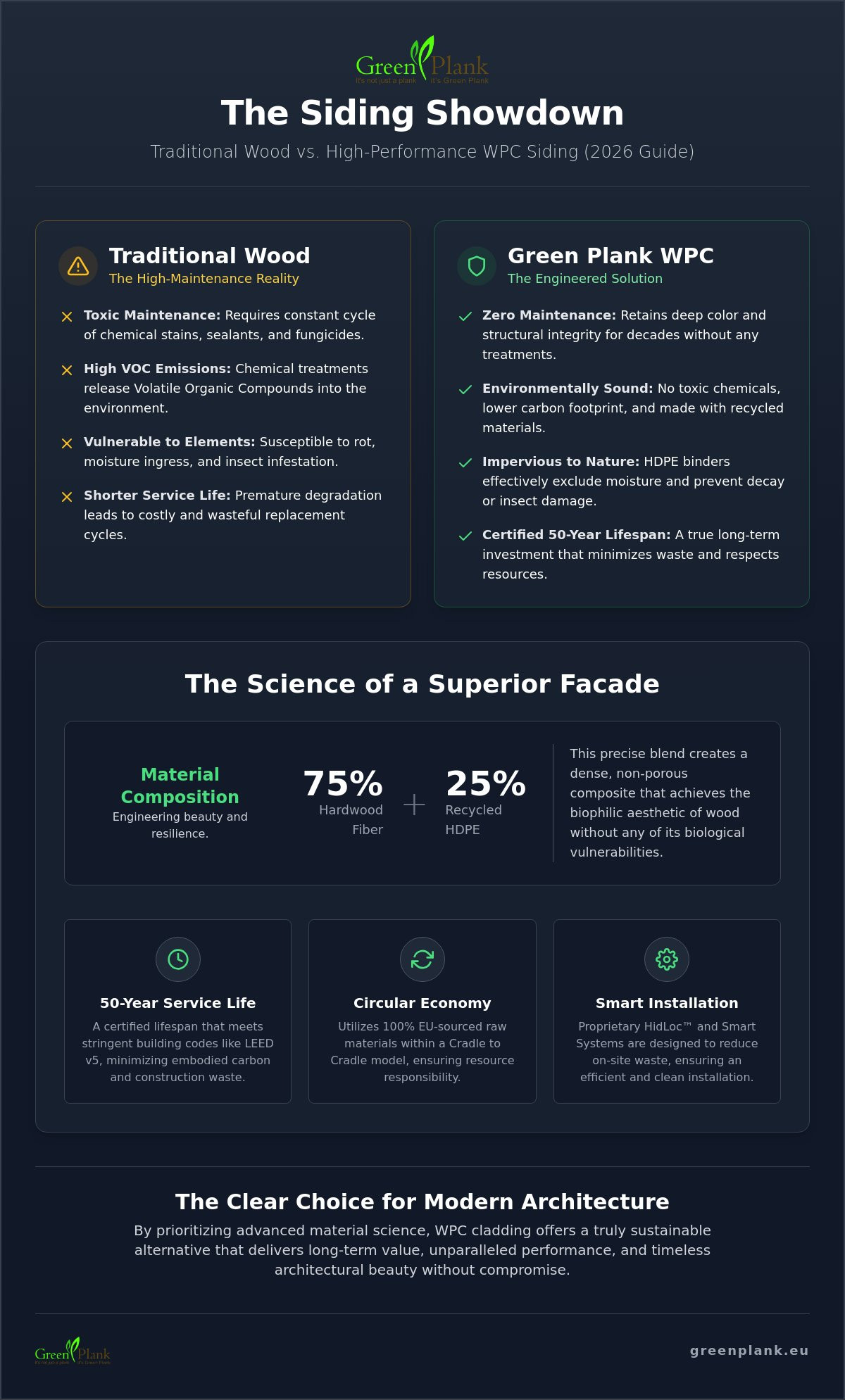
- Analyze the engineering behind 75% hardwood fiber and HDPE binders to understand how they effectively exclude moisture and prevent structural decay.
- Discover the long-term value of the Cradle to Cradle ownership model and the reliability of 100% EU-sourced raw materials for a lower carbon footprint.
- Learn how proprietary technologies like HidLoc™ and Smart System reduce installation waste while supporting a certified 50-year service life.
The Sustainability Paradox of Traditional Wood Siding
The belief that timber is the most ecological choice for a building envelope is a persistent misconception. While wood is a renewable resource, its actual lifecycle performance often contradicts its green reputation. To remain functional and aesthetically pleasing, natural timber requires a relentless schedule of chemical interventions. These treatments introduce high levels of Volatile Organic Compounds (VOCs) into the local ecosystem, effectively negating the carbon sequestration benefits of the wood itself. As architects and developers shift toward stricter environmental standards in 2026, the search for sustainable alternatives to wood siding has moved from a niche preference to a regulatory necessity.
The Environmental Impact of Chemical Maintenance
Wood preserves its structural integrity only through regular applications of stains, sealants, and fungicides. These products are often petroleum-based and energy-intensive to manufacture. Every few years, a new layer of chemicals is introduced, which increases the building's cumulative environmental impact and maintenance costs. Over a 30-year span, the total carbon footprint of a timber facade often exceeds that of high-performance materials that require no secondary treatments. The cumulative environmental cost of timber maintenance over 30 years is defined by the recurring release of petroleum-based toxins and the repeated carbon emissions generated during the production of chemical preservatives.
Resource Depletion and the Sourcing Crisis
The timber industry has undergone a significant transformation that affects both quality and sustainability. The dense, resin-heavy old-growth cedar that defined 20th-century construction is largely unavailable or ethically restricted. Modern plantation-grown timber grows much faster, which results in wider growth rings and lower natural rot resistance. This structural vulnerability makes modern wood siding highly susceptible to moisture ingress and insect infestation, often leading to premature replacement. Global supply chain volatility has further complicated this, with cedar prices fluctuating while material durability continues to decline.
By 2026, building codes like LEED v5 have set a new benchmark for durability. Materials must now demonstrate a verified 50-year service life to minimize embodied carbon and construction waste. This shift has accelerated the adoption of Wood-Plastic Composites (WPCs), which combine the aesthetic of natural grain with the resilience of advanced polymers. Choosing a material that eliminates the need for toxic maintenance isn't just a practical decision; it's a commitment to a truly circular construction model that respects regional heritage and engineering precision.
Top Sustainable Alternatives to Wood Siding in 2026
Selecting the right facade requires a balance between environmental ethics and material science. While traditional timber fails the longevity test, several sustainable alternatives to wood siding have emerged to meet the stringent 2026 energy codes. These materials range from mineral-based panels to advanced bio-composites, each offering distinct advantages in fire resistance, thermal regulation, and lifecycle circularity. Understanding the engineering behind these options is essential for making an informed specification.
Fiber cement remains a common specification due to its non-combustible nature and resistance to rot. However, the production of cement is a carbon-intensive process; this complicates the sustainability profile for projects aiming for net-zero goals. Metal siding, particularly aluminum and steel, offers exceptional longevity and high recycled content. While these systems are durable, they often lack the biophilic warmth and textured depth that high-end residential and commercial designs demand. For a broader look at the market, a comprehensive sustainable siding guide can provide deeper technical comparisons across all material categories.
Wood-Plastic Composite (WPC) cladding represents the most balanced approach to modern building envelopes. By combining 75% hardwood fiber with 25% recycled HDPE, these profiles achieve the structural rigidity of timber without its biological vulnerabilities. This material science allows for a truly circular model, especially when sourced through 100% EU raw materials. The result is a high-performance facade that maintains its color and integrity without the need for toxic stains or sealants.
Fiber Cement vs. Composite Cladding
Fiber cement is notoriously heavy and brittle, which requires specialized tools and significant labor for installation. In contrast, WPC composite cladding is engineered for low density and high impact resistance; this simplifies the building process and reduces onsite breakage. The thermal performance of WPC is also superior. The high wood fiber content acts as a natural insulator, reducing thermal bridging across the building envelope. While fiber cement relies on stamped patterns to mimic wood, advanced composites utilize high-fiber textures to achieve an authentic, tactile grain that is indistinguishable from natural timber.
Thermally Modified Wood: A Natural Half-Step
Thermally modified wood undergoes a torrefaction process where the timber is heated in an oxygen-free environment. This thermal treatment alters the wood's cell structure, removing sugars and making it less attractive to fungi and insects. While this improves rot resistance, the process makes the wood significantly more brittle. It is often prone to splitting in high-impact areas or during installation.
Even after modification, the wood remains susceptible to UV degradation. Without regular oiling, the material will silver and eventually lose its structural integrity. It fails to deliver the maintenance-free promise that modern asset owners require. If you are seeking a solution that combines the aesthetic of timber with the performance of engineering, exploring European-made WPC cladding is the logical next step for your project.
Engineering the Perfect Facade: Hardwood Fiber and HDPE
The shift from traditional timber to sustainable alternatives to wood siding requires a deep understanding of molecular engineering. It isn't enough to simply replace wood; one must improve upon its inherent flaws. High-performance WPC cladding achieves this by utilizing a specific ratio of 75% hardwood fiber and 25% High-Density Polyethylene (HDPE). This formula ensures the facade remains dimensionally stable while providing the biophilic warmth expected in premium architecture. By prioritizing 100% EU raw materials, the manufacturing process maintains a rigorous standard of chemical safety and quality control that lower-grade imports can't match.
Hardwood Fiber vs. Wood Flour
Many low-grade composites use "wood flour," which is essentially fine sawdust left over from industrial milling. While this fills the volume of a panel, it provides zero structural reinforcement. In contrast, engineered hardwood fibers are longer and more robust, creating a complex internal matrix during the extrusion process. This fiber length is critical because it significantly increases the flexural strength of the cladding panels. Hardwood fiber provides the internal skeletal structure necessary to prevent "plastic creep," ensuring the panels maintain their dimensions under extreme thermal stress. This engineering choice prevents the sagging and warping often seen in plastic-heavy or rice-husk-based alternatives.
The HDPE Advantage for Exterior Facades
The choice of polymer binder determines the long-term survival of the facade. HDPE is a superior choice for exterior applications due to its exceptional UV stability and color retention in high-exposure environments. Unlike PVC, which can become brittle and release toxins over time, HDPE remains flexible and chemically inert. It's also more easily integrated into a circular economy because it is one of the most widely recycled plastics globally. This material science results in a product that is both environmentally responsible and technically superior.
- Moisture exclusion: HDPE forms a non-porous barrier that encapsulates each fiber, preventing water from reaching the hardwood core.
- Environmental resilience: The material is naturally resistant to saltwater corrosion and can withstand extreme temperature fluctuations without cracking.
- Structural efficiency: Low-density engineering reduces the dead load on the building structure, making it ideal for both new builds and retrofits.
We utilize low-density engineering to reduce the weight of the panels without sacrificing their impact resistance. This makes the material easier for installers to handle on-site and reduces the carbon footprint associated with heavy transportation. By combining regional reliability with material science, these profiles offer a facade that respects nature and outlasts it. It's a clear example of how engineering precision can solve the durability issues that have historically plagued natural wood exteriors.
Circularity and the Cradle to Cradle Ownership Model
The concept of "recyclable" has become a hollow marketing term in the construction industry. Without a dedicated infrastructure to collect and reprocess materials, a product's potential for reuse remains entirely theoretical. True circularity requires a Cradle to Cradle Ownership model. This framework ensures that every component of the facade remains within a closed loop, preventing it from ever reaching a landfill at the end of its service life. When evaluating sustainable alternatives to wood siding, specifiers must look beyond the material itself and examine the manufacturer's commitment to verifiable take-back programs.
Our commitment to 100% EU raw materials serves as a core identity marker for our brand. By sourcing and manufacturing exclusively within Europe, we significantly reduce the carbon emissions associated with long-distance maritime shipping and complex global logistics. This regional focus ensures that the environmental ethics of the cladding aren't undermined by a massive transport footprint. A 50-year warranty serves as the ultimate proof of this engineering confidence. It guarantees that the resources invested in the building envelope will provide value for half a century, which drastically lowers the lifetime embodied carbon of the structure.
Reducing the CO2 Footprint of Your Project
Regional manufacturing in Europe slashes the carbon cost of logistics by keeping supply chains short and transparent. This proximity allows for tighter quality control and ensures that all materials meet the most stringent European environmental standards for chemical safety. There's a direct relationship between material longevity and reduced lifetime carbon emissions. The longer a facade remains in service, the fewer resources are required for replacement, maintenance, and eventual disposal. For a deeper look at how these principles are transforming the industry, see our guide on Sustainable Building Materials: The 2026 Guide to Circular Construction.
Circular Design: Planning for Deconstruction
Modern architecture is shifting toward the principle of deconstruction rather than demolition. This requires fastening systems that allow for the non-destructive removal of panels at the end of their service life. Our HidLoc™ Hidden Fastening Systems are engineered specifically for this purpose. They provide a secure, seamless finish while allowing individual panels to be detached without damage if the building's purpose or design changes. This mechanical flexibility is essential for a truly circular building strategy.
This design philosophy enables the seamless recycling of WPC back into new building profiles, fulfilling the technical promise of a circular economy. Professional specifiers and developers are increasingly moving toward "materials as a service" frameworks. These frameworks prioritize the long-term performance and recovery of building components over short-term acquisition costs. To integrate these circular principles into your next development, you can view our high-performance composite cladding profiles.
Specifying Sustainable WPC Cladding for Modern Architecture
Specifying the right facade is the final, critical step in transitioning from a conceptual design to a high-performance reality. Architects increasingly prioritize sustainable alternatives to wood siding that offer predictable results without the variables of natural timber. Achieving a biophilic aesthetic no longer requires the sacrifice of material longevity. Modern WPC cladding profiles provide deep, tactile textures that mimic the organic complexity of wood grain while maintaining a consistent performance profile. Green Plank represents over 20 years of European manufacturing excellence, ensuring that every specified profile meets the highest standards of the circular economy.
Selecting the correct profile depends on the specific demands of the project. Residential applications often prioritize the warm, inviting textures of the Nordeka or Entra collections. In contrast, high-traffic commercial environments or high-rise developments require the enhanced durability of our Commercial Infrastructure Profiles. These systems are engineered to withstand significant physical impact and environmental stress, providing a maintenance-free solution for large-scale assets. By utilizing 100% EU raw materials, we eliminate the carbon footprint associated with intercontinental shipping, providing a truly regional solution for the modern specifier.
Design Versatility in WPC Facades
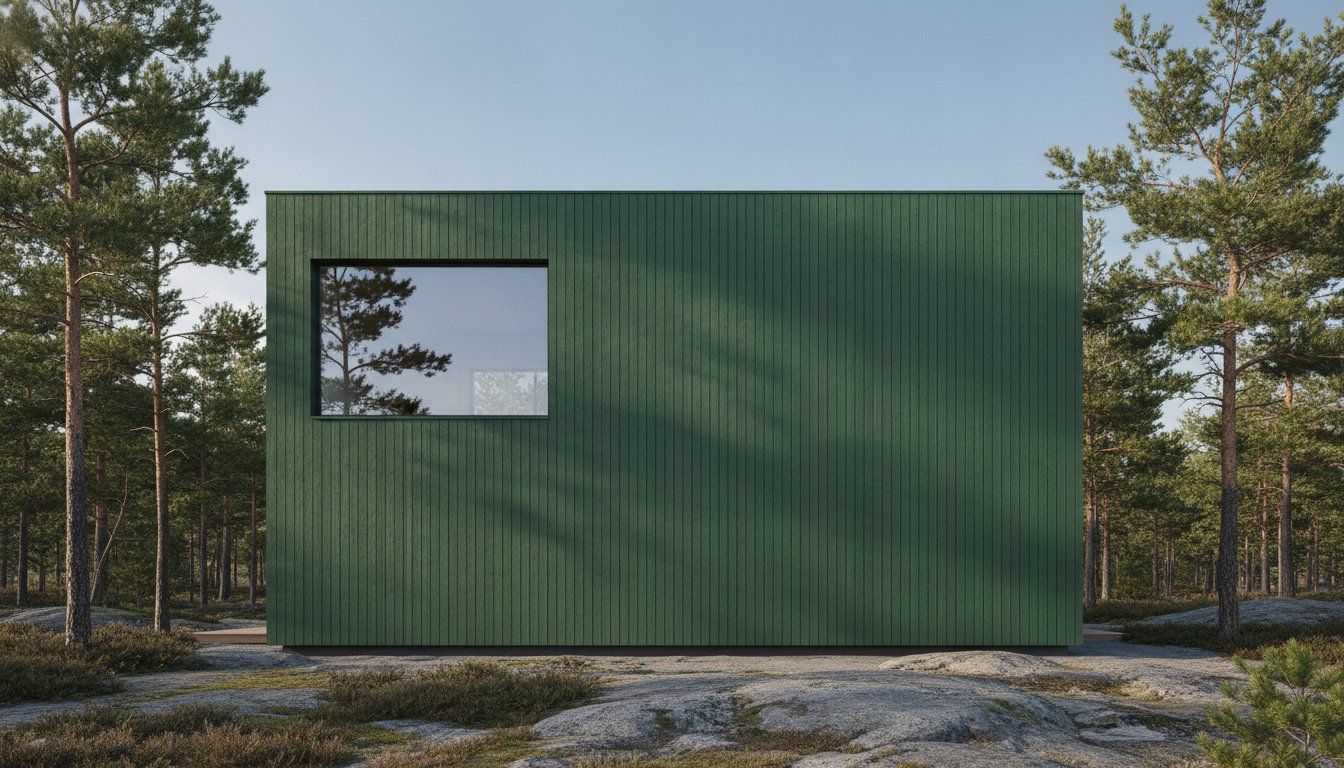
Modern architectural aesthetics often favor the clean lines of vertical installation, which creates a sense of height and contemporary elegance. Our profiles support both vertical and horizontal orientations, allowing for complete design freedom. Unlike cedar or larch, which require a lengthy "silvering" period to achieve a weathered look, WPC cladding offers immediate color stability. This ensures the building looks exactly as intended from the day of completion. For a technical deep dive into these options, read our Composite Wall Cladding: The 2026 Guide to Sustainable Exterior Facades.
HidLoc™ and the Flawless Finish
The success of a building envelope often relies on the details of its fastening system. Our HidLoc™ Hidden Fastening Systems are engineered to provide a seamless, screw-free finish that enhances the building's aesthetic. This technology does more than just look good; it creates a secure mechanical bond that prevents water ingress and allows for natural thermal expansion. Pre-engineered systems like our Smart System eliminate the risk of installer error and board splitting, which are common issues with traditional timber or lower-quality composites.
- Reduced labor time: Pre-aligned profiles allow for faster installation compared to traditional siding methods.
- Waste mitigation: Precision manufacturing ensures that every board is usable, significantly reducing on-site construction waste.
- Engineering confidence: Hidden fasteners protect the integrity of the board surface, preventing the entry points for moisture that lead to rot.
Choosing Green Plank means investing in a legacy of sustainable craftsmanship and technical precision. Our products are backed by a 50-year warranty, reflecting our confidence in the durability of our materials. If you are ready to specify a facade that balances architectural beauty with ecological responsibility, contact Green Plank today for technical specifications and professional project support.
Building a Legacy of Responsible Design
Transitioning to sustainable alternatives to wood siding ensures your architectural vision remains vibrant without the toxic maintenance cycles of natural timber. By prioritizing materials engineered with 75% hardwood fiber and recycled polymers, you align your project with the technical demands of 2026 building codes and the ethical requirements of a circular economy. It's about more than just aesthetics; it's about specifying a facade that respects both regional heritage and the future of our environment.
Our commitment to 100% EU-sourced raw materials and a Cradle to Cradle ownership model provides a transparent, low-carbon pathway for modern construction. We stand behind our engineering with a 50-year warranty on premium profiles, offering the long-term asset protection that industry professionals demand. This level of durability transforms the building envelope into a permanent asset rather than a recurring liability. You don't have to choose between aesthetics and ethics. The future of the building envelope is both beautiful and permanent.
Explore Green Plank Sustainable Cladding Solutions to find the perfect balance of engineering precision and natural warmth for your next project.
Frequently Asked Questions
Is composite siding more sustainable than natural wood?
High-quality composite is often more sustainable because it eliminates the need for toxic maintenance chemicals. While wood is a renewable resource, the recurring application of petroleum-based stains and sealants increases its lifetime carbon footprint and environmental toxicity. Choosing sustainable alternatives to wood siding that utilize recycled HDPE and hardwood fibers ensures a cleaner, more stable lifecycle for the building envelope.
How long does sustainable WPC cladding last compared to cedar?
Premium WPC cladding is engineered for a service life of up to 50 years, significantly outperforming modern plantation-grown cedar. Fast-growth timber often succumbs to rot or insect damage within two decades if maintenance is neglected. Our profiles carry a 50-year warranty, reflecting an engineering confidence that natural timber cannot match. This longevity reduces construction waste and the frequency of resource extraction.
Does composite siding look like real wood or does it look like plastic?
Modern WPC profiles achieve an authentic biophilic look through high-fiber textures and deep grain patterns. Unlike plastic-heavy composites that appear glossy or synthetic, our 75% hardwood fiber composition creates a matte, tactile finish. This material science allows for a facade that mimics the warmth of natural wood while providing the structural rigidity of an engineered product.
What are the main maintenance requirements for WPC wall cladding?
WPC wall cladding requires almost no maintenance beyond occasional cleaning with water and mild soap. You don't need to sand, stain, or seal the boards to protect them from the elements. The HDPE binder encapsulates the wood fibers, which prevents moisture ingress and UV degradation. This maintenance-free performance saves asset owners significant time and cost over the building's lifespan.
Can WPC cladding be recycled at the end of its life?
Yes, WPC cladding is fully recyclable within a dedicated circular infrastructure. Our Cradle to Cradle Ownership model ensures that materials can be returned and reprocessed into new building profiles at the end of their service life. This prevents architectural waste from entering landfills. It's a key distinction between theoretical recyclability and a functional, closed-loop system.
How does the carbon footprint of European-made WPC compare to imported alternatives?
European-made WPC has a significantly lower carbon footprint than products imported from overseas. Sourcing 100% EU raw materials slashes the CO2 emissions associated with intercontinental shipping and complex logistics. This regional reliability ensures that your project supports ethical manufacturing standards while minimizing the environmental cost of transport.
Is WPC siding fire-resistant enough for commercial buildings?
WPC cladding is frequently specified for commercial infrastructure due to its high impact resistance and durability. Our Commercial Infrastructure Profiles are designed to meet the rigorous demands of high-traffic and large-scale projects. These engineered profiles provide a robust, long-lasting alternative to traditional timber in professional settings where structural integrity and longevity are primary requirements.
What is the Cradle to Cradle model in siding manufacturing?
The Cradle to Cradle model is a design framework where products are created for a continuous, waste-free lifecycle. In siding manufacturing, this means the producer takes responsibility for the material from production through to deconstruction. It shifts the focus from a linear approach to a circular system. This ensures that every component remains a valuable resource for future manufacturing cycles.
Specify the product
Use this guide with a Green Plank specification
Technical articles support the commercial catalogue — category, product, evidence, then samples or quotes.