



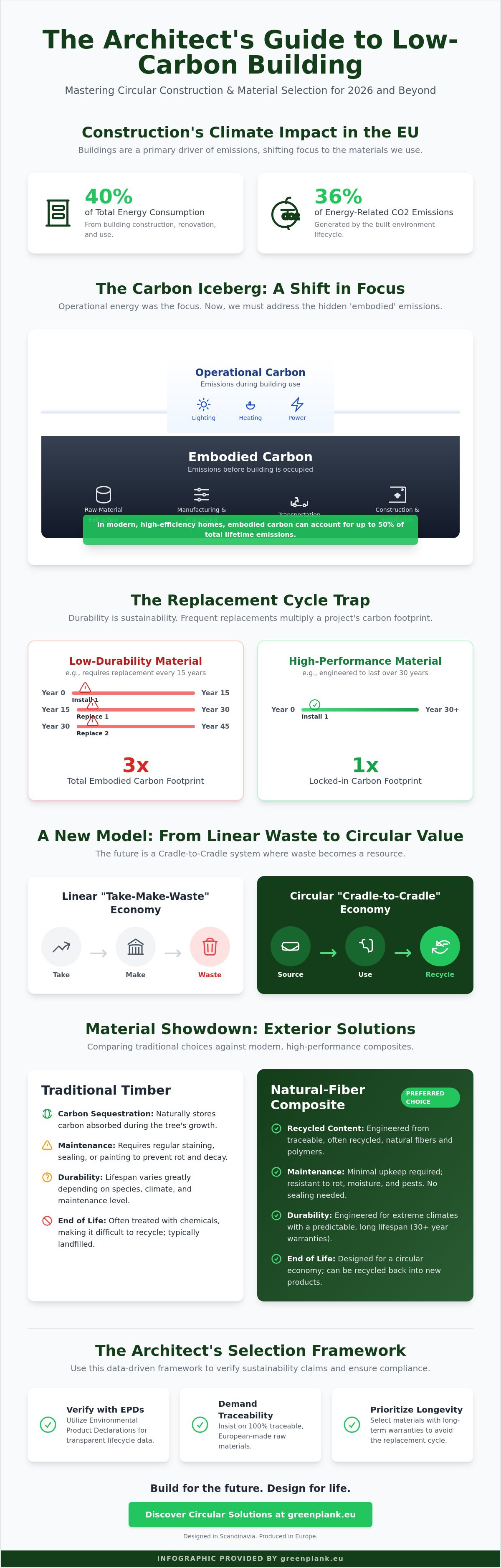
The European Commission reports that building construction and renovation are responsible for approximately 40% of energy consumption and 36% of CO2 emissions within the EU. As Sweden moves toward the 2045 climate neutrality target, the shift toward low carbon footprint building materials has become the primary benchmark for professional-grade architecture. You likely recognize that "green" marketing often obscures the technical reality of how a material performs in the harsh Nordic climate. It's difficult to balance the immediate need for carbon reduction with the long-term requirement for structural durability and minimal maintenance.
This 2026 guide provides the clarity you need to master the selection of low-embodied carbon materials for circular exterior spaces. You'll learn how to verify environmental claims using traceable data and ensure your projects meet the latest European circular economy regulations. We examine the engineering precision behind natural-fiber composites and provide a logical framework for reducing your project's carbon profile while maintaining a refined Scandinavian aesthetic. Designed in Scandinavia. Produced in Europe. This is how we build for the future.
Key Takeaways
- Identify the critical shift from operational energy to embodied carbon to uncover hidden emissions throughout a material's entire lifecycle.
- Learn why sourcing 100% traceable, European-made raw materials is essential for ensuring both environmental circularity and professional-grade durability.
- Evaluate high-performance low carbon footprint building materials by comparing the carbon sequestration of timber against the engineered longevity of natural-fiber composites.
- Master a rigorous selection framework that utilizes Environmental Product Declarations (EPDs) and "Cradle to Cradle" principles to verify true sustainability.
- Discover how Scandinavian-designed exterior solutions provide a low-maintenance, high-end aesthetic that is built to last and designed for life.
Understanding Embodied Carbon in 2026 Construction
The construction industry has reached a critical pivot point. For decades, architects and developers focused almost exclusively on operational energy, the carbon emitted while heating, cooling, and powering a building. By 2026, the priority has shifted toward the "hidden" emissions found within the building fabric itself. These emissions, known as embodied carbon, represent the greenhouse gases generated during the extraction of raw materials, manufacturing, transportation, and final installation on-site. The built environment is responsible for approximately 39% of global CO2 emissions. Within that figure, the manufacturing of materials like steel, cement, and glass accounts for a staggering 11% of the global total.
In Sweden, Boverket's climate declaration requirements have become more stringent as of 2026. Developers must now provide precise data on the lifecycle impact of their choices. This regulatory landscape makes the selection of low carbon footprint building materials a technical necessity rather than an aesthetic preference. Choosing low carbon footprint building materials reduces the initial environmental impact of a project, ensuring compliance with national targets for climate neutrality. Utilizing Bio-based building materials and advanced composites allows professionals to lock away carbon at the start of a project's life, creating a "carbon sink" rather than a carbon debt.
Embodied vs. Operational Carbon: What is the Difference?
Operational carbon is the energy consumed during a building's use, but this only tells half the story. Embodied carbon is the total greenhouse gas emissions generated before a building is occupied. While operational emissions can be reduced over time through renewable energy upgrades, embodied carbon is "spent" the moment the keys are handed over. In modern, high-efficiency Swedish homes, the materials used in the exterior can account for up to 50% of the building's total lifetime emissions. Manufacturing processes for traditional materials often involve high-heat furnaces and chemical heavy extraction, which creates a massive initial carbon debt that the building may never "pay back" through energy savings alone.
The Importance of Material Longevity in Carbon Calculations
Durability is the foundation of true sustainability. A material that lasts 50 years is significantly better for the planet than a "green" material that requires replacement after 15 years. This is the "Replacement Cycle" trap. If a cheap exterior cladding is replaced three times over a building's lifespan, its total carbon footprint triples. High-performance materials are engineered to resist the harsh Nordic climate, ensuring that the carbon invested during production remains locked in place for decades. This focus on longevity is a core pillar of the Sustainable Building Materials: The 2026 Guide to Circular Construction framework. By selecting professional-grade composites and traceable raw materials, builders avoid the waste and emissions associated with frequent renovations. A 30-year warranty isn't just a quality guarantee; it's a commitment to reducing the long-term carbon load of the Swedish built environment.
The Lifecycle of Low Carbon Footprint Building Materials
True sustainability requires a holistic view of a product’s existence. For architects and developers in Sweden, selecting low carbon footprint building materials involves analyzing every stage from raw extraction to eventual decommissioning. This lifecycle approach ensures that environmental claims are backed by data rather than marketing fluff. Manufactured in Europe using 100% traceable raw materials to deliver stability, strength, and refined Nordic character, these products represent a shift toward ethical construction. By prioritizing localized sourcing, builders can verify the ecological standards of their entire supply chain.
Manufacturing processes have evolved to minimize energy intensity. Tackling embodied carbon requires a shift toward low-density engineering, where material strength is achieved through structural design rather than sheer mass. This transition from a linear "take-make-waste" system to a Cradle-to-Cradle model ensures that products don't end up in a Swedish landfill after their 30-year service life. Instead, they become the feedstock for the next generation of construction. It's a circular philosophy that treats waste as a design flaw.
The Nordic Advantage: Traceable Raw Materials
European-made materials offer a level of environmental oversight that overseas imports can't match. Our natural-fiber composites utilize a base of 75% hardwood fiber, sourced from sustainably managed forests. This renewable material base is a cornerstone of Nordic reliability. Scandinavian design applies engineering precision to these fibers, creating a material that's both durable and carbon-sequestering. It's a professional-grade solution that respects the heritage of the landscape while meeting modern performance standards. You can explore how these sustainable composite solutions integrate into modern architecture.
Low-Density Engineering and Transportation Impact
The weight of a material directly dictates its environmental cost during transit. By utilizing low-density engineering, we create lightweight composites that maintain high structural efficiency without the heavy carbon toll of traditional wood or concrete. This reduction in density lowers fuel consumption for every truckload delivered to a site in Stockholm or Gothenburg. Localized European production significantly reduces "transportation carbon" because the distance from the factory to the project site is minimized compared to materials shipped across oceans. Produced in Europe. Designed in Scandinavia. This proximity ensures a smaller logistics footprint and a more resilient supply chain. Built to last. Designed for life.
Comparing High-Performance Exterior Materials
Selecting low carbon footprint building materials requires a shift from looking at initial costs to analyzing the full lifecycle of a product. While natural timber is often praised for carbon sequestration, its performance in the volatile Swedish climate introduces hidden environmental debts. Untreated wood degrades quickly, while pressure-treated alternatives rely on heavy chemical impregnation to survive moisture. These treatments complicate end-of-life disposal, often turning a natural product into hazardous waste. In contrast, traditional materials like concrete and steel are being phased out for exterior cladding because their production accounts for a massive portion of global CO2 emissions. Swedish construction regulations are tightening, pushing architects toward materials that offer both circularity and durability.
The concept of "maintenance carbon" is a critical factor often overlooked in sustainable design. Every liter of paint, stain, or sealant applied to a wooden deck or facade carries its own carbon footprint from manufacturing and transport. Over a 30-year period, the cumulative impact of these petroleum-based products can outweigh the initial carbon benefits of the wood itself. High-performance composites solve this by integrating protection into the material's core, removing the need for chemical reapplications. Designed in Scandinavia. Produced in Europe. This approach ensures that the environmental claims made at the start of a project hold true decades later.
WPC vs. Traditional Wood: A Sustainability Audit
Pressure-treated wood often contains copper-based preservatives and biocides that can leach into the surrounding ecosystem. Choosing wpc composite decking eliminates this toxic cycle entirely. While standard wood decks in Northern Europe typically require replacement or significant repair every 10 to 15 years, professional-grade composites are engineered for a 50-year lifecycle. This longevity means you use fewer raw materials over the building's life. It's a simple equation: replacing a deck three times in 50 years creates triple the waste and transport emissions compared to a single, durable installation.
Engineered Durability: HDPE and Hardwood Fiber
The technical superiority of modern low carbon footprint building materials lies in the science of the blend. A precise 75/25 ratio of natural hardwood fibers to recycled high-density polyethylene (HDPE) creates a material that resists thermal expansion and moisture absorption. Using European HDPE is a deliberate choice for circularity, as it utilizes traceable post-consumer waste rather than virgin plastics. When considering trex decking alternatives in 2026, the focus remains on local European manufacturing to minimize transport-related CO2. This engineered stability delivers a product that is built to last and designed for life, maintaining its structural integrity without the environmental cost of traditional timber maintenance.
- Natural Timber: High initial sequestration but requires frequent chemical maintenance.
- WPC Composites: Utilizes recycled polymers and wood fibers for a maintenance-free finish.
- Concrete and Steel: High embodied energy; increasingly restricted by Swedish carbon limit values.
- Longevity: 50-year warranties reduce the need for resource-intensive replacement cycles.
Selection Framework for Architects and Developers
Architects and developers in Sweden face tightening regulations under Boverket's climate declaration requirements, which became mandatory on January 1, 2022. Choosing low carbon footprint building materials isn't just an ethical choice; it's a compliance necessity. To ensure a project meets its sustainability targets and long-term performance goals, use this four-step selection framework:
- Step 1: Verify Environmental Product Declarations (EPDs). Don't rely on marketing claims. EPDs provide third-party verified data on the Global Warming Potential (GWP) of a product. This transparency is vital for calculating the total carbon load of a building's lifecycle.
- Step 2: Assess "Cradle to Cradle" ownership. Circularity is the benchmark of modern engineering. Evaluate whether the material can be fully reclaimed and recycled at the end of its 20 or 30-year lifespan. True sustainability avoids the landfill entirely.
- Step 3: Evaluate installation efficiency. Speed and precision on-site directly impact a project's carbon debt. Materials that require less heavy machinery or produce zero site waste contribute to a lower overall environmental impact.
- Step 4: Audit the supply chain. Sourcing 100% EU raw materials is critical. Transporting heavy building components from outside Europe can increase a product's carbon footprint by up to 40% due to shipping emissions alone.
Hidden Fastening Systems and Material Integrity
Surface-level aesthetics are secondary to structural longevity. Traditional top-down screwing methods often compromise the material's protective outer layer, inviting moisture ingress and rot. Our HidLoc™ systems eliminate this risk by securing boards from the side. This preserves the surface integrity and extends the material's life by preventing internal degradation. Precision during installation doesn't just look better; it reduces construction waste by up to 15% through optimized board layouts. For detailed technical specifications on achieving a seamless finish, refer to our professional deck installation guide.
Commercial Infrastructure and Public Space Durability
Public piers and commercial facades in the Nordic region demand extreme resilience. When selecting low carbon footprint building materials for high-traffic areas, saltwater resistance and slip ratings are core sustainability metrics. A product that fails after five years due to salt corrosion isn't sustainable, regardless of its initial carbon score. We prioritize R11 and R12 slip ratings to ensure safety in wet, coastal environments. Professional-grade certifications, such as those required for Miljöbyggnad or LEED projects, provide the engineering confidence needed for large-scale infrastructure. These materials are engineered to withstand heavy foot traffic while maintaining their Nordic character and structural stability for decades.
Ready to specify high-performance, eco-conscious materials for your next project? Explore our professional-grade composite solutions designed for the demanding Scandinavian climate.
Green Plank: Leading the Shift to Circular Construction
Green Plank operates with a clear, unwavering mission: Built to last. Designed for life. As the European construction sector moves toward stricter environmental standards in 2026, the selection of low carbon footprint building materials has become a critical factor for every project. Our commitment to circular construction isn't just a marketing slogan; it's an engineering reality embedded in our Terra Tuff and Smart System lines. These high-performance composites are engineered to replace traditional timber and high-energy plastics, offering a durable alternative that captures the essence of wood without the ecological cost.
Our 100% EU sourcing model is a strategic choice that supports Swedish sustainability goals and the European Green Deal. By keeping our supply chain within Europe, we ensure full traceability of raw materials and significantly reduce the carbon emissions associated with long-distance logistics. This localized approach allows us to maintain a transparent production cycle where quality control is absolute. It's this level of precision that enables our 50-year warranty, a testament to products that are truly designed for a lifetime of use. We don't just sell planks; we provide a long-term carbon sink for the modern building envelope.
- Terra Tuff: A heavy-duty solution for high-traffic areas, engineered for maximum impact resistance and longevity.
- Smart System: A refined cladding and decking line that emphasizes ease of installation and superior thermal stability.
- Traceable Sourcing: 100% of materials are harvested or recycled within the EU to minimize transport footprints and support local economies.
Scandinavian Design Meets European Manufacturing
The aesthetic of our products is rooted in the quiet strength of Nordic character. We believe that sustainable facades should never compromise on visual appeal. It's the reason our composite wall cladding is frequently specified for modern architectural projects across Sweden. Our manufacturing process is entirely waste-free. We've implemented a closed-loop system where production scraps are immediately reintroduced into the extruders. This circularity ensures that your building's exterior contributes to a healthier planet from the moment it's installed.
Partnering for a Low-Carbon Future
We work closely with commercial developers and residential project partners to simplify the path to green certification. Our products fit perfectly within the Cradle to Cradle ownership model, where the end-of-life stage is considered during the initial design. By choosing our low carbon footprint building materials, developers can meet Swedish climate declaration requirements while offering homeowners a premium, maintenance-free experience. We're here to provide the engineering confidence you need for the next generation of building. Explore our range of low-carbon building materials and join us in building a more sustainable future.
Designing the Next Era of Swedish Exteriors
The construction landscape in 2026 demands a rigorous focus on circularity and material transparency. Architects and developers are no longer just building structures; they're managing carbon lifecycles from the ground up. Integrating low carbon footprint building materials has become the standard for projects aiming to meet Sweden's ambitious climate goals. By focusing on high-performance composites that resist the volatile Nordic climate, you ensure that every square meter contributes to a net-zero future without compromising on premium aesthetics.
Green Plank remains at the forefront of this shift through our commitment to traceable, 100% EU raw materials and a dedicated Cradle to Cradle ownership model. Our natural-fiber solutions are engineered for durability, providing a maintenance-free alternative to traditional timber that's built to last. We stand by our craftsmanship with a warranty of up to 50 years, ensuring your investment remains secure for decades. It's time to transition from temporary fixes to permanent, sustainable excellence. Your vision for a responsible, beautiful outdoor space starts with engineering that respects the planet.
View our sustainable WPC decking and cladding solutions
Frequently Asked Questions
What are the most sustainable building materials for exterior use in 2026?
Natural fiber composites and cross-laminated timber (CLT) lead the market for 2026 sustainable exteriors. These low carbon footprint building materials prioritize high recycled content and low-energy production methods. By 2026, Swedish building regulations under the Klimatdeklaration require developers to report the carbon impact of all new constructions. Choosing materials with a verified Environmental Product Declaration (EPD) ensures a 25% reduction in embodied carbon compared to traditional synthetic alternatives.
How does WPC decking reduce a building’s carbon footprint?
Wood Plastic Composite (WPC) reduces a footprint by diverting up to 90% of raw materials from landfills. It utilizes recycled wood fibers and reclaimed polymers, which prevents the release of methane in waste sites. Because it doesn't require annual chemical staining or sealing, it eliminates VOC emissions over its 30 year lifespan. This longevity ensures that the carbon cost of replacement is avoided for several decades.
What is the difference between bio-based and circular building materials?
Bio-based materials originate from biological sources like timber or hemp that sequester carbon during their growth phase. Circular materials are designed for a closed-loop system where 100% of the product can be recovered and manufactured into new goods. While bio-based focus on the start of life, circularity focuses on the end. A truly sustainable exterior combines both, using renewable fibers in a format that's fully recyclable after its service life.
Can low-carbon materials handle high-traffic commercial environments?
High-performance low carbon footprint building materials are engineered to exceed the durability of traditional wood in commercial zones. Professional-grade composites achieve a Brinell hardness rating significantly higher than pressure-treated pine. These materials resist rot and splintering in harsh Swedish winters, making them ideal for public boardwalks and restaurant terraces. They provide a maintenance-free solution that withstands heavy foot traffic without losing structural integrity or aesthetic appeal.
Why is European sourcing important for sustainable construction?
European sourcing reduces transport-related CO2 emissions by up to 60% compared to importing goods from Asia. Manufacturing in Europe ensures compliance with the EU's strict REACH regulations and the Green Deal's 2050 climate neutrality goals. It also guarantees that raw materials are traceable and ethically harvested. Local production supports a transparent supply chain, providing Swedish architects with the confidence that their projects meet national sustainability benchmarks.
Is composite decking more eco-friendly than natural wood in the long term?
Composite decking is more eco-friendly when you evaluate the full 25 to 30 year life cycle. Natural wood often requires chemical treatments every 12 months to prevent decay in the humid Nordic climate. These toxins leach into the soil over time. Composites remain stable without toxic additives. When you factor in the carbon cost of multiple replacements for timber, the engineered alternative offers a much lower environmental impact.
What does "Cradle to Cradle" mean for building materials?
Cradle to Cradle is a design framework that views all materials as nutrients in a safe, circular cycle. It eliminates the concept of waste by ensuring products are healthy for humans and the environment from production to reuse. In the context of exteriors, this means a deck isn't just discarded at the end of its life. It's returned to the factory, processed, and reborn as a new high-quality building component.
How much CO2 can be saved by choosing engineered composites over concrete?
Replacing a concrete terrace with engineered natural-fiber composites can reduce the embodied carbon of that specific structure by approximately 40%. Concrete production accounts for nearly 8% of global CO2 emissions due to the high-heat manufacturing process. Engineered composites utilize wood fibers that have already sequestered carbon. This choice prevents the emission of roughly 15kg of CO2 for every square meter of decking installed compared to traditional masonry.
Specifikér produktet
Brug denne guide i en Green Plank-specifikation
Tekniske WPC-artikler skal understøtte de kommercielle sider — ikke konkurrere med dem. Fortsæt til kompositterrasse, TerraTuff, Nordeka eller de tekniske downloads.