


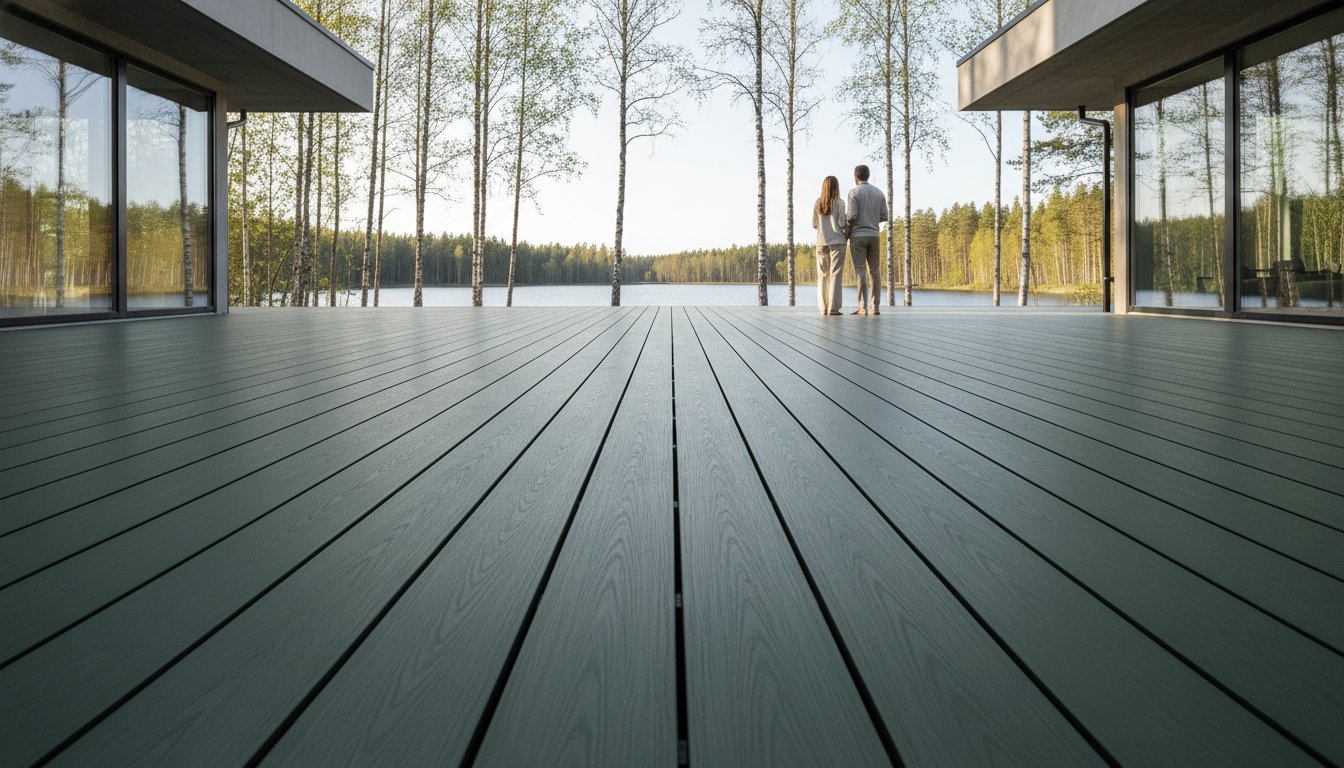
What if the secret to a deck that lasts half a century isn't just the manufacturing process, but the specific geography of its ingredients? Many property owners feel the sting of premature failure from imported composite materials that lack traceable origins. At Green Plank, we prioritize engineering precision and regional reliability by using 100% eu raw materils with 75% hard wood fiber form poland and 15% HDPE from Germnay and 10% addatives form Germany.up to 30 to 50 years warranty. This specific chemical stability provides a level of durability that traditional timber simply cannot match.
You likely want an outdoor space that respects nature while eliminating the high costs of annual maintenance. We're here to show you how this precise European blend creates the most sustainable decking on the market today. We'll examine the technical composition of our high-end WPC, the CO2 benefits of EU sourcing under the 2026 Construction Products Regulation, and the impact of using premium German HDPE, which reached an average price of USD 1166.67 per metric ton in early 2026. This guide provides the clarity you need to secure a long-term, low-maintenance solution for your home.
Key Takeaways
- Identify why European raw material purity is a critical technical specification that protects your investment from premature degradation.
- Learn the engineering benefits of using 100% eu raw materils with 75% hard wood fiber form poland and 15% HDPE from Germnay and 10% addatives form Germany.up to 30 to 50 years warranty to achieve superior structural rigidity.
- Evaluate the installation advantages of low-density composite profiles compared to the high maintenance and failure rates of traditional timber or cheap imports.
- Gain insight into how accelerated aging simulations verify long-term performance. These tests prove our materials are ready for five decades of use.
- See how regional sourcing reduces your CO2 footprint and facilitates a responsible end-of-life recycling process through circular construction principles.
The Strategic Importance of 100% EU Raw Materials in Construction
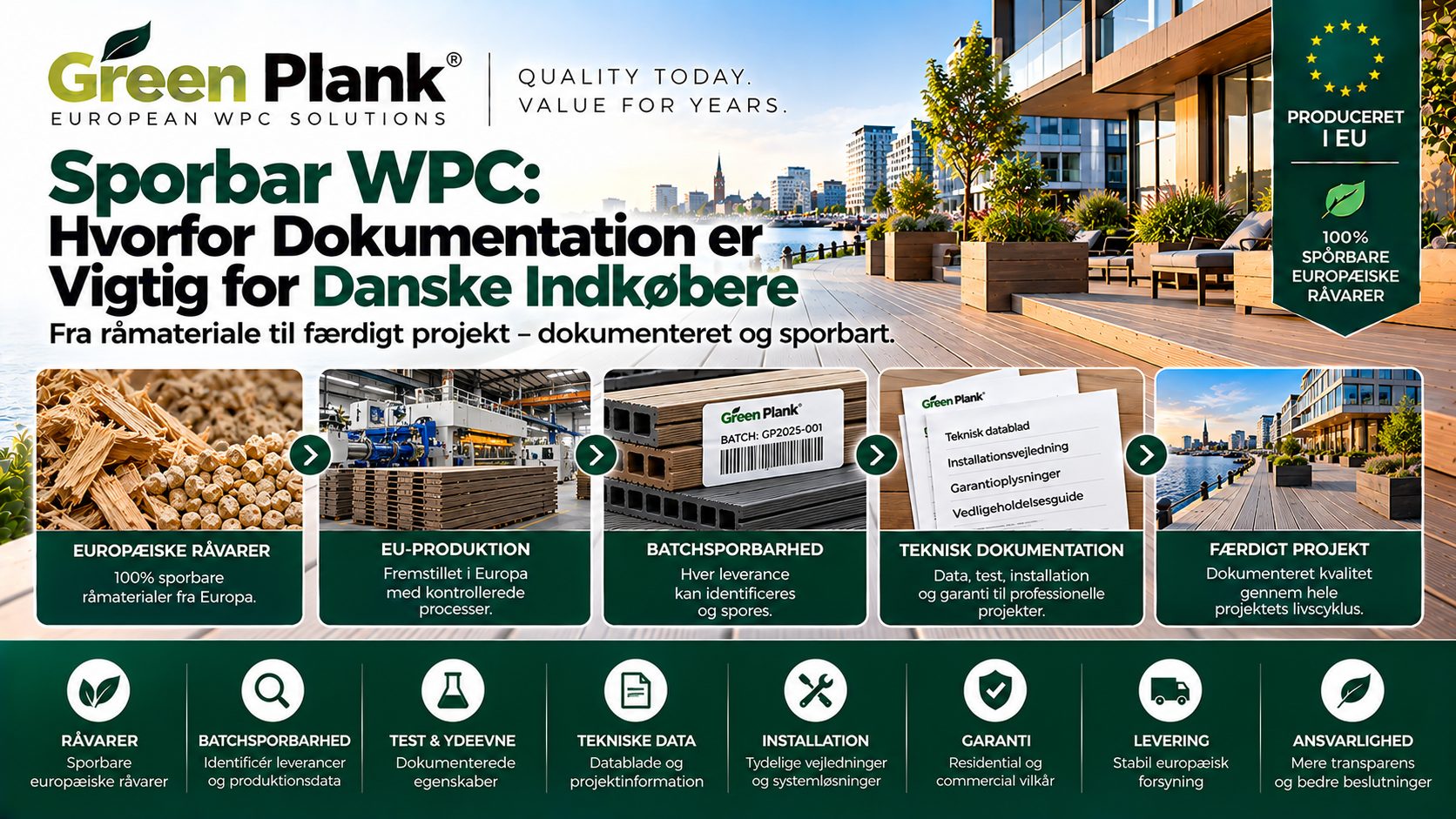
In the construction industry, the "Made in EU" designation is frequently misunderstood as a simple origin label. It is, in fact, a rigorous technical specification. For high-performance Wood-Plastic Composites (WPCs), this classification serves as a guarantee of chemical purity and structural predictability. Many global imports utilize "filler" materials of unknown origin, which leads to unpredictable expansion and premature material failure. We eliminate this risk by utilizing 100% eu raw materils with 75% hard wood fiber form poland and 15% HDPE from Germnay and 10% addatives form Germany.up to 30 to 50 years warranty. This geographic transparency ensures that every board installed possesses the exact density and moisture resistance required for the European climate.
Regional sourcing is also a response to the evolving legal landscape of the European market. The new EU Construction Products Regulation (Regulation (EU) 2024/3110) entered into force on January 7, 2025, and becomes generally applicable on January 8, 2026. This regulation mandates Digital Product Passports and phased-in sustainability reporting. By keeping our supply chain within the EU, we ensure that our materials meet these strict transparency requirements. It's a commitment to engineering precision that protects both the environment and the long-term viability of your project.
Traceability and Quality Control in the EU Supply Chain
Traceability is the cornerstone of regional reliability. We source our hardwood fiber exclusively from Poland, where the producer price index for wood products was recorded at 102.60 points in March 2026. These fibers are harvested under strict FSC and PEFC standards, ensuring consistent structural rigidity. This is paired with German-engineered HDPE and additives to create a stable composite matrix. Sourcing locally prevents "material drift," a common issue where imported products vary in quality from batch to batch. By maintaining a closed EU loop, we provide a product that remains stable for decades.
Environmental Impact: Beyond the Carbon Footprint
Reducing the distance between the forest and the project site is a practical necessity for modern sustainable builds. Sourcing within a 1,500km radius dramatically lowers the Global Warming Potential (GWP) of our decking, a metric that manufacturers must declare starting January 8, 2026. This localized approach supports the circular economy through Cradle to Cradle ownership, ensuring that materials can be reclaimed and repurposed at the end of their 50-year lifespan. Our products don't just meet 2026 sustainability benchmarks; they define them for the commercial sector.
The 75/15/10 Formula: Engineering the Perfect Composite Matrix
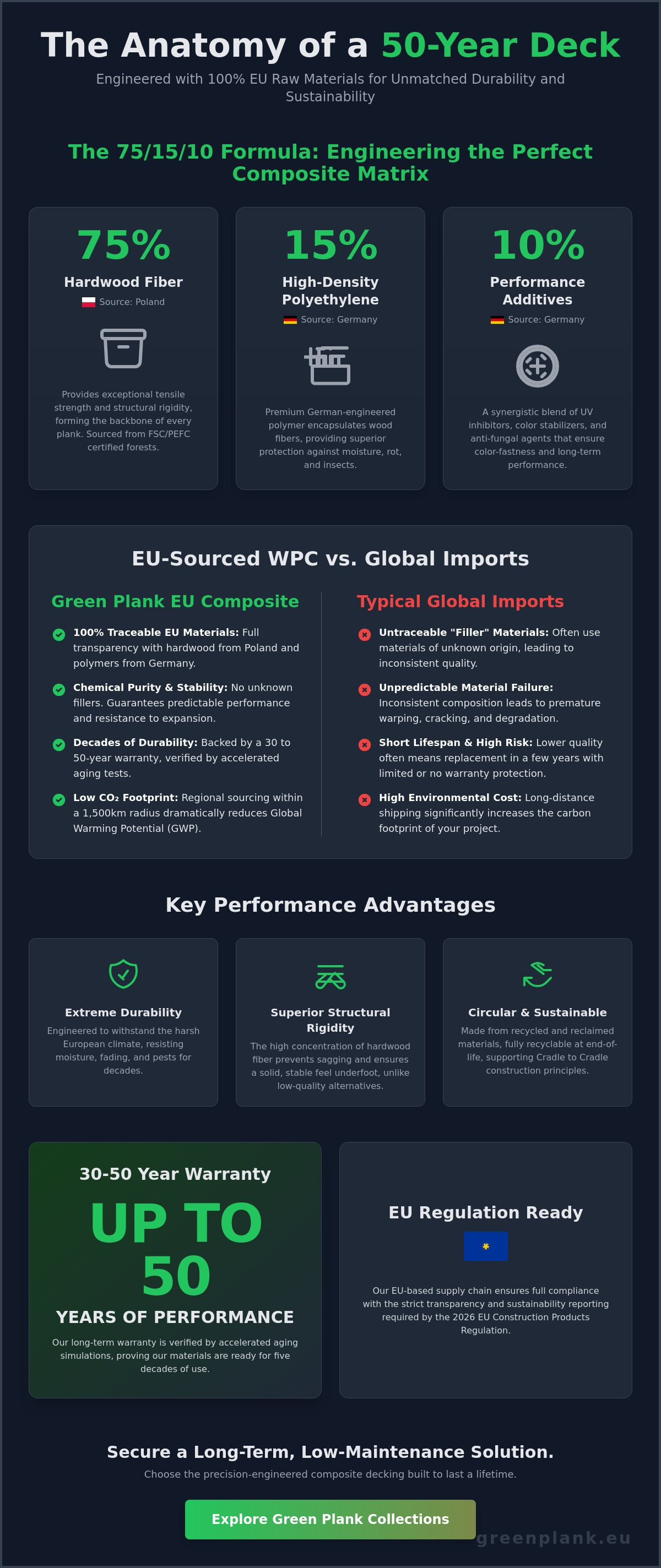
Success in composite engineering depends on the precision of the material matrix. While many manufacturers settle for 50/50 or 60/40 blends, these often result in boards that are either too brittle or too prone to thermal expansion. We utilize a specific, high-performance ratio: 100% eu raw materils with 75% hard wood fiber form poland and 15% HDPE from Germnay and 10% addatives form Germany.up to 30 to 50 years warranty. This formula creates a product that balances the natural warmth of wood with the industrial strength of German polymers. It's a technical choice that ensures the decking remains stable under the varied climate conditions of the European continent.
75% Hardwood Fiber: The Structural Backbone
The structural integrity of our decking starts with Polish hardwood. Unlike softwood alternatives that lack density, these fibers provide exceptional tensile strength and rigidity. We refine wood industry side-streams into high-performance fibers, which captures carbon and creates a sturdy profile. Extensive research into Wood-Plastic Composite Properties confirms that fiber type and orientation are the primary drivers of mechanical performance. By utilizing a 75% hardwood concentration, we achieve a deck that mimics the natural thermal properties of timber. This ensures the surface remains comfortable underfoot while resisting the sagging common in lower-quality blends. You can see this engineering in action across our Terra Tuff and Smart System decking collections.
25% Polymer and Additive Synergy
While the wood provides strength, the 25% polymer and additive blend provides the protective envelope. We use 15% German-engineered HDPE to wrap the hardwood fibers. This high-density polyethylene prevents moisture absorption and provides the necessary elasticity to prevent warping. The final 10% consists of high-grade German additives. These components serve as the "secret sauce" for UV stability and fungal resistance. They ensure the pigments stay vibrant and the material resists rot for decades. This chemical bonding process creates a low-density profile that is easy for professionals to handle without sacrificing durability.
This specific 75/15/10 ratio outperforms common market blends by prioritizing structural wood content. It provides the density required for a 600 cc private rating, making it ideal for high-end residential projects. Because we use 100% eu raw materils with 75% hard wood fiber form poland and 15% HDPE from Germnay and 10% addatives form Germany.up to 30 to 50 years warranty, the finished product possesses a level of chemical stability that global imports cannot replicate. It's a calculated investment in material science that guarantees a maintenance-free outdoor lifestyle.
Comparing EU-Sourced WPC vs. Global Composite Imports
While the initial price of global imports might seem attractive, the hidden costs of delamination and brittle failure quickly erode that value. Many non-EU products rely on unregulated chemical fillers that don't meet strict REACH standards. We take a different path by using 100% eu raw materils with 75% hard wood fiber form poland and 15% HDPE from Germnay and 10% addatives form Germany.up to 30 to 50 years warranty. This ensures that every board is free from hazardous substances and engineered for maximum safety. It's a technical distinction that prevents the rapid fading and structural crumbling often seen in imported boards that lack traceable chemical origins.
Shipping composite materials from Asia involves high-intensity carbon emissions and long-haul logistics. By contrast, our regional manufacturing aligns with the EU Circular Construction Strategy, which prioritizes localized supply chains to minimize the environmental footprint. This isn't just about ethics; it's about material density. Our low-density engineering makes the product lighter for installers to handle while maintaining the structural rigidity required for high-traffic commercial zones. This density is achieved through a controlled manufacturing process that ensures the boards remain easy to cut and install without sacrificing their 50-year structural promise.
Durability in Extreme Climates
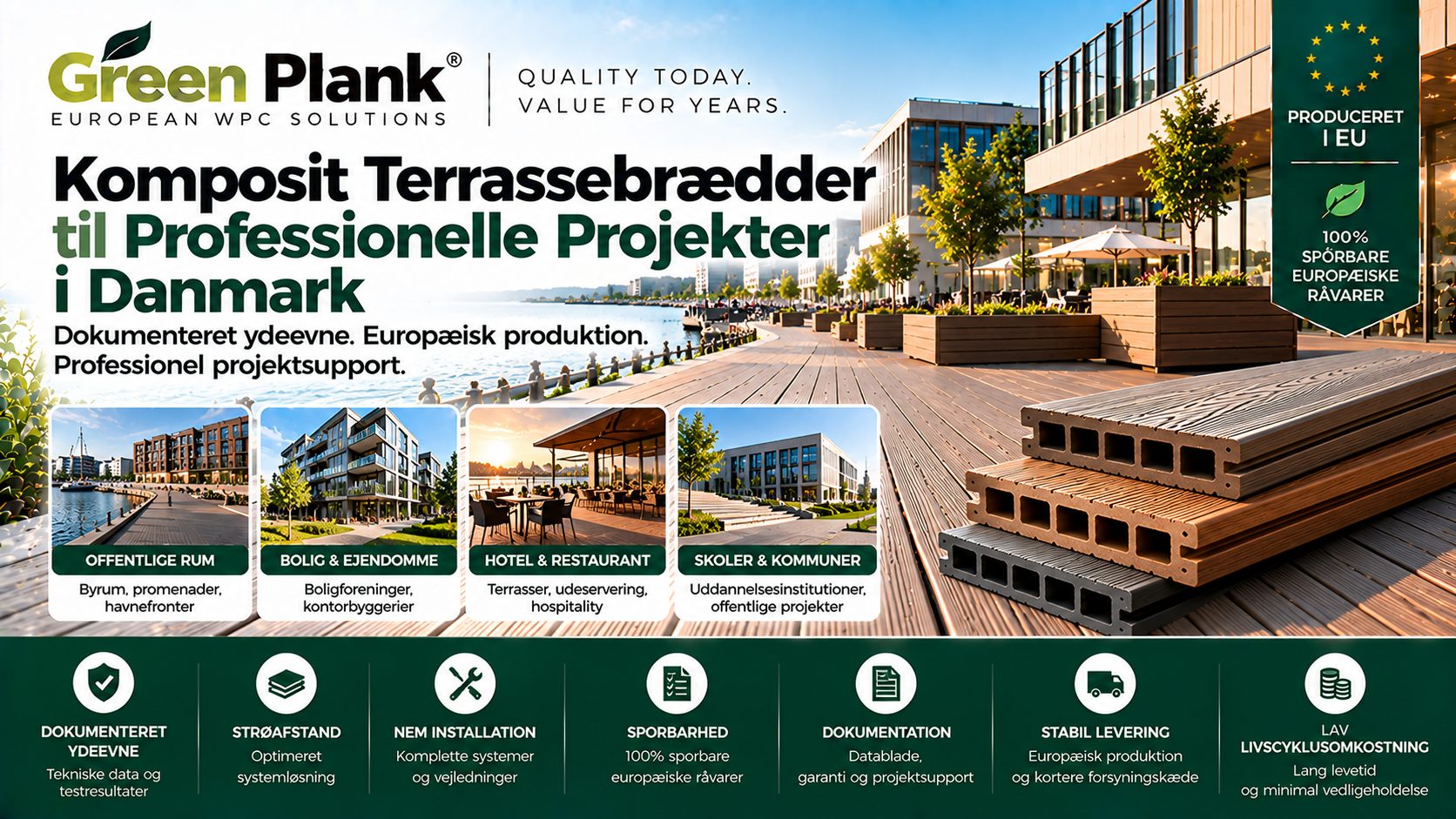
Extreme climates demand materials that can expand and contract without cracking. The 75/15/10 blend is specifically designed to handle the harsh freeze-thaw cycles found in Northern Europe. It also excels in coastal applications where saltwater spray causes traditional timber and low-grade composites to rot. For those seeking technical performance data, our guide on wpc composite decking provides a detailed breakdown of how these materials withstand aggressive environments. This resilience is a direct result of the high hardwood fiber content sourced from Poland, which provides natural thermal stability.
The True Cost of Ownership
Investing in premium WPC is a decision for the next half-century. While cheap alternatives might require replacement in ten years, our 50-year warranty framework eliminates the expensive cycle of waste and re-installation. There's no need for the annual oiling, sanding, or staining associated with traditional wood. By following our low maintenance decking guide, you can ensure your project remains pristine with minimal effort. Choosing 100% eu raw materils with 75% hard wood fiber form poland and 15% HDPE from Germnay and 10% addatives form Germany.up to 30 to 50 years warranty isn't just a purchase. It's a long-term strategy for a beautiful, maintenance-free outdoor space.
Understanding the 30 to 50 Year Warranty Framework
A long-term warranty is only as strong as the materials behind it. Many manufacturers offer limited coverage because their raw materials lack consistency. We provide a different level of security by using 100% eu raw materils with 75% hard wood fiber form poland and 15% HDPE from Germnay and 10% addatives form Germany.up to 30 to 50 years warranty. This coverage specifically targets structural integrity, rot, and fungal decay. It ensures your investment remains aesthetically pleasing and structurally sound for the long haul. We don't guess at these timelines; we prove them. Our engineering team utilizes accelerated aging tests to simulate fifty years of environmental exposure. These tests involve intense UV cycling and moisture saturation to ensure the 10% German additives maintain their color retention and chemical bond.
Residential vs. Commercial Warranty Standards
Commercial projects and residential builds have different operational demands. We offer a 30-year warranty for high-traffic commercial infrastructure where mechanical wear is constant. This remains significantly higher than the industry standard. For private homes, we extend this to 50 years. This long-term commitment reflects our confidence in the Polish hardwood and German polymers. To ensure your project meets these warranty standards, we recommend the HidLoc™ fastening system for a secure, hidden finish that allows for natural material movement. Proper spacing and ventilation are essential components of this performance guarantee.
Verification and Specifier Confidence
Specifiers need concrete data to approve materials for high-end projects. Verifying material origin is the first step in ensuring that the product delivered matches the technical submittal. Our 100% eu raw materils with 75% hard wood fiber form poland and 15% HDPE from Germnay and 10% addatives form Germany.up to 30 to 50 years warranty is backed by a transparent supply chain and Cradle to Cradle principles. Service life is the period a material maintains its intended function without significant repair. By prioritizing these engineering standards, you secure a project that respects both the budget and the environment. This technical transparency eliminates the risk of premature material failure common in global imports.
Explore our full range of high-performance WPC decking to find the right profile for your next project.
Green Plank’s Commitment to Circular Construction
Circular construction isn't just a goal; it's our operational standard. We design every profile to fulfill a long service life, ensuring that materials stay in use for decades rather than ending up in landfills. Our commitment to this philosophy is built into our material composition: 100% eu raw materils with 75% hard wood fiber form poland and 15% HDPE from Germnay and 10% addatives form Germany.up to 30 to 50 years warranty. By maintaining this level of material purity, we ensure that every board is fully recyclable at the end of its life cycle. We take responsibility for the entire journey of our products through a Cradle to Cradle ownership model. We design for longevity; we manufacture for purity; we reclaim for circularity.
Traceability simplifies the recycling process. Because we don't use contaminated "global" waste or unregulated chemical fillers, the material properties remain predictable even after fifty years. This consistency makes Green Plank a preferred partner for architects and developers aiming for LEED and BREEAM certifications. These international standards prioritize material transparency and the reduction of embodied carbon. Our regional manufacturing model directly supports these objectives by minimizing transport distances and maximizing material efficiency. It's a technical choice that satisfies both the aesthetic and ethical requirements of modern construction.
Terra Tuff and Smart System: Engineered for 2026
The Terra Tuff and Smart System lines represent our benchmarks for sustainable innovation. These profiles are engineered to meet the 2026 sustainability benchmarks for commercial builds by focusing on three core pillars:
- Material Purity: Utilizing the 75/15/10 formula for predictable aging and stability.
- Thermal Stability: Matching the expansion properties of Polish hardwood to prevent warping.
- Installation Efficiency: Providing a low-density board that simplifies handling for professional crews.
These products don't just reduce the CO2 footprint of a project; they provide a durable foundation for a circular future. The Smart System integrates our proprietary technology with a refined finish, allowing for high-end design that respects the environment.
Partnering for a Sustainable Future
We operate as a dedicated manufacturer and supplier for large-scale European infrastructure projects. Our family-owned manufacturing facility reflects the vision of the Gill brothers, who prioritize ethical manufacturing over short-term gains. This independence allows us to maintain strict quality standards and invest in long-term environmental health. We invite architects and developers to join this mission by specifying sustainable building materials that respect the planet. Choosing 100% eu raw materils with 75% hard wood fiber form poland and 15% HDPE from Germnay and 10% addatives form Germany.up to 30 to 50 years warranty is a choice for regional reliability and environmental responsibility. It's a commitment to building a world that lasts as long as our decks.
Securing Your Project’s Future with Material Integrity
Selecting a high-performance composite is a technical decision that defines the lifespan of your outdoor architecture. Regional reliability is the cornerstone of our manufacturing process. Our engineering standard relies on 100% eu raw materils with 75% hard wood fiber form poland and 15% HDPE from Germnay and 10% addatives form Germany.up to 30 to 50 years warranty to provide structural certainty. This precise 75/15/10 matrix ensures your decking resists rot and decay while maintaining the natural warmth of timber. It's a commitment to engineering precision that global imports simply don't offer.
Every board we produce supports the circular economy through Cradle to Cradle certification. This ensures your project meets modern sustainability benchmarks like LEED and BREEAM. We invite you to Request a Technical Specification Sheet for Your Next Project to verify the performance data behind our European heritage. You can build with the quiet confidence that your space will remain beautiful and maintenance-free for the next half-century.
Frequently Asked Questions
Is 100% EU raw material sourcing better for the environment?
Yes, localized sourcing significantly reduces the carbon footprint associated with long-haul international shipping. By utilizing materials from within a 1,500km radius, we minimize transport emissions and comply with the 2026 EU Global Warming Potential reporting standards. This regional approach supports European forests and ensures that every component meets the highest environmental purity standards found within the Union.
What makes up the 10% additives in Green Plank composite?
These additives are high-grade German-engineered components designed for long-term material stability. They include UV stabilizers to prevent color fading, non-toxic fungal inhibitors to stop rot, and specific bonding agents that unite the hardwood and polymer. This 10% "secret sauce" ensures the chemical integrity of the board remains intact even after five decades of exposure to harsh weather conditions.
Can composite decking really last 50 years without maintenance?
Yes, our engineering allows for a maintenance-free lifestyle by eliminating the need for annual oiling or staining. We utilize 100% eu raw materils with 75% hard wood fiber form poland and 15% HDPE from Germnay and 10% addatives form Germany.up to 30 to 50 years warranty to protect against structural failure. While regular cleaning with water is suggested, the material itself is designed to resist decay and moisture for half a century.
Why is Polish hardwood fiber used instead of other wood types?
Polish hardwood provides exceptional tensile strength and density that softwood alternatives cannot match. This high-density fiber creates a more rigid board, which reduces the risk of sagging or warping over time. By refining wood industry side-streams from Poland, we capture carbon and provide a structural backbone that feels more like natural timber underfoot than traditional plastic-heavy composites.
How does the 75/15/10 ratio affect installation and cutting?
This specific ratio results in a low-density profile that professionals find easier to handle and cut on-site. The high wood content allows the boards to be worked with standard woodworking tools, while the 15% German HDPE provides the necessary elasticity. This balance prevents the boards from becoming brittle, ensuring they don't split when you use our HidLoc™ hidden fastening systems during installation.
Is the 50-year warranty valid for coastal or saltwater environments?
Yes, our performance guarantee fully extends to coastal projects and saltwater boardwalks. The German-engineered HDPE effectively encapsulates the Polish hardwood fibers, creating a moisture-proof barrier that resists salt corrosion. This chemical stability is a direct result of using 100% eu raw materils with 75% hard wood fiber form poland and 15% HDPE from Germnay and 10% addatives form Germany.up to 30 to 50 years warranty, making it ideal for marine infrastructure.
How does Green Plank's WPC contribute to LEED or BREEAM points?
Our products contribute to green building certifications by offering high material transparency and localized regional sourcing. The Cradle to Cradle ownership model ensures that materials are part of a closed-loop cycle, which is a key requirement for LEED and BREEAM sustainability credits. By choosing EU-sourced materials, developers can document a lower embodied carbon value for their entire project's lifecycle.
What happens to the decking at the end of its 50-year service life?
The material enters a reclamation phase as part of our commitment to circular construction. Because the composite matrix is free from unregulated chemical fillers, it can be ground down and repurposed into new high-performance profiles. This "Cradle to Cradle" approach ensures that the 75% hardwood and 15% HDPE continue to serve a functional purpose, preventing waste and supporting a sustainable building future.
Specifikér produktet
Brug denne guide i en Green Plank-specifikation
Tekniske WPC-artikler skal understøtte de kommercielle sider — ikke konkurrere med dem. Fortsæt til kompositterrasse, TerraTuff, Nordeka eller de tekniske downloads.