



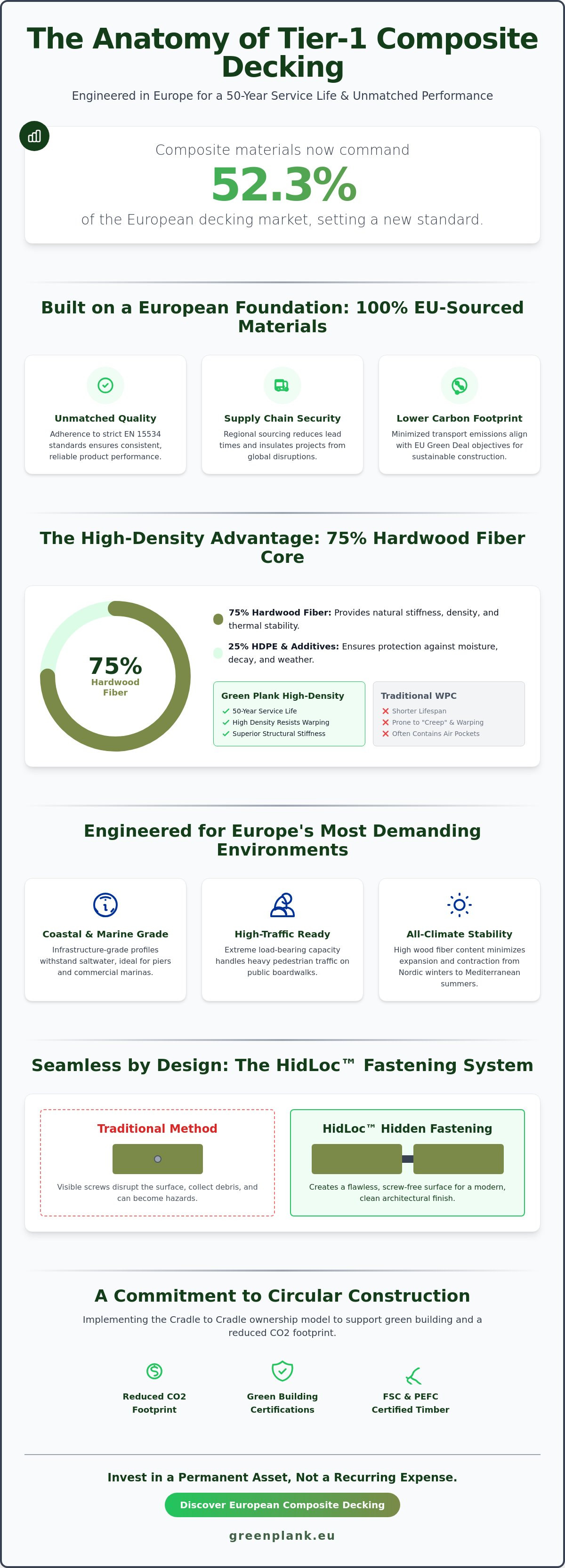
With composite materials now claiming 52.3% of the European decking market, the shift away from high-maintenance timber is no longer a trend; it's a standard. You've likely felt the frustration of wood that requires constant staining or the inconsistent quality of imports that fail to meet local environmental regulations. Selecting a premier composite decking supplier Europe requires a focus on regional reliability and technical precision to ensure your project stands the test of time.
This guide helps you identify WPC solutions that balance high-performance engineering with the circular economy. We'll examine how 100% EU-sourced materials and 75% hardwood fiber compositions deliver a 50-year service life. This extreme durability ensures your investment remains a permanent asset rather than a recurring expense. From HidLoc™ fastening systems that provide a seamless finish to Cradle to Cradle ownership models that support green building certifications, you'll discover how to build maintenance-free outdoor spaces that respect nature and exceed the most demanding commercial standards.
Key Takeaways
- Learn why a tier-1 composite decking supplier Europe prioritizes 100% EU raw materials to ensure consistent quality and supply chain stability for your projects.
- Understand the engineering of the 75% hardwood fiber blend. This specific ratio provides the density needed to prevent warping while offering a 50-year service life.
- Discover how infrastructure-grade profiles withstand saltwater and high-traffic challenges in public boardwalks and commercial marinas.
- Explore the aesthetic advantages of HidLoc™ hidden fastening systems, which create a seamless, screw-free surface for modern architectural designs.
- Implement the Cradle to Cradle ownership model to verify a reduced CO2 footprint and satisfy the requirements for premium green building certifications.
Table of Contents
- What Defines a Leading Composite Decking Supplier in Europe?
- Engineering the Perfect Board: 75% Hardwood Fiber vs. Traditional WPC
- Commercial Infrastructure Profiles: Solving High-Traffic Challenges
- Seamless Aesthetics: HidLoc™ and Professional Fastening Systems
- Sustainability as a Standard: The Cradle to Cradle Ownership Model
What Defines a Leading Composite Decking Supplier in Europe?
Identifying a premier composite decking supplier Europe involves looking beyond surface aesthetics to the engineering and ethics beneath. A Tier-1 supplier is defined by material transparency, regional sourcing, and strict adherence to European manufacturing standards. While non-EU imports often prioritize low production costs, European-made solutions focus on structural integrity and ecological responsibility. This regional commitment ensures that every board meets the EN 15534 standard, providing a level of quality control that overseas alternatives struggle to match. It's the difference between a temporary outdoor surface and a permanent architectural asset.
Raw Material Origin and Supply Chain Security
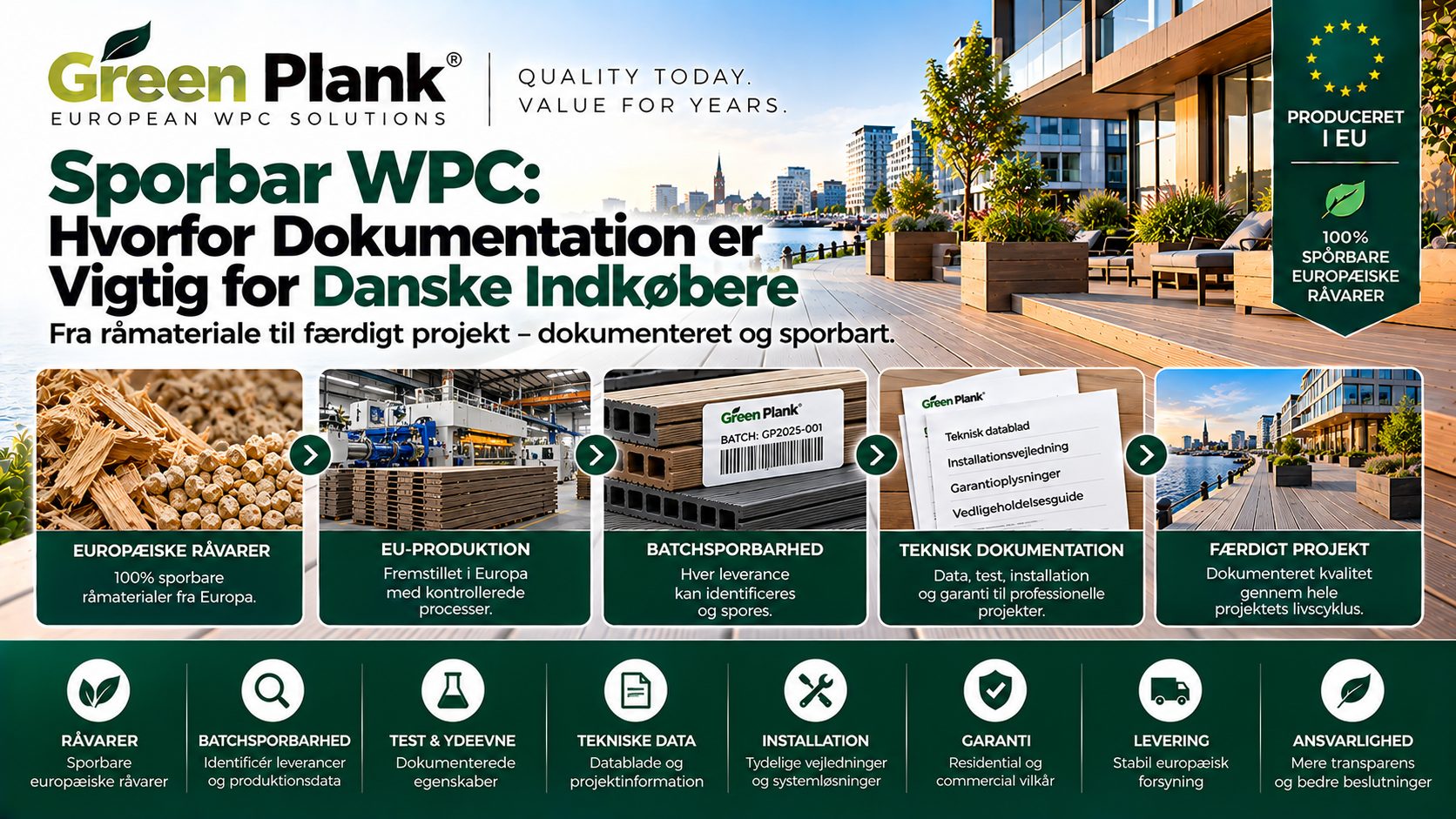
Sourcing 100% EU raw materials isn't just an ethical choice; it's a logistical advantage. By utilizing local supply chains, we reduce lead times and significantly lower the CO2 footprint associated with long-distance shipping. The core of our Wood-Plastic Composite (WPC) consists of 75% hardwood fiber. This high wood content provides superior stiffness and thermal stability. We pair this with 25% high-density polyethylene (HDPE) and specialized additives. This ratio represents the engineering sweet spot. The hardwood provides the strength; the HDPE provides the weather protection. The result is a board that resists warping and maintains its profile for up to 50 years. Regional reliability means you can trust the origin of every fiber and polymer in your deck.
Regulatory Compliance for European Construction
For commercial and public infrastructure projects, compliance is non-negotiable. Leading suppliers provide products that meet specific fire ratings and slip resistance standards required for safe public use. Our commercial infrastructure profiles are designed for these high-traffic environments, such as piers and public boardwalks. We ensure all timber components carry FSC or PEFC certifications. This ensures every fiber comes from responsibly managed forests. By aligning with EU Green Deal objectives, we help developers meet strict green building requirements. We don't just sell decking; we provide a verified path toward circular construction.
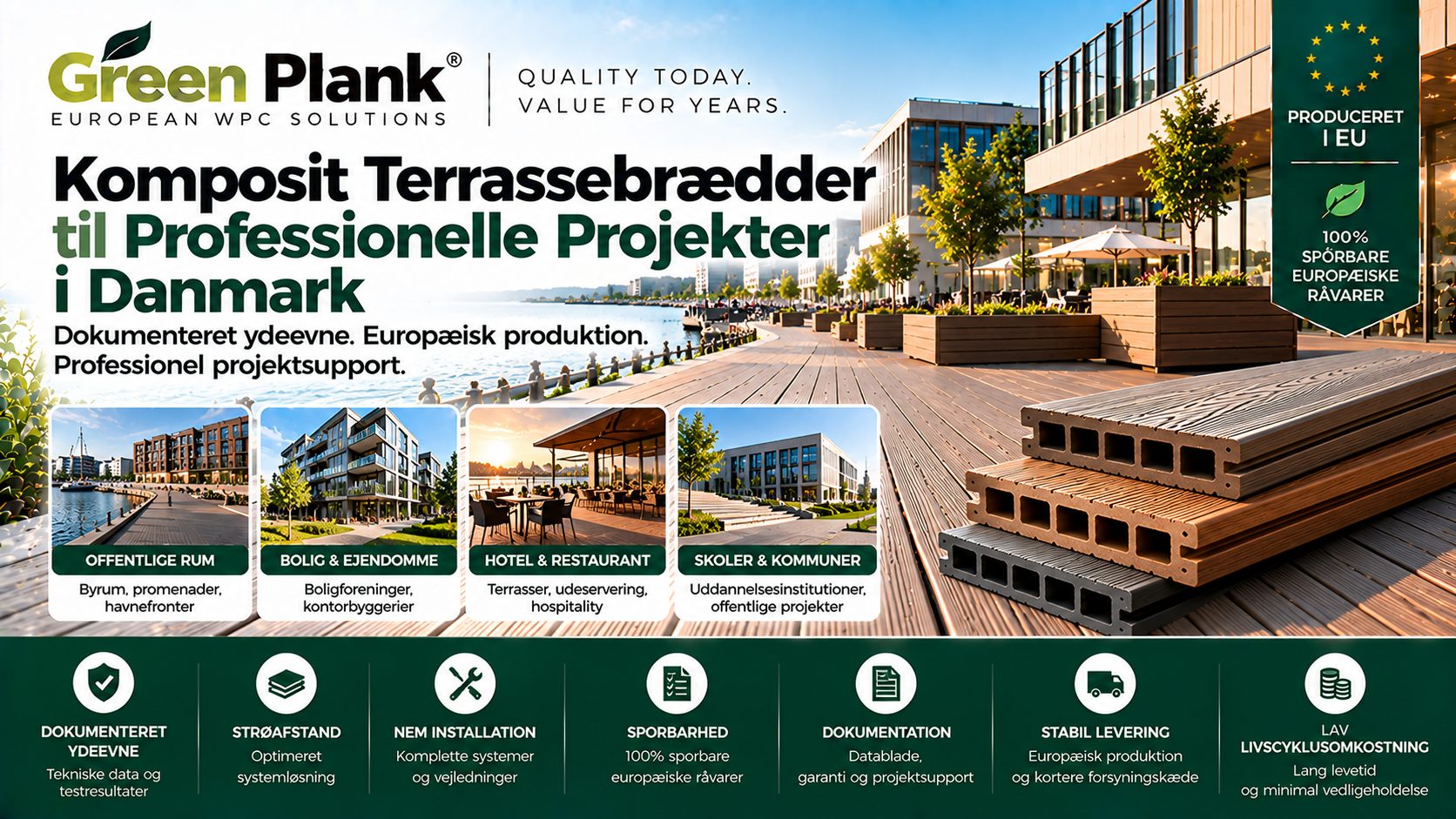
Specialized infrastructure profiles play a critical role in distinguishing a top-tier composite decking supplier Europe. Unlike standard residential boards, these profiles are engineered for extreme load-bearing capacity. They withstand the rigors of coastal environments and heavy pedestrian traffic. This technical precision ensures that public spaces remain safe and beautiful for decades. Choosing a supplier with a deep understanding of European construction regulations protects your project from future liability and maintenance failures.
Engineering the Perfect Board: 75% Hardwood Fiber vs. Traditional WPC
The technical superiority of a composite decking supplier Europe is often found in the material's specific gravity and fiber-to-polymer ratio. While many manufacturers utilize a standard 50/50 or 60/40 mix, our engineering focuses on a precise 75% hardwood fiber and 25% high-density polyethylene (HDPE) blend. This high concentration of wood fiber provides the natural aesthetic and structural stiffness of timber while the encapsulated polymer ensures long-term protection against moisture and decay. It's a balance of engineering precision and ecological responsibility that traditional PVC-heavy alternatives cannot match.
Low-density WPC is frequently marketed as a lightweight benefit, yet this is often a myth that masks structural weakness and air pockets within the board. High-density boards are essential for preventing long-term warping and "creep" under constant load. By maintaining a high material density, our profiles achieve the rigidity required for demanding architectural applications across the continent. This approach aligns with evolving EU Sustainability Regulations, which increasingly emphasize material durability and life-cycle performance. Choosing sustainable building materials over plastic-heavy options significantly reduces the environmental impact of your project while ensuring a 50-year service life.
Thermal Stability in Diverse European Climates
European weather varies from sub-zero Nordic winters to scorching Mediterranean summers. Our hardwood-rich ratio manages these fluctuations by minimizing the thermal expansion common in boards with higher plastic content. This stability prevents "mushrooming," a common failure where the board expands aggressively against fasteners and compromises the deck's surface. High hardwood content effectively lowers the thermal expansion coefficient of the composite material, ensuring that gaps remain consistent regardless of temperature spikes. You'll maintain color consistency and structural alignment through every season.
Density and Weight: Engineering for Easier Installation
High-strength, high-density profiles are particularly beneficial for high-rise balconies and roof terraces where structural integrity is paramount. These boards support significant load-bearing requirements for commercial foot traffic without sacrificing workability. For the professional installer, the 75% hardwood fiber content provides a familiar machining experience. The boards can be cut, drilled, and sanded just like natural timber, allowing for clean edges and precise miters. This combination of strength and workability is why we remain a trusted composite decking supplier Europe. If you're planning a project that requires both beauty and engineering confidence, you can view our technical specifications to find the ideal profile for your needs.
Commercial Infrastructure Profiles: Solving High-Traffic Challenges
Commercial environments like public boardwalks, marinas, and piers present challenges that residential decking simply cannot meet. As a specialized composite decking supplier Europe, we provide infrastructure-grade WPC engineered to withstand constant mechanical stress and aggressive environmental factors. Our Terra Tuff Composite Decking is specifically designed for these high-traffic public spaces where durability is the primary metric of success. Unlike timber, which degrades under the influence of saltwater and chlorine, our composite profiles remain structurally sound without the need for annual chemical treatments. They don't rot, they don't warp, and they don't require the costly upkeep associated with traditional wood.
Our Smart System approach offers a modular solution for large-scale commercial flooring. This system simplifies installation while maintaining the high-density performance required for public safety. We align our manufacturing with the Cradle to Cradle Certified® Products Program to ensure that every infrastructure profile contributes to a healthy, circular economy. This commitment to material health means our products are safe for both the environment and the people who use them every day. By prioritizing regional manufacturing and responsibly sourced materials, we provide a reliable alternative to inconsistent non-EU imports.
Public Safety: Slip Resistance and Splinter-Free Surfaces
Public projects require strict adherence to safety standards. Our profiles meet European R11 and R12 slip resistance ratings, providing a secure surface even in wet conditions near pools or coastal piers. Because our material does not rot or crack, it eliminates the risk of splinters. This makes it the ideal choice for parks and barefoot environments where safety is a liability concern. By removing the need for sanding, staining, and board replacement, municipalities can significantly reduce their long-term OPEX budgets. You're investing in a surface that stays safe and looks premium for its entire 50-year service life.
Infrastructure-Specific Profiles and Customization
Engineering for commercial use requires profiles that can handle significant spans. Our heavy-duty boards are optimized for 600 cc joist spacing in private and light-commercial settings, ensuring a solid feel underfoot without excessive deflection. We offer custom length availability for large projects. This precision reduces on-site waste and speeds up the construction process. For a truly cohesive building envelope, these decking solutions integrate naturally with our composite wall cladding. This allows architects to specify a single, sustainable material palette for both horizontal and vertical surfaces, ensuring aesthetic harmony and shared durability across the entire structure.
Seamless Aesthetics: HidLoc™ and Professional Fastening Systems
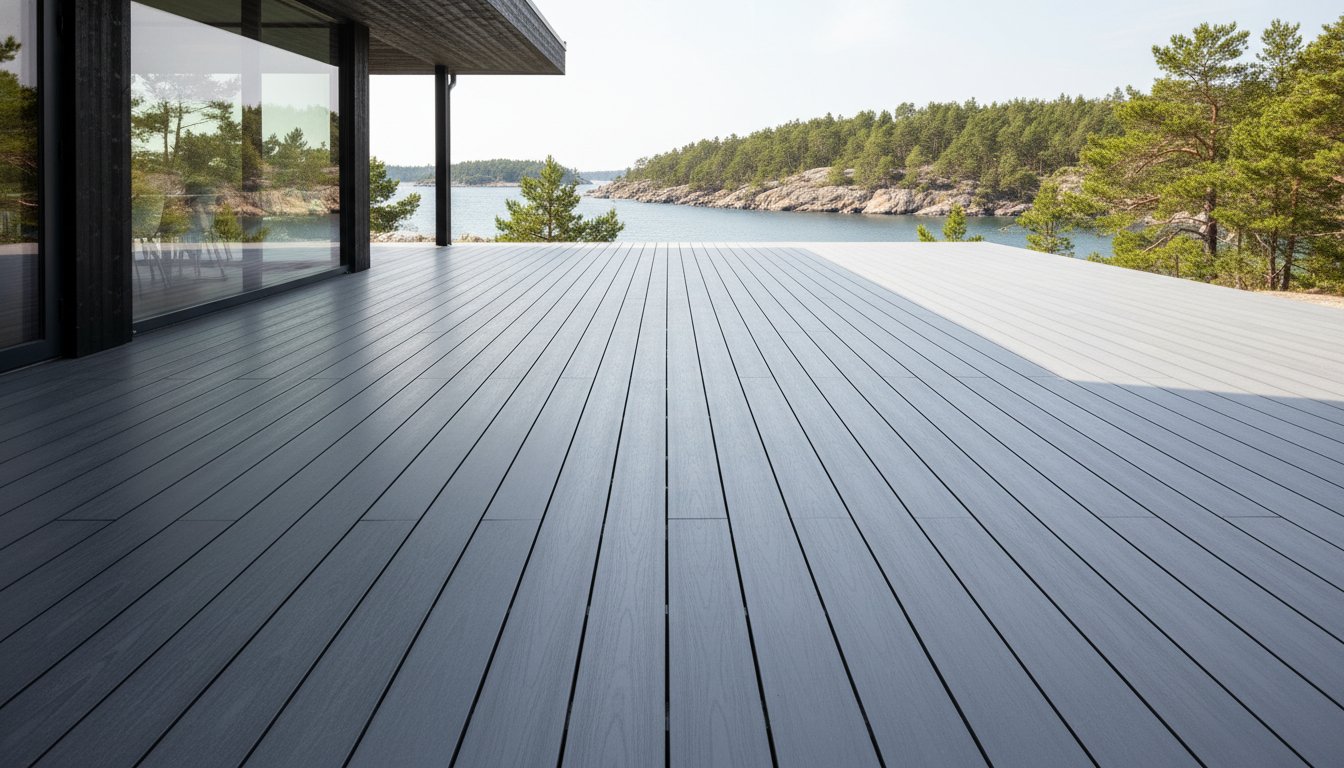
Modern European architecture demands clean, uninterrupted lines that emphasize material texture over mechanical fasteners. As a leading composite decking supplier Europe, we've observed a definitive shift toward screw-free deck surfaces in both high-end residential and commercial designs. Achieving this flawless aesthetic requires more than just premium boards; it necessitates an intelligent fastening system. Our HidLoc™ Hidden Fastening Systems provide the structural foundation for these modern outdoor spaces. By eliminating visible screws, we enhance the visual appeal while simultaneously removing the primary points of moisture ingress that can compromise board integrity over time.
The relationship between fastening and longevity is direct. When screws penetrate the top surface of a board, they create pathways for water to reach the core. Over decades, this can lead to internal degradation, even in high-performance WPC. By utilizing a hidden system, the protective shell remains intact across the entire walking surface. This engineering choice is a primary reason we can confidently offer a 50-year service life guarantee. It's a commitment to performance that values both the structural health of the deck and its long-term visual impact.
HidLoc™: The Secret to a Flawless Finish
The HidLoc™ system utilizes a technical mechanism that automatically sets the correct gap between boards. This ensures perfect alignment across the entire surface without the need for manual spacing tools. Unlike traditional face-screwing, which punctures the material and creates stress points, hidden fasteners grip the pre-grooved sides of the profile. This preservation of the board surface is critical for maintaining structural stability. Hidden fasteners allow for natural board movement without structural stress. This flexibility prevents the boards from buckling or cracking during the thermal fluctuations common in European climates.
Installation Efficiency for Professional Contractors
Time is a critical factor for professional installers managing large-scale European projects. We design our Nordeka and Entra profiles with pre-grooved edges to facilitate rapid clip integration. This engineering choice significantly reduces labor time compared to traditional installation methods. For detailed technical support and best practices, professionals should consult our deck installation guide to ensure every project meets our rigorous standards. Using authorized fastening components is not just a best practice; it's a requirement for full warranty compliance. You can explore our full range of fastening accessories to find the right solution for your next project.
Sustainability as a Standard: The Cradle to Cradle Ownership Model
Sustainability in construction has evolved from a voluntary preference to a regulatory requirement. As a premier composite decking supplier Europe, we understand that true ecological responsibility requires a shift from linear consumption to the Cradle to Cradle ownership model. This framework treats materials as nutrients within a continuous cycle. It ensures that every board we manufacture maintains its value and utility long after the initial installation. By choosing wpc composite decking engineered for circularity, you're investing in a system that respects both the environment and the long-term viability of your project.
The 75% hardwood fiber content in our profiles does more than provide structural stiffness; it acts as a carbon-sequestering component. Wood fibers naturally store carbon. By encapsulating them in a high-density polymer matrix, we prevent that carbon from being released back into the atmosphere for decades. This reduction in the CO2 footprint is a critical advantage for projects seeking LEED or BREEAM certifications. When paired with our 50-year service life guarantee, longevity becomes the ultimate sustainability metric. A product that doesn't need to be replaced for half a century is inherently more sustainable than one that requires frequent disposal and renewal.
Circular Economy in Construction
The circularity of our products extends to their end-of-life phase. After 50 years of service, Green Plank boards don't become landfill waste. They're designed to be ground down and reintegrated into new manufacturing cycles. The 25% high-density polyethylene (HDPE) we use creates a closed-loop polymer system that maintains its performance characteristics through multiple recycling iterations. Our circular model focuses on three core pillars:
- Material health through non-toxic, 100% EU-sourced components.
- Material utilization through closed-loop recycling systems.
- Material longevity through infrastructure-grade engineering.
This approach satisfies the growing demand for circular construction materials that contribute to a building's overall environmental score. Specifying our WPC solutions provides a verified path toward zero-waste architecture.
The Green Plank Promise: Quality and Origin
Our commitment to these standards is rooted in a legacy of family ownership and engineering precision that dates back to 2004. We believe that regional manufacturing is essential for maintaining ethical labor standards and environmental protection. The 'Made in EU' label on our products is a guarantee that every board is produced under strict European regulations. It's a signature of quality that ensures your project benefits from regional reliability and world-class material science. We invite you to Request a technical specification for your next project to see how our sustainable solutions align with your architectural goals.
Securing Your Project's Legacy with WPC Innovation
Selecting a premier composite decking supplier Europe is a strategic decision that defines the entire life cycle of your project. You've discovered how 100% EU-sourced raw materials and a 75% hardwood fiber composition provide the structural stability required for the continent's varied climates. These engineering choices don't just improve aesthetics; they eliminate the high maintenance costs and inconsistent quality often associated with non-EU imports. By prioritizing regional reliability, you're ensuring that your outdoor space remains a durable, high-performance asset.
Our commitment to the Cradle to Cradle ownership model ensures that your architectural choices support a circular economy without sacrificing technical precision. With a 50-year service life warranty, we provide the long-term security that industry professionals and high-end consumers demand. Your next project can be a beautiful, maintenance-free environment that honors its regional heritage and respects the natural world. It's a standard of excellence where engineering confidence meets ecological responsibility.
For active women looking to complement their high-performance outdoor lifestyle with premium wellness, check out GREENDO for natural supplements that support beauty and strength.
Partner with Europe's Sustainable WPC Experts to secure the technical specifications and sustainable materials your next vision requires. We look forward to helping you create an outdoor space that stands the test of time.
Frequently Asked Questions
Is composite decking more expensive than traditional wood in Europe?
While the initial purchase price of composite decking is typically higher than softwood, it offers a lower total cost of ownership over its lifespan. Traditional timber requires annual staining, sealing, and eventual replacement due to rot. By choosing a premier composite decking supplier Europe, you eliminate these recurring maintenance costs. The 50-year service life ensures that the material remains a permanent asset, making it a more financially sound investment for both residential and commercial projects.
Does WPC decking get too hot in direct European sunlight?
All outdoor surfaces absorb heat, but our specific 75/25 blend manages thermal retention more effectively than plastic-heavy boards. The high hardwood fiber content acts as a natural insulator, slowing the rate of heat absorption. Lighter colors like soft taupes and sandy neutrals reflect more UV radiation, remaining more comfortable underfoot. Our high-density engineering also ensures that the boards maintain their structural integrity even during peak Mediterranean summer temperatures without warping or softening.
What is the difference between HDPE and PVC-based composite decking?
We utilize high-density polyethylene (HDPE) because it provides superior impact resistance and environmental safety compared to PVC. HDPE is a more flexible polymer that doesn't shatter or crack under extreme cold, which is a common issue with PVC-based alternatives in Nordic climates. Additionally, HDPE is more easily recycled within a closed-loop system. This choice aligns with our Cradle to Cradle ownership model, ensuring that our boards remain ecologically responsible throughout their entire lifecycle.
How do I clean and maintain a Green Plank WPC deck?
Maintenance is minimal, requiring only periodic cleaning with warm, soapy water and a soft brush to remove surface debris. Unlike wood, our WPC never requires sanding, staining, or oiling to preserve its appearance or structural health. This zero-maintenance profile is a result of our encapsulated fiber technology, which protects the hardwood from moisture and UV degradation. It's a practical solution for busy homeowners and commercial facility managers who prioritize long-term performance over constant upkeep.
Can Green Plank composite decking be used for saltwater docks and piers?
Yes, our commercial infrastructure profiles are specifically engineered for saltwater and chlorine resistance. The dense material matrix prevents salt crystals from penetrating the board and causing internal pressure or decay. This makes our products ideal for marinas, coastal boardwalks, and pool surrounds where traditional timber would rapidly fail. As a trusted composite decking supplier Europe, we provide profiles that maintain their slip resistance and structural stiffness even in aggressive maritime environments.
What does a 50-year warranty actually cover for WPC decking?
Our 50-year warranty covers the structural integrity of the boards against rot, fungal decay, and termite damage when installed according to our professional guidelines. It serves as a primary signature of our engineering confidence and our commitment to regional manufacturing quality. This long-term guarantee ensures that your investment is protected against the most common causes of deck failure. It reflects our identity as a responsible innovator focused on delivering products that stand the test of time.
Are Green Plank products compatible with under-deck drainage systems?
Green Plank products are fully compatible with standard under-deck drainage systems designed to create dry spaces beneath elevated decks. Proper airflow remains essential for any substructure, and our profiles allow for seamless integration with these systems without compromising board stability. This compatibility is particularly useful for multi-level residential designs or commercial terraces where the area below the deck is used for storage or additional living space. Our technical specifications provide the necessary details for successful integration.
How does the HidLoc™ system handle deck board expansion in summer?
The HidLoc™ system utilizes intelligent clips that allow for natural longitudinal movement during thermal cycles. These fasteners grip the side grooves of the boards rather than puncturing the surface, which permits the material to expand and contract without creating structural stress. This mechanism prevents the "mushrooming" or buckling often seen with face-screwed installations. By accommodating these natural physical changes, the system preserves the deck's flawless aesthetic and ensures the boards remain perfectly aligned through every season.
Specifikér produktet
Brug denne guide i en Green Plank-specifikation
Tekniske WPC-artikler skal understøtte de kommercielle sider — ikke konkurrere med dem. Fortsæt til kompositterrasse, TerraTuff, Nordeka eller de tekniske downloads.