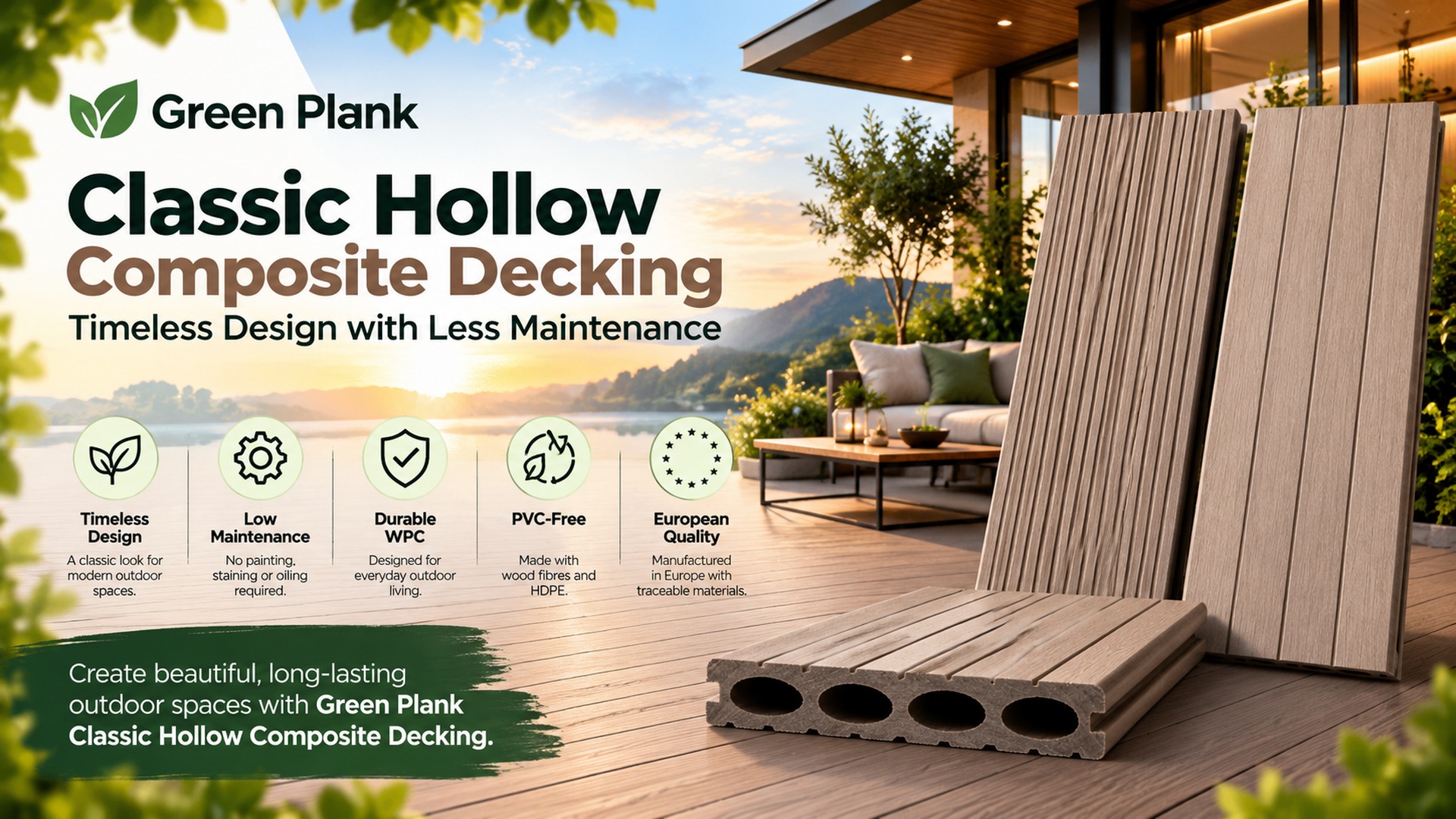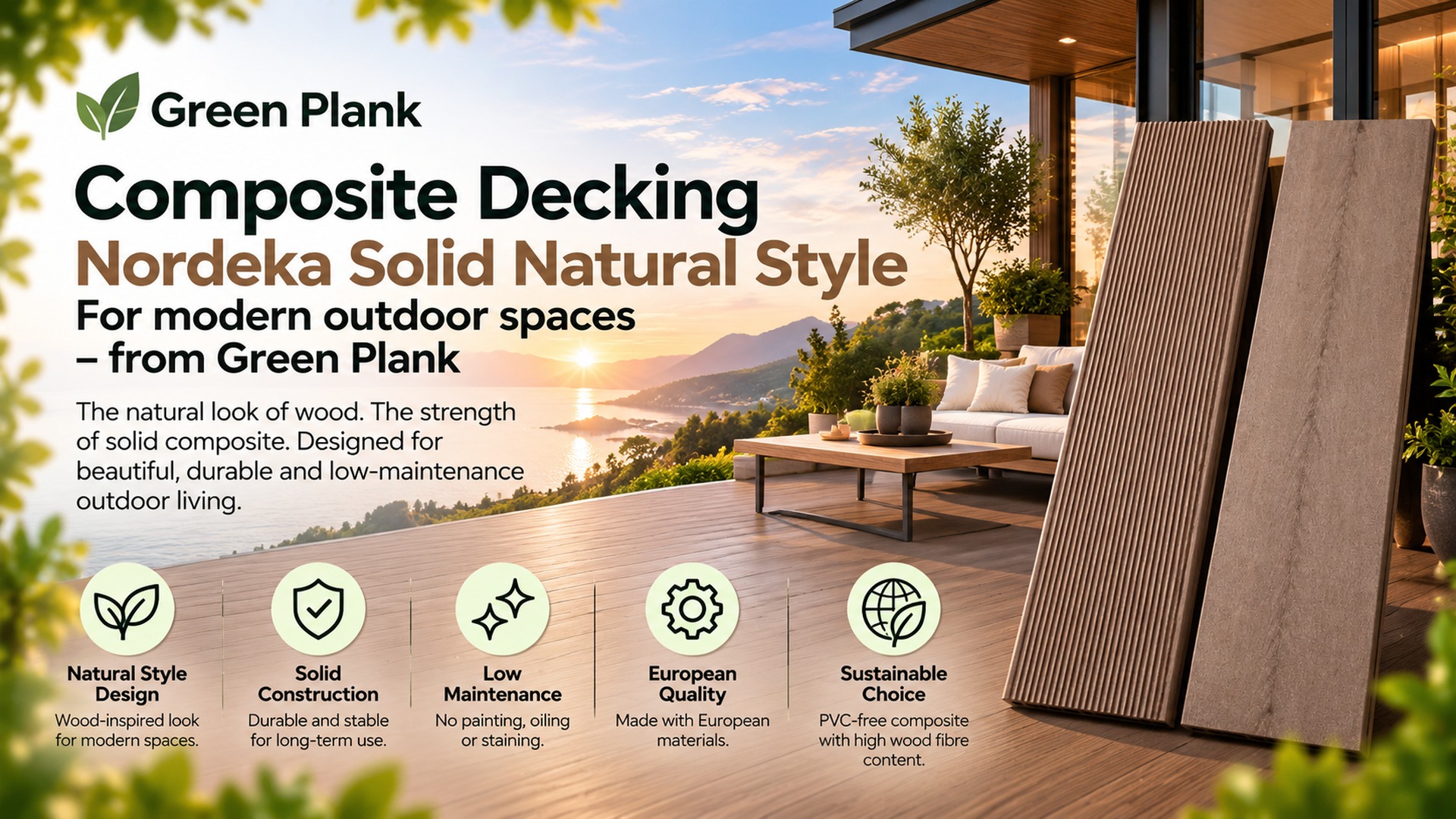




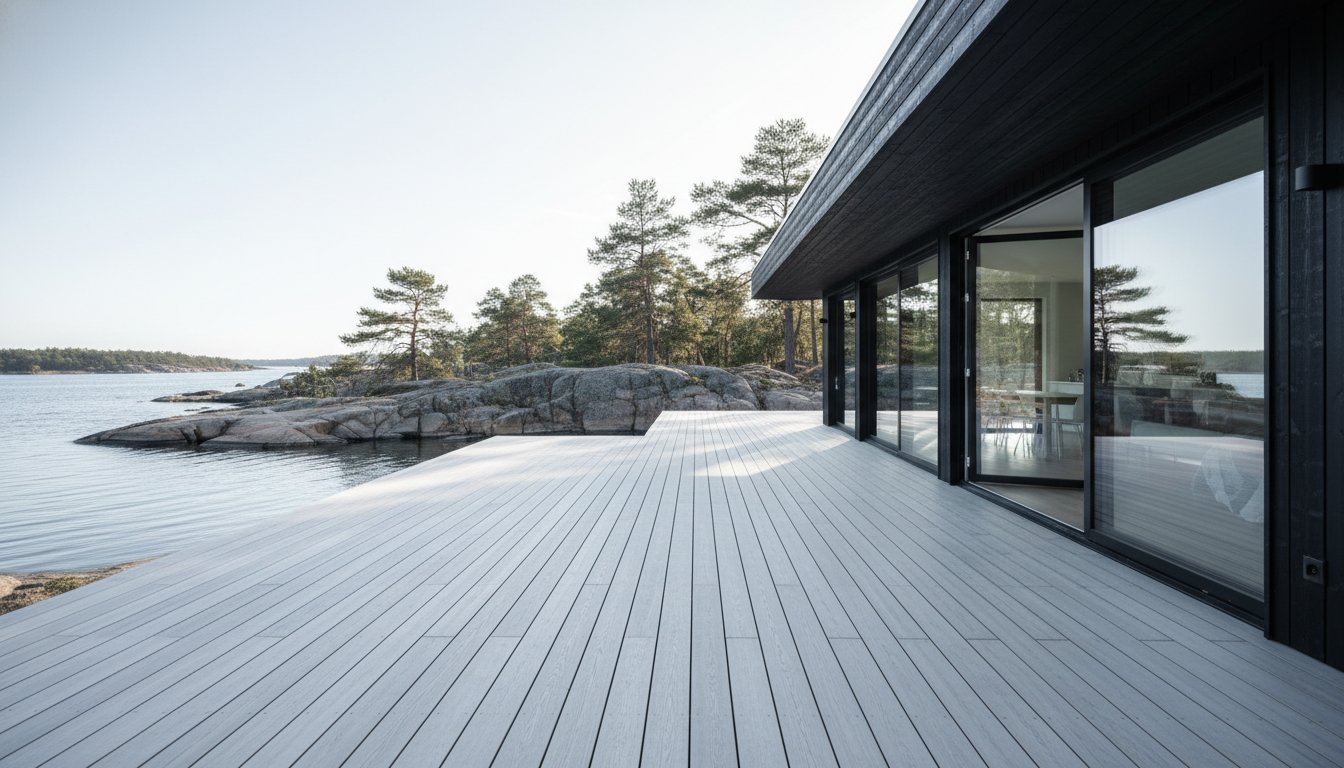
The monochromatic gray deck that defined the last decade is rapidly becoming a design relic. As we analyze the composite decking color trends 2026, it's clear the industry is shifting away from flat, artificial pigments toward biophilic authenticity. Homeowners now prioritize surfaces that mirror the complex, multi-tonal grain of natural timber while demanding the engineering precision of European manufacturing. This evolution represents a move toward "Engineered Nature," where high-end aesthetics and environmental ethics finally align.
You want an outdoor space that feels like a natural extension of your home rather than a synthetic addition. It's common to worry that a bold color choice might look dated within a few seasons, or that a dark surface will absorb too much heat for summer comfort. This article explores how architectural palettes and thermal-efficient light tones are addressing these specific concerns. You'll learn about the sustainable European finishes and material science driving the next generation of design, ensuring your deck remains a UV-resistant, low-maintenance sanctuary with a minimal CO2 footprint and a service life that spans decades.
Key Takeaways
- Understand how the shift toward biophilic authenticity is replacing uniform, artificial colors with variegated grains that mimic the organic complexity of natural timber.
- Discover why the composite decking color trends 2026 prioritize Light Reflection Value (LRV) to ensure deck surfaces remain comfortable and thermally efficient during peak summer heat.
- Identify the five architectural palettes defining the year, including the "Nordic Minimalist" look characterized by weathered silvers and bleached oak finishes.
- Learn the "Inside-Out" rule for creating a seamless transition between your interior living space and external facades by matching decking tones with composite wall cladding.
- Explore the engineering benefits of 100% EU-sourced raw materials that support a circular economy while providing a 50-year service life warranty.
Table of Contents
- The Shift Toward Biophilic Authenticity: Why 2026 is the Year of Organic Integration
- Thermal Performance and Color: The Science Behind Your 2026 Palette
- Top 5 Composite Decking Color Palettes Dominating 2026 Projects
- Designing with Longevity: Matching Your Deck Color to Architectural Styles
- The Green Plank Advantage: Sustainably Sourced Colors for the Circular Economy
The Shift Toward Biophilic Authenticity: Why 2026 is the Year of Organic Integration
Outdoor living spaces are no longer viewed as separate additions to a home. They're now considered essential extensions of the interior sanctuary. This evolution relies heavily on biophilic design principles, which seek to reconnect people with nature through the built environment. As we evaluate composite decking color trends 2026, the focus has moved from "maintenance-free plastic" to "engineered organic." This shift isn't just about looks. It's about how a space feels and how it integrates with the surrounding landscape to create a seamless transition from the living room to the garden.
The year 2026 marks the definitive end of the "plastic-perfect" era. Homeowners and architects are rejecting uniform, monolithic colors that scream synthetic. Instead, the demand has surged for variegated grains that offer subtle shifts in tone across every board. These natural variations mimic the biological reality of timber, providing a sense of calm and wellness that flat surfaces cannot achieve. Scientific studies on biophilia suggest that these organic patterns reduce stress and improve focus. European architectural standards, known for their emphasis on material honesty and longevity, are now the primary drivers of these global color preferences. Choosing these tones doesn't just improve aesthetics; it signals a commitment to quality and ecological responsibility.
The Departure from High-Contrast Artificiality
For years, the market favored stark contrasts like jet black or clinical white. These choices often felt disconnected from nature and required constant cleaning. Today, these are being replaced by muted, complex tones that absorb light rather than reflecting it harshly. This is where engineering meets art. Matte finishes have become the standard because they reduce glare and highlight the rich, wood-like texture of the material. By utilizing 100% EU raw materials and a high 75% hardwood fiber content, these boards achieve a depth of color that looks authentic from every angle. This material science ensures the deck doesn't just look like wood; it behaves with the dignity of a natural resource.
The Rise of 'Greige' and Earthy Mid-Tones
Greige has emerged as a cornerstone of composite decking color trends 2026. It's the precise point where modern gray meets organic beige. This tone is exceptionally forgiving in high-traffic areas, as it hides dust and footprints better than darker alternatives. It acts as a bridge between different architectural styles. In modern glass-heavy designs, it softens the hard edges and brings warmth to the facade. In traditional stone buildings, it provides a contemporary update without clashing with regional heritage. It’s a versatile choice that supports long-term property value by remaining timeless. It perfectly embodies the "Inside-Out" rule, where the exterior floor mirrors the interior to create an expansive, cohesive living environment.
Thermal Performance and Color: The Science Behind Your 2026 Palette
While aesthetics drive the initial selection, physics dictates the long-term enjoyment of an outdoor space. In the context of composite decking color trends 2026, color selection is no longer just a visual preference. It's a strategy for climate resilience. Light Reflection Value (LRV) is the primary metric here. It measures the percentage of light a surface reflects. Darker boards with low LRV absorb more solar radiation, which leads to significantly higher surface temperatures. Lighter 2026 trends such as 'Sandstone' and 'Silver Ash' are functional choices. These tones reflect more light and keep the deck cooler during intense summer months.
The material composition of the board plays a critical role in managing these temperatures. High-performance composites utilize a specific ratio of 75% hardwood fiber to 25% HDPE. This high fiber content acts as a thermal buffer. Wood fibers naturally dissipate heat more efficiently than pure plastic, which tends to trap thermal energy. Understanding the thermal performance of different colors helps you design a space that remains usable even during peak heat hours. It's a practical necessity to test color samples in direct sunlight at your project site before final approval to see these principles in action.
Barefoot Comfort: Designing for the Human Experience
The 'Barefoot Test' is the ultimate metric for residential comfort. Specific pigments affect heat retention differently in high-performance WPC. Commercial projects in public spaces are trending toward lighter, safer color palettes to prevent heat-related discomfort for visitors. When comparing wpc composite decking to traditional PVC, the thermal footprint is notably different. PVC lacks the organic fiber structure that aids in cooling, often resulting in a surface that is too hot for bare feet. This makes fiber-rich composites the superior choice for family-oriented environments.
UV Resistance and Color Retention Technology
Color stability is the result of advanced European engineering. Modern stabilizers protect pigments from ultraviolet radiation, preventing the drastic fading seen in older generations of composite. You should expect a minor 'weathering' phase in the first few months as the natural wood fibers acclimate to their environment. After this initial period, the color reaches a state of long-term stability. The Green Plank 50-year warranty stands as a testament to this pigmentation engineering. It ensures your deck maintains its biophilic beauty without the need for chemical stains. Explore our complete range of thermally-optimized colors to find the right fit for your architecture.
Top 5 Composite Decking Color Palettes Dominating 2026 Projects
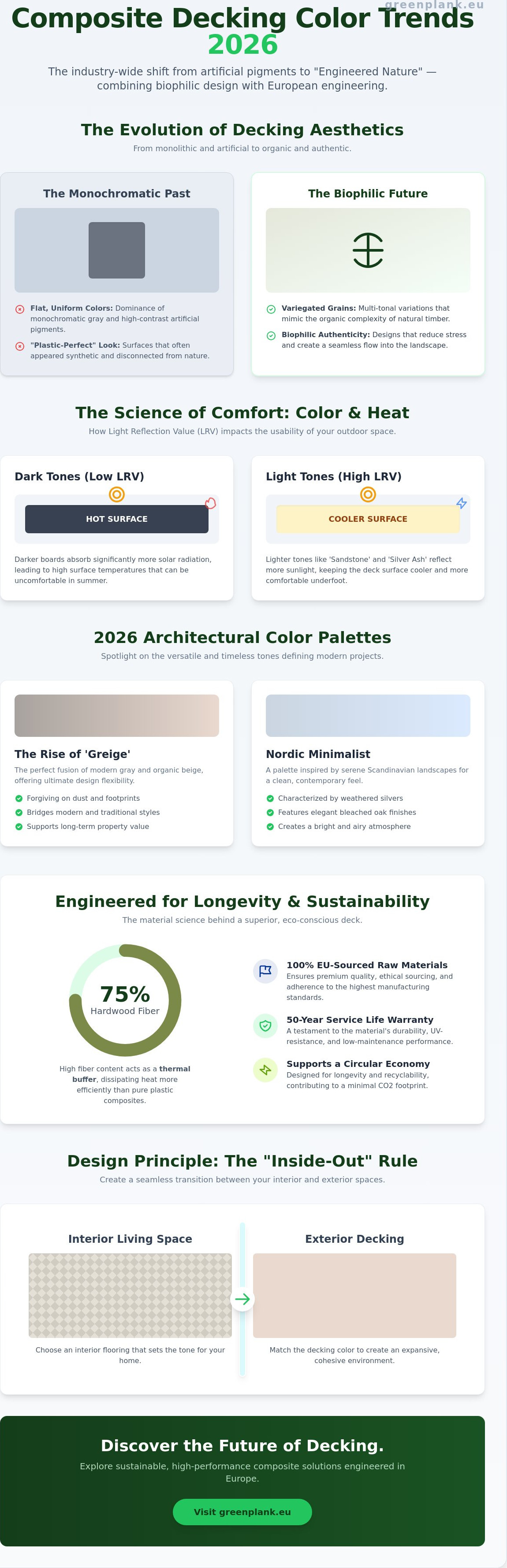
Selecting from a vast array of available pigments can be overwhelming for even the most experienced designers. To simplify the decision process, we've categorized the composite decking color trends 2026 into five distinct architectural moods that reflect current European design sensibilities. These palettes aren't just about surface-level beauty; they're engineered to perform over a 50-year service life while maintaining their structural integrity. By grouping colors into these "moods," you can ensure your outdoor space remains cohesive with your home's existing facade.
- The Nordic Minimalist: This palette utilizes cool grays, weathered silvers, and bleached oaks. It's designed for those who value light and simplicity, often seen in our Nordeka line.
- The Heritage Artisan: These boards feature deep tans and honeyed ambers. They evoke a sense of reclaimed wood and traditional craftsmanship, providing a grounded, historical feel.
- The Industrial Modernist: Matte charcoals and slate tones provide sharp, clean lines. These colors are ideal for urban terraces and steel-framed structures where a high-contrast look is desired.
- The Coastal Drift: Salt-washed whites and pale, sandy neutrals dominate this category. They create an airy, relaxed atmosphere perfect for poolside installations or seaside retreats.
- The Biophilic Grounding: Deep forest browns and mossy undertones help the deck disappear into the natural landscape, emphasizing a connection to the earth.
Integrating these colors into a project requires an understanding of the circular economy in construction. By choosing materials made from 100% EU raw materials, you ensure that the pigments used are as sustainable as the boards themselves. This commitment to quality means the color you choose today will remain vibrant for decades, reducing the need for replacement and lowering your overall CO2 footprint.
Scandinavian Ash: The New Standard for Modern Elegance
Light, desaturated wood tones are the top choice for high-end European residential projects. These colors offer a sophisticated backdrop that doesn't compete with the surrounding architecture. Pairing Ash tones with black metal railings creates a contemporary silhouette that's both bold and refined. There's also a spatial benefit: light colors expand the visual perception of small outdoor spaces. A compact urban balcony feels significantly more expansive when the floor isn't absorbing light and closing in the boundaries.
Multi-Tonal Boards: Mimicking the Randomness of Nature
Nature doesn't produce uniform colors, and 2026 design rejects the "plastic-perfect" look of the past. Advanced manufacturing technology now creates "streaked" or "variegated" boards that prevent repetitive patterns. This randomness is a core feature of high-performance ranges like Sapphire and Terra Tuff. Multi-tonal decks are also highly practical; they're superior at hiding dirt, pet hair, and minor scuffs compared to solid colors. You can choose between subtle variegation for a refined, modern look or high-contrast grain patterns for a rustic, artisan feel.
Designing with Longevity: Matching Your Deck Color to Architectural Styles
Architectural cohesion begins at the threshold of the home. The "Inside-Out" rule has become a core principle in composite decking color trends 2026. It dictates that the exterior deck should mirror the interior flooring to create an uninterrupted visual flow. This expansion of the living area makes both spaces feel larger and more intentional. Beyond the main field, using a darker "picture frame" border defines functional zones like dining or lounging areas. It adds a sharp, professional finish that highlights the deck's geometry and provides a clear architectural boundary.
Lighting also plays a critical role in how color is perceived throughout the day. As the sun sets, the spectral composition of light shifts. Warm-toned LED deck lights can enhance the golden hues in "Heritage Artisan" palettes, making them feel more inviting. Conversely, cool-white lighting can make a "Nordic Minimalist" deck appear clinical if not balanced correctly. Designers are increasingly using recessed lighting to create grazing light across the boards. This technique emphasizes the texture and depth of the pigmentation, ensuring the space remains visually engaging after dark.
Coordinating with Sustainable Facades
WPC decking and composite wall cladding should be specified simultaneously to ensure tonal harmony across the entire building envelope. Matching Terra Tuff decking with modern vertical cladding systems creates a unified aesthetic that increases curb appeal and perceived property value. You should avoid color clashes between natural stone foundations and composite boards. Selecting a deck color that shares an undertone with your stone or brickwork ensures a grounded, permanent appearance that reflects high-end European design standards.
The Role of Texture in Color Perception
Deep-embossed wood grains do more than provide slip resistance. They catch shadows at different times of the day, which deepens the apparent color and adds visual weight to the material. Modern design favors low-sheen, matte finishes because they don't reflect light in a way that reveals the material's synthetic components. The HidLoc™ Hidden Fastening Systems provide a significant advantage here. By removing visible screw heads, the color field remains unbroken. This allows the natural grain pattern to be the primary focus of the installation. Explore our architectural color gallery to see how these textures interact with different lighting conditions.
The Green Plank Advantage: Sustainably Sourced Colors for the Circular Economy
True design excellence in 2026 is measured by the legacy a product leaves behind. As you finalize your selection within the composite decking color trends 2026, the origin of the material becomes as vital as its hue. We utilize 100% EU raw materials to ensure consistent, high-quality pigmentation across every production batch. This regional sourcing guarantees that the colors you see in a sample remain identical to the boards delivered to your site. By avoiding long-distance global shipping for raw components, we significantly reduce the CO2 footprint of your outdoor project. This is engineering with a conscience.
Our commitment to a "Cradle to Cradle" ownership model means we design for decades, not just seasons. We prioritize low-density, high-durability engineering that facilitates easier handling without compromising structural strength. This approach allows us to offer a 50-year service life warranty. It's a shift from trend-following to legacy-building. While other materials might require replacement or frequent chemical treatments, our boards maintain their biophilic authenticity through material science rather than superficial coatings. You aren't just buying a color; you're investing in a permanent architectural asset.
Pigmentation Without Toxicity
Modern sustainable construction demands transparency in material chemistry. We utilize heavy-metal-free pigments to achieve deep, resonant tones without compromising environmental ethics. These stabilizers are engineered to withstand harsh UV exposure while remaining safe for families and local ecosystems. The "Made in EU" hallmark serves as a primary signature of quality for architects who require rigorous safety standards. This ensures that the weathered silvers and deep ambers of your deck don't leach harmful substances into the soil over time.
Future-Proofing Your Investment
A 50-year warranty is the ultimate metric of sustainability. When you perform a cost-benefit analysis, the value of premium WPC becomes clear. Traditional wood requires frequent restaining, sanding, and chemical sealing, each adding to the lifetime cost and environmental impact. Our 75% hardwood fiber and 25% HDPE blend eliminates these maintenance cycles. To ensure you choose a color that stands the test of time, follow this final checklist:
- Evaluate the Light Reflection Value (LRV) to ensure the surface remains cool underfoot.
- Match the undertone of your deck to your interior flooring for a seamless "Inside-Out" flow.
- Select a multi-tonal grain pattern from our Terra Tuff or Nordeka ranges to better hide natural debris.
- Verify that your chosen palette complements existing composite wall cladding for a unified facade.
Choosing a timeless, sustainably sourced color is the final step in creating an outdoor space that respects nature. Explore our full collection of eco-conscious decking to begin your project with confidence.
Designing for the Next Generation of Outdoor Living
The evolution of composite decking color trends 2026 represents more than a stylistic change; it's a commitment to architectural longevity and environmental responsibility. We've moved beyond the era of synthetic uniformity toward a future defined by biophilic textures and thermal efficiency. By selecting palettes that mirror the natural landscape and prioritize heat dissipation, you create a space that remains functional and beautiful for decades. This shift ensures your outdoor environment feels like a seamless extension of your home's interior character.
Investing in premium materials means prioritizing regional quality and ethical manufacturing. Our products are engineered with 100% EU raw materials and supported by a Cradle to Cradle ownership model. This technical precision allows us to provide a 50-year warranty, ensuring your project remains a permanent asset rather than a temporary trend. It's a choice that respects both the aesthetic demands of modern architecture and the ecological needs of the planet.
It's time to transform your vision into a tangible reality. Request Your 2026 Color Sample Kit from Green Plank today to experience the intersection of high-end design and sustainable craftsmanship. Your perfect outdoor sanctuary is within reach.
Frequently Asked Questions
What are the most popular composite decking colors for 2026?
The most popular choices are biophilic mid-tones and desaturated wood tones like Scandinavian Ash and Greige. These colors are central to the composite decking color trends 2026 because they bridge the gap between modern architecture and the natural environment. Homeowners are moving away from flat, solid colors in favor of variegated grains that offer a more organic, multi-tonal appearance.
Do dark composite decking boards get too hot in the sun?
Darker boards naturally absorb more solar radiation and reach higher surface temperatures than lighter alternatives. However, the high 75% hardwood fiber content in our European-made composites helps dissipate heat more effectively than pure plastic products. For projects in high-exposure areas, selecting a color with a higher Light Reflection Value (LRV), such as Silver Ash, ensures a cooler surface underfoot.
Will composite decking colors fade over time?
High-performance composites are engineered with UV stabilizers to ensure long-term color stability. You'll notice a minor weathering phase during the first few months as the natural wood fibers acclimate to the environment. After this initial period, the pigment remains consistent for decades. Our 50-year warranty serves as a primary signature of our engineering confidence in color retention and material integrity.
How do I choose a deck color that matches my house?
You should apply the "Inside-Out" rule by selecting a deck color that mirrors your interior flooring. This creates a seamless transition that expands your perceived living space. It's also vital to coordinate the deck with existing wall cladding or the undertones of your home's stone and brickwork. Choosing a complementary palette ensures the deck looks like a permanent architectural feature rather than a temporary addition.
What is the best composite decking color to hide dirt and wear?
Multi-tonal mid-tones, such as those found in the Terra Tuff or Sapphire ranges, are the most effective at concealing dirt and scuffs. The variegated grain patterns break up the visual field, making pet hair, dust, and minor footprints much less noticeable. Solid dark colors or very light whites tend to show debris more quickly and require more frequent cleaning to maintain their pristine appearance.
Is there a color of the year for composite decking in 2026?
There isn't a single "color of the year," but the industry has embraced "Biophilic Authenticity" as the defining theme for composite decking color trends 2026. This design movement prioritizes complex, earth-based palettes over synthetic, high-contrast tones. The goal is to move away from "plastic-perfect" surfaces toward materials that reflect the nuanced randomness found in the natural world.
Can I paint or stain my composite deck if I want to change the color later?
Painting or staining WPC decking is not recommended because the material is engineered to be maintenance-free and won't properly absorb traditional coatings. The pigments are integrated into the core of the board during manufacturing to ensure the color lasts for the product's 50-year service life. If you anticipate wanting a different look in the future, it's best to choose a timeless, neutral mid-tone that complements various architectural styles.
How does the grain pattern affect the look of the color?
Deep-embossed grain patterns create micro-shadows that add visual depth and make the color appear richer. A matte finish is essential here, as it reduces glare and allows the intricate wood-like textures to be the primary focus. Without these textures, even the best pigments can look synthetic. The combination of variegated color and deep texture is what creates the biophilic authenticity that defines modern outdoor design.
Specify the product
Use this guide with a Green Plank specification
Technical articles support the commercial catalogue — category, product, evidence, then samples or quotes.