


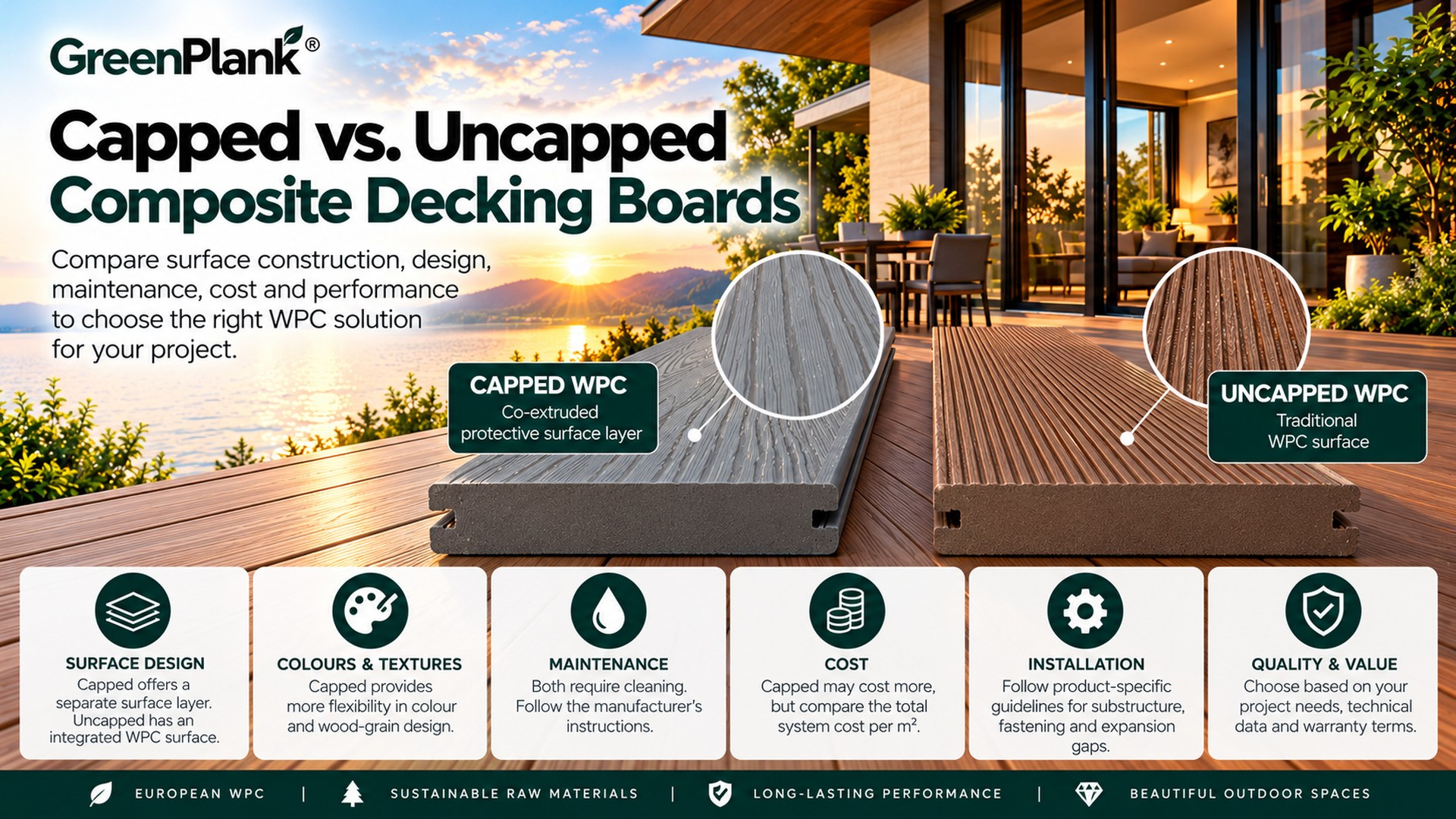
Capped vs. Uncapped Composite Decking Boards
When comparing composite decking boards, one of the most important distinctions is between capped and uncapped WPC. Both can combine wood or natural fibres with thermoplastic polymers and other formulation components, but their surface construction is different. That difference can influence appearance, cleaning, surface characteristics, price and product selection.
Capped composite decking incorporates a separate polymer-based surface layer around all or part of the WPC core, depending on the product design. With uncapped decking, the composite core itself forms the visible surface. Neither construction should automatically be considered better for every project. The right choice depends on the specific product, documented properties, installation system and intended application.
In simple terms: capped WPC combines a composite core with a separate outer layer, while uncapped WPC exposes the composite material itself at the surface. Compare the actual products, not just the labels.
What is capped composite decking?
Capped WPC is commonly produced using co-extrusion. During manufacturing, the composite core and a separate surface material are extruded together to create a continuous profile. This allows the outer layer to have a different formulation, colour and texture from the structural core.
This construction gives manufacturers additional possibilities when developing the visible and exposed surface. However, not all capped boards are identical. Cap material, thickness, coverage, core composition, profile geometry and surface texture can differ significantly between products.
What is uncapped composite decking?
Uncapped WPC uses the wood-polymer composite itself as the visible walking surface. Rather than adding a separate cap, the colour, texture and surface finish are created directly in the composite material.
Uncapped decking can be produced in solid or hollow profiles and with brushed, grooved, embossed or other finishes. Its performance therefore depends on more than the absence of a cap. Formulation, manufacturing consistency, profile design, installation and intended use all matter.
Capped vs. uncapped decking at a glance
| Feature | Capped WPC | Uncapped WPC |
|---|---|---|
| Surface construction | Separate co-extruded outer layer | Composite core forms the surface |
| Material structure | Core plus cap layer | Integrated composite material |
| Design options | Outer layer can provide separate colour and texture | Colour and texture are created in the WPC material |
| Cleaning | Depends on cap formulation and surface texture | Depends on formulation and surface finish |
| Price | May cost more because of additional material and processing | Can use a simpler manufacturing structure |
| Selection | Useful where a dedicated surface layer is preferred | Useful where traditional WPC construction is preferred |
These are general construction differences rather than guarantees of performance. Technical data for the specific decking product should always take priority.
The surface is the key difference
An outdoor deck surface is exposed to sunlight, rain, dirt, foot traffic and changing temperatures. Capped construction enables the manufacturer to formulate a dedicated exterior layer, while uncapped WPC relies on the properties of the overall composite formulation and its surface treatment.
When comparing products, ask the supplier:
- What material is used for the outer surface?
- Does the cap cover the complete profile or selected faces?
- How is the surface texture produced?
- What relevant technical data are available?
- What cleaning and maintenance instructions apply?
- What warranty conditions apply to the intended use?
Appearance, colour and surface design
Design is an important part of composite decking selection. Co-extrusion allows the manufacturer to create a decorative surface independently from much of the core formulation. This can provide additional possibilities for wood-grain patterns, colour variation and surface effects.
Uncapped decking offers a different visual approach because the visible surface is part of the composite material itself. Depending on the manufacturing process, it can be brushed, grooved, embossed or otherwise textured.
Compare physical samples before specifying a product
Website photographs cannot show every detail. Whenever possible, examine samples in natural daylight. Compare colour, gloss, texture, edges, profile construction and how the boards integrate with clips and finishing components.
Cleaning and maintenance
Both capped and uncapped composite decking require appropriate care. Leaves, pollen, soil and other outdoor contamination can accumulate on any terrace, particularly where drainage or ventilation is limited.
Routine cleaning should follow the instructions for the specific product. Suitable cleaning agents, tools and methods can vary according to surface construction. Avoid assuming that every WPC board can be cleaned in exactly the same way.
Is capped composite decking always more expensive?
A capped product requires an additional surface material and co-extrusion process, which can influence manufacturing cost. However, comparing only the board price can give an incomplete picture.
A more useful comparison calculates the complete system cost per finished square metre, including:
- decking boards and realistic cutting waste
- substructure or joists
- clips, screws and starter fasteners
- edge and finishing profiles
- transport and handling
- installation where applicable
A more expensive capped board is not automatically the best option, just as a lower-priced uncapped board is not automatically inferior. Technical suitability and complete project cost are more meaningful than the product category alone.
Which construction is right for your project?
| Project priority | What to evaluate |
|---|---|
| Wood-inspired appearance | Colour, embossing, variation and surface construction |
| Professional project | Technical data, documentation, complete system and warranty |
| Price-sensitive project | Complete cost per m² rather than board price alone |
| High-use area | Documented surface properties and intended application |
| Variable climate | Installation, drainage, ventilation and thermal movement |
Installation matters for both capped and uncapped WPC
Choosing a capped surface does not remove the need for correct installation. Substructure design, support spacing, ventilation, drainage, fastening and allowance for temperature-related movement should follow the installation instructions for the exact product.
WPC can expand and contract as temperatures change. The degree of movement depends on factors including formulation, profile geometry, board length and temperature conditions. For this reason, one universal expansion gap should not be applied to every composite decking product.
Important: product-specific installation requirements matter more than whether a board is simply described as capped or uncapped.
What about quality and technical documentation?
Surface type is only one part of a quality assessment. Professional buyers should also review raw-material information, traceability, dimensions, profile design, installation documentation, compatible accessories and warranty terms.
Geographic origin alone does not establish technical quality. Likewise, the terms capped and uncapped do not by themselves indicate how well a particular board will perform. Product-specific documentation provides a stronger basis for comparison.
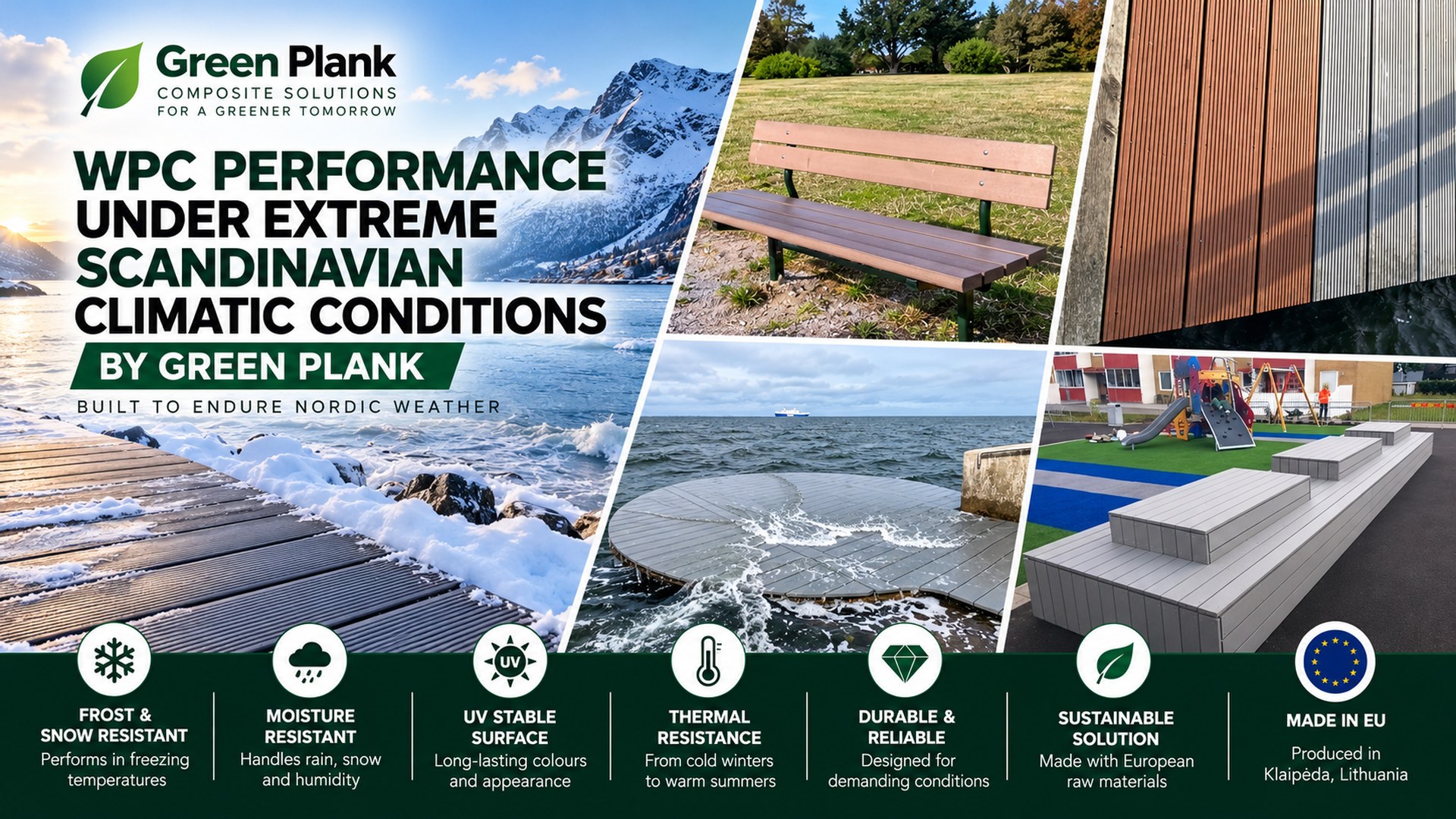
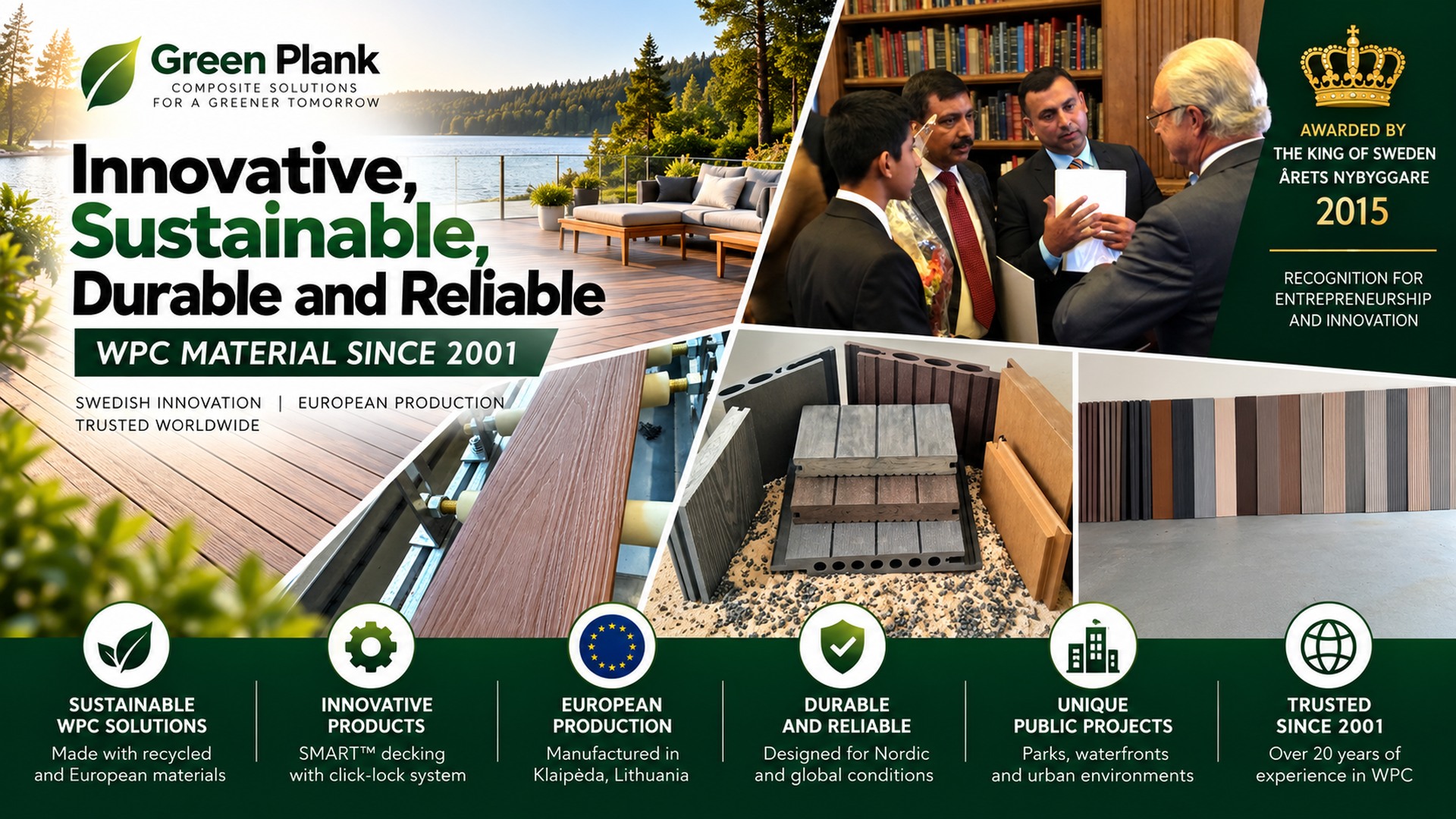
Green Plank capped and traditional WPC systems
Green Plank is a Swedish brand with WPC production in Klaipėda, Lithuania. Its material strategy is based on 100% European raw materials and 100% traceability, providing buyers with information about material origin and the European supply chain.
TerraTuff™ represents Green Plank's capped/co-extruded decking concept, while ranges including Classic™ and Sapphire™ use other profile and surface constructions. This allows architects, merchants, installers and homeowners to compare different systems according to project requirements rather than relying on a single construction type.
Selected TerraTuff™ products are offered with residential warranties of up to 50 years, depending on the specific product and applicable warranty conditions. Professional and commercial applications may be subject to different terms.
10 questions to ask before choosing capped or uncapped decking
- How is the decking profile constructed?
- What materials are used in the core and surface?
- Are the raw materials traceable?
- What technical product data are available?
- What installation requirements apply?
- Which joists, clips and fasteners are required?
- How should the surface be cleaned?
- What exactly does the warranty cover?
- What is the complete system cost per m²?
- Is the product specified for the intended application?
Conclusion: Compare the complete decking system
The fundamental difference between capped and uncapped composite decking is surface construction. Capped WPC adds a separate co-extruded layer, while uncapped WPC uses the composite material itself as the visible surface.
The better choice depends on the project. Compare material composition, profile construction, surface design, technical documentation, installation requirements, warranty conditions and complete system cost. This approach turns a simple capped-versus-uncapped decision into a professional comparison of two complete decking solutions.
Explore European WPC decking systems at Green Plank.
Sources
- Green Plank – product and system information
- USDA Forest Products Laboratory – Wood Handbook
- ISO 15686-5 – Buildings and constructed assets – Life-cycle costing
Specify the product
Use this guide with a Green Plank specification
Technical articles support the commercial catalogue — category, product, evidence, then samples or quotes.