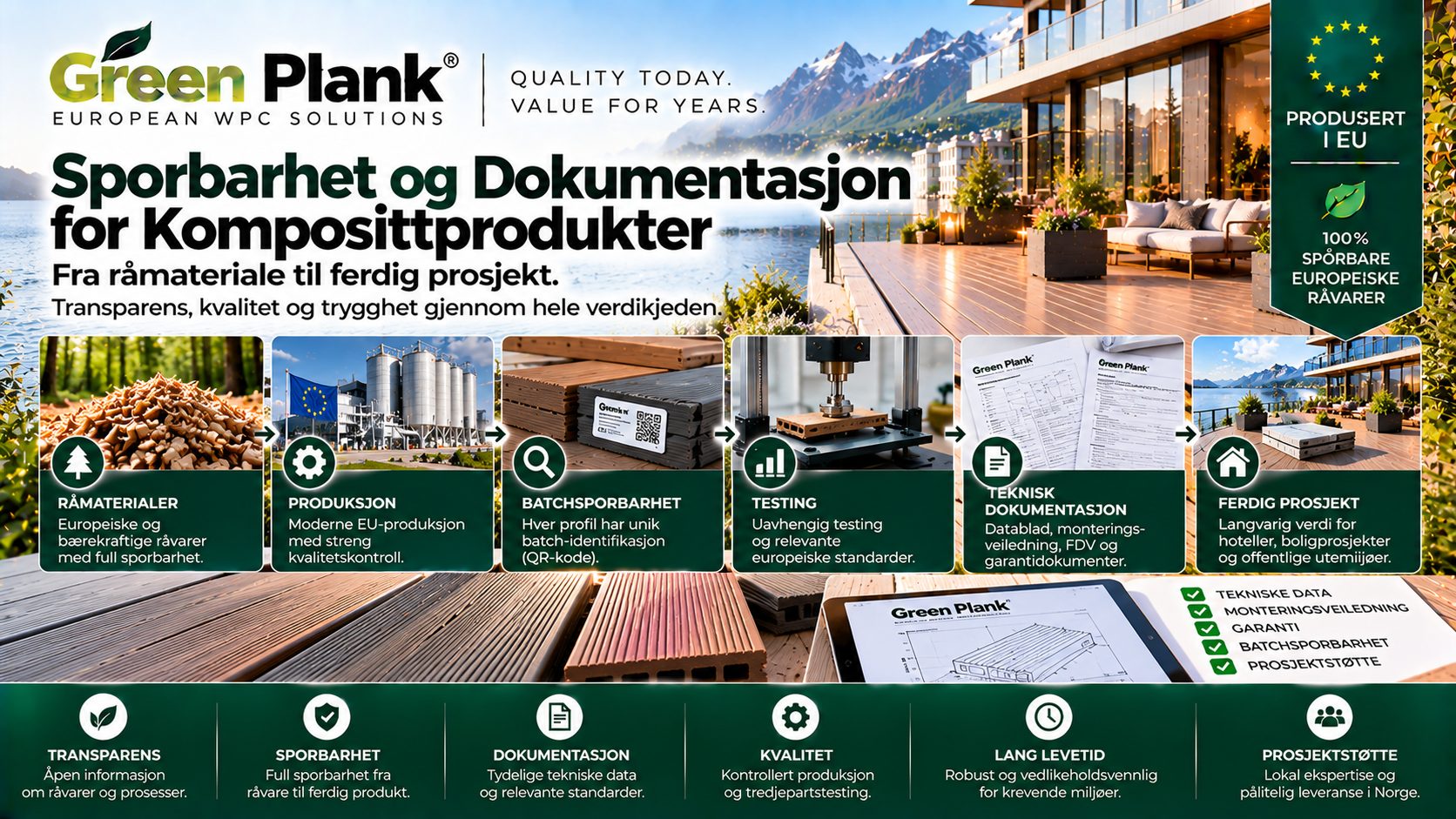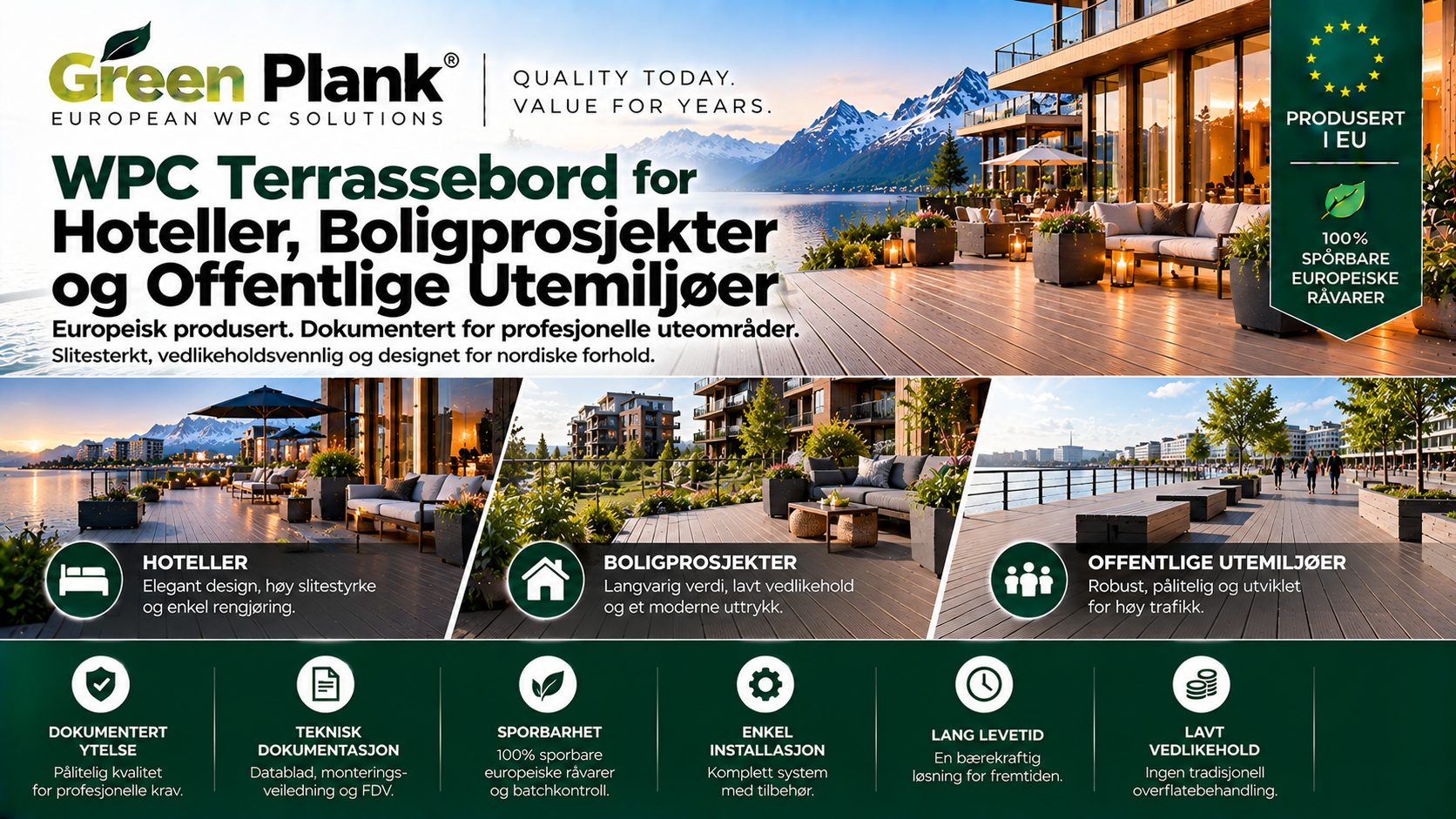




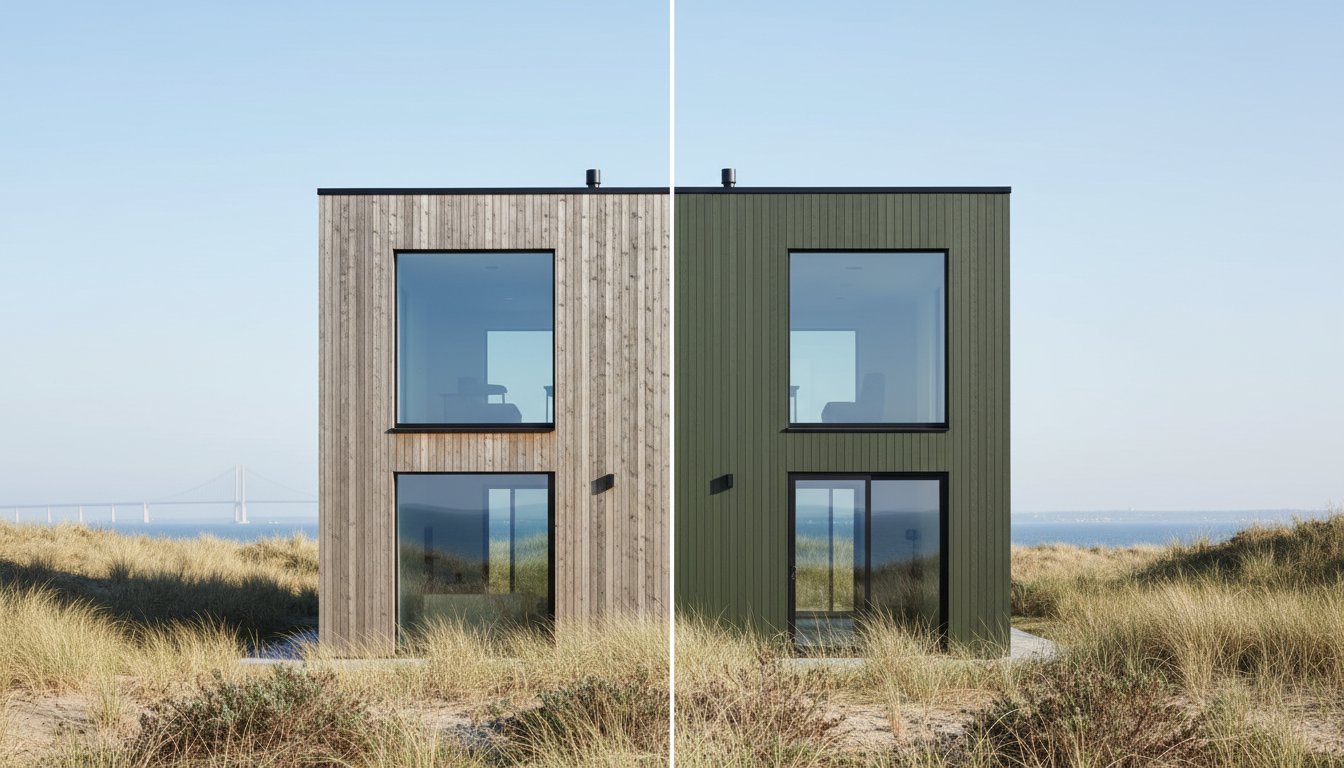
The traditional timber facade, once the undisputed choice for Scandinavian design, is rapidly becoming a financial liability for the modern developer. You likely recognize the inherent beauty of wood, yet you're also familiar with the heavy maintenance required every 3 to 5 years to combat the Nordic climate. In regions like Norrland or the coastal south, moisture ingress and UV-induced warping aren't just possibilities; they're expensive certainties that can compromise a building's envelope within 10 years. Choosing between wpc vs wood cladding now requires a deeper look at long-term structural integrity and environmental impact.
This analysis provides a rigorous engineering and sustainability comparison to help you select a facade that balances high-end aesthetics with technical precision. We promise a clear breakdown of how engineered natural-fiber composites achieve a circular lifecycle while eliminating the need for toxic chemical treatments. We'll examine the life-cycle costs and carbon footprints of these materials to ensure your 2026 projects are built to last and designed for life. Designed in Scandinavia. Produced in Europe.
Key Takeaways
- Understand why an engineered ratio of 75% hardwood fiber and 25% HDPE provides the material integrity required for the most demanding architectural specifications.
- Compare the maintenance requirements and UV stability of wpc vs wood cladding to ensure visual longevity in harsh Nordic environments.
- Explore the technical advantages of HidLoc™ hidden fastening systems for achieving a screw-free, premium aesthetic without the risks of traditional face-nailing.
- Analyze the lifecycle CO2 footprint and "Cradle to Cradle" benefits of choosing traceable, European-made natural-fiber composites over treated timber.
- Master the Total Cost of Ownership (TCO) calculation to see how eliminating professional maintenance costs can save thousands of SEK (kr) over a 25-year period.
Understanding Material Integrity: WPC vs. Traditional Wood Cladding
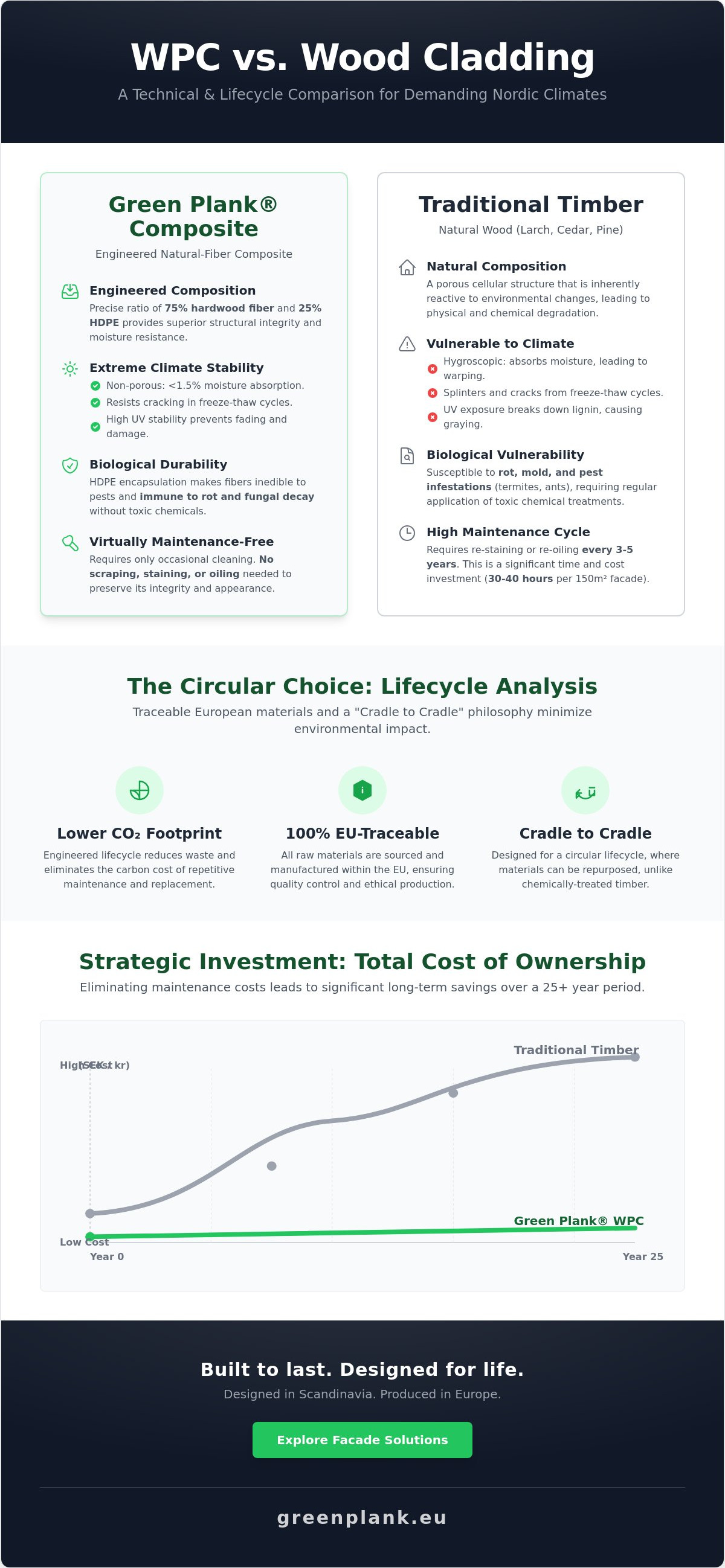
Choosing between Wood-plastic composite (WPC) and traditional timber is a decision based on engineering physics and long-term environmental impact. In the Nordic market, the debate of wpc vs wood cladding centers on long-term resilience against extreme temperature fluctuations. Green Plank defines WPC as an engineered natural-fiber composite (NFC) specifically designed to withstand the harsh Swedish climate. Our specific formulation utilizes a 75% hardwood fiber and 25% high-density polyethylene (HDPE) ratio. This precise balance ensures the material retains the natural warmth of wood while gaining the moisture-repelling resilience of advanced polymers. We manufacture every plank in Europe using 100% EU-traceable raw materials. This transparency guarantees a level of quality control and ethical sourcing that raw timber imports from outside the EU simply cannot match. It's about knowing exactly what goes into your building's envelope.
The Anatomy of Engineered Composites
The structural integrity of our composite cladding relies on the synergy between its core components. Hardwood fibers provide essential structural rigidity and thermal stability, acting as a reinforcement matrix that prevents the warping often seen in plastic-heavy alternatives. HDPE serves as a protective shield, encapsulating these fibers to prevent rot and fungal growth in Sweden's humid coastal regions. Our low-density engineering is a critical factor for large-scale commercial facades, as it reduces the dead load on building structures without sacrificing impact strength. This makes it a professional-grade choice for architects seeking durability in high-traffic environments. Designed in Scandinavia. Produced in Europe.
Traditional Wood: The Natural Benchmark
Traditional cladding typically relies on species like Siberian Larch, Western Red Cedar, or pressure-treated Pine. While these materials are the natural benchmark, they possess inherent biological vulnerabilities that lead to high maintenance costs. Timber is a porous cellular structure that reacts to every change in humidity, expanding and contracting until it eventually cracks. UV exposure causes the breakdown of lignin, which is the natural glue holding wood cells together. This leads to graying, splintering, and structural weakening within just a few years of installation. When evaluating wpc vs wood cladding, the primary difference lies in the stabilized matrix of the composite. Timber requires constant chemical treatments and staining to delay its inevitable decay. Wood-plastic composite represents a high-performance evolution of timber, engineered to bypass the biological limitations of raw wood. Built to last. Designed for life.
Performance in Extreme Climates: Durability and Maintenance Benchmarks
The Swedish climate demands building materials that withstand relentless cycles of heavy snow, rapid freeze-thaw transitions, and intense summer UV exposure. When evaluating wpc vs wood cladding, the engineering behind natural-fiber composites provides a distinct advantage in these volatile Nordic environments. Traditional timber is hygroscopic; it absorbs moisture, leading to internal pressure that causes the wood to crack and splinter during winter freezes. Professional-grade WPC is engineered with a non-porous structure that restricts moisture absorption to less than 1.5 percent, ensuring the facade remains structurally sound even when temperatures drop below -30°C.
Biological durability is another critical benchmark. Untreated or poorly maintained wood remains vulnerable to rot and pest infestations, particularly termites and carpenter ants that thrive in damp timber. WPC is manufactured by encapsulating wood fibers in high-density polymers, creating a material that is inedible to pests and immune to fungal decay. This molecular barrier ensures the cladding maintains its integrity without the need for toxic chemical treatments. Dimensional stability is equally superior; while wood can warp or cup by several centimeters over a large surface, high-performance WPC maintains expansion rates of less than 1mm per linear meter, ensuring clean lines for decades.
The Maintenance-Free Reality
Maintaining a 150-square-meter wooden facade in Sweden is a labor-intensive commitment. Property owners typically spend 30 to 40 hours every three years on scraping, oiling, or staining to prevent silvering and rot. In terms of market costs, hiring a professional to repaint a standard villa can range from 40,000 kr to 75,000 kr depending on the complexity. WPC eliminates these recurring expenses. It only requires a simple seasonal wash with water and mild biodegradable soap to remove surface dust. This shift from active maintenance to passive durability supports a 50-year service life potential, making it a superior long-term investment for the modern homeowner.
Weathering and Aesthetic Longevity
The visual degradation of timber is often rapid; lignin breaks down under UV light, turning vibrant cedar or larch into a dull grey within 12 to 18 months. WPC retains its intended aesthetic through the use of engineered UV inhibitors that are integrated during the extrusion process. This technology ensures the pigment remains stable, resisting the "greying" effect that plagues natural wood. For those seeking wpc vs wood cladding options that match contemporary architecture, exploring exterior wall cladding ideas reveals how composite materials maintain their "just-installed" look for decades. By choosing a material designed for life, you protect both the structural health and the visual value of your property. Discover how our sustainable cladding solutions are built to last in the harshest European winters.
Architectural Precision: Installation Systems and Visual Longevity
Traditional wood cladding relies on face-nailing, a method that leaves the material vulnerable from the first day of installation. Every nail hole is a potential site for moisture absorption and eventual rot. In the fluctuating Swedish climate, these penetrations accelerate the degradation of timber. When evaluating wpc vs wood cladding, this mechanical vulnerability is a decisive factor for long-term engineering integrity. We solve this through precision manufacturing.
Our natural-fiber composites utilize the HidLoc™ hidden fastening system. This technology secures the boards from the side rather than the face, preserving the protective outer layer of the material. The tongue-and-groove profile provides a structural interlock that ensures stability while creating a rainscreen that manages moisture effectively. This feature-benefit logic is simple: by removing surface fasteners, we eliminate the primary cause of facade failure.
Engineering a Flawless Facade
Hidden fasteners do more than improve aesthetics; they are a critical technical component in preventing water ingress. By eliminating surface penetrations, we protect the core of the plank from internal swelling and fungal growth. The pre-engineered nature of these profiles means every piece fits with mathematical consistency. This precision reduces installation time by approximately 30% compared to traditional timber. Contractors across Sweden benefit from reduced labor costs and a predictable assembly process. You can find specific technical measurements and load-bearing data in our guide to composite cladding installation.
Modern Design Versatility
The visual longevity of WPC is rooted in its material consistency. Traditional timber displays knots, sap pockets, and grain variations that can disrupt a minimalist Nordic aesthetic. Our composite solutions deliver a stable, refined character that resists UV degradation and remains uniform across large surfaces. This reliability makes it possible to extend a design vision from the exterior shell into the heart of the building.
The transition from outdoor environments to interior WPC wall panels creates a cohesive architectural language. Commercial infrastructure projects benefit from this versatility, as the material meets high-traffic durability requirements without sacrificing the warmth of natural textures. Every plank is manufactured in Europe using 100% traceable raw materials. It's a professional-grade solution for those who value both engineering excellence and environmental responsibility. Designed in Scandinavia. Produced in Europe.
- HidLoc™ Technology: Eliminates visible screws for a clean, professional finish.
- Interlocking Profiles: Ensures consistent expansion gaps and moisture drainage.
- Dual-Application: Engineered for both harsh exterior climates and refined interior spaces.
The Circular Choice: Environmental Lifecycle Analysis
The debate surrounding wpc vs wood cladding often centers on the initial carbon footprint. While timber naturally sequesters CO2, the industrial reality of treated wood in Sweden tells a different story. Traditional timber requires aggressive chemical preservatives to survive the Nordic climate. These treatments often categorize the wood as hazardous waste at the end of its life, preventing clean incineration or recycling. Green Plank engineered composites offer a different path through a 'Cradle to Cradle' ownership model. This ensures that every board is a resource, not a future liability.
We must debunk the myth that all composite materials are harmful. Low-quality imports often utilize virgin plastics and unregulated fillers that degrade quickly. In contrast, Green Plank focuses on high-performance longevity. By extending the replacement cycle to 30 years, we significantly reduce the total carbon debt of a building. When you compare wpc vs wood cladding over a three-decade period, the composite option frequently emerges as the superior environmental choice due to the lack of chemical maintenance and the avoidance of multiple replacement cycles.
Sustainability as a Standard
Green Plank cladding consists of 75% recycled hardwood fiber. This high concentration of organic waste material prevents deforestation by repurposing timber industry byproducts that would otherwise be discarded. We combine these fibers with HDPE, a robust and recyclable polymer that acts as the binding agent. This synergy creates a material that is 100% recyclable at the end of its service life. You can learn more about how we integrate these elements in our sustainable building materials guide. Our products aren't just plastic; they're sophisticated resource management tools designed for the circular economy.
EU Raw Materials and Traceability
We source 100% of our raw materials within the European Union to minimize transport emissions and ensure strict ethical standards. In 2026, supply chain transparency is a requirement for any professional-grade project. By keeping production local, we reduce the carbon debt associated with long-distance shipping from Asia or South America. Every additive we use is REACH compliant, ensuring no harmful toxins leach into the Swedish soil or groundwater. Circularity is the core of Green Plank's manufacturing, transforming waste into high-performance architectural solutions. Designed in Scandinavia. Produced in Europe.
- 75% recycled hardwood content reduces reliance on virgin timber harvests.
- HDPE polymers provide a stable, non-toxic alternative to inferior PVC-based products.
- EU-based sourcing cuts logistics emissions by approximately 60% compared to overseas imports.
- REACH compliance ensures the safety of both installers and the local ecosystem.
Choosing the right material means looking beyond the first year of installation. It's about the next thirty. Our commitment to sustainability ensures your project respects the environment as much as it enhances it. Built to last. Designed for life.
Strategic Investment: Calculating Total Cost of Ownership (TCO)
Investing in a building facade is a generational decision. While natural timber often presents a lower upfront purchase price, the lifecycle analysis reveals a different financial reality. In the Swedish market, professional labor costs for maintenance currently range from 550 kr to 900 kr per hour. When you calculate these expenses over a 25-year period, the initial savings on wood evaporate. The wpc vs wood cladding debate is ultimately about predictable budgeting versus escalating maintenance debt. Choosing an engineered solution means locking in your costs at the point of installation.
The ROI of Durability
Natural wood demands a cycle of sanding, staining, and painting every three to five years to survive the Swedish climate. These hidden costs are substantial. A standard 150-square-meter residential facade can require over 40,000 kr in professional services for a single refresh cycle. WPC eliminates this financial burden entirely. Developers choose our natural-fiber composites for low-density, high-durability projects because they provide a maintenance-free exterior that remains stable through fluctuating temperatures. This stability boosts rental yields and resale values. A pristine facade attracts premium tenants who value aesthetics and low upkeep without the eyesore of peeling paint or warped boards.
- Zero Painting: Saves approximately 180,000 kr in labor and material costs over 25 years.
- Structural Integrity: Manufactured in Europe to resist rot, fungal decay, and Nordic humidity.
- Property Valuation: A 50-year warranty provides a transferable asset that reassures future buyers and financial institutions.
Selecting the Right System for 2026
Professional specifiers must align material selection with the specific demands of the site. Our Smart System is designed for quick installation and a contemporary aesthetic, making it the preferred choice for modern residential builds where speed and precision are paramount. For projects requiring maximum durability in high-traffic areas, the Terra Tuff line delivers high-density performance capable of withstanding heavy impact and extreme weather. When evaluating wpc vs wood cladding, the long-term engineering of Green Plank offers a clear advantage for commercial standards and sustainable urban development.
The final decision rests on your project's long-term goals. Choose natural timber if you have the resources for constant upkeep and prefer a traditional, aging material. Choose WPC if you want a Scandinavian-designed, European-made solution that respects the planet and your bottom line. For professional specifiers in 2026, the performance data is conclusive. It's an investment in peace of mind and structural excellence. Built to last. Designed for life.
Architecting a Resilient and Circular Swedish Facade
The decision between wpc vs wood cladding determines the long-term viability of your project's envelope. Traditional wood requires recurring maintenance cycles that increase the total cost of ownership across the building's lifecycle. Green Plank engineered composites eliminate these burdens by providing a durable, low-maintenance surface that resists the harsh Swedish climate. We manufacture our products in Europe using 100% EU-sourced raw materials to ensure complete supply chain transparency and carbon efficiency. This technical precision supports our Cradle to Cradle ownership model and allows us to provide an industry-leading warranty of up to 50 years. It's a commitment to quality that means your facade is built to last and designed for life. By choosing professional-grade materials, you're investing in a circular future that respects both the environment and your budget. Request a Technical Specification for Your Next Project and discover the benefits of Nordic reliability. Your next project deserves a foundation of sustainable innovation.
Frequently Asked Questions
Is WPC cladding more expensive than traditional wood?
Initial purchase prices for wpc vs wood cladding differ significantly in the Swedish market. While pressure-treated pine often retails for approximately 350 kr per square meter, high-performance WPC ranges from 900 kr to 1,300 kr. This upfront cost reflects the engineering required for a 30 year lifespan. You'll save on long-term expenses because WPC eliminates the 5,000 kr to 8,000 kr spent every five years on oils and labor.
How long does WPC cladding actually last compared to timber?
WPC cladding lasts between 25 and 30 years without structural degradation. In contrast, traditional timber in Scandinavian climates often shows signs of rot or warping within 12 years if it isn't treated annually. Our natural-fiber composites are engineered to withstand the freeze-thaw cycles common in Sweden. They carry a 25 year warranty to ensure your investment remains secure for decades. Built to last. Designed for life.
Does WPC cladding look like real wood or like plastic?
Modern WPC cladding features a matte, brushed finish that replicates the tactile feel of organic timber. We've moved beyond the shiny, synthetic textures of the early 2000s to create a product that honors Nordic design traditions. Advanced color-streaking technology ensures each plank has a unique grain pattern. It provides the warmth of wood with the precision of European engineering. Designed in Scandinavia. Produced in Europe.
Can WPC cladding be recycled at the end of its life?
Yes, our composite cladding is a core component of the circular economy. It's manufactured using 90% recycled wood fibers and reclaimed polymers, which prevents waste from entering Swedish landfills. At the end of its 30 year life, the material can be ground down and re-manufactured into new profiles. This closed-loop process reduces the carbon footprint by 40% compared to traditional disposal methods. It's a truly sustainable choice.
Does composite cladding require any specialized tools for installation?
You don't need specialized equipment to install composite cladding. Standard woodworking tools, such as a miter saw with a carbide-tipped blade and a cordless drill, are perfectly sufficient. The material's consistent density means you won't encounter knots or splinters that slow down the process. Our hidden clipping systems also speed up installation by 30% compared to traditional face-nailing methods used for wpc vs wood cladding projects.
How does WPC cladding perform in fire safety tests?
WPC cladding undergoes rigorous testing to meet Euroclass fire safety standards, typically achieving a Class B or C rating. This performance is critical for multi-story residential projects in Sweden where fire spread regulations are strict. The inclusion of fire-retardant additives ensures the material doesn't contribute to flame spread. It provides a level of safety that many untreated softwoods can't match, making it a professional-grade selection for urban builds.
Is WPC cladding suitable for extreme coastal environments?
WPC cladding is specifically designed for the harsh conditions of the Swedish archipelago and coastal regions. It has a moisture absorption rate of less than 1%, which prevents the salt-induced rot that destroys timber. High salt spray and humidity don't cause the material to swell or corrode. It's a reliable solution for homes exposed to the Baltic Sea's volatile weather, offering durability where natural wood often fails.
Does the color of WPC cladding fade over time?
While all materials exposed to the sun change slightly, WPC cladding is engineered with UV stabilizers to minimize color shift. You'll notice a subtle weathering of about 5% in the first 12 weeks as the natural wood fibers acclimate. After this initial period, the color stabilizes and remains consistent for the rest of its life. This eliminates the need for the bi-annual staining required to keep timber looking fresh.
Spesifiser produktet
Bruk denne guiden i en Green Plank-spesifikasjon
Tekniske WPC-artikler skal støtte de kommersielle sidene — ikke konkurrere med dem. Fortsett til komposittdekke, TerraTuff, Nordeka eller de tekniske nedlastningene.