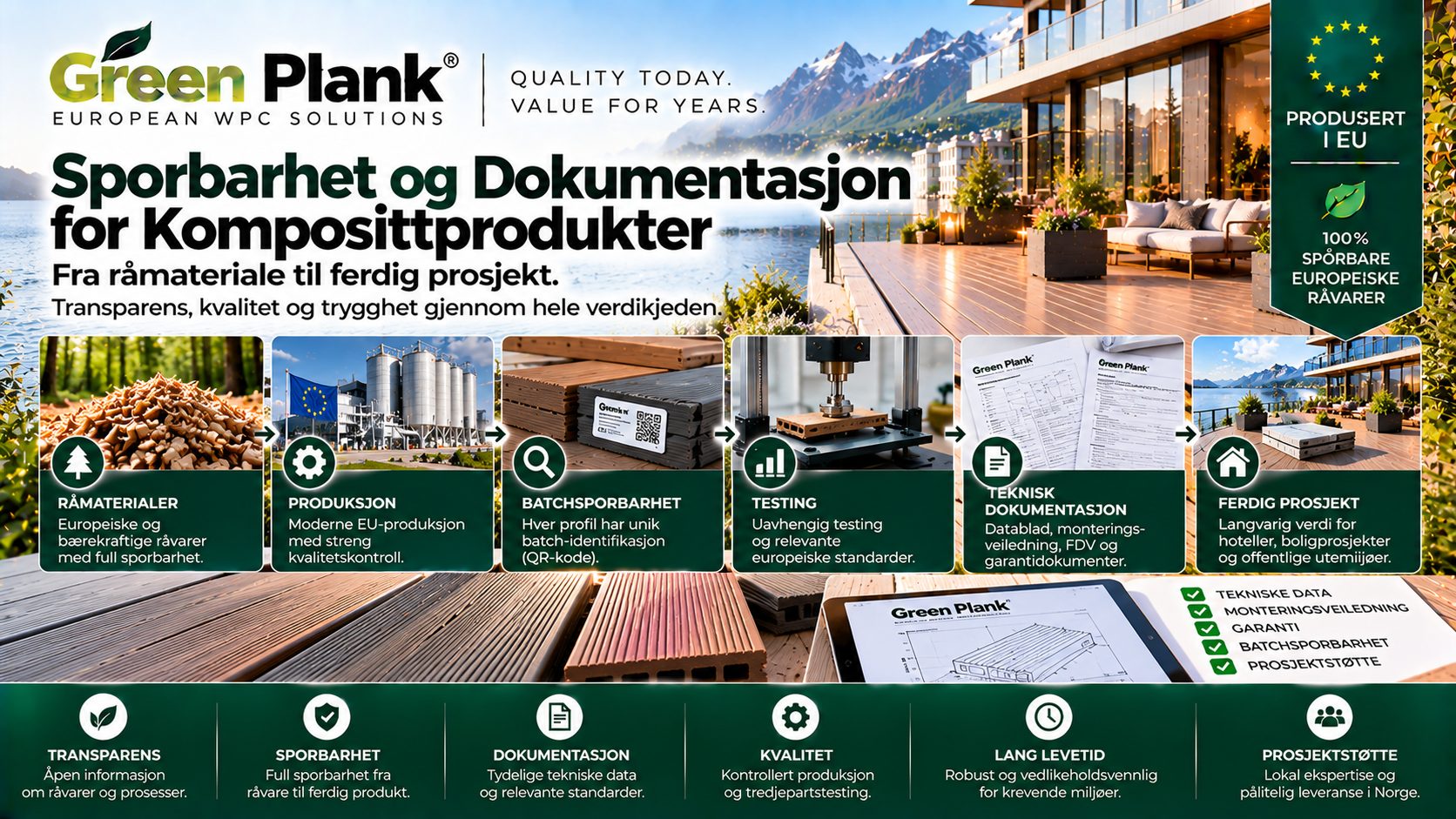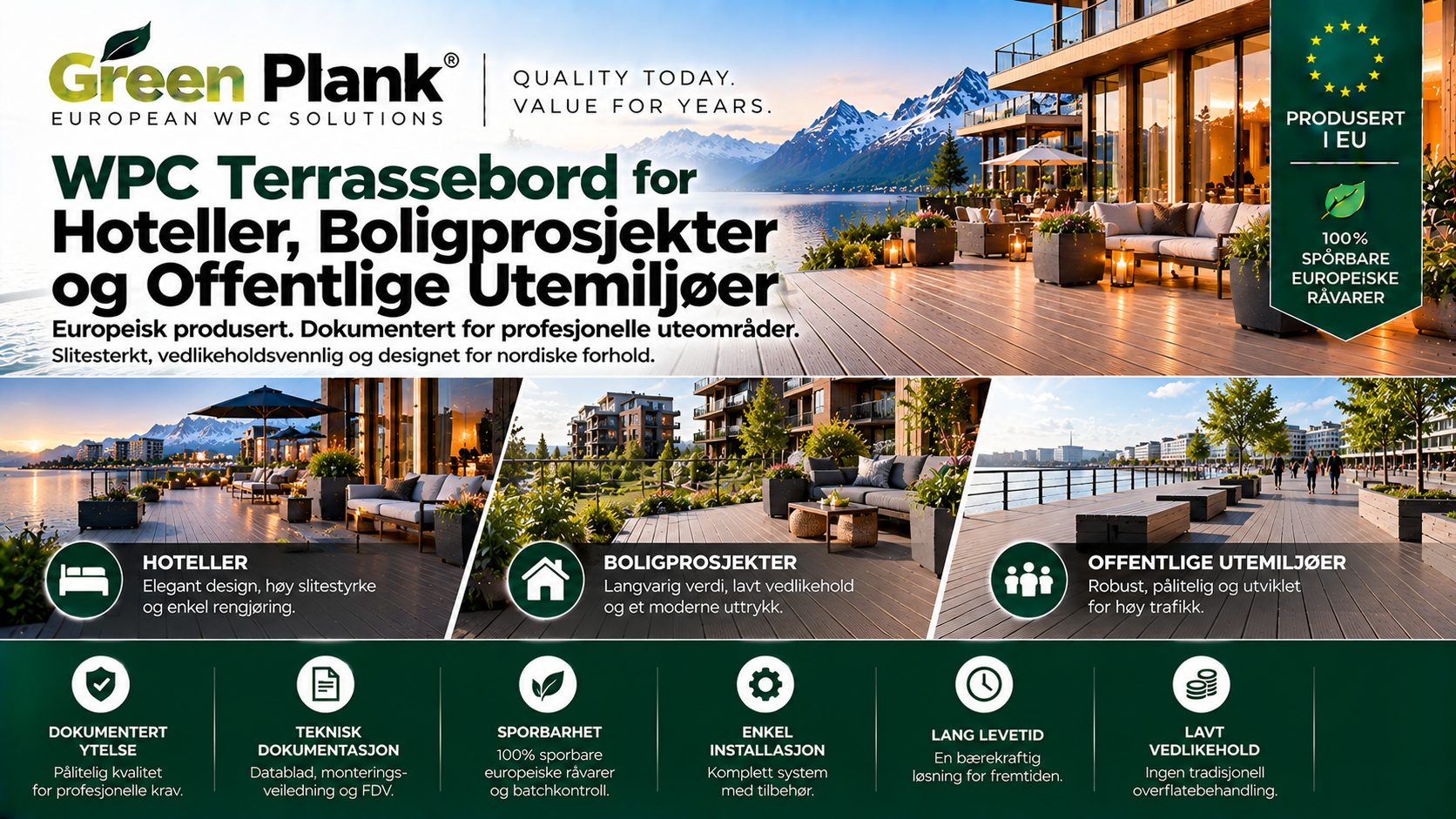





What if your building materials could tell their own story from the raw fiber to the final installation? As of January 8, 2026, the revised EU Construction Products Regulation mandates this level of transparency, making the declaration of Global Warming Potential a standard requirement for the industry. Traceability is the ethical spine of this new era. It transforms a static asset into a transparent, circular resource that meets the rigorous demands of LEED v5 and BREEAM Version 7.
You've likely felt the frustration of dealing with greenwashing and unverifiable sustainability claims that put your project's compliance at risk. We understand that ensuring a 50-year service life requires more than just a promise; it requires data-backed certainty. This article reveals how material traceability ensures the integrity, safety, and sustainability of modern building projects through transparent supply chains. You'll gain a clear understanding of the Digital Product Passport requirements and learn how to vet suppliers to ensure your infrastructure remains compliant and circular for decades to come.
Key Takeaways
- Understand why material traceability is now a regulatory necessity for verifying the historical origin and environmental composition of every building component.
- Prepare for the mandatory EU Digital Product Passport (DPP) by implementing digital documentation that supports long-term maintenance and the 'Right to Repair.'
- Learn to distinguish between backward and internal traceability to ensure every fiber and polymer meets strict FSC and EU manufacturing standards.
- Increase the commercial value of your projects by leveraging documented sustainability credentials to streamline BREEAM and LEED v5 certification processes.
- Discover how 100% EU-sourced raw materials and a 'Cradle to Cradle' ownership model provide the security and longevity required for a 50-year service life.
Table of Contents
- Understanding Traceability in Modern Sustainable Construction
- Why Traceability is the New Standard for Building Projects
- Backward vs. Forward Traceability: Tracking a Composite Plank
- The Benefits of Material Transparency for Architects and Developers
- Green Plank’s Commitment: 100% EU Raw Materials and Circular Traceability
Understanding Traceability in Modern Sustainable Construction
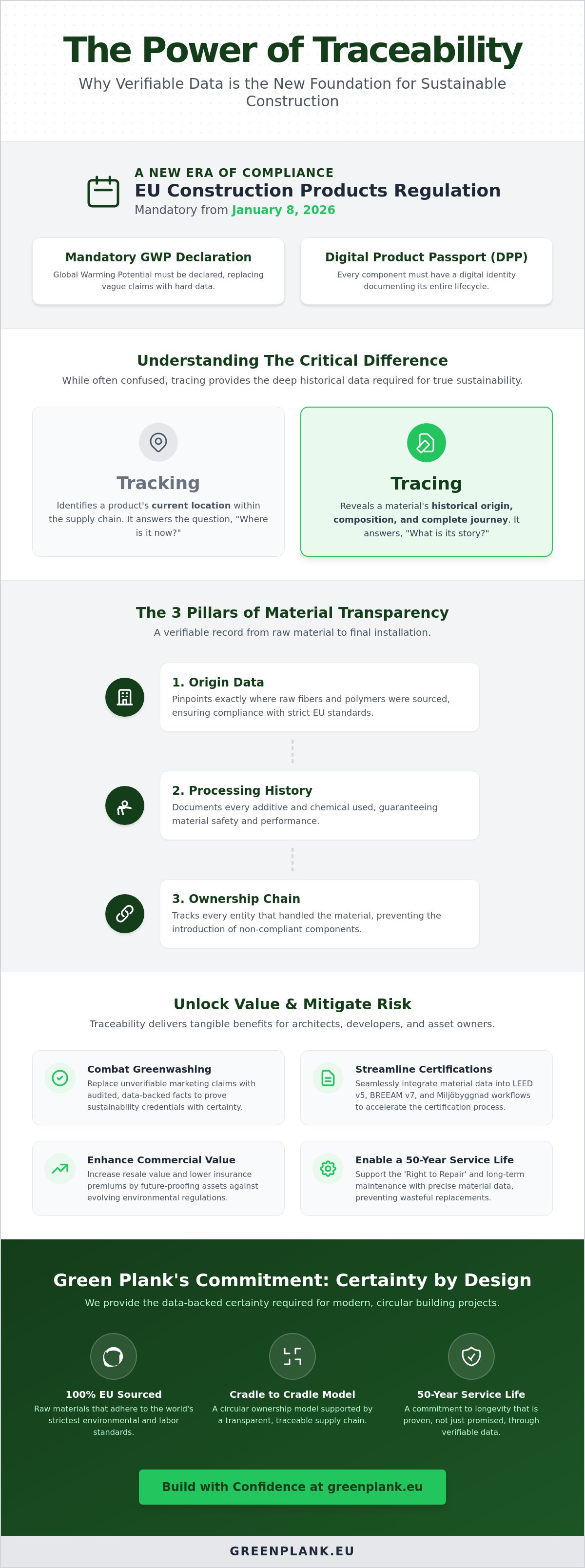
In the context of the built environment, Traceability represents the verifiable record of a material’s journey from the point of raw extraction to its ultimate end-of-life. While many industry professionals confuse tracking with tracing, the distinction is vital for engineering precision. Tracking identifies the current location of a product within a supply chain. Tracing, however, provides the historical origin and exact chemical composition of the material. Understanding Traceability is no longer an optional exercise for premium developers. It's a technical necessity that ensures the integrity of every composite plank and wall profile used in a project.
The transition from voluntary transparency to mandatory compliance is already here. With the revised EU Construction Products Regulation (Regulation (EU) 2024/3110) applying from January 8, 2026, the industry has shifted toward data-driven accountability. This regulation mandates the declaration of Global Warming Potential (GWP) and environmental performance. Traceability is the primary weapon against greenwashing because it replaces vague marketing claims with audited, verifiable facts. It allows architects to prove the sustainability of their designs with absolute certainty.
The Core Pillars of Material Transparency
- Origin data: This identifies exactly where raw timber fibers and polymers were sourced. For our products, this means 100% EU-sourced materials that adhere to strict regional environmental standards.
- Processing history: This documents every additive or chemical used during the extrusion process. It ensures that no harmful substances compromise the safety of indoor or outdoor spaces.
- Ownership chain: This tracks every entity that handled the material. A clear chain of custody prevents the introduction of non-compliant components during the logistics cycle.
Why 'Good Enough' is No Longer Sufficient
The era of paper-based certificates is over. Modern projects require immutable digital records that can be accessed throughout a building's 50-year service life. This digital shift directly impacts the resale value and insurance premiums of commercial assets. Investors now prioritize sustainable building materials that offer a clear data trail. Transparent documentation reduces risk; it proves that a structure is built to last and is ready for the circular economy. High-end consumers expect this level of craftsmanship. They want aesthetic beauty that's backed by engineering evidence. By adopting rigorous Traceability standards, developers protect their investments against evolving environmental regulations and future-proof their portfolios.
Why Traceability is the New Standard for Building Projects
The introduction of the EU Digital Product Passport (DPP) has fundamentally altered construction procurement. It's no longer enough to claim a product is sustainable; every component must carry a digital identity that documents its entire lifecycle. Traceability serves as the digital foundation for the 'Right to Repair.' When a specific section of wall cladding or decking requires maintenance decades from now, the DPP provides the exact material specifications needed for a perfect match. This level of detail facilitates long-term maintenance and prevents the wasteful replacement of entire systems.
Risk mitigation is another critical advantage of a transparent supply chain. In the rare event of a material failure, Traceability allows developers to isolate specific faulty batches without condemning an entire project. This surgical precision saves time, reduces costs, and protects the reputation of everyone involved. A robust traceability framework for construction ensures that material data flows seamlessly into BREEAM, LEED, and Miljöbyggnad certification workflows. These systems reward projects that provide audited evidence of responsible sourcing and low embodied carbon.
Regulatory Compliance and EU Standards
The revised Construction Products Regulation (CPR) makes transparency a legal mandate rather than a marketing choice. By utilizing 100% EU-sourced raw materials, developers bypass the complexities of unverifiable overseas supply chains. This regional focus simplifies the compliance burden, as all manufacturing steps occur under strict EU environmental oversight. Preparing for the mandatory circularity reporting requirements of 2026 starts with selecting partners who provide immutable data from day one.
The Link Between Sourcing and Performance
Engineering precision depends on knowing the exact hardwood-to-polymer ratio of a composite. Our standard of 75% hardwood fiber and 25% HDPE ensures optimal thermal stability and durability. Traceability allows us to verify these ratios at the molecular level, ensuring that no contaminated post-consumer plastics enter the mix. This verified sourcing is the reason we can confidently offer a 50-year warranty on our premium WPC profiles. You don't have to guess if your materials will last; the data proves they will. If you're ready to secure your project's future, consider exploring our EU-made composite solutions that prioritize both performance and planet.
Backward vs. Forward Traceability: Tracking a Composite Plank
To achieve a true circular economy, we must view a composite plank not as a static product, but as a dynamic data set. Traceability in this context is divided into three distinct layers: backward, internal, and forward. Together, these layers constitute a 'Cradle to Cradle' life record. This comprehensive data profile ensures that every Nordeka or Terra Tuff plank maintains its integrity from the forest floor to the final recycling facility decades later. It's a technical necessity for modern engineering.
Internal traceability monitors the extrusion process within our EU factory. Every temperature shift and pressure adjustment is recorded against a specific production batch. This quality control ensures that our WPC composite decking meets the high standards required for commercial infrastructure. If a technician identifies a deviation, the system flags the specific profiles immediately. This prevents subpar materials from ever leaving the facility and reaching your project site.
Backward Traceability: The Source of Truth
Backward traceability focuses on the origin. It verifies that the 75% hardwood fiber content is sourced from FSC-certified forests, ensuring high density and long-term durability. By using 100% EU raw materials, we eliminate the risks associated with non-EU imports, such as the presence of lead or phthalates in HDPE polymers. Regional extraction is a deliberate choice. It significantly reduces the CO2 footprint of our logistics chain, supporting the Benefits of Material Transparency by providing a clear, low-carbon pedigree for every project. This transparency is what allows us to guarantee the safety of our products for use in private and public spaces alike.
Forward Traceability: The Future of Maintenance
Forward traceability tracks the product from the distributor to the specific project site. Each batch is assigned a unique ID code that remains part of the building's digital twin. This is essential for the future of maintenance. If a client needs to replace a single plank in twenty years, the ID code identifies the exact color profile and material composition for a seamless match. It's a practical solution for long-term asset management.
This data also enables our 'Cradle to Cradle' ownership model. When a project reaches its end-of-life, we can identify the material's history and safely return it to our recycling stream. The use of hidden fastening systems is a practical application of this forward-thinking engineering. Unlike traditional screws that pierce the material, these systems preserve the structural integrity of the plank. This allows the profiles to be disassembled and reused or recycled without damage. It's a design choice that respects nature and maximizes the circular potential of the asset while ensuring a beautiful, maintenance-free finish.
The Benefits of Material Transparency for Architects and Developers
Architecture and development in 2026 demand more than aesthetic appeal; they require documented proof of performance. Traceability provides this evidence. It turns a building from a collection of materials into a high-value, transparent asset. When every component has a verifiable history, the project's market value increases. Investors and tenants look for the security that comes with documented sustainability credentials. This transparency isn't just about ethics; it's a strategic financial decision that protects the long-term viability of the property.
Streamlining certification processes is a practical advantage of this data-driven approach. With the registration for LEED v4 and v4.1 closing at the end of the first quarter of 2026, projects must now align with LEED v5. This new standard places a greater emphasis on decarbonization and climate resilience. Traceable material data allows architects to complete carbon assessments with surgical precision. Similarly, BREEAM Version 7, launched on September 30, 2025, requires the use of digital platforms for whole-life carbon reporting. Having an immutable record of every plank's origin makes these submissions efficient and accurate.
Quality control is significantly enhanced through this transparency. Every composite plank is verified to meet specific density requirements and fire ratings before it leaves our EU factory. This precision ensures that the installed product performs exactly as specified in the technical drawings. It eliminates the guesswork often associated with lower-quality imports that lack consistent material science. Developers gain peace of mind knowing their brand reputation is backed by engineering facts.
Mitigating Risk in Commercial Infrastructure
Public spaces with high foot traffic require materials that are both durable and safe. Traceability prevents the accidental use of 'mystery' composites that lack the necessary structural testing. For projects requiring commercial infrastructure profiles, documented performance is non-negotiable. It reduces the liability of the developer by providing a complete 'as-built' material audit trail. If a safety audit occurs, the data is already accessible, proving that the project meets all regional safety standards.
Financial and ESG Advantages
Transparent reporting is a magnet for green finance. ESG-focused investors prioritize projects that can calculate their true CO2 footprint based on verified transport and material data. Because our WPC is made from 100% EU raw materials, the logistics data is clean and accessible. This transparency allows for a more accurate lifecycle assessment than products with fragmented, global supply chains. It's a level of detail that satisfies both the emotional buyer and the rational decision-maker.
The long-term ROI of specifying traceable, high-performance WPC is clear. While cheaper alternatives might seem attractive initially, they often lack the 50-year service life and the data to back up their claims. High-end projects benefit from the regional reliability of European manufacturing. If you're ready to elevate your next project with verified material data, view our professional composite range here.
Green Plank’s Commitment: 100% EU Raw Materials and Circular Traceability
Green Plank views every composite profile as a long-term environmental investment. Our 'Cradle to Cradle' ownership model isn't just a theory; it's a practical reality powered by Traceability. By maintaining a digital record of every production batch, we ensure that the materials used in your project today can be safely identified and re-integrated into our production cycle fifty years from now. This circular approach removes the burden of waste management from the developer. It places it back into a controlled, ethical loop where materials never become waste.
Our commitment starts with 100% EU raw materials. This choice provides unparalleled supply chain security in an increasingly volatile global market. While other manufacturers might rely on fragmented overseas sourcing, we prioritize regional reliability. Every gram of our 75% hardwood fiber and 25% HDPE blend is sourced, processed, and extruded within Europe. This geographic focus allows us to provide architects with the precise technical documentation and material passports required for modern compliance. We don't just sell a product; we provide a verified data trail that supports your project's integrity.
The Power of Regional Manufacturing
The 'Made in EU' label is the ultimate guarantee of quality and transparency. By eliminating long-haul shipping from Asia, we significantly reduce the CO2 footprint of every project. This is a deliberate engineering choice. It supports local EU forestry and recycling industries through ethical procurement. We believe that a product's origin is as important as its performance. Regional manufacturing ensures that we adhere to the strictest environmental and labor standards in the world, providing a level of linguistic and regulatory decorum that reflects our premium market position.
Closing the Loop with Cradle to Cradle
Circular construction requires a fundamental shift in how we perceive material lifecycles. Our low-density, high-durability design ensures that WPC profiles remain structurally sound throughout their 50-year service life. Traceability allows us to track these materials through the decades. It ensures they're ready for the production cycle when the building is eventually renovated or decommissioned. This closed-loop system is the future of sustainable engineering. It respects nature while providing a maintenance-free outdoor space for generations.
If you're designing a high-end facade and require audited proof of circularity, we're ready to assist. You can request a full traceability audit for your next composite wall cladding project to ensure it meets the highest ethical standards. Our team provides the data you need to satisfy both regulatory bodies and ESG-focused investors. Let's build a future that values both engineering precision and ecological responsibility.
Securing the Future of Circular Construction
The transition toward a data-driven building sector is no longer a distant goal; it's a current reality. We've seen how Traceability serves as the essential link between engineering precision and ecological responsibility. By documenting every material's journey, architects and developers can move beyond the risks of greenwashing and secure their projects against evolving EU environmental mandates. This transparent approach ensures that every structure isn't just a static asset but a vital part of the circular economy.
Green Plank is proud to lead this movement as a responsible innovator. Our commitment to 100% EU raw materials and our proprietary Cradle to Cradle Ownership Model provides the technical certainty your projects demand. We back our engineering with a specific 50-year warranty on verified WPC systems, ensuring that your outdoor spaces remain beautiful and maintenance-free for decades. It's time to choose materials that respect nature as much as they respect your design vision. Partner with Green Plank for your next traceable, sustainable project and build with the quiet confidence of a sustainable craftsman.
Frequently Asked Questions
What is the difference between traceability and transparency in construction?
Transparency is the high-level policy of being open about business practices, while traceability is the technical ability to follow a material's path through the supply chain. Transparency represents the intent to be ethical. Traceability provides the data-driven proof. In the building sector, this distinction is vital for verifying that a composite profile actually contains the sustainable fibers a manufacturer claims it does.
How does traceability help in achieving LEED or BREEAM certification?
Traceability provides the audited data necessary for whole-life carbon assessments required by LEED v5 and BREEAM Version 7. These updated standards reward projects that use digital platforms to report embodied carbon. By having an immutable record of a material's origin and processing, architects can streamline the certification process. This verified data ensures that every sustainability credit is backed by engineering facts rather than vague estimates.
Why is 100% EU raw material sourcing important for traceability?
Sourcing within the EU ensures that all raw materials adhere to strict regional environmental and safety regulations. It simplifies the audit trail by keeping every stage of extraction and processing under one regulatory umbrella. This regional focus eliminates the "mystery" additives often found in overseas imports. It provides developers with the certainty that their WPC decking is free from harmful chemicals and non-compliant polymers.
Can traceability help reduce the CO2 footprint of a decking project?
Yes, it allows developers to identify and eliminate carbon-intensive logistics by favoring regional supply chains. Traceable data provides an accurate calculation of transport emissions, which is a mandatory requirement under the revised EU Construction Products Regulation starting in 2026. By choosing EU-sourced materials, you naturally lower the CO2 footprint of your project compared to materials that require long-haul shipping from Asia or the Americas.
What is a Digital Product Passport (DPP) in the context of WPC?
A Digital Product Passport is a digital identity for a composite plank that stores data on its origin, composition, and end-of-life instructions. It's a central requirement for the circular economy, allowing future contractors to identify exactly how to recycle or repair a specific wall cladding profile. This passport supports the 'Right to Repair' and ensures that materials remain part of a controlled, circular loop for decades.
How do I verify the hardwood fiber content in composite decking?
You can verify the material composition by requesting batch-specific technical data sheets that are linked to a manufacturer's traceability system. High-quality WPC should consist of 75% hardwood fiber and 25% HDPE. Traceable records allow you to verify these ratios at the molecular level. This transparency ensures that the product meets the density and durability standards required for a 50-year service life in commercial or private settings.
Is traceability required for residential fencing and cladding projects?
While mandatory regulations currently focus on larger commercial assets, traceability is rapidly becoming the standard for premium residential projects. Homeowners increasingly demand proof of non-toxicity and ethical sourcing for their fencing and cladding. Providing a documented material history increases the resale value of a home. It gives residents peace of mind that their outdoor living space respects nature and adheres to the highest safety standards.
How does Green Plank ensure the traceability of its WPC products?
We utilize a Cradle to Cradle ownership model combined with 100% EU raw material sourcing to maintain a perfect chain of custody. Every production run is logged against a unique batch ID that documents the hardwood-to-polymer ratio and the origin of all additives. This rigorous system is what allows us to offer a specific 50-year warranty. We provide the technical documentation architects need to ensure their projects remain compliant and high-performing for their entire lifecycle.
Spesifiser produktet
Bruk denne guiden i en Green Plank-spesifikasjon
Tekniske WPC-artikler skal støtte de kommersielle sidene — ikke konkurrere med dem. Fortsett til komposittdekke, TerraTuff, Nordeka eller de tekniske nedlastningene.