



Did you know that composite decking now accounts for 52.3% of the European market, yet finding truly sustainable, EU-sourced materials remains a significant challenge for modern architectural projects? It's frustrating to navigate a sea of conflicting environmental claims while trying to avoid the high maintenance costs and rapid degradation of traditional wood. You deserve a solution that pairs premium aesthetics with a grounded, eco-conscious responsibility.
This guide provides the clarity you need by detailing the 3 essential pillars of high-performance WPC: material integrity, ecological circularity, and lifecycle performance. You'll discover how to identify quality through the EN 15534 standard and why sourcing 100% European raw materials is the key to a lower CO2 footprint. We'll show you how to achieve a maintenance-free outdoor space that stands the test of time. By focusing on regional reliability and technical precision, you can select materials that offer a service life of up to 50 years. We'll explore the transition to Digital Product Passports and how these innovations ensure your project meets the latest EU safety and sustainability regulations, allowing you to build with absolute engineering confidence.
Key Takeaways
- Discover how to evaluate the 3 fundamental criteria for high-performance composite materials to ensure your architectural project meets the highest standards of longevity.
- Identify the engineering advantages of a 75% hardwood fiber and 25% HDPE ratio, which optimizes structural integrity while maintaining a low-density profile.
- Learn how localized EU manufacturing and Cradle to Cradle ownership models provide a transparent pathway to reducing your project's total carbon footprint.
- Understand the regulatory benefits of sourcing materials that comply with stringent REACH standards, ensuring superior traceability and environmental safety.
- Compare specialized profiles like Nordeka and Terra Tuff to determine the most effective solution for your specific commercial or private infrastructure needs.
The 3 Defining Eras of Outdoor Building Materials
The evolution of architectural decking has transitioned through 3 distinct phases, moving from the limitations of raw nature to the precision of modern material science. For decades, architects were forced to choose between the aesthetic warmth of timber and the durability of synthetic materials. This compromise is no longer necessary. Modern construction has entered its 3rd era, where high-performance engineering meets ecological responsibility. Green Plank has pioneered this shift in Europe, moving the industry away from disposable construction toward permanent, sustainable infrastructure. We don't just manufacture decking; we engineer long-term architectural solutions that respect both the project budget and the natural environment.
From Natural Wood to 3rd-Generation Composites
Traditional hardwoods were once the standard for premium outdoor spaces. While they offered undeniable beauty, they presented significant engineering challenges. Natural timber is prone to rot, splintering, and warping. It requires aggressive chemical treatments and constant oiling to maintain its structural integrity. These limitations led to the development of first-generation composites. However, many early iterations relied on high PVC content, which often resulted in brittle profiles and significant color fading under UV exposure.
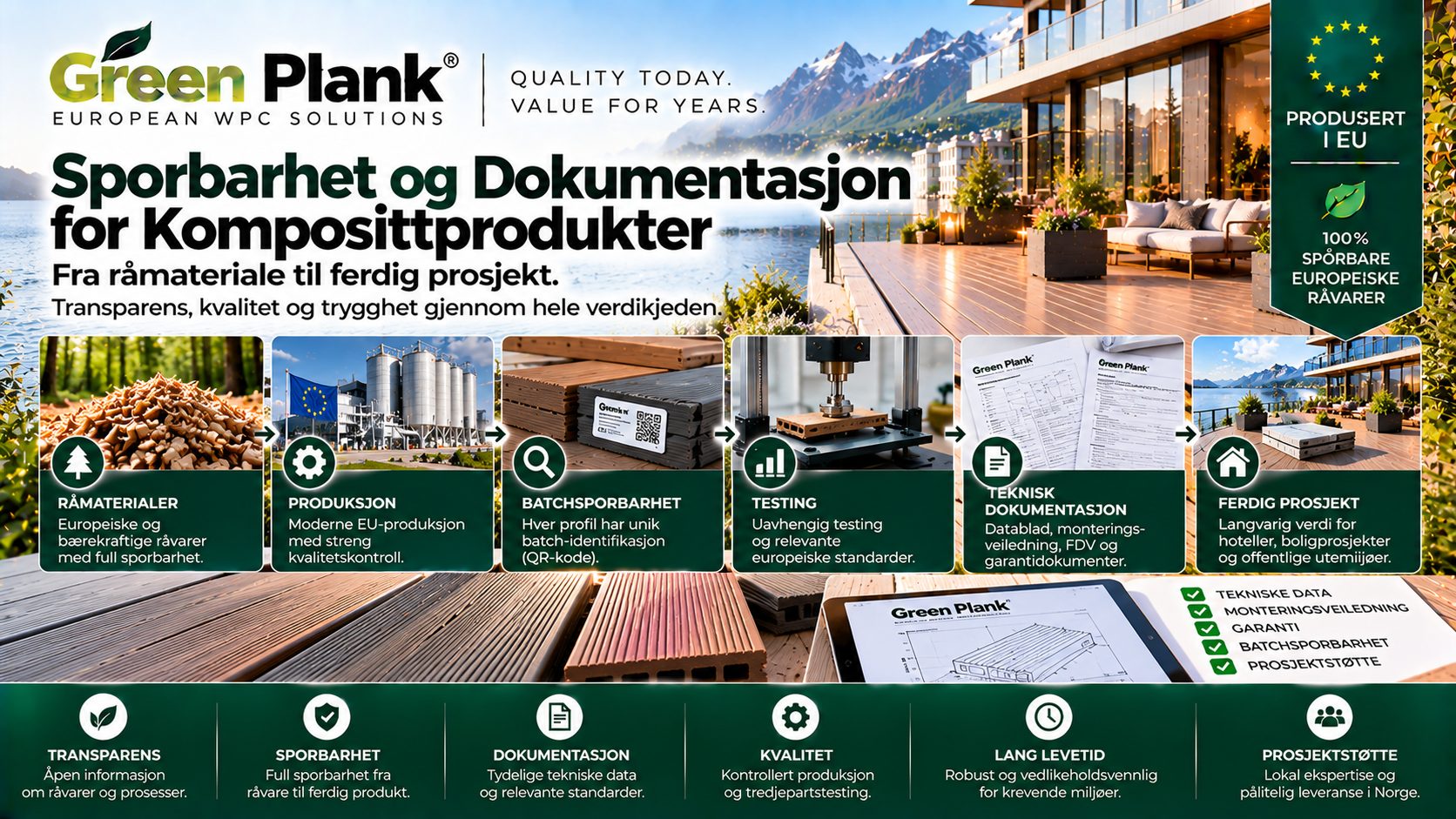
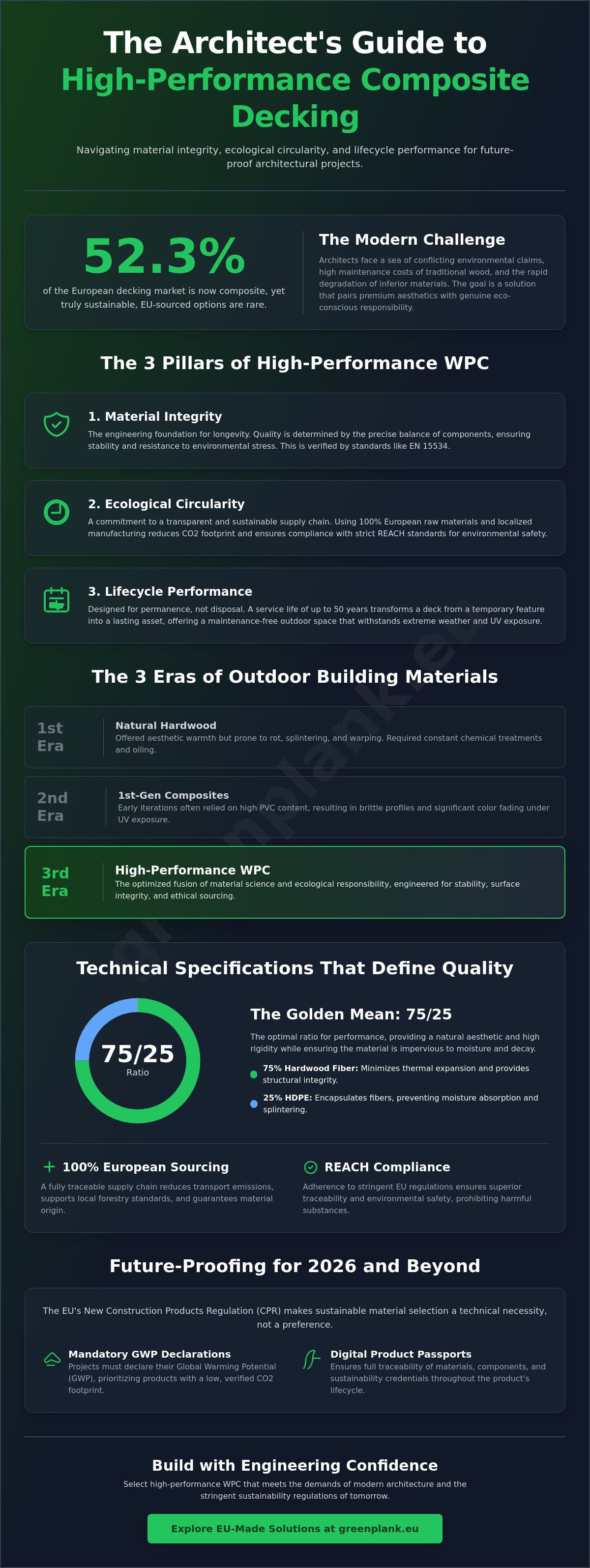
The industry eventually moved toward a more balanced approach, but it wasn't until the arrival of 3rd-generation technology that the "wood-plastic" promise was truly realized. We define 3rd-generation wood-plastic composite (WPC) as the optimized fusion of 75% hardwood fiber and 25% HDPE. This specific ratio provides a natural aesthetic and high rigidity while ensuring the material remains completely impervious to moisture and decay. By utilizing 100% European raw materials, we ensure a traceable supply chain that meets the highest environmental standards. Our engineering focuses on three key performance markers:
- Material Stability: High hardwood content minimizes thermal expansion and contraction.
- Surface Integrity: Advanced HDPE encapsulation prevents splintering and moisture absorption.
- Ethical Sourcing: Regional manufacturing reduces transport emissions and supports local forestry standards.
Why Material Evolution Matters for 2026 Projects
The regulatory landscape in Europe is changing rapidly. With the New Construction Products Regulation (CPR) entering full application on January 8, 2026, the criteria for material selection have become more stringent. Architects and developers now face mandatory Global Warming Potential (GWP) declarations and the requirement for Digital Product Passports. This shift makes the choice of sustainable building materials a technical necessity rather than a secondary preference. Commercial tenders increasingly prioritize products with a low CO2 footprint and verified circularity.
Future-proofing a project against climate-related degradation requires a shift in mindset. As European summers become more intense, materials must withstand higher UV indices and extreme weather cycles without losing their structural properties. Our 3rd-generation WPC is designed for these conditions, offering a service life of up to 50 years. This longevity transforms a deck from a temporary feature into a lasting asset, ensuring that the architectural vision remains intact for decades to come.
3 Technical Specifications That Determine WPC Quality
Architectural excellence is rarely accidental. It's the result of precise engineering decisions made during the manufacturing phase. When evaluating WPC composite decking, professionals must look beyond surface aesthetics to the 3 technical specifications that dictate long-term performance: the fiber-to-polymer ratio, profile density, and the regulatory origin of the raw materials. These factors determine whether a deck will maintain its structural integrity for five decades or succumb to environmental stress within five years.
The 75/25 Ratio: Finding the Golden Mean
High-performance WPC relies on a specific balance of components. We utilize a blend of 75% hardwood fiber and 25% HDPE (High-Density Polyethylene), supplemented with essential additives. This 75% wood content provides the authentic tactile feel and natural rigidity of timber; it ensures the boards don't feel like synthetic plastic underfoot. The HDPE serves as a high-performance binder. Unlike PVC-heavy alternatives, which can become brittle and crack under thermal stress, HDPE remains flexible and stable. It encapsulates the wood fibers, creating a permanent barrier that prevents moisture absorption and fungal growth. This ratio is the "golden mean" of material science. It delivers the maximum possible wood content without compromising the polymer's ability to shield the organic material from the elements.
Manufacturing Precision and EU Standards
The origin of raw materials is a critical safety factor that is often overlooked in global sourcing. We source 100% of our raw materials within the European Union. This ensures full compliance with REACH regulations and aligns with the objectives of the Circular Economy Act for composites. Many non-regulated imports contain "toxic" additives, such as heavy metal stabilizers or low-grade recycled plastics that off-gas harmful chemicals. By maintaining a localized supply chain, we guarantee chemical safety and material traceability. This regional reliability is what allows our products to achieve a 50-year service life.
Density also plays a vital role in structural integrity and site logistics. High-quality, low-density profiles like Nordeka demonstrate that strength isn't always tied to excessive weight. Through advanced extrusion techniques, we create profiles that are easier to handle and install while maintaining superior load-bearing capacity. This reduction in weight lowers the CO2 footprint during transport and simplifies the labor required on-site. If you're planning a large-scale project, you can examine our technical data sheets to see how these specifications translate to real-world durability and safety.
The 3 Pillars of Sustainability in Modern Facades
Sustainability in modern architecture requires more than just high-performance specifications. It demands a holistic approach to the material lifecycle, ensuring that every component contributes to a healthier planet. We anchor our environmental commitment in 3 core pillars: localized production, circular design, and the elimination of chemical maintenance. These principles allow architects to achieve premium aesthetics without compromising their ethical standards. By focusing on regional reliability and engineering precision, we've developed a manufacturing process that satisfies both the emotional desire for beauty and the rational need for ecological responsibility.
Reducing the CO2 Footprint of Your Project
The first pillar focuses on radical carbon reduction through localized production. Global shipping remains one of the largest contributors to construction-related emissions. By sourcing 100% of our raw materials within the EU and manufacturing locally, we significantly lower the logistical carbon debt of every board. We utilize recycled hardwood fibers that would otherwise be treated as waste, giving them a second life within a high-durability product. This approach doesn't just benefit the environment; it provides a more stable supply chain for your project. When you consider the impact of a 50-year warranty, the carbon cost per year of service becomes remarkably low. This longevity is a primary signature of our engineering confidence, ensuring that resources aren't wasted on frequent replacements.
Circular Design and the Cradle to Cradle Model
Our second pillar is the Cradle to Cradle ownership model. Traditional building materials often follow a linear path from extraction to landfill. We've rejected this "disposable" construction mindset. Our materials are designed for circularity, meaning they can be reclaimed and recycled at the end of their extensive service life. This philosophy extends to our composite wall cladding, which protects the building envelope while respecting the ecosystem. We view our products as borrowed resources that will eventually return to the manufacturing cycle, creating a closed-loop system that preserves natural capital for future generations.
The third pillar is the total elimination of toxic maintenance. Traditional timber requires annual applications of stains, oils, and sealants to prevent decay. These chemicals often leach into the surrounding soil and water table. Our 3rd-generation WPC requires only basic cleaning with water. This maintenance-free attribute is a significant feature that immediately benefits the end-user. It also helps projects qualify for prestigious LEED and BREEAM certifications. These international standards reward the use of materials that demonstrate low global warming potential and high chemical safety. By choosing EU-made composites, you're not just building a deck; you're implementing a sustainable infrastructure solution that meets the rigorous demands of 2026 environmental regulations.
3 Reasons Why European Manufacturing Outperforms Global Imports
Selecting architectural materials involves a calculated assessment of risk and reward. While global markets provide various low-cost options, professional specifiers increasingly recognize that European manufacturing offers a level of certainty that global imports simply cannot match. There are 3 primary reasons why EU-engineered WPC outperforms global alternatives: superior material traceability, stringent chemical safety compliance, and ethical labor standards. For architects seeking a high-performance Trex decking alternative, Green Plank provides a solution grounded in regional reliability and engineering precision.
Traceability and Chemical Safety
Global imports frequently rely on "mystery" plastics and non-regulated additives to keep costs low. These materials often lack the rigorous oversight required by EU REACH standards, posing significant risks for both public and residential environments. Our commitment to 100% EU raw materials ensures that every board is free from harmful heavy metals and volatile organic compounds. This transparency is vital for architectural projects where human safety and environmental health are non-negotiable. Professional installers prefer these systems because they offer predictable behavior during cutting and fastening. This predictability reduces on-site waste and ensures a seamless, high-end finish that reflects the quality of the overall design. When you choose materials made in the EU, you're investing in a documented supply chain that prioritizes the health of the end-user and the local ecosystem.
Engineering for the European Climate
European weather presents unique challenges, ranging from the intense UV exposure of Mediterranean summers to the punishing frost cycles of Northern winters. Our products are specifically engineered to thrive in these diverse conditions. Profiles such as Terra Tuff and Smart System undergo rigorous testing for extreme temperature fluctuations to ensure they don't warp, crack, or lose their structural integrity. High-density HDPE encapsulation provides a moisture-proof barrier. This feature resists the expansion and contraction cycles that typically cause premature failure in lower-quality imports. To maximize the longevity of these materials, following a professional deck installation guide is essential. Correct spacing and ventilation allow the 3rd-generation WPC to perform as intended, securing the 50-year service life that defines our brand.
Choosing regional manufacturing also supports European professional fair-labor standards and regional economies. It ensures that the craftsmen producing your materials work in safe, ethical conditions that mirror the values of your own firm. This choice reflects a commitment to the 3 pillars of quality we've established: material integrity, ecological circularity, and lifecycle performance. To see how these standards translate into a maintenance-free outdoor space, you can browse our full range of EU-made composite solutions.
Implementing the 3 Essentials with Green Plank Solutions
Translating the framework of material integrity, ecological circularity, and lifecycle performance into a physical structure requires a precise selection of engineered components. Modern architectural projects don't just need a product; they need a system that integrates seamlessly with the surrounding environment. By applying a framework built on the 3 pillars of sustainability, you can transform a conceptual design into a high-performance reality. Green Plank provides the technical tools and regional reliability necessary to execute these goals with engineering confidence.
Choosing Your System: Decking, Cladding, or Fencing
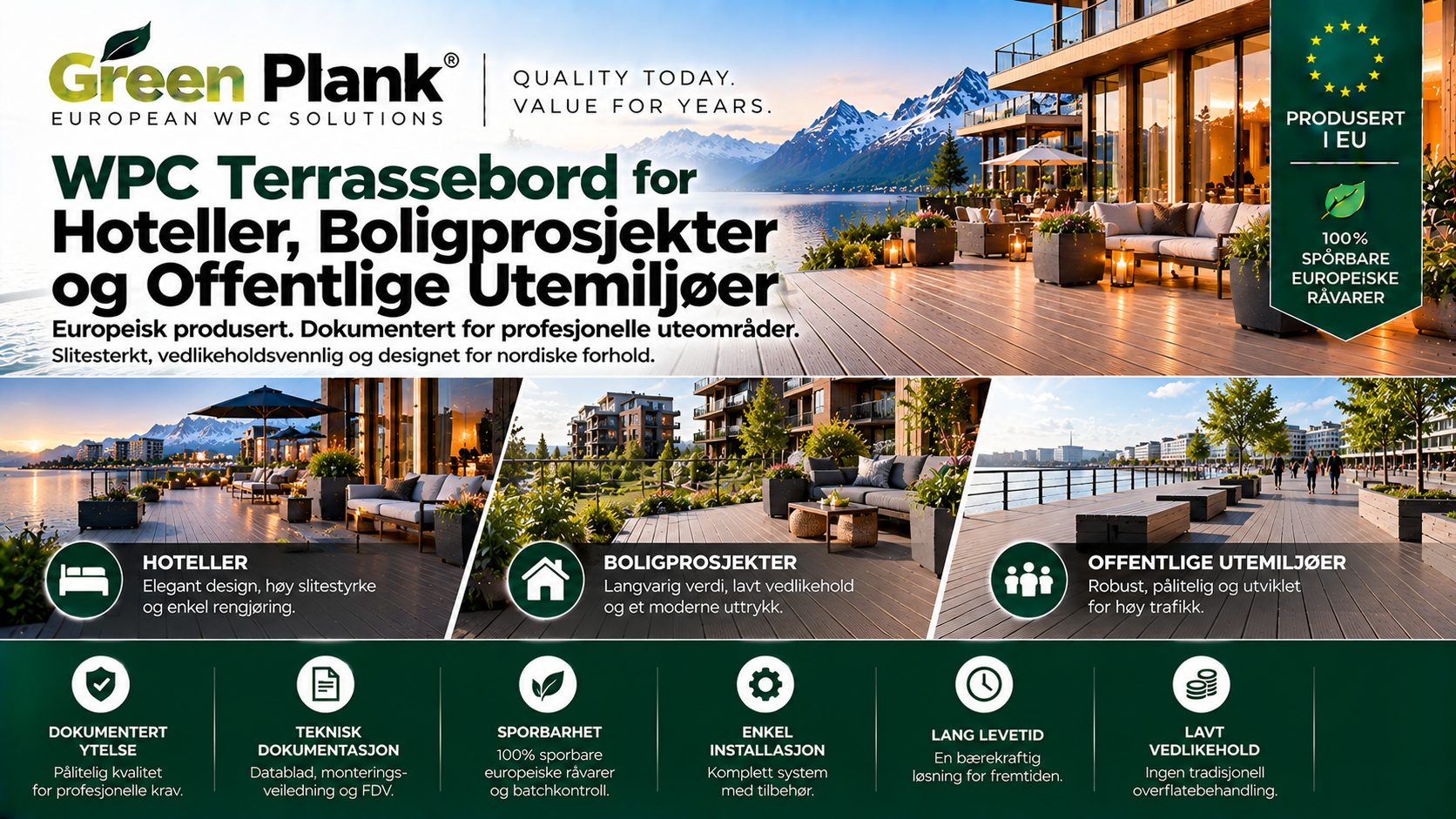
Every architectural project has unique structural demands. Selecting the right profile is a matter of matching material density to the specific requirements of the site. Nordeka offers a lightweight, low-density profile that excels in residential settings where ease of handling and rapid installation are paramount. For projects requiring maximum durability, Terra Tuff provides a robust, high-performance solution designed to withstand the rigors of heavy use. Smart System decking balances these attributes, offering a versatile choice for a wide range of applications. It's about precision. We also offer specialized Commercial Infrastructure Profiles specifically engineered for high-traffic public spaces, ensuring that safety and longevity are never compromised.
Beyond material selection, the overall design plays a critical role in the project's success. For those seeking inspiration on how to combine these technical solutions with high-end aesthetics, you can explore Deck Platforms to see how expert designers like BigDecks create cohesive outdoor environments.
A cohesive architectural vision often extends beyond the horizontal plane. Integrating composite fencing allows for a unified aesthetic that shares the same environmental credentials as your decking and cladding. We provide the ability to customize lengths and finishes for large-scale developments, reducing on-site waste and ensuring a perfect fit for complex layouts. This integrated approach simplifies the procurement process and guarantees that every boundary and facade respects the same 100% EU raw material standards.
The HidLoc™ Advantage for Professionals
The HidLoc™ Hidden Fastening System represents a significant advancement for industry professionals. It eliminates the need for visible screws, creating a contemporary, screw-free surface that is safe for bare feet and visually uninterrupted. This system doesn't just improve aesthetics; it accelerates the installation process by providing consistent gapping automatically. For private use, we recommend a 600 cc joist spacing to ensure the structural integrity of the deck remains uncompromised over time. This technical precision prevents sagging and maintains the board's profile throughout its service life.
Securing your investment is a matter of long-term performance. We back our engineering with a warranty of up to 50 years, a primary signature of our confidence in 3rd-generation WPC technology. This guarantee ensures that your outdoor space remains maintenance-free and structurally sound for decades. By choosing a system that prioritizes regional manufacturing and ethical innovation, you're not just building for today; you're creating a lasting legacy that respects both nature and the project's lifecycle costs.
Building for the Future of European Architecture
Transitioning to 3rd-generation WPC represents a fundamental shift toward permanent, eco-conscious infrastructure. By prioritizing the 3 pillars of sustainability and material integrity, you ensure that your next project withstands the test of time while respecting the natural world. Choosing materials with 100% EU raw materials guarantees chemical safety and localized reliability. This engineering precision transforms a simple deck or facade into a lasting architectural asset that meets the rigorous demands of 2026 environmental standards.
Our Cradle to Cradle ownership model and specific long-term performance guarantees, including an industry-leading 50-year warranty, provide the engineering confidence required for modern developments. You can now achieve a maintenance-free outdoor space without compromising your commitment to the environment. We invite you to explore how our regional heritage and manufacturing quality can elevate your vision. Request Technical Specifications and Samples for Your Next Project to begin your transition toward a more sustainable and durable built environment. It's time to build with purpose and precision.
Frequently Asked Questions
What are the 3 main components of Green Plank composite decking?
Green Plank composite decking is engineered from 3 main components: 75% hardwood fiber, 25% HDPE, and high-performance additives. This specific blend provides the authentic warmth of natural wood with the durability of modern material science. We source 100% of these raw materials within the EU to ensure chemical safety and consistent quality. This localized supply chain is a core identity marker that guarantees our products meet the highest professional standards.
Why is 3rd-generation WPC better than traditional wood?
3rd-generation WPC outperforms traditional wood by eliminating the need for annual staining, oiling, or sealing. Unlike natural timber, it doesn't rot, splinter, or warp when exposed to extreme moisture or UV cycles. Our engineering provides a service life of up to 50 years, making it a permanent infrastructure solution rather than a temporary feature. It's a choice that balances high-end aesthetics with grounded, maintenance-free responsibility.
How does Green Plank help reduce the CO2 footprint of a building?
We reduce the CO2 footprint of a building through localized EU manufacturing and the use of recycled hardwood fibers. Local production minimizes the carbon debt associated with global shipping, while our Cradle to Cradle ownership model ensures materials remain within a circular economy. The extreme longevity of the product also reduces the total environmental impact over the building's lifecycle by preventing the need for frequent reconstructions and replacements.
Is Green Plank composite suitable for saltwater or coastal environments?
Green Plank composite is highly suitable for saltwater and coastal environments due to its advanced HDPE encapsulation. This polymer shield prevents salt spray and high humidity from penetrating the core, protecting against the corrosion and decay that typically plague natural wood in marine settings. It's an ideal choice for marinas, boardwalks, and coastal residential projects where durability and regional reliability are primary concerns for the architect.
What is the maximum span (cc) for Green Plank decking in private projects?
The recommended maximum span for Green Plank decking in private projects is 600 cc center-to-center between joists. Adhering to this specification ensures optimal load-bearing capacity and prevents any potential sagging or bouncing underfoot. By following these 3 essentials—correct spacing, ventilation, and drainage—you ensure the boards perform as engineered. For commercial projects with higher load requirements, we provide technical data sheets to help specifiers determine the appropriate substructure configuration.
Does Green Plank offer a warranty for commercial infrastructure?
Yes, we provide specific long-term performance guarantees for commercial infrastructure, with warranties extending up to 50 years. This reflects our engineering confidence in the durability of our 3rd-generation materials. Our commercial profiles are designed to withstand high pedestrian traffic and mechanical stress, providing a maintenance-free solution for public spaces. It's a trustworthy choice for professionals who prioritize quality and long-term performance in high-traffic architectural developments.
Can Green Plank products be recycled at the end of their life?
All Green Plank products are fully recyclable at the end of their service life as part of our Cradle to Cradle ownership model. We design our composites for circularity, ensuring that the wood fibers and HDPE can be reclaimed and reintegrated into new manufacturing cycles. This prevents waste and preserves natural capital, aligning with the EU's goals for a circular construction economy and supporting a sustainable future for the building industry.
Why should I choose EU-manufactured composite over global imports?
Choosing EU-manufactured composite ensures full traceability and compliance with stringent REACH environmental regulations, which global imports often bypass. We guarantee that our products are free from heavy metals and toxic additives commonly found in non-regulated materials. Furthermore, regional manufacturing supports local economies and ensures that the products are specifically engineered for the unique challenges of the European climate, providing a level of reliability and ethical innovation that imports can't match.
Spesifiser produktet
Bruk denne guiden i en Green Plank-spesifikasjon
Tekniske WPC-artikler skal støtte de kommersielle sidene — ikke konkurrere med dem. Fortsett til komposittdekke, TerraTuff, Nordeka eller de tekniske nedlastningene.