



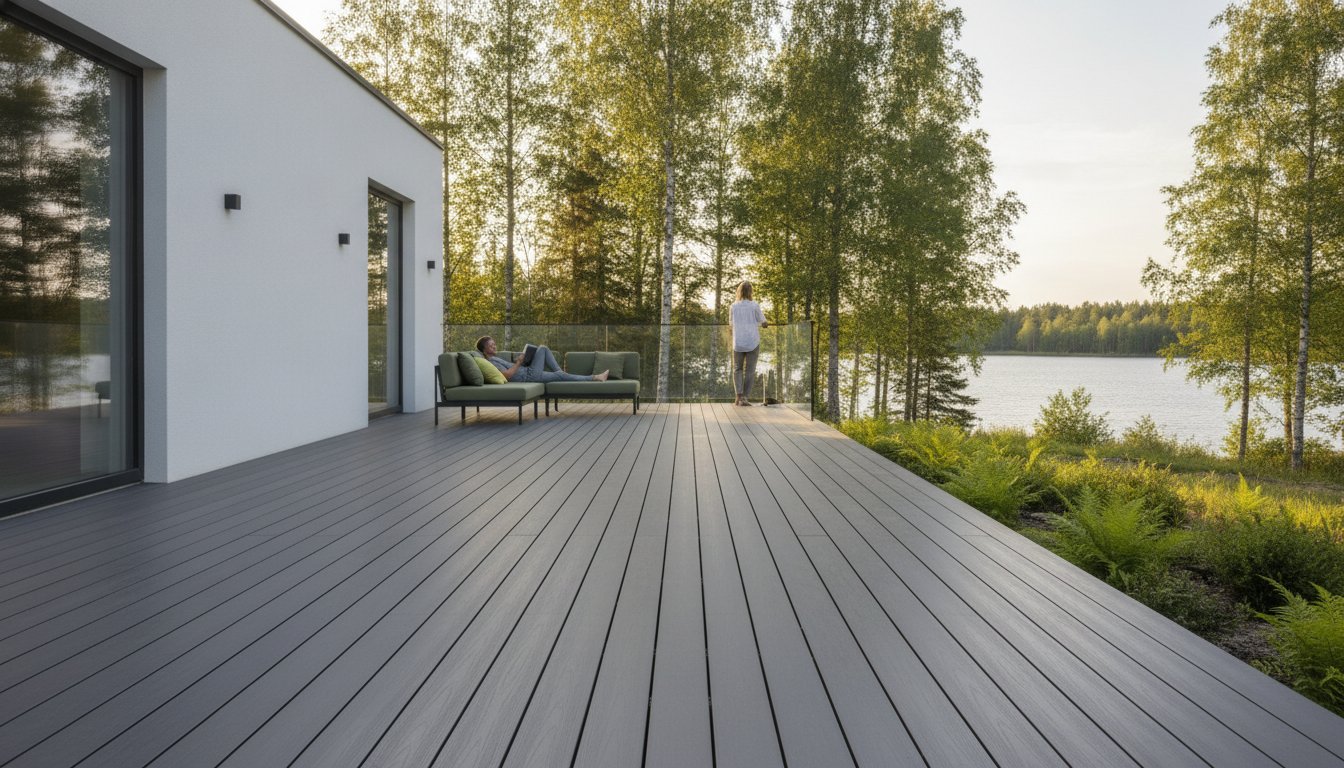
Why do we settle for outdoor spaces that demand more labor than they provide relaxation? Most homeowners invest in timber with a vision of peaceful summer evenings; instead, they find themselves trapped in a cycle of annual sanding, oiling, and repairing rot. If you're tired of splintering wood and the high environmental cost of imported materials, it's time to consider the engineering precision of European komposite trall.
This guide reveals how advanced material science transforms your backyard into a maintenance-free sanctuary that lasts up to 50 years. By blending 75% hardwood fiber with high-density polyethylene (HDPE), we've created a product that balances high-end aesthetics with grounded, eco-conscious responsibility. You'll learn about the structural integrity of our EU-sourced raw materials, the seamless finish of the HidLoc™ fastening system, and how a Cradle to Cradle approach ensures your deck respects the environment for decades to come.
Key Takeaways
- Understand how a precision blend of 75% hardwood fiber and 25% HDPE eliminates the rot and splintering inherent in organic timber.
- Learn why 100% EU raw materials and a Cradle to Cradle manufacturing model significantly reduce the CO2 footprint of your outdoor project.
- Compare the long-term ROI of komposite trall, which offers a 50-year service life without the need for annual sanding or oiling.
- Discover the technical advantages of HidLoc™ hidden fasteners and professional infrastructure profiles for a seamless, stable installation.
- Identify the ideal product line for your specific traffic requirements, from the robust Terra Tuff to the versatile Nordeka profiles.
What is Komposite Trall? Defining Modern WPC Decking
Modern outdoor architecture requires more than just visual appeal; it demands structural longevity and ethical sourcing. Wood-plastic composites (WPCs), commonly referred to as komposite trall, represent a high-tech hybrid material designed to bridge the gap between nature and engineering. While traditional timber relies on chemical treatments to delay inevitable decay, WPC uses a molecular bond to resist moisture, UV radiation, and fungal growth from the inside out. This shift from natural decay to engineered durability allows for a predictable performance profile that organic wood simply cannot match.
The Evolution of Outdoor Flooring
For decades, pressure-treated timber was the standard for European terraces. It's now becoming a liability for modern homeowners who value both their time and the environment. Traditional wood requires a relentless cycle of sanding, staining, and oiling to prevent splintering and rot, especially in wet climates. Early iterations of composite decking often struggled with a plastic appearance or thermal expansion issues. Today, modern komposite trall has evolved into a sophisticated architectural product. It successfully mimics the deep textures and variegated tones of tropical hardwoods like teak or ipe, but it does so without contributing to deforestation or requiring toxic chemical sealants. This evolution ensures a beautiful aesthetic that remains stable for decades.
Why Material Origin Matters in 2026
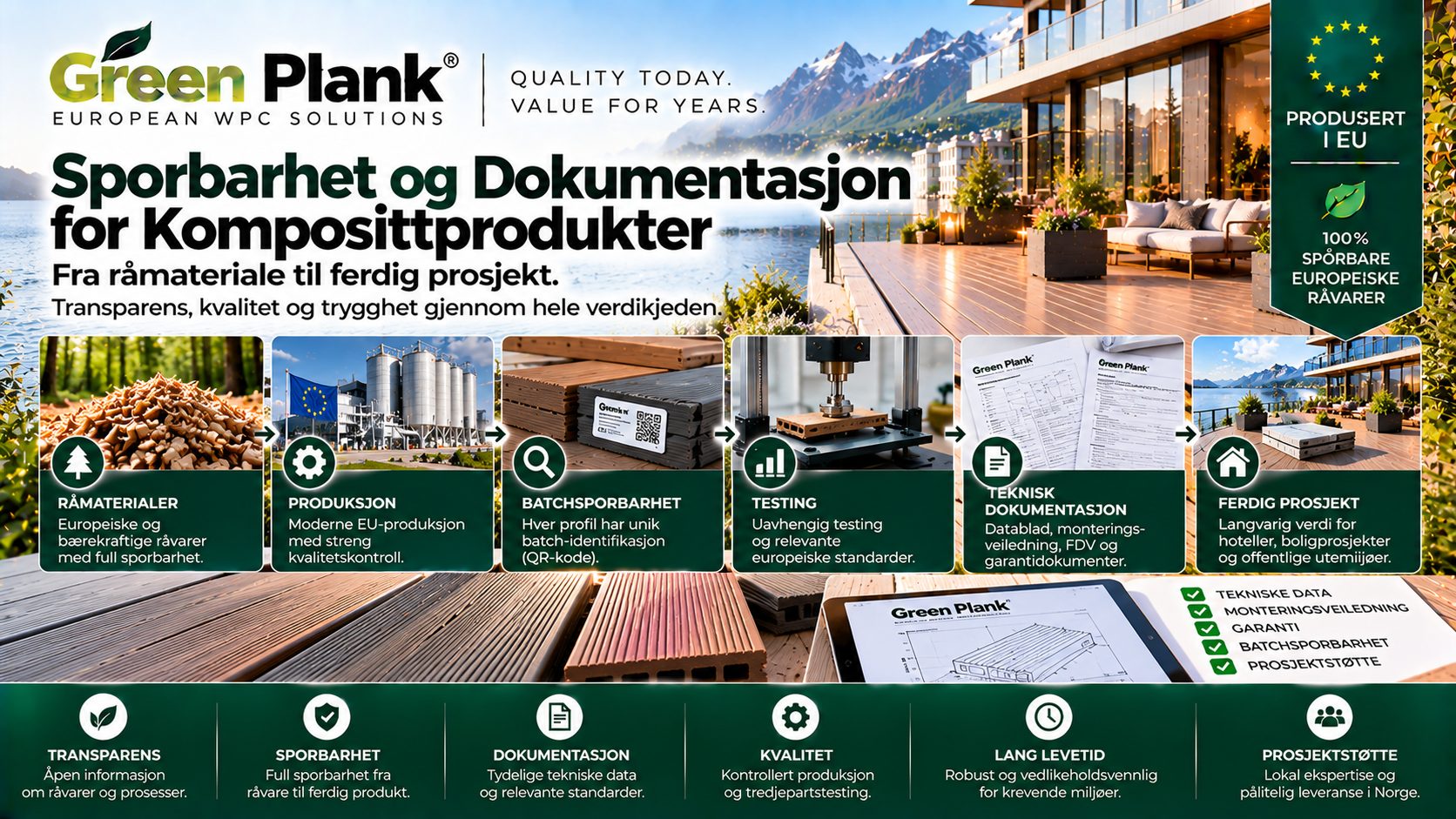
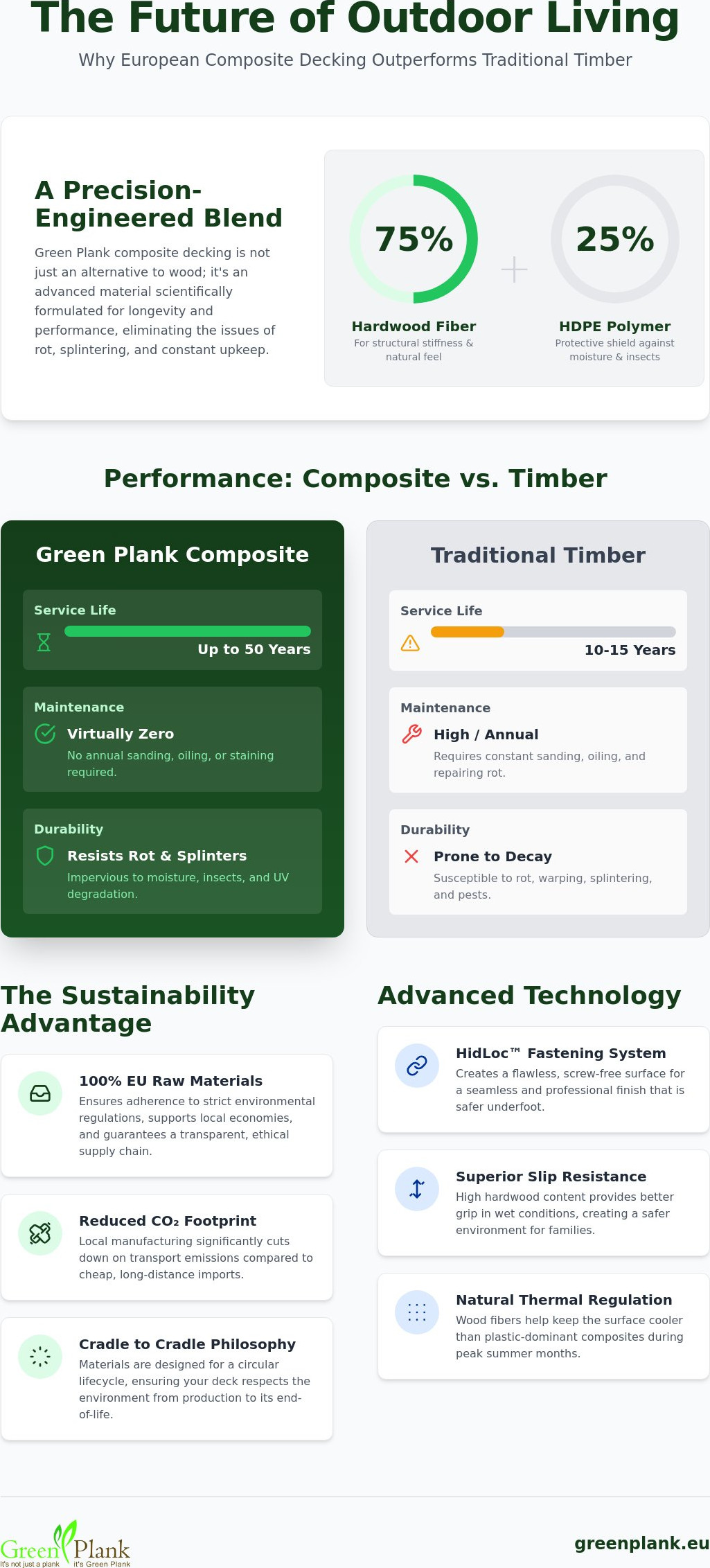
The global market is currently saturated with cheap imports that often prioritize low cost over material safety and environmental impact. Choosing 100% EU raw materials ensures that every board meets rigorous professional standards and European environmental regulations. Local manufacturing significantly reduces transport emissions and supports a transparent, ethical supply chain. This regional focus allows for stricter quality control over the raw components used in production. Our proprietary manufacturing process defines WPC as a precise engineering blend consisting of 75% hardwood fiber and 25% high-density polyethylene (HDPE) along with essential stabilizing additives.
This 75/25 ratio is critical for performance. The high hardwood content provides the structural stiffness and natural feel of real wood, while the HDPE polymer serves as a protective shield against moisture and insects. By sourcing materials within the EU, we maintain a lower CO2 footprint and guarantee a product built for a 50-year service life. This commitment to quality and origin ensures that your outdoor space is not just a temporary addition, but a long-term investment in sustainable living.
The Science of Sustainability: 75% Hardwood and Cradle to Cradle
Engineering a sustainable deck requires a departure from traditional plastic-heavy composites. Our komposite trall utilizes a precise ratio of 75% hardwood fiber and 25% high-density polyethylene (HDPE). This high wood-to-polymer ratio isn't accidental. It's a deliberate choice to prioritize structural integrity and natural aesthetics. While many competitors rely on PVC, we choose HDPE because it's a chemically inert polymer that doesn't release harmful toxins into the soil or air. It's safer for your family, it's better for the local ecosystem, and it's far easier to recycle at the end of its life cycle.
By prioritizing 100% EU raw materials, we maintain a transparent supply chain that avoids the ethical and environmental pitfalls of unchecked global imports. This regional focus ensures that every board meets professional standards while supporting a circular economy. It's about more than just building a deck; it's about making a responsible choice for the future of European construction.
The Hardwood Fiber Advantage
High hardwood content provides several technical benefits that plastic-dominant boards lack. Wood fibers offer natural thermal regulation, keeping the surface significantly cooler during peak summer months. They also provide superior slip resistance, creating a safer environment for children and pets in wet climates. We incorporate specialized eco-conscious additives to block UV rays and prevent fungal growth. Research from the USDA Forest Products Laboratory confirms that these advanced formulations are essential for long-term weatherability and durability. Our low-density boards offer high structural load capacity while remaining manageable for installers on site. This balance of strength and weight makes komposite trall the ideal choice for both private terraces and demanding commercial projects.
Achieving a Circular Project Lifecycle
Sustainability isn't a static goal; it's a circular process. We embrace a 'Cradle to Cradle' ownership model, meaning our products are designed with their next life in mind. This approach ensures that at the end of a 50-year service life, the materials can be reclaimed and repurposed rather than sent to a landfill. Choosing EU-made products helps developers and homeowners reduce CO2 footprint by minimizing the emissions associated with long-distance shipping. This focus on circular construction supports regional biodiversity and European climate goals. You can explore our full range of sustainable profiles at greenplank.eu to see how regional reliability meets high-end design.
- Resource Efficiency: Using reclaimed hardwood fibers reduces the need for virgin timber.
- Chemical Safety: HDPE avoids the phthalates and chlorine found in traditional PVC decking.
- Longevity as ROI: A 50-year service life minimizes the environmental cost of replacement.
- Regional Sourcing: 100% EU materials ensure strict quality control and lower transport impact.
Performance Comparison: Komposite Trall vs. Traditional Wood
Choosing a decking material is a decision that impacts your lifestyle for decades. Traditional timber offers a classic look but demands a high price in labor. Over a 25-year period, a wood deck requires at least 12 to 15 cycles of sanding and oiling to remain functional. In contrast, komposite trall maintains its structural integrity and color with nothing more than occasional soap and water cleaning. This resistance to the elements makes it immune to the rot and insect infestations that typically claim wooden decks within a decade. For a deeper look at the technical specifications, read our What is WPC Composite Decking? guide.
Many homeowners worry about surface temperature. It's a common misconception that all composites get too hot to walk on. Because our boards utilize a high 75% hardwood fiber content, they manage thermal energy much like natural wood. They don't retain heat in the same way that plastic-heavy imports do. This makes them comfortable for bare feet even on bright summer days. This thermal stability is a direct result of our engineering focus on material density and wood-to-polymer ratios.
Durability and Service Life
Softwoods like pressure-treated pine often begin to degrade after just five to ten years in harsh climates. Premium komposite trall is engineered for a 50-year service life. This longevity is essential for saltwater environments or poolside areas where constant moisture accelerates the decay of organic fibers. Our boards also provide a splinter-free guarantee. This is a critical safety feature for families with children or for high-traffic public spaces where liability and comfort are priorities. The material remains stable and smooth, regardless of the weather conditions it faces.
Total Cost of Ownership (TCO)
The initial investment in WPC is higher than low-grade timber. However, the total cost of ownership tells a different story. When you calculate the cumulative expense of stains, sealants, and the labor required for timber maintenance, the "cheaper" option becomes significantly more expensive within seven years. High-performance lines like Terra Tuff justify their cost through sheer endurance. While industry standard timber often carries a limited or non-existent warranty against rot, Green Plank provides a 50-year warranty that reflects our engineering confidence. This long-term performance makes it the most financially responsible choice for your outdoor space.
- Maintenance: No sanding, staining, or oiling required for the life of the deck.
- Safety: A splinter-free surface that is safe for bare feet and paws.
- Resilience: Full resistance to saltwater, mold, and wood-boring insects.
- Stability: Superior thermal regulation thanks to high hardwood fiber content.
Professional Installation: From HidLoc™ to Infrastructure Profiles
The longevity of a high-performance komposite trall deck depends as much on the quality of installation as it does on the material itself. While traditional timber projects often rely on invasive surface-screwing, modern WPC systems require a more engineered approach to handle thermal dynamics and structural loads. A disciplined installation process ensures that the finished space remains stable and aesthetically perfect for its entire 50-year service life. For comprehensive framing specifications and technical drawings, consult our Professional Deck Installation Guide.
The HidLoc™ Hidden Fastening System
The HidLoc™ hidden fastening system is a specialized solution that creates a seamless, screw-free surface. These clips anchor into the side grooves of the boards, which eliminates the risk of popped screw heads or surface splinters. This design creates a barefoot-friendly environment that is essential for residential terraces and public pool areas. Beyond the visual advantage, HidLoc™ provides a critical technical function by allowing the boards to expand and contract naturally. Because temperature changes cause predictable movement in composite materials, a flexible fastening system prevents the warping and internal stress associated with rigid surface-fastening. Professional installers prioritize this system because it significantly reduces labor time while delivering a high-end architectural finish.
Framing and Substructure Requirements
A stable deck begins with a correctly spaced substructure. For private residential projects, a maximum of 600 cc joist spacing provides the necessary support to keep the boards rigid and flat. In high-traffic public zones, we recommend the use of our commercial infrastructure profiles. These heavy-duty profiles are engineered to manage extreme weight and constant use without compromising the structural integrity of the project. Choosing the right substructure material is equally important. While WPC joists provide excellent durability for most gardens, aluminum subframes offer the ultimate in precision and rot-resistance for large-scale commercial decks.
Proper ventilation and drainage are the most overlooked aspects of composite installation. Air must be allowed to circulate beneath the deck to prevent moisture buildup and ensure the long-term health of the entire system. You can complete the installation by using matching skirting and lattice to hide the substructure and provide a polished, professional appearance. This attention to detail transforms a standard outdoor area into a premium living space. You can explore our complete range of Commercial Infrastructure Profiles and fastening accessories to find the right components for your next project.
- Barefoot Safety: Hidden fasteners eliminate dangerous sharp edges on the deck surface.
- Thermal Management: Engineered clips allow for natural board movement during seasonal shifts.
- Structural Integrity: 600 cc spacing ensures a solid feel underfoot for residential use.
- Professional Aesthetics: Matching skirting and lattice profiles provide a clean, finished look.
Choosing the Right Profile for Your Project
Selecting the correct profile for your project is a matter of aligning engineering specifications with the intended traffic load. While aesthetics play a role, the structural design of the board determines its performance over decades. Our 100% EU raw materials ensure that when you order large batches of komposite trall, you receive consistent color and density across every profile. This regional reliability is essential for maintaining a high-end look on expansive terraces or multi-unit developments where batch variation can ruin a visual finish. Whether you prefer the classic safety of a grooved surface or the natural elegance of a wood-grain finish, the underlying quality remains constant.
Residential vs. Commercial Solutions
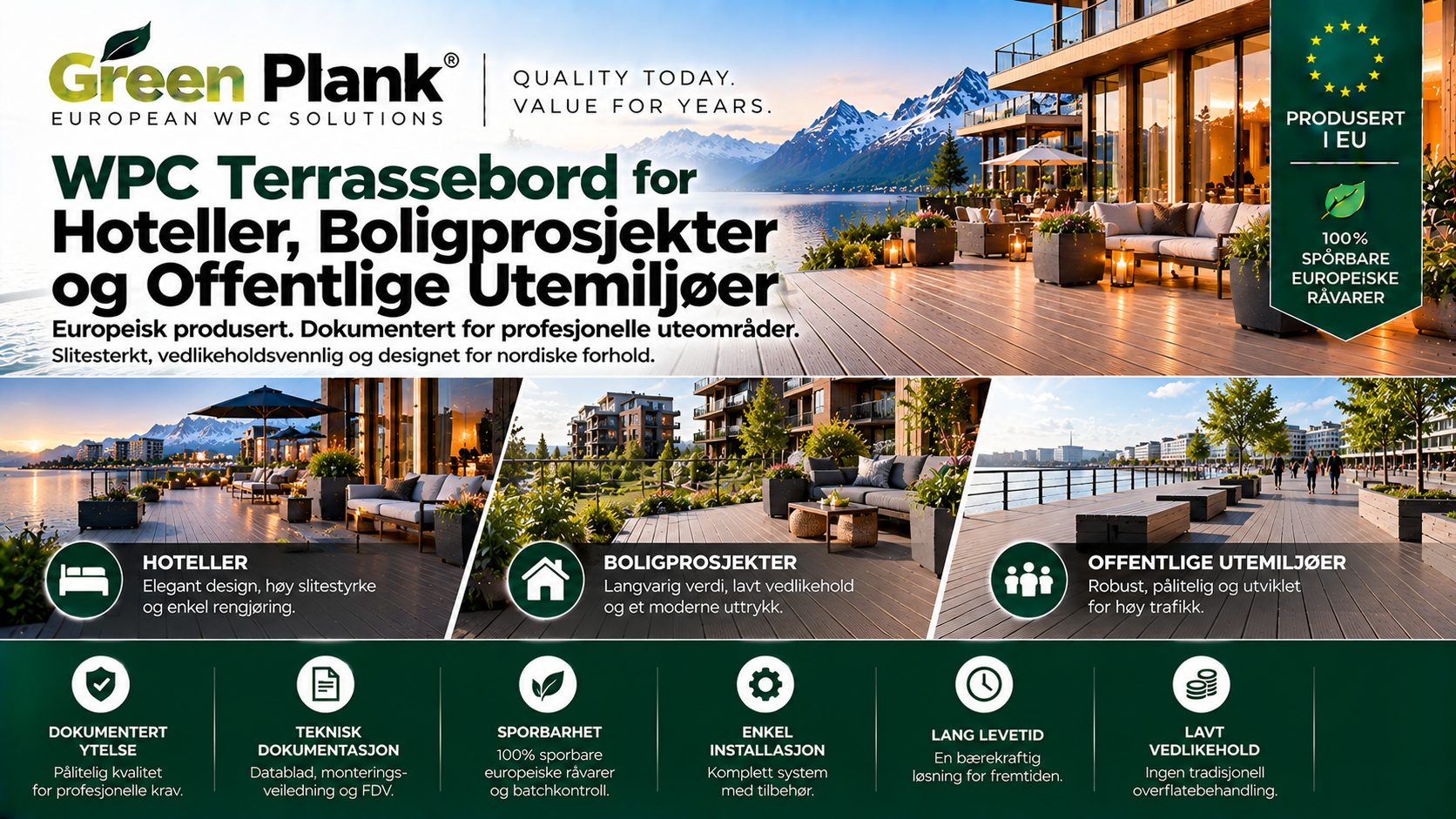
The Terra Tuff line is the professional standard for public infrastructure and high-traffic commercial zones. Its robust profile handles the constant weight and friction of public use without degrading. For modern residential balconies and garden terraces, the Smart System offers a refined, low-density solution that balances strength with ease of handling. If your project requires maximum aesthetic versatility, the Nordeka line provides a premium finish that suits both contemporary and traditional designs. To create a unified exterior aesthetic, these decking profiles can be matched with our composite wall cladding and fencing systems. This creates a cohesive architectural statement that respects the surrounding nature while requiring zero maintenance.
Sustainability as a Design Choice
In 2026, building materials must do more than just look good; they must contribute to the circular economy. Green Plank products are designed to help developers and architects meet rigorous LEED or BREEAM certification standards. By choosing a product with a documented "Cradle to Cradle" ownership model, you're investing in a project that minimizes waste and supports regional sustainability goals. This isn't just about environmental ethics. It's about engineering a product that outlasts the competition.
The inclusion of a 50-year warranty isn't just a promise of quality; it's a tangible asset for property valuation. Homeowners and commercial developers find that a maintenance-free outdoor space significantly increases the long-term appeal and resale value of a property. To ensure your investment is built and maintained to the highest standards, you can learn more about Cardwell Property Services Inc.. When you're ready to specify your materials, use the following checklist to ensure you're getting a premium komposite trall product that meets professional standards.
- Material Origin: Does the supplier guarantee 100% EU raw materials for color consistency?
- Chemical Safety: Is the product free from PVC, chlorine, and toxic phthalates?
- Long-Term ROI: Does the profile offer a 50-year warranty against rot and structural failure?
- Certification: Can the manufacturer provide documentation for circular construction or LEED credits?
- Unified Design: Are there matching cladding, fencing, and skirting profiles available for a complete look?
Build a Sustainable Legacy for Your Outdoor Space
Investing in your outdoor space shouldn't mean committing to a lifetime of maintenance. By choosing komposite trall, you're selecting a product defined by engineering precision and environmental ethics. The unique composition of 75% hardwood fiber provides the natural warmth and stiffness of timber, while advanced HDPE technology ensures complete protection against the elements. This is a material built for longevity, backed by a 50-year warranty that reflects our confidence in European manufacturing standards. It's a choice that prioritizes long-term value over temporary fixes.
Our commitment to a Cradle to Cradle circular design means your project supports a sustainable future without compromising on premium aesthetics. You can move beyond the cycle of sanding and staining to enjoy a terrace that remains stable, safe, and beautiful for decades. It's time to prioritize quality that lasts and materials that respect nature. This forward-thinking approach ensures your terrace remains an asset to your property for the next half-century.
To complete your maintenance-free sanctuary, a garden sauna from simplysaunas.co.uk makes a perfect addition to a high-performance composite terrace.
Explore our range of European-engineered composite decking to discover how our specialized profiles can transform your next project into a maintenance-free sanctuary. Build with the quiet confidence of a product designed for the future of sustainable living.
Frequently Asked Questions
Does komposite trall get hotter than wood in the summer?
High-performance komposite trall manages heat similarly to natural wood because of its 75% hardwood fiber composition. Unlike plastic-heavy alternatives that retain significant thermal energy, our boards provide a comfortable surface for bare feet. Choosing lighter color profiles can also help maintain a cooler surface temperature in areas with intense direct sunlight.
How do I clean and maintain my WPC composite deck?
Maintenance is limited to occasional cleaning with warm, soapy water and a soft brush to remove surface debris. You don't need to sand, oil, or seal the boards to maintain their structural integrity or color consistency. This maintenance-free design saves significant labor and material costs over the 50-year service life of the product.
Can I install composite decking directly onto a concrete surface?
No, you shouldn't install composite boards directly onto concrete or any flat surface. A substructure of WPC or aluminum joists is required to ensure proper ventilation and drainage beneath the deck. Adequate airflow prevents moisture accumulation and protects the long-term health of the entire installation system.
What is the difference between hollow and solid composite boards?
Hollow boards are lightweight and ideal for residential terraces, while solid boards offer the density required for heavy commercial traffic. Solid profiles provide superior impact resistance and are often specified for stairs or public boardwalks. Both options utilize the same high-quality EU raw materials and offer the same environmental benefits.
Are Green Plank products really made from 100% EU raw materials?
Yes, all our raw materials are sourced 100% within the European Union to ensure regional reliability. This focus ensures strict adherence to environmental regulations and significantly reduces the CO2 footprint associated with long-distance transport. It also guarantees a high level of quality control across every production batch for professional results.
How does the HidLoc™ system handle thermal expansion?
The HidLoc™ system utilizes engineered clips that anchor the boards while allowing them to slide slightly. This mechanism accommodates the natural thermal expansion and contraction caused by seasonal temperature shifts. By avoiding rigid surface-screwing, the system prevents internal stress and potential warping over the deck's lifespan.
Is composite decking slippery when wet compared to timber?
Premium komposite trall often provides better slip resistance than traditional timber, especially when wet. The high hardwood fiber content creates a textured surface that offers reliable grip for families and public spaces. Unlike wood, it doesn't develop a slippery layer of algae or mold, making it a safer choice for poolside areas.
What kind of warranty comes with Green Plank composite decking?
Our products come with a comprehensive warranty of up to 50 years against rot and structural failure. This guarantee serves as a primary signature of our engineering confidence and commitment to quality. It ensures that your investment remains protected through a Cradle to Cradle ownership model that prioritizes long-term performance and sustainability.
Spesifiser produktet
Bruk denne guiden i en Green Plank-spesifikasjon
Tekniske WPC-artikler skal støtte de kommersielle sidene — ikke konkurrere med dem. Fortsett til komposittdekke, TerraTuff, Nordeka eller de tekniske nedlastningene.