



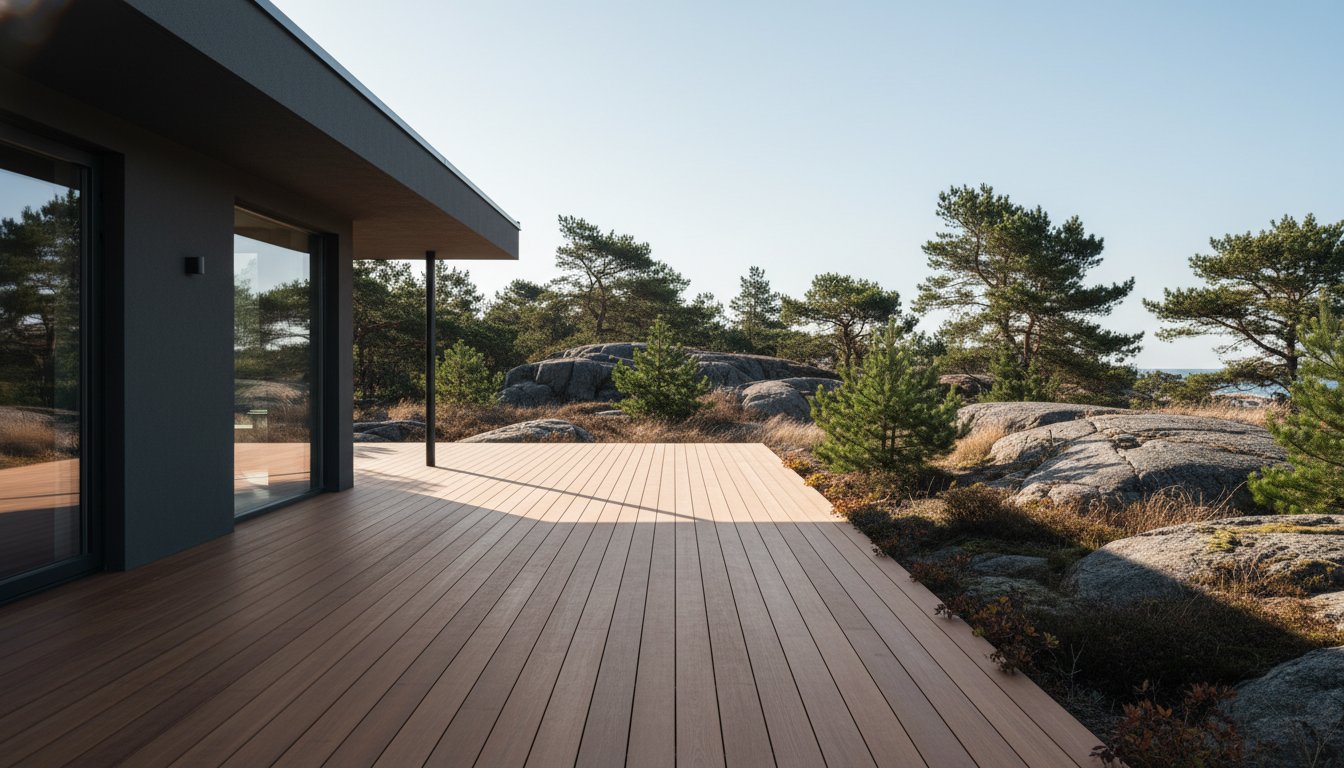
Sweden’s harsh coastal winds and seasonal freeze-thaw cycles can reduce a standard softwood deck to a rotting, splintered liability in less than 12 years. If you're managing a commercial project in Stockholm or a private residence in Gothenburg, you've likely seen how traditional timber fails to meet the long-term demands of modern architecture. This is where hardwood fiber composite changes the equation. It's an engineered material that combines the natural strength of traceable hardwood fibers with high-density polymers to eliminate the structural weaknesses of low-grade alternatives. Designed in Scandinavia. Produced in Europe.
We agree that a building material should be as enduring as the landscape it inhabits. You shouldn't have to choose between aesthetic warmth and technical performance, nor should you face the mounting costs of annual staining and chemical treatments. In this guide, you’ll discover the mechanical advantages and environmental benefits of hardwood-based natural fiber composites for professional-grade construction. We’ll examine the specific CO2 profiles required for Miljöbyggnad certification and show you how to select a material with a verified 30 to 50 year service life. Built to last. Designed for life.
Key Takeaways
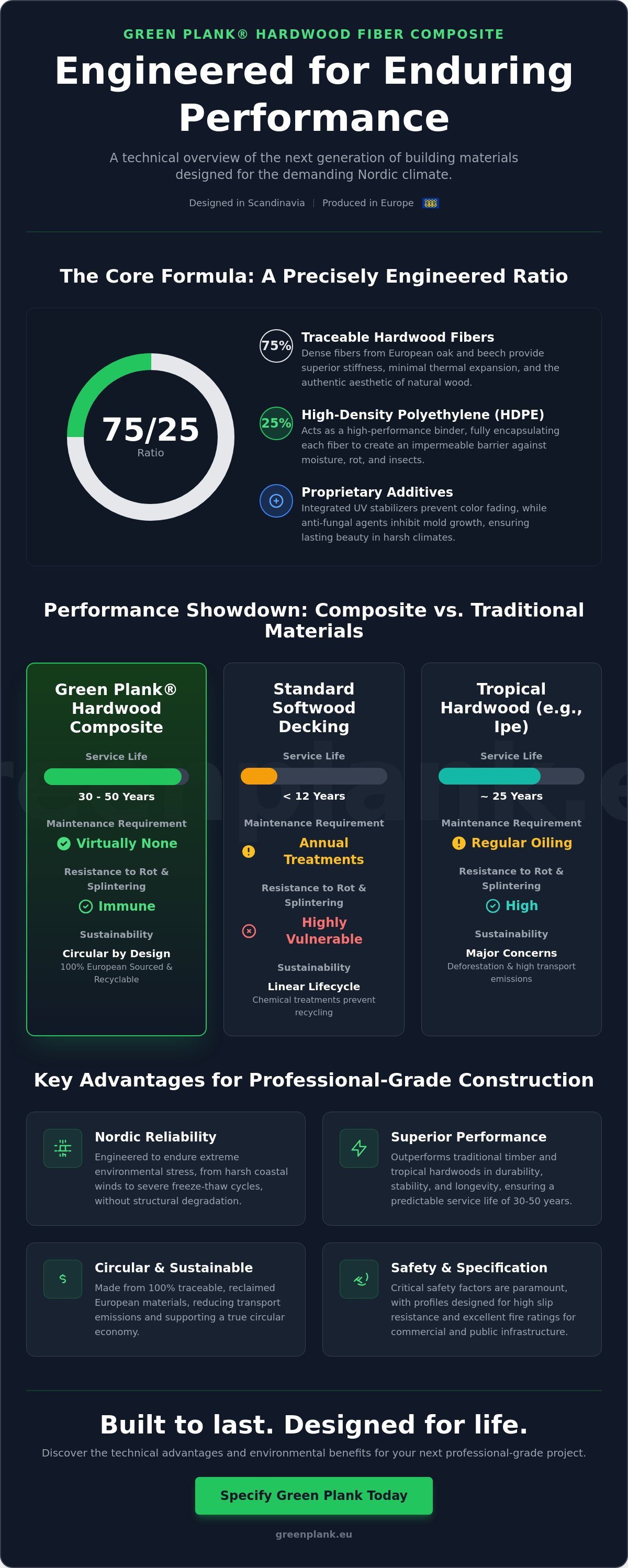
- Understand the engineering precision behind the 75/25 hardwood-to-HDPE ratio, designed to deliver a natural wood aesthetic without the traditional vulnerabilities of organic materials.
- Analyze the environmental impact of utilizing 100% European-sourced materials to achieve carbon sequestration and reduce transport-related emissions in Swedish construction.
- Compare the tensile and flexural performance of hardwood fiber composite against tropical hardwoods like Ipe to ensure professional-grade durability in Nordic climates.
- Gain technical insights into specifying the correct profiles for commercial infrastructure, focusing on critical safety factors like slip resistance and fire ratings.
- Discover how modern natural fiber composites provide a maintenance-free, circular alternative to traditional timber while maintaining high-end Scandinavian design standards.
What is Hardwood Fiber Composite? Defining High-Performance WPC
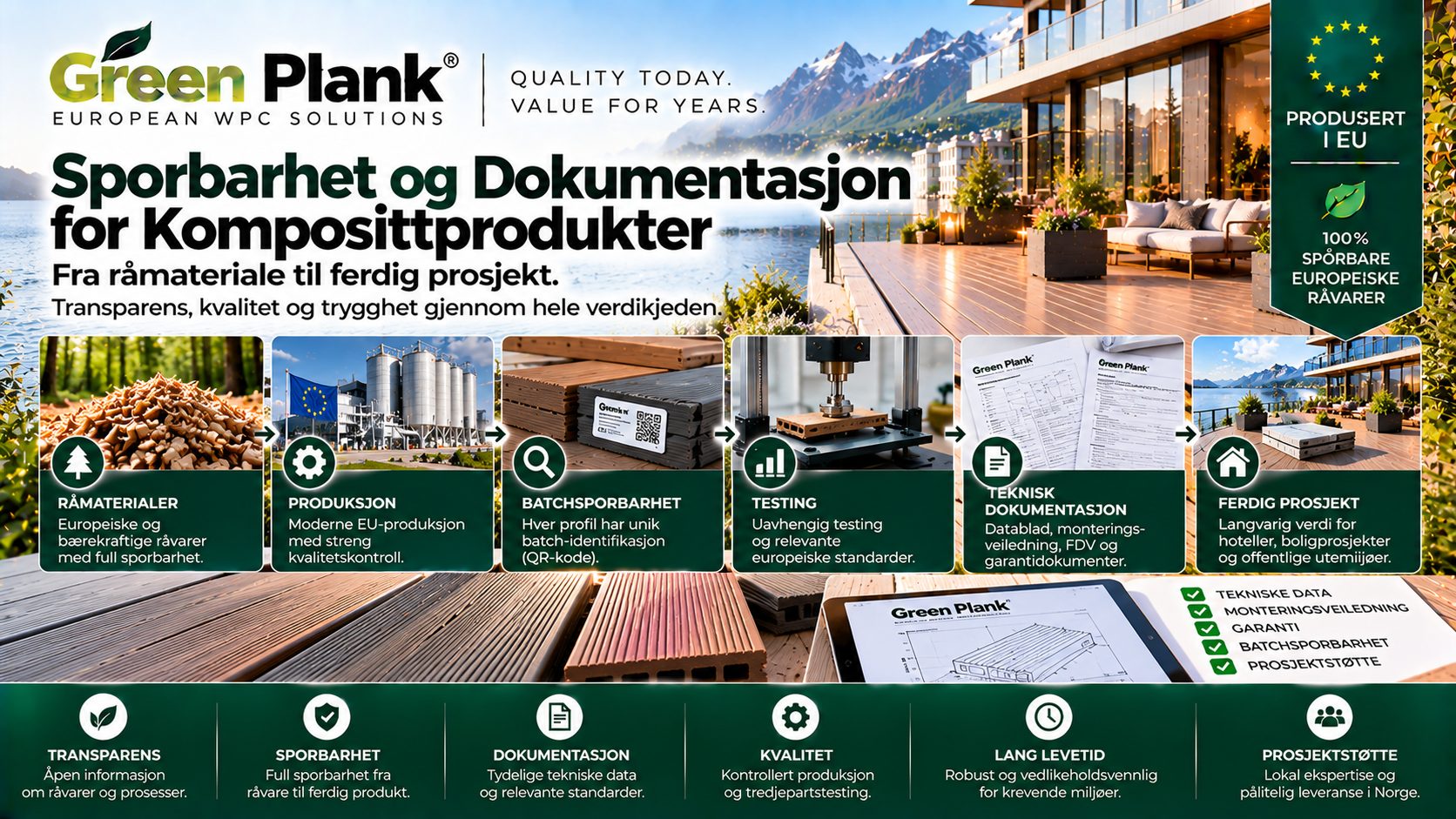
Hardwood fiber composite represents the next generation of biobased engineering. It's a sophisticated material that fuses 75% processed hardwood flour with 25% high-density polyethylene (HDPE) and proprietary additives. This isn't the early "plastic wood" that often lacked structural character; it's a high-performance natural fiber composite (NFC) designed to bridge the gap between organic aesthetics and industrial durability. By combining the natural strength of wood with the resilience of polymers, we've created a material that's engineered for the demanding Swedish climate.
Green Plank operates on a core philosophy: Built to last. Designed for life. This commitment means moving beyond temporary solutions toward permanent, low-maintenance infrastructure. Wood-plastic composites (WPCs) have transitioned from simple garden decking to critical components in commercial architecture, providing a traceable and sustainable alternative to rare tropical hardwoods. Every board is manufactured in Europe using 100% traceable raw materials to deliver stability, strength, and a refined Nordic character.
The Distinction Between Hardwood and Softwood Fibers
The choice of fiber dictates the long-term performance of the final profile. Hardwood fibers, derived from species like oak and beech, possess a significantly higher cellular density than softwoods like pine or cedar. This density translates directly to superior stiffness in the composite matrix. Because hardwood fiber composite utilizes these denser fibers, the resulting boards exhibit lower thermal expansion rates. They stay true to their dimensions even during Sweden's intense seasonal temperature swings. The specific fiber morphology ensures a consistent, high-density finish that resists the surface degradation often seen in cheaper softwood alternatives.
The Evolution of Wood-Plastic Composites (WPC) in 2026
As we move through 2026, the construction industry has shifted its focus toward the circular economy. Early domestic decking has paved the way for professional-grade profiles used in massive urban redevelopment projects across Scandinavia. The integration of sustainable building materials is now a requirement in modern urban planning to meet carbon neutrality goals. This evolution is anchored by a specific engineering ethos that prioritizes longevity over initial cost.
Nordic Reliability is defined as the uncompromising fusion of Scandinavian design precision with the technical capacity to endure extreme environmental stress without structural maintenance. This standard ensures that whether a project is a public boardwalk in Gothenburg or a private terrace in Stockholm, the material performs predictably for 20 to 30 years. The focus is no longer just on looking like wood; it's about outperforming it in every measurable metric of durability and environmental ethics.
The Engineering Behind the 75/25 Hardwood-to-HDPE Ratio
Achieving the perfect balance in a hardwood fiber composite requires a precise understanding of material science. At Green Plank, we utilize a 75/25 ratio, where 75% of the profile consists of reclaimed hardwood fibers and 25% is High-Density Polyethylene (HDPE). This specific blend is the "sweet spot" for performance. It provides the tactile warmth and organic aesthetic of natural timber while the HDPE acts as a high-performance binder. This ratio ensures the boards don't feel like plastic underfoot, maintaining a natural surface temperature even during Sweden's peak summer months.
The HDPE isn't just a filler; it's a structural matrix. During the high-pressure extrusion process, this polymer creates a 100% encapsulation of every organic fiber. We integrate specialized additives into this mix to fortify the boards against the harsh Nordic climate. These include high-grade UV stabilizers to prevent color fading and anti-fungal agents that inhibit mold growth in damp, shaded areas. The result is a low-density yet high-strength profile that outperforms both traditional timber and standard PVC-based alternatives.
Mechanical Properties: Stiffness, Strength, and Weight
The structural integrity of our hardwood fiber composite stems from the flexural modulus provided by the wood fibers. These fibers act as a natural reinforcement within the polymer matrix, increasing the board's stiffness. Unlike hollow-core composites that can feel "bouncy" or fragile, Green Plank’s high-density solid profiles offer superior impact resistance. This engineering choice is vital for long-term durability in residential and commercial settings alike.
- Structural Reinforcement: Hardwood fibers provide the necessary tensile strength to prevent sagging.
- Load-Bearing Capacity: Designed to support standard 600 mm joist spacing for private Swedish decking projects.
- Impact Performance: High-density composition resists denting from fallen objects or heavy patio furniture.
By optimizing the internal density, we've created a product that handles heavy loads without the excessive weight of tropical hardwoods. If you're planning a complex installation, you can view our technical specifications to ensure your subframe meets professional-grade standards.
Encapsulation Technology: Preventing Moisture Absorption
The primary weakness of traditional timber is its hygroscopic nature; it breathes, absorbs water, and eventually rots. Our engineering process solves this through advanced encapsulation. By studying the manufacturing steps, physical and mechanical properties of high-end composites, we've refined an extrusion method that coats every hardwood fiber in a protective polymer shield. This shield is impenetrable to moisture, which is the root cause of warping, splintering, and internal decay.
This technological barrier ensures long-term dimensional stability. Even when submerged or exposed to heavy snowmelt, the expansion and contraction rates remain minimal. It's this reliability that defines the quality of modern wpc composite decking. We don't just mimic the look of wood; we've re-engineered its DNA to thrive in environments where organic timber fails. It's a solution built to last and designed for life.
Sustainability and the Circular Economy: The CO2 Advantage
Selecting a hardwood fiber composite isn't just a choice for durability; it's a commitment to a circular building model. Traditional timber often relies on chemical treatments to survive Swedish winters, but engineered composites provide a cleaner alternative. By utilizing the hardwood fiber composite structure, we lock carbon into a stable, long-lasting form that avoids the landfill for decades. This section explores how material origin and engineering precision create a measurable environmental benefit.Traceability and Made in EU Standards
Ethical sourcing is the backbone of Nordic reliability. Every board we produce utilizes 100% European raw materials, ensuring that fibers come from sustainably managed forests. This geographical proximity drastically reduces transport-related emissions compared to products shipped from overseas. For developers and architects, using made in eu building materials simplifies ESG reporting by providing a transparent chain of custody. Many non-traceable imports use recycled plastics of unknown origin, which can introduce contaminants into the ecosystem. In contrast, our manufacturing process adheres to strict EU REACH regulations. We've eliminated the toxic preservatives, arsenic, and heavy metals typically found in pressure-treated wood. Designed in Scandinavia. Produced in Europe. This approach ensures that the material remains safe for both families and the environment throughout its life cycle.Reducing the CO2 Footprint of Construction Projects
Carbon sequestration is a primary advantage of biobased engineering. Trees naturally absorb CO2, and when those fibers are converted into a high-performance composite, that carbon is effectively "stored" for the product's 50-year service life. A comprehensive Life Cycle Assessment of WPCs demonstrates that these materials can significantly lower the environmental impact of a project when compared to traditional alternatives that require frequent replacement or chemical maintenance. Architects looking to reduce co2 footprint building projects find that our composites fit perfectly into the cradle to cradle building materials framework. The circularity of our products is defined by three pillars:- Carbon Storage: Biogenic carbon remains trapped in the hardwood fibers for decades.
- Low Maintenance: No need for petroleum-based stains or paints during the product's life.
- Recyclability: At the end of its 50-year life, the material can be ground down and repurposed into new composite profiles.
Hardwood Composites vs. Traditional Materials: A Performance Review
Choosing between traditional timber and a high-performance hardwood fiber composite requires a shift from looking at initial price tags to evaluating long-term engineering value. While pressure-treated pine remains a common choice in Sweden due to its low entry cost, it demands a rigorous maintenance schedule that many property owners find unsustainable. Tropical hardwoods like Ipe offer extreme density, yet they carry significant environmental footprints and are prone to surface checking in harsh Nordic winters.
The most common question from specifiers is whether a composite can match the strength of solid wood. Engineering data confirms that Green Plank profiles deliver a flexural strength of approximately 28 MPa and a modulus of elasticity exceeding 3,000 MPa. While natural wood may show higher initial tensile strength, it begins to degrade the moment it's exposed to the elements. Our composite remains stable, retaining its structural integrity without the warping or twisting typical of organic timber.
Total Cost of Ownership (TCO) provides the most compelling argument for the Swedish market. Pressure-treated pine typically costs between 250 kr and 350 kr per square meter initially. However, when you factor in the cost of high-quality oils and labor every two years, the maintenance cost reaches roughly 1,875 kr per square meter over a 25-year period. A premium hardwood fiber composite requires zero oiling, staining, or sealing. This means the total investment for a composite deck is often 40% lower than pine over its lifespan.
Why Traditional Wood Fails Where Composites Excel
Natural wood is susceptible to biological triggers like moisture absorption and fungal growth which lead to rot. Our engineering process neutralizes these threats by encapsulating hardwood fibers in a protective polymer matrix. This prevents the "grey out" effect seen in natural timber within six months of installation. Instead, UV-stable pigments ensure the aesthetic remains consistent. Safety is another critical factor; our surfaces are guaranteed to be splinter-free, making them ideal for public boardwalks and residential pool areas. Built to last. Designed for life.
Green Plank vs. Trex and Other PE-based Alternatives
Not all composites are created equal. Many North American brands like Trex utilize different material ratios that may not be optimized for the extreme temperature fluctuations of Northern Europe. Green Plank profiles are designed in Scandinavia and produced in Europe, ensuring they withstand the freeze-thaw cycles unique to our region. We utilize a precise 60/40 fiber-to-plastic ratio, which offers superior thermal stability compared to budget-grade alternatives. For professionals looking for a localized, high-performance solution, you can explore our guide on trex decking alternatives to understand why European engineering matters.
Specifying Hardwood Fiber Composites for Professional Projects
Technical compliance remains the cornerstone of professional specification. For public infrastructure, slip resistance is a critical safety metric. Green Plank profiles are tested to ensure stability in wet or icy conditions, meeting the rigorous demands of Nordic winters. Fire safety ratings, such as Bfl-s1, provide the necessary certification for commercial buildings and public gathering spaces, ensuring that every project meets local building codes and safety regulations.
Applications: Beyond Residential Decking
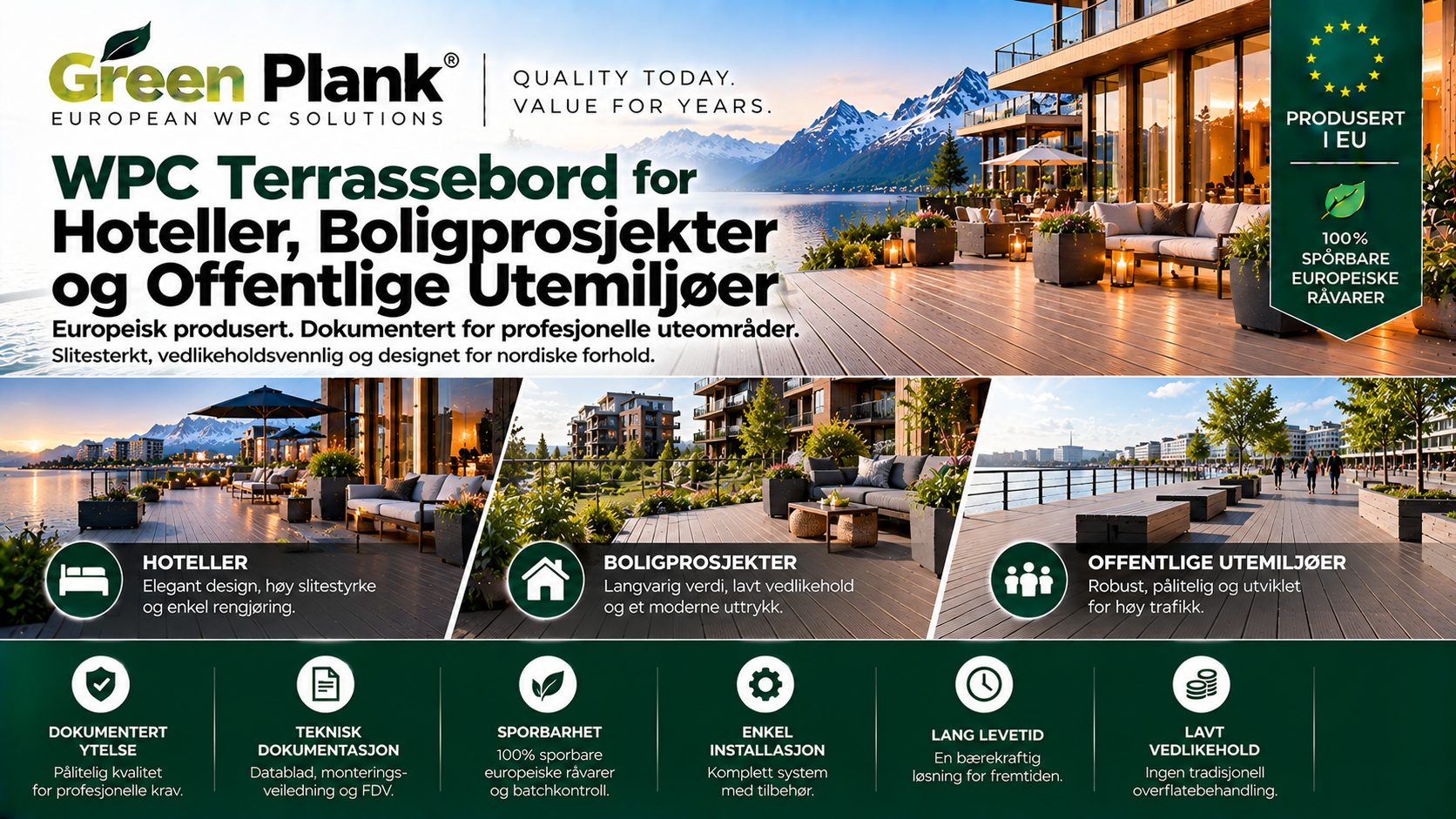
The utility of this material extends far beyond traditional flooring. We've seen a rise in the use of hardwood composites for vertical wall cladding and sustainable fencing in urban developments across Sweden. These systems create a cohesive architectural language, blending indoor and outdoor modern facades seamlessly. Public piers and boardwalks benefit from the material’s resistance to rot and saltwater, making it a staple for coastal municipalities from Gothenburg to Luleå. It's a choice that respects both the architectural vision and the surrounding environment.
Installation Best Practices for Longevity
Precision in the field ensures the material performs as designed for decades. We recommend that all contractors and site managers consult our deck installation guide to maintain structural integrity. Using specialized HidLoc™ hidden fasteners is a vital part of this process. These clips allow for natural thermal expansion and contraction while keeping the surface free of visible screws. This reduces surface penetrations where moisture could otherwise settle, effectively extending the service life of the installation and preserving the clean, minimalist aesthetic.
- Structural Integrity: HidLoc™ fasteners ensure secure attachment without compromising the board's surface.
- Thermal Management: Engineered spacing allows for the 1-2 mm of movement required during seasonal temperature shifts.
- Professional Finish: Hidden systems provide a fastener-free look that highlights the natural grain of the hardwood fiber composite.
Our 50-year warranty isn't just a marketing claim; it's a testament to our engineering confidence. It reflects a deep commitment to a circular economy and products that don't need frequent replacement. Designed in Scandinavia. Produced in Europe. Built to last. Designed for life. For project-specific technical data, CAD drawings, or sustainability certifications, consult with the Green Plank technical team to ensure your next build stands the test of time.
Engineering the Future of Sustainable Nordic Design
The transition to hardwood fiber composite marks a decisive step toward merging structural resilience with environmental integrity. Engineering a 75% hardwood fiber ratio ensures these profiles possess the density and strength necessary for the rigorous Nordic climate. This isn't a mere aesthetic choice; it's a technical solution designed to prevent warping and degradation over decades of use. Every profile is manufactured in the EU using 100% traceable raw materials to guarantee a transparent, sustainable supply chain. This engineering precision supports an extensive warranty of up to 50 years for both residential and commercial applications.
By prioritizing traceable quality and circular design, you're investing in a professional-grade material that minimizes maintenance and maximizes longevity. It's a choice that reflects a commitment to premium quality and a healthier planet. Explore our range of professional-grade hardwood fiber composites to find the perfect fit for your next project. Built to last. Designed for life. Start your journey toward a more durable outdoor environment today.
Frequently Asked Questions
Is hardwood fiber composite better than standard WPC?
Yes, hardwood fiber composite offers superior density and dimensional stability compared to standard softwood-based WPC. We engineer our products with high-density hardwood fibers to reduce thermal expansion by up to 30 percent. This creates a more rigid board that resists warping in the fluctuating Swedish climate. It's a professional-grade choice for high-traffic areas where longevity is the primary requirement.
How long does hardwood fiber composite last?
Hardwood fiber composite is designed for a service life exceeding 25 years in demanding Nordic environments. Our products carry a 20 to 30 year limited warranty against rot, decay, and fungal attack. This durability stems from the encapsulated fiber technology that prevents moisture absorption below 1.5 percent. It's built to last and designed for life.
Does hardwood fiber composite require maintenance?
No, this material doesn't require the annual sanding, staining, or sealing associated with traditional timber. You'll save approximately 150 hours of labor over the product's lifespan compared to pressure-treated wood. A simple cleaning with warm, soapy water twice a year is sufficient to maintain its appearance. It's a low-maintenance solution that keeps your outdoor space looking pristine with minimal effort.
Is hardwood fiber composite environmentally friendly?
Yes, our hardwood fiber composite is a cornerstone of circular construction. We use 100 percent traceable raw materials, including recycled hardwood fibers and post-consumer polymers. This process diverts thousands of tonnes of waste from Swedish landfills annually. Because the boards are fully recyclable at the end of their 30 year life, they support a sustainable, closed-loop manufacturing system.
Can hardwood fiber composite be used for structural load-bearing?
No, hardwood fiber composite isn't intended for primary structural load-bearing applications like pillars or beams. It's engineered as a high-performance surface material for decking, fencing, and cladding. You must install it over a code-compliant sub-structure, such as pressure-treated timber or aluminum joists. Always follow the Swedish building regulations from Boverket for specific joist spacing requirements to ensure safety.
How does hardwood fiber composite react to extreme heat or cold?
Our composite is specifically engineered to withstand the Swedish temperature swing from -30 degrees Celsius in winter to +35 degrees in summer. The hardwood fibers provide a lower coefficient of thermal expansion than pure plastic boards. This ensures the deck remains stable and doesn't become brittle in freezing conditions. It's a reliable choice for the varied Scandinavian climate, designed in Scandinavia and produced in Europe.
Is hardwood fiber composite slip-resistant for public use?
Yes, our products are engineered with high slip-resistance ratings, often achieving R11 or R12 classifications according to DIN 51130 standards. This makes them safe for public walkways, commercial terraces, and pool surrounds in Sweden. The brushed surface texture provides excellent grip even when the boards are wet. It's a professional-grade safety feature that protects users in all weather conditions.
What is the difference between HDPE and PVC in composites?
HDPE (High-Density Polyethylene) is more flexible and impact-resistant than PVC, making it ideal for the Swedish freeze-thaw cycle. It's also more sustainable as it's easier to recycle and doesn't release chlorine gas during production. PVC is more rigid but can become brittle in cold temperatures. We choose HDPE to ensure our hardwood fiber composite remains durable, environmentally responsible, and safe for residential use.
Spesifiser produktet
Bruk denne guiden i en Green Plank-spesifikasjon
Tekniske WPC-artikler skal støtte de kommersielle sidene — ikke konkurrere med dem. Fortsett til komposittdekke, TerraTuff, Nordeka eller de tekniske nedlastningene.