



By 2026, the traditional Swedish timber facade will no longer be the default choice for architects prioritizing both aesthetics and environmental responsibility. You likely appreciate the organic warmth of natural wood, yet you've seen how the harsh Nordic climate can turn a beautiful exterior into an expensive maintenance burden within just five years. It's a common frustration to see premium projects lose their luster to rot or fading. Choosing professional-grade composite wall cladding allows you to break this cycle without sacrificing the refined Scandinavian aesthetic you desire.
Our 2026 guide reveals how engineered natural-fiber composites provide a maintenance-free, circular alternative to traditional timber for high-performance architectural projects. You'll discover how these materials achieve a reduced CO2 footprint while offering the durability needed to last half a century. We'll examine the technical engineering behind European-made facades and why a 30 to 50 year service life is now the professional standard for sustainable construction. Designed for life. Built to last.
Key Takeaways
- Understand why high-performance architectural envelopes are replacing traditional timber to eliminate rot and costly maintenance cycles.
- Discover the engineering precision behind the 75/25 hardwood-to-HDPE ratio that ensures superior structural integrity and a 50-year service life.
- Explore how modern composite wall cladding offers unparalleled design versatility, enabling seamless transitions between exterior facades and contemporary interior spaces.
- Learn how the Cradle to Cradle (C2C) circular design model significantly reduces carbon footprints by utilizing traceable, recycled hardwood fibers.
- Gain insight into why long-term warranties of up to 50 years serve as a definitive marker of engineering confidence and Scandinavian durability.
Understanding Composite Wall Cladding: The Evolution of Modern Facades
Designed in Scandinavia. Produced in Europe. Modern architecture in 2026 demands more than just visual appeal; it requires a high-performance envelope that stands up to the rigorous Swedish climate. Composite wall cladding represents the pinnacle of this evolution, merging the warmth of natural timber with the resilience of advanced engineering. These Wood-plastic composites (WPCs) are engineered to provide a circular solution for exterior facades, utilizing recycled fibers and polymers to create a material that outperforms traditional wood in every metric.
As we move toward 2026, the industry has shifted away from high-maintenance timber. Architects now prioritize materials with a lower CO2 footprint and 100% traceability. This new standard ensures that every plank can be tracked back to its source, meeting strict European environmental regulations. High-performance composite wall cladding balances natural aesthetics with engineering precision, offering a facade that remains stable through intense UV exposure and heavy Scandinavian snowfall.
The Limitations of Traditional Exterior Cladding
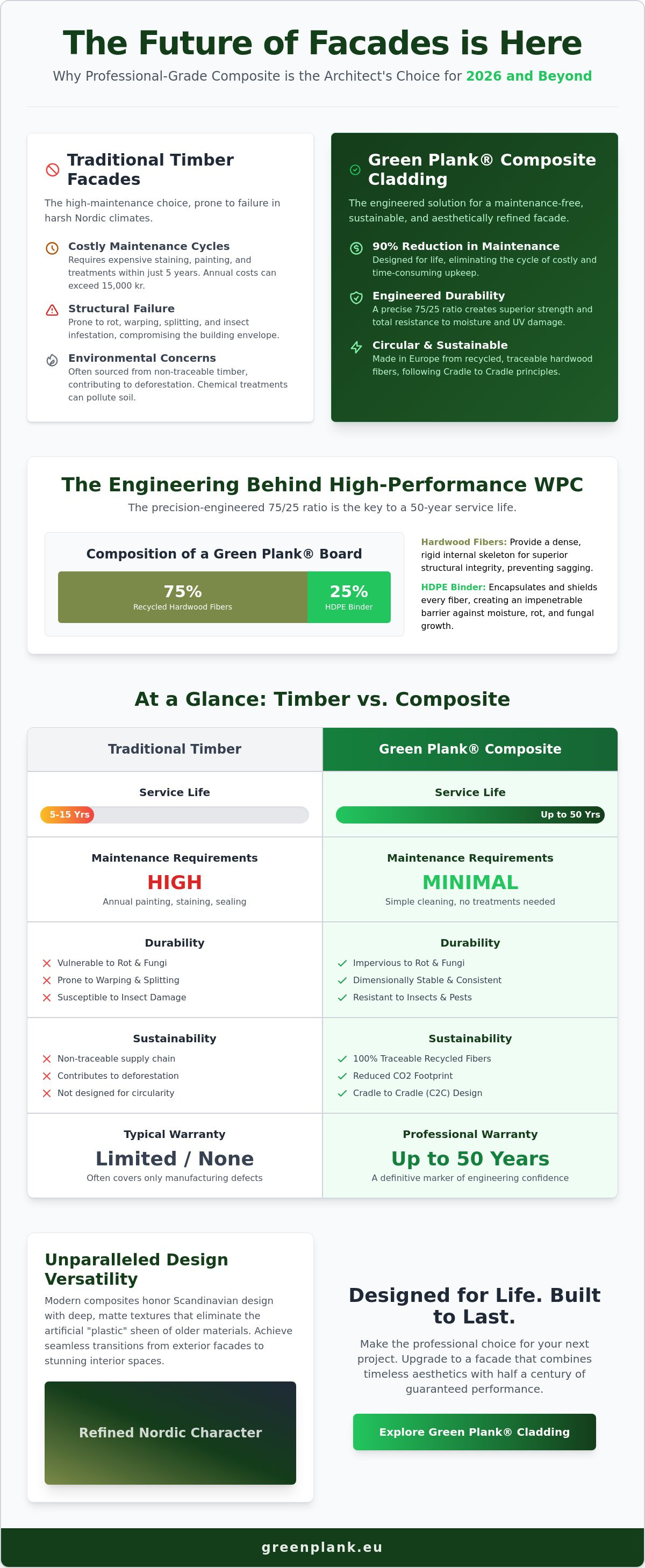
Traditional softwood and hardwood facades face significant challenges in northern latitudes. Common issues like warping, splitting, and insect infestation lead to premature structural failure. In Sweden, the constant freeze-thaw cycles accelerate wood degradation, causing natural fibers to expand and contract until the surface cracks. These physical defects aren't just aesthetic; they compromise the building's thermal efficiency and moisture protection.
The hidden costs of timber are substantial. Property owners often face annual expenses exceeding 15,000 kr for professional staining, painting, and chemical treatments on mid-sized residential facades. Beyond the financial burden, the environmental impact of non-traceable timber contributes to global deforestation. Chemical preservatives used to prevent rot often leach into the soil, contradicting the goals of modern sustainable construction.
Why Composite is the Professional Choice for 2026
Built to last. Designed for life. This philosophy drives the adoption of professional-grade WPC. The aesthetic leap in recent years is remarkable. Modern manufacturing achieves a refined Nordic character with deep, matte textures that eliminate the "plastic" sheen of early-generation synthetics. These boards are manufactured in Europe using traceable raw materials to deliver stability, strength, and a sophisticated finish that honors Scandinavian design heritage.
From an engineering perspective, the wpc vs wood cladding debate is settled by data. Composite materials offer a 90% reduction in lifetime maintenance requirements. By 2026, the focus has shifted toward the circular economy, where cladding is designed for disassembly and recycling. This professional-grade choice ensures that the facade remains as vibrant and structurally sound in year 25 as it was on day one, backed by comprehensive 20 to 30-year warranties that reflect true engineering confidence.
The Engineering Behind High-Performance WPC: The 75/25 Ratio
Green Plank composite wall cladding relies on a precise 75/25 engineering ratio to achieve its industry-leading durability. This blend consists of 75% refined hardwood fibers and 25% High-Density Polyethylene (HDPE). While many manufacturers use softwood fillers like pine or spruce, hardwood fibers provide a significantly higher level of structural integrity. Hardwood is naturally denser and less porous, which creates a rigid internal skeleton for each plank. This choice of raw material ensures the facade doesn't sag or lose its shape over decades of exposure.
The 25% HDPE component acts as a high-performance binder and protective shield. Advanced Wood Plastic Composite Manufacturing techniques allow these polymers to encapsulate every wood fiber. This encapsulation is the primary defense against moisture. It prevents the internal fungal growth and rot that often plague natural timber. By sealing the organic material in a synthetic matrix, the cladding remains impervious to the damp conditions common in Nordic winters.
Weight management is equally vital for modern architecture. Our low-density engineering reduces the structural load on the building's frame by up to 15% compared to traditional solid wood. This reduction in mass doesn't compromise strength; instead, the cellular structure is optimized for impact resistance. It's a professional-grade solution that handles physical stress while remaining easy for contractors to install. Built to last. Designed for life.
100% European Raw Materials and Traceability
Quality begins with the origin of the fiber. Sourcing 100% of our raw materials within the EU ensures that every plank meets strict REACH safety standards. This localized supply chain avoids the "toxic additive" trap found in many non-European imports, which often contain heavy metals or recycled plastics of unknown origin. These traceable supply chains are essential for developers seeking sustainable building materials certifications like BREEAM or LEED. We provide full transparency from the forest floor to the finished facade.
Density and Dimensional Stability
Early-generation composites were often criticized for excessive movement. Green Plank solves this through high hardwood density, which naturally resists the forces of thermal expansion. In Sweden, where temperatures can fluctuate from -25°C in the northern winters to +30°C in the summer sun, thermal stability is a technical necessity. Dimensional stability is the material's ability to maintain its original proportions under environmental stress. This stability ensures that gaps remain uniform and joints stay tight, regardless of coastal humidity or inland frost. You can explore our range of engineered cladding profiles to see how this stability translates into a seamless aesthetic.
Durability and Performance: Engineered for a 50-Year Service Life
Green Plank products are built to withstand the rigorous Swedish climate. From the salt-heavy winds of the Gothenburg archipelago to the intense UV exposure of northern summers, our composite wall cladding is engineered for resilience. We provide warranties ranging from 20 to 50 years. This isn't just a number. It's a reflection of engineering confidence. While traditional timber requires staining every 3 to 5 years, our natural-fiber composites remain stable without chemical treatments. They serve as a permanent moisture barrier, protecting the building envelope from rot and decay.
Professional-grade WPC handles high-traffic commercial zones with ease. It resists impacts that would dent or scratch residential-grade alternatives. Maintenance is simple. A routine wash with soap and water is all that's needed to remove surface dust. You'll save thousands of kronor in long-term labor and material costs. Designed in Scandinavia. Produced in Europe. This geography ensures every board meets the highest technical standards while respecting local environmental regulations.
- Salt-water resilience: Ideal for coastal properties where salt spray destroys traditional paint.
- Moisture barriers: Advanced polymer blends prevent water absorption and fungal growth.
- High-traffic endurance: Engineered density that withstands the daily wear of public spaces.
UV Resistance and Color Longevity
We integrate high-quality pigments directly into the material during the extrusion process. This prevents the surface peeling or flaking common with painted wood. New installations undergo a natural weathering phase during the first 8 to 12 weeks. During this period, the wood fibers settle into their permanent hue. For projects requiring maximum fade resistance, our capped boards feature an extra protective polymer shield. This shield blocks 96% of UV rays, ensuring the Nordic aesthetic stays sharp for decades. It's the difference between a facade that ages and one that endures.
Fire Safety and Compliance
Safety is non-negotiable in multi-story Swedish developments. Our fire-rated composite wall cladding systems utilize specialized mineral additives to achieve Euroclass B-s1, d0 ratings. These additives inhibit flame spread and minimize smoke production. Architects must prioritize fire-rated systems in commercial projects to meet Boverket's strict safety regulations. Choosing a certified system ensures compliance and protects lives. It's a hallmark of responsible innovation. Built to last. Designed for life.
Design Versatility: Creating Modern Aesthetics with WPC
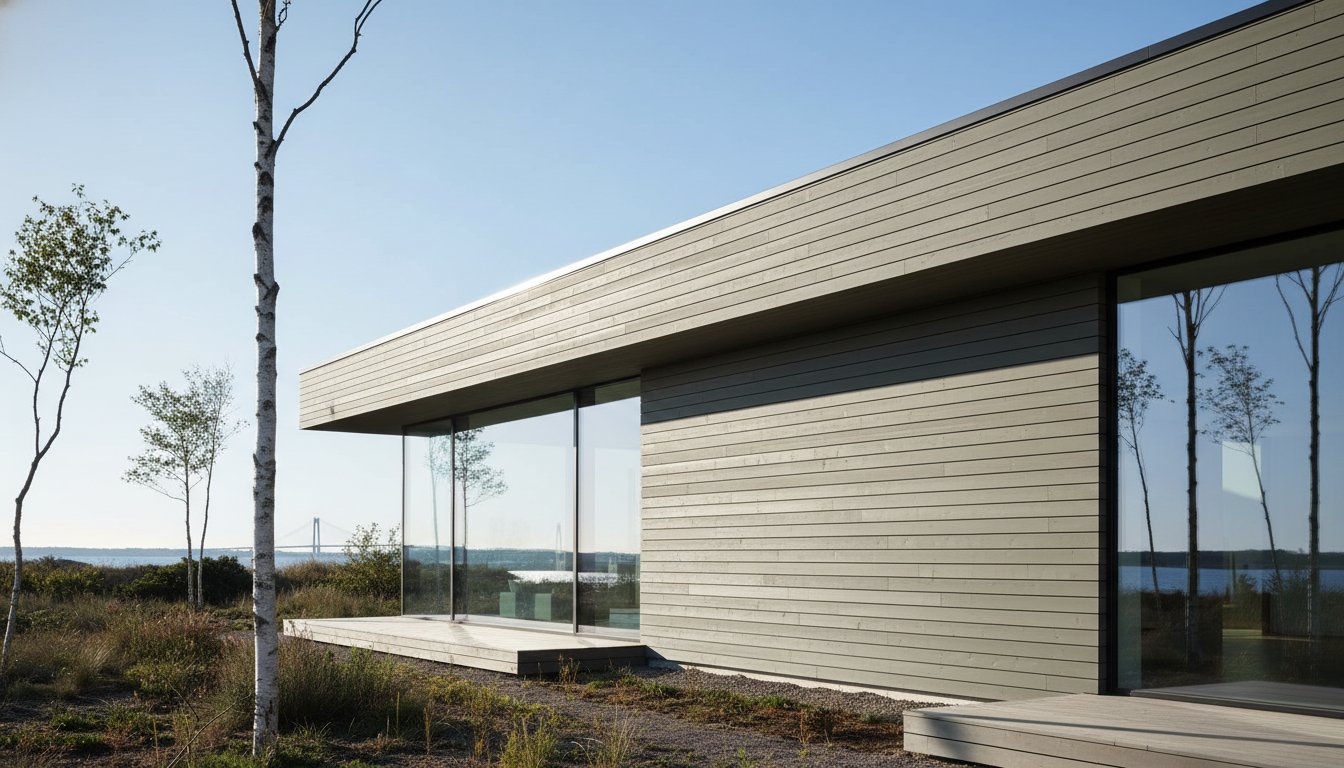
Modern architecture in Sweden increasingly relies on materials that balance form with function. Choosing composite wall cladding allows architects to manipulate light and perspective through installation orientation. Horizontal boards ground a building, creating a sense of stability and traditional warmth. Vertical installations draw the eye upward, making smaller structures appear taller and more contemporary. This flexibility enables a single material to adapt to both minimalist summer houses and complex urban developments. The boundary between living spaces and the outdoors is blurring. Designers now specify interior wpc wall panels to create a seamless visual transition from the living room to the terrace. This continuity is a hallmark of Nordic design, where nature is invited inside. By using identical profiles for both environments, you achieve a cohesive flow that expands the perceived square footage of a property. The 2026 palette remains rooted in Scandinavian minimalism. Teak offers organic warmth, while Grey and Charcoal tones provide a sharp, architectural edge. Slatted cladding profiles introduce deep shadow lines, adding a three-dimensional texture that changes as the sun moves across the facade. It's a sophisticated way to add depth without the maintenance demands of natural timber. Built to last. Designed for life.HidLoc™ and the Hidden Fastening Revolution
The HidLoc™ system ensures a flawless, screw-free surface finish. This engineering choice removes visible fasteners that often detract from a premium aesthetic. Beyond looks, the system manages natural thermal movement. Swedish temperature swings can reach 50 degrees Celsius between seasons, but HidLoc™ allows boards to expand and contract without buckling. Contractors report that these interlocking systems reduce installation labor by up to 30% compared to traditional timber fixing methods.
Inspiration for Modern Facades
Combining WPC with stone, glass, or steel creates a sophisticated mixed-material aesthetic. Referencing exterior wall cladding ideas reveals how these combinations boost residential property values in Stockholm and Gothenburg. Beyond the main house, composite wall cladding serves as a functional accent for garden rooms and privacy screens. It's a professional-grade solution for outbuildings that require zero maintenance and high durability.
The Sustainable Choice: Cradle to Cradle and Circular Design
Modern architecture requires more than aesthetic appeal; it demands accountability. The Cradle to Cradle (C2C) framework redefines composite wall cladding as a perpetual resource rather than a consumable product. In this circular model, materials circulate in continuous loops, effectively eliminating the concept of waste. Green Plank adopts this philosophy by ensuring every facade component serves as a technical nutrient for future manufacturing cycles. Our boards don't just sit on a building; they represent a stored resource that remains within the economy.
Swedish construction standards are shifting toward total transparency. By moving away from the "take-make-waste" linear economy, we provide developers with a pathway to meet strict environmental targets. Our products are engineered to be disassembled and repurposed, ensuring that the materials we use today don't become the environmental burdens of tomorrow. It's a commitment to Nordic reliability and ethical manufacturing that defines our brand identity.
Reducing the CO2 Footprint in Construction
Carbon management is a core metric for Swedish developers aiming for climate neutrality by 2045. Green Plank utilizes 75% recycled hardwood fibers in its formulations, which serves as a significant carbon sink. This choice sequesters carbon within the material, preventing it from entering the atmosphere as CO2. Because we prioritize European production, we drastically reduce the "transportation carbon" that typically plagues the industry when sourcing from overseas markets. Green Plank's manufacturing process aims for net-zero waste through circular material loops. This localized approach ensures a lower Global Warming Potential (GWP) for your building's lifecycle assessment.
- 75% Recycled Content: Diverting wood waste from incinerators to high-value architectural use.
- 100% Recyclable: Ensuring WPC boards stay out of landfills at the end of their service life.
- Energy Efficiency: European-made products adhere to the highest energy standards during fabrication.
A Professional Partnership for Large-Scale Projects
We provide architects and contractors with the precise technical specifications needed for complex urban developments. Selecting the right material is only half the challenge; achieving a professional composite cladding installation is vital for long-term project success and structural integrity. Our technical team supports the integration of sustainable materials into LEED and BREEAM-certified projects, where material traceability and low-maintenance profiles are highly valued. These certifications aren't just badges of honor; they increase the market value of the property and reduce long-term operational costs.
Our products come with 20 to 30 year warranties because they're engineered for the harsh Nordic climate. We don't just sell materials; we offer a partnership that values the planet. Choose a facade that respects both the architecture and the environment. Built to last. Designed for life.
Future-Proof Your Facade with Nordic Engineering
The shift toward circular construction in Sweden is no longer a trend; it's a technical requirement for the 2026 building landscape. Choosing composite wall cladding means investing in a facade engineered with a 75/25 natural fiber-to-polymer ratio, ensuring your project remains stable through harsh Nordic winters and coastal humidity. By utilizing 100% EU-sourced raw materials, Green Plank eliminates the environmental costs of long-distance shipping while providing an engineered 50-year service life. This isn't just about aesthetics. It's about a professional-grade solution that meets Red Dot design standards and offers up to a 50-year warranty on selected profiles. You're opting for a maintenance-free future where Scandinavian design meets rigorous engineering precision. This approach reduces long-term maintenance costs and ensures your project aligns with Sweden's strict environmental standards. Your building deserves a facade that respects the environment as much as it protects your investment. Designed for life. Built to last.
Explore the Green Plank Composite Cladding Range
Let's build a more sustainable Sweden together.
Frequently Asked Questions
Does composite wall cladding fade over time?
High-quality composite wall cladding includes UV stabilizers to minimize color change during sun exposure. Most premium Swedish installations experience a subtle weathering phase during the first 12 weeks of outdoor life. After this initial period, the color stabilizes. Green Plank designs its facades to retain 95% of their original hue over a 25 year lifespan. This ensures your home maintains its aesthetic value without the drastic graying seen in untreated timber.
How much more expensive is composite cladding than timber?
The initial purchase price of composite cladding is typically 40% to 60% higher than pressure-treated pine. While standard timber might cost 350 kr per square meter, professional-grade composite often ranges from 800 kr to 1,200 kr per square meter in the Swedish market. You'll recover this investment within 7 years. You save approximately 5,000 kr in oiling and staining costs for a 50 square meter area every two years.
Is composite cladding fire-rated for commercial use?
Specific composite products are engineered to meet Euroclass B-s1, d0 fire ratings required for commercial buildings in Sweden. These boards contain flame retardants that limit smoke production and prevent flaming droplets. Always verify the Boverket Building Regulations for your specific project height. Our engineered solutions provide the necessary safety margins for multi-family dwellings and public infrastructure. Safety and reliability are central to our Scandinavian design philosophy.
Can I install composite cladding directly onto a brick wall?
You cannot install composite boards directly against brick because they require a 30 mm ventilation gap to prevent moisture buildup. Install a sub-frame of treated timber or aluminum battens first. These battens should be spaced at maximum 400 mm intervals to ensure structural integrity. This airflow prevents mold growth and ensures the composite wall cladding performs as intended for decades. Proper ventilation is the key to a long-lasting facade.
Does WPC cladding require any staining or sealing?
Wood Plastic Composite cladding never requires staining, painting, or sealing. The color is deeply embedded during the extrusion process, so there's no surface layer to peel or flake. This eliminates the need for the biennial maintenance cycles common with cedar or larch. By choosing this engineered material, you eliminate the VOC emissions associated with traditional wood treatments. It's a maintenance-free solution designed for the harsh Nordic climate.
What is the difference between capped and uncapped composite cladding?
Capped cladding features an extra polymer shield that wraps around the core for superior stain and scratch resistance. Uncapped versions provide a more uniform, matte texture but are slightly more porous. Statistics show that capped boards resist 98% of common outdoor stains, including grease and tannins. This protective layer is essential for high-traffic areas or facades exposed to heavy rain and snow. Both options offer significant durability over traditional wood.
How do I clean and maintain my composite facade?
You only need warm, soapy water and a soft-bristle brush to maintain your facade twice a year. Avoid using high-pressure washers at close range, as pressures exceeding 1,500 PSI can damage the surface fibers. For stubborn organic debris, a mild solution of dish soap usually works. This simple routine keeps the natural-fiber composite looking pristine without the need for specialized chemical cleaners. It's built to last and designed for life.
Is composite cladding environmentally friendly?
Composite cladding is highly sustainable because it's manufactured from 90% recycled wood fibers and reclaimed polymers. By repurposing industrial waste, these products prevent thousands of tons of plastic from entering landfills annually. Green Plank utilizes a circular production model where 100% of factory off-cuts are recycled back into the manufacturing line. This reduces the carbon footprint compared to harvesting slow-growth tropical hardwoods. Our European-made products prioritize traceable, eco-conscious raw materials.
Spesifiser produktet
Bruk denne guiden i en Green Plank-spesifikasjon
Tekniske WPC-artikler skal støtte de kommersielle sidene — ikke konkurrere med dem. Fortsett til komposittdekke, TerraTuff, Nordeka eller de tekniske nedlastningene.