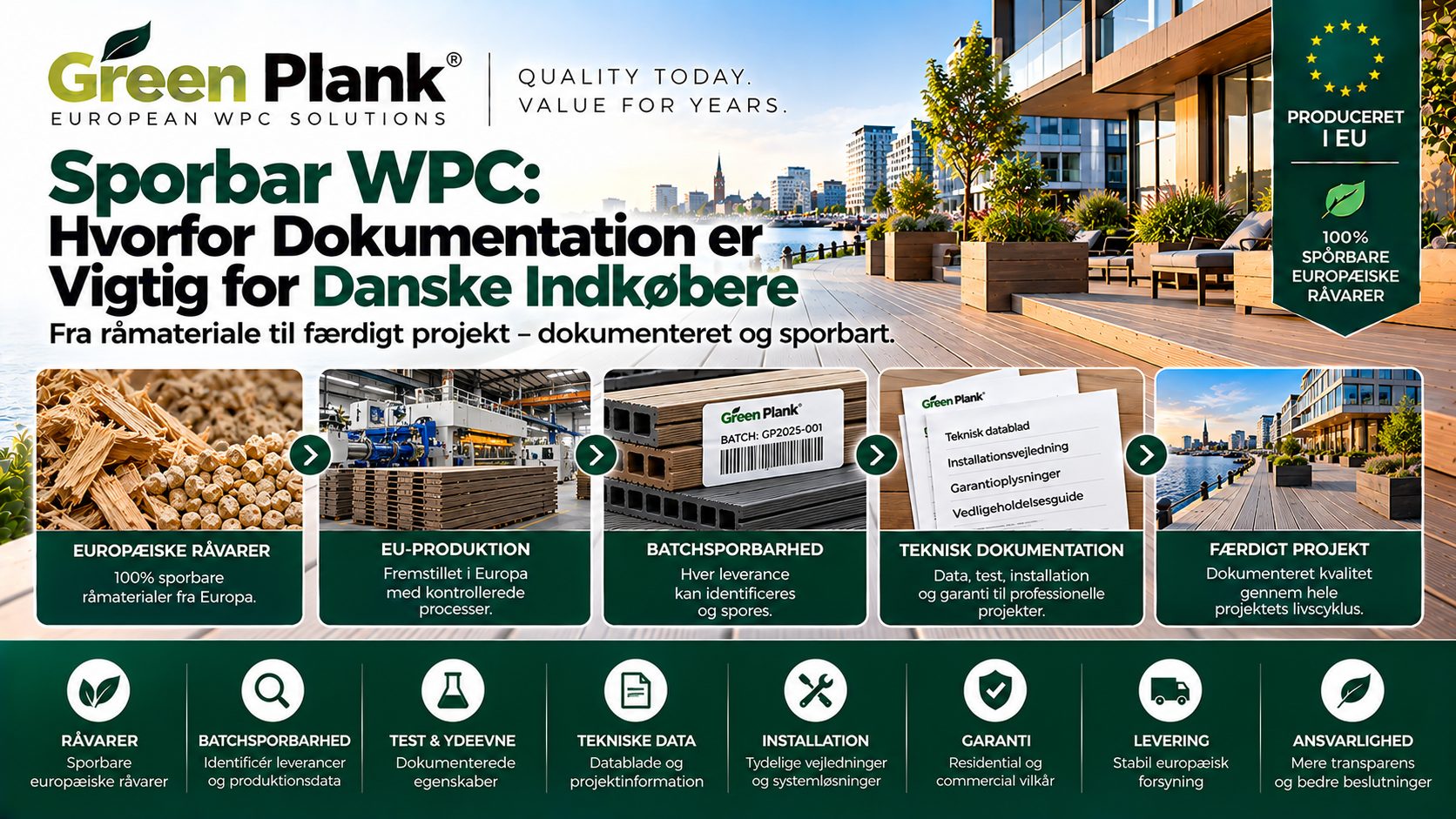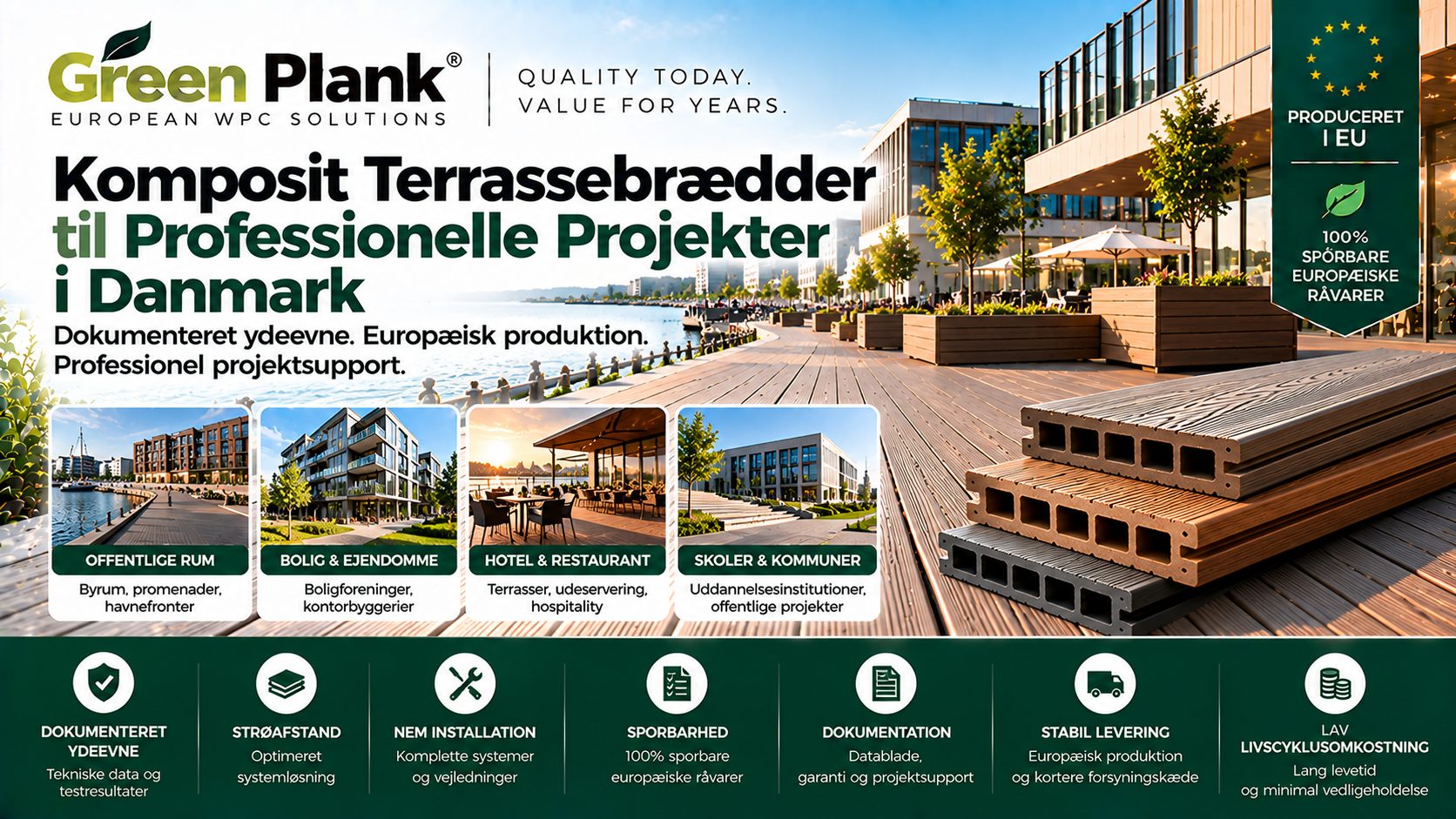




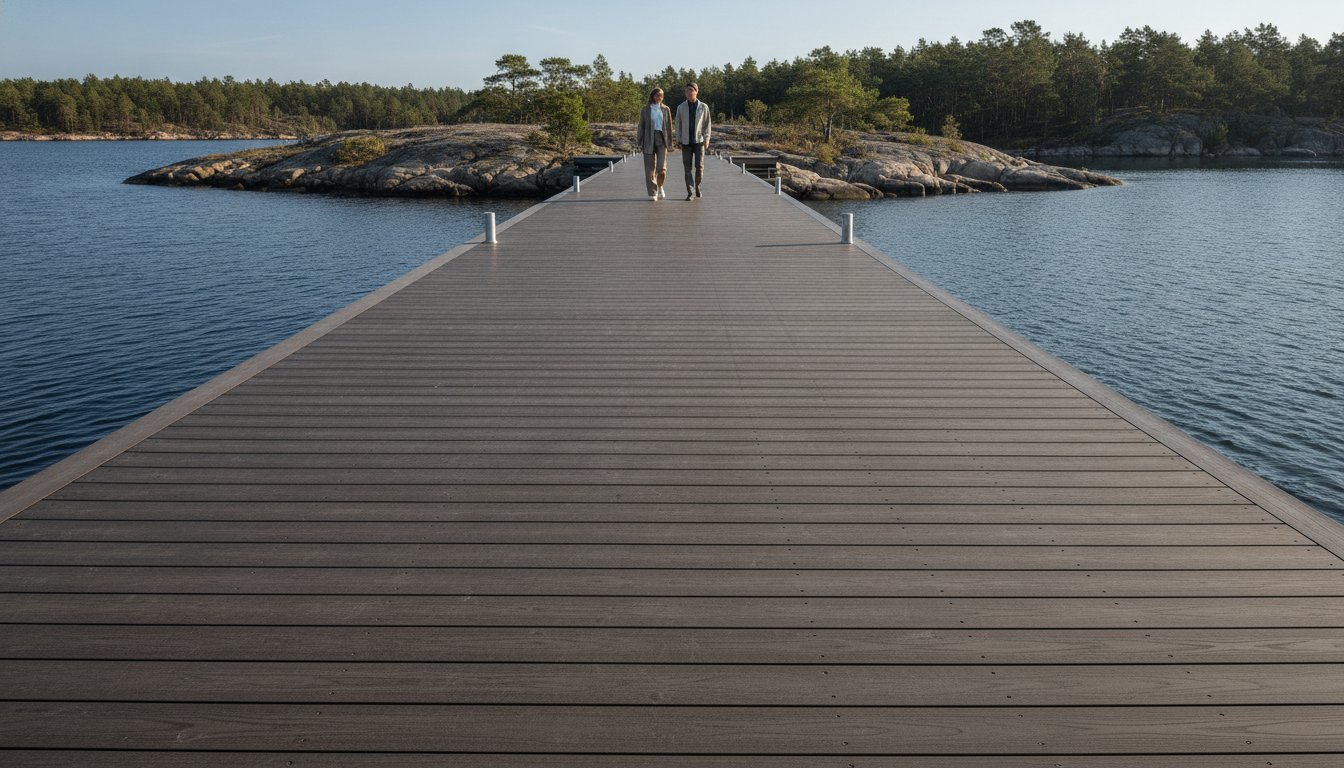
Traditional timber was never meant to survive the relentless cycle of salt spray and tidal surges. You've likely seen the rapid decay, the hazardous splintering, and the escalating repair bills that plague coastal walkways and public piers. It's a frustrating cycle of maintenance that drains budgets and harms local ecosystems. This guide explores why engineered composite materials for marine environments are now the definitive choice for infrastructure that demands a 25+ year service life without the toxic footprint of chemically treated wood.
We'll examine the material science behind high-performance WPC, specifically focusing on the synergy between 75% hardwood fiber and HDPE moisture resistance. You'll discover how European manufacturing standards ensure regional reliability and why modern installation methods, like the Smart System, significantly reduce lifecycle costs. From the durability of Terra Tuff to the precision of HidLoc fastening, we're shifting the focus from temporary fixes to permanent, sustainable excellence. We believe that professional standards and environmental ethics should always work in tandem.
Key Takeaways
- Understand the specific environmental stressors, such as high salinity and intense UV exposure, that cause traditional timber to fail in coastal applications.
- Discover how high-performance composite materials for marine environments utilize a precise blend of 75% hardwood fiber and 25% HDPE to achieve superior density.
- Learn how to extend the service life of marine infrastructure with warranties of up to 50 years while ensuring safety through slip-resistant, splinter-free surfaces.
- Identify eco-conscious, European-made alternatives to pressure-treated wood that protect sensitive aquatic ecosystems from chemical leaching.
- Explore innovative solutions like Terra Tuff and the Smart System to reduce lifecycle maintenance and installation complexity for public coastal projects.
The Challenges of Composite Materials for Marine Environments
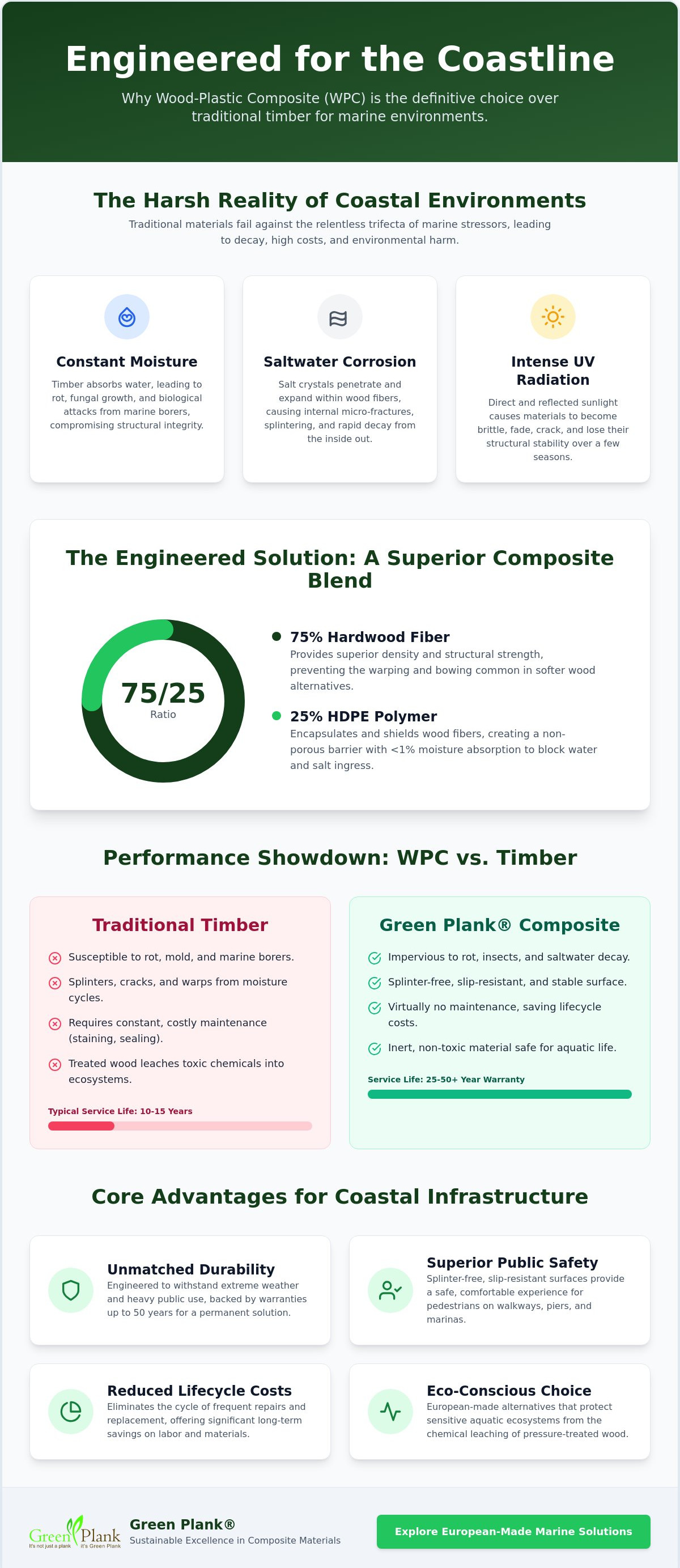
The marine environment is one of the most demanding settings for any building material. Constant moisture, high salinity, and intense UV exposure create a trifecta of stressors that quickly degrade standard infrastructure. Traditional choices often fall short; timber succumbs to rot, steel inevitably corrodes, and pure plastic lacks the structural rigidity needed for public safety. These failures aren't just aesthetic. They represent significant financial liabilities and environmental risks for coastal managers and private developers alike.
Engineering for these zones requires an understanding of salt crystallization. When saltwater penetrates porous materials like wood, the salt remains behind as the water evaporates. These crystals expand within the fibers, causing internal pressure that leads to cracking and splintering from the inside out. Wood-plastic composites (WPCs) solve this by encapsulating organic fibers in a protective polymer matrix. This engineering choice creates a material that withstands the unique pressures of coastal life while maintaining its form and function.
Saltwater Corrosion and Biological Attack
Saltwater is a catalyst for decay. In traditional marine timber, the cycle of wetting and drying allows salt to accumulate deep within the grain. This process, combined with hydrostatic pressure, creates micro-fractures that invite biological threats. Marine borers and specialized fungi thrive in these humid, saline conditions, literally consuming the infrastructure. High-performance composite materials for marine environments are engineered with moisture absorption rates typically below 1%. This low permeability prevents salt from entering the core of the profile.
- High density prevents water ingress; this eliminates the risk of internal salt expansion.
- Inert polymer components resist marine borers; this ensures the structural integrity of the walkway remains intact.
- Non-porous surfaces inhibit fungal growth; this maintains a hygienic and safe environment for public use.
UV Stability in Coastal Regions
Coastal projects face a double dose of solar radiation. UV rays don't just come from above; they reflect off the water's surface, intensifying the photodegradation process. Without proper engineering, standard materials become brittle and lose their color within a few seasons. We utilize high-quality HDPE to shield hardwood fibers from this intense exposure. This protective barrier ensures the material remains stable and retains its aesthetic appeal without the need for toxic stains or annual painting.
- Integrated UV stabilizers prevent brittleness; this ensures the material doesn't crack under thermal stress.
- Pigment encapsulation maintains color depth; this preserves the premium appearance of the coastal landscape.
- Hardwood fiber density provides structural strength; this prevents the warping often seen in softwood-based alternatives.
Why WPC Outperforms Traditional Marine Timber
While traditional timber has served as the standard for centuries, its limitations in coastal zones are increasingly clear. Timber requires a replacement cycle every 10 to 15 years in high-traffic marine areas, often failing much sooner due to internal decay. In contrast, engineered wood plastic composites offer a service life that justifies a 50-year warranty. This longevity isn't just a promise; it's a result of superior material science. By choosing composite materials for marine environments, engineers secure infrastructure that resists the twisting, bowing, and warping common in natural wood exposed to fluctuating humidity.
The initial investment in WPC is higher than pressure-treated timber, yet the lifecycle cost analysis reveals significant savings. When evaluating selection criteria for marine projects, professionals must account for labor, materials, and the downtime associated with frequent repairs. WPC eliminates these recurring expenses. It remains structurally sound without the structural failure risks associated with internal rot. For those overseeing large-scale public works, this predictability is invaluable. You can explore our full range of European-made marine profiles to see how these engineering standards translate to real-world durability.
The End of Constant Maintenance
Maintaining a marina or public boardwalk shouldn't be a seasonal burden. Traditional wood demands annual sanding, sealing, and oiling to prevent total degradation and "silvering" from UV exposure. High-performance WPC removes these requirements entirely. It's naturally resistant to the oil, grease, and fuel spills typical in nautical settings, preventing permanent staining that ruins timber. Cleaning involves little more than a simple pressure wash or a mild detergent. This efficiency allows facility managers to redirect resources toward community improvements rather than basic structural survival.
Safety and Accessibility Standards
Public safety is paramount in wet, high-traffic environments. We design our profiles to meet rigorous R11 and R12 slip-resistance ratings, ensuring stability even when surfaces are saturated by tides or rain. The elimination of splinters protects pedestrians and pets alike, making coastal spaces more accessible for everyone. The HidLoc™ Hidden Fastening Systems provide a completely screw-free, barefoot-friendly surface that prevents the tripping hazards caused by popping nail heads in traditional decks. These technical details reflect our commitment to being a responsible innovator in the marine sector, prioritizing human safety alongside material endurance.
Engineering for Saltwater: The 75/25 Hardwood to HDPE Ratio
Success in coastal engineering depends on the specific chemistry of the material. While generic composites exist, high-performance composite materials for marine environments rely on a precise 75/25 ratio of hardwood fiber to High-Density Polyethylene (HDPE). This formulation isn't arbitrary. The 75% hardwood component provides the compressive strength and stiffness required for commercial loads, while the 25% HDPE acts as a durable, moisture-proof binder. You can learn more about the technical role of hardwood fiber in composite durability and how it supports a circular economy model.
The manufacturing process involves a high-pressure encapsulation technique. Each individual hardwood fiber is thoroughly coated in the polymer shell, creating a barrier that saltwater cannot penetrate. This microscopic level of protection is what separates premium WPC from cheaper alternatives. If the encapsulation is incomplete, moisture will eventually reach the wood fibers, leading to internal rot and structural failure. Our commitment to using 100% EU raw materials ensures that this polymer matrix remains consistent and reliable across every profile produced.
HDPE: The Ideal Marine Polymer
HDPE is the preferred polymer for nautical settings because it offers superior impact resistance compared to PVC. While PVC can become brittle and crack under thermal stress, HDPE maintains its flexibility. This characteristic is vital for large-scale coastal boardwalks that experience significant temperature fluctuations. It allows the boards to expand and contract without compromising the integrity of the fastening system. We utilize specialized additives to manage this thermal movement, ensuring that the installation remains tight and secure for decades. Using 100% EU raw materials allows for strict quality control, guaranteeing that no contaminants weaken the polymer bond.
Hardwood Fiber vs. Softwood
The choice of hardwood over softwood is a critical distinction in material density. Hardwood fibers are naturally more robust, which directly improves fastener retention in high-traffic zones. Softwood-based composites often suffer from "mushrooming" or swelling at board ends where moisture absorption is most likely to occur. Hardwood fibers provide the structural skeleton for the HDPE matrix. This internal framework ensures that the boards do not sag or lose their shape under the weight of public foot traffic or heavy commercial equipment. By prioritizing these high-density fibers, we ensure a product that remains stable even in the most volatile coastal climates.
Selection Criteria for Coastal Infrastructure Projects
Specifying materials for a public pier or commercial dock requires a balance of engineering precision and ecological responsibility. It's no longer enough for a material to simply survive the waves. It must also align with modern environmental mandates and safety codes. When evaluating composite materials for marine environments, professionals look for solutions that reduce long-term liability while meeting strict performance benchmarks. This process begins with understanding the specific load-bearing needs and the sensitive nature of the surrounding aquatic ecosystem.
Sustainability is a core pillar of modern procurement. Our commitment to Cradle to Cradle ownership and a reduced CO2 footprint ensures that every profile contributes to a circular construction model. For comprehensive project planning that extends beyond the water's edge, we recommend reviewing our 2026 Guide to Sustainable Exterior Facades. This resource helps specifiers maintain a cohesive, eco-conscious aesthetic across an entire coastal development.
Environmental Impact in Marine Zones
In 2026, the regulatory landscape regarding chemically treated wood has shifted significantly. The leaching of heavy metals and biocides into sensitive water bodies poses a major regulatory risk for developers. High-performance WPC offers a non-toxic alternative that eliminates this hazard entirely. These materials are 100% recyclable, allowing them to be repurposed at the end of their long service life. By choosing responsibly manufactured composites, projects can secure essential "Green Building" points and comply with the latest international environmental standards for maritime construction.
Technical Specifications for Specifiers
Engineering a stable boardwalk requires attention to thermal movement and structural support. While our profiles are suitable for a 600 cc joist spacing in private applications, commercial docks often require a 400 cc configuration to handle higher foot traffic and equipment loads. Calculating the correct thermal expansion gaps is equally critical to prevent buckling during peak summer months. Public infrastructure must also meet the Bfl-s1 fire rating to ensure safety in high-occupancy areas. You can download our full technical specifications for marine infrastructure to ensure your next project meets these professional standards.
Green Plank Solutions: Terra Tuff and Smart System
Translating material science into functional infrastructure requires products that withstand extreme conditions without compromising on aesthetics. Our range of composite materials for marine environments is designed to bridge this gap. We provide architects and developers with profiles that are as resilient as they are sustainable. Through our Cradle to Cradle ownership model, we ensure that every board produced remains part of a circular economy. This commitment reflects our identity as a responsible innovator, prioritizing the long-term health of our coastal ecosystems.
Innovation at Green Plank extends to how these materials are installed and utilized. The Smart System represents a significant advancement in lightweight, high-strength outdoor flooring. This system allows for rapid deployment in commercial settings, reducing labor time while maintaining the structural integrity required for public safety. By combining low-density engineering with high-performance additives, we've created a solution that is easy to handle yet capable of enduring the most volatile nautical climates. It's a balance of efficiency and endurance that defines our manufacturing standards.
Terra Tuff for Marine Infrastructure
Terra Tuff serves as our flagship solution for high-traffic coastal zones. The specific profile design of Terra Tuff decking is optimized for public piers where constant foot traffic and heavy equipment are the norm. In harsh Northern European coastal climates, these boards have proven their longevity by resisting the deep-freeze cycles and high-salinity winds that typically destroy traditional timber. We also offer custom infrastructure profiles for specialized marine applications, ensuring that unique project requirements are met with precision-engineered solutions that fit the regional landscape.
- High-density core provides maximum fastener retention; this ensures the deck remains secure under heavy loads.
- Integrated slip-resistance exceeds public safety requirements; this protects pedestrians in wet conditions.
- UV-stable pigments prevent fading from water-reflected radiation; this maintains a premium appearance for decades.
Partnering for Success
We believe that long-term performance is built on strong B2B partnerships. Green Plank supports developers and architects from the initial design phase through to the final supply, providing technical expertise that ensures project success. Our specific 50-year warranty serves as a primary signature of our engineering confidence. It allows municipal planners to significantly reduce their maintenance budgets, shifting funds from constant repairs to community growth. When you choose our systems, you're investing in a legacy of regional reliability and professional standards. Explore our commercial marine solutions to begin your next sustainable coastal project.
Securing the Future of Coastal Infrastructure
Designing for the water's edge requires materials that respect both engineering limits and ecological boundaries. We've explored how the precise 75/25 blend of hardwood fiber and HDPE creates a resilient barrier against salt and UV. These high-performance composite materials for marine environments don't just survive the elements; they thrive without the need for toxic treatments or constant repairs. By choosing Cradle to Cradle certified manufacturing, you're investing in a circular future that protects our oceans while delivering a 50-year service life. Every profile we engineer with 75% hardwood fiber is built for superior strength and regional reliability.
Our commitment to quality ensures that every pier, boardwalk, and dock remains a safe, beautiful asset for decades. It's time to move beyond the limitations of traditional timber and embrace a more sustainable, high-performance standard. View our high-performance marine infrastructure profiles to see how our engineering expertise can transform your next project. Let's build a coastal legacy that respects nature and stands the test of time.
Frequently Asked Questions
Is composite decking suitable for saltwater environments?
Yes, high-performance composite materials for marine environments are specifically designed for high-salinity zones. The polymer matrix prevents salt crystals from penetrating the core, which eliminates the internal expansion that causes traditional wood to crack. This resistance to moisture and salt ensures that the boards remain structurally sound even when exposed to constant tidal cycles. It's a durable solution that outperforms timber in every coastal application while maintaining its aesthetic integrity.
Does composite decking get too hot for barefoot use on docks?
WPC manages thermal absorption effectively through material density and specialized light-reflective pigments. While all outdoor surfaces absorb solar heat, our profiles remain comfortable for barefoot use without the hazard of splinters. Choosing lighter shades can further reduce surface temperatures on sun-drenched docks. This makes it a safer and more comfortable choice for public boardwalks and private piers alike compared to the rough, heat-absorbing surfaces of weathered timber.
Can I use hidden fasteners on a marine boardwalk?
Hidden fasteners are highly recommended for marine boardwalks to ensure a safe, barefoot-friendly surface. Our HidLoc™ Hidden Fastening Systems eliminate the tripping hazards and corrosion issues associated with traditional surface-mounted screws. This creates a seamless, high-end aesthetic that complements the natural coastal surroundings. It's an engineering choice that prioritizes pedestrian safety and long-term structural integrity in high-traffic commercial zones where maintenance needs must be kept to a minimum.
What is the best wood-to-plastic ratio for marine composites?
A 75/25 ratio of hardwood fiber to HDPE provides the optimal balance of structural strength and moisture protection. The 75% hardwood acts as a rigid skeleton for the profile, while the 25% HDPE binder encapsulates every fiber. This specific density is superior to softwood-based alternatives. It ensures that the material resists warping and maintains its shape under the heavy loads common in commercial marine infrastructure and busy public piers.
How do you clean composite materials in a marina setting?
Routine cleaning requires only a mild detergent and a low-pressure water wash to remove salt and debris. Unlike timber, there's no need for annual sanding, staining, or oiling to maintain structural performance or aesthetic appeal. This simplicity reduces the operational costs of public marinas and commercial piers significantly. It's a low-maintenance solution that allows facility managers to focus on community improvements rather than the constant repairs required by traditional wood.
Is WPC safe for use in marine ecosystems with sensitive wildlife?
Yes, engineered WPC is a safe, non-toxic alternative to chemically treated timber in sensitive aquatic zones. It's manufactured without the harmful biocides or heavy metals that can leach into the water and harm wildlife. Our commitment to Cradle to Cradle certified manufacturing ensures that the product is safe for the environment throughout its entire lifecycle. It's a responsible choice for protecting our oceans and coastal ecosystems from potential chemical contamination.
How does the service life of WPC compare to pressure-treated timber?
WPC offers a significantly longer service life, with warranties extending up to 50 years. In contrast, pressure-treated timber in marine environments often requires replacement within 10 to 15 years due to rot and biological attack. This longevity is achieved through superior material science that resists moisture absorption and UV degradation. It represents a more sustainable and cost-effective investment for long-term coastal infrastructure projects that demand regional reliability and professional standards.
What are the installation requirements for composite decking near water?
Installation near water requires precise joist spacing and careful management of thermal expansion. We recommend 600 cc spacing for private decks and a tighter 400 cc configuration for commercial marine zones to handle higher loads. Proper ventilation beneath the deck and specific gap spacing between boards are also essential technical requirements. These professional standards ensure that the composite materials for marine environments remain stable and secure for decades despite extreme weather changes.
Specifikér produktet
Brug denne guide i en Green Plank-specifikation
Tekniske WPC-artikler skal understøtte de kommercielle sider — ikke konkurrere med dem. Fortsæt til kompositterrasse, TerraTuff, Nordeka eller de tekniske downloads.