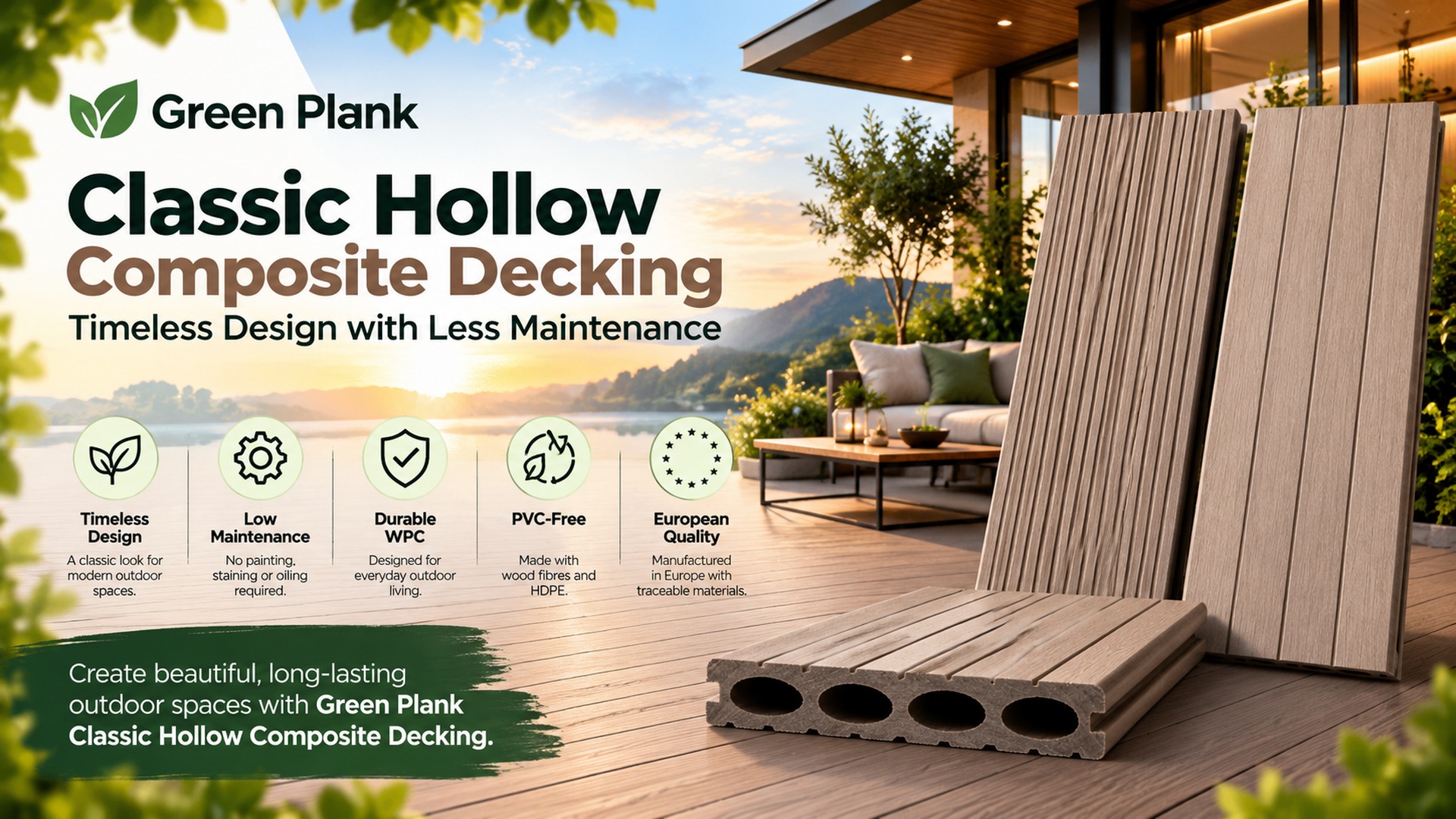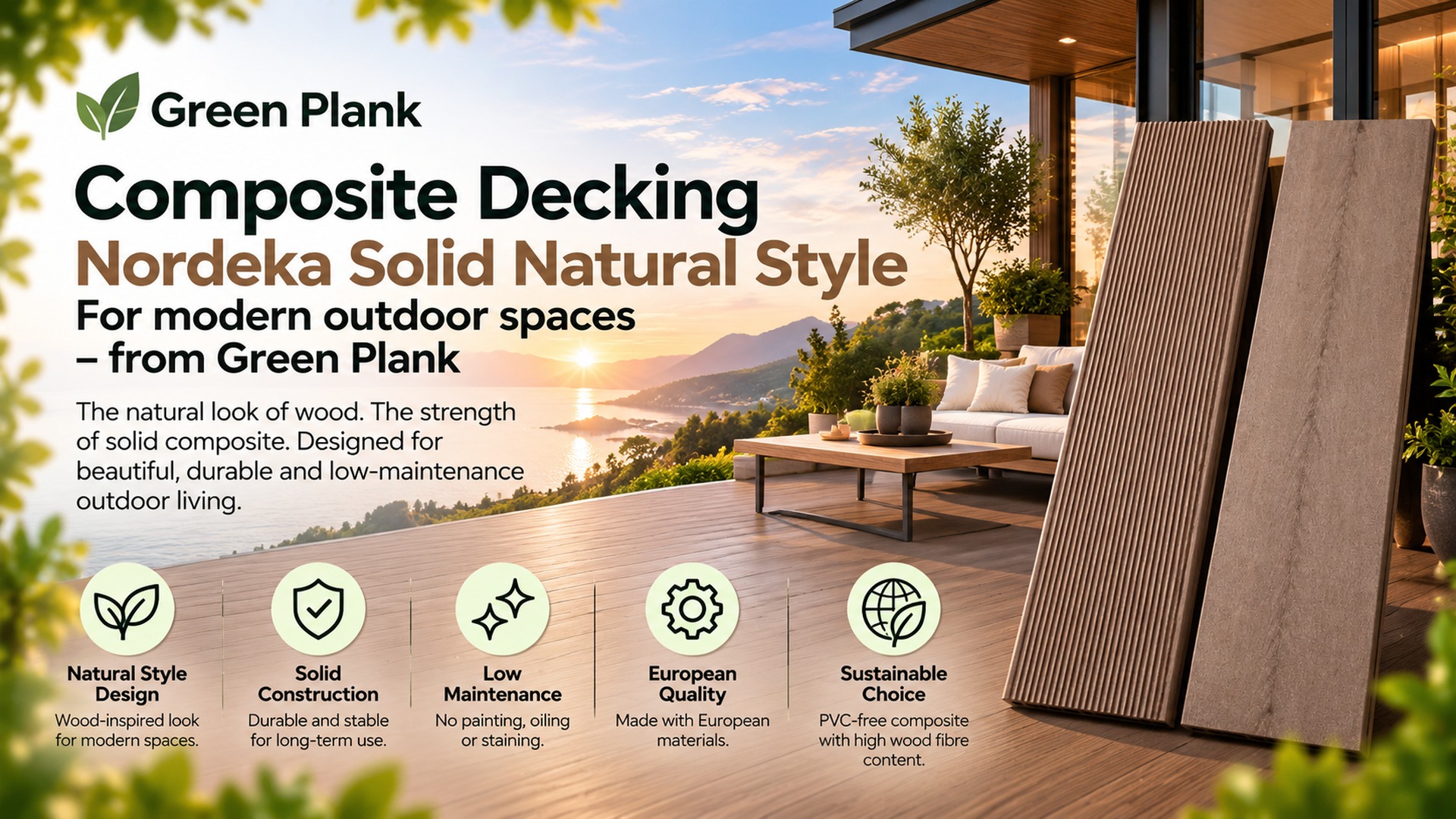




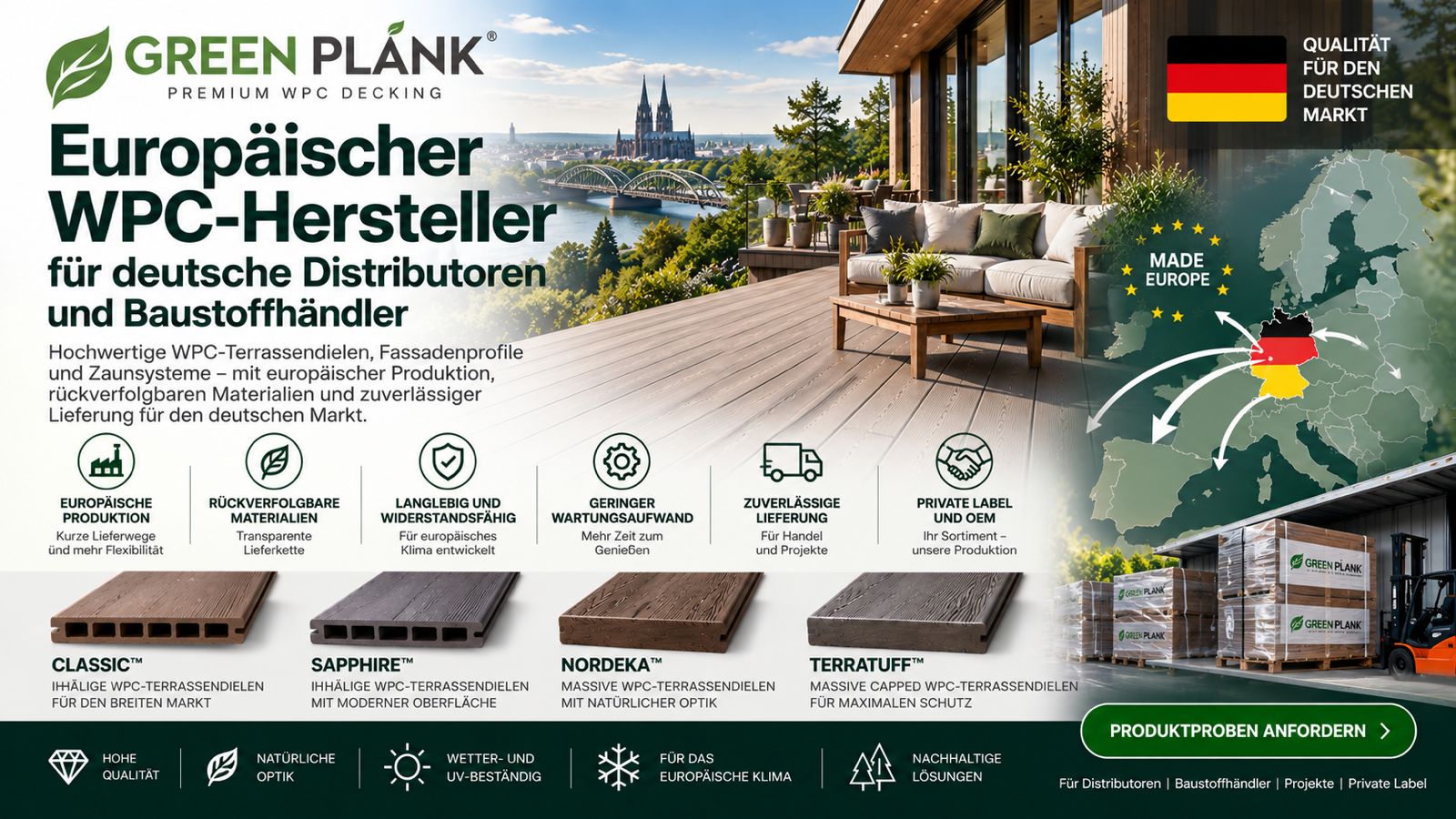
DECKING GUIDE
Complete Guide to Decking: Features, Materials, Benefits, Design Ideas & Everything You Need to Know
Decking has become one of the most versatile ways to transform an outdoor area into a comfortable,
functional and visually appealing extension of a home or commercial property. Whether you are planning
a small garden deck, a large entertainment area, a poolside platform, a rooftop terrace or a complete
outdoor living space, choosing the right decking material and design can make a significant difference
to the final result.
Modern decking is available in a wide range of materials, colors, textures, profiles and installation
systems. Traditional timber decking continues to provide a natural appearance, while composite decking,
PVC and other engineered materials offer alternatives designed around durability and reduced maintenance.
Composite decking, for example, commonly combines wood-derived fibers with polymers and may include a
protective outer cap for improved resistance to moisture, stains and fading. :contentReference[oaicite:1]{index=1}
In this comprehensive guide, we will explore what decking is, the major types of decking available,
important features to consider, installation requirements, maintenance, design possibilities, advantages
and disadvantages, sustainability considerations, and how to select decking for different outdoor
environments.
A well-designed deck can create an outdoor living area for relaxing, dining and entertaining.
Table of Contents
What Is Decking?
Why Is Decking So Popular?
Types of Decking Materials
Composite Decking Explained
Key Features of Quality Decking
Benefits of Modern Decking
Decking Material Comparison
Decking Design Ideas
Decking Installation
Decking Maintenance
Decking and Different Climates
Sustainability and Environmental Considerations
Common Decking Mistakes
Decking Buying Guide
Frequently Asked Questions
Final Thoughts
What Is Decking?
Decking refers to a constructed outdoor surface made from boards or planks that are installed over a
supporting structure. A deck can be positioned directly above the ground, raised above the ground,
attached to a building, installed around a swimming pool, incorporated into a garden or designed as
part of a larger outdoor living area.
Traditionally, decking was predominantly associated with timber. However, the decking industry has
evolved considerably. Homeowners and commercial property owners can now choose from pressure-treated
timber, hardwood, composite decking, PVC and other engineered decking systems.
The purpose of decking extends far beyond simply creating a flat outdoor surface. A properly designed
deck can visually connect indoor and outdoor spaces, provide an area for outdoor furniture, create
different levels within a garden and establish a dedicated area for dining, entertaining or relaxation.
Modern decking can also be highly customizable. Boards may be installed in traditional parallel
patterns, diagonal arrangements, herringbone layouts, picture-frame borders and other decorative
configurations.
In Simple Terms
Decking is an outdoor flooring system designed to create a practical and attractive surface while
providing a foundation for outdoor activities, furniture and landscaping features.
Why Is Decking So Popular?
Outdoor living has become an important part of modern residential design. Instead of treating gardens,
patios and terraces as separate spaces, homeowners increasingly use them as extensions of the main
living area.
Decking provides a structured way to achieve this transition. A deck can define an outdoor room without
requiring walls or a conventional roof. Add outdoor furniture, lighting, planters, a dining table,
barbecue or lounge seating and the deck can become a dedicated outdoor living environment.
Creates a defined outdoor living area.
Provides a clean and organized surface for outdoor furniture.
Can visually enhance gardens and landscaping.
Can be designed around unusual spaces and different levels.
Available in a wide range of colors and textures.
Can be combined with lighting, railings and landscaping.
Composite options can significantly reduce routine finishing maintenance.
Can be used for residential and commercial applications.
Another reason for its popularity is the variety of materials now available. Modern composite products
can replicate the visual character of timber while offering a maintenance profile that differs from
traditional wood. :contentReference[oaicite:2]{index=2}
Types of Decking Materials
Selecting a decking material is one of the most important decisions in any decking project. There is
no universal material that is suitable for every property. The right option depends on budget,
appearance, maintenance expectations, climate, installation method and the intended use of the space.
Timber Decking
Timber decking provides an authentic natural appearance. Depending on the species and treatment,
timber can provide different colors, grain patterns and textures.
Natural appearance
Traditional character
Can be stained or painted
Easy to cut and modify
Requires ongoing maintenance
Composite Decking
Composite decking typically combines wood fibers or other fillers with plastic polymers. Modern
capped products can feature a protective polymer layer designed to improve resistance to moisture,
staining and fading. :contentReference[oaicite:3]{index=3}
Low-maintenance surface
Wide selection of colors
Wood-inspired appearance
Resistant to rot and insects
No routine staining or sealing for many products
PVC Decking
PVC decking is a synthetic decking option that does not use wood fibers in its board construction.
It can be useful where moisture resistance and a synthetic material profile are important.
Moisture resistant
Low routine maintenance
Wide design selection
Lightweight compared with some composite boards
Hardwood Decking
Hardwood decking is selected by homeowners who want the appearance and feel of premium natural
timber. Specific performance varies significantly by species, installation and maintenance.
Premium natural appearance
Distinctive grain patterns
Strong and dense species available
Usually requires appropriate maintenance
Composite Decking Explained
Composite decking has become an important alternative to traditional wood decking. It is generally
manufactured by combining wood fibers, recycled or virgin polymers and additives, followed by a
manufacturing process such as extrusion.
One of the major developments in composite decking has been the introduction of capped boards. A
protective synthetic layer can surround part or all of the board, depending on the product. This layer
can provide additional resistance to moisture, stains and fading compared with older uncapped designs.
:contentReference[oaicite:4]{index=4}
How Composite Decking Is Made
Wood fibers or another structural filler are prepared.
Polymer material is combined with the filler.
Color pigments and performance additives may be introduced.
The mixture is processed into decking profiles.
A surface texture may be embossed into the board.
Some products receive a protective outer cap.
The finished boards are cut and prepared for installation.
The exact formulation differs between manufacturers and product collections, so buyers should always
review the technical documentation and warranty for the specific product being considered.
Important:
A product category is not the same thing as a product specification. Board construction, surface
technology, warranty, installation requirements and performance can differ considerably between
individual decking products.
Key Features of Quality Decking
When evaluating decking, it is useful to look beyond color and price. The technical characteristics
of a decking board can have a major effect on its appearance, maintenance requirements and long-term
performance.
1. Durability
Quality decking should be designed for the environmental conditions where it will be installed.
Moisture exposure, sunlight, temperature changes, foot traffic and furniture movement can all affect
the surface over time.
2. Moisture Resistance
Outdoor decking is continuously exposed to moisture from rain, humidity and cleaning. Moisture
resistance is particularly important in climates with frequent rainfall or around pools.
3. UV Resistance
Continuous exposure to sunlight can affect the color of outdoor materials. Many modern synthetic
decking products incorporate UV-resistant technologies designed to reduce unwanted color change.
4. Low Maintenance
One of the major reasons homeowners consider composite decking is the reduced need for recurring
staining, sealing and refinishing compared with many traditional timber systems.
5. Surface Texture
Decking can feature wood-grain patterns, brushed textures, grooves or other finishes. Texture affects
both appearance and how the surface feels underfoot.
6. Color Selection
Modern decking is available in neutral gray, brown, black, natural timber-inspired colors and
numerous other shades depending on the manufacturer.
7. Fastening System
Deck boards can be installed using visible screws or hidden fastening systems. Hidden fasteners can
create a cleaner appearance while maintaining appropriate board movement and spacing.
8. Board Profile
Boards may be solid or hollow depending on the product. Profile design affects weight, installation,
stiffness and the manufacturer's recommended span.
Benefits of Modern Decking
1. Creates Additional Living Space
One of the biggest advantages of decking is its ability to turn an underused outdoor area into a
practical extension of the home. A deck can accommodate dining furniture, sofas, sun loungers,
planters, outdoor kitchens and entertainment areas.
2. Flexible Design Possibilities
Decking does not have to be a simple rectangular platform. Designers can create curves, steps,
multiple levels, borders, contrasting colors and integrated planting areas.
3. Reduced Maintenance With Composite Options
Composite decking generally does not require the same recurring stain-and-seal routine associated with
many wood decking systems. Regular cleaning is still important, but the maintenance process can be
considerably simpler. :contentReference[oaicite:5]{index=5}
4. Resistance to Rot and Insects
Many composite decking products are designed to resist common problems associated with exposed timber,
including rot and insect damage. This does not mean the entire deck structure is maintenance-free:
framing, drainage and installation remain critical.
5. Wide Range of Aesthetic Choices
Modern decking can reproduce the visual language of natural wood while offering consistent colors and
repeatable patterns. Manufacturers offer different surface textures, colors and board profiles.
6. Cleaner Installation Aesthetics
Hidden fastening systems can reduce the number of visible screw heads across the surface. Many composite
systems are specifically designed around concealed clips or other manufacturer-approved fastening
solutions. :contentReference[oaicite:6]{index=6}
Composite decking can combine wood-inspired textures with a low-maintenance outdoor surface.
Decking Material Comparison
The following table provides a general comparison of common decking categories. Actual performance,
lifespan, maintenance requirements and warranties vary by product, installation quality and environment.
Feature
Timber
Composite
PVC
Hardwood
Natural Appearance
Excellent
Very Good
Good
Excellent
Maintenance
Regular
Low
Low
Moderate
Staining / Sealing
Usually required for appearance and protection
Generally not required
Generally not required
Product dependent
Rot Resistance
Depends on species and treatment
High for many products
High
Species dependent
Insect Resistance
Treatment dependent
High for many products
High
Species dependent
Color Options
Very High with stains/paints
High
High
Natural color focused
Splintering
Possible
Designed to avoid wood splinters
Very low
Possible depending on condition
Initial Cost
Low to high
Medium to high
Medium to high
High
Maintenance Cost
Potentially higher
Generally lower
Generally lower
Potentially higher
Consumer testing also shows why material selection should not be based on a single characteristic.
Some wood products can perform particularly well in areas such as stiffness and slip resistance, while
synthetic alternatives may perform well for stain and color retention. :contentReference[oaicite:7]{index=7}
Decking Design Ideas for Modern Outdoor Spaces
Decking provides enormous design flexibility. The same material can look completely different depending
on board direction, borders, lighting, furniture and landscaping.
1. Classic Straight-Board Deck
The simplest design uses parallel boards running in a single direction. This approach works particularly
well for rectangular gardens and contemporary properties.
2. Picture-Frame Decking
A contrasting border can be installed around the main deck area. Picture-frame designs create a
finished appearance and visually emphasize the shape of the deck.
3. Multi-Level Decking
If the garden contains changes in elevation, multiple deck levels can turn an awkward slope into an
intentional architectural feature.
4. Poolside Decking
Decking around a pool can create a dedicated relaxation zone. Material selection should pay particular
attention to moisture exposure, drainage, surface characteristics and local safety requirements.
5. Outdoor Dining Deck
A deck can be designed specifically around a dining table, outdoor kitchen or barbecue area. Lighting
can then be integrated into the surrounding structure for evening use.
6. Garden Deck With Planters
Built-in planters can soften the appearance of a large deck and create a transition between hard
landscaping and vegetation.
7. Contemporary Dark Decking
Dark decking can create a dramatic architectural appearance. However, darker surfaces can become
hotter in direct sunlight, so the local climate and intended use should be considered before selecting
a dark color. :contentReference[oaicite:8]{index=8}
8. Natural Timber-Look Deck
Brown and warm-toned composite boards can create the appearance of a traditional timber deck while
providing a different maintenance profile.
Decking Inspiration
Contemporary garden decking
Wood-effect composite decking
Poolside decking
Multi-level outdoor decking
How Is Decking Installed?
Although the visible surface is made from decking boards, a successful deck depends heavily on the
structure beneath it. A deck generally requires appropriate foundations, posts, beams, joists and
decking boards, with additional components depending on the design.
Typical Installation Process
Planning and Measurement
Measure the area carefully and determine the required deck dimensions, orientation, levels,
access points and intended use.
Structural Design
Determine the supporting structure, joist layout, foundations and appropriate spacing based on the
specific decking system and applicable building requirements.
Ground Preparation
Prepare the site to provide appropriate drainage, stability and clearance beneath the deck.
Build the Supporting Frame
Install the structural framing according to the applicable engineering and manufacturer
requirements.
Install the Deck Boards
Boards are cut, positioned and fastened using the approved fastening system.
Add Edges and Finishing Components
Fascia, steps, railings, trim and other finishing components can be added as required.
Final Inspection
Check spacing, fasteners, edges, transitions, drainage and overall stability before the deck is
placed into regular use.
Installation Matters
Decking boards should never be treated as a standalone product. Manufacturer-specific spacing,
fastening, ventilation, drainage and joist requirements should always be followed. Composite materials
can move with temperature changes, making correct installation particularly important. :contentReference[oaicite:9]{index=9}
How to Maintain Your Decking
Every decking material benefits from regular inspection and cleaning. The exact maintenance schedule
depends on the material, product, climate and surrounding environment.
Basic Deck Maintenance Checklist
Remove leaves and debris regularly.
Keep drainage paths clear.
Clean food and drink spills promptly.
Inspect boards for damage.
Check visible fasteners and connections.
Inspect the supporting structure periodically.
Trim vegetation that prevents airflow.
Follow the decking manufacturer's cleaning recommendations.
Cleaning Composite Decking
Many composite decking products can be cleaned using ordinary soap and water with an appropriate brush.
However, cleaning products and pressure-washing recommendations vary, so the manufacturer's care guide
should always take priority.
This is one of the major differences between composite and many timber decking systems. Traditional wood
may require periodic staining, sealing or refinishing to maintain its appearance, while many composite
products are designed around occasional cleaning rather than repeated surface finishing. :contentReference[oaicite:10]{index=10}
Maintenance Schedule
Task
Recommended Attention
Why It Matters
Sweeping
Regularly
Prevents debris accumulation
General Cleaning
As required
Removes dirt and spills
Board Inspection
Periodically
Identifies damaged boards early
Drainage Inspection
Periodically
Helps prevent standing moisture
Structural Inspection
Periodically
Protects the integrity of the deck system
Decking for Different Climates
Climate should play an important role in decking selection. A deck exposed to intense sunlight and high
temperatures can experience different conditions from a deck installed in a cool, wet environment.
Hot and Sunny Climates
Consider color, surface texture and the amount of direct sunlight. Darker decking can absorb substantial
solar heat and become uncomfortable underfoot in direct sun.
Wet and Humid Climates
Moisture management becomes particularly important. Drainage, ventilation and correct board spacing can
help the overall deck system perform properly.
Cold Climates
Temperature fluctuations can affect outdoor materials. Installation should account for the expansion
and contraction characteristics specified by the manufacturer.
Coastal Environments
Salt, moisture, wind and intense sunlight can create challenging conditions. Fastener selection and
material specifications should therefore be considered carefully.
Remember:
There is no single decking material that is automatically ideal for every climate. The specific product,
installation system and environmental exposure should be evaluated together.
Sustainability and Environmental Considerations
Sustainability has become an increasingly important consideration when selecting building materials.
Some composite decking products incorporate recycled plastics and reclaimed wood fibers, allowing
manufacturers to reuse materials that might otherwise become waste. :contentReference[oaicite:11]{index=11}
However, environmental performance should not be judged solely by whether a product contains recycled
content. Buyers should consider the entire product lifecycle, including raw materials, manufacturing,
transportation, expected service life, maintenance requirements and end-of-life options.
Questions to Ask About Sustainable Decking
Does the manufacturer disclose recycled content?
Where are the raw materials sourced?
How long is the expected product life?
What warranty is provided?
How much maintenance does the product require?
Can damaged boards be replaced individually?
Does the manufacturer provide information about disposal or recycling?
Common Decking Mistakes to Avoid
Mistake 1: Choosing Only Based on Price
The cheapest decking board is not necessarily the cheapest solution over its entire ownership period.
Maintenance, replacement boards, finishing products, labor and installation requirements can all affect
long-term cost.
Mistake 2: Ignoring the Supporting Structure
A premium decking board cannot compensate for an inadequate frame. The supporting structure must be
designed and installed correctly.
Mistake 3: Ignoring Drainage
Water should not be allowed to remain trapped around decking components. Good drainage and ventilation
are fundamental to long-term outdoor construction.
Mistake 4: Ignoring Manufacturer Instructions
Different decking systems can have different requirements for joist spacing, board gaps, fasteners,
expansion and installation temperature.
Mistake 5: Choosing a Dark Color Without Considering Sun Exposure
Dark surfaces can become significantly warmer in direct sunlight. If the deck will be used barefoot,
especially around a pool or in a very sunny garden, surface temperature should be considered.
Mistake 6: Forgetting Furniture and Traffic
The intended use of the deck should influence material selection. A deck used for heavy outdoor
furniture and frequent entertaining may experience different wear patterns from a deck used occasionally.
Decking Buying Guide: What Should You Look For?
Buying decking is a long-term decision. Instead of choosing a board simply because its color looks
attractive, create a complete checklist before ordering materials.
Step 1: Define Your Budget
Establish both your material budget and your complete project budget. Include framing, foundations,
fasteners, fascia, railings, stairs, lighting, labor, delivery and waste.
Step 2: Determine the Required Appearance
Decide whether you prefer authentic natural timber, contemporary composite, dark modern boards,
warm wood tones or a neutral architectural palette.
Step 3: Consider Maintenance
If you want to minimize recurring staining and sealing, investigate low-maintenance composite or
synthetic decking options.
Step 4: Evaluate the Climate
Consider rainfall, humidity, sunlight, temperature fluctuations, snow, coastal exposure and drainage.
Step 5: Examine Technical Specifications
Board dimensions
Board profile
Recommended joist spacing
Fastening system
Expansion requirements
Surface texture
UV performance
Stain resistance
Slip characteristics
Warranty terms
Step 6: Request Samples
A photograph cannot fully communicate the texture, color variation or surface appearance of a decking
board. Whenever possible, view physical samples in natural daylight.
Step 7: Review the Warranty
Do not look only at the number of warranty years. Read what the warranty actually covers, what
exclusions apply and whether specific installation procedures are required.
Which Decking Type Fits Your Priorities?
Your Priority
Material Category to Investigate
Important Consideration
Natural appearance
Timber / Hardwood
Maintenance and species selection
Low maintenance
Composite / PVC
Exact product specifications
Lower initial cost
Pressure-treated timber
Long-term maintenance
Wide color selection
Composite / PVC
Color and heat performance
Premium natural look
Hardwood
Cost and ongoing care
Moisture-heavy environment
Composite / PVC / suitable hardwood
Drainage and installation
Modern architectural design
Composite / PVC
Board color, profile and fastening
At-a-Glance: Important Decking Features
✓
Durability
Designed to withstand outdoor exposure and everyday use.
✓
Low Maintenance
Many modern decking systems reduce the need for recurring finishing.
✓
Design Flexibility
Choose from different colors, textures, patterns and layouts.
✓
Outdoor Comfort
Create a dedicated area for dining, relaxing and entertaining.
✓
Moisture Resistance
Many modern materials are engineered for outdoor moisture exposure.
✓
Long-Term Value
Consider the entire ownership period rather than only the initial purchase price.
Frequently Asked Questions About Decking
What is the best material for decking?
The appropriate material depends on your budget, appearance preferences, climate, maintenance
expectations and intended use. Timber, composite, PVC and hardwood all have different characteristics.
Is composite decking better than wood?
Composite and wood have different strengths. Composite generally emphasizes low maintenance,
consistency and resistance to common outdoor deterioration, while wood provides natural appearance,
traditional feel and often a lower initial material cost. The right choice depends on project
requirements rather than a universal ranking.
Does composite decking need to be sealed?
Many composite decking products do not require routine sealing or staining. However, care requirements
vary, so the manufacturer's maintenance instructions should always be followed.
Can composite decking rot?
Composite decking is designed to resist rot and moisture-related deterioration, but performance
depends on the specific product and installation. The supporting structure beneath the decking still
needs appropriate protection and drainage.
Does composite decking fade?
Color change depends on the specific product and surface technology. Modern products often incorporate
UV-resistance technologies, but buyers should review the manufacturer's fade-resistance information
and warranty.
Does composite decking get hot?
Yes. Decking exposed to direct sunlight can become hot, and darker colors can absorb more solar heat.
Color, sunlight exposure, climate and surface design should therefore be considered when selecting
decking for barefoot areas.
Can decking be installed around a swimming pool?
Decking can be used around pools, but material selection, drainage, surface characteristics,
fastening and local safety requirements need careful consideration.
How long does decking last?
There is no single lifespan that applies to all decking. Material quality, product design, climate,
installation, maintenance and structural conditions all influence service life. Review the exact
manufacturer's warranty and technical documentation for a realistic product-specific expectation.
Is composite decking environmentally friendly?
Some composite decking products incorporate recycled plastics and wood-derived materials. However,
environmental performance depends on the complete product lifecycle, including manufacturing,
transportation, service life and end-of-life considerations.
Can individual decking boards be replaced?
Many decking systems allow individual boards to be removed and replaced, although the exact process
depends on the fastening system and product design.
A thoughtfully designed deck can become a natural extension of the home's living space.
Final Thoughts: Choosing the Right Decking
Decking is much more than a collection of outdoor boards. It is a complete outdoor living system that
combines structure, materials, design, landscaping and everyday functionality.
The ideal decking solution depends on what matters most to the property owner. Some homeowners may
prioritize the authentic appearance and feel of natural timber. Others may prefer the lower routine
maintenance associated with composite or PVC products. Some projects may require premium hardwood,
while others may prioritize initial budget and straightforward installation.
Composite decking has become particularly popular because it offers a combination of wood-inspired
aesthetics, broad color selection and reduced routine maintenance. Current composite products can also
incorporate protective caps, recycled materials and specialized fastening systems. :contentReference[oaicite:12]{index=12}
Nevertheless, choosing decking should never be based on a single feature. A beautiful board will not
perform as expected if the supporting structure is poorly designed, drainage is inadequate or the
manufacturer's installation instructions are ignored.
Start by understanding how you intend to use the space. Consider sunlight, rain, temperature, foot
traffic, furniture, pets, children, pool exposure and maintenance expectations. Then compare materials,
board profiles, warranties, colors, textures and installation systems.
A successful decking project balances appearance, durability, maintenance, comfort,
installation requirements and long-term value. By evaluating all of these factors before
purchasing materials, you can create an outdoor space that is practical, attractive and suited to the
way you actually live.
Ready to Transform Your Outdoor Space?
Explore decking materials, compare colors and finishes, and plan a deck that fits your outdoor space,
lifestyle and design goals.
Explore Our Decking Collection
Important Product Information
Decking specifications vary between manufacturers and product ranges. Information about installation,
cleaning, joist spacing, fasteners, expansion gaps, warranties, fire performance and maintenance should
always be verified against the technical documentation supplied for the specific decking product.
Related Decking Guides
Composite vs Timber Decking
Compare the differences between composite and traditional timber decking, including appearance,
maintenance and long-term considerations.
Read Guide →
How to Maintain Composite Decking
Learn how to keep your composite deck clean and looking its best throughout the year.
Read Guide →
Decking Design Ideas
Explore modern layouts, colors, borders, lighting and landscaping ideas for your next deck.
Read Guide →
Choosing the Right Decking Color
Understand how color, sunlight, architecture and landscaping can influence your decking choice.
Read Guide →
DECKING GUIDE
Complete Guide to Decking: Features, Materials, Benefits, Design Ideas & Everything You Need to Know
Decking has become one of the most versatile ways to transform an outdoor area into a comfortable,
functional and visually appealing extension of a home or commercial property. Whether you are planning
a small garden deck, a large entertainment area, a poolside platform, a rooftop terrace or a complete
outdoor living space, choosing the right decking material and design can make a significant difference
to the final result.
Modern decking is available in a wide range of materials, colors, textures, profiles and installation
systems. Traditional timber decking continues to provide a natural appearance, while composite decking,
PVC and other engineered materials offer alternatives designed around durability and reduced maintenance.
Composite decking, for example, commonly combines wood-derived fibers with polymers and may include a
protective outer cap for improved resistance to moisture, stains and fading. :contentReference[oaicite:1]{index=1}
In this comprehensive guide, we will explore what decking is, the major types of decking available,
important features to consider, installation requirements, maintenance, design possibilities, advantages
and disadvantages, sustainability considerations, and how to select decking for different outdoor
environments.
A well-designed deck can create an outdoor living area for relaxing, dining and entertaining.
Table of Contents
What Is Decking?
Why Is Decking So Popular?
Types of Decking Materials
Composite Decking Explained
Key Features of Quality Decking
Benefits of Modern Decking
Decking Material Comparison
Decking Design Ideas
Decking Installation
Decking Maintenance
Decking and Different Climates
Sustainability and Environmental Considerations
Common Decking Mistakes
Decking Buying Guide
Frequently Asked Questions
Final Thoughts
What Is Decking?
Decking refers to a constructed outdoor surface made from boards or planks that are installed over a
supporting structure. A deck can be positioned directly above the ground, raised above the ground,
attached to a building, installed around a swimming pool, incorporated into a garden or designed as
part of a larger outdoor living area.
Traditionally, decking was predominantly associated with timber. However, the decking industry has
evolved considerably. Homeowners and commercial property owners can now choose from pressure-treated
timber, hardwood, composite decking, PVC and other engineered decking systems.
The purpose of decking extends far beyond simply creating a flat outdoor surface. A properly designed
deck can visually connect indoor and outdoor spaces, provide an area for outdoor furniture, create
different levels within a garden and establish a dedicated area for dining, entertaining or relaxation.
Modern decking can also be highly customizable. Boards may be installed in traditional parallel
patterns, diagonal arrangements, herringbone layouts, picture-frame borders and other decorative
configurations.
In Simple Terms
Decking is an outdoor flooring system designed to create a practical and attractive surface while
providing a foundation for outdoor activities, furniture and landscaping features.
Why Is Decking So Popular?
Outdoor living has become an important part of modern residential design. Instead of treating gardens,
patios and terraces as separate spaces, homeowners increasingly use them as extensions of the main
living area.
Decking provides a structured way to achieve this transition. A deck can define an outdoor room without
requiring walls or a conventional roof. Add outdoor furniture, lighting, planters, a dining table,
barbecue or lounge seating and the deck can become a dedicated outdoor living environment.
Creates a defined outdoor living area.
Provides a clean and organized surface for outdoor furniture.
Can visually enhance gardens and landscaping.
Can be designed around unusual spaces and different levels.
Available in a wide range of colors and textures.
Can be combined with lighting, railings and landscaping.
Composite options can significantly reduce routine finishing maintenance.
Can be used for residential and commercial applications.
Another reason for its popularity is the variety of materials now available. Modern composite products
can replicate the visual character of timber while offering a maintenance profile that differs from
traditional wood. :contentReference[oaicite:2]{index=2}
Types of Decking Materials
Selecting a decking material is one of the most important decisions in any decking project. There is
no universal material that is suitable for every property. The right option depends on budget,
appearance, maintenance expectations, climate, installation method and the intended use of the space.
Timber Decking
Timber decking provides an authentic natural appearance. Depending on the species and treatment,
timber can provide different colors, grain patterns and textures.
Natural appearance
Traditional character
Can be stained or painted
Easy to cut and modify
Requires ongoing maintenance
Composite Decking
Composite decking typically combines wood fibers or other fillers with plastic polymers. Modern
capped products can feature a protective polymer layer designed to improve resistance to moisture,
staining and fading. :contentReference[oaicite:3]{index=3}
Low-maintenance surface
Wide selection of colors
Wood-inspired appearance
Resistant to rot and insects
No routine staining or sealing for many products
PVC Decking
PVC decking is a synthetic decking option that does not use wood fibers in its board construction.
It can be useful where moisture resistance and a synthetic material profile are important.
Moisture resistant
Low routine maintenance
Wide design selection
Lightweight compared with some composite boards
Hardwood Decking
Hardwood decking is selected by homeowners who want the appearance and feel of premium natural
timber. Specific performance varies significantly by species, installation and maintenance.
Premium natural appearance
Distinctive grain patterns
Strong and dense species available
Usually requires appropriate maintenance
Composite Decking Explained
Composite decking has become an important alternative to traditional wood decking. It is generally
manufactured by combining wood fibers, recycled or virgin polymers and additives, followed by a
manufacturing process such as extrusion.
One of the major developments in composite decking has been the introduction of capped boards. A
protective synthetic layer can surround part or all of the board, depending on the product. This layer
can provide additional resistance to moisture, stains and fading compared with older uncapped designs.
:contentReference[oaicite:4]{index=4}
How Composite Decking Is Made
Wood fibers or another structural filler are prepared.
Polymer material is combined with the filler.
Color pigments and performance additives may be introduced.
The mixture is processed into decking profiles.
A surface texture may be embossed into the board.
Some products receive a protective outer cap.
The finished boards are cut and prepared for installation.
The exact formulation differs between manufacturers and product collections, so buyers should always
review the technical documentation and warranty for the specific product being considered.
Important:
A product category is not the same thing as a product specification. Board construction, surface
technology, warranty, installation requirements and performance can differ considerably between
individual decking products.
Key Features of Quality Decking
When evaluating decking, it is useful to look beyond color and price. The technical characteristics
of a decking board can have a major effect on its appearance, maintenance requirements and long-term
performance.
1. Durability
Quality decking should be designed for the environmental conditions where it will be installed.
Moisture exposure, sunlight, temperature changes, foot traffic and furniture movement can all affect
the surface over time.
2. Moisture Resistance
Outdoor decking is continuously exposed to moisture from rain, humidity and cleaning. Moisture
resistance is particularly important in climates with frequent rainfall or around pools.
3. UV Resistance
Continuous exposure to sunlight can affect the color of outdoor materials. Many modern synthetic
decking products incorporate UV-resistant technologies designed to reduce unwanted color change.
4. Low Maintenance
One of the major reasons homeowners consider composite decking is the reduced need for recurring
staining, sealing and refinishing compared with many traditional timber systems.
5. Surface Texture
Decking can feature wood-grain patterns, brushed textures, grooves or other finishes. Texture affects
both appearance and how the surface feels underfoot.
6. Color Selection
Modern decking is available in neutral gray, brown, black, natural timber-inspired colors and
numerous other shades depending on the manufacturer.
7. Fastening System
Deck boards can be installed using visible screws or hidden fastening systems. Hidden fasteners can
create a cleaner appearance while maintaining appropriate board movement and spacing.
8. Board Profile
Boards may be solid or hollow depending on the product. Profile design affects weight, installation,
stiffness and the manufacturer's recommended span.
Benefits of Modern Decking
1. Creates Additional Living Space
One of the biggest advantages of decking is its ability to turn an underused outdoor area into a
practical extension of the home. A deck can accommodate dining furniture, sofas, sun loungers,
planters, outdoor kitchens and entertainment areas.
2. Flexible Design Possibilities
Decking does not have to be a simple rectangular platform. Designers can create curves, steps,
multiple levels, borders, contrasting colors and integrated planting areas.
3. Reduced Maintenance With Composite Options
Composite decking generally does not require the same recurring stain-and-seal routine associated with
many wood decking systems. Regular cleaning is still important, but the maintenance process can be
considerably simpler. :contentReference[oaicite:5]{index=5}
4. Resistance to Rot and Insects
Many composite decking products are designed to resist common problems associated with exposed timber,
including rot and insect damage. This does not mean the entire deck structure is maintenance-free:
framing, drainage and installation remain critical.
5. Wide Range of Aesthetic Choices
Modern decking can reproduce the visual language of natural wood while offering consistent colors and
repeatable patterns. Manufacturers offer different surface textures, colors and board profiles.
6. Cleaner Installation Aesthetics
Hidden fastening systems can reduce the number of visible screw heads across the surface. Many composite
systems are specifically designed around concealed clips or other manufacturer-approved fastening
solutions. :contentReference[oaicite:6]{index=6}
Composite decking can combine wood-inspired textures with a low-maintenance outdoor surface.
Decking Material Comparison
The following table provides a general comparison of common decking categories. Actual performance,
lifespan, maintenance requirements and warranties vary by product, installation quality and environment.
Feature
Timber
Composite
PVC
Hardwood
Natural Appearance
Excellent
Very Good
Good
Excellent
Maintenance
Regular
Low
Low
Moderate
Staining / Sealing
Usually required for appearance and protection
Generally not required
Generally not required
Product dependent
Rot Resistance
Depends on species and treatment
High for many products
High
Species dependent
Insect Resistance
Treatment dependent
High for many products
High
Species dependent
Color Options
Very High with stains/paints
High
High
Natural color focused
Splintering
Possible
Designed to avoid wood splinters
Very low
Possible depending on condition
Initial Cost
Low to high
Medium to high
Medium to high
High
Maintenance Cost
Potentially higher
Generally lower
Generally lower
Potentially higher
Consumer testing also shows why material selection should not be based on a single characteristic.
Some wood products can perform particularly well in areas such as stiffness and slip resistance, while
synthetic alternatives may perform well for stain and color retention. :contentReference[oaicite:7]{index=7}
Decking Design Ideas for Modern Outdoor Spaces
Decking provides enormous design flexibility. The same material can look completely different depending
on board direction, borders, lighting, furniture and landscaping.
1. Classic Straight-Board Deck
The simplest design uses parallel boards running in a single direction. This approach works particularly
well for rectangular gardens and contemporary properties.
2. Picture-Frame Decking
A contrasting border can be installed around the main deck area. Picture-frame designs create a
finished appearance and visually emphasize the shape of the deck.
3. Multi-Level Decking
If the garden contains changes in elevation, multiple deck levels can turn an awkward slope into an
intentional architectural feature.
4. Poolside Decking
Decking around a pool can create a dedicated relaxation zone. Material selection should pay particular
attention to moisture exposure, drainage, surface characteristics and local safety requirements.
5. Outdoor Dining Deck
A deck can be designed specifically around a dining table, outdoor kitchen or barbecue area. Lighting
can then be integrated into the surrounding structure for evening use.
6. Garden Deck With Planters
Built-in planters can soften the appearance of a large deck and create a transition between hard
landscaping and vegetation.
7. Contemporary Dark Decking
Dark decking can create a dramatic architectural appearance. However, darker surfaces can become
hotter in direct sunlight, so the local climate and intended use should be considered before selecting
a dark color. :contentReference[oaicite:8]{index=8}
8. Natural Timber-Look Deck
Brown and warm-toned composite boards can create the appearance of a traditional timber deck while
providing a different maintenance profile.
Decking Inspiration
Contemporary garden decking
Wood-effect composite decking
Poolside decking
Multi-level outdoor decking
How Is Decking Installed?
Although the visible surface is made from decking boards, a successful deck depends heavily on the
structure beneath it. A deck generally requires appropriate foundations, posts, beams, joists and
decking boards, with additional components depending on the design.
Typical Installation Process
Planning and Measurement
Measure the area carefully and determine the required deck dimensions, orientation, levels,
access points and intended use.
Structural Design
Determine the supporting structure, joist layout, foundations and appropriate spacing based on the
specific decking system and applicable building requirements.
Ground Preparation
Prepare the site to provide appropriate drainage, stability and clearance beneath the deck.
Build the Supporting Frame
Install the structural framing according to the applicable engineering and manufacturer
requirements.
Install the Deck Boards
Boards are cut, positioned and fastened using the approved fastening system.
Add Edges and Finishing Components
Fascia, steps, railings, trim and other finishing components can be added as required.
Final Inspection
Check spacing, fasteners, edges, transitions, drainage and overall stability before the deck is
placed into regular use.
Installation Matters
Decking boards should never be treated as a standalone product. Manufacturer-specific spacing,
fastening, ventilation, drainage and joist requirements should always be followed. Composite materials
can move with temperature changes, making correct installation particularly important. :contentReference[oaicite:9]{index=9}
How to Maintain Your Decking
Every decking material benefits from regular inspection and cleaning. The exact maintenance schedule
depends on the material, product, climate and surrounding environment.
Basic Deck Maintenance Checklist
Remove leaves and debris regularly.
Keep drainage paths clear.
Clean food and drink spills promptly.
Inspect boards for damage.
Check visible fasteners and connections.
Inspect the supporting structure periodically.
Trim vegetation that prevents airflow.
Follow the decking manufacturer's cleaning recommendations.
Cleaning Composite Decking
Many composite decking products can be cleaned using ordinary soap and water with an appropriate brush.
However, cleaning products and pressure-washing recommendations vary, so the manufacturer's care guide
should always take priority.
This is one of the major differences between composite and many timber decking systems. Traditional wood
may require periodic staining, sealing or refinishing to maintain its appearance, while many composite
products are designed around occasional cleaning rather than repeated surface finishing. :contentReference[oaicite:10]{index=10}
Maintenance Schedule
Task
Recommended Attention
Why It Matters
Sweeping
Regularly
Prevents debris accumulation
General Cleaning
As required
Removes dirt and spills
Board Inspection
Periodically
Identifies damaged boards early
Drainage Inspection
Periodically
Helps prevent standing moisture
Structural Inspection
Periodically
Protects the integrity of the deck system
Decking for Different Climates
Climate should play an important role in decking selection. A deck exposed to intense sunlight and high
temperatures can experience different conditions from a deck installed in a cool, wet environment.
Hot and Sunny Climates
Consider color, surface texture and the amount of direct sunlight. Darker decking can absorb substantial
solar heat and become uncomfortable underfoot in direct sun.
Wet and Humid Climates
Moisture management becomes particularly important. Drainage, ventilation and correct board spacing can
help the overall deck system perform properly.
Cold Climates
Temperature fluctuations can affect outdoor materials. Installation should account for the expansion
and contraction characteristics specified by the manufacturer.
Coastal Environments
Salt, moisture, wind and intense sunlight can create challenging conditions. Fastener selection and
material specifications should therefore be considered carefully.
Remember:
There is no single decking material that is automatically ideal for every climate. The specific product,
installation system and environmental exposure should be evaluated together.
Sustainability and Environmental Considerations
Sustainability has become an increasingly important consideration when selecting building materials.
Some composite decking products incorporate recycled plastics and reclaimed wood fibers, allowing
manufacturers to reuse materials that might otherwise become waste. :contentReference[oaicite:11]{index=11}
However, environmental performance should not be judged solely by whether a product contains recycled
content. Buyers should consider the entire product lifecycle, including raw materials, manufacturing,
transportation, expected service life, maintenance requirements and end-of-life options.
Questions to Ask About Sustainable Decking
Does the manufacturer disclose recycled content?
Where are the raw materials sourced?
How long is the expected product life?
What warranty is provided?
How much maintenance does the product require?
Can damaged boards be replaced individually?
Does the manufacturer provide information about disposal or recycling?
Common Decking Mistakes to Avoid
Mistake 1: Choosing Only Based on Price
The cheapest decking board is not necessarily the cheapest solution over its entire ownership period.
Maintenance, replacement boards, finishing products, labor and installation requirements can all affect
long-term cost.
Mistake 2: Ignoring the Supporting Structure
A premium decking board cannot compensate for an inadequate frame. The supporting structure must be
designed and installed correctly.
Mistake 3: Ignoring Drainage
Water should not be allowed to remain trapped around decking components. Good drainage and ventilation
are fundamental to long-term outdoor construction.
Mistake 4: Ignoring Manufacturer Instructions
Different decking systems can have different requirements for joist spacing, board gaps, fasteners,
expansion and installation temperature.
Mistake 5: Choosing a Dark Color Without Considering Sun Exposure
Dark surfaces can become significantly warmer in direct sunlight. If the deck will be used barefoot,
especially around a pool or in a very sunny garden, surface temperature should be considered.
Mistake 6: Forgetting Furniture and Traffic
The intended use of the deck should influence material selection. A deck used for heavy outdoor
furniture and frequent entertaining may experience different wear patterns from a deck used occasionally.
Decking Buying Guide: What Should You Look For?
Buying decking is a long-term decision. Instead of choosing a board simply because its color looks
attractive, create a complete checklist before ordering materials.
Step 1: Define Your Budget
Establish both your material budget and your complete project budget. Include framing, foundations,
fasteners, fascia, railings, stairs, lighting, labor, delivery and waste.
Step 2: Determine the Required Appearance
Decide whether you prefer authentic natural timber, contemporary composite, dark modern boards,
warm wood tones or a neutral architectural palette.
Step 3: Consider Maintenance
If you want to minimize recurring staining and sealing, investigate low-maintenance composite or
synthetic decking options.
Step 4: Evaluate the Climate
Consider rainfall, humidity, sunlight, temperature fluctuations, snow, coastal exposure and drainage.
Step 5: Examine Technical Specifications
Board dimensions
Board profile
Recommended joist spacing
Fastening system
Expansion requirements
Surface texture
UV performance
Stain resistance
Slip characteristics
Warranty terms
Step 6: Request Samples
A photograph cannot fully communicate the texture, color variation or surface appearance of a decking
board. Whenever possible, view physical samples in natural daylight.
Step 7: Review the Warranty
Do not look only at the number of warranty years. Read what the warranty actually covers, what
exclusions apply and whether specific installation procedures are required.
Which Decking Type Fits Your Priorities?
Your Priority
Material Category to Investigate
Important Consideration
Natural appearance
Timber / Hardwood
Maintenance and species selection
Low maintenance
Composite / PVC
Exact product specifications
Lower initial cost
Pressure-treated timber
Long-term maintenance
Wide color selection
Composite / PVC
Color and heat performance
Premium natural look
Hardwood
Cost and ongoing care
Moisture-heavy environment
Composite / PVC / suitable hardwood
Drainage and installation
Modern architectural design
Composite / PVC
Board color, profile and fastening
At-a-Glance: Important Decking Features
✓
Durability
Designed to withstand outdoor exposure and everyday use.
✓
Low Maintenance
Many modern decking systems reduce the need for recurring finishing.
✓
Design Flexibility
Choose from different colors, textures, patterns and layouts.
✓
Outdoor Comfort
Create a dedicated area for dining, relaxing and entertaining.
✓
Moisture Resistance
Many modern materials are engineered for outdoor moisture exposure.
✓
Long-Term Value
Consider the entire ownership period rather than only the initial purchase price.
Frequently Asked Questions About Decking
What is the best material for decking?
The appropriate material depends on your budget, appearance preferences, climate, maintenance
expectations and intended use. Timber, composite, PVC and hardwood all have different characteristics.
Is composite decking better than wood?
Composite and wood have different strengths. Composite generally emphasizes low maintenance,
consistency and resistance to common outdoor deterioration, while wood provides natural appearance,
traditional feel and often a lower initial material cost. The right choice depends on project
requirements rather than a universal ranking.
Does composite decking need to be sealed?
Many composite decking products do not require routine sealing or staining. However, care requirements
vary, so the manufacturer's maintenance instructions should always be followed.
Can composite decking rot?
Composite decking is designed to resist rot and moisture-related deterioration, but performance
depends on the specific product and installation. The supporting structure beneath the decking still
needs appropriate protection and drainage.
Does composite decking fade?
Color change depends on the specific product and surface technology. Modern products often incorporate
UV-resistance technologies, but buyers should review the manufacturer's fade-resistance information
and warranty.
Does composite decking get hot?
Yes. Decking exposed to direct sunlight can become hot, and darker colors can absorb more solar heat.
Color, sunlight exposure, climate and surface design should therefore be considered when selecting
decking for barefoot areas.
Can decking be installed around a swimming pool?
Decking can be used around pools, but material selection, drainage, surface characteristics,
fastening and local safety requirements need careful consideration.
How long does decking last?
There is no single lifespan that applies to all decking. Material quality, product design, climate,
installation, maintenance and structural conditions all influence service life. Review the exact
manufacturer's warranty and technical documentation for a realistic product-specific expectation.
Is composite decking environmentally friendly?
Some composite decking products incorporate recycled plastics and wood-derived materials. However,
environmental performance depends on the complete product lifecycle, including manufacturing,
transportation, service life and end-of-life considerations.
Can individual decking boards be replaced?
Many decking systems allow individual boards to be removed and replaced, although the exact process
depends on the fastening system and product design.
A thoughtfully designed deck can become a natural extension of the home's living space.
Final Thoughts: Choosing the Right Decking
Decking is much more than a collection of outdoor boards. It is a complete outdoor living system that
combines structure, materials, design, landscaping and everyday functionality.
The ideal decking solution depends on what matters most to the property owner. Some homeowners may
prioritize the authentic appearance and feel of natural timber. Others may prefer the lower routine
maintenance associated with composite or PVC products. Some projects may require premium hardwood,
while others may prioritize initial budget and straightforward installation.
Composite decking has become particularly popular because it offers a combination of wood-inspired
aesthetics, broad color selection and reduced routine maintenance. Current composite products can also
incorporate protective caps, recycled materials and specialized fastening systems. :contentReference[oaicite:12]{index=12}
Nevertheless, choosing decking should never be based on a single feature. A beautiful board will not
perform as expected if the supporting structure is poorly designed, drainage is inadequate or the
manufacturer's installation instructions are ignored.
Start by understanding how you intend to use the space. Consider sunlight, rain, temperature, foot
traffic, furniture, pets, children, pool exposure and maintenance expectations. Then compare materials,
board profiles, warranties, colors, textures and installation systems.
A successful decking project balances appearance, durability, maintenance, comfort,
installation requirements and long-term value. By evaluating all of these factors before
purchasing materials, you can create an outdoor space that is practical, attractive and suited to the
way you actually live.
Ready to Transform Your Outdoor Space?
Explore decking materials, compare colors and finishes, and plan a deck that fits your outdoor space,
lifestyle and design goals.
Explore Our Decking Collection
Important Product Information
Decking specifications vary between manufacturers and product ranges. Information about installation,
cleaning, joist spacing, fasteners, expansion gaps, warranties, fire performance and maintenance should
always be verified against the technical documentation supplied for the specific decking product.
Related Decking Guides
Composite vs Timber Decking
Compare the differences between composite and traditional timber decking, including appearance,
maintenance and long-term considerations.
Read Guide →
How to Maintain Composite Decking
Learn how to keep your composite deck clean and looking its best throughout the year.
Read Guide →
Decking Design Ideas
Explore modern layouts, colors, borders, lighting and landscaping ideas for your next deck.
Read Guide →
Choosing the Right Decking Color
Understand how color, sunlight, architecture and landscaping can influence your decking choice.
Read Guide →
DECKING GUIDE
Complete Guide to Decking: Features, Materials, Benefits, Design Ideas & Everything You Need to Know
Decking has become one of the most versatile ways to transform an outdoor area into a comfortable,
functional and visually appealing extension of a home or commercial property. Whether you are planning
a small garden deck, a large entertainment area, a poolside platform, a rooftop terrace or a complete
outdoor living space, choosing the right decking material and design can make a significant difference
to the final result.
Modern decking is available in a wide range of materials, colors, textures, profiles and installation
systems. Traditional timber decking continues to provide a natural appearance, while composite decking,
PVC and other engineered materials offer alternatives designed around durability and reduced maintenance.
Composite decking, for example, commonly combines wood-derived fibers with polymers and may include a
protective outer cap for improved resistance to moisture, stains and fading. :contentReference[oaicite:1]{index=1}
In this comprehensive guide, we will explore what decking is, the major types of decking available,
important features to consider, installation requirements, maintenance, design possibilities, advantages
and disadvantages, sustainability considerations, and how to select decking for different outdoor
environments.
A well-designed deck can create an outdoor living area for relaxing, dining and entertaining.
Table of Contents
What Is Decking?
Why Is Decking So Popular?
Types of Decking Materials
Composite Decking Explained
Key Features of Quality Decking
Benefits of Modern Decking
Decking Material Comparison
Decking Design Ideas
Decking Installation
Decking Maintenance
Decking and Different Climates
Sustainability and Environmental Considerations
Common Decking Mistakes
Decking Buying Guide
Frequently Asked Questions
Final Thoughts
What Is Decking?
Decking refers to a constructed outdoor surface made from boards or planks that are installed over a
supporting structure. A deck can be positioned directly above the ground, raised above the ground,
attached to a building, installed around a swimming pool, incorporated into a garden or designed as
part of a larger outdoor living area.
Traditionally, decking was predominantly associated with timber. However, the decking industry has
evolved considerably. Homeowners and commercial property owners can now choose from pressure-treated
timber, hardwood, composite decking, PVC and other engineered decking systems.
The purpose of decking extends far beyond simply creating a flat outdoor surface. A properly designed
deck can visually connect indoor and outdoor spaces, provide an area for outdoor furniture, create
different levels within a garden and establish a dedicated area for dining, entertaining or relaxation.
Modern decking can also be highly customizable. Boards may be installed in traditional parallel
patterns, diagonal arrangements, herringbone layouts, picture-frame borders and other decorative
configurations.
In Simple Terms
Decking is an outdoor flooring system designed to create a practical and attractive surface while
providing a foundation for outdoor activities, furniture and landscaping features.
Why Is Decking So Popular?
Outdoor living has become an important part of modern residential design. Instead of treating gardens,
patios and terraces as separate spaces, homeowners increasingly use them as extensions of the main
living area.
Decking provides a structured way to achieve this transition. A deck can define an outdoor room without
requiring walls or a conventional roof. Add outdoor furniture, lighting, planters, a dining table,
barbecue or lounge seating and the deck can become a dedicated outdoor living environment.
Creates a defined outdoor living area.
Provides a clean and organized surface for outdoor furniture.
Can visually enhance gardens and landscaping.
Can be designed around unusual spaces and different levels.
Available in a wide range of colors and textures.
Can be combined with lighting, railings and landscaping.
Composite options can significantly reduce routine finishing maintenance.
Can be used for residential and commercial applications.
Another reason for its popularity is the variety of materials now available. Modern composite products
can replicate the visual character of timber while offering a maintenance profile that differs from
traditional wood. :contentReference[oaicite:2]{index=2}
Types of Decking Materials
Selecting a decking material is one of the most important decisions in any decking project. There is
no universal material that is suitable for every property. The right option depends on budget,
appearance, maintenance expectations, climate, installation method and the intended use of the space.
Timber Decking
Timber decking provides an authentic natural appearance. Depending on the species and treatment,
timber can provide different colors, grain patterns and textures.
Natural appearance
Traditional character
Can be stained or painted
Easy to cut and modify
Requires ongoing maintenance
Composite Decking
Composite decking typically combines wood fibers or other fillers with plastic polymers. Modern
capped products can feature a protective polymer layer designed to improve resistance to moisture,
staining and fading. :contentReference[oaicite:3]{index=3}
Low-maintenance surface
Wide selection of colors
Wood-inspired appearance
Resistant to rot and insects
No routine staining or sealing for many products
PVC Decking
PVC decking is a synthetic decking option that does not use wood fibers in its board construction.
It can be useful where moisture resistance and a synthetic material profile are important.
Moisture resistant
Low routine maintenance
Wide design selection
Lightweight compared with some composite boards
Hardwood Decking
Hardwood decking is selected by homeowners who want the appearance and feel of premium natural
timber. Specific performance varies significantly by species, installation and maintenance.
Premium natural appearance
Distinctive grain patterns
Strong and dense species available
Usually requires appropriate maintenance
Composite Decking Explained
Composite decking has become an important alternative to traditional wood decking. It is generally
manufactured by combining wood fibers, recycled or virgin polymers and additives, followed by a
manufacturing process such as extrusion.
One of the major developments in composite decking has been the introduction of capped boards. A
protective synthetic layer can surround part or all of the board, depending on the product. This layer
can provide additional resistance to moisture, stains and fading compared with older uncapped designs.
:contentReference[oaicite:4]{index=4}
How Composite Decking Is Made
Wood fibers or another structural filler are prepared.
Polymer material is combined with the filler.
Color pigments and performance additives may be introduced.
The mixture is processed into decking profiles.
A surface texture may be embossed into the board.
Some products receive a protective outer cap.
The finished boards are cut and prepared for installation.
The exact formulation differs between manufacturers and product collections, so buyers should always
review the technical documentation and warranty for the specific product being considered.
Important:
A product category is not the same thing as a product specification. Board construction, surface
technology, warranty, installation requirements and performance can differ considerably between
individual decking products.
Key Features of Quality Decking
When evaluating decking, it is useful to look beyond color and price. The technical characteristics
of a decking board can have a major effect on its appearance, maintenance requirements and long-term
performance.
1. Durability
Quality decking should be designed for the environmental conditions where it will be installed.
Moisture exposure, sunlight, temperature changes, foot traffic and furniture movement can all affect
the surface over time.
2. Moisture Resistance
Outdoor decking is continuously exposed to moisture from rain, humidity and cleaning. Moisture
resistance is particularly important in climates with frequent rainfall or around pools.
3. UV Resistance
Continuous exposure to sunlight can affect the color of outdoor materials. Many modern synthetic
decking products incorporate UV-resistant technologies designed to reduce unwanted color change.
4. Low Maintenance
One of the major reasons homeowners consider composite decking is the reduced need for recurring
staining, sealing and refinishing compared with many traditional timber systems.
5. Surface Texture
Decking can feature wood-grain patterns, brushed textures, grooves or other finishes. Texture affects
both appearance and how the surface feels underfoot.
6. Color Selection
Modern decking is available in neutral gray, brown, black, natural timber-inspired colors and
numerous other shades depending on the manufacturer.
7. Fastening System
Deck boards can be installed using visible screws or hidden fastening systems. Hidden fasteners can
create a cleaner appearance while maintaining appropriate board movement and spacing.
8. Board Profile
Boards may be solid or hollow depending on the product. Profile design affects weight, installation,
stiffness and the manufacturer's recommended span.
Benefits of Modern Decking
1. Creates Additional Living Space
One of the biggest advantages of decking is its ability to turn an underused outdoor area into a
practical extension of the home. A deck can accommodate dining furniture, sofas, sun loungers,
planters, outdoor kitchens and entertainment areas.
2. Flexible Design Possibilities
Decking does not have to be a simple rectangular platform. Designers can create curves, steps,
multiple levels, borders, contrasting colors and integrated planting areas.
3. Reduced Maintenance With Composite Options
Composite decking generally does not require the same recurring stain-and-seal routine associated with
many wood decking systems. Regular cleaning is still important, but the maintenance process can be
considerably simpler. :contentReference[oaicite:5]{index=5}
4. Resistance to Rot and Insects
Many composite decking products are designed to resist common problems associated with exposed timber,
including rot and insect damage. This does not mean the entire deck structure is maintenance-free:
framing, drainage and installation remain critical.
5. Wide Range of Aesthetic Choices
Modern decking can reproduce the visual language of natural wood while offering consistent colors and
repeatable patterns. Manufacturers offer different surface textures, colors and board profiles.
6. Cleaner Installation Aesthetics
Hidden fastening systems can reduce the number of visible screw heads across the surface. Many composite
systems are specifically designed around concealed clips or other manufacturer-approved fastening
solutions. :contentReference[oaicite:6]{index=6}
Composite decking can combine wood-inspired textures with a low-maintenance outdoor surface.
Decking Material Comparison
The following table provides a general comparison of common decking categories. Actual performance,
lifespan, maintenance requirements and warranties vary by product, installation quality and environment.
Feature
Timber
Composite
PVC
Hardwood
Natural Appearance
Excellent
Very Good
Good
Excellent
Maintenance
Regular
Low
Low
Moderate
Staining / Sealing
Usually required for appearance and protection
Generally not required
Generally not required
Product dependent
Rot Resistance
Depends on species and treatment
High for many products
High
Species dependent
Insect Resistance
Treatment dependent
High for many products
High
Species dependent
Color Options
Very High with stains/paints
High
High
Natural color focused
Splintering
Possible
Designed to avoid wood splinters
Very low
Possible depending on condition
Initial Cost
Low to high
Medium to high
Medium to high
High
Maintenance Cost
Potentially higher
Generally lower
Generally lower
Potentially higher
Consumer testing also shows why material selection should not be based on a single characteristic.
Some wood products can perform particularly well in areas such as stiffness and slip resistance, while
synthetic alternatives may perform well for stain and color retention. :contentReference[oaicite:7]{index=7}
Decking Design Ideas for Modern Outdoor Spaces
Decking provides enormous design flexibility. The same material can look completely different depending
on board direction, borders, lighting, furniture and landscaping.
1. Classic Straight-Board Deck
The simplest design uses parallel boards running in a single direction. This approach works particularly
well for rectangular gardens and contemporary properties.
2. Picture-Frame Decking
A contrasting border can be installed around the main deck area. Picture-frame designs create a
finished appearance and visually emphasize the shape of the deck.
3. Multi-Level Decking
If the garden contains changes in elevation, multiple deck levels can turn an awkward slope into an
intentional architectural feature.
4. Poolside Decking
Decking around a pool can create a dedicated relaxation zone. Material selection should pay particular
attention to moisture exposure, drainage, surface characteristics and local safety requirements.
5. Outdoor Dining Deck
A deck can be designed specifically around a dining table, outdoor kitchen or barbecue area. Lighting
can then be integrated into the surrounding structure for evening use.
6. Garden Deck With Planters
Built-in planters can soften the appearance of a large deck and create a transition between hard
landscaping and vegetation.
7. Contemporary Dark Decking
Dark decking can create a dramatic architectural appearance. However, darker surfaces can become
hotter in direct sunlight, so the local climate and intended use should be considered before selecting
a dark color. :contentReference[oaicite:8]{index=8}
8. Natural Timber-Look Deck
Brown and warm-toned composite boards can create the appearance of a traditional timber deck while
providing a different maintenance profile.
Decking Inspiration
Contemporary garden decking
Wood-effect composite decking
Poolside decking
Multi-level outdoor decking
How Is Decking Installed?
Although the visible surface is made from decking boards, a successful deck depends heavily on the
structure beneath it. A deck generally requires appropriate foundations, posts, beams, joists and
decking boards, with additional components depending on the design.
Typical Installation Process
Planning and Measurement
Measure the area carefully and determine the required deck dimensions, orientation, levels,
access points and intended use.
Structural Design
Determine the supporting structure, joist layout, foundations and appropriate spacing based on the
specific decking system and applicable building requirements.
Ground Preparation
Prepare the site to provide appropriate drainage, stability and clearance beneath the deck.
Build the Supporting Frame
Install the structural framing according to the applicable engineering and manufacturer
requirements.
Install the Deck Boards
Boards are cut, positioned and fastened using the approved fastening system.
Add Edges and Finishing Components
Fascia, steps, railings, trim and other finishing components can be added as required.
Final Inspection
Check spacing, fasteners, edges, transitions, drainage and overall stability before the deck is
placed into regular use.
Installation Matters
Decking boards should never be treated as a standalone product. Manufacturer-specific spacing,
fastening, ventilation, drainage and joist requirements should always be followed. Composite materials
can move with temperature changes, making correct installation particularly important. :contentReference[oaicite:9]{index=9}
How to Maintain Your Decking
Every decking material benefits from regular inspection and cleaning. The exact maintenance schedule
depends on the material, product, climate and surrounding environment.
Basic Deck Maintenance Checklist
Remove leaves and debris regularly.
Keep drainage paths clear.
Clean food and drink spills promptly.
Inspect boards for damage.
Check visible fasteners and connections.
Inspect the supporting structure periodically.
Trim vegetation that prevents airflow.
Follow the decking manufacturer's cleaning recommendations.
Cleaning Composite Decking
Many composite decking products can be cleaned using ordinary soap and water with an appropriate brush.
However, cleaning products and pressure-washing recommendations vary, so the manufacturer's care guide
should always take priority.
This is one of the major differences between composite and many timber decking systems. Traditional wood
may require periodic staining, sealing or refinishing to maintain its appearance, while many composite
products are designed around occasional cleaning rather than repeated surface finishing. :contentReference[oaicite:10]{index=10}
Maintenance Schedule
Task
Recommended Attention
Why It Matters
Sweeping
Regularly
Prevents debris accumulation
General Cleaning
As required
Removes dirt and spills
Board Inspection
Periodically
Identifies damaged boards early
Drainage Inspection
Periodically
Helps prevent standing moisture
Structural Inspection
Periodically
Protects the integrity of the deck system
Decking for Different Climates
Climate should play an important role in decking selection. A deck exposed to intense sunlight and high
temperatures can experience different conditions from a deck installed in a cool, wet environment.
Hot and Sunny Climates
Consider color, surface texture and the amount of direct sunlight. Darker decking can absorb substantial
solar heat and become uncomfortable underfoot in direct sun.
Wet and Humid Climates
Moisture management becomes particularly important. Drainage, ventilation and correct board spacing can
help the overall deck system perform properly.
Cold Climates
Temperature fluctuations can affect outdoor materials. Installation should account for the expansion
and contraction characteristics specified by the manufacturer.
Coastal Environments
Salt, moisture, wind and intense sunlight can create challenging conditions. Fastener selection and
material specifications should therefore be considered carefully.
Remember:
There is no single decking material that is automatically ideal for every climate. The specific product,
installation system and environmental exposure should be evaluated together.
Sustainability and Environmental Considerations
Sustainability has become an increasingly important consideration when selecting building materials.
Some composite decking products incorporate recycled plastics and reclaimed wood fibers, allowing
manufacturers to reuse materials that might otherwise become waste. :contentReference[oaicite:11]{index=11}
However, environmental performance should not be judged solely by whether a product contains recycled
content. Buyers should consider the entire product lifecycle, including raw materials, manufacturing,
transportation, expected service life, maintenance requirements and end-of-life options.
Questions to Ask About Sustainable Decking
Does the manufacturer disclose recycled content?
Where are the raw materials sourced?
How long is the expected product life?
What warranty is provided?
How much maintenance does the product require?
Can damaged boards be replaced individually?
Does the manufacturer provide information about disposal or recycling?
Common Decking Mistakes to Avoid
Mistake 1: Choosing Only Based on Price
The cheapest decking board is not necessarily the cheapest solution over its entire ownership period.
Maintenance, replacement boards, finishing products, labor and installation requirements can all affect
long-term cost.
Mistake 2: Ignoring the Supporting Structure
A premium decking board cannot compensate for an inadequate frame. The supporting structure must be
designed and installed correctly.
Mistake 3: Ignoring Drainage
Water should not be allowed to remain trapped around decking components. Good drainage and ventilation
are fundamental to long-term outdoor construction.
Mistake 4: Ignoring Manufacturer Instructions
Different decking systems can have different requirements for joist spacing, board gaps, fasteners,
expansion and installation temperature.
Mistake 5: Choosing a Dark Color Without Considering Sun Exposure
Dark surfaces can become significantly warmer in direct sunlight. If the deck will be used barefoot,
especially around a pool or in a very sunny garden, surface temperature should be considered.
Mistake 6: Forgetting Furniture and Traffic
The intended use of the deck should influence material selection. A deck used for heavy outdoor
furniture and frequent entertaining may experience different wear patterns from a deck used occasionally.
Decking Buying Guide: What Should You Look For?
Buying decking is a long-term decision. Instead of choosing a board simply because its color looks
attractive, create a complete checklist before ordering materials.
Step 1: Define Your Budget
Establish both your material budget and your complete project budget. Include framing, foundations,
fasteners, fascia, railings, stairs, lighting, labor, delivery and waste.
Step 2: Determine the Required Appearance
Decide whether you prefer authentic natural timber, contemporary composite, dark modern boards,
warm wood tones or a neutral architectural palette.
Step 3: Consider Maintenance
If you want to minimize recurring staining and sealing, investigate low-maintenance composite or
synthetic decking options.
Step 4: Evaluate the Climate
Consider rainfall, humidity, sunlight, temperature fluctuations, snow, coastal exposure and drainage.
Step 5: Examine Technical Specifications
Board dimensions
Board profile
Recommended joist spacing
Fastening system
Expansion requirements
Surface texture
UV performance
Stain resistance
Slip characteristics
Warranty terms
Step 6: Request Samples
A photograph cannot fully communicate the texture, color variation or surface appearance of a decking
board. Whenever possible, view physical samples in natural daylight.
Step 7: Review the Warranty
Do not look only at the number of warranty years. Read what the warranty actually covers, what
exclusions apply and whether specific installation procedures are required.
Which Decking Type Fits Your Priorities?
Your Priority
Material Category to Investigate
Important Consideration
Natural appearance
Timber / Hardwood
Maintenance and species selection
Low maintenance
Composite / PVC
Exact product specifications
Lower initial cost
Pressure-treated timber
Long-term maintenance
Wide color selection
Composite / PVC
Color and heat performance
Premium natural look
Hardwood
Cost and ongoing care
Moisture-heavy environment
Composite / PVC / suitable hardwood
Drainage and installation
Modern architectural design
Composite / PVC
Board color, profile and fastening
At-a-Glance: Important Decking Features
✓
Durability
Designed to withstand outdoor exposure and everyday use.
✓
Low Maintenance
Many modern decking systems reduce the need for recurring finishing.
✓
Design Flexibility
Choose from different colors, textures, patterns and layouts.
✓
Outdoor Comfort
Create a dedicated area for dining, relaxing and entertaining.
✓
Moisture Resistance
Many modern materials are engineered for outdoor moisture exposure.
✓
Long-Term Value
Consider the entire ownership period rather than only the initial purchase price.
Frequently Asked Questions About Decking
What is the best material for decking?
The appropriate material depends on your budget, appearance preferences, climate, maintenance
expectations and intended use. Timber, composite, PVC and hardwood all have different characteristics.
Is composite decking better than wood?
Composite and wood have different strengths. Composite generally emphasizes low maintenance,
consistency and resistance to common outdoor deterioration, while wood provides natural appearance,
traditional feel and often a lower initial material cost. The right choice depends on project
requirements rather than a universal ranking.
Does composite decking need to be sealed?
Many composite decking products do not require routine sealing or staining. However, care requirements
vary, so the manufacturer's maintenance instructions should always be followed.
Can composite decking rot?
Composite decking is designed to resist rot and moisture-related deterioration, but performance
depends on the specific product and installation. The supporting structure beneath the decking still
needs appropriate protection and drainage.
Does composite decking fade?
Color change depends on the specific product and surface technology. Modern products often incorporate
UV-resistance technologies, but buyers should review the manufacturer's fade-resistance information
and warranty.
Does composite decking get hot?
Yes. Decking exposed to direct sunlight can become hot, and darker colors can absorb more solar heat.
Color, sunlight exposure, climate and surface design should therefore be considered when selecting
decking for barefoot areas.
Can decking be installed around a swimming pool?
Decking can be used around pools, but material selection, drainage, surface characteristics,
fastening and local safety requirements need careful consideration.
How long does decking last?
There is no single lifespan that applies to all decking. Material quality, product design, climate,
installation, maintenance and structural conditions all influence service life. Review the exact
manufacturer's warranty and technical documentation for a realistic product-specific expectation.
Is composite decking environmentally friendly?
Some composite decking products incorporate recycled plastics and wood-derived materials. However,
environmental performance depends on the complete product lifecycle, including manufacturing,
transportation, service life and end-of-life considerations.
Can individual decking boards be replaced?
Many decking systems allow individual boards to be removed and replaced, although the exact process
depends on the fastening system and product design.
A thoughtfully designed deck can become a natural extension of the home's living space.
Final Thoughts: Choosing the Right Decking
Decking is much more than a collection of outdoor boards. It is a complete outdoor living system that
combines structure, materials, design, landscaping and everyday functionality.
The ideal decking solution depends on what matters most to the property owner. Some homeowners may
prioritize the authentic appearance and feel of natural timber. Others may prefer the lower routine
maintenance associated with composite or PVC products. Some projects may require premium hardwood,
while others may prioritize initial budget and straightforward installation.
Composite decking has become particularly popular because it offers a combination of wood-inspired
aesthetics, broad color selection and reduced routine maintenance. Current composite products can also
incorporate protective caps, recycled materials and specialized fastening systems. :contentReference[oaicite:12]{index=12}
Nevertheless, choosing decking should never be based on a single feature. A beautiful board will not
perform as expected if the supporting structure is poorly designed, drainage is inadequate or the
manufacturer's installation instructions are ignored.
Start by understanding how you intend to use the space. Consider sunlight, rain, temperature, foot
traffic, furniture, pets, children, pool exposure and maintenance expectations. Then compare materials,
board profiles, warranties, colors, textures and installation systems.
A successful decking project balances appearance, durability, maintenance, comfort,
installation requirements and long-term value. By evaluating all of these factors before
purchasing materials, you can create an outdoor space that is practical, attractive and suited to the
way you actually live.
Ready to Transform Your Outdoor Space?
Explore decking materials, compare colors and finishes, and plan a deck that fits your outdoor space,
lifestyle and design goals.
Explore Our Decking Collection
Important Product Information
Decking specifications vary between manufacturers and product ranges. Information about installation,
cleaning, joist spacing, fasteners, expansion gaps, warranties, fire performance and maintenance should
always be verified against the technical documentation supplied for the specific decking product.
Related Decking Guides
Composite vs Timber Decking
Compare the differences between composite and traditional timber decking, including appearance,
maintenance and long-term considerations.
Read Guide →
How to Maintain Composite Decking
Learn how to keep your composite deck clean and looking its best throughout the year.
Read Guide →
Decking Design Ideas
Explore modern layouts, colors, borders, lighting and landscaping ideas for your next deck.
Read Guide →
Choosing the Right Decking Color
Understand how color, sunlight, architecture and landscaping can influence your decking choice.
Read Guide →
DECKING GUIDE
Complete Guide to Decking: Features, Materials, Benefits, Design Ideas & Everything You Need to Know
Decking has become one of the most versatile ways to transform an outdoor area into a comfortable,
functional and visually appealing extension of a home or commercial property. Whether you are planning
a small garden deck, a large entertainment area, a poolside platform, a rooftop terrace or a complete
outdoor living space, choosing the right decking material and design can make a significant difference
to the final result.
Modern decking is available in a wide range of materials, colors, textures, profiles and installation
systems. Traditional timber decking continues to provide a natural appearance, while composite decking,
PVC and other engineered materials offer alternatives designed around durability and reduced maintenance.
Composite decking, for example, commonly combines wood-derived fibers with polymers and may include a
protective outer cap for improved resistance to moisture, stains and fading. :contentReference[oaicite:1]{index=1}
In this comprehensive guide, we will explore what decking is, the major types of decking available,
important features to consider, installation requirements, maintenance, design possibilities, advantages
and disadvantages, sustainability considerations, and how to select decking for different outdoor
environments.
A well-designed deck can create an outdoor living area for relaxing, dining and entertaining.
Table of Contents
What Is Decking?
Why Is Decking So Popular?
Types of Decking Materials
Composite Decking Explained
Key Features of Quality Decking
Benefits of Modern Decking
Decking Material Comparison
Decking Design Ideas
Decking Installation
Decking Maintenance
Decking and Different Climates
Sustainability and Environmental Considerations
Common Decking Mistakes
Decking Buying Guide
Frequently Asked Questions
Final Thoughts
What Is Decking?
Decking refers to a constructed outdoor surface made from boards or planks that are installed over a
supporting structure. A deck can be positioned directly above the ground, raised above the ground,
attached to a building, installed around a swimming pool, incorporated into a garden or designed as
part of a larger outdoor living area.
Traditionally, decking was predominantly associated with timber. However, the decking industry has
evolved considerably. Homeowners and commercial property owners can now choose from pressure-treated
timber, hardwood, composite decking, PVC and other engineered decking systems.
The purpose of decking extends far beyond simply creating a flat outdoor surface. A properly designed
deck can visually connect indoor and outdoor spaces, provide an area for outdoor furniture, create
different levels within a garden and establish a dedicated area for dining, entertaining or relaxation.
Modern decking can also be highly customizable. Boards may be installed in traditional parallel
patterns, diagonal arrangements, herringbone layouts, picture-frame borders and other decorative
configurations.
In Simple Terms
Decking is an outdoor flooring system designed to create a practical and attractive surface while
providing a foundation for outdoor activities, furniture and landscaping features.
Why Is Decking So Popular?
Outdoor living has become an important part of modern residential design. Instead of treating gardens,
patios and terraces as separate spaces, homeowners increasingly use them as extensions of the main
living area.
Decking provides a structured way to achieve this transition. A deck can define an outdoor room without
requiring walls or a conventional roof. Add outdoor furniture, lighting, planters, a dining table,
barbecue or lounge seating and the deck can become a dedicated outdoor living environment.
Creates a defined outdoor living area.
Provides a clean and organized surface for outdoor furniture.
Can visually enhance gardens and landscaping.
Can be designed around unusual spaces and different levels.
Available in a wide range of colors and textures.
Can be combined with lighting, railings and landscaping.
Composite options can significantly reduce routine finishing maintenance.
Can be used for residential and commercial applications.
Another reason for its popularity is the variety of materials now available. Modern composite products
can replicate the visual character of timber while offering a maintenance profile that differs from
traditional wood. :contentReference[oaicite:2]{index=2}
Types of Decking Materials
Selecting a decking material is one of the most important decisions in any decking project. There is
no universal material that is suitable for every property. The right option depends on budget,
appearance, maintenance expectations, climate, installation method and the intended use of the space.
Timber Decking
Timber decking provides an authentic natural appearance. Depending on the species and treatment,
timber can provide different colors, grain patterns and textures.
Natural appearance
Traditional character
Can be stained or painted
Easy to cut and modify
Requires ongoing maintenance
Composite Decking
Composite decking typically combines wood fibers or other fillers with plastic polymers. Modern
capped products can feature a protective polymer layer designed to improve resistance to moisture,
staining and fading. :contentReference[oaicite:3]{index=3}
Low-maintenance surface
Wide selection of colors
Wood-inspired appearance
Resistant to rot and insects
No routine staining or sealing for many products
PVC Decking
PVC decking is a synthetic decking option that does not use wood fibers in its board construction.
It can be useful where moisture resistance and a synthetic material profile are important.
Moisture resistant
Low routine maintenance
Wide design selection
Lightweight compared with some composite boards
Hardwood Decking
Hardwood decking is selected by homeowners who want the appearance and feel of premium natural
timber. Specific performance varies significantly by species, installation and maintenance.
Premium natural appearance
Distinctive grain patterns
Strong and dense species available
Usually requires appropriate maintenance
Composite Decking Explained
Composite decking has become an important alternative to traditional wood decking. It is generally
manufactured by combining wood fibers, recycled or virgin polymers and additives, followed by a
manufacturing process such as extrusion.
One of the major developments in composite decking has been the introduction of capped boards. A
protective synthetic layer can surround part or all of the board, depending on the product. This layer
can provide additional resistance to moisture, stains and fading compared with older uncapped designs.
:contentReference[oaicite:4]{index=4}
How Composite Decking Is Made
Wood fibers or another structural filler are prepared.
Polymer material is combined with the filler.
Color pigments and performance additives may be introduced.
The mixture is processed into decking profiles.
A surface texture may be embossed into the board.
Some products receive a protective outer cap.
The finished boards are cut and prepared for installation.
The exact formulation differs between manufacturers and product collections, so buyers should always
review the technical documentation and warranty for the specific product being considered.
Important:
A product category is not the same thing as a product specification. Board construction, surface
technology, warranty, installation requirements and performance can differ considerably between
individual decking products.
Key Features of Quality Decking
When evaluating decking, it is useful to look beyond color and price. The technical characteristics
of a decking board can have a major effect on its appearance, maintenance requirements and long-term
performance.
1. Durability
Quality decking should be designed for the environmental conditions where it will be installed.
Moisture exposure, sunlight, temperature changes, foot traffic and furniture movement can all affect
the surface over time.
2. Moisture Resistance
Outdoor decking is continuously exposed to moisture from rain, humidity and cleaning. Moisture
resistance is particularly important in climates with frequent rainfall or around pools.
3. UV Resistance
Continuous exposure to sunlight can affect the color of outdoor materials. Many modern synthetic
decking products incorporate UV-resistant technologies designed to reduce unwanted color change.
4. Low Maintenance
One of the major reasons homeowners consider composite decking is the reduced need for recurring
staining, sealing and refinishing compared with many traditional timber systems.
5. Surface Texture
Decking can feature wood-grain patterns, brushed textures, grooves or other finishes. Texture affects
both appearance and how the surface feels underfoot.
6. Color Selection
Modern decking is available in neutral gray, brown, black, natural timber-inspired colors and
numerous other shades depending on the manufacturer.
7. Fastening System
Deck boards can be installed using visible screws or hidden fastening systems. Hidden fasteners can
create a cleaner appearance while maintaining appropriate board movement and spacing.
8. Board Profile
Boards may be solid or hollow depending on the product. Profile design affects weight, installation,
stiffness and the manufacturer's recommended span.
Benefits of Modern Decking
1. Creates Additional Living Space
One of the biggest advantages of decking is its ability to turn an underused outdoor area into a
practical extension of the home. A deck can accommodate dining furniture, sofas, sun loungers,
planters, outdoor kitchens and entertainment areas.
2. Flexible Design Possibilities
Decking does not have to be a simple rectangular platform. Designers can create curves, steps,
multiple levels, borders, contrasting colors and integrated planting areas.
3. Reduced Maintenance With Composite Options
Composite decking generally does not require the same recurring stain-and-seal routine associated with
many wood decking systems. Regular cleaning is still important, but the maintenance process can be
considerably simpler. :contentReference[oaicite:5]{index=5}
4. Resistance to Rot and Insects
Many composite decking products are designed to resist common problems associated with exposed timber,
including rot and insect damage. This does not mean the entire deck structure is maintenance-free:
framing, drainage and installation remain critical.
5. Wide Range of Aesthetic Choices
Modern decking can reproduce the visual language of natural wood while offering consistent colors and
repeatable patterns. Manufacturers offer different surface textures, colors and board profiles.
6. Cleaner Installation Aesthetics
Hidden fastening systems can reduce the number of visible screw heads across the surface. Many composite
systems are specifically designed around concealed clips or other manufacturer-approved fastening
solutions. :contentReference[oaicite:6]{index=6}
Composite decking can combine wood-inspired textures with a low-maintenance outdoor surface.
Decking Material Comparison
The following table provides a general comparison of common decking categories. Actual performance,
lifespan, maintenance requirements and warranties vary by product, installation quality and environment.
Feature
Timber
Composite
PVC
Hardwood
Natural Appearance
Excellent
Very Good
Good
Excellent
Maintenance
Regular
Low
Low
Moderate
Staining / Sealing
Usually required for appearance and protection
Generally not required
Generally not required
Product dependent
Rot Resistance
Depends on species and treatment
High for many products
High
Species dependent
Insect Resistance
Treatment dependent
High for many products
High
Species dependent
Color Options
Very High with stains/paints
High
High
Natural color focused
Splintering
Possible
Designed to avoid wood splinters
Very low
Possible depending on condition
Initial Cost
Low to high
Medium to high
Medium to high
High
Maintenance Cost
Potentially higher
Generally lower
Generally lower
Potentially higher
Consumer testing also shows why material selection should not be based on a single characteristic.
Some wood products can perform particularly well in areas such as stiffness and slip resistance, while
synthetic alternatives may perform well for stain and color retention. :contentReference[oaicite:7]{index=7}
Decking Design Ideas for Modern Outdoor Spaces
Decking provides enormous design flexibility. The same material can look completely different depending
on board direction, borders, lighting, furniture and landscaping.
1. Classic Straight-Board Deck
The simplest design uses parallel boards running in a single direction. This approach works particularly
well for rectangular gardens and contemporary properties.
2. Picture-Frame Decking
A contrasting border can be installed around the main deck area. Picture-frame designs create a
finished appearance and visually emphasize the shape of the deck.
3. Multi-Level Decking
If the garden contains changes in elevation, multiple deck levels can turn an awkward slope into an
intentional architectural feature.
4. Poolside Decking
Decking around a pool can create a dedicated relaxation zone. Material selection should pay particular
attention to moisture exposure, drainage, surface characteristics and local safety requirements.
5. Outdoor Dining Deck
A deck can be designed specifically around a dining table, outdoor kitchen or barbecue area. Lighting
can then be integrated into the surrounding structure for evening use.
6. Garden Deck With Planters
Built-in planters can soften the appearance of a large deck and create a transition between hard
landscaping and vegetation.
7. Contemporary Dark Decking
Dark decking can create a dramatic architectural appearance. However, darker surfaces can become
hotter in direct sunlight, so the local climate and intended use should be considered before selecting
a dark color. :contentReference[oaicite:8]{index=8}
8. Natural Timber-Look Deck
Brown and warm-toned composite boards can create the appearance of a traditional timber deck while
providing a different maintenance profile.
Decking Inspiration
Contemporary garden decking
Wood-effect composite decking
Poolside decking
Multi-level outdoor decking
How Is Decking Installed?
Although the visible surface is made from decking boards, a successful deck depends heavily on the
structure beneath it. A deck generally requires appropriate foundations, posts, beams, joists and
decking boards, with additional components depending on the design.
Typical Installation Process
Planning and Measurement
Measure the area carefully and determine the required deck dimensions, orientation, levels,
access points and intended use.
Structural Design
Determine the supporting structure, joist layout, foundations and appropriate spacing based on the
specific decking system and applicable building requirements.
Ground Preparation
Prepare the site to provide appropriate drainage, stability and clearance beneath the deck.
Build the Supporting Frame
Install the structural framing according to the applicable engineering and manufacturer
requirements.
Install the Deck Boards
Boards are cut, positioned and fastened using the approved fastening system.
Add Edges and Finishing Components
Fascia, steps, railings, trim and other finishing components can be added as required.
Final Inspection
Check spacing, fasteners, edges, transitions, drainage and overall stability before the deck is
placed into regular use.
Installation Matters
Decking boards should never be treated as a standalone product. Manufacturer-specific spacing,
fastening, ventilation, drainage and joist requirements should always be followed. Composite materials
can move with temperature changes, making correct installation particularly important. :contentReference[oaicite:9]{index=9}
How to Maintain Your Decking
Every decking material benefits from regular inspection and cleaning. The exact maintenance schedule
depends on the material, product, climate and surrounding environment.
Basic Deck Maintenance Checklist
Remove leaves and debris regularly.
Keep drainage paths clear.
Clean food and drink spills promptly.
Inspect boards for damage.
Check visible fasteners and connections.
Inspect the supporting structure periodically.
Trim vegetation that prevents airflow.
Follow the decking manufacturer's cleaning recommendations.
Cleaning Composite Decking
Many composite decking products can be cleaned using ordinary soap and water with an appropriate brush.
However, cleaning products and pressure-washing recommendations vary, so the manufacturer's care guide
should always take priority.
This is one of the major differences between composite and many timber decking systems. Traditional wood
may require periodic staining, sealing or refinishing to maintain its appearance, while many composite
products are designed around occasional cleaning rather than repeated surface finishing. :contentReference[oaicite:10]{index=10}
Maintenance Schedule
Task
Recommended Attention
Why It Matters
Sweeping
Regularly
Prevents debris accumulation
General Cleaning
As required
Removes dirt and spills
Board Inspection
Periodically
Identifies damaged boards early
Drainage Inspection
Periodically
Helps prevent standing moisture
Structural Inspection
Periodically
Protects the integrity of the deck system
Decking for Different Climates
Climate should play an important role in decking selection. A deck exposed to intense sunlight and high
temperatures can experience different conditions from a deck installed in a cool, wet environment.
Hot and Sunny Climates
Consider color, surface texture and the amount of direct sunlight. Darker decking can absorb substantial
solar heat and become uncomfortable underfoot in direct sun.
Wet and Humid Climates
Moisture management becomes particularly important. Drainage, ventilation and correct board spacing can
help the overall deck system perform properly.
Cold Climates
Temperature fluctuations can affect outdoor materials. Installation should account for the expansion
and contraction characteristics specified by the manufacturer.
Coastal Environments
Salt, moisture, wind and intense sunlight can create challenging conditions. Fastener selection and
material specifications should therefore be considered carefully.
Remember:
There is no single decking material that is automatically ideal for every climate. The specific product,
installation system and environmental exposure should be evaluated together.
Sustainability and Environmental Considerations
Sustainability has become an increasingly important consideration when selecting building materials.
Some composite decking products incorporate recycled plastics and reclaimed wood fibers, allowing
manufacturers to reuse materials that might otherwise become waste. :contentReference[oaicite:11]{index=11}
However, environmental performance should not be judged solely by whether a product contains recycled
content. Buyers should consider the entire product lifecycle, including raw materials, manufacturing,
transportation, expected service life, maintenance requirements and end-of-life options.
Questions to Ask About Sustainable Decking
Does the manufacturer disclose recycled content?
Where are the raw materials sourced?
How long is the expected product life?
What warranty is provided?
How much maintenance does the product require?
Can damaged boards be replaced individually?
Does the manufacturer provide information about disposal or recycling?
Common Decking Mistakes to Avoid
Mistake 1: Choosing Only Based on Price
The cheapest decking board is not necessarily the cheapest solution over its entire ownership period.
Maintenance, replacement boards, finishing products, labor and installation requirements can all affect
long-term cost.
Mistake 2: Ignoring the Supporting Structure
A premium decking board cannot compensate for an inadequate frame. The supporting structure must be
designed and installed correctly.
Mistake 3: Ignoring Drainage
Water should not be allowed to remain trapped around decking components. Good drainage and ventilation
are fundamental to long-term outdoor construction.
Mistake 4: Ignoring Manufacturer Instructions
Different decking systems can have different requirements for joist spacing, board gaps, fasteners,
expansion and installation temperature.
Mistake 5: Choosing a Dark Color Without Considering Sun Exposure
Dark surfaces can become significantly warmer in direct sunlight. If the deck will be used barefoot,
especially around a pool or in a very sunny garden, surface temperature should be considered.
Mistake 6: Forgetting Furniture and Traffic
The intended use of the deck should influence material selection. A deck used for heavy outdoor
furniture and frequent entertaining may experience different wear patterns from a deck used occasionally.
Decking Buying Guide: What Should You Look For?
Buying decking is a long-term decision. Instead of choosing a board simply because its color looks
attractive, create a complete checklist before ordering materials.
Step 1: Define Your Budget
Establish both your material budget and your complete project budget. Include framing, foundations,
fasteners, fascia, railings, stairs, lighting, labor, delivery and waste.
Step 2: Determine the Required Appearance
Decide whether you prefer authentic natural timber, contemporary composite, dark modern boards,
warm wood tones or a neutral architectural palette.
Step 3: Consider Maintenance
If you want to minimize recurring staining and sealing, investigate low-maintenance composite or
synthetic decking options.
Step 4: Evaluate the Climate
Consider rainfall, humidity, sunlight, temperature fluctuations, snow, coastal exposure and drainage.
Step 5: Examine Technical Specifications
Board dimensions
Board profile
Recommended joist spacing
Fastening system
Expansion requirements
Surface texture
UV performance
Stain resistance
Slip characteristics
Warranty terms
Step 6: Request Samples
A photograph cannot fully communicate the texture, color variation or surface appearance of a decking
board. Whenever possible, view physical samples in natural daylight.
Step 7: Review the Warranty
Do not look only at the number of warranty years. Read what the warranty actually covers, what
exclusions apply and whether specific installation procedures are required.
Which Decking Type Fits Your Priorities?
Your Priority
Material Category to Investigate
Important Consideration
Natural appearance
Timber / Hardwood
Maintenance and species selection
Low maintenance
Composite / PVC
Exact product specifications
Lower initial cost
Pressure-treated timber
Long-term maintenance
Wide color selection
Composite / PVC
Color and heat performance
Premium natural look
Hardwood
Cost and ongoing care
Moisture-heavy environment
Composite / PVC / suitable hardwood
Drainage and installation
Modern architectural design
Composite / PVC
Board color, profile and fastening
At-a-Glance: Important Decking Features
✓
Durability
Designed to withstand outdoor exposure and everyday use.
✓
Low Maintenance
Many modern decking systems reduce the need for recurring finishing.
✓
Design Flexibility
Choose from different colors, textures, patterns and layouts.
✓
Outdoor Comfort
Create a dedicated area for dining, relaxing and entertaining.
✓
Moisture Resistance
Many modern materials are engineered for outdoor moisture exposure.
✓
Long-Term Value
Consider the entire ownership period rather than only the initial purchase price.
Frequently Asked Questions About Decking
What is the best material for decking?
The appropriate material depends on your budget, appearance preferences, climate, maintenance
expectations and intended use. Timber, composite, PVC and hardwood all have different characteristics.
Is composite decking better than wood?
Composite and wood have different strengths. Composite generally emphasizes low maintenance,
consistency and resistance to common outdoor deterioration, while wood provides natural appearance,
traditional feel and often a lower initial material cost. The right choice depends on project
requirements rather than a universal ranking.
Does composite decking need to be sealed?
Many composite decking products do not require routine sealing or staining. However, care requirements
vary, so the manufacturer's maintenance instructions should always be followed.
Can composite decking rot?
Composite decking is designed to resist rot and moisture-related deterioration, but performance
depends on the specific product and installation. The supporting structure beneath the decking still
needs appropriate protection and drainage.
Does composite decking fade?
Color change depends on the specific product and surface technology. Modern products often incorporate
UV-resistance technologies, but buyers should review the manufacturer's fade-resistance information
and warranty.
Does composite decking get hot?
Yes. Decking exposed to direct sunlight can become hot, and darker colors can absorb more solar heat.
Color, sunlight exposure, climate and surface design should therefore be considered when selecting
decking for barefoot areas.
Can decking be installed around a swimming pool?
Decking can be used around pools, but material selection, drainage, surface characteristics,
fastening and local safety requirements need careful consideration.
How long does decking last?
There is no single lifespan that applies to all decking. Material quality, product design, climate,
installation, maintenance and structural conditions all influence service life. Review the exact
manufacturer's warranty and technical documentation for a realistic product-specific expectation.
Is composite decking environmentally friendly?
Some composite decking products incorporate recycled plastics and wood-derived materials. However,
environmental performance depends on the complete product lifecycle, including manufacturing,
transportation, service life and end-of-life considerations.
Can individual decking boards be replaced?
Many decking systems allow individual boards to be removed and replaced, although the exact process
depends on the fastening system and product design.
A thoughtfully designed deck can become a natural extension of the home's living space.
Final Thoughts: Choosing the Right Decking
Decking is much more than a collection of outdoor boards. It is a complete outdoor living system that
combines structure, materials, design, landscaping and everyday functionality.
The ideal decking solution depends on what matters most to the property owner. Some homeowners may
prioritize the authentic appearance and feel of natural timber. Others may prefer the lower routine
maintenance associated with composite or PVC products. Some projects may require premium hardwood,
while others may prioritize initial budget and straightforward installation.
Composite decking has become particularly popular because it offers a combination of wood-inspired
aesthetics, broad color selection and reduced routine maintenance. Current composite products can also
incorporate protective caps, recycled materials and specialized fastening systems. :contentReference[oaicite:12]{index=12}
Nevertheless, choosing decking should never be based on a single feature. A beautiful board will not
perform as expected if the supporting structure is poorly designed, drainage is inadequate or the
manufacturer's installation instructions are ignored.
Start by understanding how you intend to use the space. Consider sunlight, rain, temperature, foot
traffic, furniture, pets, children, pool exposure and maintenance expectations. Then compare materials,
board profiles, warranties, colors, textures and installation systems.
A successful decking project balances appearance, durability, maintenance, comfort,
installation requirements and long-term value. By evaluating all of these factors before
purchasing materials, you can create an outdoor space that is practical, attractive and suited to the
way you actually live.
Ready to Transform Your Outdoor Space?
Explore decking materials, compare colors and finishes, and plan a deck that fits your outdoor space,
lifestyle and design goals.
Explore Our Decking Collection
Important Product Information
Decking specifications vary between manufacturers and product ranges. Information about installation,
cleaning, joist spacing, fasteners, expansion gaps, warranties, fire performance and maintenance should
always be verified against the technical documentation supplied for the specific decking product.
Related Decking Guides
Composite vs Timber Decking
Compare the differences between composite and traditional timber decking, including appearance,
maintenance and long-term considerations.
Read Guide →
How to Maintain Composite Decking
Learn how to keep your composite deck clean and looking its best throughout the year.
Read Guide →
Decking Design Ideas
Explore modern layouts, colors, borders, lighting and landscaping ideas for your next deck.
Read Guide →
Choosing the Right Decking Color
Understand how color, sunlight, architecture and landscaping can influence your decking choice.
Read Guide →
DECKING GUIDE
Complete Guide to Decking: Features, Materials, Benefits, Design Ideas & Everything You Need to Know
Decking has become one of the most versatile ways to transform an outdoor area into a comfortable,
functional and visually appealing extension of a home or commercial property. Whether you are planning
a small garden deck, a large entertainment area, a poolside platform, a rooftop terrace or a complete
outdoor living space, choosing the right decking material and design can make a significant difference
to the final result.
Modern decking is available in a wide range of materials, colors, textures, profiles and installation
systems. Traditional timber decking continues to provide a natural appearance, while composite decking,
PVC and other engineered materials offer alternatives designed around durability and reduced maintenance.
Composite decking, for example, commonly combines wood-derived fibers with polymers and may include a
protective outer cap for improved resistance to moisture, stains and fading. :contentReference[oaicite:1]{index=1}
In this comprehensive guide, we will explore what decking is, the major types of decking available,
important features to consider, installation requirements, maintenance, design possibilities, advantages
and disadvantages, sustainability considerations, and how to select decking for different outdoor
environments.
A well-designed deck can create an outdoor living area for relaxing, dining and entertaining.
Table of Contents
What Is Decking?
Why Is Decking So Popular?
Types of Decking Materials
Composite Decking Explained
Key Features of Quality Decking
Benefits of Modern Decking
Decking Material Comparison
Decking Design Ideas
Decking Installation
Decking Maintenance
Decking and Different Climates
Sustainability and Environmental Considerations
Common Decking Mistakes
Decking Buying Guide
Frequently Asked Questions
Final Thoughts
What Is Decking?
Decking refers to a constructed outdoor surface made from boards or planks that are installed over a
supporting structure. A deck can be positioned directly above the ground, raised above the ground,
attached to a building, installed around a swimming pool, incorporated into a garden or designed as
part of a larger outdoor living area.
Traditionally, decking was predominantly associated with timber. However, the decking industry has
evolved considerably. Homeowners and commercial property owners can now choose from pressure-treated
timber, hardwood, composite decking, PVC and other engineered decking systems.
The purpose of decking extends far beyond simply creating a flat outdoor surface. A properly designed
deck can visually connect indoor and outdoor spaces, provide an area for outdoor furniture, create
different levels within a garden and establish a dedicated area for dining, entertaining or relaxation.
Modern decking can also be highly customizable. Boards may be installed in traditional parallel
patterns, diagonal arrangements, herringbone layouts, picture-frame borders and other decorative
configurations.
In Simple Terms
Decking is an outdoor flooring system designed to create a practical and attractive surface while
providing a foundation for outdoor activities, furniture and landscaping features.
Why Is Decking So Popular?
Outdoor living has become an important part of modern residential design. Instead of treating gardens,
patios and terraces as separate spaces, homeowners increasingly use them as extensions of the main
living area.
Decking provides a structured way to achieve this transition. A deck can define an outdoor room without
requiring walls or a conventional roof. Add outdoor furniture, lighting, planters, a dining table,
barbecue or lounge seating and the deck can become a dedicated outdoor living environment.
Creates a defined outdoor living area.
Provides a clean and organized surface for outdoor furniture.
Can visually enhance gardens and landscaping.
Can be designed around unusual spaces and different levels.
Available in a wide range of colors and textures.
Can be combined with lighting, railings and landscaping.
Composite options can significantly reduce routine finishing maintenance.
Can be used for residential and commercial applications.
Another reason for its popularity is the variety of materials now available. Modern composite products
can replicate the visual character of timber while offering a maintenance profile that differs from
traditional wood. :contentReference[oaicite:2]{index=2}
Types of Decking Materials
Selecting a decking material is one of the most important decisions in any decking project. There is
no universal material that is suitable for every property. The right option depends on budget,
appearance, maintenance expectations, climate, installation method and the intended use of the space.
Timber Decking
Timber decking provides an authentic natural appearance. Depending on the species and treatment,
timber can provide different colors, grain patterns and textures.
Natural appearance
Traditional character
Can be stained or painted
Easy to cut and modify
Requires ongoing maintenance
Composite Decking
Composite decking typically combines wood fibers or other fillers with plastic polymers. Modern
capped products can feature a protective polymer layer designed to improve resistance to moisture,
staining and fading. :contentReference[oaicite:3]{index=3}
Low-maintenance surface
Wide selection of colors
Wood-inspired appearance
Resistant to rot and insects
No routine staining or sealing for many products
PVC Decking
PVC decking is a synthetic decking option that does not use wood fibers in its board construction.
It can be useful where moisture resistance and a synthetic material profile are important.
Moisture resistant
Low routine maintenance
Wide design selection
Lightweight compared with some composite boards
Hardwood Decking
Hardwood decking is selected by homeowners who want the appearance and feel of premium natural
timber. Specific performance varies significantly by species, installation and maintenance.
Premium natural appearance
Distinctive grain patterns
Strong and dense species available
Usually requires appropriate maintenance
Composite Decking Explained
Composite decking has become an important alternative to traditional wood decking. It is generally
manufactured by combining wood fibers, recycled or virgin polymers and additives, followed by a
manufacturing process such as extrusion.
One of the major developments in composite decking has been the introduction of capped boards. A
protective synthetic layer can surround part or all of the board, depending on the product. This layer
can provide additional resistance to moisture, stains and fading compared with older uncapped designs.
:contentReference[oaicite:4]{index=4}
How Composite Decking Is Made
Wood fibers or another structural filler are prepared.
Polymer material is combined with the filler.
Color pigments and performance additives may be introduced.
The mixture is processed into decking profiles.
A surface texture may be embossed into the board.
Some products receive a protective outer cap.
The finished boards are cut and prepared for installation.
The exact formulation differs between manufacturers and product collections, so buyers should always
review the technical documentation and warranty for the specific product being considered.
Important:
A product category is not the same thing as a product specification. Board construction, surface
technology, warranty, installation requirements and performance can differ considerably between
individual decking products.
Key Features of Quality Decking
When evaluating decking, it is useful to look beyond color and price. The technical characteristics
of a decking board can have a major effect on its appearance, maintenance requirements and long-term
performance.
1. Durability
Quality decking should be designed for the environmental conditions where it will be installed.
Moisture exposure, sunlight, temperature changes, foot traffic and furniture movement can all affect
the surface over time.
2. Moisture Resistance
Outdoor decking is continuously exposed to moisture from rain, humidity and cleaning. Moisture
resistance is particularly important in climates with frequent rainfall or around pools.
3. UV Resistance
Continuous exposure to sunlight can affect the color of outdoor materials. Many modern synthetic
decking products incorporate UV-resistant technologies designed to reduce unwanted color change.
4. Low Maintenance
One of the major reasons homeowners consider composite decking is the reduced need for recurring
staining, sealing and refinishing compared with many traditional timber systems.
5. Surface Texture
Decking can feature wood-grain patterns, brushed textures, grooves or other finishes. Texture affects
both appearance and how the surface feels underfoot.
6. Color Selection
Modern decking is available in neutral gray, brown, black, natural timber-inspired colors and
numerous other shades depending on the manufacturer.
7. Fastening System
Deck boards can be installed using visible screws or hidden fastening systems. Hidden fasteners can
create a cleaner appearance while maintaining appropriate board movement and spacing.
8. Board Profile
Boards may be solid or hollow depending on the product. Profile design affects weight, installation,
stiffness and the manufacturer's recommended span.
Benefits of Modern Decking
1. Creates Additional Living Space
One of the biggest advantages of decking is its ability to turn an underused outdoor area into a
practical extension of the home. A deck can accommodate dining furniture, sofas, sun loungers,
planters, outdoor kitchens and entertainment areas.
2. Flexible Design Possibilities
Decking does not have to be a simple rectangular platform. Designers can create curves, steps,
multiple levels, borders, contrasting colors and integrated planting areas.
3. Reduced Maintenance With Composite Options
Composite decking generally does not require the same recurring stain-and-seal routine associated with
many wood decking systems. Regular cleaning is still important, but the maintenance process can be
considerably simpler. :contentReference[oaicite:5]{index=5}
4. Resistance to Rot and Insects
Many composite decking products are designed to resist common problems associated with exposed timber,
including rot and insect damage. This does not mean the entire deck structure is maintenance-free:
framing, drainage and installation remain critical.
5. Wide Range of Aesthetic Choices
Modern decking can reproduce the visual language of natural wood while offering consistent colors and
repeatable patterns. Manufacturers offer different surface textures, colors and board profiles.
6. Cleaner Installation Aesthetics
Hidden fastening systems can reduce the number of visible screw heads across the surface. Many composite
systems are specifically designed around concealed clips or other manufacturer-approved fastening
solutions. :contentReference[oaicite:6]{index=6}
Composite decking can combine wood-inspired textures with a low-maintenance outdoor surface.
Decking Material Comparison
The following table provides a general comparison of common decking categories. Actual performance,
lifespan, maintenance requirements and warranties vary by product, installation quality and environment.
Feature
Timber
Composite
PVC
Hardwood
Natural Appearance
Excellent
Very Good
Good
Excellent
Maintenance
Regular
Low
Low
Moderate
Staining / Sealing
Usually required for appearance and protection
Generally not required
Generally not required
Product dependent
Rot Resistance
Depends on species and treatment
High for many products
High
Species dependent
Insect Resistance
Treatment dependent
High for many products
High
Species dependent
Color Options
Very High with stains/paints
High
High
Natural color focused
Splintering
Possible
Designed to avoid wood splinters
Very low
Possible depending on condition
Initial Cost
Low to high
Medium to high
Medium to high
High
Maintenance Cost
Potentially higher
Generally lower
Generally lower
Potentially higher
Consumer testing also shows why material selection should not be based on a single characteristic.
Some wood products can perform particularly well in areas such as stiffness and slip resistance, while
synthetic alternatives may perform well for stain and color retention. :contentReference[oaicite:7]{index=7}
Decking Design Ideas for Modern Outdoor Spaces
Decking provides enormous design flexibility. The same material can look completely different depending
on board direction, borders, lighting, furniture and landscaping.
1. Classic Straight-Board Deck
The simplest design uses parallel boards running in a single direction. This approach works particularly
well for rectangular gardens and contemporary properties.
2. Picture-Frame Decking
A contrasting border can be installed around the main deck area. Picture-frame designs create a
finished appearance and visually emphasize the shape of the deck.
3. Multi-Level Decking
If the garden contains changes in elevation, multiple deck levels can turn an awkward slope into an
intentional architectural feature.
4. Poolside Decking
Decking around a pool can create a dedicated relaxation zone. Material selection should pay particular
attention to moisture exposure, drainage, surface characteristics and local safety requirements.
5. Outdoor Dining Deck
A deck can be designed specifically around a dining table, outdoor kitchen or barbecue area. Lighting
can then be integrated into the surrounding structure for evening use.
6. Garden Deck With Planters
Built-in planters can soften the appearance of a large deck and create a transition between hard
landscaping and vegetation.
7. Contemporary Dark Decking
Dark decking can create a dramatic architectural appearance. However, darker surfaces can become
hotter in direct sunlight, so the local climate and intended use should be considered before selecting
a dark color. :contentReference[oaicite:8]{index=8}
8. Natural Timber-Look Deck
Brown and warm-toned composite boards can create the appearance of a traditional timber deck while
providing a different maintenance profile.
Decking Inspiration
Contemporary garden decking
Wood-effect composite decking
Poolside decking
Multi-level outdoor decking
How Is Decking Installed?
Although the visible surface is made from decking boards, a successful deck depends heavily on the
structure beneath it. A deck generally requires appropriate foundations, posts, beams, joists and
decking boards, with additional components depending on the design.
Typical Installation Process
Planning and Measurement
Measure the area carefully and determine the required deck dimensions, orientation, levels,
access points and intended use.
Structural Design
Determine the supporting structure, joist layout, foundations and appropriate spacing based on the
specific decking system and applicable building requirements.
Ground Preparation
Prepare the site to provide appropriate drainage, stability and clearance beneath the deck.
Build the Supporting Frame
Install the structural framing according to the applicable engineering and manufacturer
requirements.
Install the Deck Boards
Boards are cut, positioned and fastened using the approved fastening system.
Add Edges and Finishing Components
Fascia, steps, railings, trim and other finishing components can be added as required.
Final Inspection
Check spacing, fasteners, edges, transitions, drainage and overall stability before the deck is
placed into regular use.
Installation Matters
Decking boards should never be treated as a standalone product. Manufacturer-specific spacing,
fastening, ventilation, drainage and joist requirements should always be followed. Composite materials
can move with temperature changes, making correct installation particularly important. :contentReference[oaicite:9]{index=9}
How to Maintain Your Decking
Every decking material benefits from regular inspection and cleaning. The exact maintenance schedule
depends on the material, product, climate and surrounding environment.
Basic Deck Maintenance Checklist
Remove leaves and debris regularly.
Keep drainage paths clear.
Clean food and drink spills promptly.
Inspect boards for damage.
Check visible fasteners and connections.
Inspect the supporting structure periodically.
Trim vegetation that prevents airflow.
Follow the decking manufacturer's cleaning recommendations.
Cleaning Composite Decking
Many composite decking products can be cleaned using ordinary soap and water with an appropriate brush.
However, cleaning products and pressure-washing recommendations vary, so the manufacturer's care guide
should always take priority.
This is one of the major differences between composite and many timber decking systems. Traditional wood
may require periodic staining, sealing or refinishing to maintain its appearance, while many composite
products are designed around occasional cleaning rather than repeated surface finishing. :contentReference[oaicite:10]{index=10}
Maintenance Schedule
Task
Recommended Attention
Why It Matters
Sweeping
Regularly
Prevents debris accumulation
General Cleaning
As required
Removes dirt and spills
Board Inspection
Periodically
Identifies damaged boards early
Drainage Inspection
Periodically
Helps prevent standing moisture
Structural Inspection
Periodically
Protects the integrity of the deck system
Decking for Different Climates
Climate should play an important role in decking selection. A deck exposed to intense sunlight and high
temperatures can experience different conditions from a deck installed in a cool, wet environment.
Hot and Sunny Climates
Consider color, surface texture and the amount of direct sunlight. Darker decking can absorb substantial
solar heat and become uncomfortable underfoot in direct sun.
Wet and Humid Climates
Moisture management becomes particularly important. Drainage, ventilation and correct board spacing can
help the overall deck system perform properly.
Cold Climates
Temperature fluctuations can affect outdoor materials. Installation should account for the expansion
and contraction characteristics specified by the manufacturer.
Coastal Environments
Salt, moisture, wind and intense sunlight can create challenging conditions. Fastener selection and
material specifications should therefore be considered carefully.
Remember:
There is no single decking material that is automatically ideal for every climate. The specific product,
installation system and environmental exposure should be evaluated together.
Sustainability and Environmental Considerations
Sustainability has become an increasingly important consideration when selecting building materials.
Some composite decking products incorporate recycled plastics and reclaimed wood fibers, allowing
manufacturers to reuse materials that might otherwise become waste. :contentReference[oaicite:11]{index=11}
However, environmental performance should not be judged solely by whether a product contains recycled
content. Buyers should consider the entire product lifecycle, including raw materials, manufacturing,
transportation, expected service life, maintenance requirements and end-of-life options.
Questions to Ask About Sustainable Decking
Does the manufacturer disclose recycled content?
Where are the raw materials sourced?
How long is the expected product life?
What warranty is provided?
How much maintenance does the product require?
Can damaged boards be replaced individually?
Does the manufacturer provide information about disposal or recycling?
Common Decking Mistakes to Avoid
Mistake 1: Choosing Only Based on Price
The cheapest decking board is not necessarily the cheapest solution over its entire ownership period.
Maintenance, replacement boards, finishing products, labor and installation requirements can all affect
long-term cost.
Mistake 2: Ignoring the Supporting Structure
A premium decking board cannot compensate for an inadequate frame. The supporting structure must be
designed and installed correctly.
Mistake 3: Ignoring Drainage
Water should not be allowed to remain trapped around decking components. Good drainage and ventilation
are fundamental to long-term outdoor construction.
Mistake 4: Ignoring Manufacturer Instructions
Different decking systems can have different requirements for joist spacing, board gaps, fasteners,
expansion and installation temperature.
Mistake 5: Choosing a Dark Color Without Considering Sun Exposure
Dark surfaces can become significantly warmer in direct sunlight. If the deck will be used barefoot,
especially around a pool or in a very sunny garden, surface temperature should be considered.
Mistake 6: Forgetting Furniture and Traffic
The intended use of the deck should influence material selection. A deck used for heavy outdoor
furniture and frequent entertaining may experience different wear patterns from a deck used occasionally.
Decking Buying Guide: What Should You Look For?
Buying decking is a long-term decision. Instead of choosing a board simply because its color looks
attractive, create a complete checklist before ordering materials.
Step 1: Define Your Budget
Establish both your material budget and your complete project budget. Include framing, foundations,
fasteners, fascia, railings, stairs, lighting, labor, delivery and waste.
Step 2: Determine the Required Appearance
Decide whether you prefer authentic natural timber, contemporary composite, dark modern boards,
warm wood tones or a neutral architectural palette.
Step 3: Consider Maintenance
If you want to minimize recurring staining and sealing, investigate low-maintenance composite or
synthetic decking options.
Step 4: Evaluate the Climate
Consider rainfall, humidity, sunlight, temperature fluctuations, snow, coastal exposure and drainage.
Step 5: Examine Technical Specifications
Board dimensions
Board profile
Recommended joist spacing
Fastening system
Expansion requirements
Surface texture
UV performance
Stain resistance
Slip characteristics
Warranty terms
Step 6: Request Samples
A photograph cannot fully communicate the texture, color variation or surface appearance of a decking
board. Whenever possible, view physical samples in natural daylight.
Step 7: Review the Warranty
Do not look only at the number of warranty years. Read what the warranty actually covers, what
exclusions apply and whether specific installation procedures are required.
Which Decking Type Fits Your Priorities?
Your Priority
Material Category to Investigate
Important Consideration
Natural appearance
Timber / Hardwood
Maintenance and species selection
Low maintenance
Composite / PVC
Exact product specifications
Lower initial cost
Pressure-treated timber
Long-term maintenance
Wide color selection
Composite / PVC
Color and heat performance
Premium natural look
Hardwood
Cost and ongoing care
Moisture-heavy environment
Composite / PVC / suitable hardwood
Drainage and installation
Modern architectural design
Composite / PVC
Board color, profile and fastening
At-a-Glance: Important Decking Features
✓
Durability
Designed to withstand outdoor exposure and everyday use.
✓
Low Maintenance
Many modern decking systems reduce the need for recurring finishing.
✓
Design Flexibility
Choose from different colors, textures, patterns and layouts.
✓
Outdoor Comfort
Create a dedicated area for dining, relaxing and entertaining.
✓
Moisture Resistance
Many modern materials are engineered for outdoor moisture exposure.
✓
Long-Term Value
Consider the entire ownership period rather than only the initial purchase price.
Frequently Asked Questions About Decking
What is the best material for decking?
The appropriate material depends on your budget, appearance preferences, climate, maintenance
expectations and intended use. Timber, composite, PVC and hardwood all have different characteristics.
Is composite decking better than wood?
Composite and wood have different strengths. Composite generally emphasizes low maintenance,
consistency and resistance to common outdoor deterioration, while wood provides natural appearance,
traditional feel and often a lower initial material cost. The right choice depends on project
requirements rather than a universal ranking.
Does composite decking need to be sealed?
Many composite decking products do not require routine sealing or staining. However, care requirements
vary, so the manufacturer's maintenance instructions should always be followed.
Can composite decking rot?
Composite decking is designed to resist rot and moisture-related deterioration, but performance
depends on the specific product and installation. The supporting structure beneath the decking still
needs appropriate protection and drainage.
Does composite decking fade?
Color change depends on the specific product and surface technology. Modern products often incorporate
UV-resistance technologies, but buyers should review the manufacturer's fade-resistance information
and warranty.
Does composite decking get hot?
Yes. Decking exposed to direct sunlight can become hot, and darker colors can absorb more solar heat.
Color, sunlight exposure, climate and surface design should therefore be considered when selecting
decking for barefoot areas.
Can decking be installed around a swimming pool?
Decking can be used around pools, but material selection, drainage, surface characteristics,
fastening and local safety requirements need careful consideration.
How long does decking last?
There is no single lifespan that applies to all decking. Material quality, product design, climate,
installation, maintenance and structural conditions all influence service life. Review the exact
manufacturer's warranty and technical documentation for a realistic product-specific expectation.
Is composite decking environmentally friendly?
Some composite decking products incorporate recycled plastics and wood-derived materials. However,
environmental performance depends on the complete product lifecycle, including manufacturing,
transportation, service life and end-of-life considerations.
Can individual decking boards be replaced?
Many decking systems allow individual boards to be removed and replaced, although the exact process
depends on the fastening system and product design.
A thoughtfully designed deck can become a natural extension of the home's living space.
Final Thoughts: Choosing the Right Decking
Decking is much more than a collection of outdoor boards. It is a complete outdoor living system that
combines structure, materials, design, landscaping and everyday functionality.
The ideal decking solution depends on what matters most to the property owner. Some homeowners may
prioritize the authentic appearance and feel of natural timber. Others may prefer the lower routine
maintenance associated with composite or PVC products. Some projects may require premium hardwood,
while others may prioritize initial budget and straightforward installation.
Composite decking has become particularly popular because it offers a combination of wood-inspired
aesthetics, broad color selection and reduced routine maintenance. Current composite products can also
incorporate protective caps, recycled materials and specialized fastening systems. :contentReference[oaicite:12]{index=12}
Nevertheless, choosing decking should never be based on a single feature. A beautiful board will not
perform as expected if the supporting structure is poorly designed, drainage is inadequate or the
manufacturer's installation instructions are ignored.
Start by understanding how you intend to use the space. Consider sunlight, rain, temperature, foot
traffic, furniture, pets, children, pool exposure and maintenance expectations. Then compare materials,
board profiles, warranties, colors, textures and installation systems.
A successful decking project balances appearance, durability, maintenance, comfort,
installation requirements and long-term value. By evaluating all of these factors before
purchasing materials, you can create an outdoor space that is practical, attractive and suited to the
way you actually live.
Ready to Transform Your Outdoor Space?
Explore decking materials, compare colors and finishes, and plan a deck that fits your outdoor space,
lifestyle and design goals.
Explore Our Decking Collection
Important Product Information
Decking specifications vary between manufacturers and product ranges. Information about installation,
cleaning, joist spacing, fasteners, expansion gaps, warranties, fire performance and maintenance should
always be verified against the technical documentation supplied for the specific decking product.
Related Decking Guides
Composite vs Timber Decking
Compare the differences between composite and traditional timber decking, including appearance,
maintenance and long-term considerations.
Read Guide →
How to Maintain Composite Decking
Learn how to keep your composite deck clean and looking its best throughout the year.
Read Guide →
Decking Design Ideas
Explore modern layouts, colors, borders, lighting and landscaping ideas for your next deck.
Read Guide →
Choosing the Right Decking Color
Understand how color, sunlight, architecture and landscaping can influence your decking choice.
Read Guide →
DECKING GUIDE
Complete Guide to Decking: Features, Materials, Benefits, Design Ideas & Everything You Need to Know
Decking has become one of the most versatile ways to transform an outdoor area into a comfortable,
functional and visually appealing extension of a home or commercial property. Whether you are planning
a small garden deck, a large entertainment area, a poolside platform, a rooftop terrace or a complete
outdoor living space, choosing the right decking material and design can make a significant difference
to the final result.
Modern decking is available in a wide range of materials, colors, textures, profiles and installation
systems. Traditional timber decking continues to provide a natural appearance, while composite decking,
PVC and other engineered materials offer alternatives designed around durability and reduced maintenance.
Composite decking, for example, commonly combines wood-derived fibers with polymers and may include a
protective outer cap for improved resistance to moisture, stains and fading. :contentReference[oaicite:1]{index=1}
In this comprehensive guide, we will explore what decking is, the major types of decking available,
important features to consider, installation requirements, maintenance, design possibilities, advantages
and disadvantages, sustainability considerations, and how to select decking for different outdoor
environments.
A well-designed deck can create an outdoor living area for relaxing, dining and entertaining.
Table of Contents
What Is Decking?
Why Is Decking So Popular?
Types of Decking Materials
Composite Decking Explained
Key Features of Quality Decking
Benefits of Modern Decking
Decking Material Comparison
Decking Design Ideas
Decking Installation
Decking Maintenance
Decking and Different Climates
Sustainability and Environmental Considerations
Common Decking Mistakes
Decking Buying Guide
Frequently Asked Questions
Final Thoughts
What Is Decking?
Decking refers to a constructed outdoor surface made from boards or planks that are installed over a
supporting structure. A deck can be positioned directly above the ground, raised above the ground,
attached to a building, installed around a swimming pool, incorporated into a garden or designed as
part of a larger outdoor living area.
Traditionally, decking was predominantly associated with timber. However, the decking industry has
evolved considerably. Homeowners and commercial property owners can now choose from pressure-treated
timber, hardwood, composite decking, PVC and other engineered decking systems.
The purpose of decking extends far beyond simply creating a flat outdoor surface. A properly designed
deck can visually connect indoor and outdoor spaces, provide an area for outdoor furniture, create
different levels within a garden and establish a dedicated area for dining, entertaining or relaxation.
Modern decking can also be highly customizable. Boards may be installed in traditional parallel
patterns, diagonal arrangements, herringbone layouts, picture-frame borders and other decorative
configurations.
In Simple Terms
Decking is an outdoor flooring system designed to create a practical and attractive surface while
providing a foundation for outdoor activities, furniture and landscaping features.
Why Is Decking So Popular?
Outdoor living has become an important part of modern residential design. Instead of treating gardens,
patios and terraces as separate spaces, homeowners increasingly use them as extensions of the main
living area.
Decking provides a structured way to achieve this transition. A deck can define an outdoor room without
requiring walls or a conventional roof. Add outdoor furniture, lighting, planters, a dining table,
barbecue or lounge seating and the deck can become a dedicated outdoor living environment.
Creates a defined outdoor living area.
Provides a clean and organized surface for outdoor furniture.
Can visually enhance gardens and landscaping.
Can be designed around unusual spaces and different levels.
Available in a wide range of colors and textures.
Can be combined with lighting, railings and landscaping.
Composite options can significantly reduce routine finishing maintenance.
Can be used for residential and commercial applications.
Another reason for its popularity is the variety of materials now available. Modern composite products
can replicate the visual character of timber while offering a maintenance profile that differs from
traditional wood. :contentReference[oaicite:2]{index=2}
Types of Decking Materials
Selecting a decking material is one of the most important decisions in any decking project. There is
no universal material that is suitable for every property. The right option depends on budget,
appearance, maintenance expectations, climate, installation method and the intended use of the space.
Timber Decking
Timber decking provides an authentic natural appearance. Depending on the species and treatment,
timber can provide different colors, grain patterns and textures.
Natural appearance
Traditional character
Can be stained or painted
Easy to cut and modify
Requires ongoing maintenance
Composite Decking
Composite decking typically combines wood fibers or other fillers with plastic polymers. Modern
capped products can feature a protective polymer layer designed to improve resistance to moisture,
staining and fading. :contentReference[oaicite:3]{index=3}
Low-maintenance surface
Wide selection of colors
Wood-inspired appearance
Resistant to rot and insects
No routine staining or sealing for many products
PVC Decking
PVC decking is a synthetic decking option that does not use wood fibers in its board construction.
It can be useful where moisture resistance and a synthetic material profile are important.
Moisture resistant
Low routine maintenance
Wide design selection
Lightweight compared with some composite boards
Hardwood Decking
Hardwood decking is selected by homeowners who want the appearance and feel of premium natural
timber. Specific performance varies significantly by species, installation and maintenance.
Premium natural appearance
Distinctive grain patterns
Strong and dense species available
Usually requires appropriate maintenance
Composite Decking Explained
Composite decking has become an important alternative to traditional wood decking. It is generally
manufactured by combining wood fibers, recycled or virgin polymers and additives, followed by a
manufacturing process such as extrusion.
One of the major developments in composite decking has been the introduction of capped boards. A
protective synthetic layer can surround part or all of the board, depending on the product. This layer
can provide additional resistance to moisture, stains and fading compared with older uncapped designs.
:contentReference[oaicite:4]{index=4}
How Composite Decking Is Made
Wood fibers or another structural filler are prepared.
Polymer material is combined with the filler.
Color pigments and performance additives may be introduced.
The mixture is processed into decking profiles.
A surface texture may be embossed into the board.
Some products receive a protective outer cap.
The finished boards are cut and prepared for installation.
The exact formulation differs between manufacturers and product collections, so buyers should always
review the technical documentation and warranty for the specific product being considered.
Important:
A product category is not the same thing as a product specification. Board construction, surface
technology, warranty, installation requirements and performance can differ considerably between
individual decking products.
Key Features of Quality Decking
When evaluating decking, it is useful to look beyond color and price. The technical characteristics
of a decking board can have a major effect on its appearance, maintenance requirements and long-term
performance.
1. Durability
Quality decking should be designed for the environmental conditions where it will be installed.
Moisture exposure, sunlight, temperature changes, foot traffic and furniture movement can all affect
the surface over time.
2. Moisture Resistance
Outdoor decking is continuously exposed to moisture from rain, humidity and cleaning. Moisture
resistance is particularly important in climates with frequent rainfall or around pools.
3. UV Resistance
Continuous exposure to sunlight can affect the color of outdoor materials. Many modern synthetic
decking products incorporate UV-resistant technologies designed to reduce unwanted color change.
4. Low Maintenance
One of the major reasons homeowners consider composite decking is the reduced need for recurring
staining, sealing and refinishing compared with many traditional timber systems.
5. Surface Texture
Decking can feature wood-grain patterns, brushed textures, grooves or other finishes. Texture affects
both appearance and how the surface feels underfoot.
6. Color Selection
Modern decking is available in neutral gray, brown, black, natural timber-inspired colors and
numerous other shades depending on the manufacturer.
7. Fastening System
Deck boards can be installed using visible screws or hidden fastening systems. Hidden fasteners can
create a cleaner appearance while maintaining appropriate board movement and spacing.
8. Board Profile
Boards may be solid or hollow depending on the product. Profile design affects weight, installation,
stiffness and the manufacturer's recommended span.
Benefits of Modern Decking
1. Creates Additional Living Space
One of the biggest advantages of decking is its ability to turn an underused outdoor area into a
practical extension of the home. A deck can accommodate dining furniture, sofas, sun loungers,
planters, outdoor kitchens and entertainment areas.
2. Flexible Design Possibilities
Decking does not have to be a simple rectangular platform. Designers can create curves, steps,
multiple levels, borders, contrasting colors and integrated planting areas.
3. Reduced Maintenance With Composite Options
Composite decking generally does not require the same recurring stain-and-seal routine associated with
many wood decking systems. Regular cleaning is still important, but the maintenance process can be
considerably simpler. :contentReference[oaicite:5]{index=5}
4. Resistance to Rot and Insects
Many composite decking products are designed to resist common problems associated with exposed timber,
including rot and insect damage. This does not mean the entire deck structure is maintenance-free:
framing, drainage and installation remain critical.
5. Wide Range of Aesthetic Choices
Modern decking can reproduce the visual language of natural wood while offering consistent colors and
repeatable patterns. Manufacturers offer different surface textures, colors and board profiles.
6. Cleaner Installation Aesthetics
Hidden fastening systems can reduce the number of visible screw heads across the surface. Many composite
systems are specifically designed around concealed clips or other manufacturer-approved fastening
solutions. :contentReference[oaicite:6]{index=6}
Composite decking can combine wood-inspired textures with a low-maintenance outdoor surface.
Decking Material Comparison
The following table provides a general comparison of common decking categories. Actual performance,
lifespan, maintenance requirements and warranties vary by product, installation quality and environment.
Feature
Timber
Composite
PVC
Hardwood
Natural Appearance
Excellent
Very Good
Good
Excellent
Maintenance
Regular
Low
Low
Moderate
Staining / Sealing
Usually required for appearance and protection
Generally not required
Generally not required
Product dependent
Rot Resistance
Depends on species and treatment
High for many products
High
Species dependent
Insect Resistance
Treatment dependent
High for many products
High
Species dependent
Color Options
Very High with stains/paints
High
High
Natural color focused
Splintering
Possible
Designed to avoid wood splinters
Very low
Possible depending on condition
Initial Cost
Low to high
Medium to high
Medium to high
High
Maintenance Cost
Potentially higher
Generally lower
Generally lower
Potentially higher
Consumer testing also shows why material selection should not be based on a single characteristic.
Some wood products can perform particularly well in areas such as stiffness and slip resistance, while
synthetic alternatives may perform well for stain and color retention. :contentReference[oaicite:7]{index=7}
Decking Design Ideas for Modern Outdoor Spaces
Decking provides enormous design flexibility. The same material can look completely different depending
on board direction, borders, lighting, furniture and landscaping.
1. Classic Straight-Board Deck
The simplest design uses parallel boards running in a single direction. This approach works particularly
well for rectangular gardens and contemporary properties.
2. Picture-Frame Decking
A contrasting border can be installed around the main deck area. Picture-frame designs create a
finished appearance and visually emphasize the shape of the deck.
3. Multi-Level Decking
If the garden contains changes in elevation, multiple deck levels can turn an awkward slope into an
intentional architectural feature.
4. Poolside Decking
Decking around a pool can create a dedicated relaxation zone. Material selection should pay particular
attention to moisture exposure, drainage, surface characteristics and local safety requirements.
5. Outdoor Dining Deck
A deck can be designed specifically around a dining table, outdoor kitchen or barbecue area. Lighting
can then be integrated into the surrounding structure for evening use.
6. Garden Deck With Planters
Built-in planters can soften the appearance of a large deck and create a transition between hard
landscaping and vegetation.
7. Contemporary Dark Decking
Dark decking can create a dramatic architectural appearance. However, darker surfaces can become
hotter in direct sunlight, so the local climate and intended use should be considered before selecting
a dark color. :contentReference[oaicite:8]{index=8}
8. Natural Timber-Look Deck
Brown and warm-toned composite boards can create the appearance of a traditional timber deck while
providing a different maintenance profile.
Decking Inspiration
Contemporary garden decking
Wood-effect composite decking
Poolside decking
Multi-level outdoor decking
How Is Decking Installed?
Although the visible surface is made from decking boards, a successful deck depends heavily on the
structure beneath it. A deck generally requires appropriate foundations, posts, beams, joists and
decking boards, with additional components depending on the design.
Typical Installation Process
Planning and Measurement
Measure the area carefully and determine the required deck dimensions, orientation, levels,
access points and intended use.
Structural Design
Determine the supporting structure, joist layout, foundations and appropriate spacing based on the
specific decking system and applicable building requirements.
Ground Preparation
Prepare the site to provide appropriate drainage, stability and clearance beneath the deck.
Build the Supporting Frame
Install the structural framing according to the applicable engineering and manufacturer
requirements.
Install the Deck Boards
Boards are cut, positioned and fastened using the approved fastening system.
Add Edges and Finishing Components
Fascia, steps, railings, trim and other finishing components can be added as required.
Final Inspection
Check spacing, fasteners, edges, transitions, drainage and overall stability before the deck is
placed into regular use.
Installation Matters
Decking boards should never be treated as a standalone product. Manufacturer-specific spacing,
fastening, ventilation, drainage and joist requirements should always be followed. Composite materials
can move with temperature changes, making correct installation particularly important. :contentReference[oaicite:9]{index=9}
How to Maintain Your Decking
Every decking material benefits from regular inspection and cleaning. The exact maintenance schedule
depends on the material, product, climate and surrounding environment.
Basic Deck Maintenance Checklist
Remove leaves and debris regularly.
Keep drainage paths clear.
Clean food and drink spills promptly.
Inspect boards for damage.
Check visible fasteners and connections.
Inspect the supporting structure periodically.
Trim vegetation that prevents airflow.
Follow the decking manufacturer's cleaning recommendations.
Cleaning Composite Decking
Many composite decking products can be cleaned using ordinary soap and water with an appropriate brush.
However, cleaning products and pressure-washing recommendations vary, so the manufacturer's care guide
should always take priority.
This is one of the major differences between composite and many timber decking systems. Traditional wood
may require periodic staining, sealing or refinishing to maintain its appearance, while many composite
products are designed around occasional cleaning rather than repeated surface finishing. :contentReference[oaicite:10]{index=10}
Maintenance Schedule
Task
Recommended Attention
Why It Matters
Sweeping
Regularly
Prevents debris accumulation
General Cleaning
As required
Removes dirt and spills
Board Inspection
Periodically
Identifies damaged boards early
Drainage Inspection
Periodically
Helps prevent standing moisture
Structural Inspection
Periodically
Protects the integrity of the deck system
Decking for Different Climates
Climate should play an important role in decking selection. A deck exposed to intense sunlight and high
temperatures can experience different conditions from a deck installed in a cool, wet environment.
Hot and Sunny Climates
Consider color, surface texture and the amount of direct sunlight. Darker decking can absorb substantial
solar heat and become uncomfortable underfoot in direct sun.
Wet and Humid Climates
Moisture management becomes particularly important. Drainage, ventilation and correct board spacing can
help the overall deck system perform properly.
Cold Climates
Temperature fluctuations can affect outdoor materials. Installation should account for the expansion
and contraction characteristics specified by the manufacturer.
Coastal Environments
Salt, moisture, wind and intense sunlight can create challenging conditions. Fastener selection and
material specifications should therefore be considered carefully.
Remember:
There is no single decking material that is automatically ideal for every climate. The specific product,
installation system and environmental exposure should be evaluated together.
Sustainability and Environmental Considerations
Sustainability has become an increasingly important consideration when selecting building materials.
Some composite decking products incorporate recycled plastics and reclaimed wood fibers, allowing
manufacturers to reuse materials that might otherwise become waste. :contentReference[oaicite:11]{index=11}
However, environmental performance should not be judged solely by whether a product contains recycled
content. Buyers should consider the entire product lifecycle, including raw materials, manufacturing,
transportation, expected service life, maintenance requirements and end-of-life options.
Questions to Ask About Sustainable Decking
Does the manufacturer disclose recycled content?
Where are the raw materials sourced?
How long is the expected product life?
What warranty is provided?
How much maintenance does the product require?
Can damaged boards be replaced individually?
Does the manufacturer provide information about disposal or recycling?
Common Decking Mistakes to Avoid
Mistake 1: Choosing Only Based on Price
The cheapest decking board is not necessarily the cheapest solution over its entire ownership period.
Maintenance, replacement boards, finishing products, labor and installation requirements can all affect
long-term cost.
Mistake 2: Ignoring the Supporting Structure
A premium decking board cannot compensate for an inadequate frame. The supporting structure must be
designed and installed correctly.
Mistake 3: Ignoring Drainage
Water should not be allowed to remain trapped around decking components. Good drainage and ventilation
are fundamental to long-term outdoor construction.
Mistake 4: Ignoring Manufacturer Instructions
Different decking systems can have different requirements for joist spacing, board gaps, fasteners,
expansion and installation temperature.
Mistake 5: Choosing a Dark Color Without Considering Sun Exposure
Dark surfaces can become significantly warmer in direct sunlight. If the deck will be used barefoot,
especially around a pool or in a very sunny garden, surface temperature should be considered.
Mistake 6: Forgetting Furniture and Traffic
The intended use of the deck should influence material selection. A deck used for heavy outdoor
furniture and frequent entertaining may experience different wear patterns from a deck used occasionally.
Decking Buying Guide: What Should You Look For?
Buying decking is a long-term decision. Instead of choosing a board simply because its color looks
attractive, create a complete checklist before ordering materials.
Step 1: Define Your Budget
Establish both your material budget and your complete project budget. Include framing, foundations,
fasteners, fascia, railings, stairs, lighting, labor, delivery and waste.
Step 2: Determine the Required Appearance
Decide whether you prefer authentic natural timber, contemporary composite, dark modern boards,
warm wood tones or a neutral architectural palette.
Step 3: Consider Maintenance
If you want to minimize recurring staining and sealing, investigate low-maintenance composite or
synthetic decking options.
Step 4: Evaluate the Climate
Consider rainfall, humidity, sunlight, temperature fluctuations, snow, coastal exposure and drainage.
Step 5: Examine Technical Specifications
Board dimensions
Board profile
Recommended joist spacing
Fastening system
Expansion requirements
Surface texture
UV performance
Stain resistance
Slip characteristics
Warranty terms
Step 6: Request Samples
A photograph cannot fully communicate the texture, color variation or surface appearance of a decking
board. Whenever possible, view physical samples in natural daylight.
Step 7: Review the Warranty
Do not look only at the number of warranty years. Read what the warranty actually covers, what
exclusions apply and whether specific installation procedures are required.
Which Decking Type Fits Your Priorities?
Your Priority
Material Category to Investigate
Important Consideration
Natural appearance
Timber / Hardwood
Maintenance and species selection
Low maintenance
Composite / PVC
Exact product specifications
Lower initial cost
Pressure-treated timber
Long-term maintenance
Wide color selection
Composite / PVC
Color and heat performance
Premium natural look
Hardwood
Cost and ongoing care
Moisture-heavy environment
Composite / PVC / suitable hardwood
Drainage and installation
Modern architectural design
Composite / PVC
Board color, profile and fastening
At-a-Glance: Important Decking Features
✓
Durability
Designed to withstand outdoor exposure and everyday use.
✓
Low Maintenance
Many modern decking systems reduce the need for recurring finishing.
✓
Design Flexibility
Choose from different colors, textures, patterns and layouts.
✓
Outdoor Comfort
Create a dedicated area for dining, relaxing and entertaining.
✓
Moisture Resistance
Many modern materials are engineered for outdoor moisture exposure.
✓
Long-Term Value
Consider the entire ownership period rather than only the initial purchase price.
Frequently Asked Questions About Decking
What is the best material for decking?
The appropriate material depends on your budget, appearance preferences, climate, maintenance
expectations and intended use. Timber, composite, PVC and hardwood all have different characteristics.
Is composite decking better than wood?
Composite and wood have different strengths. Composite generally emphasizes low maintenance,
consistency and resistance to common outdoor deterioration, while wood provides natural appearance,
traditional feel and often a lower initial material cost. The right choice depends on project
requirements rather than a universal ranking.
Does composite decking need to be sealed?
Many composite decking products do not require routine sealing or staining. However, care requirements
vary, so the manufacturer's maintenance instructions should always be followed.
Can composite decking rot?
Composite decking is designed to resist rot and moisture-related deterioration, but performance
depends on the specific product and installation. The supporting structure beneath the decking still
needs appropriate protection and drainage.
Does composite decking fade?
Color change depends on the specific product and surface technology. Modern products often incorporate
UV-resistance technologies, but buyers should review the manufacturer's fade-resistance information
and warranty.
Does composite decking get hot?
Yes. Decking exposed to direct sunlight can become hot, and darker colors can absorb more solar heat.
Color, sunlight exposure, climate and surface design should therefore be considered when selecting
decking for barefoot areas.
Can decking be installed around a swimming pool?
Decking can be used around pools, but material selection, drainage, surface characteristics,
fastening and local safety requirements need careful consideration.
How long does decking last?
There is no single lifespan that applies to all decking. Material quality, product design, climate,
installation, maintenance and structural conditions all influence service life. Review the exact
manufacturer's warranty and technical documentation for a realistic product-specific expectation.
Is composite decking environmentally friendly?
Some composite decking products incorporate recycled plastics and wood-derived materials. However,
environmental performance depends on the complete product lifecycle, including manufacturing,
transportation, service life and end-of-life considerations.
Can individual decking boards be replaced?
Many decking systems allow individual boards to be removed and replaced, although the exact process
depends on the fastening system and product design.
A thoughtfully designed deck can become a natural extension of the home's living space.
Final Thoughts: Choosing the Right Decking
Decking is much more than a collection of outdoor boards. It is a complete outdoor living system that
combines structure, materials, design, landscaping and everyday functionality.
The ideal decking solution depends on what matters most to the property owner. Some homeowners may
prioritize the authentic appearance and feel of natural timber. Others may prefer the lower routine
maintenance associated with composite or PVC products. Some projects may require premium hardwood,
while others may prioritize initial budget and straightforward installation.
Composite decking has become particularly popular because it offers a combination of wood-inspired
aesthetics, broad color selection and reduced routine maintenance. Current composite products can also
incorporate protective caps, recycled materials and specialized fastening systems. :contentReference[oaicite:12]{index=12}
Nevertheless, choosing decking should never be based on a single feature. A beautiful board will not
perform as expected if the supporting structure is poorly designed, drainage is inadequate or the
manufacturer's installation instructions are ignored.
Start by understanding how you intend to use the space. Consider sunlight, rain, temperature, foot
traffic, furniture, pets, children, pool exposure and maintenance expectations. Then compare materials,
board profiles, warranties, colors, textures and installation systems.
A successful decking project balances appearance, durability, maintenance, comfort,
installation requirements and long-term value. By evaluating all of these factors before
purchasing materials, you can create an outdoor space that is practical, attractive and suited to the
way you actually live.
Ready to Transform Your Outdoor Space?
Explore decking materials, compare colors and finishes, and plan a deck that fits your outdoor space,
lifestyle and design goals.
Explore Our Decking Collection
Important Product Information
Decking specifications vary between manufacturers and product ranges. Information about installation,
cleaning, joist spacing, fasteners, expansion gaps, warranties, fire performance and maintenance should
always be verified against the technical documentation supplied for the specific decking product.
Related Decking Guides
Composite vs Timber Decking
Compare the differences between composite and traditional timber decking, including appearance,
maintenance and long-term considerations.
Read Guide →
How to Maintain Composite Decking
Learn how to keep your composite deck clean and looking its best throughout the year.
Read Guide →
Decking Design Ideas
Explore modern layouts, colors, borders, lighting and landscaping ideas for your next deck.
Read Guide →
Choosing the Right Decking Color
Understand how color, sunlight, architecture and landscaping can influence your decking choice.
Read Guide →
DECKING GUIDE
Complete Guide to Decking: Features, Materials, Benefits, Design Ideas & Everything You Need to Know
Decking has become one of the most versatile ways to transform an outdoor area into a comfortable,
functional and visually appealing extension of a home or commercial property. Whether you are planning
a small garden deck, a large entertainment area, a poolside platform, a rooftop terrace or a complete
outdoor living space, choosing the right decking material and design can make a significant difference
to the final result.
Modern decking is available in a wide range of materials, colors, textures, profiles and installation
systems. Traditional timber decking continues to provide a natural appearance, while composite decking,
PVC and other engineered materials offer alternatives designed around durability and reduced maintenance.
Composite decking, for example, commonly combines wood-derived fibers with polymers and may include a
protective outer cap for improved resistance to moisture, stains and fading. :contentReference[oaicite:1]{index=1}
In this comprehensive guide, we will explore what decking is, the major types of decking available,
important features to consider, installation requirements, maintenance, design possibilities, advantages
and disadvantages, sustainability considerations, and how to select decking for different outdoor
environments.
A well-designed deck can create an outdoor living area for relaxing, dining and entertaining.
Table of Contents
What Is Decking?
Why Is Decking So Popular?
Types of Decking Materials
Composite Decking Explained
Key Features of Quality Decking
Benefits of Modern Decking
Decking Material Comparison
Decking Design Ideas
Decking Installation
Decking Maintenance
Decking and Different Climates
Sustainability and Environmental Considerations
Common Decking Mistakes
Decking Buying Guide
Frequently Asked Questions
Final Thoughts
What Is Decking?
Decking refers to a constructed outdoor surface made from boards or planks that are installed over a
supporting structure. A deck can be positioned directly above the ground, raised above the ground,
attached to a building, installed around a swimming pool, incorporated into a garden or designed as
part of a larger outdoor living area.
Traditionally, decking was predominantly associated with timber. However, the decking industry has
evolved considerably. Homeowners and commercial property owners can now choose from pressure-treated
timber, hardwood, composite decking, PVC and other engineered decking systems.
The purpose of decking extends far beyond simply creating a flat outdoor surface. A properly designed
deck can visually connect indoor and outdoor spaces, provide an area for outdoor furniture, create
different levels within a garden and establish a dedicated area for dining, entertaining or relaxation.
Modern decking can also be highly customizable. Boards may be installed in traditional parallel
patterns, diagonal arrangements, herringbone layouts, picture-frame borders and other decorative
configurations.
In Simple Terms
Decking is an outdoor flooring system designed to create a practical and attractive surface while
providing a foundation for outdoor activities, furniture and landscaping features.
Why Is Decking So Popular?
Outdoor living has become an important part of modern residential design. Instead of treating gardens,
patios and terraces as separate spaces, homeowners increasingly use them as extensions of the main
living area.
Decking provides a structured way to achieve this transition. A deck can define an outdoor room without
requiring walls or a conventional roof. Add outdoor furniture, lighting, planters, a dining table,
barbecue or lounge seating and the deck can become a dedicated outdoor living environment.
Creates a defined outdoor living area.
Provides a clean and organized surface for outdoor furniture.
Can visually enhance gardens and landscaping.
Can be designed around unusual spaces and different levels.
Available in a wide range of colors and textures.
Can be combined with lighting, railings and landscaping.
Composite options can significantly reduce routine finishing maintenance.
Can be used for residential and commercial applications.
Another reason for its popularity is the variety of materials now available. Modern composite products
can replicate the visual character of timber while offering a maintenance profile that differs from
traditional wood. :contentReference[oaicite:2]{index=2}
Types of Decking Materials
Selecting a decking material is one of the most important decisions in any decking project. There is
no universal material that is suitable for every property. The right option depends on budget,
appearance, maintenance expectations, climate, installation method and the intended use of the space.
Timber Decking
Timber decking provides an authentic natural appearance. Depending on the species and treatment,
timber can provide different colors, grain patterns and textures.
Natural appearance
Traditional character
Can be stained or painted
Easy to cut and modify
Requires ongoing maintenance
Composite Decking
Composite decking typically combines wood fibers or other fillers with plastic polymers. Modern
capped products can feature a protective polymer layer designed to improve resistance to moisture,
staining and fading. :contentReference[oaicite:3]{index=3}
Low-maintenance surface
Wide selection of colors
Wood-inspired appearance
Resistant to rot and insects
No routine staining or sealing for many products
PVC Decking
PVC decking is a synthetic decking option that does not use wood fibers in its board construction.
It can be useful where moisture resistance and a synthetic material profile are important.
Moisture resistant
Low routine maintenance
Wide design selection
Lightweight compared with some composite boards
Hardwood Decking
Hardwood decking is selected by homeowners who want the appearance and feel of premium natural
timber. Specific performance varies significantly by species, installation and maintenance.
Premium natural appearance
Distinctive grain patterns
Strong and dense species available
Usually requires appropriate maintenance
Composite Decking Explained
Composite decking has become an important alternative to traditional wood decking. It is generally
manufactured by combining wood fibers, recycled or virgin polymers and additives, followed by a
manufacturing process such as extrusion.
One of the major developments in composite decking has been the introduction of capped boards. A
protective synthetic layer can surround part or all of the board, depending on the product. This layer
can provide additional resistance to moisture, stains and fading compared with older uncapped designs.
:contentReference[oaicite:4]{index=4}
How Composite Decking Is Made
Wood fibers or another structural filler are prepared.
Polymer material is combined with the filler.
Color pigments and performance additives may be introduced.
The mixture is processed into decking profiles.
A surface texture may be embossed into the board.
Some products receive a protective outer cap.
The finished boards are cut and prepared for installation.
The exact formulation differs between manufacturers and product collections, so buyers should always
review the technical documentation and warranty for the specific product being considered.
Important:
A product category is not the same thing as a product specification. Board construction, surface
technology, warranty, installation requirements and performance can differ considerably between
individual decking products.
Key Features of Quality Decking
When evaluating decking, it is useful to look beyond color and price. The technical characteristics
of a decking board can have a major effect on its appearance, maintenance requirements and long-term
performance.
1. Durability
Quality decking should be designed for the environmental conditions where it will be installed.
Moisture exposure, sunlight, temperature changes, foot traffic and furniture movement can all affect
the surface over time.
2. Moisture Resistance
Outdoor decking is continuously exposed to moisture from rain, humidity and cleaning. Moisture
resistance is particularly important in climates with frequent rainfall or around pools.
3. UV Resistance
Continuous exposure to sunlight can affect the color of outdoor materials. Many modern synthetic
decking products incorporate UV-resistant technologies designed to reduce unwanted color change.
4. Low Maintenance
One of the major reasons homeowners consider composite decking is the reduced need for recurring
staining, sealing and refinishing compared with many traditional timber systems.
5. Surface Texture
Decking can feature wood-grain patterns, brushed textures, grooves or other finishes. Texture affects
both appearance and how the surface feels underfoot.
6. Color Selection
Modern decking is available in neutral gray, brown, black, natural timber-inspired colors and
numerous other shades depending on the manufacturer.
7. Fastening System
Deck boards can be installed using visible screws or hidden fastening systems. Hidden fasteners can
create a cleaner appearance while maintaining appropriate board movement and spacing.
8. Board Profile
Boards may be solid or hollow depending on the product. Profile design affects weight, installation,
stiffness and the manufacturer's recommended span.
Benefits of Modern Decking
1. Creates Additional Living Space
One of the biggest advantages of decking is its ability to turn an underused outdoor area into a
practical extension of the home. A deck can accommodate dining furniture, sofas, sun loungers,
planters, outdoor kitchens and entertainment areas.
2. Flexible Design Possibilities
Decking does not have to be a simple rectangular platform. Designers can create curves, steps,
multiple levels, borders, contrasting colors and integrated planting areas.
3. Reduced Maintenance With Composite Options
Composite decking generally does not require the same recurring stain-and-seal routine associated with
many wood decking systems. Regular cleaning is still important, but the maintenance process can be
considerably simpler. :contentReference[oaicite:5]{index=5}
4. Resistance to Rot and Insects
Many composite decking products are designed to resist common problems associated with exposed timber,
including rot and insect damage. This does not mean the entire deck structure is maintenance-free:
framing, drainage and installation remain critical.
5. Wide Range of Aesthetic Choices
Modern decking can reproduce the visual language of natural wood while offering consistent colors and
repeatable patterns. Manufacturers offer different surface textures, colors and board profiles.
6. Cleaner Installation Aesthetics
Hidden fastening systems can reduce the number of visible screw heads across the surface. Many composite
systems are specifically designed around concealed clips or other manufacturer-approved fastening
solutions. :contentReference[oaicite:6]{index=6}
Composite decking can combine wood-inspired textures with a low-maintenance outdoor surface.
Decking Material Comparison
The following table provides a general comparison of common decking categories. Actual performance,
lifespan, maintenance requirements and warranties vary by product, installation quality and environment.
Feature
Timber
Composite
PVC
Hardwood
Natural Appearance
Excellent
Very Good
Good
Excellent
Maintenance
Regular
Low
Low
Moderate
Staining / Sealing
Usually required for appearance and protection
Generally not required
Generally not required
Product dependent
Rot Resistance
Depends on species and treatment
High for many products
High
Species dependent
Insect Resistance
Treatment dependent
High for many products
High
Species dependent
Color Options
Very High with stains/paints
High
High
Natural color focused
Splintering
Possible
Designed to avoid wood splinters
Very low
Possible depending on condition
Initial Cost
Low to high
Medium to high
Medium to high
High
Maintenance Cost
Potentially higher
Generally lower
Generally lower
Potentially higher
Consumer testing also shows why material selection should not be based on a single characteristic.
Some wood products can perform particularly well in areas such as stiffness and slip resistance, while
synthetic alternatives may perform well for stain and color retention. :contentReference[oaicite:7]{index=7}
Decking Design Ideas for Modern Outdoor Spaces
Decking provides enormous design flexibility. The same material can look completely different depending
on board direction, borders, lighting, furniture and landscaping.
1. Classic Straight-Board Deck
The simplest design uses parallel boards running in a single direction. This approach works particularly
well for rectangular gardens and contemporary properties.
2. Picture-Frame Decking
A contrasting border can be installed around the main deck area. Picture-frame designs create a
finished appearance and visually emphasize the shape of the deck.
3. Multi-Level Decking
If the garden contains changes in elevation, multiple deck levels can turn an awkward slope into an
intentional architectural feature.
4. Poolside Decking
Decking around a pool can create a dedicated relaxation zone. Material selection should pay particular
attention to moisture exposure, drainage, surface characteristics and local safety requirements.
5. Outdoor Dining Deck
A deck can be designed specifically around a dining table, outdoor kitchen or barbecue area. Lighting
can then be integrated into the surrounding structure for evening use.
6. Garden Deck With Planters
Built-in planters can soften the appearance of a large deck and create a transition between hard
landscaping and vegetation.
7. Contemporary Dark Decking
Dark decking can create a dramatic architectural appearance. However, darker surfaces can become
hotter in direct sunlight, so the local climate and intended use should be considered before selecting
a dark color. :contentReference[oaicite:8]{index=8}
8. Natural Timber-Look Deck
Brown and warm-toned composite boards can create the appearance of a traditional timber deck while
providing a different maintenance profile.
Decking Inspiration
Contemporary garden decking
Wood-effect composite decking
Poolside decking
Multi-level outdoor decking
How Is Decking Installed?
Although the visible surface is made from decking boards, a successful deck depends heavily on the
structure beneath it. A deck generally requires appropriate foundations, posts, beams, joists and
decking boards, with additional components depending on the design.
Typical Installation Process
Planning and Measurement
Measure the area carefully and determine the required deck dimensions, orientation, levels,
access points and intended use.
Structural Design
Determine the supporting structure, joist layout, foundations and appropriate spacing based on the
specific decking system and applicable building requirements.
Ground Preparation
Prepare the site to provide appropriate drainage, stability and clearance beneath the deck.
Build the Supporting Frame
Install the structural framing according to the applicable engineering and manufacturer
requirements.
Install the Deck Boards
Boards are cut, positioned and fastened using the approved fastening system.
Add Edges and Finishing Components
Fascia, steps, railings, trim and other finishing components can be added as required.
Final Inspection
Check spacing, fasteners, edges, transitions, drainage and overall stability before the deck is
placed into regular use.
Installation Matters
Decking boards should never be treated as a standalone product. Manufacturer-specific spacing,
fastening, ventilation, drainage and joist requirements should always be followed. Composite materials
can move with temperature changes, making correct installation particularly important. :contentReference[oaicite:9]{index=9}
How to Maintain Your Decking
Every decking material benefits from regular inspection and cleaning. The exact maintenance schedule
depends on the material, product, climate and surrounding environment.
Basic Deck Maintenance Checklist
Remove leaves and debris regularly.
Keep drainage paths clear.
Clean food and drink spills promptly.
Inspect boards for damage.
Check visible fasteners and connections.
Inspect the supporting structure periodically.
Trim vegetation that prevents airflow.
Follow the decking manufacturer's cleaning recommendations.
Cleaning Composite Decking
Many composite decking products can be cleaned using ordinary soap and water with an appropriate brush.
However, cleaning products and pressure-washing recommendations vary, so the manufacturer's care guide
should always take priority.
This is one of the major differences between composite and many timber decking systems. Traditional wood
may require periodic staining, sealing or refinishing to maintain its appearance, while many composite
products are designed around occasional cleaning rather than repeated surface finishing. :contentReference[oaicite:10]{index=10}
Maintenance Schedule
Task
Recommended Attention
Why It Matters
Sweeping
Regularly
Prevents debris accumulation
General Cleaning
As required
Removes dirt and spills
Board Inspection
Periodically
Identifies damaged boards early
Drainage Inspection
Periodically
Helps prevent standing moisture
Structural Inspection
Periodically
Protects the integrity of the deck system
Decking for Different Climates
Climate should play an important role in decking selection. A deck exposed to intense sunlight and high
temperatures can experience different conditions from a deck installed in a cool, wet environment.
Hot and Sunny Climates
Consider color, surface texture and the amount of direct sunlight. Darker decking can absorb substantial
solar heat and become uncomfortable underfoot in direct sun.
Wet and Humid Climates
Moisture management becomes particularly important. Drainage, ventilation and correct board spacing can
help the overall deck system perform properly.
Cold Climates
Temperature fluctuations can affect outdoor materials. Installation should account for the expansion
and contraction characteristics specified by the manufacturer.
Coastal Environments
Salt, moisture, wind and intense sunlight can create challenging conditions. Fastener selection and
material specifications should therefore be considered carefully.
Remember:
There is no single decking material that is automatically ideal for every climate. The specific product,
installation system and environmental exposure should be evaluated together.
Sustainability and Environmental Considerations
Sustainability has become an increasingly important consideration when selecting building materials.
Some composite decking products incorporate recycled plastics and reclaimed wood fibers, allowing
manufacturers to reuse materials that might otherwise become waste. :contentReference[oaicite:11]{index=11}
However, environmental performance should not be judged solely by whether a product contains recycled
content. Buyers should consider the entire product lifecycle, including raw materials, manufacturing,
transportation, expected service life, maintenance requirements and end-of-life options.
Questions to Ask About Sustainable Decking
Does the manufacturer disclose recycled content?
Where are the raw materials sourced?
How long is the expected product life?
What warranty is provided?
How much maintenance does the product require?
Can damaged boards be replaced individually?
Does the manufacturer provide information about disposal or recycling?
Common Decking Mistakes to Avoid
Mistake 1: Choosing Only Based on Price
The cheapest decking board is not necessarily the cheapest solution over its entire ownership period.
Maintenance, replacement boards, finishing products, labor and installation requirements can all affect
long-term cost.
Mistake 2: Ignoring the Supporting Structure
A premium decking board cannot compensate for an inadequate frame. The supporting structure must be
designed and installed correctly.
Mistake 3: Ignoring Drainage
Water should not be allowed to remain trapped around decking components. Good drainage and ventilation
are fundamental to long-term outdoor construction.
Mistake 4: Ignoring Manufacturer Instructions
Different decking systems can have different requirements for joist spacing, board gaps, fasteners,
expansion and installation temperature.
Mistake 5: Choosing a Dark Color Without Considering Sun Exposure
Dark surfaces can become significantly warmer in direct sunlight. If the deck will be used barefoot,
especially around a pool or in a very sunny garden, surface temperature should be considered.
Mistake 6: Forgetting Furniture and Traffic
The intended use of the deck should influence material selection. A deck used for heavy outdoor
furniture and frequent entertaining may experience different wear patterns from a deck used occasionally.
Decking Buying Guide: What Should You Look For?
Buying decking is a long-term decision. Instead of choosing a board simply because its color looks
attractive, create a complete checklist before ordering materials.
Step 1: Define Your Budget
Establish both your material budget and your complete project budget. Include framing, foundations,
fasteners, fascia, railings, stairs, lighting, labor, delivery and waste.
Step 2: Determine the Required Appearance
Decide whether you prefer authentic natural timber, contemporary composite, dark modern boards,
warm wood tones or a neutral architectural palette.
Step 3: Consider Maintenance
If you want to minimize recurring staining and sealing, investigate low-maintenance composite or
synthetic decking options.
Step 4: Evaluate the Climate
Consider rainfall, humidity, sunlight, temperature fluctuations, snow, coastal exposure and drainage.
Step 5: Examine Technical Specifications
Board dimensions
Board profile
Recommended joist spacing
Fastening system
Expansion requirements
Surface texture
UV performance
Stain resistance
Slip characteristics
Warranty terms
Step 6: Request Samples
A photograph cannot fully communicate the texture, color variation or surface appearance of a decking
board. Whenever possible, view physical samples in natural daylight.
Step 7: Review the Warranty
Do not look only at the number of warranty years. Read what the warranty actually covers, what
exclusions apply and whether specific installation procedures are required.
Which Decking Type Fits Your Priorities?
Your Priority
Material Category to Investigate
Important Consideration
Natural appearance
Timber / Hardwood
Maintenance and species selection
Low maintenance
Composite / PVC
Exact product specifications
Lower initial cost
Pressure-treated timber
Long-term maintenance
Wide color selection
Composite / PVC
Color and heat performance
Premium natural look
Hardwood
Cost and ongoing care
Moisture-heavy environment
Composite / PVC / suitable hardwood
Drainage and installation
Modern architectural design
Composite / PVC
Board color, profile and fastening
At-a-Glance: Important Decking Features
✓
Durability
Designed to withstand outdoor exposure and everyday use.
✓
Low Maintenance
Many modern decking systems reduce the need for recurring finishing.
✓
Design Flexibility
Choose from different colors, textures, patterns and layouts.
✓
Outdoor Comfort
Create a dedicated area for dining, relaxing and entertaining.
✓
Moisture Resistance
Many modern materials are engineered for outdoor moisture exposure.
✓
Long-Term Value
Consider the entire ownership period rather than only the initial purchase price.
Frequently Asked Questions About Decking
What is the best material for decking?
The appropriate material depends on your budget, appearance preferences, climate, maintenance
expectations and intended use. Timber, composite, PVC and hardwood all have different characteristics.
Is composite decking better than wood?
Composite and wood have different strengths. Composite generally emphasizes low maintenance,
consistency and resistance to common outdoor deterioration, while wood provides natural appearance,
traditional feel and often a lower initial material cost. The right choice depends on project
requirements rather than a universal ranking.
Does composite decking need to be sealed?
Many composite decking products do not require routine sealing or staining. However, care requirements
vary, so the manufacturer's maintenance instructions should always be followed.
Can composite decking rot?
Composite decking is designed to resist rot and moisture-related deterioration, but performance
depends on the specific product and installation. The supporting structure beneath the decking still
needs appropriate protection and drainage.
Does composite decking fade?
Color change depends on the specific product and surface technology. Modern products often incorporate
UV-resistance technologies, but buyers should review the manufacturer's fade-resistance information
and warranty.
Does composite decking get hot?
Yes. Decking exposed to direct sunlight can become hot, and darker colors can absorb more solar heat.
Color, sunlight exposure, climate and surface design should therefore be considered when selecting
decking for barefoot areas.
Can decking be installed around a swimming pool?
Decking can be used around pools, but material selection, drainage, surface characteristics,
fastening and local safety requirements need careful consideration.
How long does decking last?
There is no single lifespan that applies to all decking. Material quality, product design, climate,
installation, maintenance and structural conditions all influence service life. Review the exact
manufacturer's warranty and technical documentation for a realistic product-specific expectation.
Is composite decking environmentally friendly?
Some composite decking products incorporate recycled plastics and wood-derived materials. However,
environmental performance depends on the complete product lifecycle, including manufacturing,
transportation, service life and end-of-life considerations.
Can individual decking boards be replaced?
Many decking systems allow individual boards to be removed and replaced, although the exact process
depends on the fastening system and product design.
A thoughtfully designed deck can become a natural extension of the home's living space.
Final Thoughts: Choosing the Right Decking
Decking is much more than a collection of outdoor boards. It is a complete outdoor living system that
combines structure, materials, design, landscaping and everyday functionality.
The ideal decking solution depends on what matters most to the property owner. Some homeowners may
prioritize the authentic appearance and feel of natural timber. Others may prefer the lower routine
maintenance associated with composite or PVC products. Some projects may require premium hardwood,
while others may prioritize initial budget and straightforward installation.
Composite decking has become particularly popular because it offers a combination of wood-inspired
aesthetics, broad color selection and reduced routine maintenance. Current composite products can also
incorporate protective caps, recycled materials and specialized fastening systems. :contentReference[oaicite:12]{index=12}
Nevertheless, choosing decking should never be based on a single feature. A beautiful board will not
perform as expected if the supporting structure is poorly designed, drainage is inadequate or the
manufacturer's installation instructions are ignored.
Start by understanding how you intend to use the space. Consider sunlight, rain, temperature, foot
traffic, furniture, pets, children, pool exposure and maintenance expectations. Then compare materials,
board profiles, warranties, colors, textures and installation systems.
A successful decking project balances appearance, durability, maintenance, comfort,
installation requirements and long-term value. By evaluating all of these factors before
purchasing materials, you can create an outdoor space that is practical, attractive and suited to the
way you actually live.
Ready to Transform Your Outdoor Space?
Explore decking materials, compare colors and finishes, and plan a deck that fits your outdoor space,
lifestyle and design goals.
Explore Our Decking Collection
Important Product Information
Decking specifications vary between manufacturers and product ranges. Information about installation,
cleaning, joist spacing, fasteners, expansion gaps, warranties, fire performance and maintenance should
always be verified against the technical documentation supplied for the specific decking product.
Related Decking Guides
Composite vs Timber Decking
Compare the differences between composite and traditional timber decking, including appearance,
maintenance and long-term considerations.
Read Guide →
How to Maintain Composite Decking
Learn how to keep your composite deck clean and looking its best throughout the year.
Read Guide →
Decking Design Ideas
Explore modern layouts, colors, borders, lighting and landscaping ideas for your next deck.
Read Guide →
Choosing the Right Decking Color
Understand how color, sunlight, architecture and landscaping can influence your decking choice.
Read Guide →
DECKING GUIDE
Complete Guide to Decking: Features, Materials, Benefits, Design Ideas & Everything You Need to Know
Decking has become one of the most versatile ways to transform an outdoor area into a comfortable,
functional and visually appealing extension of a home or commercial property. Whether you are planning
a small garden deck, a large entertainment area, a poolside platform, a rooftop terrace or a complete
outdoor living space, choosing the right decking material and design can make a significant difference
to the final result.
Modern decking is available in a wide range of materials, colors, textures, profiles and installation
systems. Traditional timber decking continues to provide a natural appearance, while composite decking,
PVC and other engineered materials offer alternatives designed around durability and reduced maintenance.
Composite decking, for example, commonly combines wood-derived fibers with polymers and may include a
protective outer cap for improved resistance to moisture, stains and fading. :contentReference[oaicite:1]{index=1}
In this comprehensive guide, we will explore what decking is, the major types of decking available,
important features to consider, installation requirements, maintenance, design possibilities, advantages
and disadvantages, sustainability considerations, and how to select decking for different outdoor
environments.
A well-designed deck can create an outdoor living area for relaxing, dining and entertaining.
Table of Contents
What Is Decking?
Why Is Decking So Popular?
Types of Decking Materials
Composite Decking Explained
Key Features of Quality Decking
Benefits of Modern Decking
Decking Material Comparison
Decking Design Ideas
Decking Installation
Decking Maintenance
Decking and Different Climates
Sustainability and Environmental Considerations
Common Decking Mistakes
Decking Buying Guide
Frequently Asked Questions
Final Thoughts
What Is Decking?
Decking refers to a constructed outdoor surface made from boards or planks that are installed over a
supporting structure. A deck can be positioned directly above the ground, raised above the ground,
attached to a building, installed around a swimming pool, incorporated into a garden or designed as
part of a larger outdoor living area.
Traditionally, decking was predominantly associated with timber. However, the decking industry has
evolved considerably. Homeowners and commercial property owners can now choose from pressure-treated
timber, hardwood, composite decking, PVC and other engineered decking systems.
The purpose of decking extends far beyond simply creating a flat outdoor surface. A properly designed
deck can visually connect indoor and outdoor spaces, provide an area for outdoor furniture, create
different levels within a garden and establish a dedicated area for dining, entertaining or relaxation.
Modern decking can also be highly customizable. Boards may be installed in traditional parallel
patterns, diagonal arrangements, herringbone layouts, picture-frame borders and other decorative
configurations.
In Simple Terms
Decking is an outdoor flooring system designed to create a practical and attractive surface while
providing a foundation for outdoor activities, furniture and landscaping features.
Why Is Decking So Popular?
Outdoor living has become an important part of modern residential design. Instead of treating gardens,
patios and terraces as separate spaces, homeowners increasingly use them as extensions of the main
living area.
Decking provides a structured way to achieve this transition. A deck can define an outdoor room without
requiring walls or a conventional roof. Add outdoor furniture, lighting, planters, a dining table,
barbecue or lounge seating and the deck can become a dedicated outdoor living environment.
Creates a defined outdoor living area.
Provides a clean and organized surface for outdoor furniture.
Can visually enhance gardens and landscaping.
Can be designed around unusual spaces and different levels.
Available in a wide range of colors and textures.
Can be combined with lighting, railings and landscaping.
Composite options can significantly reduce routine finishing maintenance.
Can be used for residential and commercial applications.
Another reason for its popularity is the variety of materials now available. Modern composite products
can replicate the visual character of timber while offering a maintenance profile that differs from
traditional wood. :contentReference[oaicite:2]{index=2}
Types of Decking Materials
Selecting a decking material is one of the most important decisions in any decking project. There is
no universal material that is suitable for every property. The right option depends on budget,
appearance, maintenance expectations, climate, installation method and the intended use of the space.
Timber Decking
Timber decking provides an authentic natural appearance. Depending on the species and treatment,
timber can provide different colors, grain patterns and textures.
Natural appearance
Traditional character
Can be stained or painted
Easy to cut and modify
Requires ongoing maintenance
Composite Decking
Composite decking typically combines wood fibers or other fillers with plastic polymers. Modern
capped products can feature a protective polymer layer designed to improve resistance to moisture,
staining and fading. :contentReference[oaicite:3]{index=3}
Low-maintenance surface
Wide selection of colors
Wood-inspired appearance
Resistant to rot and insects
No routine staining or sealing for many products
PVC Decking
PVC decking is a synthetic decking option that does not use wood fibers in its board construction.
It can be useful where moisture resistance and a synthetic material profile are important.
Moisture resistant
Low routine maintenance
Wide design selection
Lightweight compared with some composite boards
Hardwood Decking
Hardwood decking is selected by homeowners who want the appearance and feel of premium natural
timber. Specific performance varies significantly by species, installation and maintenance.
Premium natural appearance
Distinctive grain patterns
Strong and dense species available
Usually requires appropriate maintenance
Composite Decking Explained
Composite decking has become an important alternative to traditional wood decking. It is generally
manufactured by combining wood fibers, recycled or virgin polymers and additives, followed by a
manufacturing process such as extrusion.
One of the major developments in composite decking has been the introduction of capped boards. A
protective synthetic layer can surround part or all of the board, depending on the product. This layer
can provide additional resistance to moisture, stains and fading compared with older uncapped designs.
:contentReference[oaicite:4]{index=4}
How Composite Decking Is Made
Wood fibers or another structural filler are prepared.
Polymer material is combined with the filler.
Color pigments and performance additives may be introduced.
The mixture is processed into decking profiles.
A surface texture may be embossed into the board.
Some products receive a protective outer cap.
The finished boards are cut and prepared for installation.
The exact formulation differs between manufacturers and product collections, so buyers should always
review the technical documentation and warranty for the specific product being considered.
Important:
A product category is not the same thing as a product specification. Board construction, surface
technology, warranty, installation requirements and performance can differ considerably between
individual decking products.
Key Features of Quality Decking
When evaluating decking, it is useful to look beyond color and price. The technical characteristics
of a decking board can have a major effect on its appearance, maintenance requirements and long-term
performance.
1. Durability
Quality decking should be designed for the environmental conditions where it will be installed.
Moisture exposure, sunlight, temperature changes, foot traffic and furniture movement can all affect
the surface over time.
2. Moisture Resistance
Outdoor decking is continuously exposed to moisture from rain, humidity and cleaning. Moisture
resistance is particularly important in climates with frequent rainfall or around pools.
3. UV Resistance
Continuous exposure to sunlight can affect the color of outdoor materials. Many modern synthetic
decking products incorporate UV-resistant technologies designed to reduce unwanted color change.
4. Low Maintenance
One of the major reasons homeowners consider composite decking is the reduced need for recurring
staining, sealing and refinishing compared with many traditional timber systems.
5. Surface Texture
Decking can feature wood-grain patterns, brushed textures, grooves or other finishes. Texture affects
both appearance and how the surface feels underfoot.
6. Color Selection
Modern decking is available in neutral gray, brown, black, natural timber-inspired colors and
numerous other shades depending on the manufacturer.
7. Fastening System
Deck boards can be installed using visible screws or hidden fastening systems. Hidden fasteners can
create a cleaner appearance while maintaining appropriate board movement and spacing.
8. Board Profile
Boards may be solid or hollow depending on the product. Profile design affects weight, installation,
stiffness and the manufacturer's recommended span.
Benefits of Modern Decking
1. Creates Additional Living Space
One of the biggest advantages of decking is its ability to turn an underused outdoor area into a
practical extension of the home. A deck can accommodate dining furniture, sofas, sun loungers,
planters, outdoor kitchens and entertainment areas.
2. Flexible Design Possibilities
Decking does not have to be a simple rectangular platform. Designers can create curves, steps,
multiple levels, borders, contrasting colors and integrated planting areas.
3. Reduced Maintenance With Composite Options
Composite decking generally does not require the same recurring stain-and-seal routine associated with
many wood decking systems. Regular cleaning is still important, but the maintenance process can be
considerably simpler. :contentReference[oaicite:5]{index=5}
4. Resistance to Rot and Insects
Many composite decking products are designed to resist common problems associated with exposed timber,
including rot and insect damage. This does not mean the entire deck structure is maintenance-free:
framing, drainage and installation remain critical.
5. Wide Range of Aesthetic Choices
Modern decking can reproduce the visual language of natural wood while offering consistent colors and
repeatable patterns. Manufacturers offer different surface textures, colors and board profiles.
6. Cleaner Installation Aesthetics
Hidden fastening systems can reduce the number of visible screw heads across the surface. Many composite
systems are specifically designed around concealed clips or other manufacturer-approved fastening
solutions. :contentReference[oaicite:6]{index=6}
Composite decking can combine wood-inspired textures with a low-maintenance outdoor surface.
Decking Material Comparison
The following table provides a general comparison of common decking categories. Actual performance,
lifespan, maintenance requirements and warranties vary by product, installation quality and environment.
Feature
Timber
Composite
PVC
Hardwood
Natural Appearance
Excellent
Very Good
Good
Excellent
Maintenance
Regular
Low
Low
Moderate
Staining / Sealing
Usually required for appearance and protection
Generally not required
Generally not required
Product dependent
Rot Resistance
Depends on species and treatment
High for many products
High
Species dependent
Insect Resistance
Treatment dependent
High for many products
High
Species dependent
Color Options
Very High with stains/paints
High
High
Natural color focused
Splintering
Possible
Designed to avoid wood splinters
Very low
Possible depending on condition
Initial Cost
Low to high
Medium to high
Medium to high
High
Maintenance Cost
Potentially higher
Generally lower
Generally lower
Potentially higher
Consumer testing also shows why material selection should not be based on a single characteristic.
Some wood products can perform particularly well in areas such as stiffness and slip resistance, while
synthetic alternatives may perform well for stain and color retention. :contentReference[oaicite:7]{index=7}
Decking Design Ideas for Modern Outdoor Spaces
Decking provides enormous design flexibility. The same material can look completely different depending
on board direction, borders, lighting, furniture and landscaping.
1. Classic Straight-Board Deck
The simplest design uses parallel boards running in a single direction. This approach works particularly
well for rectangular gardens and contemporary properties.
2. Picture-Frame Decking
A contrasting border can be installed around the main deck area. Picture-frame designs create a
finished appearance and visually emphasize the shape of the deck.
3. Multi-Level Decking
If the garden contains changes in elevation, multiple deck levels can turn an awkward slope into an
intentional architectural feature.
4. Poolside Decking
Decking around a pool can create a dedicated relaxation zone. Material selection should pay particular
attention to moisture exposure, drainage, surface characteristics and local safety requirements.
5. Outdoor Dining Deck
A deck can be designed specifically around a dining table, outdoor kitchen or barbecue area. Lighting
can then be integrated into the surrounding structure for evening use.
6. Garden Deck With Planters
Built-in planters can soften the appearance of a large deck and create a transition between hard
landscaping and vegetation.
7. Contemporary Dark Decking
Dark decking can create a dramatic architectural appearance. However, darker surfaces can become
hotter in direct sunlight, so the local climate and intended use should be considered before selecting
a dark color. :contentReference[oaicite:8]{index=8}
8. Natural Timber-Look Deck
Brown and warm-toned composite boards can create the appearance of a traditional timber deck while
providing a different maintenance profile.
Decking Inspiration
Contemporary garden decking
Wood-effect composite decking
Poolside decking
Multi-level outdoor decking
How Is Decking Installed?
Although the visible surface is made from decking boards, a successful deck depends heavily on the
structure beneath it. A deck generally requires appropriate foundations, posts, beams, joists and
decking boards, with additional components depending on the design.
Typical Installation Process
Planning and Measurement
Measure the area carefully and determine the required deck dimensions, orientation, levels,
access points and intended use.
Structural Design
Determine the supporting structure, joist layout, foundations and appropriate spacing based on the
specific decking system and applicable building requirements.
Ground Preparation
Prepare the site to provide appropriate drainage, stability and clearance beneath the deck.
Build the Supporting Frame
Install the structural framing according to the applicable engineering and manufacturer
requirements.
Install the Deck Boards
Boards are cut, positioned and fastened using the approved fastening system.
Add Edges and Finishing Components
Fascia, steps, railings, trim and other finishing components can be added as required.
Final Inspection
Check spacing, fasteners, edges, transitions, drainage and overall stability before the deck is
placed into regular use.
Installation Matters
Decking boards should never be treated as a standalone product. Manufacturer-specific spacing,
fastening, ventilation, drainage and joist requirements should always be followed. Composite materials
can move with temperature changes, making correct installation particularly important. :contentReference[oaicite:9]{index=9}
How to Maintain Your Decking
Every decking material benefits from regular inspection and cleaning. The exact maintenance schedule
depends on the material, product, climate and surrounding environment.
Basic Deck Maintenance Checklist
Remove leaves and debris regularly.
Keep drainage paths clear.
Clean food and drink spills promptly.
Inspect boards for damage.
Check visible fasteners and connections.
Inspect the supporting structure periodically.
Trim vegetation that prevents airflow.
Follow the decking manufacturer's cleaning recommendations.
Cleaning Composite Decking
Many composite decking products can be cleaned using ordinary soap and water with an appropriate brush.
However, cleaning products and pressure-washing recommendations vary, so the manufacturer's care guide
should always take priority.
This is one of the major differences between composite and many timber decking systems. Traditional wood
may require periodic staining, sealing or refinishing to maintain its appearance, while many composite
products are designed around occasional cleaning rather than repeated surface finishing. :contentReference[oaicite:10]{index=10}
Maintenance Schedule
Task
Recommended Attention
Why It Matters
Sweeping
Regularly
Prevents debris accumulation
General Cleaning
As required
Removes dirt and spills
Board Inspection
Periodically
Identifies damaged boards early
Drainage Inspection
Periodically
Helps prevent standing moisture
Structural Inspection
Periodically
Protects the integrity of the deck system
Decking for Different Climates
Climate should play an important role in decking selection. A deck exposed to intense sunlight and high
temperatures can experience different conditions from a deck installed in a cool, wet environment.
Hot and Sunny Climates
Consider color, surface texture and the amount of direct sunlight. Darker decking can absorb substantial
solar heat and become uncomfortable underfoot in direct sun.
Wet and Humid Climates
Moisture management becomes particularly important. Drainage, ventilation and correct board spacing can
help the overall deck system perform properly.
Cold Climates
Temperature fluctuations can affect outdoor materials. Installation should account for the expansion
and contraction characteristics specified by the manufacturer.
Coastal Environments
Salt, moisture, wind and intense sunlight can create challenging conditions. Fastener selection and
material specifications should therefore be considered carefully.
Remember:
There is no single decking material that is automatically ideal for every climate. The specific product,
installation system and environmental exposure should be evaluated together.
Sustainability and Environmental Considerations
Sustainability has become an increasingly important consideration when selecting building materials.
Some composite decking products incorporate recycled plastics and reclaimed wood fibers, allowing
manufacturers to reuse materials that might otherwise become waste. :contentReference[oaicite:11]{index=11}
However, environmental performance should not be judged solely by whether a product contains recycled
content. Buyers should consider the entire product lifecycle, including raw materials, manufacturing,
transportation, expected service life, maintenance requirements and end-of-life options.
Questions to Ask About Sustainable Decking
Does the manufacturer disclose recycled content?
Where are the raw materials sourced?
How long is the expected product life?
What warranty is provided?
How much maintenance does the product require?
Can damaged boards be replaced individually?
Does the manufacturer provide information about disposal or recycling?
Common Decking Mistakes to Avoid
Mistake 1: Choosing Only Based on Price
The cheapest decking board is not necessarily the cheapest solution over its entire ownership period.
Maintenance, replacement boards, finishing products, labor and installation requirements can all affect
long-term cost.
Mistake 2: Ignoring the Supporting Structure
A premium decking board cannot compensate for an inadequate frame. The supporting structure must be
designed and installed correctly.
Mistake 3: Ignoring Drainage
Water should not be allowed to remain trapped around decking components. Good drainage and ventilation
are fundamental to long-term outdoor construction.
Mistake 4: Ignoring Manufacturer Instructions
Different decking systems can have different requirements for joist spacing, board gaps, fasteners,
expansion and installation temperature.
Mistake 5: Choosing a Dark Color Without Considering Sun Exposure
Dark surfaces can become significantly warmer in direct sunlight. If the deck will be used barefoot,
especially around a pool or in a very sunny garden, surface temperature should be considered.
Mistake 6: Forgetting Furniture and Traffic
The intended use of the deck should influence material selection. A deck used for heavy outdoor
furniture and frequent entertaining may experience different wear patterns from a deck used occasionally.
Decking Buying Guide: What Should You Look For?
Buying decking is a long-term decision. Instead of choosing a board simply because its color looks
attractive, create a complete checklist before ordering materials.
Step 1: Define Your Budget
Establish both your material budget and your complete project budget. Include framing, foundations,
fasteners, fascia, railings, stairs, lighting, labor, delivery and waste.
Step 2: Determine the Required Appearance
Decide whether you prefer authentic natural timber, contemporary composite, dark modern boards,
warm wood tones or a neutral architectural palette.
Step 3: Consider Maintenance
If you want to minimize recurring staining and sealing, investigate low-maintenance composite or
synthetic decking options.
Step 4: Evaluate the Climate
Consider rainfall, humidity, sunlight, temperature fluctuations, snow, coastal exposure and drainage.
Step 5: Examine Technical Specifications
Board dimensions
Board profile
Recommended joist spacing
Fastening system
Expansion requirements
Surface texture
UV performance
Stain resistance
Slip characteristics
Warranty terms
Step 6: Request Samples
A photograph cannot fully communicate the texture, color variation or surface appearance of a decking
board. Whenever possible, view physical samples in natural daylight.
Step 7: Review the Warranty
Do not look only at the number of warranty years. Read what the warranty actually covers, what
exclusions apply and whether specific installation procedures are required.
Which Decking Type Fits Your Priorities?
Your Priority
Material Category to Investigate
Important Consideration
Natural appearance
Timber / Hardwood
Maintenance and species selection
Low maintenance
Composite / PVC
Exact product specifications
Lower initial cost
Pressure-treated timber
Long-term maintenance
Wide color selection
Composite / PVC
Color and heat performance
Premium natural look
Hardwood
Cost and ongoing care
Moisture-heavy environment
Composite / PVC / suitable hardwood
Drainage and installation
Modern architectural design
Composite / PVC
Board color, profile and fastening
At-a-Glance: Important Decking Features
✓
Durability
Designed to withstand outdoor exposure and everyday use.
✓
Low Maintenance
Many modern decking systems reduce the need for recurring finishing.
✓
Design Flexibility
Choose from different colors, textures, patterns and layouts.
✓
Outdoor Comfort
Create a dedicated area for dining, relaxing and entertaining.
✓
Moisture Resistance
Many modern materials are engineered for outdoor moisture exposure.
✓
Long-Term Value
Consider the entire ownership period rather than only the initial purchase price.
Frequently Asked Questions About Decking
What is the best material for decking?
The appropriate material depends on your budget, appearance preferences, climate, maintenance
expectations and intended use. Timber, composite, PVC and hardwood all have different characteristics.
Is composite decking better than wood?
Composite and wood have different strengths. Composite generally emphasizes low maintenance,
consistency and resistance to common outdoor deterioration, while wood provides natural appearance,
traditional feel and often a lower initial material cost. The right choice depends on project
requirements rather than a universal ranking.
Does composite decking need to be sealed?
Many composite decking products do not require routine sealing or staining. However, care requirements
vary, so the manufacturer's maintenance instructions should always be followed.
Can composite decking rot?
Composite decking is designed to resist rot and moisture-related deterioration, but performance
depends on the specific product and installation. The supporting structure beneath the decking still
needs appropriate protection and drainage.
Does composite decking fade?
Color change depends on the specific product and surface technology. Modern products often incorporate
UV-resistance technologies, but buyers should review the manufacturer's fade-resistance information
and warranty.
Does composite decking get hot?
Yes. Decking exposed to direct sunlight can become hot, and darker colors can absorb more solar heat.
Color, sunlight exposure, climate and surface design should therefore be considered when selecting
decking for barefoot areas.
Can decking be installed around a swimming pool?
Decking can be used around pools, but material selection, drainage, surface characteristics,
fastening and local safety requirements need careful consideration.
How long does decking last?
There is no single lifespan that applies to all decking. Material quality, product design, climate,
installation, maintenance and structural conditions all influence service life. Review the exact
manufacturer's warranty and technical documentation for a realistic product-specific expectation.
Is composite decking environmentally friendly?
Some composite decking products incorporate recycled plastics and wood-derived materials. However,
environmental performance depends on the complete product lifecycle, including manufacturing,
transportation, service life and end-of-life considerations.
Can individual decking boards be replaced?
Many decking systems allow individual boards to be removed and replaced, although the exact process
depends on the fastening system and product design.
A thoughtfully designed deck can become a natural extension of the home's living space.
Final Thoughts: Choosing the Right Decking
Decking is much more than a collection of outdoor boards. It is a complete outdoor living system that
combines structure, materials, design, landscaping and everyday functionality.
The ideal decking solution depends on what matters most to the property owner. Some homeowners may
prioritize the authentic appearance and feel of natural timber. Others may prefer the lower routine
maintenance associated with composite or PVC products. Some projects may require premium hardwood,
while others may prioritize initial budget and straightforward installation.
Composite decking has become particularly popular because it offers a combination of wood-inspired
aesthetics, broad color selection and reduced routine maintenance. Current composite products can also
incorporate protective caps, recycled materials and specialized fastening systems. :contentReference[oaicite:12]{index=12}
Nevertheless, choosing decking should never be based on a single feature. A beautiful board will not
perform as expected if the supporting structure is poorly designed, drainage is inadequate or the
manufacturer's installation instructions are ignored.
Start by understanding how you intend to use the space. Consider sunlight, rain, temperature, foot
traffic, furniture, pets, children, pool exposure and maintenance expectations. Then compare materials,
board profiles, warranties, colors, textures and installation systems.
A successful decking project balances appearance, durability, maintenance, comfort,
installation requirements and long-term value. By evaluating all of these factors before
purchasing materials, you can create an outdoor space that is practical, attractive and suited to the
way you actually live.
Ready to Transform Your Outdoor Space?
Explore decking materials, compare colors and finishes, and plan a deck that fits your outdoor space,
lifestyle and design goals.
Explore Our Decking Collection
Important Product Information
Decking specifications vary between manufacturers and product ranges. Information about installation,
cleaning, joist spacing, fasteners, expansion gaps, warranties, fire performance and maintenance should
always be verified against the technical documentation supplied for the specific decking product.
Related Decking Guides
Composite vs Timber Decking
Compare the differences between composite and traditional timber decking, including appearance,
maintenance and long-term considerations.
Read Guide →
How to Maintain Composite Decking
Learn how to keep your composite deck clean and looking its best throughout the year.
Read Guide →
Decking Design Ideas
Explore modern layouts, colors, borders, lighting and landscaping ideas for your next deck.
Read Guide →
Choosing the Right Decking Color
Understand how color, sunlight, architecture and landscaping can influence your decking choice.
Read Guide →
DECKING GUIDE
Complete Guide to Decking: Features, Materials, Benefits, Design Ideas & Everything You Need to Know
Decking has become one of the most versatile ways to transform an outdoor area into a comfortable,
functional and visually appealing extension of a home or commercial property. Whether you are planning
a small garden deck, a large entertainment area, a poolside platform, a rooftop terrace or a complete
outdoor living space, choosing the right decking material and design can make a significant difference
to the final result.
Modern decking is available in a wide range of materials, colors, textures, profiles and installation
systems. Traditional timber decking continues to provide a natural appearance, while composite decking,
PVC and other engineered materials offer alternatives designed around durability and reduced maintenance.
Composite decking, for example, commonly combines wood-derived fibers with polymers and may include a
protective outer cap for improved resistance to moisture, stains and fading. :contentReference[oaicite:1]{index=1}
In this comprehensive guide, we will explore what decking is, the major types of decking available,
important features to consider, installation requirements, maintenance, design possibilities, advantages
and disadvantages, sustainability considerations, and how to select decking for different outdoor
environments.
A well-designed deck can create an outdoor living area for relaxing, dining and entertaining.
Table of Contents
What Is Decking?
Why Is Decking So Popular?
Types of Decking Materials
Composite Decking Explained
Key Features of Quality Decking
Benefits of Modern Decking
Decking Material Comparison
Decking Design Ideas
Decking Installation
Decking Maintenance
Decking and Different Climates
Sustainability and Environmental Considerations
Common Decking Mistakes
Decking Buying Guide
Frequently Asked Questions
Final Thoughts
What Is Decking?
Decking refers to a constructed outdoor surface made from boards or planks that are installed over a
supporting structure. A deck can be positioned directly above the ground, raised above the ground,
attached to a building, installed around a swimming pool, incorporated into a garden or designed as
part of a larger outdoor living area.
Traditionally, decking was predominantly associated with timber. However, the decking industry has
evolved considerably. Homeowners and commercial property owners can now choose from pressure-treated
timber, hardwood, composite decking, PVC and other engineered decking systems.
The purpose of decking extends far beyond simply creating a flat outdoor surface. A properly designed
deck can visually connect indoor and outdoor spaces, provide an area for outdoor furniture, create
different levels within a garden and establish a dedicated area for dining, entertaining or relaxation.
Modern decking can also be highly customizable. Boards may be installed in traditional parallel
patterns, diagonal arrangements, herringbone layouts, picture-frame borders and other decorative
configurations.
In Simple Terms
Decking is an outdoor flooring system designed to create a practical and attractive surface while
providing a foundation for outdoor activities, furniture and landscaping features.
Why Is Decking So Popular?
Outdoor living has become an important part of modern residential design. Instead of treating gardens,
patios and terraces as separate spaces, homeowners increasingly use them as extensions of the main
living area.
Decking provides a structured way to achieve this transition. A deck can define an outdoor room without
requiring walls or a conventional roof. Add outdoor furniture, lighting, planters, a dining table,
barbecue or lounge seating and the deck can become a dedicated outdoor living environment.
Creates a defined outdoor living area.
Provides a clean and organized surface for outdoor furniture.
Can visually enhance gardens and landscaping.
Can be designed around unusual spaces and different levels.
Available in a wide range of colors and textures.
Can be combined with lighting, railings and landscaping.
Composite options can significantly reduce routine finishing maintenance.
Can be used for residential and commercial applications.
Another reason for its popularity is the variety of materials now available. Modern composite products
can replicate the visual character of timber while offering a maintenance profile that differs from
traditional wood. :contentReference[oaicite:2]{index=2}
Types of Decking Materials
Selecting a decking material is one of the most important decisions in any decking project. There is
no universal material that is suitable for every property. The right option depends on budget,
appearance, maintenance expectations, climate, installation method and the intended use of the space.
Timber Decking
Timber decking provides an authentic natural appearance. Depending on the species and treatment,
timber can provide different colors, grain patterns and textures.
Natural appearance
Traditional character
Can be stained or painted
Easy to cut and modify
Requires ongoing maintenance
Composite Decking
Composite decking typically combines wood fibers or other fillers with plastic polymers. Modern
capped products can feature a protective polymer layer designed to improve resistance to moisture,
staining and fading. :contentReference[oaicite:3]{index=3}
Low-maintenance surface
Wide selection of colors
Wood-inspired appearance
Resistant to rot and insects
No routine staining or sealing for many products
PVC Decking
PVC decking is a synthetic decking option that does not use wood fibers in its board construction.
It can be useful where moisture resistance and a synthetic material profile are important.
Moisture resistant
Low routine maintenance
Wide design selection
Lightweight compared with some composite boards
Hardwood Decking
Hardwood decking is selected by homeowners who want the appearance and feel of premium natural
timber. Specific performance varies significantly by species, installation and maintenance.
Premium natural appearance
Distinctive grain patterns
Strong and dense species available
Usually requires appropriate maintenance
Composite Decking Explained
Composite decking has become an important alternative to traditional wood decking. It is generally
manufactured by combining wood fibers, recycled or virgin polymers and additives, followed by a
manufacturing process such as extrusion.
One of the major developments in composite decking has been the introduction of capped boards. A
protective synthetic layer can surround part or all of the board, depending on the product. This layer
can provide additional resistance to moisture, stains and fading compared with older uncapped designs.
:contentReference[oaicite:4]{index=4}
How Composite Decking Is Made
Wood fibers or another structural filler are prepared.
Polymer material is combined with the filler.
Color pigments and performance additives may be introduced.
The mixture is processed into decking profiles.
A surface texture may be embossed into the board.
Some products receive a protective outer cap.
The finished boards are cut and prepared for installation.
The exact formulation differs between manufacturers and product collections, so buyers should always
review the technical documentation and warranty for the specific product being considered.
Important:
A product category is not the same thing as a product specification. Board construction, surface
technology, warranty, installation requirements and performance can differ considerably between
individual decking products.
Key Features of Quality Decking
When evaluating decking, it is useful to look beyond color and price. The technical characteristics
of a decking board can have a major effect on its appearance, maintenance requirements and long-term
performance.
1. Durability
Quality decking should be designed for the environmental conditions where it will be installed.
Moisture exposure, sunlight, temperature changes, foot traffic and furniture movement can all affect
the surface over time.
2. Moisture Resistance
Outdoor decking is continuously exposed to moisture from rain, humidity and cleaning. Moisture
resistance is particularly important in climates with frequent rainfall or around pools.
3. UV Resistance
Continuous exposure to sunlight can affect the color of outdoor materials. Many modern synthetic
decking products incorporate UV-resistant technologies designed to reduce unwanted color change.
4. Low Maintenance
One of the major reasons homeowners consider composite decking is the reduced need for recurring
staining, sealing and refinishing compared with many traditional timber systems.
5. Surface Texture
Decking can feature wood-grain patterns, brushed textures, grooves or other finishes. Texture affects
both appearance and how the surface feels underfoot.
6. Color Selection
Modern decking is available in neutral gray, brown, black, natural timber-inspired colors and
numerous other shades depending on the manufacturer.
7. Fastening System
Deck boards can be installed using visible screws or hidden fastening systems. Hidden fasteners can
create a cleaner appearance while maintaining appropriate board movement and spacing.
8. Board Profile
Boards may be solid or hollow depending on the product. Profile design affects weight, installation,
stiffness and the manufacturer's recommended span.
Benefits of Modern Decking
1. Creates Additional Living Space
One of the biggest advantages of decking is its ability to turn an underused outdoor area into a
practical extension of the home. A deck can accommodate dining furniture, sofas, sun loungers,
planters, outdoor kitchens and entertainment areas.
2. Flexible Design Possibilities
Decking does not have to be a simple rectangular platform. Designers can create curves, steps,
multiple levels, borders, contrasting colors and integrated planting areas.
3. Reduced Maintenance With Composite Options
Composite decking generally does not require the same recurring stain-and-seal routine associated with
many wood decking systems. Regular cleaning is still important, but the maintenance process can be
considerably simpler. :contentReference[oaicite:5]{index=5}
4. Resistance to Rot and Insects
Many composite decking products are designed to resist common problems associated with exposed timber,
including rot and insect damage. This does not mean the entire deck structure is maintenance-free:
framing, drainage and installation remain critical.
5. Wide Range of Aesthetic Choices
Modern decking can reproduce the visual language of natural wood while offering consistent colors and
repeatable patterns. Manufacturers offer different surface textures, colors and board profiles.
6. Cleaner Installation Aesthetics
Hidden fastening systems can reduce the number of visible screw heads across the surface. Many composite
systems are specifically designed around concealed clips or other manufacturer-approved fastening
solutions. :contentReference[oaicite:6]{index=6}
Composite decking can combine wood-inspired textures with a low-maintenance outdoor surface.
Decking Material Comparison
The following table provides a general comparison of common decking categories. Actual performance,
lifespan, maintenance requirements and warranties vary by product, installation quality and environment.
Feature
Timber
Composite
PVC
Hardwood
Natural Appearance
Excellent
Very Good
Good
Excellent
Maintenance
Regular
Low
Low
Moderate
Staining / Sealing
Usually required for appearance and protection
Generally not required
Generally not required
Product dependent
Rot Resistance
Depends on species and treatment
High for many products
High
Species dependent
Insect Resistance
Treatment dependent
High for many products
High
Species dependent
Color Options
Very High with stains/paints
High
High
Natural color focused
Splintering
Possible
Designed to avoid wood splinters
Very low
Possible depending on condition
Initial Cost
Low to high
Medium to high
Medium to high
High
Maintenance Cost
Potentially higher
Generally lower
Generally lower
Potentially higher
Consumer testing also shows why material selection should not be based on a single characteristic.
Some wood products can perform particularly well in areas such as stiffness and slip resistance, while
synthetic alternatives may perform well for stain and color retention. :contentReference[oaicite:7]{index=7}
Decking Design Ideas for Modern Outdoor Spaces
Decking provides enormous design flexibility. The same material can look completely different depending
on board direction, borders, lighting, furniture and landscaping.
1. Classic Straight-Board Deck
The simplest design uses parallel boards running in a single direction. This approach works particularly
well for rectangular gardens and contemporary properties.
2. Picture-Frame Decking
A contrasting border can be installed around the main deck area. Picture-frame designs create a
finished appearance and visually emphasize the shape of the deck.
3. Multi-Level Decking
If the garden contains changes in elevation, multiple deck levels can turn an awkward slope into an
intentional architectural feature.
4. Poolside Decking
Decking around a pool can create a dedicated relaxation zone. Material selection should pay particular
attention to moisture exposure, drainage, surface characteristics and local safety requirements.
5. Outdoor Dining Deck
A deck can be designed specifically around a dining table, outdoor kitchen or barbecue area. Lighting
can then be integrated into the surrounding structure for evening use.
6. Garden Deck With Planters
Built-in planters can soften the appearance of a large deck and create a transition between hard
landscaping and vegetation.
7. Contemporary Dark Decking
Dark decking can create a dramatic architectural appearance. However, darker surfaces can become
hotter in direct sunlight, so the local climate and intended use should be considered before selecting
a dark color. :contentReference[oaicite:8]{index=8}
8. Natural Timber-Look Deck
Brown and warm-toned composite boards can create the appearance of a traditional timber deck while
providing a different maintenance profile.
Decking Inspiration
Contemporary garden decking
Wood-effect composite decking
Poolside decking
Multi-level outdoor decking
How Is Decking Installed?
Although the visible surface is made from decking boards, a successful deck depends heavily on the
structure beneath it. A deck generally requires appropriate foundations, posts, beams, joists and
decking boards, with additional components depending on the design.
Typical Installation Process
Planning and Measurement
Measure the area carefully and determine the required deck dimensions, orientation, levels,
access points and intended use.
Structural Design
Determine the supporting structure, joist layout, foundations and appropriate spacing based on the
specific decking system and applicable building requirements.
Ground Preparation
Prepare the site to provide appropriate drainage, stability and clearance beneath the deck.
Build the Supporting Frame
Install the structural framing according to the applicable engineering and manufacturer
requirements.
Install the Deck Boards
Boards are cut, positioned and fastened using the approved fastening system.
Add Edges and Finishing Components
Fascia, steps, railings, trim and other finishing components can be added as required.
Final Inspection
Check spacing, fasteners, edges, transitions, drainage and overall stability before the deck is
placed into regular use.
Installation Matters
Decking boards should never be treated as a standalone product. Manufacturer-specific spacing,
fastening, ventilation, drainage and joist requirements should always be followed. Composite materials
can move with temperature changes, making correct installation particularly important. :contentReference[oaicite:9]{index=9}
How to Maintain Your Decking
Every decking material benefits from regular inspection and cleaning. The exact maintenance schedule
depends on the material, product, climate and surrounding environment.
Basic Deck Maintenance Checklist
Remove leaves and debris regularly.
Keep drainage paths clear.
Clean food and drink spills promptly.
Inspect boards for damage.
Check visible fasteners and connections.
Inspect the supporting structure periodically.
Trim vegetation that prevents airflow.
Follow the decking manufacturer's cleaning recommendations.
Cleaning Composite Decking
Many composite decking products can be cleaned using ordinary soap and water with an appropriate brush.
However, cleaning products and pressure-washing recommendations vary, so the manufacturer's care guide
should always take priority.
This is one of the major differences between composite and many timber decking systems. Traditional wood
may require periodic staining, sealing or refinishing to maintain its appearance, while many composite
products are designed around occasional cleaning rather than repeated surface finishing. :contentReference[oaicite:10]{index=10}
Maintenance Schedule
Task
Recommended Attention
Why It Matters
Sweeping
Regularly
Prevents debris accumulation
General Cleaning
As required
Removes dirt and spills
Board Inspection
Periodically
Identifies damaged boards early
Drainage Inspection
Periodically
Helps prevent standing moisture
Structural Inspection
Periodically
Protects the integrity of the deck system
Decking for Different Climates
Climate should play an important role in decking selection. A deck exposed to intense sunlight and high
temperatures can experience different conditions from a deck installed in a cool, wet environment.
Hot and Sunny Climates
Consider color, surface texture and the amount of direct sunlight. Darker decking can absorb substantial
solar heat and become uncomfortable underfoot in direct sun.
Wet and Humid Climates
Moisture management becomes particularly important. Drainage, ventilation and correct board spacing can
help the overall deck system perform properly.
Cold Climates
Temperature fluctuations can affect outdoor materials. Installation should account for the expansion
and contraction characteristics specified by the manufacturer.
Coastal Environments
Salt, moisture, wind and intense sunlight can create challenging conditions. Fastener selection and
material specifications should therefore be considered carefully.
Remember:
There is no single decking material that is automatically ideal for every climate. The specific product,
installation system and environmental exposure should be evaluated together.
Sustainability and Environmental Considerations
Sustainability has become an increasingly important consideration when selecting building materials.
Some composite decking products incorporate recycled plastics and reclaimed wood fibers, allowing
manufacturers to reuse materials that might otherwise become waste. :contentReference[oaicite:11]{index=11}
However, environmental performance should not be judged solely by whether a product contains recycled
content. Buyers should consider the entire product lifecycle, including raw materials, manufacturing,
transportation, expected service life, maintenance requirements and end-of-life options.
Questions to Ask About Sustainable Decking
Does the manufacturer disclose recycled content?
Where are the raw materials sourced?
How long is the expected product life?
What warranty is provided?
How much maintenance does the product require?
Can damaged boards be replaced individually?
Does the manufacturer provide information about disposal or recycling?
Common Decking Mistakes to Avoid
Mistake 1: Choosing Only Based on Price
The cheapest decking board is not necessarily the cheapest solution over its entire ownership period.
Maintenance, replacement boards, finishing products, labor and installation requirements can all affect
long-term cost.
Mistake 2: Ignoring the Supporting Structure
A premium decking board cannot compensate for an inadequate frame. The supporting structure must be
designed and installed correctly.
Mistake 3: Ignoring Drainage
Water should not be allowed to remain trapped around decking components. Good drainage and ventilation
are fundamental to long-term outdoor construction.
Mistake 4: Ignoring Manufacturer Instructions
Different decking systems can have different requirements for joist spacing, board gaps, fasteners,
expansion and installation temperature.
Mistake 5: Choosing a Dark Color Without Considering Sun Exposure
Dark surfaces can become significantly warmer in direct sunlight. If the deck will be used barefoot,
especially around a pool or in a very sunny garden, surface temperature should be considered.
Mistake 6: Forgetting Furniture and Traffic
The intended use of the deck should influence material selection. A deck used for heavy outdoor
furniture and frequent entertaining may experience different wear patterns from a deck used occasionally.
Decking Buying Guide: What Should You Look For?
Buying decking is a long-term decision. Instead of choosing a board simply because its color looks
attractive, create a complete checklist before ordering materials.
Step 1: Define Your Budget
Establish both your material budget and your complete project budget. Include framing, foundations,
fasteners, fascia, railings, stairs, lighting, labor, delivery and waste.
Step 2: Determine the Required Appearance
Decide whether you prefer authentic natural timber, contemporary composite, dark modern boards,
warm wood tones or a neutral architectural palette.
Step 3: Consider Maintenance
If you want to minimize recurring staining and sealing, investigate low-maintenance composite or
synthetic decking options.
Step 4: Evaluate the Climate
Consider rainfall, humidity, sunlight, temperature fluctuations, snow, coastal exposure and drainage.
Step 5: Examine Technical Specifications
Board dimensions
Board profile
Recommended joist spacing
Fastening system
Expansion requirements
Surface texture
UV performance
Stain resistance
Slip characteristics
Warranty terms
Step 6: Request Samples
A photograph cannot fully communicate the texture, color variation or surface appearance of a decking
board. Whenever possible, view physical samples in natural daylight.
Step 7: Review the Warranty
Do not look only at the number of warranty years. Read what the warranty actually covers, what
exclusions apply and whether specific installation procedures are required.
Which Decking Type Fits Your Priorities?
Your Priority
Material Category to Investigate
Important Consideration
Natural appearance
Timber / Hardwood
Maintenance and species selection
Low maintenance
Composite / PVC
Exact product specifications
Lower initial cost
Pressure-treated timber
Long-term maintenance
Wide color selection
Composite / PVC
Color and heat performance
Premium natural look
Hardwood
Cost and ongoing care
Moisture-heavy environment
Composite / PVC / suitable hardwood
Drainage and installation
Modern architectural design
Composite / PVC
Board color, profile and fastening
At-a-Glance: Important Decking Features
✓
Durability
Designed to withstand outdoor exposure and everyday use.
✓
Low Maintenance
Many modern decking systems reduce the need for recurring finishing.
✓
Design Flexibility
Choose from different colors, textures, patterns and layouts.
✓
Outdoor Comfort
Create a dedicated area for dining, relaxing and entertaining.
✓
Moisture Resistance
Many modern materials are engineered for outdoor moisture exposure.
✓
Long-Term Value
Consider the entire ownership period rather than only the initial purchase price.
Frequently Asked Questions About Decking
What is the best material for decking?
The appropriate material depends on your budget, appearance preferences, climate, maintenance
expectations and intended use. Timber, composite, PVC and hardwood all have different characteristics.
Is composite decking better than wood?
Composite and wood have different strengths. Composite generally emphasizes low maintenance,
consistency and resistance to common outdoor deterioration, while wood provides natural appearance,
traditional feel and often a lower initial material cost. The right choice depends on project
requirements rather than a universal ranking.
Does composite decking need to be sealed?
Many composite decking products do not require routine sealing or staining. However, care requirements
vary, so the manufacturer's maintenance instructions should always be followed.
Can composite decking rot?
Composite decking is designed to resist rot and moisture-related deterioration, but performance
depends on the specific product and installation. The supporting structure beneath the decking still
needs appropriate protection and drainage.
Does composite decking fade?
Color change depends on the specific product and surface technology. Modern products often incorporate
UV-resistance technologies, but buyers should review the manufacturer's fade-resistance information
and warranty.
Does composite decking get hot?
Yes. Decking exposed to direct sunlight can become hot, and darker colors can absorb more solar heat.
Color, sunlight exposure, climate and surface design should therefore be considered when selecting
decking for barefoot areas.
Can decking be installed around a swimming pool?
Decking can be used around pools, but material selection, drainage, surface characteristics,
fastening and local safety requirements need careful consideration.
How long does decking last?
There is no single lifespan that applies to all decking. Material quality, product design, climate,
installation, maintenance and structural conditions all influence service life. Review the exact
manufacturer's warranty and technical documentation for a realistic product-specific expectation.
Is composite decking environmentally friendly?
Some composite decking products incorporate recycled plastics and wood-derived materials. However,
environmental performance depends on the complete product lifecycle, including manufacturing,
transportation, service life and end-of-life considerations.
Can individual decking boards be replaced?
Many decking systems allow individual boards to be removed and replaced, although the exact process
depends on the fastening system and product design.
A thoughtfully designed deck can become a natural extension of the home's living space.
Final Thoughts: Choosing the Right Decking
Decking is much more than a collection of outdoor boards. It is a complete outdoor living system that
combines structure, materials, design, landscaping and everyday functionality.
The ideal decking solution depends on what matters most to the property owner. Some homeowners may
prioritize the authentic appearance and feel of natural timber. Others may prefer the lower routine
maintenance associated with composite or PVC products. Some projects may require premium hardwood,
while others may prioritize initial budget and straightforward installation.
Composite decking has become particularly popular because it offers a combination of wood-inspired
aesthetics, broad color selection and reduced routine maintenance. Current composite products can also
incorporate protective caps, recycled materials and specialized fastening systems. :contentReference[oaicite:12]{index=12}
Nevertheless, choosing decking should never be based on a single feature. A beautiful board will not
perform as expected if the supporting structure is poorly designed, drainage is inadequate or the
manufacturer's installation instructions are ignored.
Start by understanding how you intend to use the space. Consider sunlight, rain, temperature, foot
traffic, furniture, pets, children, pool exposure and maintenance expectations. Then compare materials,
board profiles, warranties, colors, textures and installation systems.
A successful decking project balances appearance, durability, maintenance, comfort,
installation requirements and long-term value. By evaluating all of these factors before
purchasing materials, you can create an outdoor space that is practical, attractive and suited to the
way you actually live.
Ready to Transform Your Outdoor Space?
Explore decking materials, compare colors and finishes, and plan a deck that fits your outdoor space,
lifestyle and design goals.
Explore Our Decking Collection
Important Product Information
Decking specifications vary between manufacturers and product ranges. Information about installation,
cleaning, joist spacing, fasteners, expansion gaps, warranties, fire performance and maintenance should
always be verified against the technical documentation supplied for the specific decking product.
Related Decking Guides
Composite vs Timber Decking
Compare the differences between composite and traditional timber decking, including appearance,
maintenance and long-term considerations.
Read Guide →
How to Maintain Composite Decking
Learn how to keep your composite deck clean and looking its best throughout the year.
Read Guide →
Decking Design Ideas
Explore modern layouts, colors, borders, lighting and landscaping ideas for your next deck.
Read Guide →
Choosing the Right Decking Color
Understand how color, sunlight, architecture and landscaping can influence your decking choice.
Read Guide →
DECKING GUIDE
Complete Guide to Decking: Features, Materials, Benefits, Design Ideas & Everything You Need to Know
Decking has become one of the most versatile ways to transform an outdoor area into a comfortable,
functional and visually appealing extension of a home or commercial property. Whether you are planning
a small garden deck, a large entertainment area, a poolside platform, a rooftop terrace or a complete
outdoor living space, choosing the right decking material and design can make a significant difference
to the final result.
Modern decking is available in a wide range of materials, colors, textures, profiles and installation
systems. Traditional timber decking continues to provide a natural appearance, while composite decking,
PVC and other engineered materials offer alternatives designed around durability and reduced maintenance.
Composite decking, for example, commonly combines wood-derived fibers with polymers and may include a
protective outer cap for improved resistance to moisture, stains and fading. :contentReference[oaicite:1]{index=1}
In this comprehensive guide, we will explore what decking is, the major types of decking available,
important features to consider, installation requirements, maintenance, design possibilities, advantages
and disadvantages, sustainability considerations, and how to select decking for different outdoor
environments.
A well-designed deck can create an outdoor living area for relaxing, dining and entertaining.
Table of Contents
What Is Decking?
Why Is Decking So Popular?
Types of Decking Materials
Composite Decking Explained
Key Features of Quality Decking
Benefits of Modern Decking
Decking Material Comparison
Decking Design Ideas
Decking Installation
Decking Maintenance
Decking and Different Climates
Sustainability and Environmental Considerations
Common Decking Mistakes
Decking Buying Guide
Frequently Asked Questions
Final Thoughts
What Is Decking?
Decking refers to a constructed outdoor surface made from boards or planks that are installed over a
supporting structure. A deck can be positioned directly above the ground, raised above the ground,
attached to a building, installed around a swimming pool, incorporated into a garden or designed as
part of a larger outdoor living area.
Traditionally, decking was predominantly associated with timber. However, the decking industry has
evolved considerably. Homeowners and commercial property owners can now choose from pressure-treated
timber, hardwood, composite decking, PVC and other engineered decking systems.
The purpose of decking extends far beyond simply creating a flat outdoor surface. A properly designed
deck can visually connect indoor and outdoor spaces, provide an area for outdoor furniture, create
different levels within a garden and establish a dedicated area for dining, entertaining or relaxation.
Modern decking can also be highly customizable. Boards may be installed in traditional parallel
patterns, diagonal arrangements, herringbone layouts, picture-frame borders and other decorative
configurations.
In Simple Terms
Decking is an outdoor flooring system designed to create a practical and attractive surface while
providing a foundation for outdoor activities, furniture and landscaping features.
Why Is Decking So Popular?
Outdoor living has become an important part of modern residential design. Instead of treating gardens,
patios and terraces as separate spaces, homeowners increasingly use them as extensions of the main
living area.
Decking provides a structured way to achieve this transition. A deck can define an outdoor room without
requiring walls or a conventional roof. Add outdoor furniture, lighting, planters, a dining table,
barbecue or lounge seating and the deck can become a dedicated outdoor living environment.
Creates a defined outdoor living area.
Provides a clean and organized surface for outdoor furniture.
Can visually enhance gardens and landscaping.
Can be designed around unusual spaces and different levels.
Available in a wide range of colors and textures.
Can be combined with lighting, railings and landscaping.
Composite options can significantly reduce routine finishing maintenance.
Can be used for residential and commercial applications.
Another reason for its popularity is the variety of materials now available. Modern composite products
can replicate the visual character of timber while offering a maintenance profile that differs from
traditional wood. :contentReference[oaicite:2]{index=2}
Types of Decking Materials
Selecting a decking material is one of the most important decisions in any decking project. There is
no universal material that is suitable for every property. The right option depends on budget,
appearance, maintenance expectations, climate, installation method and the intended use of the space.
Timber Decking
Timber decking provides an authentic natural appearance. Depending on the species and treatment,
timber can provide different colors, grain patterns and textures.
Natural appearance
Traditional character
Can be stained or painted
Easy to cut and modify
Requires ongoing maintenance
Composite Decking
Composite decking typically combines wood fibers or other fillers with plastic polymers. Modern
capped products can feature a protective polymer layer designed to improve resistance to moisture,
staining and fading. :contentReference[oaicite:3]{index=3}
Low-maintenance surface
Wide selection of colors
Wood-inspired appearance
Resistant to rot and insects
No routine staining or sealing for many products
PVC Decking
PVC decking is a synthetic decking option that does not use wood fibers in its board construction.
It can be useful where moisture resistance and a synthetic material profile are important.
Moisture resistant
Low routine maintenance
Wide design selection
Lightweight compared with some composite boards
Hardwood Decking
Hardwood decking is selected by homeowners who want the appearance and feel of premium natural
timber. Specific performance varies significantly by species, installation and maintenance.
Premium natural appearance
Distinctive grain patterns
Strong and dense species available
Usually requires appropriate maintenance
Composite Decking Explained
Composite decking has become an important alternative to traditional wood decking. It is generally
manufactured by combining wood fibers, recycled or virgin polymers and additives, followed by a
manufacturing process such as extrusion.
One of the major developments in composite decking has been the introduction of capped boards. A
protective synthetic layer can surround part or all of the board, depending on the product. This layer
can provide additional resistance to moisture, stains and fading compared with older uncapped designs.
:contentReference[oaicite:4]{index=4}
How Composite Decking Is Made
Wood fibers or another structural filler are prepared.
Polymer material is combined with the filler.
Color pigments and performance additives may be introduced.
The mixture is processed into decking profiles.
A surface texture may be embossed into the board.
Some products receive a protective outer cap.
The finished boards are cut and prepared for installation.
The exact formulation differs between manufacturers and product collections, so buyers should always
review the technical documentation and warranty for the specific product being considered.
Important:
A product category is not the same thing as a product specification. Board construction, surface
technology, warranty, installation requirements and performance can differ considerably between
individual decking products.
Key Features of Quality Decking
When evaluating decking, it is useful to look beyond color and price. The technical characteristics
of a decking board can have a major effect on its appearance, maintenance requirements and long-term
performance.
1. Durability
Quality decking should be designed for the environmental conditions where it will be installed.
Moisture exposure, sunlight, temperature changes, foot traffic and furniture movement can all affect
the surface over time.
2. Moisture Resistance
Outdoor decking is continuously exposed to moisture from rain, humidity and cleaning. Moisture
resistance is particularly important in climates with frequent rainfall or around pools.
3. UV Resistance
Continuous exposure to sunlight can affect the color of outdoor materials. Many modern synthetic
decking products incorporate UV-resistant technologies designed to reduce unwanted color change.
4. Low Maintenance
One of the major reasons homeowners consider composite decking is the reduced need for recurring
staining, sealing and refinishing compared with many traditional timber systems.
5. Surface Texture
Decking can feature wood-grain patterns, brushed textures, grooves or other finishes. Texture affects
both appearance and how the surface feels underfoot.
6. Color Selection
Modern decking is available in neutral gray, brown, black, natural timber-inspired colors and
numerous other shades depending on the manufacturer.
7. Fastening System
Deck boards can be installed using visible screws or hidden fastening systems. Hidden fasteners can
create a cleaner appearance while maintaining appropriate board movement and spacing.
8. Board Profile
Boards may be solid or hollow depending on the product. Profile design affects weight, installation,
stiffness and the manufacturer's recommended span.
Benefits of Modern Decking
1. Creates Additional Living Space
One of the biggest advantages of decking is its ability to turn an underused outdoor area into a
practical extension of the home. A deck can accommodate dining furniture, sofas, sun loungers,
planters, outdoor kitchens and entertainment areas.
2. Flexible Design Possibilities
Decking does not have to be a simple rectangular platform. Designers can create curves, steps,
multiple levels, borders, contrasting colors and integrated planting areas.
3. Reduced Maintenance With Composite Options
Composite decking generally does not require the same recurring stain-and-seal routine associated with
many wood decking systems. Regular cleaning is still important, but the maintenance process can be
considerably simpler. :contentReference[oaicite:5]{index=5}
4. Resistance to Rot and Insects
Many composite decking products are designed to resist common problems associated with exposed timber,
including rot and insect damage. This does not mean the entire deck structure is maintenance-free:
framing, drainage and installation remain critical.
5. Wide Range of Aesthetic Choices
Modern decking can reproduce the visual language of natural wood while offering consistent colors and
repeatable patterns. Manufacturers offer different surface textures, colors and board profiles.
6. Cleaner Installation Aesthetics
Hidden fastening systems can reduce the number of visible screw heads across the surface. Many composite
systems are specifically designed around concealed clips or other manufacturer-approved fastening
solutions. :contentReference[oaicite:6]{index=6}
Composite decking can combine wood-inspired textures with a low-maintenance outdoor surface.
Decking Material Comparison
The following table provides a general comparison of common decking categories. Actual performance,
lifespan, maintenance requirements and warranties vary by product, installation quality and environment.
Feature
Timber
Composite
PVC
Hardwood
Natural Appearance
Excellent
Very Good
Good
Excellent
Maintenance
Regular
Low
Low
Moderate
Staining / Sealing
Usually required for appearance and protection
Generally not required
Generally not required
Product dependent
Rot Resistance
Depends on species and treatment
High for many products
High
Species dependent
Insect Resistance
Treatment dependent
High for many products
High
Species dependent
Color Options
Very High with stains/paints
High
High
Natural color focused
Splintering
Possible
Designed to avoid wood splinters
Very low
Possible depending on condition
Initial Cost
Low to high
Medium to high
Medium to high
High
Maintenance Cost
Potentially higher
Generally lower
Generally lower
Potentially higher
Consumer testing also shows why material selection should not be based on a single characteristic.
Some wood products can perform particularly well in areas such as stiffness and slip resistance, while
synthetic alternatives may perform well for stain and color retention. :contentReference[oaicite:7]{index=7}
Decking Design Ideas for Modern Outdoor Spaces
Decking provides enormous design flexibility. The same material can look completely different depending
on board direction, borders, lighting, furniture and landscaping.
1. Classic Straight-Board Deck
The simplest design uses parallel boards running in a single direction. This approach works particularly
well for rectangular gardens and contemporary properties.
2. Picture-Frame Decking
A contrasting border can be installed around the main deck area. Picture-frame designs create a
finished appearance and visually emphasize the shape of the deck.
3. Multi-Level Decking
If the garden contains changes in elevation, multiple deck levels can turn an awkward slope into an
intentional architectural feature.
4. Poolside Decking
Decking around a pool can create a dedicated relaxation zone. Material selection should pay particular
attention to moisture exposure, drainage, surface characteristics and local safety requirements.
5. Outdoor Dining Deck
A deck can be designed specifically around a dining table, outdoor kitchen or barbecue area. Lighting
can then be integrated into the surrounding structure for evening use.
6. Garden Deck With Planters
Built-in planters can soften the appearance of a large deck and create a transition between hard
landscaping and vegetation.
7. Contemporary Dark Decking
Dark decking can create a dramatic architectural appearance. However, darker surfaces can become
hotter in direct sunlight, so the local climate and intended use should be considered before selecting
a dark color. :contentReference[oaicite:8]{index=8}
8. Natural Timber-Look Deck
Brown and warm-toned composite boards can create the appearance of a traditional timber deck while
providing a different maintenance profile.
Decking Inspiration
Contemporary garden decking
Wood-effect composite decking
Poolside decking
Multi-level outdoor decking
How Is Decking Installed?
Although the visible surface is made from decking boards, a successful deck depends heavily on the
structure beneath it. A deck generally requires appropriate foundations, posts, beams, joists and
decking boards, with additional components depending on the design.
Typical Installation Process
Planning and Measurement
Measure the area carefully and determine the required deck dimensions, orientation, levels,
access points and intended use.
Structural Design
Determine the supporting structure, joist layout, foundations and appropriate spacing based on the
specific decking system and applicable building requirements.
Ground Preparation
Prepare the site to provide appropriate drainage, stability and clearance beneath the deck.
Build the Supporting Frame
Install the structural framing according to the applicable engineering and manufacturer
requirements.
Install the Deck Boards
Boards are cut, positioned and fastened using the approved fastening system.
Add Edges and Finishing Components
Fascia, steps, railings, trim and other finishing components can be added as required.
Final Inspection
Check spacing, fasteners, edges, transitions, drainage and overall stability before the deck is
placed into regular use.
Installation Matters
Decking boards should never be treated as a standalone product. Manufacturer-specific spacing,
fastening, ventilation, drainage and joist requirements should always be followed. Composite materials
can move with temperature changes, making correct installation particularly important. :contentReference[oaicite:9]{index=9}
How to Maintain Your Decking
Every decking material benefits from regular inspection and cleaning. The exact maintenance schedule
depends on the material, product, climate and surrounding environment.
Basic Deck Maintenance Checklist
Remove leaves and debris regularly.
Keep drainage paths clear.
Clean food and drink spills promptly.
Inspect boards for damage.
Check visible fasteners and connections.
Inspect the supporting structure periodically.
Trim vegetation that prevents airflow.
Follow the decking manufacturer's cleaning recommendations.
Cleaning Composite Decking
Many composite decking products can be cleaned using ordinary soap and water with an appropriate brush.
However, cleaning products and pressure-washing recommendations vary, so the manufacturer's care guide
should always take priority.
This is one of the major differences between composite and many timber decking systems. Traditional wood
may require periodic staining, sealing or refinishing to maintain its appearance, while many composite
products are designed around occasional cleaning rather than repeated surface finishing. :contentReference[oaicite:10]{index=10}
Maintenance Schedule
Task
Recommended Attention
Why It Matters
Sweeping
Regularly
Prevents debris accumulation
General Cleaning
As required
Removes dirt and spills
Board Inspection
Periodically
Identifies damaged boards early
Drainage Inspection
Periodically
Helps prevent standing moisture
Structural Inspection
Periodically
Protects the integrity of the deck system
Decking for Different Climates
Climate should play an important role in decking selection. A deck exposed to intense sunlight and high
temperatures can experience different conditions from a deck installed in a cool, wet environment.
Hot and Sunny Climates
Consider color, surface texture and the amount of direct sunlight. Darker decking can absorb substantial
solar heat and become uncomfortable underfoot in direct sun.
Wet and Humid Climates
Moisture management becomes particularly important. Drainage, ventilation and correct board spacing can
help the overall deck system perform properly.
Cold Climates
Temperature fluctuations can affect outdoor materials. Installation should account for the expansion
and contraction characteristics specified by the manufacturer.
Coastal Environments
Salt, moisture, wind and intense sunlight can create challenging conditions. Fastener selection and
material specifications should therefore be considered carefully.
Remember:
There is no single decking material that is automatically ideal for every climate. The specific product,
installation system and environmental exposure should be evaluated together.
Sustainability and Environmental Considerations
Sustainability has become an increasingly important consideration when selecting building materials.
Some composite decking products incorporate recycled plastics and reclaimed wood fibers, allowing
manufacturers to reuse materials that might otherwise become waste. :contentReference[oaicite:11]{index=11}
However, environmental performance should not be judged solely by whether a product contains recycled
content. Buyers should consider the entire product lifecycle, including raw materials, manufacturing,
transportation, expected service life, maintenance requirements and end-of-life options.
Questions to Ask About Sustainable Decking
Does the manufacturer disclose recycled content?
Where are the raw materials sourced?
How long is the expected product life?
What warranty is provided?
How much maintenance does the product require?
Can damaged boards be replaced individually?
Does the manufacturer provide information about disposal or recycling?
Common Decking Mistakes to Avoid
Mistake 1: Choosing Only Based on Price
The cheapest decking board is not necessarily the cheapest solution over its entire ownership period.
Maintenance, replacement boards, finishing products, labor and installation requirements can all affect
long-term cost.
Mistake 2: Ignoring the Supporting Structure
A premium decking board cannot compensate for an inadequate frame. The supporting structure must be
designed and installed correctly.
Mistake 3: Ignoring Drainage
Water should not be allowed to remain trapped around decking components. Good drainage and ventilation
are fundamental to long-term outdoor construction.
Mistake 4: Ignoring Manufacturer Instructions
Different decking systems can have different requirements for joist spacing, board gaps, fasteners,
expansion and installation temperature.
Mistake 5: Choosing a Dark Color Without Considering Sun Exposure
Dark surfaces can become significantly warmer in direct sunlight. If the deck will be used barefoot,
especially around a pool or in a very sunny garden, surface temperature should be considered.
Mistake 6: Forgetting Furniture and Traffic
The intended use of the deck should influence material selection. A deck used for heavy outdoor
furniture and frequent entertaining may experience different wear patterns from a deck used occasionally.
Decking Buying Guide: What Should You Look For?
Buying decking is a long-term decision. Instead of choosing a board simply because its color looks
attractive, create a complete checklist before ordering materials.
Step 1: Define Your Budget
Establish both your material budget and your complete project budget. Include framing, foundations,
fasteners, fascia, railings, stairs, lighting, labor, delivery and waste.
Step 2: Determine the Required Appearance
Decide whether you prefer authentic natural timber, contemporary composite, dark modern boards,
warm wood tones or a neutral architectural palette.
Step 3: Consider Maintenance
If you want to minimize recurring staining and sealing, investigate low-maintenance composite or
synthetic decking options.
Step 4: Evaluate the Climate
Consider rainfall, humidity, sunlight, temperature fluctuations, snow, coastal exposure and drainage.
Step 5: Examine Technical Specifications
Board dimensions
Board profile
Recommended joist spacing
Fastening system
Expansion requirements
Surface texture
UV performance
Stain resistance
Slip characteristics
Warranty terms
Step 6: Request Samples
A photograph cannot fully communicate the texture, color variation or surface appearance of a decking
board. Whenever possible, view physical samples in natural daylight.
Step 7: Review the Warranty
Do not look only at the number of warranty years. Read what the warranty actually covers, what
exclusions apply and whether specific installation procedures are required.
Which Decking Type Fits Your Priorities?
Your Priority
Material Category to Investigate
Important Consideration
Natural appearance
Timber / Hardwood
Maintenance and species selection
Low maintenance
Composite / PVC
Exact product specifications
Lower initial cost
Pressure-treated timber
Long-term maintenance
Wide color selection
Composite / PVC
Color and heat performance
Premium natural look
Hardwood
Cost and ongoing care
Moisture-heavy environment
Composite / PVC / suitable hardwood
Drainage and installation
Modern architectural design
Composite / PVC
Board color, profile and fastening
At-a-Glance: Important Decking Features
✓
Durability
Designed to withstand outdoor exposure and everyday use.
✓
Low Maintenance
Many modern decking systems reduce the need for recurring finishing.
✓
Design Flexibility
Choose from different colors, textures, patterns and layouts.
✓
Outdoor Comfort
Create a dedicated area for dining, relaxing and entertaining.
✓
Moisture Resistance
Many modern materials are engineered for outdoor moisture exposure.
✓
Long-Term Value
Consider the entire ownership period rather than only the initial purchase price.
Frequently Asked Questions About Decking
What is the best material for decking?
The appropriate material depends on your budget, appearance preferences, climate, maintenance
expectations and intended use. Timber, composite, PVC and hardwood all have different characteristics.
Is composite decking better than wood?
Composite and wood have different strengths. Composite generally emphasizes low maintenance,
consistency and resistance to common outdoor deterioration, while wood provides natural appearance,
traditional feel and often a lower initial material cost. The right choice depends on project
requirements rather than a universal ranking.
Does composite decking need to be sealed?
Many composite decking products do not require routine sealing or staining. However, care requirements
vary, so the manufacturer's maintenance instructions should always be followed.
Can composite decking rot?
Composite decking is designed to resist rot and moisture-related deterioration, but performance
depends on the specific product and installation. The supporting structure beneath the decking still
needs appropriate protection and drainage.
Does composite decking fade?
Color change depends on the specific product and surface technology. Modern products often incorporate
UV-resistance technologies, but buyers should review the manufacturer's fade-resistance information
and warranty.
Does composite decking get hot?
Yes. Decking exposed to direct sunlight can become hot, and darker colors can absorb more solar heat.
Color, sunlight exposure, climate and surface design should therefore be considered when selecting
decking for barefoot areas.
Can decking be installed around a swimming pool?
Decking can be used around pools, but material selection, drainage, surface characteristics,
fastening and local safety requirements need careful consideration.
How long does decking last?
There is no single lifespan that applies to all decking. Material quality, product design, climate,
installation, maintenance and structural conditions all influence service life. Review the exact
manufacturer's warranty and technical documentation for a realistic product-specific expectation.
Is composite decking environmentally friendly?
Some composite decking products incorporate recycled plastics and wood-derived materials. However,
environmental performance depends on the complete product lifecycle, including manufacturing,
transportation, service life and end-of-life considerations.
Can individual decking boards be replaced?
Many decking systems allow individual boards to be removed and replaced, although the exact process
depends on the fastening system and product design.
A thoughtfully designed deck can become a natural extension of the home's living space.
Final Thoughts: Choosing the Right Decking
Decking is much more than a collection of outdoor boards. It is a complete outdoor living system that
combines structure, materials, design, landscaping and everyday functionality.
The ideal decking solution depends on what matters most to the property owner. Some homeowners may
prioritize the authentic appearance and feel of natural timber. Others may prefer the lower routine
maintenance associated with composite or PVC products. Some projects may require premium hardwood,
while others may prioritize initial budget and straightforward installation.
Composite decking has become particularly popular because it offers a combination of wood-inspired
aesthetics, broad color selection and reduced routine maintenance. Current composite products can also
incorporate protective caps, recycled materials and specialized fastening systems. :contentReference[oaicite:12]{index=12}
Nevertheless, choosing decking should never be based on a single feature. A beautiful board will not
perform as expected if the supporting structure is poorly designed, drainage is inadequate or the
manufacturer's installation instructions are ignored.
Start by understanding how you intend to use the space. Consider sunlight, rain, temperature, foot
traffic, furniture, pets, children, pool exposure and maintenance expectations. Then compare materials,
board profiles, warranties, colors, textures and installation systems.
A successful decking project balances appearance, durability, maintenance, comfort,
installation requirements and long-term value. By evaluating all of these factors before
purchasing materials, you can create an outdoor space that is practical, attractive and suited to the
way you actually live.
Ready to Transform Your Outdoor Space?
Explore decking materials, compare colors and finishes, and plan a deck that fits your outdoor space,
lifestyle and design goals.
Explore Our Decking Collection
Important Product Information
Decking specifications vary between manufacturers and product ranges. Information about installation,
cleaning, joist spacing, fasteners, expansion gaps, warranties, fire performance and maintenance should
always be verified against the technical documentation supplied for the specific decking product.
Related Decking Guides
Composite vs Timber Decking
Compare the differences between composite and traditional timber decking, including appearance,
maintenance and long-term considerations.
Read Guide →
How to Maintain Composite Decking
Learn how to keep your composite deck clean and looking its best throughout the year.
Read Guide →
Decking Design Ideas
Explore modern layouts, colors, borders, lighting and landscaping ideas for your next deck.
Read Guide →
Choosing the Right Decking Color
Understand how color, sunlight, architecture and landscaping can influence your decking choice.
Read Guide →
DECKING GUIDE
Complete Guide to Decking: Features, Materials, Benefits, Design Ideas & Everything You Need to Know
Decking has become one of the most versatile ways to transform an outdoor area into a comfortable,
functional and visually appealing extension of a home or commercial property. Whether you are planning
a small garden deck, a large entertainment area, a poolside platform, a rooftop terrace or a complete
outdoor living space, choosing the right decking material and design can make a significant difference
to the final result.
Modern decking is available in a wide range of materials, colors, textures, profiles and installation
systems. Traditional timber decking continues to provide a natural appearance, while composite decking,
PVC and other engineered materials offer alternatives designed around durability and reduced maintenance.
Composite decking, for example, commonly combines wood-derived fibers with polymers and may include a
protective outer cap for improved resistance to moisture, stains and fading. :contentReference[oaicite:1]{index=1}
In this comprehensive guide, we will explore what decking is, the major types of decking available,
important features to consider, installation requirements, maintenance, design possibilities, advantages
and disadvantages, sustainability considerations, and how to select decking for different outdoor
environments.
A well-designed deck can create an outdoor living area for relaxing, dining and entertaining.
Table of Contents
What Is Decking?
Why Is Decking So Popular?
Types of Decking Materials
Composite Decking Explained
Key Features of Quality Decking
Benefits of Modern Decking
Decking Material Comparison
Decking Design Ideas
Decking Installation
Decking Maintenance
Decking and Different Climates
Sustainability and Environmental Considerations
Common Decking Mistakes
Decking Buying Guide
Frequently Asked Questions
Final Thoughts
What Is Decking?
Decking refers to a constructed outdoor surface made from boards or planks that are installed over a
supporting structure. A deck can be positioned directly above the ground, raised above the ground,
attached to a building, installed around a swimming pool, incorporated into a garden or designed as
part of a larger outdoor living area.
Traditionally, decking was predominantly associated with timber. However, the decking industry has
evolved considerably. Homeowners and commercial property owners can now choose from pressure-treated
timber, hardwood, composite decking, PVC and other engineered decking systems.
The purpose of decking extends far beyond simply creating a flat outdoor surface. A properly designed
deck can visually connect indoor and outdoor spaces, provide an area for outdoor furniture, create
different levels within a garden and establish a dedicated area for dining, entertaining or relaxation.
Modern decking can also be highly customizable. Boards may be installed in traditional parallel
patterns, diagonal arrangements, herringbone layouts, picture-frame borders and other decorative
configurations.
In Simple Terms
Decking is an outdoor flooring system designed to create a practical and attractive surface while
providing a foundation for outdoor activities, furniture and landscaping features.
Why Is Decking So Popular?
Outdoor living has become an important part of modern residential design. Instead of treating gardens,
patios and terraces as separate spaces, homeowners increasingly use them as extensions of the main
living area.
Decking provides a structured way to achieve this transition. A deck can define an outdoor room without
requiring walls or a conventional roof. Add outdoor furniture, lighting, planters, a dining table,
barbecue or lounge seating and the deck can become a dedicated outdoor living environment.
Creates a defined outdoor living area.
Provides a clean and organized surface for outdoor furniture.
Can visually enhance gardens and landscaping.
Can be designed around unusual spaces and different levels.
Available in a wide range of colors and textures.
Can be combined with lighting, railings and landscaping.
Composite options can significantly reduce routine finishing maintenance.
Can be used for residential and commercial applications.
Another reason for its popularity is the variety of materials now available. Modern composite products
can replicate the visual character of timber while offering a maintenance profile that differs from
traditional wood. :contentReference[oaicite:2]{index=2}
Types of Decking Materials
Selecting a decking material is one of the most important decisions in any decking project. There is
no universal material that is suitable for every property. The right option depends on budget,
appearance, maintenance expectations, climate, installation method and the intended use of the space.
Timber Decking
Timber decking provides an authentic natural appearance. Depending on the species and treatment,
timber can provide different colors, grain patterns and textures.
Natural appearance
Traditional character
Can be stained or painted
Easy to cut and modify
Requires ongoing maintenance
Composite Decking
Composite decking typically combines wood fibers or other fillers with plastic polymers. Modern
capped products can feature a protective polymer layer designed to improve resistance to moisture,
staining and fading. :contentReference[oaicite:3]{index=3}
Low-maintenance surface
Wide selection of colors
Wood-inspired appearance
Resistant to rot and insects
No routine staining or sealing for many products
PVC Decking
PVC decking is a synthetic decking option that does not use wood fibers in its board construction.
It can be useful where moisture resistance and a synthetic material profile are important.
Moisture resistant
Low routine maintenance
Wide design selection
Lightweight compared with some composite boards
Hardwood Decking
Hardwood decking is selected by homeowners who want the appearance and feel of premium natural
timber. Specific performance varies significantly by species, installation and maintenance.
Premium natural appearance
Distinctive grain patterns
Strong and dense species available
Usually requires appropriate maintenance
Composite Decking Explained
Composite decking has become an important alternative to traditional wood decking. It is generally
manufactured by combining wood fibers, recycled or virgin polymers and additives, followed by a
manufacturing process such as extrusion.
One of the major developments in composite decking has been the introduction of capped boards. A
protective synthetic layer can surround part or all of the board, depending on the product. This layer
can provide additional resistance to moisture, stains and fading compared with older uncapped designs.
:contentReference[oaicite:4]{index=4}
How Composite Decking Is Made
Wood fibers or another structural filler are prepared.
Polymer material is combined with the filler.
Color pigments and performance additives may be introduced.
The mixture is processed into decking profiles.
A surface texture may be embossed into the board.
Some products receive a protective outer cap.
The finished boards are cut and prepared for installation.
The exact formulation differs between manufacturers and product collections, so buyers should always
review the technical documentation and warranty for the specific product being considered.
Important:
A product category is not the same thing as a product specification. Board construction, surface
technology, warranty, installation requirements and performance can differ considerably between
individual decking products.
Key Features of Quality Decking
When evaluating decking, it is useful to look beyond color and price. The technical characteristics
of a decking board can have a major effect on its appearance, maintenance requirements and long-term
performance.
1. Durability
Quality decking should be designed for the environmental conditions where it will be installed.
Moisture exposure, sunlight, temperature changes, foot traffic and furniture movement can all affect
the surface over time.
2. Moisture Resistance
Outdoor decking is continuously exposed to moisture from rain, humidity and cleaning. Moisture
resistance is particularly important in climates with frequent rainfall or around pools.
3. UV Resistance
Continuous exposure to sunlight can affect the color of outdoor materials. Many modern synthetic
decking products incorporate UV-resistant technologies designed to reduce unwanted color change.
4. Low Maintenance
One of the major reasons homeowners consider composite decking is the reduced need for recurring
staining, sealing and refinishing compared with many traditional timber systems.
5. Surface Texture
Decking can feature wood-grain patterns, brushed textures, grooves or other finishes. Texture affects
both appearance and how the surface feels underfoot.
6. Color Selection
Modern decking is available in neutral gray, brown, black, natural timber-inspired colors and
numerous other shades depending on the manufacturer.
7. Fastening System
Deck boards can be installed using visible screws or hidden fastening systems. Hidden fasteners can
create a cleaner appearance while maintaining appropriate board movement and spacing.
8. Board Profile
Boards may be solid or hollow depending on the product. Profile design affects weight, installation,
stiffness and the manufacturer's recommended span.
Benefits of Modern Decking
1. Creates Additional Living Space
One of the biggest advantages of decking is its ability to turn an underused outdoor area into a
practical extension of the home. A deck can accommodate dining furniture, sofas, sun loungers,
planters, outdoor kitchens and entertainment areas.
2. Flexible Design Possibilities
Decking does not have to be a simple rectangular platform. Designers can create curves, steps,
multiple levels, borders, contrasting colors and integrated planting areas.
3. Reduced Maintenance With Composite Options
Composite decking generally does not require the same recurring stain-and-seal routine associated with
many wood decking systems. Regular cleaning is still important, but the maintenance process can be
considerably simpler. :contentReference[oaicite:5]{index=5}
4. Resistance to Rot and Insects
Many composite decking products are designed to resist common problems associated with exposed timber,
including rot and insect damage. This does not mean the entire deck structure is maintenance-free:
framing, drainage and installation remain critical.
5. Wide Range of Aesthetic Choices
Modern decking can reproduce the visual language of natural wood while offering consistent colors and
repeatable patterns. Manufacturers offer different surface textures, colors and board profiles.
6. Cleaner Installation Aesthetics
Hidden fastening systems can reduce the number of visible screw heads across the surface. Many composite
systems are specifically designed around concealed clips or other manufacturer-approved fastening
solutions. :contentReference[oaicite:6]{index=6}
Composite decking can combine wood-inspired textures with a low-maintenance outdoor surface.
Decking Material Comparison
The following table provides a general comparison of common decking categories. Actual performance,
lifespan, maintenance requirements and warranties vary by product, installation quality and environment.
Feature
Timber
Composite
PVC
Hardwood
Natural Appearance
Excellent
Very Good
Good
Excellent
Maintenance
Regular
Low
Low
Moderate
Staining / Sealing
Usually required for appearance and protection
Generally not required
Generally not required
Product dependent
Rot Resistance
Depends on species and treatment
High for many products
High
Species dependent
Insect Resistance
Treatment dependent
High for many products
High
Species dependent
Color Options
Very High with stains/paints
High
High
Natural color focused
Splintering
Possible
Designed to avoid wood splinters
Very low
Possible depending on condition
Initial Cost
Low to high
Medium to high
Medium to high
High
Maintenance Cost
Potentially higher
Generally lower
Generally lower
Potentially higher
Consumer testing also shows why material selection should not be based on a single characteristic.
Some wood products can perform particularly well in areas such as stiffness and slip resistance, while
synthetic alternatives may perform well for stain and color retention. :contentReference[oaicite:7]{index=7}
Decking Design Ideas for Modern Outdoor Spaces
Decking provides enormous design flexibility. The same material can look completely different depending
on board direction, borders, lighting, furniture and landscaping.
1. Classic Straight-Board Deck
The simplest design uses parallel boards running in a single direction. This approach works particularly
well for rectangular gardens and contemporary properties.
2. Picture-Frame Decking
A contrasting border can be installed around the main deck area. Picture-frame designs create a
finished appearance and visually emphasize the shape of the deck.
3. Multi-Level Decking
If the garden contains changes in elevation, multiple deck levels can turn an awkward slope into an
intentional architectural feature.
4. Poolside Decking
Decking around a pool can create a dedicated relaxation zone. Material selection should pay particular
attention to moisture exposure, drainage, surface characteristics and local safety requirements.
5. Outdoor Dining Deck
A deck can be designed specifically around a dining table, outdoor kitchen or barbecue area. Lighting
can then be integrated into the surrounding structure for evening use.
6. Garden Deck With Planters
Built-in planters can soften the appearance of a large deck and create a transition between hard
landscaping and vegetation.
7. Contemporary Dark Decking
Dark decking can create a dramatic architectural appearance. However, darker surfaces can become
hotter in direct sunlight, so the local climate and intended use should be considered before selecting
a dark color. :contentReference[oaicite:8]{index=8}
8. Natural Timber-Look Deck
Brown and warm-toned composite boards can create the appearance of a traditional timber deck while
providing a different maintenance profile.
Decking Inspiration
Contemporary garden decking
Wood-effect composite decking
Poolside decking
Multi-level outdoor decking
How Is Decking Installed?
Although the visible surface is made from decking boards, a successful deck depends heavily on the
structure beneath it. A deck generally requires appropriate foundations, posts, beams, joists and
decking boards, with additional components depending on the design.
Typical Installation Process
Planning and Measurement
Measure the area carefully and determine the required deck dimensions, orientation, levels,
access points and intended use.
Structural Design
Determine the supporting structure, joist layout, foundations and appropriate spacing based on the
specific decking system and applicable building requirements.
Ground Preparation
Prepare the site to provide appropriate drainage, stability and clearance beneath the deck.
Build the Supporting Frame
Install the structural framing according to the applicable engineering and manufacturer
requirements.
Install the Deck Boards
Boards are cut, positioned and fastened using the approved fastening system.
Add Edges and Finishing Components
Fascia, steps, railings, trim and other finishing components can be added as required.
Final Inspection
Check spacing, fasteners, edges, transitions, drainage and overall stability before the deck is
placed into regular use.
Installation Matters
Decking boards should never be treated as a standalone product. Manufacturer-specific spacing,
fastening, ventilation, drainage and joist requirements should always be followed. Composite materials
can move with temperature changes, making correct installation particularly important. :contentReference[oaicite:9]{index=9}
How to Maintain Your Decking
Every decking material benefits from regular inspection and cleaning. The exact maintenance schedule
depends on the material, product, climate and surrounding environment.
Basic Deck Maintenance Checklist
Remove leaves and debris regularly.
Keep drainage paths clear.
Clean food and drink spills promptly.
Inspect boards for damage.
Check visible fasteners and connections.
Inspect the supporting structure periodically.
Trim vegetation that prevents airflow.
Follow the decking manufacturer's cleaning recommendations.
Cleaning Composite Decking
Many composite decking products can be cleaned using ordinary soap and water with an appropriate brush.
However, cleaning products and pressure-washing recommendations vary, so the manufacturer's care guide
should always take priority.
This is one of the major differences between composite and many timber decking systems. Traditional wood
may require periodic staining, sealing or refinishing to maintain its appearance, while many composite
products are designed around occasional cleaning rather than repeated surface finishing. :contentReference[oaicite:10]{index=10}
Maintenance Schedule
Task
Recommended Attention
Why It Matters
Sweeping
Regularly
Prevents debris accumulation
General Cleaning
As required
Removes dirt and spills
Board Inspection
Periodically
Identifies damaged boards early
Drainage Inspection
Periodically
Helps prevent standing moisture
Structural Inspection
Periodically
Protects the integrity of the deck system
Decking for Different Climates
Climate should play an important role in decking selection. A deck exposed to intense sunlight and high
temperatures can experience different conditions from a deck installed in a cool, wet environment.
Hot and Sunny Climates
Consider color, surface texture and the amount of direct sunlight. Darker decking can absorb substantial
solar heat and become uncomfortable underfoot in direct sun.
Wet and Humid Climates
Moisture management becomes particularly important. Drainage, ventilation and correct board spacing can
help the overall deck system perform properly.
Cold Climates
Temperature fluctuations can affect outdoor materials. Installation should account for the expansion
and contraction characteristics specified by the manufacturer.
Coastal Environments
Salt, moisture, wind and intense sunlight can create challenging conditions. Fastener selection and
material specifications should therefore be considered carefully.
Remember:
There is no single decking material that is automatically ideal for every climate. The specific product,
installation system and environmental exposure should be evaluated together.
Sustainability and Environmental Considerations
Sustainability has become an increasingly important consideration when selecting building materials.
Some composite decking products incorporate recycled plastics and reclaimed wood fibers, allowing
manufacturers to reuse materials that might otherwise become waste. :contentReference[oaicite:11]{index=11}
However, environmental performance should not be judged solely by whether a product contains recycled
content. Buyers should consider the entire product lifecycle, including raw materials, manufacturing,
transportation, expected service life, maintenance requirements and end-of-life options.
Questions to Ask About Sustainable Decking
Does the manufacturer disclose recycled content?
Where are the raw materials sourced?
How long is the expected product life?
What warranty is provided?
How much maintenance does the product require?
Can damaged boards be replaced individually?
Does the manufacturer provide information about disposal or recycling?
Common Decking Mistakes to Avoid
Mistake 1: Choosing Only Based on Price
The cheapest decking board is not necessarily the cheapest solution over its entire ownership period.
Maintenance, replacement boards, finishing products, labor and installation requirements can all affect
long-term cost.
Mistake 2: Ignoring the Supporting Structure
A premium decking board cannot compensate for an inadequate frame. The supporting structure must be
designed and installed correctly.
Mistake 3: Ignoring Drainage
Water should not be allowed to remain trapped around decking components. Good drainage and ventilation
are fundamental to long-term outdoor construction.
Mistake 4: Ignoring Manufacturer Instructions
Different decking systems can have different requirements for joist spacing, board gaps, fasteners,
expansion and installation temperature.
Mistake 5: Choosing a Dark Color Without Considering Sun Exposure
Dark surfaces can become significantly warmer in direct sunlight. If the deck will be used barefoot,
especially around a pool or in a very sunny garden, surface temperature should be considered.
Mistake 6: Forgetting Furniture and Traffic
The intended use of the deck should influence material selection. A deck used for heavy outdoor
furniture and frequent entertaining may experience different wear patterns from a deck used occasionally.
Decking Buying Guide: What Should You Look For?
Buying decking is a long-term decision. Instead of choosing a board simply because its color looks
attractive, create a complete checklist before ordering materials.
Step 1: Define Your Budget
Establish both your material budget and your complete project budget. Include framing, foundations,
fasteners, fascia, railings, stairs, lighting, labor, delivery and waste.
Step 2: Determine the Required Appearance
Decide whether you prefer authentic natural timber, contemporary composite, dark modern boards,
warm wood tones or a neutral architectural palette.
Step 3: Consider Maintenance
If you want to minimize recurring staining and sealing, investigate low-maintenance composite or
synthetic decking options.
Step 4: Evaluate the Climate
Consider rainfall, humidity, sunlight, temperature fluctuations, snow, coastal exposure and drainage.
Step 5: Examine Technical Specifications
Board dimensions
Board profile
Recommended joist spacing
Fastening system
Expansion requirements
Surface texture
UV performance
Stain resistance
Slip characteristics
Warranty terms
Step 6: Request Samples
A photograph cannot fully communicate the texture, color variation or surface appearance of a decking
board. Whenever possible, view physical samples in natural daylight.
Step 7: Review the Warranty
Do not look only at the number of warranty years. Read what the warranty actually covers, what
exclusions apply and whether specific installation procedures are required.
Which Decking Type Fits Your Priorities?
Your Priority
Material Category to Investigate
Important Consideration
Natural appearance
Timber / Hardwood
Maintenance and species selection
Low maintenance
Composite / PVC
Exact product specifications
Lower initial cost
Pressure-treated timber
Long-term maintenance
Wide color selection
Composite / PVC
Color and heat performance
Premium natural look
Hardwood
Cost and ongoing care
Moisture-heavy environment
Composite / PVC / suitable hardwood
Drainage and installation
Modern architectural design
Composite / PVC
Board color, profile and fastening
At-a-Glance: Important Decking Features
✓
Durability
Designed to withstand outdoor exposure and everyday use.
✓
Low Maintenance
Many modern decking systems reduce the need for recurring finishing.
✓
Design Flexibility
Choose from different colors, textures, patterns and layouts.
✓
Outdoor Comfort
Create a dedicated area for dining, relaxing and entertaining.
✓
Moisture Resistance
Many modern materials are engineered for outdoor moisture exposure.
✓
Long-Term Value
Consider the entire ownership period rather than only the initial purchase price.
Frequently Asked Questions About Decking
What is the best material for decking?
The appropriate material depends on your budget, appearance preferences, climate, maintenance
expectations and intended use. Timber, composite, PVC and hardwood all have different characteristics.
Is composite decking better than wood?
Composite and wood have different strengths. Composite generally emphasizes low maintenance,
consistency and resistance to common outdoor deterioration, while wood provides natural appearance,
traditional feel and often a lower initial material cost. The right choice depends on project
requirements rather than a universal ranking.
Does composite decking need to be sealed?
Many composite decking products do not require routine sealing or staining. However, care requirements
vary, so the manufacturer's maintenance instructions should always be followed.
Can composite decking rot?
Composite decking is designed to resist rot and moisture-related deterioration, but performance
depends on the specific product and installation. The supporting structure beneath the decking still
needs appropriate protection and drainage.
Does composite decking fade?
Color change depends on the specific product and surface technology. Modern products often incorporate
UV-resistance technologies, but buyers should review the manufacturer's fade-resistance information
and warranty.
Does composite decking get hot?
Yes. Decking exposed to direct sunlight can become hot, and darker colors can absorb more solar heat.
Color, sunlight exposure, climate and surface design should therefore be considered when selecting
decking for barefoot areas.
Can decking be installed around a swimming pool?
Decking can be used around pools, but material selection, drainage, surface characteristics,
fastening and local safety requirements need careful consideration.
How long does decking last?
There is no single lifespan that applies to all decking. Material quality, product design, climate,
installation, maintenance and structural conditions all influence service life. Review the exact
manufacturer's warranty and technical documentation for a realistic product-specific expectation.
Is composite decking environmentally friendly?
Some composite decking products incorporate recycled plastics and wood-derived materials. However,
environmental performance depends on the complete product lifecycle, including manufacturing,
transportation, service life and end-of-life considerations.
Can individual decking boards be replaced?
Many decking systems allow individual boards to be removed and replaced, although the exact process
depends on the fastening system and product design.
A thoughtfully designed deck can become a natural extension of the home's living space.
Final Thoughts: Choosing the Right Decking
Decking is much more than a collection of outdoor boards. It is a complete outdoor living system that
combines structure, materials, design, landscaping and everyday functionality.
The ideal decking solution depends on what matters most to the property owner. Some homeowners may
prioritize the authentic appearance and feel of natural timber. Others may prefer the lower routine
maintenance associated with composite or PVC products. Some projects may require premium hardwood,
while others may prioritize initial budget and straightforward installation.
Composite decking has become particularly popular because it offers a combination of wood-inspired
aesthetics, broad color selection and reduced routine maintenance. Current composite products can also
incorporate protective caps, recycled materials and specialized fastening systems. :contentReference[oaicite:12]{index=12}
Nevertheless, choosing decking should never be based on a single feature. A beautiful board will not
perform as expected if the supporting structure is poorly designed, drainage is inadequate or the
manufacturer's installation instructions are ignored.
Start by understanding how you intend to use the space. Consider sunlight, rain, temperature, foot
traffic, furniture, pets, children, pool exposure and maintenance expectations. Then compare materials,
board profiles, warranties, colors, textures and installation systems.
A successful decking project balances appearance, durability, maintenance, comfort,
installation requirements and long-term value. By evaluating all of these factors before
purchasing materials, you can create an outdoor space that is practical, attractive and suited to the
way you actually live.
Ready to Transform Your Outdoor Space?
Explore decking materials, compare colors and finishes, and plan a deck that fits your outdoor space,
lifestyle and design goals.
Explore Our Decking Collection
Important Product Information
Decking specifications vary between manufacturers and product ranges. Information about installation,
cleaning, joist spacing, fasteners, expansion gaps, warranties, fire performance and maintenance should
always be verified against the technical documentation supplied for the specific decking product.
Related Decking Guides
Composite vs Timber Decking
Compare the differences between composite and traditional timber decking, including appearance,
maintenance and long-term considerations.
Read Guide →
How to Maintain Composite Decking
Learn how to keep your composite deck clean and looking its best throughout the year.
Read Guide →
Decking Design Ideas
Explore modern layouts, colors, borders, lighting and landscaping ideas for your next deck.
Read Guide →
Choosing the Right Decking Color
Understand how color, sunlight, architecture and landscaping can influence your decking choice.
Read Guide →
DECKING GUIDE
Complete Guide to Decking: Features, Materials, Benefits, Design Ideas & Everything You Need to Know
Decking has become one of the most versatile ways to transform an outdoor area into a comfortable,
functional and visually appealing extension of a home or commercial property. Whether you are planning
a small garden deck, a large entertainment area, a poolside platform, a rooftop terrace or a complete
outdoor living space, choosing the right decking material and design can make a significant difference
to the final result.
Modern decking is available in a wide range of materials, colors, textures, profiles and installation
systems. Traditional timber decking continues to provide a natural appearance, while composite decking,
PVC and other engineered materials offer alternatives designed around durability and reduced maintenance.
Composite decking, for example, commonly combines wood-derived fibers with polymers and may include a
protective outer cap for improved resistance to moisture, stains and fading. :contentReference[oaicite:1]{index=1}
In this comprehensive guide, we will explore what decking is, the major types of decking available,
important features to consider, installation requirements, maintenance, design possibilities, advantages
and disadvantages, sustainability considerations, and how to select decking for different outdoor
environments.
A well-designed deck can create an outdoor living area for relaxing, dining and entertaining.
Table of Contents
What Is Decking?
Why Is Decking So Popular?
Types of Decking Materials
Composite Decking Explained
Key Features of Quality Decking
Benefits of Modern Decking
Decking Material Comparison
Decking Design Ideas
Decking Installation
Decking Maintenance
Decking and Different Climates
Sustainability and Environmental Considerations
Common Decking Mistakes
Decking Buying Guide
Frequently Asked Questions
Final Thoughts
What Is Decking?
Decking refers to a constructed outdoor surface made from boards or planks that are installed over a
supporting structure. A deck can be positioned directly above the ground, raised above the ground,
attached to a building, installed around a swimming pool, incorporated into a garden or designed as
part of a larger outdoor living area.
Traditionally, decking was predominantly associated with timber. However, the decking industry has
evolved considerably. Homeowners and commercial property owners can now choose from pressure-treated
timber, hardwood, composite decking, PVC and other engineered decking systems.
The purpose of decking extends far beyond simply creating a flat outdoor surface. A properly designed
deck can visually connect indoor and outdoor spaces, provide an area for outdoor furniture, create
different levels within a garden and establish a dedicated area for dining, entertaining or relaxation.
Modern decking can also be highly customizable. Boards may be installed in traditional parallel
patterns, diagonal arrangements, herringbone layouts, picture-frame borders and other decorative
configurations.
In Simple Terms
Decking is an outdoor flooring system designed to create a practical and attractive surface while
providing a foundation for outdoor activities, furniture and landscaping features.
Why Is Decking So Popular?
Outdoor living has become an important part of modern residential design. Instead of treating gardens,
patios and terraces as separate spaces, homeowners increasingly use them as extensions of the main
living area.
Decking provides a structured way to achieve this transition. A deck can define an outdoor room without
requiring walls or a conventional roof. Add outdoor furniture, lighting, planters, a dining table,
barbecue or lounge seating and the deck can become a dedicated outdoor living environment.
Creates a defined outdoor living area.
Provides a clean and organized surface for outdoor furniture.
Can visually enhance gardens and landscaping.
Can be designed around unusual spaces and different levels.
Available in a wide range of colors and textures.
Can be combined with lighting, railings and landscaping.
Composite options can significantly reduce routine finishing maintenance.
Can be used for residential and commercial applications.
Another reason for its popularity is the variety of materials now available. Modern composite products
can replicate the visual character of timber while offering a maintenance profile that differs from
traditional wood. :contentReference[oaicite:2]{index=2}
Types of Decking Materials
Selecting a decking material is one of the most important decisions in any decking project. There is
no universal material that is suitable for every property. The right option depends on budget,
appearance, maintenance expectations, climate, installation method and the intended use of the space.
Timber Decking
Timber decking provides an authentic natural appearance. Depending on the species and treatment,
timber can provide different colors, grain patterns and textures.
Natural appearance
Traditional character
Can be stained or painted
Easy to cut and modify
Requires ongoing maintenance
Composite Decking
Composite decking typically combines wood fibers or other fillers with plastic polymers. Modern
capped products can feature a protective polymer layer designed to improve resistance to moisture,
staining and fading. :contentReference[oaicite:3]{index=3}
Low-maintenance surface
Wide selection of colors
Wood-inspired appearance
Resistant to rot and insects
No routine staining or sealing for many products
PVC Decking
PVC decking is a synthetic decking option that does not use wood fibers in its board construction.
It can be useful where moisture resistance and a synthetic material profile are important.
Moisture resistant
Low routine maintenance
Wide design selection
Lightweight compared with some composite boards
Hardwood Decking
Hardwood decking is selected by homeowners who want the appearance and feel of premium natural
timber. Specific performance varies significantly by species, installation and maintenance.
Premium natural appearance
Distinctive grain patterns
Strong and dense species available
Usually requires appropriate maintenance
Composite Decking Explained
Composite decking has become an important alternative to traditional wood decking. It is generally
manufactured by combining wood fibers, recycled or virgin polymers and additives, followed by a
manufacturing process such as extrusion.
One of the major developments in composite decking has been the introduction of capped boards. A
protective synthetic layer can surround part or all of the board, depending on the product. This layer
can provide additional resistance to moisture, stains and fading compared with older uncapped designs.
:contentReference[oaicite:4]{index=4}
How Composite Decking Is Made
Wood fibers or another structural filler are prepared.
Polymer material is combined with the filler.
Color pigments and performance additives may be introduced.
The mixture is processed into decking profiles.
A surface texture may be embossed into the board.
Some products receive a protective outer cap.
The finished boards are cut and prepared for installation.
The exact formulation differs between manufacturers and product collections, so buyers should always
review the technical documentation and warranty for the specific product being considered.
Important:
A product category is not the same thing as a product specification. Board construction, surface
technology, warranty, installation requirements and performance can differ considerably between
individual decking products.
Key Features of Quality Decking
When evaluating decking, it is useful to look beyond color and price. The technical characteristics
of a decking board can have a major effect on its appearance, maintenance requirements and long-term
performance.
1. Durability
Quality decking should be designed for the environmental conditions where it will be installed.
Moisture exposure, sunlight, temperature changes, foot traffic and furniture movement can all affect
the surface over time.
2. Moisture Resistance
Outdoor decking is continuously exposed to moisture from rain, humidity and cleaning. Moisture
resistance is particularly important in climates with frequent rainfall or around pools.
3. UV Resistance
Continuous exposure to sunlight can affect the color of outdoor materials. Many modern synthetic
decking products incorporate UV-resistant technologies designed to reduce unwanted color change.
4. Low Maintenance
One of the major reasons homeowners consider composite decking is the reduced need for recurring
staining, sealing and refinishing compared with many traditional timber systems.
5. Surface Texture
Decking can feature wood-grain patterns, brushed textures, grooves or other finishes. Texture affects
both appearance and how the surface feels underfoot.
6. Color Selection
Modern decking is available in neutral gray, brown, black, natural timber-inspired colors and
numerous other shades depending on the manufacturer.
7. Fastening System
Deck boards can be installed using visible screws or hidden fastening systems. Hidden fasteners can
create a cleaner appearance while maintaining appropriate board movement and spacing.
8. Board Profile
Boards may be solid or hollow depending on the product. Profile design affects weight, installation,
stiffness and the manufacturer's recommended span.
Benefits of Modern Decking
1. Creates Additional Living Space
One of the biggest advantages of decking is its ability to turn an underused outdoor area into a
practical extension of the home. A deck can accommodate dining furniture, sofas, sun loungers,
planters, outdoor kitchens and entertainment areas.
2. Flexible Design Possibilities
Decking does not have to be a simple rectangular platform. Designers can create curves, steps,
multiple levels, borders, contrasting colors and integrated planting areas.
3. Reduced Maintenance With Composite Options
Composite decking generally does not require the same recurring stain-and-seal routine associated with
many wood decking systems. Regular cleaning is still important, but the maintenance process can be
considerably simpler. :contentReference[oaicite:5]{index=5}
4. Resistance to Rot and Insects
Many composite decking products are designed to resist common problems associated with exposed timber,
including rot and insect damage. This does not mean the entire deck structure is maintenance-free:
framing, drainage and installation remain critical.
5. Wide Range of Aesthetic Choices
Modern decking can reproduce the visual language of natural wood while offering consistent colors and
repeatable patterns. Manufacturers offer different surface textures, colors and board profiles.
6. Cleaner Installation Aesthetics
Hidden fastening systems can reduce the number of visible screw heads across the surface. Many composite
systems are specifically designed around concealed clips or other manufacturer-approved fastening
solutions. :contentReference[oaicite:6]{index=6}
Composite decking can combine wood-inspired textures with a low-maintenance outdoor surface.
Decking Material Comparison
The following table provides a general comparison of common decking categories. Actual performance,
lifespan, maintenance requirements and warranties vary by product, installation quality and environment.
Feature
Timber
Composite
PVC
Hardwood
Natural Appearance
Excellent
Very Good
Good
Excellent
Maintenance
Regular
Low
Low
Moderate
Staining / Sealing
Usually required for appearance and protection
Generally not required
Generally not required
Product dependent
Rot Resistance
Depends on species and treatment
High for many products
High
Species dependent
Insect Resistance
Treatment dependent
High for many products
High
Species dependent
Color Options
Very High with stains/paints
High
High
Natural color focused
Splintering
Possible
Designed to avoid wood splinters
Very low
Possible depending on condition
Initial Cost
Low to high
Medium to high
Medium to high
High
Maintenance Cost
Potentially higher
Generally lower
Generally lower
Potentially higher
Consumer testing also shows why material selection should not be based on a single characteristic.
Some wood products can perform particularly well in areas such as stiffness and slip resistance, while
synthetic alternatives may perform well for stain and color retention. :contentReference[oaicite:7]{index=7}
Decking Design Ideas for Modern Outdoor Spaces
Decking provides enormous design flexibility. The same material can look completely different depending
on board direction, borders, lighting, furniture and landscaping.
1. Classic Straight-Board Deck
The simplest design uses parallel boards running in a single direction. This approach works particularly
well for rectangular gardens and contemporary properties.
2. Picture-Frame Decking
A contrasting border can be installed around the main deck area. Picture-frame designs create a
finished appearance and visually emphasize the shape of the deck.
3. Multi-Level Decking
If the garden contains changes in elevation, multiple deck levels can turn an awkward slope into an
intentional architectural feature.
4. Poolside Decking
Decking around a pool can create a dedicated relaxation zone. Material selection should pay particular
attention to moisture exposure, drainage, surface characteristics and local safety requirements.
5. Outdoor Dining Deck
A deck can be designed specifically around a dining table, outdoor kitchen or barbecue area. Lighting
can then be integrated into the surrounding structure for evening use.
6. Garden Deck With Planters
Built-in planters can soften the appearance of a large deck and create a transition between hard
landscaping and vegetation.
7. Contemporary Dark Decking
Dark decking can create a dramatic architectural appearance. However, darker surfaces can become
hotter in direct sunlight, so the local climate and intended use should be considered before selecting
a dark color. :contentReference[oaicite:8]{index=8}
8. Natural Timber-Look Deck
Brown and warm-toned composite boards can create the appearance of a traditional timber deck while
providing a different maintenance profile.
Decking Inspiration
Contemporary garden decking
Wood-effect composite decking
Poolside decking
Multi-level outdoor decking
How Is Decking Installed?
Although the visible surface is made from decking boards, a successful deck depends heavily on the
structure beneath it. A deck generally requires appropriate foundations, posts, beams, joists and
decking boards, with additional components depending on the design.
Typical Installation Process
Planning and Measurement
Measure the area carefully and determine the required deck dimensions, orientation, levels,
access points and intended use.
Structural Design
Determine the supporting structure, joist layout, foundations and appropriate spacing based on the
specific decking system and applicable building requirements.
Ground Preparation
Prepare the site to provide appropriate drainage, stability and clearance beneath the deck.
Build the Supporting Frame
Install the structural framing according to the applicable engineering and manufacturer
requirements.
Install the Deck Boards
Boards are cut, positioned and fastened using the approved fastening system.
Add Edges and Finishing Components
Fascia, steps, railings, trim and other finishing components can be added as required.
Final Inspection
Check spacing, fasteners, edges, transitions, drainage and overall stability before the deck is
placed into regular use.
Installation Matters
Decking boards should never be treated as a standalone product. Manufacturer-specific spacing,
fastening, ventilation, drainage and joist requirements should always be followed. Composite materials
can move with temperature changes, making correct installation particularly important. :contentReference[oaicite:9]{index=9}
How to Maintain Your Decking
Every decking material benefits from regular inspection and cleaning. The exact maintenance schedule
depends on the material, product, climate and surrounding environment.
Basic Deck Maintenance Checklist
Remove leaves and debris regularly.
Keep drainage paths clear.
Clean food and drink spills promptly.
Inspect boards for damage.
Check visible fasteners and connections.
Inspect the supporting structure periodically.
Trim vegetation that prevents airflow.
Follow the decking manufacturer's cleaning recommendations.
Cleaning Composite Decking
Many composite decking products can be cleaned using ordinary soap and water with an appropriate brush.
However, cleaning products and pressure-washing recommendations vary, so the manufacturer's care guide
should always take priority.
This is one of the major differences between composite and many timber decking systems. Traditional wood
may require periodic staining, sealing or refinishing to maintain its appearance, while many composite
products are designed around occasional cleaning rather than repeated surface finishing. :contentReference[oaicite:10]{index=10}
Maintenance Schedule
Task
Recommended Attention
Why It Matters
Sweeping
Regularly
Prevents debris accumulation
General Cleaning
As required
Removes dirt and spills
Board Inspection
Periodically
Identifies damaged boards early
Drainage Inspection
Periodically
Helps prevent standing moisture
Structural Inspection
Periodically
Protects the integrity of the deck system
Decking for Different Climates
Climate should play an important role in decking selection. A deck exposed to intense sunlight and high
temperatures can experience different conditions from a deck installed in a cool, wet environment.
Hot and Sunny Climates
Consider color, surface texture and the amount of direct sunlight. Darker decking can absorb substantial
solar heat and become uncomfortable underfoot in direct sun.
Wet and Humid Climates
Moisture management becomes particularly important. Drainage, ventilation and correct board spacing can
help the overall deck system perform properly.
Cold Climates
Temperature fluctuations can affect outdoor materials. Installation should account for the expansion
and contraction characteristics specified by the manufacturer.
Coastal Environments
Salt, moisture, wind and intense sunlight can create challenging conditions. Fastener selection and
material specifications should therefore be considered carefully.
Remember:
There is no single decking material that is automatically ideal for every climate. The specific product,
installation system and environmental exposure should be evaluated together.
Sustainability and Environmental Considerations
Sustainability has become an increasingly important consideration when selecting building materials.
Some composite decking products incorporate recycled plastics and reclaimed wood fibers, allowing
manufacturers to reuse materials that might otherwise become waste. :contentReference[oaicite:11]{index=11}
However, environmental performance should not be judged solely by whether a product contains recycled
content. Buyers should consider the entire product lifecycle, including raw materials, manufacturing,
transportation, expected service life, maintenance requirements and end-of-life options.
Questions to Ask About Sustainable Decking
Does the manufacturer disclose recycled content?
Where are the raw materials sourced?
How long is the expected product life?
What warranty is provided?
How much maintenance does the product require?
Can damaged boards be replaced individually?
Does the manufacturer provide information about disposal or recycling?
Common Decking Mistakes to Avoid
Mistake 1: Choosing Only Based on Price
The cheapest decking board is not necessarily the cheapest solution over its entire ownership period.
Maintenance, replacement boards, finishing products, labor and installation requirements can all affect
long-term cost.
Mistake 2: Ignoring the Supporting Structure
A premium decking board cannot compensate for an inadequate frame. The supporting structure must be
designed and installed correctly.
Mistake 3: Ignoring Drainage
Water should not be allowed to remain trapped around decking components. Good drainage and ventilation
are fundamental to long-term outdoor construction.
Mistake 4: Ignoring Manufacturer Instructions
Different decking systems can have different requirements for joist spacing, board gaps, fasteners,
expansion and installation temperature.
Mistake 5: Choosing a Dark Color Without Considering Sun Exposure
Dark surfaces can become significantly warmer in direct sunlight. If the deck will be used barefoot,
especially around a pool or in a very sunny garden, surface temperature should be considered.
Mistake 6: Forgetting Furniture and Traffic
The intended use of the deck should influence material selection. A deck used for heavy outdoor
furniture and frequent entertaining may experience different wear patterns from a deck used occasionally.
Decking Buying Guide: What Should You Look For?
Buying decking is a long-term decision. Instead of choosing a board simply because its color looks
attractive, create a complete checklist before ordering materials.
Step 1: Define Your Budget
Establish both your material budget and your complete project budget. Include framing, foundations,
fasteners, fascia, railings, stairs, lighting, labor, delivery and waste.
Step 2: Determine the Required Appearance
Decide whether you prefer authentic natural timber, contemporary composite, dark modern boards,
warm wood tones or a neutral architectural palette.
Step 3: Consider Maintenance
If you want to minimize recurring staining and sealing, investigate low-maintenance composite or
synthetic decking options.
Step 4: Evaluate the Climate
Consider rainfall, humidity, sunlight, temperature fluctuations, snow, coastal exposure and drainage.
Step 5: Examine Technical Specifications
Board dimensions
Board profile
Recommended joist spacing
Fastening system
Expansion requirements
Surface texture
UV performance
Stain resistance
Slip characteristics
Warranty terms
Step 6: Request Samples
A photograph cannot fully communicate the texture, color variation or surface appearance of a decking
board. Whenever possible, view physical samples in natural daylight.
Step 7: Review the Warranty
Do not look only at the number of warranty years. Read what the warranty actually covers, what
exclusions apply and whether specific installation procedures are required.
Which Decking Type Fits Your Priorities?
Your Priority
Material Category to Investigate
Important Consideration
Natural appearance
Timber / Hardwood
Maintenance and species selection
Low maintenance
Composite / PVC
Exact product specifications
Lower initial cost
Pressure-treated timber
Long-term maintenance
Wide color selection
Composite / PVC
Color and heat performance
Premium natural look
Hardwood
Cost and ongoing care
Moisture-heavy environment
Composite / PVC / suitable hardwood
Drainage and installation
Modern architectural design
Composite / PVC
Board color, profile and fastening
At-a-Glance: Important Decking Features
✓
Durability
Designed to withstand outdoor exposure and everyday use.
✓
Low Maintenance
Many modern decking systems reduce the need for recurring finishing.
✓
Design Flexibility
Choose from different colors, textures, patterns and layouts.
✓
Outdoor Comfort
Create a dedicated area for dining, relaxing and entertaining.
✓
Moisture Resistance
Many modern materials are engineered for outdoor moisture exposure.
✓
Long-Term Value
Consider the entire ownership period rather than only the initial purchase price.
Frequently Asked Questions About Decking
What is the best material for decking?
The appropriate material depends on your budget, appearance preferences, climate, maintenance
expectations and intended use. Timber, composite, PVC and hardwood all have different characteristics.
Is composite decking better than wood?
Composite and wood have different strengths. Composite generally emphasizes low maintenance,
consistency and resistance to common outdoor deterioration, while wood provides natural appearance,
traditional feel and often a lower initial material cost. The right choice depends on project
requirements rather than a universal ranking.
Does composite decking need to be sealed?
Many composite decking products do not require routine sealing or staining. However, care requirements
vary, so the manufacturer's maintenance instructions should always be followed.
Can composite decking rot?
Composite decking is designed to resist rot and moisture-related deterioration, but performance
depends on the specific product and installation. The supporting structure beneath the decking still
needs appropriate protection and drainage.
Does composite decking fade?
Color change depends on the specific product and surface technology. Modern products often incorporate
UV-resistance technologies, but buyers should review the manufacturer's fade-resistance information
and warranty.
Does composite decking get hot?
Yes. Decking exposed to direct sunlight can become hot, and darker colors can absorb more solar heat.
Color, sunlight exposure, climate and surface design should therefore be considered when selecting
decking for barefoot areas.
Can decking be installed around a swimming pool?
Decking can be used around pools, but material selection, drainage, surface characteristics,
fastening and local safety requirements need careful consideration.
How long does decking last?
There is no single lifespan that applies to all decking. Material quality, product design, climate,
installation, maintenance and structural conditions all influence service life. Review the exact
manufacturer's warranty and technical documentation for a realistic product-specific expectation.
Is composite decking environmentally friendly?
Some composite decking products incorporate recycled plastics and wood-derived materials. However,
environmental performance depends on the complete product lifecycle, including manufacturing,
transportation, service life and end-of-life considerations.
Can individual decking boards be replaced?
Many decking systems allow individual boards to be removed and replaced, although the exact process
depends on the fastening system and product design.
A thoughtfully designed deck can become a natural extension of the home's living space.
Final Thoughts: Choosing the Right Decking
Decking is much more than a collection of outdoor boards. It is a complete outdoor living system that
combines structure, materials, design, landscaping and everyday functionality.
The ideal decking solution depends on what matters most to the property owner. Some homeowners may
prioritize the authentic appearance and feel of natural timber. Others may prefer the lower routine
maintenance associated with composite or PVC products. Some projects may require premium hardwood,
while others may prioritize initial budget and straightforward installation.
Composite decking has become particularly popular because it offers a combination of wood-inspired
aesthetics, broad color selection and reduced routine maintenance. Current composite products can also
incorporate protective caps, recycled materials and specialized fastening systems. :contentReference[oaicite:12]{index=12}
Nevertheless, choosing decking should never be based on a single feature. A beautiful board will not
perform as expected if the supporting structure is poorly designed, drainage is inadequate or the
manufacturer's installation instructions are ignored.
Start by understanding how you intend to use the space. Consider sunlight, rain, temperature, foot
traffic, furniture, pets, children, pool exposure and maintenance expectations. Then compare materials,
board profiles, warranties, colors, textures and installation systems.
A successful decking project balances appearance, durability, maintenance, comfort,
installation requirements and long-term value. By evaluating all of these factors before
purchasing materials, you can create an outdoor space that is practical, attractive and suited to the
way you actually live.
Ready to Transform Your Outdoor Space?
Explore decking materials, compare colors and finishes, and plan a deck that fits your outdoor space,
lifestyle and design goals.
Explore Our Decking Collection
Important Product Information
Decking specifications vary between manufacturers and product ranges. Information about installation,
cleaning, joist spacing, fasteners, expansion gaps, warranties, fire performance and maintenance should
always be verified against the technical documentation supplied for the specific decking product.
Related Decking Guides
Composite vs Timber Decking
Compare the differences between composite and traditional timber decking, including appearance,
maintenance and long-term considerations.
Read Guide →
How to Maintain Composite Decking
Learn how to keep your composite deck clean and looking its best throughout the year.
Read Guide →
Decking Design Ideas
Explore modern layouts, colors, borders, lighting and landscaping ideas for your next deck.
Read Guide →
Choosing the Right Decking Color
Understand how color, sunlight, architecture and landscaping can influence your decking choice.
Read Guide →
DECKING GUIDE
Complete Guide to Decking: Features, Materials, Benefits, Design Ideas & Everything You Need to Know
Decking has become one of the most versatile ways to transform an outdoor area into a comfortable,
functional and visually appealing extension of a home or commercial property. Whether you are planning
a small garden deck, a large entertainment area, a poolside platform, a rooftop terrace or a complete
outdoor living space, choosing the right decking material and design can make a significant difference
to the final result.
Modern decking is available in a wide range of materials, colors, textures, profiles and installation
systems. Traditional timber decking continues to provide a natural appearance, while composite decking,
PVC and other engineered materials offer alternatives designed around durability and reduced maintenance.
Composite decking, for example, commonly combines wood-derived fibers with polymers and may include a
protective outer cap for improved resistance to moisture, stains and fading. :contentReference[oaicite:1]{index=1}
In this comprehensive guide, we will explore what decking is, the major types of decking available,
important features to consider, installation requirements, maintenance, design possibilities, advantages
and disadvantages, sustainability considerations, and how to select decking for different outdoor
environments.
A well-designed deck can create an outdoor living area for relaxing, dining and entertaining.
Table of Contents
What Is Decking?
Why Is Decking So Popular?
Types of Decking Materials
Composite Decking Explained
Key Features of Quality Decking
Benefits of Modern Decking
Decking Material Comparison
Decking Design Ideas
Decking Installation
Decking Maintenance
Decking and Different Climates
Sustainability and Environmental Considerations
Common Decking Mistakes
Decking Buying Guide
Frequently Asked Questions
Final Thoughts
What Is Decking?
Decking refers to a constructed outdoor surface made from boards or planks that are installed over a
supporting structure. A deck can be positioned directly above the ground, raised above the ground,
attached to a building, installed around a swimming pool, incorporated into a garden or designed as
part of a larger outdoor living area.
Traditionally, decking was predominantly associated with timber. However, the decking industry has
evolved considerably. Homeowners and commercial property owners can now choose from pressure-treated
timber, hardwood, composite decking, PVC and other engineered decking systems.
The purpose of decking extends far beyond simply creating a flat outdoor surface. A properly designed
deck can visually connect indoor and outdoor spaces, provide an area for outdoor furniture, create
different levels within a garden and establish a dedicated area for dining, entertaining or relaxation.
Modern decking can also be highly customizable. Boards may be installed in traditional parallel
patterns, diagonal arrangements, herringbone layouts, picture-frame borders and other decorative
configurations.
In Simple Terms
Decking is an outdoor flooring system designed to create a practical and attractive surface while
providing a foundation for outdoor activities, furniture and landscaping features.
Why Is Decking So Popular?
Outdoor living has become an important part of modern residential design. Instead of treating gardens,
patios and terraces as separate spaces, homeowners increasingly use them as extensions of the main
living area.
Decking provides a structured way to achieve this transition. A deck can define an outdoor room without
requiring walls or a conventional roof. Add outdoor furniture, lighting, planters, a dining table,
barbecue or lounge seating and the deck can become a dedicated outdoor living environment.
Creates a defined outdoor living area.
Provides a clean and organized surface for outdoor furniture.
Can visually enhance gardens and landscaping.
Can be designed around unusual spaces and different levels.
Available in a wide range of colors and textures.
Can be combined with lighting, railings and landscaping.
Composite options can significantly reduce routine finishing maintenance.
Can be used for residential and commercial applications.
Another reason for its popularity is the variety of materials now available. Modern composite products
can replicate the visual character of timber while offering a maintenance profile that differs from
traditional wood. :contentReference[oaicite:2]{index=2}
Types of Decking Materials
Selecting a decking material is one of the most important decisions in any decking project. There is
no universal material that is suitable for every property. The right option depends on budget,
appearance, maintenance expectations, climate, installation method and the intended use of the space.
Timber Decking
Timber decking provides an authentic natural appearance. Depending on the species and treatment,
timber can provide different colors, grain patterns and textures.
Natural appearance
Traditional character
Can be stained or painted
Easy to cut and modify
Requires ongoing maintenance
Composite Decking
Composite decking typically combines wood fibers or other fillers with plastic polymers. Modern
capped products can feature a protective polymer layer designed to improve resistance to moisture,
staining and fading. :contentReference[oaicite:3]{index=3}
Low-maintenance surface
Wide selection of colors
Wood-inspired appearance
Resistant to rot and insects
No routine staining or sealing for many products
PVC Decking
PVC decking is a synthetic decking option that does not use wood fibers in its board construction.
It can be useful where moisture resistance and a synthetic material profile are important.
Moisture resistant
Low routine maintenance
Wide design selection
Lightweight compared with some composite boards
Hardwood Decking
Hardwood decking is selected by homeowners who want the appearance and feel of premium natural
timber. Specific performance varies significantly by species, installation and maintenance.
Premium natural appearance
Distinctive grain patterns
Strong and dense species available
Usually requires appropriate maintenance
Composite Decking Explained
Composite decking has become an important alternative to traditional wood decking. It is generally
manufactured by combining wood fibers, recycled or virgin polymers and additives, followed by a
manufacturing process such as extrusion.
One of the major developments in composite decking has been the introduction of capped boards. A
protective synthetic layer can surround part or all of the board, depending on the product. This layer
can provide additional resistance to moisture, stains and fading compared with older uncapped designs.
:contentReference[oaicite:4]{index=4}
How Composite Decking Is Made
Wood fibers or another structural filler are prepared.
Polymer material is combined with the filler.
Color pigments and performance additives may be introduced.
The mixture is processed into decking profiles.
A surface texture may be embossed into the board.
Some products receive a protective outer cap.
The finished boards are cut and prepared for installation.
The exact formulation differs between manufacturers and product collections, so buyers should always
review the technical documentation and warranty for the specific product being considered.
Important:
A product category is not the same thing as a product specification. Board construction, surface
technology, warranty, installation requirements and performance can differ considerably between
individual decking products.
Key Features of Quality Decking
When evaluating decking, it is useful to look beyond color and price. The technical characteristics
of a decking board can have a major effect on its appearance, maintenance requirements and long-term
performance.
1. Durability
Quality decking should be designed for the environmental conditions where it will be installed.
Moisture exposure, sunlight, temperature changes, foot traffic and furniture movement can all affect
the surface over time.
2. Moisture Resistance
Outdoor decking is continuously exposed to moisture from rain, humidity and cleaning. Moisture
resistance is particularly important in climates with frequent rainfall or around pools.
3. UV Resistance
Continuous exposure to sunlight can affect the color of outdoor materials. Many modern synthetic
decking products incorporate UV-resistant technologies designed to reduce unwanted color change.
4. Low Maintenance
One of the major reasons homeowners consider composite decking is the reduced need for recurring
staining, sealing and refinishing compared with many traditional timber systems.
5. Surface Texture
Decking can feature wood-grain patterns, brushed textures, grooves or other finishes. Texture affects
both appearance and how the surface feels underfoot.
6. Color Selection
Modern decking is available in neutral gray, brown, black, natural timber-inspired colors and
numerous other shades depending on the manufacturer.
7. Fastening System
Deck boards can be installed using visible screws or hidden fastening systems. Hidden fasteners can
create a cleaner appearance while maintaining appropriate board movement and spacing.
8. Board Profile
Boards may be solid or hollow depending on the product. Profile design affects weight, installation,
stiffness and the manufacturer's recommended span.
Benefits of Modern Decking
1. Creates Additional Living Space
One of the biggest advantages of decking is its ability to turn an underused outdoor area into a
practical extension of the home. A deck can accommodate dining furniture, sofas, sun loungers,
planters, outdoor kitchens and entertainment areas.
2. Flexible Design Possibilities
Decking does not have to be a simple rectangular platform. Designers can create curves, steps,
multiple levels, borders, contrasting colors and integrated planting areas.
3. Reduced Maintenance With Composite Options
Composite decking generally does not require the same recurring stain-and-seal routine associated with
many wood decking systems. Regular cleaning is still important, but the maintenance process can be
considerably simpler. :contentReference[oaicite:5]{index=5}
4. Resistance to Rot and Insects
Many composite decking products are designed to resist common problems associated with exposed timber,
including rot and insect damage. This does not mean the entire deck structure is maintenance-free:
framing, drainage and installation remain critical.
5. Wide Range of Aesthetic Choices
Modern decking can reproduce the visual language of natural wood while offering consistent colors and
repeatable patterns. Manufacturers offer different surface textures, colors and board profiles.
6. Cleaner Installation Aesthetics
Hidden fastening systems can reduce the number of visible screw heads across the surface. Many composite
systems are specifically designed around concealed clips or other manufacturer-approved fastening
solutions. :contentReference[oaicite:6]{index=6}
Composite decking can combine wood-inspired textures with a low-maintenance outdoor surface.
Decking Material Comparison
The following table provides a general comparison of common decking categories. Actual performance,
lifespan, maintenance requirements and warranties vary by product, installation quality and environment.
Feature
Timber
Composite
PVC
Hardwood
Natural Appearance
Excellent
Very Good
Good
Excellent
Maintenance
Regular
Low
Low
Moderate
Staining / Sealing
Usually required for appearance and protection
Generally not required
Generally not required
Product dependent
Rot Resistance
Depends on species and treatment
High for many products
High
Species dependent
Insect Resistance
Treatment dependent
High for many products
High
Species dependent
Color Options
Very High with stains/paints
High
High
Natural color focused
Splintering
Possible
Designed to avoid wood splinters
Very low
Possible depending on condition
Initial Cost
Low to high
Medium to high
Medium to high
High
Maintenance Cost
Potentially higher
Generally lower
Generally lower
Potentially higher
Consumer testing also shows why material selection should not be based on a single characteristic.
Some wood products can perform particularly well in areas such as stiffness and slip resistance, while
synthetic alternatives may perform well for stain and color retention. :contentReference[oaicite:7]{index=7}
Decking Design Ideas for Modern Outdoor Spaces
Decking provides enormous design flexibility. The same material can look completely different depending
on board direction, borders, lighting, furniture and landscaping.
1. Classic Straight-Board Deck
The simplest design uses parallel boards running in a single direction. This approach works particularly
well for rectangular gardens and contemporary properties.
2. Picture-Frame Decking
A contrasting border can be installed around the main deck area. Picture-frame designs create a
finished appearance and visually emphasize the shape of the deck.
3. Multi-Level Decking
If the garden contains changes in elevation, multiple deck levels can turn an awkward slope into an
intentional architectural feature.
4. Poolside Decking
Decking around a pool can create a dedicated relaxation zone. Material selection should pay particular
attention to moisture exposure, drainage, surface characteristics and local safety requirements.
5. Outdoor Dining Deck
A deck can be designed specifically around a dining table, outdoor kitchen or barbecue area. Lighting
can then be integrated into the surrounding structure for evening use.
6. Garden Deck With Planters
Built-in planters can soften the appearance of a large deck and create a transition between hard
landscaping and vegetation.
7. Contemporary Dark Decking
Dark decking can create a dramatic architectural appearance. However, darker surfaces can become
hotter in direct sunlight, so the local climate and intended use should be considered before selecting
a dark color. :contentReference[oaicite:8]{index=8}
8. Natural Timber-Look Deck
Brown and warm-toned composite boards can create the appearance of a traditional timber deck while
providing a different maintenance profile.
Decking Inspiration
Contemporary garden decking
Wood-effect composite decking
Poolside decking
Multi-level outdoor decking
How Is Decking Installed?
Although the visible surface is made from decking boards, a successful deck depends heavily on the
structure beneath it. A deck generally requires appropriate foundations, posts, beams, joists and
decking boards, with additional components depending on the design.
Typical Installation Process
Planning and Measurement
Measure the area carefully and determine the required deck dimensions, orientation, levels,
access points and intended use.
Structural Design
Determine the supporting structure, joist layout, foundations and appropriate spacing based on the
specific decking system and applicable building requirements.
Ground Preparation
Prepare the site to provide appropriate drainage, stability and clearance beneath the deck.
Build the Supporting Frame
Install the structural framing according to the applicable engineering and manufacturer
requirements.
Install the Deck Boards
Boards are cut, positioned and fastened using the approved fastening system.
Add Edges and Finishing Components
Fascia, steps, railings, trim and other finishing components can be added as required.
Final Inspection
Check spacing, fasteners, edges, transitions, drainage and overall stability before the deck is
placed into regular use.
Installation Matters
Decking boards should never be treated as a standalone product. Manufacturer-specific spacing,
fastening, ventilation, drainage and joist requirements should always be followed. Composite materials
can move with temperature changes, making correct installation particularly important. :contentReference[oaicite:9]{index=9}
How to Maintain Your Decking
Every decking material benefits from regular inspection and cleaning. The exact maintenance schedule
depends on the material, product, climate and surrounding environment.
Basic Deck Maintenance Checklist
Remove leaves and debris regularly.
Keep drainage paths clear.
Clean food and drink spills promptly.
Inspect boards for damage.
Check visible fasteners and connections.
Inspect the supporting structure periodically.
Trim vegetation that prevents airflow.
Follow the decking manufacturer's cleaning recommendations.
Cleaning Composite Decking
Many composite decking products can be cleaned using ordinary soap and water with an appropriate brush.
However, cleaning products and pressure-washing recommendations vary, so the manufacturer's care guide
should always take priority.
This is one of the major differences between composite and many timber decking systems. Traditional wood
may require periodic staining, sealing or refinishing to maintain its appearance, while many composite
products are designed around occasional cleaning rather than repeated surface finishing. :contentReference[oaicite:10]{index=10}
Maintenance Schedule
Task
Recommended Attention
Why It Matters
Sweeping
Regularly
Prevents debris accumulation
General Cleaning
As required
Removes dirt and spills
Board Inspection
Periodically
Identifies damaged boards early
Drainage Inspection
Periodically
Helps prevent standing moisture
Structural Inspection
Periodically
Protects the integrity of the deck system
Decking for Different Climates
Climate should play an important role in decking selection. A deck exposed to intense sunlight and high
temperatures can experience different conditions from a deck installed in a cool, wet environment.
Hot and Sunny Climates
Consider color, surface texture and the amount of direct sunlight. Darker decking can absorb substantial
solar heat and become uncomfortable underfoot in direct sun.
Wet and Humid Climates
Moisture management becomes particularly important. Drainage, ventilation and correct board spacing can
help the overall deck system perform properly.
Cold Climates
Temperature fluctuations can affect outdoor materials. Installation should account for the expansion
and contraction characteristics specified by the manufacturer.
Coastal Environments
Salt, moisture, wind and intense sunlight can create challenging conditions. Fastener selection and
material specifications should therefore be considered carefully.
Remember:
There is no single decking material that is automatically ideal for every climate. The specific product,
installation system and environmental exposure should be evaluated together.
Sustainability and Environmental Considerations
Sustainability has become an increasingly important consideration when selecting building materials.
Some composite decking products incorporate recycled plastics and reclaimed wood fibers, allowing
manufacturers to reuse materials that might otherwise become waste. :contentReference[oaicite:11]{index=11}
However, environmental performance should not be judged solely by whether a product contains recycled
content. Buyers should consider the entire product lifecycle, including raw materials, manufacturing,
transportation, expected service life, maintenance requirements and end-of-life options.
Questions to Ask About Sustainable Decking
Does the manufacturer disclose recycled content?
Where are the raw materials sourced?
How long is the expected product life?
What warranty is provided?
How much maintenance does the product require?
Can damaged boards be replaced individually?
Does the manufacturer provide information about disposal or recycling?
Common Decking Mistakes to Avoid
Mistake 1: Choosing Only Based on Price
The cheapest decking board is not necessarily the cheapest solution over its entire ownership period.
Maintenance, replacement boards, finishing products, labor and installation requirements can all affect
long-term cost.
Mistake 2: Ignoring the Supporting Structure
A premium decking board cannot compensate for an inadequate frame. The supporting structure must be
designed and installed correctly.
Mistake 3: Ignoring Drainage
Water should not be allowed to remain trapped around decking components. Good drainage and ventilation
are fundamental to long-term outdoor construction.
Mistake 4: Ignoring Manufacturer Instructions
Different decking systems can have different requirements for joist spacing, board gaps, fasteners,
expansion and installation temperature.
Mistake 5: Choosing a Dark Color Without Considering Sun Exposure
Dark surfaces can become significantly warmer in direct sunlight. If the deck will be used barefoot,
especially around a pool or in a very sunny garden, surface temperature should be considered.
Mistake 6: Forgetting Furniture and Traffic
The intended use of the deck should influence material selection. A deck used for heavy outdoor
furniture and frequent entertaining may experience different wear patterns from a deck used occasionally.
Decking Buying Guide: What Should You Look For?
Buying decking is a long-term decision. Instead of choosing a board simply because its color looks
attractive, create a complete checklist before ordering materials.
Step 1: Define Your Budget
Establish both your material budget and your complete project budget. Include framing, foundations,
fasteners, fascia, railings, stairs, lighting, labor, delivery and waste.
Step 2: Determine the Required Appearance
Decide whether you prefer authentic natural timber, contemporary composite, dark modern boards,
warm wood tones or a neutral architectural palette.
Step 3: Consider Maintenance
If you want to minimize recurring staining and sealing, investigate low-maintenance composite or
synthetic decking options.
Step 4: Evaluate the Climate
Consider rainfall, humidity, sunlight, temperature fluctuations, snow, coastal exposure and drainage.
Step 5: Examine Technical Specifications
Board dimensions
Board profile
Recommended joist spacing
Fastening system
Expansion requirements
Surface texture
UV performance
Stain resistance
Slip characteristics
Warranty terms
Step 6: Request Samples
A photograph cannot fully communicate the texture, color variation or surface appearance of a decking
board. Whenever possible, view physical samples in natural daylight.
Step 7: Review the Warranty
Do not look only at the number of warranty years. Read what the warranty actually covers, what
exclusions apply and whether specific installation procedures are required.
Which Decking Type Fits Your Priorities?
Your Priority
Material Category to Investigate
Important Consideration
Natural appearance
Timber / Hardwood
Maintenance and species selection
Low maintenance
Composite / PVC
Exact product specifications
Lower initial cost
Pressure-treated timber
Long-term maintenance
Wide color selection
Composite / PVC
Color and heat performance
Premium natural look
Hardwood
Cost and ongoing care
Moisture-heavy environment
Composite / PVC / suitable hardwood
Drainage and installation
Modern architectural design
Composite / PVC
Board color, profile and fastening
At-a-Glance: Important Decking Features
✓
Durability
Designed to withstand outdoor exposure and everyday use.
✓
Low Maintenance
Many modern decking systems reduce the need for recurring finishing.
✓
Design Flexibility
Choose from different colors, textures, patterns and layouts.
✓
Outdoor Comfort
Create a dedicated area for dining, relaxing and entertaining.
✓
Moisture Resistance
Many modern materials are engineered for outdoor moisture exposure.
✓
Long-Term Value
Consider the entire ownership period rather than only the initial purchase price.
Frequently Asked Questions About Decking
What is the best material for decking?
The appropriate material depends on your budget, appearance preferences, climate, maintenance
expectations and intended use. Timber, composite, PVC and hardwood all have different characteristics.
Is composite decking better than wood?
Composite and wood have different strengths. Composite generally emphasizes low maintenance,
consistency and resistance to common outdoor deterioration, while wood provides natural appearance,
traditional feel and often a lower initial material cost. The right choice depends on project
requirements rather than a universal ranking.
Does composite decking need to be sealed?
Many composite decking products do not require routine sealing or staining. However, care requirements
vary, so the manufacturer's maintenance instructions should always be followed.
Can composite decking rot?
Composite decking is designed to resist rot and moisture-related deterioration, but performance
depends on the specific product and installation. The supporting structure beneath the decking still
needs appropriate protection and drainage.
Does composite decking fade?
Color change depends on the specific product and surface technology. Modern products often incorporate
UV-resistance technologies, but buyers should review the manufacturer's fade-resistance information
and warranty.
Does composite decking get hot?
Yes. Decking exposed to direct sunlight can become hot, and darker colors can absorb more solar heat.
Color, sunlight exposure, climate and surface design should therefore be considered when selecting
decking for barefoot areas.
Can decking be installed around a swimming pool?
Decking can be used around pools, but material selection, drainage, surface characteristics,
fastening and local safety requirements need careful consideration.
How long does decking last?
There is no single lifespan that applies to all decking. Material quality, product design, climate,
installation, maintenance and structural conditions all influence service life. Review the exact
manufacturer's warranty and technical documentation for a realistic product-specific expectation.
Is composite decking environmentally friendly?
Some composite decking products incorporate recycled plastics and wood-derived materials. However,
environmental performance depends on the complete product lifecycle, including manufacturing,
transportation, service life and end-of-life considerations.
Can individual decking boards be replaced?
Many decking systems allow individual boards to be removed and replaced, although the exact process
depends on the fastening system and product design.
A thoughtfully designed deck can become a natural extension of the home's living space.
Final Thoughts: Choosing the Right Decking
Decking is much more than a collection of outdoor boards. It is a complete outdoor living system that
combines structure, materials, design, landscaping and everyday functionality.
The ideal decking solution depends on what matters most to the property owner. Some homeowners may
prioritize the authentic appearance and feel of natural timber. Others may prefer the lower routine
maintenance associated with composite or PVC products. Some projects may require premium hardwood,
while others may prioritize initial budget and straightforward installation.
Composite decking has become particularly popular because it offers a combination of wood-inspired
aesthetics, broad color selection and reduced routine maintenance. Current composite products can also
incorporate protective caps, recycled materials and specialized fastening systems. :contentReference[oaicite:12]{index=12}
Nevertheless, choosing decking should never be based on a single feature. A beautiful board will not
perform as expected if the supporting structure is poorly designed, drainage is inadequate or the
manufacturer's installation instructions are ignored.
Start by understanding how you intend to use the space. Consider sunlight, rain, temperature, foot
traffic, furniture, pets, children, pool exposure and maintenance expectations. Then compare materials,
board profiles, warranties, colors, textures and installation systems.
A successful decking project balances appearance, durability, maintenance, comfort,
installation requirements and long-term value. By evaluating all of these factors before
purchasing materials, you can create an outdoor space that is practical, attractive and suited to the
way you actually live.
Ready to Transform Your Outdoor Space?
Explore decking materials, compare colors and finishes, and plan a deck that fits your outdoor space,
lifestyle and design goals.
Explore Our Decking Collection
Important Product Information
Decking specifications vary between manufacturers and product ranges. Information about installation,
cleaning, joist spacing, fasteners, expansion gaps, warranties, fire performance and maintenance should
always be verified against the technical documentation supplied for the specific decking product.
Related Decking Guides
Composite vs Timber Decking
Compare the differences between composite and traditional timber decking, including appearance,
maintenance and long-term considerations.
Read Guide →
How to Maintain Composite Decking
Learn how to keep your composite deck clean and looking its best throughout the year.
Read Guide →
Decking Design Ideas
Explore modern layouts, colors, borders, lighting and landscaping ideas for your next deck.
Read Guide →
Choosing the Right Decking Color
Understand how color, sunlight, architecture and landscaping can influence your decking choice.
Read Guide →
DECKING GUIDE
Complete Guide to Decking: Features, Materials, Benefits, Design Ideas & Everything You Need to Know
Decking has become one of the most versatile ways to transform an outdoor area into a comfortable,
functional and visually appealing extension of a home or commercial property. Whether you are planning
a small garden deck, a large entertainment area, a poolside platform, a rooftop terrace or a complete
outdoor living space, choosing the right decking material and design can make a significant difference
to the final result.
Modern decking is available in a wide range of materials, colors, textures, profiles and installation
systems. Traditional timber decking continues to provide a natural appearance, while composite decking,
PVC and other engineered materials offer alternatives designed around durability and reduced maintenance.
Composite decking, for example, commonly combines wood-derived fibers with polymers and may include a
protective outer cap for improved resistance to moisture, stains and fading. :contentReference[oaicite:1]{index=1}
In this comprehensive guide, we will explore what decking is, the major types of decking available,
important features to consider, installation requirements, maintenance, design possibilities, advantages
and disadvantages, sustainability considerations, and how to select decking for different outdoor
environments.
A well-designed deck can create an outdoor living area for relaxing, dining and entertaining.
Table of Contents
What Is Decking?
Why Is Decking So Popular?
Types of Decking Materials
Composite Decking Explained
Key Features of Quality Decking
Benefits of Modern Decking
Decking Material Comparison
Decking Design Ideas
Decking Installation
Decking Maintenance
Decking and Different Climates
Sustainability and Environmental Considerations
Common Decking Mistakes
Decking Buying Guide
Frequently Asked Questions
Final Thoughts
What Is Decking?
Decking refers to a constructed outdoor surface made from boards or planks that are installed over a
supporting structure. A deck can be positioned directly above the ground, raised above the ground,
attached to a building, installed around a swimming pool, incorporated into a garden or designed as
part of a larger outdoor living area.
Traditionally, decking was predominantly associated with timber. However, the decking industry has
evolved considerably. Homeowners and commercial property owners can now choose from pressure-treated
timber, hardwood, composite decking, PVC and other engineered decking systems.
The purpose of decking extends far beyond simply creating a flat outdoor surface. A properly designed
deck can visually connect indoor and outdoor spaces, provide an area for outdoor furniture, create
different levels within a garden and establish a dedicated area for dining, entertaining or relaxation.
Modern decking can also be highly customizable. Boards may be installed in traditional parallel
patterns, diagonal arrangements, herringbone layouts, picture-frame borders and other decorative
configurations.
In Simple Terms
Decking is an outdoor flooring system designed to create a practical and attractive surface while
providing a foundation for outdoor activities, furniture and landscaping features.
Why Is Decking So Popular?
Outdoor living has become an important part of modern residential design. Instead of treating gardens,
patios and terraces as separate spaces, homeowners increasingly use them as extensions of the main
living area.
Decking provides a structured way to achieve this transition. A deck can define an outdoor room without
requiring walls or a conventional roof. Add outdoor furniture, lighting, planters, a dining table,
barbecue or lounge seating and the deck can become a dedicated outdoor living environment.
Creates a defined outdoor living area.
Provides a clean and organized surface for outdoor furniture.
Can visually enhance gardens and landscaping.
Can be designed around unusual spaces and different levels.
Available in a wide range of colors and textures.
Can be combined with lighting, railings and landscaping.
Composite options can significantly reduce routine finishing maintenance.
Can be used for residential and commercial applications.
Another reason for its popularity is the variety of materials now available. Modern composite products
can replicate the visual character of timber while offering a maintenance profile that differs from
traditional wood. :contentReference[oaicite:2]{index=2}
Types of Decking Materials
Selecting a decking material is one of the most important decisions in any decking project. There is
no universal material that is suitable for every property. The right option depends on budget,
appearance, maintenance expectations, climate, installation method and the intended use of the space.
Timber Decking
Timber decking provides an authentic natural appearance. Depending on the species and treatment,
timber can provide different colors, grain patterns and textures.
Natural appearance
Traditional character
Can be stained or painted
Easy to cut and modify
Requires ongoing maintenance
Composite Decking
Composite decking typically combines wood fibers or other fillers with plastic polymers. Modern
capped products can feature a protective polymer layer designed to improve resistance to moisture,
staining and fading. :contentReference[oaicite:3]{index=3}
Low-maintenance surface
Wide selection of colors
Wood-inspired appearance
Resistant to rot and insects
No routine staining or sealing for many products
PVC Decking
PVC decking is a synthetic decking option that does not use wood fibers in its board construction.
It can be useful where moisture resistance and a synthetic material profile are important.
Moisture resistant
Low routine maintenance
Wide design selection
Lightweight compared with some composite boards
Hardwood Decking
Hardwood decking is selected by homeowners who want the appearance and feel of premium natural
timber. Specific performance varies significantly by species, installation and maintenance.
Premium natural appearance
Distinctive grain patterns
Strong and dense species available
Usually requires appropriate maintenance
Composite Decking Explained
Composite decking has become an important alternative to traditional wood decking. It is generally
manufactured by combining wood fibers, recycled or virgin polymers and additives, followed by a
manufacturing process such as extrusion.
One of the major developments in composite decking has been the introduction of capped boards. A
protective synthetic layer can surround part or all of the board, depending on the product. This layer
can provide additional resistance to moisture, stains and fading compared with older uncapped designs.
:contentReference[oaicite:4]{index=4}
How Composite Decking Is Made
Wood fibers or another structural filler are prepared.
Polymer material is combined with the filler.
Color pigments and performance additives may be introduced.
The mixture is processed into decking profiles.
A surface texture may be embossed into the board.
Some products receive a protective outer cap.
The finished boards are cut and prepared for installation.
The exact formulation differs between manufacturers and product collections, so buyers should always
review the technical documentation and warranty for the specific product being considered.
Important:
A product category is not the same thing as a product specification. Board construction, surface
technology, warranty, installation requirements and performance can differ considerably between
individual decking products.
Key Features of Quality Decking
When evaluating decking, it is useful to look beyond color and price. The technical characteristics
of a decking board can have a major effect on its appearance, maintenance requirements and long-term
performance.
1. Durability
Quality decking should be designed for the environmental conditions where it will be installed.
Moisture exposure, sunlight, temperature changes, foot traffic and furniture movement can all affect
the surface over time.
2. Moisture Resistance
Outdoor decking is continuously exposed to moisture from rain, humidity and cleaning. Moisture
resistance is particularly important in climates with frequent rainfall or around pools.
3. UV Resistance
Continuous exposure to sunlight can affect the color of outdoor materials. Many modern synthetic
decking products incorporate UV-resistant technologies designed to reduce unwanted color change.
4. Low Maintenance
One of the major reasons homeowners consider composite decking is the reduced need for recurring
staining, sealing and refinishing compared with many traditional timber systems.
5. Surface Texture
Decking can feature wood-grain patterns, brushed textures, grooves or other finishes. Texture affects
both appearance and how the surface feels underfoot.
6. Color Selection
Modern decking is available in neutral gray, brown, black, natural timber-inspired colors and
numerous other shades depending on the manufacturer.
7. Fastening System
Deck boards can be installed using visible screws or hidden fastening systems. Hidden fasteners can
create a cleaner appearance while maintaining appropriate board movement and spacing.
8. Board Profile
Boards may be solid or hollow depending on the product. Profile design affects weight, installation,
stiffness and the manufacturer's recommended span.
Benefits of Modern Decking
1. Creates Additional Living Space
One of the biggest advantages of decking is its ability to turn an underused outdoor area into a
practical extension of the home. A deck can accommodate dining furniture, sofas, sun loungers,
planters, outdoor kitchens and entertainment areas.
2. Flexible Design Possibilities
Decking does not have to be a simple rectangular platform. Designers can create curves, steps,
multiple levels, borders, contrasting colors and integrated planting areas.
3. Reduced Maintenance With Composite Options
Composite decking generally does not require the same recurring stain-and-seal routine associated with
many wood decking systems. Regular cleaning is still important, but the maintenance process can be
considerably simpler. :contentReference[oaicite:5]{index=5}
4. Resistance to Rot and Insects
Many composite decking products are designed to resist common problems associated with exposed timber,
including rot and insect damage. This does not mean the entire deck structure is maintenance-free:
framing, drainage and installation remain critical.
5. Wide Range of Aesthetic Choices
Modern decking can reproduce the visual language of natural wood while offering consistent colors and
repeatable patterns. Manufacturers offer different surface textures, colors and board profiles.
6. Cleaner Installation Aesthetics
Hidden fastening systems can reduce the number of visible screw heads across the surface. Many composite
systems are specifically designed around concealed clips or other manufacturer-approved fastening
solutions. :contentReference[oaicite:6]{index=6}
Composite decking can combine wood-inspired textures with a low-maintenance outdoor surface.
Decking Material Comparison
The following table provides a general comparison of common decking categories. Actual performance,
lifespan, maintenance requirements and warranties vary by product, installation quality and environment.
Feature
Timber
Composite
PVC
Hardwood
Natural Appearance
Excellent
Very Good
Good
Excellent
Maintenance
Regular
Low
Low
Moderate
Staining / Sealing
Usually required for appearance and protection
Generally not required
Generally not required
Product dependent
Rot Resistance
Depends on species and treatment
High for many products
High
Species dependent
Insect Resistance
Treatment dependent
High for many products
High
Species dependent
Color Options
Very High with stains/paints
High
High
Natural color focused
Splintering
Possible
Designed to avoid wood splinters
Very low
Possible depending on condition
Initial Cost
Low to high
Medium to high
Medium to high
High
Maintenance Cost
Potentially higher
Generally lower
Generally lower
Potentially higher
Consumer testing also shows why material selection should not be based on a single characteristic.
Some wood products can perform particularly well in areas such as stiffness and slip resistance, while
synthetic alternatives may perform well for stain and color retention. :contentReference[oaicite:7]{index=7}
Decking Design Ideas for Modern Outdoor Spaces
Decking provides enormous design flexibility. The same material can look completely different depending
on board direction, borders, lighting, furniture and landscaping.
1. Classic Straight-Board Deck
The simplest design uses parallel boards running in a single direction. This approach works particularly
well for rectangular gardens and contemporary properties.
2. Picture-Frame Decking
A contrasting border can be installed around the main deck area. Picture-frame designs create a
finished appearance and visually emphasize the shape of the deck.
3. Multi-Level Decking
If the garden contains changes in elevation, multiple deck levels can turn an awkward slope into an
intentional architectural feature.
4. Poolside Decking
Decking around a pool can create a dedicated relaxation zone. Material selection should pay particular
attention to moisture exposure, drainage, surface characteristics and local safety requirements.
5. Outdoor Dining Deck
A deck can be designed specifically around a dining table, outdoor kitchen or barbecue area. Lighting
can then be integrated into the surrounding structure for evening use.
6. Garden Deck With Planters
Built-in planters can soften the appearance of a large deck and create a transition between hard
landscaping and vegetation.
7. Contemporary Dark Decking
Dark decking can create a dramatic architectural appearance. However, darker surfaces can become
hotter in direct sunlight, so the local climate and intended use should be considered before selecting
a dark color. :contentReference[oaicite:8]{index=8}
8. Natural Timber-Look Deck
Brown and warm-toned composite boards can create the appearance of a traditional timber deck while
providing a different maintenance profile.
Decking Inspiration
Contemporary garden decking
Wood-effect composite decking
Poolside decking
Multi-level outdoor decking
How Is Decking Installed?
Although the visible surface is made from decking boards, a successful deck depends heavily on the
structure beneath it. A deck generally requires appropriate foundations, posts, beams, joists and
decking boards, with additional components depending on the design.
Typical Installation Process
Planning and Measurement
Measure the area carefully and determine the required deck dimensions, orientation, levels,
access points and intended use.
Structural Design
Determine the supporting structure, joist layout, foundations and appropriate spacing based on the
specific decking system and applicable building requirements.
Ground Preparation
Prepare the site to provide appropriate drainage, stability and clearance beneath the deck.
Build the Supporting Frame
Install the structural framing according to the applicable engineering and manufacturer
requirements.
Install the Deck Boards
Boards are cut, positioned and fastened using the approved fastening system.
Add Edges and Finishing Components
Fascia, steps, railings, trim and other finishing components can be added as required.
Final Inspection
Check spacing, fasteners, edges, transitions, drainage and overall stability before the deck is
placed into regular use.
Installation Matters
Decking boards should never be treated as a standalone product. Manufacturer-specific spacing,
fastening, ventilation, drainage and joist requirements should always be followed. Composite materials
can move with temperature changes, making correct installation particularly important. :contentReference[oaicite:9]{index=9}
How to Maintain Your Decking
Every decking material benefits from regular inspection and cleaning. The exact maintenance schedule
depends on the material, product, climate and surrounding environment.
Basic Deck Maintenance Checklist
Remove leaves and debris regularly.
Keep drainage paths clear.
Clean food and drink spills promptly.
Inspect boards for damage.
Check visible fasteners and connections.
Inspect the supporting structure periodically.
Trim vegetation that prevents airflow.
Follow the decking manufacturer's cleaning recommendations.
Cleaning Composite Decking
Many composite decking products can be cleaned using ordinary soap and water with an appropriate brush.
However, cleaning products and pressure-washing recommendations vary, so the manufacturer's care guide
should always take priority.
This is one of the major differences between composite and many timber decking systems. Traditional wood
may require periodic staining, sealing or refinishing to maintain its appearance, while many composite
products are designed around occasional cleaning rather than repeated surface finishing. :contentReference[oaicite:10]{index=10}
Maintenance Schedule
Task
Recommended Attention
Why It Matters
Sweeping
Regularly
Prevents debris accumulation
General Cleaning
As required
Removes dirt and spills
Board Inspection
Periodically
Identifies damaged boards early
Drainage Inspection
Periodically
Helps prevent standing moisture
Structural Inspection
Periodically
Protects the integrity of the deck system
Decking for Different Climates
Climate should play an important role in decking selection. A deck exposed to intense sunlight and high
temperatures can experience different conditions from a deck installed in a cool, wet environment.
Hot and Sunny Climates
Consider color, surface texture and the amount of direct sunlight. Darker decking can absorb substantial
solar heat and become uncomfortable underfoot in direct sun.
Wet and Humid Climates
Moisture management becomes particularly important. Drainage, ventilation and correct board spacing can
help the overall deck system perform properly.
Cold Climates
Temperature fluctuations can affect outdoor materials. Installation should account for the expansion
and contraction characteristics specified by the manufacturer.
Coastal Environments
Salt, moisture, wind and intense sunlight can create challenging conditions. Fastener selection and
material specifications should therefore be considered carefully.
Remember:
There is no single decking material that is automatically ideal for every climate. The specific product,
installation system and environmental exposure should be evaluated together.
Sustainability and Environmental Considerations
Sustainability has become an increasingly important consideration when selecting building materials.
Some composite decking products incorporate recycled plastics and reclaimed wood fibers, allowing
manufacturers to reuse materials that might otherwise become waste. :contentReference[oaicite:11]{index=11}
However, environmental performance should not be judged solely by whether a product contains recycled
content. Buyers should consider the entire product lifecycle, including raw materials, manufacturing,
transportation, expected service life, maintenance requirements and end-of-life options.
Questions to Ask About Sustainable Decking
Does the manufacturer disclose recycled content?
Where are the raw materials sourced?
How long is the expected product life?
What warranty is provided?
How much maintenance does the product require?
Can damaged boards be replaced individually?
Does the manufacturer provide information about disposal or recycling?
Common Decking Mistakes to Avoid
Mistake 1: Choosing Only Based on Price
The cheapest decking board is not necessarily the cheapest solution over its entire ownership period.
Maintenance, replacement boards, finishing products, labor and installation requirements can all affect
long-term cost.
Mistake 2: Ignoring the Supporting Structure
A premium decking board cannot compensate for an inadequate frame. The supporting structure must be
designed and installed correctly.
Mistake 3: Ignoring Drainage
Water should not be allowed to remain trapped around decking components. Good drainage and ventilation
are fundamental to long-term outdoor construction.
Mistake 4: Ignoring Manufacturer Instructions
Different decking systems can have different requirements for joist spacing, board gaps, fasteners,
expansion and installation temperature.
Mistake 5: Choosing a Dark Color Without Considering Sun Exposure
Dark surfaces can become significantly warmer in direct sunlight. If the deck will be used barefoot,
especially around a pool or in a very sunny garden, surface temperature should be considered.
Mistake 6: Forgetting Furniture and Traffic
The intended use of the deck should influence material selection. A deck used for heavy outdoor
furniture and frequent entertaining may experience different wear patterns from a deck used occasionally.
Decking Buying Guide: What Should You Look For?
Buying decking is a long-term decision. Instead of choosing a board simply because its color looks
attractive, create a complete checklist before ordering materials.
Step 1: Define Your Budget
Establish both your material budget and your complete project budget. Include framing, foundations,
fasteners, fascia, railings, stairs, lighting, labor, delivery and waste.
Step 2: Determine the Required Appearance
Decide whether you prefer authentic natural timber, contemporary composite, dark modern boards,
warm wood tones or a neutral architectural palette.
Step 3: Consider Maintenance
If you want to minimize recurring staining and sealing, investigate low-maintenance composite or
synthetic decking options.
Step 4: Evaluate the Climate
Consider rainfall, humidity, sunlight, temperature fluctuations, snow, coastal exposure and drainage.
Step 5: Examine Technical Specifications
Board dimensions
Board profile
Recommended joist spacing
Fastening system
Expansion requirements
Surface texture
UV performance
Stain resistance
Slip characteristics
Warranty terms
Step 6: Request Samples
A photograph cannot fully communicate the texture, color variation or surface appearance of a decking
board. Whenever possible, view physical samples in natural daylight.
Step 7: Review the Warranty
Do not look only at the number of warranty years. Read what the warranty actually covers, what
exclusions apply and whether specific installation procedures are required.
Which Decking Type Fits Your Priorities?
Your Priority
Material Category to Investigate
Important Consideration
Natural appearance
Timber / Hardwood
Maintenance and species selection
Low maintenance
Composite / PVC
Exact product specifications
Lower initial cost
Pressure-treated timber
Long-term maintenance
Wide color selection
Composite / PVC
Color and heat performance
Premium natural look
Hardwood
Cost and ongoing care
Moisture-heavy environment
Composite / PVC / suitable hardwood
Drainage and installation
Modern architectural design
Composite / PVC
Board color, profile and fastening
At-a-Glance: Important Decking Features
✓
Durability
Designed to withstand outdoor exposure and everyday use.
✓
Low Maintenance
Many modern decking systems reduce the need for recurring finishing.
✓
Design Flexibility
Choose from different colors, textures, patterns and layouts.
✓
Outdoor Comfort
Create a dedicated area for dining, relaxing and entertaining.
✓
Moisture Resistance
Many modern materials are engineered for outdoor moisture exposure.
✓
Long-Term Value
Consider the entire ownership period rather than only the initial purchase price.
Frequently Asked Questions About Decking
What is the best material for decking?
The appropriate material depends on your budget, appearance preferences, climate, maintenance
expectations and intended use. Timber, composite, PVC and hardwood all have different characteristics.
Is composite decking better than wood?
Composite and wood have different strengths. Composite generally emphasizes low maintenance,
consistency and resistance to common outdoor deterioration, while wood provides natural appearance,
traditional feel and often a lower initial material cost. The right choice depends on project
requirements rather than a universal ranking.
Does composite decking need to be sealed?
Many composite decking products do not require routine sealing or staining. However, care requirements
vary, so the manufacturer's maintenance instructions should always be followed.
Can composite decking rot?
Composite decking is designed to resist rot and moisture-related deterioration, but performance
depends on the specific product and installation. The supporting structure beneath the decking still
needs appropriate protection and drainage.
Does composite decking fade?
Color change depends on the specific product and surface technology. Modern products often incorporate
UV-resistance technologies, but buyers should review the manufacturer's fade-resistance information
and warranty.
Does composite decking get hot?
Yes. Decking exposed to direct sunlight can become hot, and darker colors can absorb more solar heat.
Color, sunlight exposure, climate and surface design should therefore be considered when selecting
decking for barefoot areas.
Can decking be installed around a swimming pool?
Decking can be used around pools, but material selection, drainage, surface characteristics,
fastening and local safety requirements need careful consideration.
How long does decking last?
There is no single lifespan that applies to all decking. Material quality, product design, climate,
installation, maintenance and structural conditions all influence service life. Review the exact
manufacturer's warranty and technical documentation for a realistic product-specific expectation.
Is composite decking environmentally friendly?
Some composite decking products incorporate recycled plastics and wood-derived materials. However,
environmental performance depends on the complete product lifecycle, including manufacturing,
transportation, service life and end-of-life considerations.
Can individual decking boards be replaced?
Many decking systems allow individual boards to be removed and replaced, although the exact process
depends on the fastening system and product design.
A thoughtfully designed deck can become a natural extension of the home's living space.
Final Thoughts: Choosing the Right Decking
Decking is much more than a collection of outdoor boards. It is a complete outdoor living system that
combines structure, materials, design, landscaping and everyday functionality.
The ideal decking solution depends on what matters most to the property owner. Some homeowners may
prioritize the authentic appearance and feel of natural timber. Others may prefer the lower routine
maintenance associated with composite or PVC products. Some projects may require premium hardwood,
while others may prioritize initial budget and straightforward installation.
Composite decking has become particularly popular because it offers a combination of wood-inspired
aesthetics, broad color selection and reduced routine maintenance. Current composite products can also
incorporate protective caps, recycled materials and specialized fastening systems. :contentReference[oaicite:12]{index=12}
Nevertheless, choosing decking should never be based on a single feature. A beautiful board will not
perform as expected if the supporting structure is poorly designed, drainage is inadequate or the
manufacturer's installation instructions are ignored.
Start by understanding how you intend to use the space. Consider sunlight, rain, temperature, foot
traffic, furniture, pets, children, pool exposure and maintenance expectations. Then compare materials,
board profiles, warranties, colors, textures and installation systems.
A successful decking project balances appearance, durability, maintenance, comfort,
installation requirements and long-term value. By evaluating all of these factors before
purchasing materials, you can create an outdoor space that is practical, attractive and suited to the
way you actually live.
Ready to Transform Your Outdoor Space?
Explore decking materials, compare colors and finishes, and plan a deck that fits your outdoor space,
lifestyle and design goals.
Explore Our Decking Collection
Important Product Information
Decking specifications vary between manufacturers and product ranges. Information about installation,
cleaning, joist spacing, fasteners, expansion gaps, warranties, fire performance and maintenance should
always be verified against the technical documentation supplied for the specific decking product.
Related Decking Guides
Composite vs Timber Decking
Compare the differences between composite and traditional timber decking, including appearance,
maintenance and long-term considerations.
Read Guide →
How to Maintain Composite Decking
Learn how to keep your composite deck clean and looking its best throughout the year.
Read Guide →
Decking Design Ideas
Explore modern layouts, colors, borders, lighting and landscaping ideas for your next deck.
Read Guide →
Choosing the Right Decking Color
Understand how color, sunlight, architecture and landscaping can influence your decking choice.
Read Guide →
DECKING GUIDE
Complete Guide to Decking: Features, Materials, Benefits, Design Ideas & Everything You Need to Know
Decking has become one of the most versatile ways to transform an outdoor area into a comfortable,
functional and visually appealing extension of a home or commercial property. Whether you are planning
a small garden deck, a large entertainment area, a poolside platform, a rooftop terrace or a complete
outdoor living space, choosing the right decking material and design can make a significant difference
to the final result.
Modern decking is available in a wide range of materials, colors, textures, profiles and installation
systems. Traditional timber decking continues to provide a natural appearance, while composite decking,
PVC and other engineered materials offer alternatives designed around durability and reduced maintenance.
Composite decking, for example, commonly combines wood-derived fibers with polymers and may include a
protective outer cap for improved resistance to moisture, stains and fading. :contentReference[oaicite:1]{index=1}
In this comprehensive guide, we will explore what decking is, the major types of decking available,
important features to consider, installation requirements, maintenance, design possibilities, advantages
and disadvantages, sustainability considerations, and how to select decking for different outdoor
environments.
A well-designed deck can create an outdoor living area for relaxing, dining and entertaining.
Table of Contents
What Is Decking?
Why Is Decking So Popular?
Types of Decking Materials
Composite Decking Explained
Key Features of Quality Decking
Benefits of Modern Decking
Decking Material Comparison
Decking Design Ideas
Decking Installation
Decking Maintenance
Decking and Different Climates
Sustainability and Environmental Considerations
Common Decking Mistakes
Decking Buying Guide
Frequently Asked Questions
Final Thoughts
What Is Decking?
Decking refers to a constructed outdoor surface made from boards or planks that are installed over a
supporting structure. A deck can be positioned directly above the ground, raised above the ground,
attached to a building, installed around a swimming pool, incorporated into a garden or designed as
part of a larger outdoor living area.
Traditionally, decking was predominantly associated with timber. However, the decking industry has
evolved considerably. Homeowners and commercial property owners can now choose from pressure-treated
timber, hardwood, composite decking, PVC and other engineered decking systems.
The purpose of decking extends far beyond simply creating a flat outdoor surface. A properly designed
deck can visually connect indoor and outdoor spaces, provide an area for outdoor furniture, create
different levels within a garden and establish a dedicated area for dining, entertaining or relaxation.
Modern decking can also be highly customizable. Boards may be installed in traditional parallel
patterns, diagonal arrangements, herringbone layouts, picture-frame borders and other decorative
configurations.
In Simple Terms
Decking is an outdoor flooring system designed to create a practical and attractive surface while
providing a foundation for outdoor activities, furniture and landscaping features.
Why Is Decking So Popular?
Outdoor living has become an important part of modern residential design. Instead of treating gardens,
patios and terraces as separate spaces, homeowners increasingly use them as extensions of the main
living area.
Decking provides a structured way to achieve this transition. A deck can define an outdoor room without
requiring walls or a conventional roof. Add outdoor furniture, lighting, planters, a dining table,
barbecue or lounge seating and the deck can become a dedicated outdoor living environment.
Creates a defined outdoor living area.
Provides a clean and organized surface for outdoor furniture.
Can visually enhance gardens and landscaping.
Can be designed around unusual spaces and different levels.
Available in a wide range of colors and textures.
Can be combined with lighting, railings and landscaping.
Composite options can significantly reduce routine finishing maintenance.
Can be used for residential and commercial applications.
Another reason for its popularity is the variety of materials now available. Modern composite products
can replicate the visual character of timber while offering a maintenance profile that differs from
traditional wood. :contentReference[oaicite:2]{index=2}
Types of Decking Materials
Selecting a decking material is one of the most important decisions in any decking project. There is
no universal material that is suitable for every property. The right option depends on budget,
appearance, maintenance expectations, climate, installation method and the intended use of the space.
Timber Decking
Timber decking provides an authentic natural appearance. Depending on the species and treatment,
timber can provide different colors, grain patterns and textures.
Natural appearance
Traditional character
Can be stained or painted
Easy to cut and modify
Requires ongoing maintenance
Composite Decking
Composite decking typically combines wood fibers or other fillers with plastic polymers. Modern
capped products can feature a protective polymer layer designed to improve resistance to moisture,
staining and fading. :contentReference[oaicite:3]{index=3}
Low-maintenance surface
Wide selection of colors
Wood-inspired appearance
Resistant to rot and insects
No routine staining or sealing for many products
PVC Decking
PVC decking is a synthetic decking option that does not use wood fibers in its board construction.
It can be useful where moisture resistance and a synthetic material profile are important.
Moisture resistant
Low routine maintenance
Wide design selection
Lightweight compared with some composite boards
Hardwood Decking
Hardwood decking is selected by homeowners who want the appearance and feel of premium natural
timber. Specific performance varies significantly by species, installation and maintenance.
Premium natural appearance
Distinctive grain patterns
Strong and dense species available
Usually requires appropriate maintenance
Composite Decking Explained
Composite decking has become an important alternative to traditional wood decking. It is generally
manufactured by combining wood fibers, recycled or virgin polymers and additives, followed by a
manufacturing process such as extrusion.
One of the major developments in composite decking has been the introduction of capped boards. A
protective synthetic layer can surround part or all of the board, depending on the product. This layer
can provide additional resistance to moisture, stains and fading compared with older uncapped designs.
:contentReference[oaicite:4]{index=4}
How Composite Decking Is Made
Wood fibers or another structural filler are prepared.
Polymer material is combined with the filler.
Color pigments and performance additives may be introduced.
The mixture is processed into decking profiles.
A surface texture may be embossed into the board.
Some products receive a protective outer cap.
The finished boards are cut and prepared for installation.
The exact formulation differs between manufacturers and product collections, so buyers should always
review the technical documentation and warranty for the specific product being considered.
Important:
A product category is not the same thing as a product specification. Board construction, surface
technology, warranty, installation requirements and performance can differ considerably between
individual decking products.
Key Features of Quality Decking
When evaluating decking, it is useful to look beyond color and price. The technical characteristics
of a decking board can have a major effect on its appearance, maintenance requirements and long-term
performance.
1. Durability
Quality decking should be designed for the environmental conditions where it will be installed.
Moisture exposure, sunlight, temperature changes, foot traffic and furniture movement can all affect
the surface over time.
2. Moisture Resistance
Outdoor decking is continuously exposed to moisture from rain, humidity and cleaning. Moisture
resistance is particularly important in climates with frequent rainfall or around pools.
3. UV Resistance
Continuous exposure to sunlight can affect the color of outdoor materials. Many modern synthetic
decking products incorporate UV-resistant technologies designed to reduce unwanted color change.
4. Low Maintenance
One of the major reasons homeowners consider composite decking is the reduced need for recurring
staining, sealing and refinishing compared with many traditional timber systems.
5. Surface Texture
Decking can feature wood-grain patterns, brushed textures, grooves or other finishes. Texture affects
both appearance and how the surface feels underfoot.
6. Color Selection
Modern decking is available in neutral gray, brown, black, natural timber-inspired colors and
numerous other shades depending on the manufacturer.
7. Fastening System
Deck boards can be installed using visible screws or hidden fastening systems. Hidden fasteners can
create a cleaner appearance while maintaining appropriate board movement and spacing.
8. Board Profile
Boards may be solid or hollow depending on the product. Profile design affects weight, installation,
stiffness and the manufacturer's recommended span.
Benefits of Modern Decking
1. Creates Additional Living Space
One of the biggest advantages of decking is its ability to turn an underused outdoor area into a
practical extension of the home. A deck can accommodate dining furniture, sofas, sun loungers,
planters, outdoor kitchens and entertainment areas.
2. Flexible Design Possibilities
Decking does not have to be a simple rectangular platform. Designers can create curves, steps,
multiple levels, borders, contrasting colors and integrated planting areas.
3. Reduced Maintenance With Composite Options
Composite decking generally does not require the same recurring stain-and-seal routine associated with
many wood decking systems. Regular cleaning is still important, but the maintenance process can be
considerably simpler. :contentReference[oaicite:5]{index=5}
4. Resistance to Rot and Insects
Many composite decking products are designed to resist common problems associated with exposed timber,
including rot and insect damage. This does not mean the entire deck structure is maintenance-free:
framing, drainage and installation remain critical.
5. Wide Range of Aesthetic Choices
Modern decking can reproduce the visual language of natural wood while offering consistent colors and
repeatable patterns. Manufacturers offer different surface textures, colors and board profiles.
6. Cleaner Installation Aesthetics
Hidden fastening systems can reduce the number of visible screw heads across the surface. Many composite
systems are specifically designed around concealed clips or other manufacturer-approved fastening
solutions. :contentReference[oaicite:6]{index=6}
Composite decking can combine wood-inspired textures with a low-maintenance outdoor surface.
Decking Material Comparison
The following table provides a general comparison of common decking categories. Actual performance,
lifespan, maintenance requirements and warranties vary by product, installation quality and environment.
Feature
Timber
Composite
PVC
Hardwood
Natural Appearance
Excellent
Very Good
Good
Excellent
Maintenance
Regular
Low
Low
Moderate
Staining / Sealing
Usually required for appearance and protection
Generally not required
Generally not required
Product dependent
Rot Resistance
Depends on species and treatment
High for many products
High
Species dependent
Insect Resistance
Treatment dependent
High for many products
High
Species dependent
Color Options
Very High with stains/paints
High
High
Natural color focused
Splintering
Possible
Designed to avoid wood splinters
Very low
Possible depending on condition
Initial Cost
Low to high
Medium to high
Medium to high
High
Maintenance Cost
Potentially higher
Generally lower
Generally lower
Potentially higher
Consumer testing also shows why material selection should not be based on a single characteristic.
Some wood products can perform particularly well in areas such as stiffness and slip resistance, while
synthetic alternatives may perform well for stain and color retention. :contentReference[oaicite:7]{index=7}
Decking Design Ideas for Modern Outdoor Spaces
Decking provides enormous design flexibility. The same material can look completely different depending
on board direction, borders, lighting, furniture and landscaping.
1. Classic Straight-Board Deck
The simplest design uses parallel boards running in a single direction. This approach works particularly
well for rectangular gardens and contemporary properties.
2. Picture-Frame Decking
A contrasting border can be installed around the main deck area. Picture-frame designs create a
finished appearance and visually emphasize the shape of the deck.
3. Multi-Level Decking
If the garden contains changes in elevation, multiple deck levels can turn an awkward slope into an
intentional architectural feature.
4. Poolside Decking
Decking around a pool can create a dedicated relaxation zone. Material selection should pay particular
attention to moisture exposure, drainage, surface characteristics and local safety requirements.
5. Outdoor Dining Deck
A deck can be designed specifically around a dining table, outdoor kitchen or barbecue area. Lighting
can then be integrated into the surrounding structure for evening use.
6. Garden Deck With Planters
Built-in planters can soften the appearance of a large deck and create a transition between hard
landscaping and vegetation.
7. Contemporary Dark Decking
Dark decking can create a dramatic architectural appearance. However, darker surfaces can become
hotter in direct sunlight, so the local climate and intended use should be considered before selecting
a dark color. :contentReference[oaicite:8]{index=8}
8. Natural Timber-Look Deck
Brown and warm-toned composite boards can create the appearance of a traditional timber deck while
providing a different maintenance profile.
Decking Inspiration
Contemporary garden decking
Wood-effect composite decking
Poolside decking
Multi-level outdoor decking
How Is Decking Installed?
Although the visible surface is made from decking boards, a successful deck depends heavily on the
structure beneath it. A deck generally requires appropriate foundations, posts, beams, joists and
decking boards, with additional components depending on the design.
Typical Installation Process
Planning and Measurement
Measure the area carefully and determine the required deck dimensions, orientation, levels,
access points and intended use.
Structural Design
Determine the supporting structure, joist layout, foundations and appropriate spacing based on the
specific decking system and applicable building requirements.
Ground Preparation
Prepare the site to provide appropriate drainage, stability and clearance beneath the deck.
Build the Supporting Frame
Install the structural framing according to the applicable engineering and manufacturer
requirements.
Install the Deck Boards
Boards are cut, positioned and fastened using the approved fastening system.
Add Edges and Finishing Components
Fascia, steps, railings, trim and other finishing components can be added as required.
Final Inspection
Check spacing, fasteners, edges, transitions, drainage and overall stability before the deck is
placed into regular use.
Installation Matters
Decking boards should never be treated as a standalone product. Manufacturer-specific spacing,
fastening, ventilation, drainage and joist requirements should always be followed. Composite materials
can move with temperature changes, making correct installation particularly important. :contentReference[oaicite:9]{index=9}
How to Maintain Your Decking
Every decking material benefits from regular inspection and cleaning. The exact maintenance schedule
depends on the material, product, climate and surrounding environment.
Basic Deck Maintenance Checklist
Remove leaves and debris regularly.
Keep drainage paths clear.
Clean food and drink spills promptly.
Inspect boards for damage.
Check visible fasteners and connections.
Inspect the supporting structure periodically.
Trim vegetation that prevents airflow.
Follow the decking manufacturer's cleaning recommendations.
Cleaning Composite Decking
Many composite decking products can be cleaned using ordinary soap and water with an appropriate brush.
However, cleaning products and pressure-washing recommendations vary, so the manufacturer's care guide
should always take priority.
This is one of the major differences between composite and many timber decking systems. Traditional wood
may require periodic staining, sealing or refinishing to maintain its appearance, while many composite
products are designed around occasional cleaning rather than repeated surface finishing. :contentReference[oaicite:10]{index=10}
Maintenance Schedule
Task
Recommended Attention
Why It Matters
Sweeping
Regularly
Prevents debris accumulation
General Cleaning
As required
Removes dirt and spills
Board Inspection
Periodically
Identifies damaged boards early
Drainage Inspection
Periodically
Helps prevent standing moisture
Structural Inspection
Periodically
Protects the integrity of the deck system
Decking for Different Climates
Climate should play an important role in decking selection. A deck exposed to intense sunlight and high
temperatures can experience different conditions from a deck installed in a cool, wet environment.
Hot and Sunny Climates
Consider color, surface texture and the amount of direct sunlight. Darker decking can absorb substantial
solar heat and become uncomfortable underfoot in direct sun.
Wet and Humid Climates
Moisture management becomes particularly important. Drainage, ventilation and correct board spacing can
help the overall deck system perform properly.
Cold Climates
Temperature fluctuations can affect outdoor materials. Installation should account for the expansion
and contraction characteristics specified by the manufacturer.
Coastal Environments
Salt, moisture, wind and intense sunlight can create challenging conditions. Fastener selection and
material specifications should therefore be considered carefully.
Remember:
There is no single decking material that is automatically ideal for every climate. The specific product,
installation system and environmental exposure should be evaluated together.
Sustainability and Environmental Considerations
Sustainability has become an increasingly important consideration when selecting building materials.
Some composite decking products incorporate recycled plastics and reclaimed wood fibers, allowing
manufacturers to reuse materials that might otherwise become waste. :contentReference[oaicite:11]{index=11}
However, environmental performance should not be judged solely by whether a product contains recycled
content. Buyers should consider the entire product lifecycle, including raw materials, manufacturing,
transportation, expected service life, maintenance requirements and end-of-life options.
Questions to Ask About Sustainable Decking
Does the manufacturer disclose recycled content?
Where are the raw materials sourced?
How long is the expected product life?
What warranty is provided?
How much maintenance does the product require?
Can damaged boards be replaced individually?
Does the manufacturer provide information about disposal or recycling?
Common Decking Mistakes to Avoid
Mistake 1: Choosing Only Based on Price
The cheapest decking board is not necessarily the cheapest solution over its entire ownership period.
Maintenance, replacement boards, finishing products, labor and installation requirements can all affect
long-term cost.
Mistake 2: Ignoring the Supporting Structure
A premium decking board cannot compensate for an inadequate frame. The supporting structure must be
designed and installed correctly.
Mistake 3: Ignoring Drainage
Water should not be allowed to remain trapped around decking components. Good drainage and ventilation
are fundamental to long-term outdoor construction.
Mistake 4: Ignoring Manufacturer Instructions
Different decking systems can have different requirements for joist spacing, board gaps, fasteners,
expansion and installation temperature.
Mistake 5: Choosing a Dark Color Without Considering Sun Exposure
Dark surfaces can become significantly warmer in direct sunlight. If the deck will be used barefoot,
especially around a pool or in a very sunny garden, surface temperature should be considered.
Mistake 6: Forgetting Furniture and Traffic
The intended use of the deck should influence material selection. A deck used for heavy outdoor
furniture and frequent entertaining may experience different wear patterns from a deck used occasionally.
Decking Buying Guide: What Should You Look For?
Buying decking is a long-term decision. Instead of choosing a board simply because its color looks
attractive, create a complete checklist before ordering materials.
Step 1: Define Your Budget
Establish both your material budget and your complete project budget. Include framing, foundations,
fasteners, fascia, railings, stairs, lighting, labor, delivery and waste.
Step 2: Determine the Required Appearance
Decide whether you prefer authentic natural timber, contemporary composite, dark modern boards,
warm wood tones or a neutral architectural palette.
Step 3: Consider Maintenance
If you want to minimize recurring staining and sealing, investigate low-maintenance composite or
synthetic decking options.
Step 4: Evaluate the Climate
Consider rainfall, humidity, sunlight, temperature fluctuations, snow, coastal exposure and drainage.
Step 5: Examine Technical Specifications
Board dimensions
Board profile
Recommended joist spacing
Fastening system
Expansion requirements
Surface texture
UV performance
Stain resistance
Slip characteristics
Warranty terms
Step 6: Request Samples
A photograph cannot fully communicate the texture, color variation or surface appearance of a decking
board. Whenever possible, view physical samples in natural daylight.
Step 7: Review the Warranty
Do not look only at the number of warranty years. Read what the warranty actually covers, what
exclusions apply and whether specific installation procedures are required.
Which Decking Type Fits Your Priorities?
Your Priority
Material Category to Investigate
Important Consideration
Natural appearance
Timber / Hardwood
Maintenance and species selection
Low maintenance
Composite / PVC
Exact product specifications
Lower initial cost
Pressure-treated timber
Long-term maintenance
Wide color selection
Composite / PVC
Color and heat performance
Premium natural look
Hardwood
Cost and ongoing care
Moisture-heavy environment
Composite / PVC / suitable hardwood
Drainage and installation
Modern architectural design
Composite / PVC
Board color, profile and fastening
At-a-Glance: Important Decking Features
✓
Durability
Designed to withstand outdoor exposure and everyday use.
✓
Low Maintenance
Many modern decking systems reduce the need for recurring finishing.
✓
Design Flexibility
Choose from different colors, textures, patterns and layouts.
✓
Outdoor Comfort
Create a dedicated area for dining, relaxing and entertaining.
✓
Moisture Resistance
Many modern materials are engineered for outdoor moisture exposure.
✓
Long-Term Value
Consider the entire ownership period rather than only the initial purchase price.
Frequently Asked Questions About Decking
What is the best material for decking?
The appropriate material depends on your budget, appearance preferences, climate, maintenance
expectations and intended use. Timber, composite, PVC and hardwood all have different characteristics.
Is composite decking better than wood?
Composite and wood have different strengths. Composite generally emphasizes low maintenance,
consistency and resistance to common outdoor deterioration, while wood provides natural appearance,
traditional feel and often a lower initial material cost. The right choice depends on project
requirements rather than a universal ranking.
Does composite decking need to be sealed?
Many composite decking products do not require routine sealing or staining. However, care requirements
vary, so the manufacturer's maintenance instructions should always be followed.
Can composite decking rot?
Composite decking is designed to resist rot and moisture-related deterioration, but performance
depends on the specific product and installation. The supporting structure beneath the decking still
needs appropriate protection and drainage.
Does composite decking fade?
Color change depends on the specific product and surface technology. Modern products often incorporate
UV-resistance technologies, but buyers should review the manufacturer's fade-resistance information
and warranty.
Does composite decking get hot?
Yes. Decking exposed to direct sunlight can become hot, and darker colors can absorb more solar heat.
Color, sunlight exposure, climate and surface design should therefore be considered when selecting
decking for barefoot areas.
Can decking be installed around a swimming pool?
Decking can be used around pools, but material selection, drainage, surface characteristics,
fastening and local safety requirements need careful consideration.
How long does decking last?
There is no single lifespan that applies to all decking. Material quality, product design, climate,
installation, maintenance and structural conditions all influence service life. Review the exact
manufacturer's warranty and technical documentation for a realistic product-specific expectation.
Is composite decking environmentally friendly?
Some composite decking products incorporate recycled plastics and wood-derived materials. However,
environmental performance depends on the complete product lifecycle, including manufacturing,
transportation, service life and end-of-life considerations.
Can individual decking boards be replaced?
Many decking systems allow individual boards to be removed and replaced, although the exact process
depends on the fastening system and product design.
A thoughtfully designed deck can become a natural extension of the home's living space.
Final Thoughts: Choosing the Right Decking
Decking is much more than a collection of outdoor boards. It is a complete outdoor living system that
combines structure, materials, design, landscaping and everyday functionality.
The ideal decking solution depends on what matters most to the property owner. Some homeowners may
prioritize the authentic appearance and feel of natural timber. Others may prefer the lower routine
maintenance associated with composite or PVC products. Some projects may require premium hardwood,
while others may prioritize initial budget and straightforward installation.
Composite decking has become particularly popular because it offers a combination of wood-inspired
aesthetics, broad color selection and reduced routine maintenance. Current composite products can also
incorporate protective caps, recycled materials and specialized fastening systems. :contentReference[oaicite:12]{index=12}
Nevertheless, choosing decking should never be based on a single feature. A beautiful board will not
perform as expected if the supporting structure is poorly designed, drainage is inadequate or the
manufacturer's installation instructions are ignored.
Start by understanding how you intend to use the space. Consider sunlight, rain, temperature, foot
traffic, furniture, pets, children, pool exposure and maintenance expectations. Then compare materials,
board profiles, warranties, colors, textures and installation systems.
A successful decking project balances appearance, durability, maintenance, comfort,
installation requirements and long-term value. By evaluating all of these factors before
purchasing materials, you can create an outdoor space that is practical, attractive and suited to the
way you actually live.
Ready to Transform Your Outdoor Space?
Explore decking materials, compare colors and finishes, and plan a deck that fits your outdoor space,
lifestyle and design goals.
Explore Our Decking Collection
Important Product Information
Decking specifications vary between manufacturers and product ranges. Information about installation,
cleaning, joist spacing, fasteners, expansion gaps, warranties, fire performance and maintenance should
always be verified against the technical documentation supplied for the specific decking product.
Related Decking Guides
Composite vs Timber Decking
Compare the differences between composite and traditional timber decking, including appearance,
maintenance and long-term considerations.
Read Guide →
How to Maintain Composite Decking
Learn how to keep your composite deck clean and looking its best throughout the year.
Read Guide →
Decking Design Ideas
Explore modern layouts, colors, borders, lighting and landscaping ideas for your next deck.
Read Guide →
Choosing the Right Decking Color
Understand how color, sunlight, architecture and landscaping can influence your decking choice.
Read Guide →
DECKING GUIDE
Complete Guide to Decking: Features, Materials, Benefits, Design Ideas & Everything You Need to Know
Decking has become one of the most versatile ways to transform an outdoor area into a comfortable,
functional and visually appealing extension of a home or commercial property. Whether you are planning
a small garden deck, a large entertainment area, a poolside platform, a rooftop terrace or a complete
outdoor living space, choosing the right decking material and design can make a significant difference
to the final result.
Modern decking is available in a wide range of materials, colors, textures, profiles and installation
systems. Traditional timber decking continues to provide a natural appearance, while composite decking,
PVC and other engineered materials offer alternatives designed around durability and reduced maintenance.
Composite decking, for example, commonly combines wood-derived fibers with polymers and may include a
protective outer cap for improved resistance to moisture, stains and fading. :contentReference[oaicite:1]{index=1}
In this comprehensive guide, we will explore what decking is, the major types of decking available,
important features to consider, installation requirements, maintenance, design possibilities, advantages
and disadvantages, sustainability considerations, and how to select decking for different outdoor
environments.
A well-designed deck can create an outdoor living area for relaxing, dining and entertaining.
Table of Contents
What Is Decking?
Why Is Decking So Popular?
Types of Decking Materials
Composite Decking Explained
Key Features of Quality Decking
Benefits of Modern Decking
Decking Material Comparison
Decking Design Ideas
Decking Installation
Decking Maintenance
Decking and Different Climates
Sustainability and Environmental Considerations
Common Decking Mistakes
Decking Buying Guide
Frequently Asked Questions
Final Thoughts
What Is Decking?
Decking refers to a constructed outdoor surface made from boards or planks that are installed over a
supporting structure. A deck can be positioned directly above the ground, raised above the ground,
attached to a building, installed around a swimming pool, incorporated into a garden or designed as
part of a larger outdoor living area.
Traditionally, decking was predominantly associated with timber. However, the decking industry has
evolved considerably. Homeowners and commercial property owners can now choose from pressure-treated
timber, hardwood, composite decking, PVC and other engineered decking systems.
The purpose of decking extends far beyond simply creating a flat outdoor surface. A properly designed
deck can visually connect indoor and outdoor spaces, provide an area for outdoor furniture, create
different levels within a garden and establish a dedicated area for dining, entertaining or relaxation.
Modern decking can also be highly customizable. Boards may be installed in traditional parallel
patterns, diagonal arrangements, herringbone layouts, picture-frame borders and other decorative
configurations.
In Simple Terms
Decking is an outdoor flooring system designed to create a practical and attractive surface while
providing a foundation for outdoor activities, furniture and landscaping features.
Why Is Decking So Popular?
Outdoor living has become an important part of modern residential design. Instead of treating gardens,
patios and terraces as separate spaces, homeowners increasingly use them as extensions of the main
living area.
Decking provides a structured way to achieve this transition. A deck can define an outdoor room without
requiring walls or a conventional roof. Add outdoor furniture, lighting, planters, a dining table,
barbecue or lounge seating and the deck can become a dedicated outdoor living environment.
Creates a defined outdoor living area.
Provides a clean and organized surface for outdoor furniture.
Can visually enhance gardens and landscaping.
Can be designed around unusual spaces and different levels.
Available in a wide range of colors and textures.
Can be combined with lighting, railings and landscaping.
Composite options can significantly reduce routine finishing maintenance.
Can be used for residential and commercial applications.
Another reason for its popularity is the variety of materials now available. Modern composite products
can replicate the visual character of timber while offering a maintenance profile that differs from
traditional wood. :contentReference[oaicite:2]{index=2}
Types of Decking Materials
Selecting a decking material is one of the most important decisions in any decking project. There is
no universal material that is suitable for every property. The right option depends on budget,
appearance, maintenance expectations, climate, installation method and the intended use of the space.
Timber Decking
Timber decking provides an authentic natural appearance. Depending on the species and treatment,
timber can provide different colors, grain patterns and textures.
Natural appearance
Traditional character
Can be stained or painted
Easy to cut and modify
Requires ongoing maintenance
Composite Decking
Composite decking typically combines wood fibers or other fillers with plastic polymers. Modern
capped products can feature a protective polymer layer designed to improve resistance to moisture,
staining and fading. :contentReference[oaicite:3]{index=3}
Low-maintenance surface
Wide selection of colors
Wood-inspired appearance
Resistant to rot and insects
No routine staining or sealing for many products
PVC Decking
PVC decking is a synthetic decking option that does not use wood fibers in its board construction.
It can be useful where moisture resistance and a synthetic material profile are important.
Moisture resistant
Low routine maintenance
Wide design selection
Lightweight compared with some composite boards
Hardwood Decking
Hardwood decking is selected by homeowners who want the appearance and feel of premium natural
timber. Specific performance varies significantly by species, installation and maintenance.
Premium natural appearance
Distinctive grain patterns
Strong and dense species available
Usually requires appropriate maintenance
Composite Decking Explained
Composite decking has become an important alternative to traditional wood decking. It is generally
manufactured by combining wood fibers, recycled or virgin polymers and additives, followed by a
manufacturing process such as extrusion.
One of the major developments in composite decking has been the introduction of capped boards. A
protective synthetic layer can surround part or all of the board, depending on the product. This layer
can provide additional resistance to moisture, stains and fading compared with older uncapped designs.
:contentReference[oaicite:4]{index=4}
How Composite Decking Is Made
Wood fibers or another structural filler are prepared.
Polymer material is combined with the filler.
Color pigments and performance additives may be introduced.
The mixture is processed into decking profiles.
A surface texture may be embossed into the board.
Some products receive a protective outer cap.
The finished boards are cut and prepared for installation.
The exact formulation differs between manufacturers and product collections, so buyers should always
review the technical documentation and warranty for the specific product being considered.
Important:
A product category is not the same thing as a product specification. Board construction, surface
technology, warranty, installation requirements and performance can differ considerably between
individual decking products.
Key Features of Quality Decking
When evaluating decking, it is useful to look beyond color and price. The technical characteristics
of a decking board can have a major effect on its appearance, maintenance requirements and long-term
performance.
1. Durability
Quality decking should be designed for the environmental conditions where it will be installed.
Moisture exposure, sunlight, temperature changes, foot traffic and furniture movement can all affect
the surface over time.
2. Moisture Resistance
Outdoor decking is continuously exposed to moisture from rain, humidity and cleaning. Moisture
resistance is particularly important in climates with frequent rainfall or around pools.
3. UV Resistance
Continuous exposure to sunlight can affect the color of outdoor materials. Many modern synthetic
decking products incorporate UV-resistant technologies designed to reduce unwanted color change.
4. Low Maintenance
One of the major reasons homeowners consider composite decking is the reduced need for recurring
staining, sealing and refinishing compared with many traditional timber systems.
5. Surface Texture
Decking can feature wood-grain patterns, brushed textures, grooves or other finishes. Texture affects
both appearance and how the surface feels underfoot.
6. Color Selection
Modern decking is available in neutral gray, brown, black, natural timber-inspired colors and
numerous other shades depending on the manufacturer.
7. Fastening System
Deck boards can be installed using visible screws or hidden fastening systems. Hidden fasteners can
create a cleaner appearance while maintaining appropriate board movement and spacing.
8. Board Profile
Boards may be solid or hollow depending on the product. Profile design affects weight, installation,
stiffness and the manufacturer's recommended span.
Benefits of Modern Decking
1. Creates Additional Living Space
One of the biggest advantages of decking is its ability to turn an underused outdoor area into a
practical extension of the home. A deck can accommodate dining furniture, sofas, sun loungers,
planters, outdoor kitchens and entertainment areas.
2. Flexible Design Possibilities
Decking does not have to be a simple rectangular platform. Designers can create curves, steps,
multiple levels, borders, contrasting colors and integrated planting areas.
3. Reduced Maintenance With Composite Options
Composite decking generally does not require the same recurring stain-and-seal routine associated with
many wood decking systems. Regular cleaning is still important, but the maintenance process can be
considerably simpler. :contentReference[oaicite:5]{index=5}
4. Resistance to Rot and Insects
Many composite decking products are designed to resist common problems associated with exposed timber,
including rot and insect damage. This does not mean the entire deck structure is maintenance-free:
framing, drainage and installation remain critical.
5. Wide Range of Aesthetic Choices
Modern decking can reproduce the visual language of natural wood while offering consistent colors and
repeatable patterns. Manufacturers offer different surface textures, colors and board profiles.
6. Cleaner Installation Aesthetics
Hidden fastening systems can reduce the number of visible screw heads across the surface. Many composite
systems are specifically designed around concealed clips or other manufacturer-approved fastening
solutions. :contentReference[oaicite:6]{index=6}
Composite decking can combine wood-inspired textures with a low-maintenance outdoor surface.
Decking Material Comparison
The following table provides a general comparison of common decking categories. Actual performance,
lifespan, maintenance requirements and warranties vary by product, installation quality and environment.
Feature
Timber
Composite
PVC
Hardwood
Natural Appearance
Excellent
Very Good
Good
Excellent
Maintenance
Regular
Low
Low
Moderate
Staining / Sealing
Usually required for appearance and protection
Generally not required
Generally not required
Product dependent
Rot Resistance
Depends on species and treatment
High for many products
High
Species dependent
Insect Resistance
Treatment dependent
High for many products
High
Species dependent
Color Options
Very High with stains/paints
High
High
Natural color focused
Splintering
Possible
Designed to avoid wood splinters
Very low
Possible depending on condition
Initial Cost
Low to high
Medium to high
Medium to high
High
Maintenance Cost
Potentially higher
Generally lower
Generally lower
Potentially higher
Consumer testing also shows why material selection should not be based on a single characteristic.
Some wood products can perform particularly well in areas such as stiffness and slip resistance, while
synthetic alternatives may perform well for stain and color retention. :contentReference[oaicite:7]{index=7}
Decking Design Ideas for Modern Outdoor Spaces
Decking provides enormous design flexibility. The same material can look completely different depending
on board direction, borders, lighting, furniture and landscaping.
1. Classic Straight-Board Deck
The simplest design uses parallel boards running in a single direction. This approach works particularly
well for rectangular gardens and contemporary properties.
2. Picture-Frame Decking
A contrasting border can be installed around the main deck area. Picture-frame designs create a
finished appearance and visually emphasize the shape of the deck.
3. Multi-Level Decking
If the garden contains changes in elevation, multiple deck levels can turn an awkward slope into an
intentional architectural feature.
4. Poolside Decking
Decking around a pool can create a dedicated relaxation zone. Material selection should pay particular
attention to moisture exposure, drainage, surface characteristics and local safety requirements.
5. Outdoor Dining Deck
A deck can be designed specifically around a dining table, outdoor kitchen or barbecue area. Lighting
can then be integrated into the surrounding structure for evening use.
6. Garden Deck With Planters
Built-in planters can soften the appearance of a large deck and create a transition between hard
landscaping and vegetation.
7. Contemporary Dark Decking
Dark decking can create a dramatic architectural appearance. However, darker surfaces can become
hotter in direct sunlight, so the local climate and intended use should be considered before selecting
a dark color. :contentReference[oaicite:8]{index=8}
8. Natural Timber-Look Deck
Brown and warm-toned composite boards can create the appearance of a traditional timber deck while
providing a different maintenance profile.
Decking Inspiration
Contemporary garden decking
Wood-effect composite decking
Poolside decking
Multi-level outdoor decking
How Is Decking Installed?
Although the visible surface is made from decking boards, a successful deck depends heavily on the
structure beneath it. A deck generally requires appropriate foundations, posts, beams, joists and
decking boards, with additional components depending on the design.
Typical Installation Process
Planning and Measurement
Measure the area carefully and determine the required deck dimensions, orientation, levels,
access points and intended use.
Structural Design
Determine the supporting structure, joist layout, foundations and appropriate spacing based on the
specific decking system and applicable building requirements.
Ground Preparation
Prepare the site to provide appropriate drainage, stability and clearance beneath the deck.
Build the Supporting Frame
Install the structural framing according to the applicable engineering and manufacturer
requirements.
Install the Deck Boards
Boards are cut, positioned and fastened using the approved fastening system.
Add Edges and Finishing Components
Fascia, steps, railings, trim and other finishing components can be added as required.
Final Inspection
Check spacing, fasteners, edges, transitions, drainage and overall stability before the deck is
placed into regular use.
Installation Matters
Decking boards should never be treated as a standalone product. Manufacturer-specific spacing,
fastening, ventilation, drainage and joist requirements should always be followed. Composite materials
can move with temperature changes, making correct installation particularly important. :contentReference[oaicite:9]{index=9}
How to Maintain Your Decking
Every decking material benefits from regular inspection and cleaning. The exact maintenance schedule
depends on the material, product, climate and surrounding environment.
Basic Deck Maintenance Checklist
Remove leaves and debris regularly.
Keep drainage paths clear.
Clean food and drink spills promptly.
Inspect boards for damage.
Check visible fasteners and connections.
Inspect the supporting structure periodically.
Trim vegetation that prevents airflow.
Follow the decking manufacturer's cleaning recommendations.
Cleaning Composite Decking
Many composite decking products can be cleaned using ordinary soap and water with an appropriate brush.
However, cleaning products and pressure-washing recommendations vary, so the manufacturer's care guide
should always take priority.
This is one of the major differences between composite and many timber decking systems. Traditional wood
may require periodic staining, sealing or refinishing to maintain its appearance, while many composite
products are designed around occasional cleaning rather than repeated surface finishing. :contentReference[oaicite:10]{index=10}
Maintenance Schedule
Task
Recommended Attention
Why It Matters
Sweeping
Regularly
Prevents debris accumulation
General Cleaning
As required
Removes dirt and spills
Board Inspection
Periodically
Identifies damaged boards early
Drainage Inspection
Periodically
Helps prevent standing moisture
Structural Inspection
Periodically
Protects the integrity of the deck system
Decking for Different Climates
Climate should play an important role in decking selection. A deck exposed to intense sunlight and high
temperatures can experience different conditions from a deck installed in a cool, wet environment.
Hot and Sunny Climates
Consider color, surface texture and the amount of direct sunlight. Darker decking can absorb substantial
solar heat and become uncomfortable underfoot in direct sun.
Wet and Humid Climates
Moisture management becomes particularly important. Drainage, ventilation and correct board spacing can
help the overall deck system perform properly.
Cold Climates
Temperature fluctuations can affect outdoor materials. Installation should account for the expansion
and contraction characteristics specified by the manufacturer.
Coastal Environments
Salt, moisture, wind and intense sunlight can create challenging conditions. Fastener selection and
material specifications should therefore be considered carefully.
Remember:
There is no single decking material that is automatically ideal for every climate. The specific product,
installation system and environmental exposure should be evaluated together.
Sustainability and Environmental Considerations
Sustainability has become an increasingly important consideration when selecting building materials.
Some composite decking products incorporate recycled plastics and reclaimed wood fibers, allowing
manufacturers to reuse materials that might otherwise become waste. :contentReference[oaicite:11]{index=11}
However, environmental performance should not be judged solely by whether a product contains recycled
content. Buyers should consider the entire product lifecycle, including raw materials, manufacturing,
transportation, expected service life, maintenance requirements and end-of-life options.
Questions to Ask About Sustainable Decking
Does the manufacturer disclose recycled content?
Where are the raw materials sourced?
How long is the expected product life?
What warranty is provided?
How much maintenance does the product require?
Can damaged boards be replaced individually?
Does the manufacturer provide information about disposal or recycling?
Common Decking Mistakes to Avoid
Mistake 1: Choosing Only Based on Price
The cheapest decking board is not necessarily the cheapest solution over its entire ownership period.
Maintenance, replacement boards, finishing products, labor and installation requirements can all affect
long-term cost.
Mistake 2: Ignoring the Supporting Structure
A premium decking board cannot compensate for an inadequate frame. The supporting structure must be
designed and installed correctly.
Mistake 3: Ignoring Drainage
Water should not be allowed to remain trapped around decking components. Good drainage and ventilation
are fundamental to long-term outdoor construction.
Mistake 4: Ignoring Manufacturer Instructions
Different decking systems can have different requirements for joist spacing, board gaps, fasteners,
expansion and installation temperature.
Mistake 5: Choosing a Dark Color Without Considering Sun Exposure
Dark surfaces can become significantly warmer in direct sunlight. If the deck will be used barefoot,
especially around a pool or in a very sunny garden, surface temperature should be considered.
Mistake 6: Forgetting Furniture and Traffic
The intended use of the deck should influence material selection. A deck used for heavy outdoor
furniture and frequent entertaining may experience different wear patterns from a deck used occasionally.
Decking Buying Guide: What Should You Look For?
Buying decking is a long-term decision. Instead of choosing a board simply because its color looks
attractive, create a complete checklist before ordering materials.
Step 1: Define Your Budget
Establish both your material budget and your complete project budget. Include framing, foundations,
fasteners, fascia, railings, stairs, lighting, labor, delivery and waste.
Step 2: Determine the Required Appearance
Decide whether you prefer authentic natural timber, contemporary composite, dark modern boards,
warm wood tones or a neutral architectural palette.
Step 3: Consider Maintenance
If you want to minimize recurring staining and sealing, investigate low-maintenance composite or
synthetic decking options.
Step 4: Evaluate the Climate
Consider rainfall, humidity, sunlight, temperature fluctuations, snow, coastal exposure and drainage.
Step 5: Examine Technical Specifications
Board dimensions
Board profile
Recommended joist spacing
Fastening system
Expansion requirements
Surface texture
UV performance
Stain resistance
Slip characteristics
Warranty terms
Step 6: Request Samples
A photograph cannot fully communicate the texture, color variation or surface appearance of a decking
board. Whenever possible, view physical samples in natural daylight.
Step 7: Review the Warranty
Do not look only at the number of warranty years. Read what the warranty actually covers, what
exclusions apply and whether specific installation procedures are required.
Which Decking Type Fits Your Priorities?
Your Priority
Material Category to Investigate
Important Consideration
Natural appearance
Timber / Hardwood
Maintenance and species selection
Low maintenance
Composite / PVC
Exact product specifications
Lower initial cost
Pressure-treated timber
Long-term maintenance
Wide color selection
Composite / PVC
Color and heat performance
Premium natural look
Hardwood
Cost and ongoing care
Moisture-heavy environment
Composite / PVC / suitable hardwood
Drainage and installation
Modern architectural design
Composite / PVC
Board color, profile and fastening
At-a-Glance: Important Decking Features
✓
Durability
Designed to withstand outdoor exposure and everyday use.
✓
Low Maintenance
Many modern decking systems reduce the need for recurring finishing.
✓
Design Flexibility
Choose from different colors, textures, patterns and layouts.
✓
Outdoor Comfort
Create a dedicated area for dining, relaxing and entertaining.
✓
Moisture Resistance
Many modern materials are engineered for outdoor moisture exposure.
✓
Long-Term Value
Consider the entire ownership period rather than only the initial purchase price.
Frequently Asked Questions About Decking
What is the best material for decking?
The appropriate material depends on your budget, appearance preferences, climate, maintenance
expectations and intended use. Timber, composite, PVC and hardwood all have different characteristics.
Is composite decking better than wood?
Composite and wood have different strengths. Composite generally emphasizes low maintenance,
consistency and resistance to common outdoor deterioration, while wood provides natural appearance,
traditional feel and often a lower initial material cost. The right choice depends on project
requirements rather than a universal ranking.
Does composite decking need to be sealed?
Many composite decking products do not require routine sealing or staining. However, care requirements
vary, so the manufacturer's maintenance instructions should always be followed.
Can composite decking rot?
Composite decking is designed to resist rot and moisture-related deterioration, but performance
depends on the specific product and installation. The supporting structure beneath the decking still
needs appropriate protection and drainage.
Does composite decking fade?
Color change depends on the specific product and surface technology. Modern products often incorporate
UV-resistance technologies, but buyers should review the manufacturer's fade-resistance information
and warranty.
Does composite decking get hot?
Yes. Decking exposed to direct sunlight can become hot, and darker colors can absorb more solar heat.
Color, sunlight exposure, climate and surface design should therefore be considered when selecting
decking for barefoot areas.
Can decking be installed around a swimming pool?
Decking can be used around pools, but material selection, drainage, surface characteristics,
fastening and local safety requirements need careful consideration.
How long does decking last?
There is no single lifespan that applies to all decking. Material quality, product design, climate,
installation, maintenance and structural conditions all influence service life. Review the exact
manufacturer's warranty and technical documentation for a realistic product-specific expectation.
Is composite decking environmentally friendly?
Some composite decking products incorporate recycled plastics and wood-derived materials. However,
environmental performance depends on the complete product lifecycle, including manufacturing,
transportation, service life and end-of-life considerations.
Can individual decking boards be replaced?
Many decking systems allow individual boards to be removed and replaced, although the exact process
depends on the fastening system and product design.
A thoughtfully designed deck can become a natural extension of the home's living space.
Final Thoughts: Choosing the Right Decking
Decking is much more than a collection of outdoor boards. It is a complete outdoor living system that
combines structure, materials, design, landscaping and everyday functionality.
The ideal decking solution depends on what matters most to the property owner. Some homeowners may
prioritize the authentic appearance and feel of natural timber. Others may prefer the lower routine
maintenance associated with composite or PVC products. Some projects may require premium hardwood,
while others may prioritize initial budget and straightforward installation.
Composite decking has become particularly popular because it offers a combination of wood-inspired
aesthetics, broad color selection and reduced routine maintenance. Current composite products can also
incorporate protective caps, recycled materials and specialized fastening systems. :contentReference[oaicite:12]{index=12}
Nevertheless, choosing decking should never be based on a single feature. A beautiful board will not
perform as expected if the supporting structure is poorly designed, drainage is inadequate or the
manufacturer's installation instructions are ignored.
Start by understanding how you intend to use the space. Consider sunlight, rain, temperature, foot
traffic, furniture, pets, children, pool exposure and maintenance expectations. Then compare materials,
board profiles, warranties, colors, textures and installation systems.
A successful decking project balances appearance, durability, maintenance, comfort,
installation requirements and long-term value. By evaluating all of these factors before
purchasing materials, you can create an outdoor space that is practical, attractive and suited to the
way you actually live.
Ready to Transform Your Outdoor Space?
Explore decking materials, compare colors and finishes, and plan a deck that fits your outdoor space,
lifestyle and design goals.
Explore Our Decking Collection
Important Product Information
Decking specifications vary between manufacturers and product ranges. Information about installation,
cleaning, joist spacing, fasteners, expansion gaps, warranties, fire performance and maintenance should
always be verified against the technical documentation supplied for the specific decking product.
Related Decking Guides
Composite vs Timber Decking
Compare the differences between composite and traditional timber decking, including appearance,
maintenance and long-term considerations.
Read Guide →
How to Maintain Composite Decking
Learn how to keep your composite deck clean and looking its best throughout the year.
Read Guide →
Decking Design Ideas
Explore modern layouts, colors, borders, lighting and landscaping ideas for your next deck.
Read Guide →
Choosing the Right Decking Color
Understand how color, sunlight, architecture and landscaping can influence your decking choice.
Read Guide →
DECKING GUIDE
Complete Guide to Decking: Features, Materials, Benefits, Design Ideas & Everything You Need to Know
Decking has become one of the most versatile ways to transform an outdoor area into a comfortable,
functional and visually appealing extension of a home or commercial property. Whether you are planning
a small garden deck, a large entertainment area, a poolside platform, a rooftop terrace or a complete
outdoor living space, choosing the right decking material and design can make a significant difference
to the final result.
Modern decking is available in a wide range of materials, colors, textures, profiles and installation
systems. Traditional timber decking continues to provide a natural appearance, while composite decking,
PVC and other engineered materials offer alternatives designed around durability and reduced maintenance.
Composite decking, for example, commonly combines wood-derived fibers with polymers and may include a
protective outer cap for improved resistance to moisture, stains and fading. :contentReference[oaicite:1]{index=1}
In this comprehensive guide, we will explore what decking is, the major types of decking available,
important features to consider, installation requirements, maintenance, design possibilities, advantages
and disadvantages, sustainability considerations, and how to select decking for different outdoor
environments.
A well-designed deck can create an outdoor living area for relaxing, dining and entertaining.
Table of Contents
What Is Decking?
Why Is Decking So Popular?
Types of Decking Materials
Composite Decking Explained
Key Features of Quality Decking
Benefits of Modern Decking
Decking Material Comparison
Decking Design Ideas
Decking Installation
Decking Maintenance
Decking and Different Climates
Sustainability and Environmental Considerations
Common Decking Mistakes
Decking Buying Guide
Frequently Asked Questions
Final Thoughts
What Is Decking?
Decking refers to a constructed outdoor surface made from boards or planks that are installed over a
supporting structure. A deck can be positioned directly above the ground, raised above the ground,
attached to a building, installed around a swimming pool, incorporated into a garden or designed as
part of a larger outdoor living area.
Traditionally, decking was predominantly associated with timber. However, the decking industry has
evolved considerably. Homeowners and commercial property owners can now choose from pressure-treated
timber, hardwood, composite decking, PVC and other engineered decking systems.
The purpose of decking extends far beyond simply creating a flat outdoor surface. A properly designed
deck can visually connect indoor and outdoor spaces, provide an area for outdoor furniture, create
different levels within a garden and establish a dedicated area for dining, entertaining or relaxation.
Modern decking can also be highly customizable. Boards may be installed in traditional parallel
patterns, diagonal arrangements, herringbone layouts, picture-frame borders and other decorative
configurations.
In Simple Terms
Decking is an outdoor flooring system designed to create a practical and attractive surface while
providing a foundation for outdoor activities, furniture and landscaping features.
Why Is Decking So Popular?
Outdoor living has become an important part of modern residential design. Instead of treating gardens,
patios and terraces as separate spaces, homeowners increasingly use them as extensions of the main
living area.
Decking provides a structured way to achieve this transition. A deck can define an outdoor room without
requiring walls or a conventional roof. Add outdoor furniture, lighting, planters, a dining table,
barbecue or lounge seating and the deck can become a dedicated outdoor living environment.
Creates a defined outdoor living area.
Provides a clean and organized surface for outdoor furniture.
Can visually enhance gardens and landscaping.
Can be designed around unusual spaces and different levels.
Available in a wide range of colors and textures.
Can be combined with lighting, railings and landscaping.
Composite options can significantly reduce routine finishing maintenance.
Can be used for residential and commercial applications.
Another reason for its popularity is the variety of materials now available. Modern composite products
can replicate the visual character of timber while offering a maintenance profile that differs from
traditional wood. :contentReference[oaicite:2]{index=2}
Types of Decking Materials
Selecting a decking material is one of the most important decisions in any decking project. There is
no universal material that is suitable for every property. The right option depends on budget,
appearance, maintenance expectations, climate, installation method and the intended use of the space.
Timber Decking
Timber decking provides an authentic natural appearance. Depending on the species and treatment,
timber can provide different colors, grain patterns and textures.
Natural appearance
Traditional character
Can be stained or painted
Easy to cut and modify
Requires ongoing maintenance
Composite Decking
Composite decking typically combines wood fibers or other fillers with plastic polymers. Modern
capped products can feature a protective polymer layer designed to improve resistance to moisture,
staining and fading. :contentReference[oaicite:3]{index=3}
Low-maintenance surface
Wide selection of colors
Wood-inspired appearance
Resistant to rot and insects
No routine staining or sealing for many products
PVC Decking
PVC decking is a synthetic decking option that does not use wood fibers in its board construction.
It can be useful where moisture resistance and a synthetic material profile are important.
Moisture resistant
Low routine maintenance
Wide design selection
Lightweight compared with some composite boards
Hardwood Decking
Hardwood decking is selected by homeowners who want the appearance and feel of premium natural
timber. Specific performance varies significantly by species, installation and maintenance.
Premium natural appearance
Distinctive grain patterns
Strong and dense species available
Usually requires appropriate maintenance
Composite Decking Explained
Composite decking has become an important alternative to traditional wood decking. It is generally
manufactured by combining wood fibers, recycled or virgin polymers and additives, followed by a
manufacturing process such as extrusion.
One of the major developments in composite decking has been the introduction of capped boards. A
protective synthetic layer can surround part or all of the board, depending on the product. This layer
can provide additional resistance to moisture, stains and fading compared with older uncapped designs.
:contentReference[oaicite:4]{index=4}
How Composite Decking Is Made
Wood fibers or another structural filler are prepared.
Polymer material is combined with the filler.
Color pigments and performance additives may be introduced.
The mixture is processed into decking profiles.
A surface texture may be embossed into the board.
Some products receive a protective outer cap.
The finished boards are cut and prepared for installation.
The exact formulation differs between manufacturers and product collections, so buyers should always
review the technical documentation and warranty for the specific product being considered.
Important:
A product category is not the same thing as a product specification. Board construction, surface
technology, warranty, installation requirements and performance can differ considerably between
individual decking products.
Key Features of Quality Decking
When evaluating decking, it is useful to look beyond color and price. The technical characteristics
of a decking board can have a major effect on its appearance, maintenance requirements and long-term
performance.
1. Durability
Quality decking should be designed for the environmental conditions where it will be installed.
Moisture exposure, sunlight, temperature changes, foot traffic and furniture movement can all affect
the surface over time.
2. Moisture Resistance
Outdoor decking is continuously exposed to moisture from rain, humidity and cleaning. Moisture
resistance is particularly important in climates with frequent rainfall or around pools.
3. UV Resistance
Continuous exposure to sunlight can affect the color of outdoor materials. Many modern synthetic
decking products incorporate UV-resistant technologies designed to reduce unwanted color change.
4. Low Maintenance
One of the major reasons homeowners consider composite decking is the reduced need for recurring
staining, sealing and refinishing compared with many traditional timber systems.
5. Surface Texture
Decking can feature wood-grain patterns, brushed textures, grooves or other finishes. Texture affects
both appearance and how the surface feels underfoot.
6. Color Selection
Modern decking is available in neutral gray, brown, black, natural timber-inspired colors and
numerous other shades depending on the manufacturer.
7. Fastening System
Deck boards can be installed using visible screws or hidden fastening systems. Hidden fasteners can
create a cleaner appearance while maintaining appropriate board movement and spacing.
8. Board Profile
Boards may be solid or hollow depending on the product. Profile design affects weight, installation,
stiffness and the manufacturer's recommended span.
Benefits of Modern Decking
1. Creates Additional Living Space
One of the biggest advantages of decking is its ability to turn an underused outdoor area into a
practical extension of the home. A deck can accommodate dining furniture, sofas, sun loungers,
planters, outdoor kitchens and entertainment areas.
2. Flexible Design Possibilities
Decking does not have to be a simple rectangular platform. Designers can create curves, steps,
multiple levels, borders, contrasting colors and integrated planting areas.
3. Reduced Maintenance With Composite Options
Composite decking generally does not require the same recurring stain-and-seal routine associated with
many wood decking systems. Regular cleaning is still important, but the maintenance process can be
considerably simpler. :contentReference[oaicite:5]{index=5}
4. Resistance to Rot and Insects
Many composite decking products are designed to resist common problems associated with exposed timber,
including rot and insect damage. This does not mean the entire deck structure is maintenance-free:
framing, drainage and installation remain critical.
5. Wide Range of Aesthetic Choices
Modern decking can reproduce the visual language of natural wood while offering consistent colors and
repeatable patterns. Manufacturers offer different surface textures, colors and board profiles.
6. Cleaner Installation Aesthetics
Hidden fastening systems can reduce the number of visible screw heads across the surface. Many composite
systems are specifically designed around concealed clips or other manufacturer-approved fastening
solutions. :contentReference[oaicite:6]{index=6}
Composite decking can combine wood-inspired textures with a low-maintenance outdoor surface.
Decking Material Comparison
The following table provides a general comparison of common decking categories. Actual performance,
lifespan, maintenance requirements and warranties vary by product, installation quality and environment.
Feature
Timber
Composite
PVC
Hardwood
Natural Appearance
Excellent
Very Good
Good
Excellent
Maintenance
Regular
Low
Low
Moderate
Staining / Sealing
Usually required for appearance and protection
Generally not required
Generally not required
Product dependent
Rot Resistance
Depends on species and treatment
High for many products
High
Species dependent
Insect Resistance
Treatment dependent
High for many products
High
Species dependent
Color Options
Very High with stains/paints
High
High
Natural color focused
Splintering
Possible
Designed to avoid wood splinters
Very low
Possible depending on condition
Initial Cost
Low to high
Medium to high
Medium to high
High
Maintenance Cost
Potentially higher
Generally lower
Generally lower
Potentially higher
Consumer testing also shows why material selection should not be based on a single characteristic.
Some wood products can perform particularly well in areas such as stiffness and slip resistance, while
synthetic alternatives may perform well for stain and color retention. :contentReference[oaicite:7]{index=7}
Decking Design Ideas for Modern Outdoor Spaces
Decking provides enormous design flexibility. The same material can look completely different depending
on board direction, borders, lighting, furniture and landscaping.
1. Classic Straight-Board Deck
The simplest design uses parallel boards running in a single direction. This approach works particularly
well for rectangular gardens and contemporary properties.
2. Picture-Frame Decking
A contrasting border can be installed around the main deck area. Picture-frame designs create a
finished appearance and visually emphasize the shape of the deck.
3. Multi-Level Decking
If the garden contains changes in elevation, multiple deck levels can turn an awkward slope into an
intentional architectural feature.
4. Poolside Decking
Decking around a pool can create a dedicated relaxation zone. Material selection should pay particular
attention to moisture exposure, drainage, surface characteristics and local safety requirements.
5. Outdoor Dining Deck
A deck can be designed specifically around a dining table, outdoor kitchen or barbecue area. Lighting
can then be integrated into the surrounding structure for evening use.
6. Garden Deck With Planters
Built-in planters can soften the appearance of a large deck and create a transition between hard
landscaping and vegetation.
7. Contemporary Dark Decking
Dark decking can create a dramatic architectural appearance. However, darker surfaces can become
hotter in direct sunlight, so the local climate and intended use should be considered before selecting
a dark color. :contentReference[oaicite:8]{index=8}
8. Natural Timber-Look Deck
Brown and warm-toned composite boards can create the appearance of a traditional timber deck while
providing a different maintenance profile.
Decking Inspiration
Contemporary garden decking
Wood-effect composite decking
Poolside decking
Multi-level outdoor decking
How Is Decking Installed?
Although the visible surface is made from decking boards, a successful deck depends heavily on the
structure beneath it. A deck generally requires appropriate foundations, posts, beams, joists and
decking boards, with additional components depending on the design.
Typical Installation Process
Planning and Measurement
Measure the area carefully and determine the required deck dimensions, orientation, levels,
access points and intended use.
Structural Design
Determine the supporting structure, joist layout, foundations and appropriate spacing based on the
specific decking system and applicable building requirements.
Ground Preparation
Prepare the site to provide appropriate drainage, stability and clearance beneath the deck.
Build the Supporting Frame
Install the structural framing according to the applicable engineering and manufacturer
requirements.
Install the Deck Boards
Boards are cut, positioned and fastened using the approved fastening system.
Add Edges and Finishing Components
Fascia, steps, railings, trim and other finishing components can be added as required.
Final Inspection
Check spacing, fasteners, edges, transitions, drainage and overall stability before the deck is
placed into regular use.
Installation Matters
Decking boards should never be treated as a standalone product. Manufacturer-specific spacing,
fastening, ventilation, drainage and joist requirements should always be followed. Composite materials
can move with temperature changes, making correct installation particularly important. :contentReference[oaicite:9]{index=9}
How to Maintain Your Decking
Every decking material benefits from regular inspection and cleaning. The exact maintenance schedule
depends on the material, product, climate and surrounding environment.
Basic Deck Maintenance Checklist
Remove leaves and debris regularly.
Keep drainage paths clear.
Clean food and drink spills promptly.
Inspect boards for damage.
Check visible fasteners and connections.
Inspect the supporting structure periodically.
Trim vegetation that prevents airflow.
Follow the decking manufacturer's cleaning recommendations.
Cleaning Composite Decking
Many composite decking products can be cleaned using ordinary soap and water with an appropriate brush.
However, cleaning products and pressure-washing recommendations vary, so the manufacturer's care guide
should always take priority.
This is one of the major differences between composite and many timber decking systems. Traditional wood
may require periodic staining, sealing or refinishing to maintain its appearance, while many composite
products are designed around occasional cleaning rather than repeated surface finishing. :contentReference[oaicite:10]{index=10}
Maintenance Schedule
Task
Recommended Attention
Why It Matters
Sweeping
Regularly
Prevents debris accumulation
General Cleaning
As required
Removes dirt and spills
Board Inspection
Periodically
Identifies damaged boards early
Drainage Inspection
Periodically
Helps prevent standing moisture
Structural Inspection
Periodically
Protects the integrity of the deck system
Decking for Different Climates
Climate should play an important role in decking selection. A deck exposed to intense sunlight and high
temperatures can experience different conditions from a deck installed in a cool, wet environment.
Hot and Sunny Climates
Consider color, surface texture and the amount of direct sunlight. Darker decking can absorb substantial
solar heat and become uncomfortable underfoot in direct sun.
Wet and Humid Climates
Moisture management becomes particularly important. Drainage, ventilation and correct board spacing can
help the overall deck system perform properly.
Cold Climates
Temperature fluctuations can affect outdoor materials. Installation should account for the expansion
and contraction characteristics specified by the manufacturer.
Coastal Environments
Salt, moisture, wind and intense sunlight can create challenging conditions. Fastener selection and
material specifications should therefore be considered carefully.
Remember:
There is no single decking material that is automatically ideal for every climate. The specific product,
installation system and environmental exposure should be evaluated together.
Sustainability and Environmental Considerations
Sustainability has become an increasingly important consideration when selecting building materials.
Some composite decking products incorporate recycled plastics and reclaimed wood fibers, allowing
manufacturers to reuse materials that might otherwise become waste. :contentReference[oaicite:11]{index=11}
However, environmental performance should not be judged solely by whether a product contains recycled
content. Buyers should consider the entire product lifecycle, including raw materials, manufacturing,
transportation, expected service life, maintenance requirements and end-of-life options.
Questions to Ask About Sustainable Decking
Does the manufacturer disclose recycled content?
Where are the raw materials sourced?
How long is the expected product life?
What warranty is provided?
How much maintenance does the product require?
Can damaged boards be replaced individually?
Does the manufacturer provide information about disposal or recycling?
Common Decking Mistakes to Avoid
Mistake 1: Choosing Only Based on Price
The cheapest decking board is not necessarily the cheapest solution over its entire ownership period.
Maintenance, replacement boards, finishing products, labor and installation requirements can all affect
long-term cost.
Mistake 2: Ignoring the Supporting Structure
A premium decking board cannot compensate for an inadequate frame. The supporting structure must be
designed and installed correctly.
Mistake 3: Ignoring Drainage
Water should not be allowed to remain trapped around decking components. Good drainage and ventilation
are fundamental to long-term outdoor construction.
Mistake 4: Ignoring Manufacturer Instructions
Different decking systems can have different requirements for joist spacing, board gaps, fasteners,
expansion and installation temperature.
Mistake 5: Choosing a Dark Color Without Considering Sun Exposure
Dark surfaces can become significantly warmer in direct sunlight. If the deck will be used barefoot,
especially around a pool or in a very sunny garden, surface temperature should be considered.
Mistake 6: Forgetting Furniture and Traffic
The intended use of the deck should influence material selection. A deck used for heavy outdoor
furniture and frequent entertaining may experience different wear patterns from a deck used occasionally.
Decking Buying Guide: What Should You Look For?
Buying decking is a long-term decision. Instead of choosing a board simply because its color looks
attractive, create a complete checklist before ordering materials.
Step 1: Define Your Budget
Establish both your material budget and your complete project budget. Include framing, foundations,
fasteners, fascia, railings, stairs, lighting, labor, delivery and waste.
Step 2: Determine the Required Appearance
Decide whether you prefer authentic natural timber, contemporary composite, dark modern boards,
warm wood tones or a neutral architectural palette.
Step 3: Consider Maintenance
If you want to minimize recurring staining and sealing, investigate low-maintenance composite or
synthetic decking options.
Step 4: Evaluate the Climate
Consider rainfall, humidity, sunlight, temperature fluctuations, snow, coastal exposure and drainage.
Step 5: Examine Technical Specifications
Board dimensions
Board profile
Recommended joist spacing
Fastening system
Expansion requirements
Surface texture
UV performance
Stain resistance
Slip characteristics
Warranty terms
Step 6: Request Samples
A photograph cannot fully communicate the texture, color variation or surface appearance of a decking
board. Whenever possible, view physical samples in natural daylight.
Step 7: Review the Warranty
Do not look only at the number of warranty years. Read what the warranty actually covers, what
exclusions apply and whether specific installation procedures are required.
Which Decking Type Fits Your Priorities?
Your Priority
Material Category to Investigate
Important Consideration
Natural appearance
Timber / Hardwood
Maintenance and species selection
Low maintenance
Composite / PVC
Exact product specifications
Lower initial cost
Pressure-treated timber
Long-term maintenance
Wide color selection
Composite / PVC
Color and heat performance
Premium natural look
Hardwood
Cost and ongoing care
Moisture-heavy environment
Composite / PVC / suitable hardwood
Drainage and installation
Modern architectural design
Composite / PVC
Board color, profile and fastening
At-a-Glance: Important Decking Features
✓
Durability
Designed to withstand outdoor exposure and everyday use.
✓
Low Maintenance
Many modern decking systems reduce the need for recurring finishing.
✓
Design Flexibility
Choose from different colors, textures, patterns and layouts.
✓
Outdoor Comfort
Create a dedicated area for dining, relaxing and entertaining.
✓
Moisture Resistance
Many modern materials are engineered for outdoor moisture exposure.
✓
Long-Term Value
Consider the entire ownership period rather than only the initial purchase price.
Frequently Asked Questions About Decking
What is the best material for decking?
The appropriate material depends on your budget, appearance preferences, climate, maintenance
expectations and intended use. Timber, composite, PVC and hardwood all have different characteristics.
Is composite decking better than wood?
Composite and wood have different strengths. Composite generally emphasizes low maintenance,
consistency and resistance to common outdoor deterioration, while wood provides natural appearance,
traditional feel and often a lower initial material cost. The right choice depends on project
requirements rather than a universal ranking.
Does composite decking need to be sealed?
Many composite decking products do not require routine sealing or staining. However, care requirements
vary, so the manufacturer's maintenance instructions should always be followed.
Can composite decking rot?
Composite decking is designed to resist rot and moisture-related deterioration, but performance
depends on the specific product and installation. The supporting structure beneath the decking still
needs appropriate protection and drainage.
Does composite decking fade?
Color change depends on the specific product and surface technology. Modern products often incorporate
UV-resistance technologies, but buyers should review the manufacturer's fade-resistance information
and warranty.
Does composite decking get hot?
Yes. Decking exposed to direct sunlight can become hot, and darker colors can absorb more solar heat.
Color, sunlight exposure, climate and surface design should therefore be considered when selecting
decking for barefoot areas.
Can decking be installed around a swimming pool?
Decking can be used around pools, but material selection, drainage, surface characteristics,
fastening and local safety requirements need careful consideration.
How long does decking last?
There is no single lifespan that applies to all decking. Material quality, product design, climate,
installation, maintenance and structural conditions all influence service life. Review the exact
manufacturer's warranty and technical documentation for a realistic product-specific expectation.
Is composite decking environmentally friendly?
Some composite decking products incorporate recycled plastics and wood-derived materials. However,
environmental performance depends on the complete product lifecycle, including manufacturing,
transportation, service life and end-of-life considerations.
Can individual decking boards be replaced?
Many decking systems allow individual boards to be removed and replaced, although the exact process
depends on the fastening system and product design.
A thoughtfully designed deck can become a natural extension of the home's living space.
Final Thoughts: Choosing the Right Decking
Decking is much more than a collection of outdoor boards. It is a complete outdoor living system that
combines structure, materials, design, landscaping and everyday functionality.
The ideal decking solution depends on what matters most to the property owner. Some homeowners may
prioritize the authentic appearance and feel of natural timber. Others may prefer the lower routine
maintenance associated with composite or PVC products. Some projects may require premium hardwood,
while others may prioritize initial budget and straightforward installation.
Composite decking has become particularly popular because it offers a combination of wood-inspired
aesthetics, broad color selection and reduced routine maintenance. Current composite products can also
incorporate protective caps, recycled materials and specialized fastening systems. :contentReference[oaicite:12]{index=12}
Nevertheless, choosing decking should never be based on a single feature. A beautiful board will not
perform as expected if the supporting structure is poorly designed, drainage is inadequate or the
manufacturer's installation instructions are ignored.
Start by understanding how you intend to use the space. Consider sunlight, rain, temperature, foot
traffic, furniture, pets, children, pool exposure and maintenance expectations. Then compare materials,
board profiles, warranties, colors, textures and installation systems.
A successful decking project balances appearance, durability, maintenance, comfort,
installation requirements and long-term value. By evaluating all of these factors before
purchasing materials, you can create an outdoor space that is practical, attractive and suited to the
way you actually live.
Ready to Transform Your Outdoor Space?
Explore decking materials, compare colors and finishes, and plan a deck that fits your outdoor space,
lifestyle and design goals.
Explore Our Decking Collection
Important Product Information
Decking specifications vary between manufacturers and product ranges. Information about installation,
cleaning, joist spacing, fasteners, expansion gaps, warranties, fire performance and maintenance should
always be verified against the technical documentation supplied for the specific decking product.
Related Decking Guides
Composite vs Timber Decking
Compare the differences between composite and traditional timber decking, including appearance,
maintenance and long-term considerations.
Read Guide →
How to Maintain Composite Decking
Learn how to keep your composite deck clean and looking its best throughout the year.
Read Guide →
Decking Design Ideas
Explore modern layouts, colors, borders, lighting and landscaping ideas for your next deck.
Read Guide →
Choosing the Right Decking Color
Understand how color, sunlight, architecture and landscaping can influence your decking choice.
Read Guide →
DECKING GUIDE
Complete Guide to Decking: Features, Materials, Benefits, Design Ideas & Everything You Need to Know
Decking has become one of the most versatile ways to transform an outdoor area into a comfortable,
functional and visually appealing extension of a home or commercial property. Whether you are planning
a small garden deck, a large entertainment area, a poolside platform, a rooftop terrace or a complete
outdoor living space, choosing the right decking material and design can make a significant difference
to the final result.
Modern decking is available in a wide range of materials, colors, textures, profiles and installation
systems. Traditional timber decking continues to provide a natural appearance, while composite decking,
PVC and other engineered materials offer alternatives designed around durability and reduced maintenance.
Composite decking, for example, commonly combines wood-derived fibers with polymers and may include a
protective outer cap for improved resistance to moisture, stains and fading. :contentReference[oaicite:1]{index=1}
In this comprehensive guide, we will explore what decking is, the major types of decking available,
important features to consider, installation requirements, maintenance, design possibilities, advantages
and disadvantages, sustainability considerations, and how to select decking for different outdoor
environments.
A well-designed deck can create an outdoor living area for relaxing, dining and entertaining.
Table of Contents
What Is Decking?
Why Is Decking So Popular?
Types of Decking Materials
Composite Decking Explained
Key Features of Quality Decking
Benefits of Modern Decking
Decking Material Comparison
Decking Design Ideas
Decking Installation
Decking Maintenance
Decking and Different Climates
Sustainability and Environmental Considerations
Common Decking Mistakes
Decking Buying Guide
Frequently Asked Questions
Final Thoughts
What Is Decking?
Decking refers to a constructed outdoor surface made from boards or planks that are installed over a
supporting structure. A deck can be positioned directly above the ground, raised above the ground,
attached to a building, installed around a swimming pool, incorporated into a garden or designed as
part of a larger outdoor living area.
Traditionally, decking was predominantly associated with timber. However, the decking industry has
evolved considerably. Homeowners and commercial property owners can now choose from pressure-treated
timber, hardwood, composite decking, PVC and other engineered decking systems.
The purpose of decking extends far beyond simply creating a flat outdoor surface. A properly designed
deck can visually connect indoor and outdoor spaces, provide an area for outdoor furniture, create
different levels within a garden and establish a dedicated area for dining, entertaining or relaxation.
Modern decking can also be highly customizable. Boards may be installed in traditional parallel
patterns, diagonal arrangements, herringbone layouts, picture-frame borders and other decorative
configurations.
In Simple Terms
Decking is an outdoor flooring system designed to create a practical and attractive surface while
providing a foundation for outdoor activities, furniture and landscaping features.
Why Is Decking So Popular?
Outdoor living has become an important part of modern residential design. Instead of treating gardens,
patios and terraces as separate spaces, homeowners increasingly use them as extensions of the main
living area.
Decking provides a structured way to achieve this transition. A deck can define an outdoor room without
requiring walls or a conventional roof. Add outdoor furniture, lighting, planters, a dining table,
barbecue or lounge seating and the deck can become a dedicated outdoor living environment.
Creates a defined outdoor living area.
Provides a clean and organized surface for outdoor furniture.
Can visually enhance gardens and landscaping.
Can be designed around unusual spaces and different levels.
Available in a wide range of colors and textures.
Can be combined with lighting, railings and landscaping.
Composite options can significantly reduce routine finishing maintenance.
Can be used for residential and commercial applications.
Another reason for its popularity is the variety of materials now available. Modern composite products
can replicate the visual character of timber while offering a maintenance profile that differs from
traditional wood. :contentReference[oaicite:2]{index=2}
Types of Decking Materials
Selecting a decking material is one of the most important decisions in any decking project. There is
no universal material that is suitable for every property. The right option depends on budget,
appearance, maintenance expectations, climate, installation method and the intended use of the space.
Timber Decking
Timber decking provides an authentic natural appearance. Depending on the species and treatment,
timber can provide different colors, grain patterns and textures.
Natural appearance
Traditional character
Can be stained or painted
Easy to cut and modify
Requires ongoing maintenance
Composite Decking
Composite decking typically combines wood fibers or other fillers with plastic polymers. Modern
capped products can feature a protective polymer layer designed to improve resistance to moisture,
staining and fading. :contentReference[oaicite:3]{index=3}
Low-maintenance surface
Wide selection of colors
Wood-inspired appearance
Resistant to rot and insects
No routine staining or sealing for many products
PVC Decking
PVC decking is a synthetic decking option that does not use wood fibers in its board construction.
It can be useful where moisture resistance and a synthetic material profile are important.
Moisture resistant
Low routine maintenance
Wide design selection
Lightweight compared with some composite boards
Hardwood Decking
Hardwood decking is selected by homeowners who want the appearance and feel of premium natural
timber. Specific performance varies significantly by species, installation and maintenance.
Premium natural appearance
Distinctive grain patterns
Strong and dense species available
Usually requires appropriate maintenance
Composite Decking Explained
Composite decking has become an important alternative to traditional wood decking. It is generally
manufactured by combining wood fibers, recycled or virgin polymers and additives, followed by a
manufacturing process such as extrusion.
One of the major developments in composite decking has been the introduction of capped boards. A
protective synthetic layer can surround part or all of the board, depending on the product. This layer
can provide additional resistance to moisture, stains and fading compared with older uncapped designs.
:contentReference[oaicite:4]{index=4}
How Composite Decking Is Made
Wood fibers or another structural filler are prepared.
Polymer material is combined with the filler.
Color pigments and performance additives may be introduced.
The mixture is processed into decking profiles.
A surface texture may be embossed into the board.
Some products receive a protective outer cap.
The finished boards are cut and prepared for installation.
The exact formulation differs between manufacturers and product collections, so buyers should always
review the technical documentation and warranty for the specific product being considered.
Important:
A product category is not the same thing as a product specification. Board construction, surface
technology, warranty, installation requirements and performance can differ considerably between
individual decking products.
Key Features of Quality Decking
When evaluating decking, it is useful to look beyond color and price. The technical characteristics
of a decking board can have a major effect on its appearance, maintenance requirements and long-term
performance.
1. Durability
Quality decking should be designed for the environmental conditions where it will be installed.
Moisture exposure, sunlight, temperature changes, foot traffic and furniture movement can all affect
the surface over time.
2. Moisture Resistance
Outdoor decking is continuously exposed to moisture from rain, humidity and cleaning. Moisture
resistance is particularly important in climates with frequent rainfall or around pools.
3. UV Resistance
Continuous exposure to sunlight can affect the color of outdoor materials. Many modern synthetic
decking products incorporate UV-resistant technologies designed to reduce unwanted color change.
4. Low Maintenance
One of the major reasons homeowners consider composite decking is the reduced need for recurring
staining, sealing and refinishing compared with many traditional timber systems.
5. Surface Texture
Decking can feature wood-grain patterns, brushed textures, grooves or other finishes. Texture affects
both appearance and how the surface feels underfoot.
6. Color Selection
Modern decking is available in neutral gray, brown, black, natural timber-inspired colors and
numerous other shades depending on the manufacturer.
7. Fastening System
Deck boards can be installed using visible screws or hidden fastening systems. Hidden fasteners can
create a cleaner appearance while maintaining appropriate board movement and spacing.
8. Board Profile
Boards may be solid or hollow depending on the product. Profile design affects weight, installation,
stiffness and the manufacturer's recommended span.
Benefits of Modern Decking
1. Creates Additional Living Space
One of the biggest advantages of decking is its ability to turn an underused outdoor area into a
practical extension of the home. A deck can accommodate dining furniture, sofas, sun loungers,
planters, outdoor kitchens and entertainment areas.
2. Flexible Design Possibilities
Decking does not have to be a simple rectangular platform. Designers can create curves, steps,
multiple levels, borders, contrasting colors and integrated planting areas.
3. Reduced Maintenance With Composite Options
Composite decking generally does not require the same recurring stain-and-seal routine associated with
many wood decking systems. Regular cleaning is still important, but the maintenance process can be
considerably simpler. :contentReference[oaicite:5]{index=5}
4. Resistance to Rot and Insects
Many composite decking products are designed to resist common problems associated with exposed timber,
including rot and insect damage. This does not mean the entire deck structure is maintenance-free:
framing, drainage and installation remain critical.
5. Wide Range of Aesthetic Choices
Modern decking can reproduce the visual language of natural wood while offering consistent colors and
repeatable patterns. Manufacturers offer different surface textures, colors and board profiles.
6. Cleaner Installation Aesthetics
Hidden fastening systems can reduce the number of visible screw heads across the surface. Many composite
systems are specifically designed around concealed clips or other manufacturer-approved fastening
solutions. :contentReference[oaicite:6]{index=6}
Composite decking can combine wood-inspired textures with a low-maintenance outdoor surface.
Decking Material Comparison
The following table provides a general comparison of common decking categories. Actual performance,
lifespan, maintenance requirements and warranties vary by product, installation quality and environment.
Feature
Timber
Composite
PVC
Hardwood
Natural Appearance
Excellent
Very Good
Good
Excellent
Maintenance
Regular
Low
Low
Moderate
Staining / Sealing
Usually required for appearance and protection
Generally not required
Generally not required
Product dependent
Rot Resistance
Depends on species and treatment
High for many products
High
Species dependent
Insect Resistance
Treatment dependent
High for many products
High
Species dependent
Color Options
Very High with stains/paints
High
High
Natural color focused
Splintering
Possible
Designed to avoid wood splinters
Very low
Possible depending on condition
Initial Cost
Low to high
Medium to high
Medium to high
High
Maintenance Cost
Potentially higher
Generally lower
Generally lower
Potentially higher
Consumer testing also shows why material selection should not be based on a single characteristic.
Some wood products can perform particularly well in areas such as stiffness and slip resistance, while
synthetic alternatives may perform well for stain and color retention. :contentReference[oaicite:7]{index=7}
Decking Design Ideas for Modern Outdoor Spaces
Decking provides enormous design flexibility. The same material can look completely different depending
on board direction, borders, lighting, furniture and landscaping.
1. Classic Straight-Board Deck
The simplest design uses parallel boards running in a single direction. This approach works particularly
well for rectangular gardens and contemporary properties.
2. Picture-Frame Decking
A contrasting border can be installed around the main deck area. Picture-frame designs create a
finished appearance and visually emphasize the shape of the deck.
3. Multi-Level Decking
If the garden contains changes in elevation, multiple deck levels can turn an awkward slope into an
intentional architectural feature.
4. Poolside Decking
Decking around a pool can create a dedicated relaxation zone. Material selection should pay particular
attention to moisture exposure, drainage, surface characteristics and local safety requirements.
5. Outdoor Dining Deck
A deck can be designed specifically around a dining table, outdoor kitchen or barbecue area. Lighting
can then be integrated into the surrounding structure for evening use.
6. Garden Deck With Planters
Built-in planters can soften the appearance of a large deck and create a transition between hard
landscaping and vegetation.
7. Contemporary Dark Decking
Dark decking can create a dramatic architectural appearance. However, darker surfaces can become
hotter in direct sunlight, so the local climate and intended use should be considered before selecting
a dark color. :contentReference[oaicite:8]{index=8}
8. Natural Timber-Look Deck
Brown and warm-toned composite boards can create the appearance of a traditional timber deck while
providing a different maintenance profile.
Decking Inspiration
Contemporary garden decking
Wood-effect composite decking
Poolside decking
Multi-level outdoor decking
How Is Decking Installed?
Although the visible surface is made from decking boards, a successful deck depends heavily on the
structure beneath it. A deck generally requires appropriate foundations, posts, beams, joists and
decking boards, with additional components depending on the design.
Typical Installation Process
Planning and Measurement
Measure the area carefully and determine the required deck dimensions, orientation, levels,
access points and intended use.
Structural Design
Determine the supporting structure, joist layout, foundations and appropriate spacing based on the
specific decking system and applicable building requirements.
Ground Preparation
Prepare the site to provide appropriate drainage, stability and clearance beneath the deck.
Build the Supporting Frame
Install the structural framing according to the applicable engineering and manufacturer
requirements.
Install the Deck Boards
Boards are cut, positioned and fastened using the approved fastening system.
Add Edges and Finishing Components
Fascia, steps, railings, trim and other finishing components can be added as required.
Final Inspection
Check spacing, fasteners, edges, transitions, drainage and overall stability before the deck is
placed into regular use.
Installation Matters
Decking boards should never be treated as a standalone product. Manufacturer-specific spacing,
fastening, ventilation, drainage and joist requirements should always be followed. Composite materials
can move with temperature changes, making correct installation particularly important. :contentReference[oaicite:9]{index=9}
How to Maintain Your Decking
Every decking material benefits from regular inspection and cleaning. The exact maintenance schedule
depends on the material, product, climate and surrounding environment.
Basic Deck Maintenance Checklist
Remove leaves and debris regularly.
Keep drainage paths clear.
Clean food and drink spills promptly.
Inspect boards for damage.
Check visible fasteners and connections.
Inspect the supporting structure periodically.
Trim vegetation that prevents airflow.
Follow the decking manufacturer's cleaning recommendations.
Cleaning Composite Decking
Many composite decking products can be cleaned using ordinary soap and water with an appropriate brush.
However, cleaning products and pressure-washing recommendations vary, so the manufacturer's care guide
should always take priority.
This is one of the major differences between composite and many timber decking systems. Traditional wood
may require periodic staining, sealing or refinishing to maintain its appearance, while many composite
products are designed around occasional cleaning rather than repeated surface finishing. :contentReference[oaicite:10]{index=10}
Maintenance Schedule
Task
Recommended Attention
Why It Matters
Sweeping
Regularly
Prevents debris accumulation
General Cleaning
As required
Removes dirt and spills
Board Inspection
Periodically
Identifies damaged boards early
Drainage Inspection
Periodically
Helps prevent standing moisture
Structural Inspection
Periodically
Protects the integrity of the deck system
Decking for Different Climates
Climate should play an important role in decking selection. A deck exposed to intense sunlight and high
temperatures can experience different conditions from a deck installed in a cool, wet environment.
Hot and Sunny Climates
Consider color, surface texture and the amount of direct sunlight. Darker decking can absorb substantial
solar heat and become uncomfortable underfoot in direct sun.
Wet and Humid Climates
Moisture management becomes particularly important. Drainage, ventilation and correct board spacing can
help the overall deck system perform properly.
Cold Climates
Temperature fluctuations can affect outdoor materials. Installation should account for the expansion
and contraction characteristics specified by the manufacturer.
Coastal Environments
Salt, moisture, wind and intense sunlight can create challenging conditions. Fastener selection and
material specifications should therefore be considered carefully.
Remember:
There is no single decking material that is automatically ideal for every climate. The specific product,
installation system and environmental exposure should be evaluated together.
Sustainability and Environmental Considerations
Sustainability has become an increasingly important consideration when selecting building materials.
Some composite decking products incorporate recycled plastics and reclaimed wood fibers, allowing
manufacturers to reuse materials that might otherwise become waste. :contentReference[oaicite:11]{index=11}
However, environmental performance should not be judged solely by whether a product contains recycled
content. Buyers should consider the entire product lifecycle, including raw materials, manufacturing,
transportation, expected service life, maintenance requirements and end-of-life options.
Questions to Ask About Sustainable Decking
Does the manufacturer disclose recycled content?
Where are the raw materials sourced?
How long is the expected product life?
What warranty is provided?
How much maintenance does the product require?
Can damaged boards be replaced individually?
Does the manufacturer provide information about disposal or recycling?
Common Decking Mistakes to Avoid
Mistake 1: Choosing Only Based on Price
The cheapest decking board is not necessarily the cheapest solution over its entire ownership period.
Maintenance, replacement boards, finishing products, labor and installation requirements can all affect
long-term cost.
Mistake 2: Ignoring the Supporting Structure
A premium decking board cannot compensate for an inadequate frame. The supporting structure must be
designed and installed correctly.
Mistake 3: Ignoring Drainage
Water should not be allowed to remain trapped around decking components. Good drainage and ventilation
are fundamental to long-term outdoor construction.
Mistake 4: Ignoring Manufacturer Instructions
Different decking systems can have different requirements for joist spacing, board gaps, fasteners,
expansion and installation temperature.
Mistake 5: Choosing a Dark Color Without Considering Sun Exposure
Dark surfaces can become significantly warmer in direct sunlight. If the deck will be used barefoot,
especially around a pool or in a very sunny garden, surface temperature should be considered.
Mistake 6: Forgetting Furniture and Traffic
The intended use of the deck should influence material selection. A deck used for heavy outdoor
furniture and frequent entertaining may experience different wear patterns from a deck used occasionally.
Decking Buying Guide: What Should You Look For?
Buying decking is a long-term decision. Instead of choosing a board simply because its color looks
attractive, create a complete checklist before ordering materials.
Step 1: Define Your Budget
Establish both your material budget and your complete project budget. Include framing, foundations,
fasteners, fascia, railings, stairs, lighting, labor, delivery and waste.
Step 2: Determine the Required Appearance
Decide whether you prefer authentic natural timber, contemporary composite, dark modern boards,
warm wood tones or a neutral architectural palette.
Step 3: Consider Maintenance
If you want to minimize recurring staining and sealing, investigate low-maintenance composite or
synthetic decking options.
Step 4: Evaluate the Climate
Consider rainfall, humidity, sunlight, temperature fluctuations, snow, coastal exposure and drainage.
Step 5: Examine Technical Specifications
Board dimensions
Board profile
Recommended joist spacing
Fastening system
Expansion requirements
Surface texture
UV performance
Stain resistance
Slip characteristics
Warranty terms
Step 6: Request Samples
A photograph cannot fully communicate the texture, color variation or surface appearance of a decking
board. Whenever possible, view physical samples in natural daylight.
Step 7: Review the Warranty
Do not look only at the number of warranty years. Read what the warranty actually covers, what
exclusions apply and whether specific installation procedures are required.
Which Decking Type Fits Your Priorities?
Your Priority
Material Category to Investigate
Important Consideration
Natural appearance
Timber / Hardwood
Maintenance and species selection
Low maintenance
Composite / PVC
Exact product specifications
Lower initial cost
Pressure-treated timber
Long-term maintenance
Wide color selection
Composite / PVC
Color and heat performance
Premium natural look
Hardwood
Cost and ongoing care
Moisture-heavy environment
Composite / PVC / suitable hardwood
Drainage and installation
Modern architectural design
Composite / PVC
Board color, profile and fastening
At-a-Glance: Important Decking Features
✓
Durability
Designed to withstand outdoor exposure and everyday use.
✓
Low Maintenance
Many modern decking systems reduce the need for recurring finishing.
✓
Design Flexibility
Choose from different colors, textures, patterns and layouts.
✓
Outdoor Comfort
Create a dedicated area for dining, relaxing and entertaining.
✓
Moisture Resistance
Many modern materials are engineered for outdoor moisture exposure.
✓
Long-Term Value
Consider the entire ownership period rather than only the initial purchase price.
Frequently Asked Questions About Decking
What is the best material for decking?
The appropriate material depends on your budget, appearance preferences, climate, maintenance
expectations and intended use. Timber, composite, PVC and hardwood all have different characteristics.
Is composite decking better than wood?
Composite and wood have different strengths. Composite generally emphasizes low maintenance,
consistency and resistance to common outdoor deterioration, while wood provides natural appearance,
traditional feel and often a lower initial material cost. The right choice depends on project
requirements rather than a universal ranking.
Does composite decking need to be sealed?
Many composite decking products do not require routine sealing or staining. However, care requirements
vary, so the manufacturer's maintenance instructions should always be followed.
Can composite decking rot?
Composite decking is designed to resist rot and moisture-related deterioration, but performance
depends on the specific product and installation. The supporting structure beneath the decking still
needs appropriate protection and drainage.
Does composite decking fade?
Color change depends on the specific product and surface technology. Modern products often incorporate
UV-resistance technologies, but buyers should review the manufacturer's fade-resistance information
and warranty.
Does composite decking get hot?
Yes. Decking exposed to direct sunlight can become hot, and darker colors can absorb more solar heat.
Color, sunlight exposure, climate and surface design should therefore be considered when selecting
decking for barefoot areas.
Can decking be installed around a swimming pool?
Decking can be used around pools, but material selection, drainage, surface characteristics,
fastening and local safety requirements need careful consideration.
How long does decking last?
There is no single lifespan that applies to all decking. Material quality, product design, climate,
installation, maintenance and structural conditions all influence service life. Review the exact
manufacturer's warranty and technical documentation for a realistic product-specific expectation.
Is composite decking environmentally friendly?
Some composite decking products incorporate recycled plastics and wood-derived materials. However,
environmental performance depends on the complete product lifecycle, including manufacturing,
transportation, service life and end-of-life considerations.
Can individual decking boards be replaced?
Many decking systems allow individual boards to be removed and replaced, although the exact process
depends on the fastening system and product design.
A thoughtfully designed deck can become a natural extension of the home's living space.
Final Thoughts: Choosing the Right Decking
Decking is much more than a collection of outdoor boards. It is a complete outdoor living system that
combines structure, materials, design, landscaping and everyday functionality.
The ideal decking solution depends on what matters most to the property owner. Some homeowners may
prioritize the authentic appearance and feel of natural timber. Others may prefer the lower routine
maintenance associated with composite or PVC products. Some projects may require premium hardwood,
while others may prioritize initial budget and straightforward installation.
Composite decking has become particularly popular because it offers a combination of wood-inspired
aesthetics, broad color selection and reduced routine maintenance. Current composite products can also
incorporate protective caps, recycled materials and specialized fastening systems. :contentReference[oaicite:12]{index=12}
Nevertheless, choosing decking should never be based on a single feature. A beautiful board will not
perform as expected if the supporting structure is poorly designed, drainage is inadequate or the
manufacturer's installation instructions are ignored.
Start by understanding how you intend to use the space. Consider sunlight, rain, temperature, foot
traffic, furniture, pets, children, pool exposure and maintenance expectations. Then compare materials,
board profiles, warranties, colors, textures and installation systems.
A successful decking project balances appearance, durability, maintenance, comfort,
installation requirements and long-term value. By evaluating all of these factors before
purchasing materials, you can create an outdoor space that is practical, attractive and suited to the
way you actually live.
Ready to Transform Your Outdoor Space?
Explore decking materials, compare colors and finishes, and plan a deck that fits your outdoor space,
lifestyle and design goals.
Explore Our Decking Collection
Important Product Information
Decking specifications vary between manufacturers and product ranges. Information about installation,
cleaning, joist spacing, fasteners, expansion gaps, warranties, fire performance and maintenance should
always be verified against the technical documentation supplied for the specific decking product.
Related Decking Guides
Composite vs Timber Decking
Compare the differences between composite and traditional timber decking, including appearance,
maintenance and long-term considerations.
Read Guide →
How to Maintain Composite Decking
Learn how to keep your composite deck clean and looking its best throughout the year.
Read Guide →
Decking Design Ideas
Explore modern layouts, colors, borders, lighting and landscaping ideas for your next deck.
Read Guide →
Choosing the Right Decking Color
Understand how color, sunlight, architecture and landscaping can influence your decking choice.
Read Guide →
DECKING GUIDE
Complete Guide to Decking: Features, Materials, Benefits, Design Ideas & Everything You Need to Know
Decking has become one of the most versatile ways to transform an outdoor area into a comfortable,
functional and visually appealing extension of a home or commercial property. Whether you are planning
a small garden deck, a large entertainment area, a poolside platform, a rooftop terrace or a complete
outdoor living space, choosing the right decking material and design can make a significant difference
to the final result.
Modern decking is available in a wide range of materials, colors, textures, profiles and installation
systems. Traditional timber decking continues to provide a natural appearance, while composite decking,
PVC and other engineered materials offer alternatives designed around durability and reduced maintenance.
Composite decking, for example, commonly combines wood-derived fibers with polymers and may include a
protective outer cap for improved resistance to moisture, stains and fading. :contentReference[oaicite:1]{index=1}
In this comprehensive guide, we will explore what decking is, the major types of decking available,
important features to consider, installation requirements, maintenance, design possibilities, advantages
and disadvantages, sustainability considerations, and how to select decking for different outdoor
environments.
A well-designed deck can create an outdoor living area for relaxing, dining and entertaining.
Table of Contents
What Is Decking?
Why Is Decking So Popular?
Types of Decking Materials
Composite Decking Explained
Key Features of Quality Decking
Benefits of Modern Decking
Decking Material Comparison
Decking Design Ideas
Decking Installation
Decking Maintenance
Decking and Different Climates
Sustainability and Environmental Considerations
Common Decking Mistakes
Decking Buying Guide
Frequently Asked Questions
Final Thoughts
What Is Decking?
Decking refers to a constructed outdoor surface made from boards or planks that are installed over a
supporting structure. A deck can be positioned directly above the ground, raised above the ground,
attached to a building, installed around a swimming pool, incorporated into a garden or designed as
part of a larger outdoor living area.
Traditionally, decking was predominantly associated with timber. However, the decking industry has
evolved considerably. Homeowners and commercial property owners can now choose from pressure-treated
timber, hardwood, composite decking, PVC and other engineered decking systems.
The purpose of decking extends far beyond simply creating a flat outdoor surface. A properly designed
deck can visually connect indoor and outdoor spaces, provide an area for outdoor furniture, create
different levels within a garden and establish a dedicated area for dining, entertaining or relaxation.
Modern decking can also be highly customizable. Boards may be installed in traditional parallel
patterns, diagonal arrangements, herringbone layouts, picture-frame borders and other decorative
configurations.
In Simple Terms
Decking is an outdoor flooring system designed to create a practical and attractive surface while
providing a foundation for outdoor activities, furniture and landscaping features.
Why Is Decking So Popular?
Outdoor living has become an important part of modern residential design. Instead of treating gardens,
patios and terraces as separate spaces, homeowners increasingly use them as extensions of the main
living area.
Decking provides a structured way to achieve this transition. A deck can define an outdoor room without
requiring walls or a conventional roof. Add outdoor furniture, lighting, planters, a dining table,
barbecue or lounge seating and the deck can become a dedicated outdoor living environment.
Creates a defined outdoor living area.
Provides a clean and organized surface for outdoor furniture.
Can visually enhance gardens and landscaping.
Can be designed around unusual spaces and different levels.
Available in a wide range of colors and textures.
Can be combined with lighting, railings and landscaping.
Composite options can significantly reduce routine finishing maintenance.
Can be used for residential and commercial applications.
Another reason for its popularity is the variety of materials now available. Modern composite products
can replicate the visual character of timber while offering a maintenance profile that differs from
traditional wood. :contentReference[oaicite:2]{index=2}
Types of Decking Materials
Selecting a decking material is one of the most important decisions in any decking project. There is
no universal material that is suitable for every property. The right option depends on budget,
appearance, maintenance expectations, climate, installation method and the intended use of the space.
Timber Decking
Timber decking provides an authentic natural appearance. Depending on the species and treatment,
timber can provide different colors, grain patterns and textures.
Natural appearance
Traditional character
Can be stained or painted
Easy to cut and modify
Requires ongoing maintenance
Composite Decking
Composite decking typically combines wood fibers or other fillers with plastic polymers. Modern
capped products can feature a protective polymer layer designed to improve resistance to moisture,
staining and fading. :contentReference[oaicite:3]{index=3}
Low-maintenance surface
Wide selection of colors
Wood-inspired appearance
Resistant to rot and insects
No routine staining or sealing for many products
PVC Decking
PVC decking is a synthetic decking option that does not use wood fibers in its board construction.
It can be useful where moisture resistance and a synthetic material profile are important.
Moisture resistant
Low routine maintenance
Wide design selection
Lightweight compared with some composite boards
Hardwood Decking
Hardwood decking is selected by homeowners who want the appearance and feel of premium natural
timber. Specific performance varies significantly by species, installation and maintenance.
Premium natural appearance
Distinctive grain patterns
Strong and dense species available
Usually requires appropriate maintenance
Composite Decking Explained
Composite decking has become an important alternative to traditional wood decking. It is generally
manufactured by combining wood fibers, recycled or virgin polymers and additives, followed by a
manufacturing process such as extrusion.
One of the major developments in composite decking has been the introduction of capped boards. A
protective synthetic layer can surround part or all of the board, depending on the product. This layer
can provide additional resistance to moisture, stains and fading compared with older uncapped designs.
:contentReference[oaicite:4]{index=4}
How Composite Decking Is Made
Wood fibers or another structural filler are prepared.
Polymer material is combined with the filler.
Color pigments and performance additives may be introduced.
The mixture is processed into decking profiles.
A surface texture may be embossed into the board.
Some products receive a protective outer cap.
The finished boards are cut and prepared for installation.
The exact formulation differs between manufacturers and product collections, so buyers should always
review the technical documentation and warranty for the specific product being considered.
Important:
A product category is not the same thing as a product specification. Board construction, surface
technology, warranty, installation requirements and performance can differ considerably between
individual decking products.
Key Features of Quality Decking
When evaluating decking, it is useful to look beyond color and price. The technical characteristics
of a decking board can have a major effect on its appearance, maintenance requirements and long-term
performance.
1. Durability
Quality decking should be designed for the environmental conditions where it will be installed.
Moisture exposure, sunlight, temperature changes, foot traffic and furniture movement can all affect
the surface over time.
2. Moisture Resistance
Outdoor decking is continuously exposed to moisture from rain, humidity and cleaning. Moisture
resistance is particularly important in climates with frequent rainfall or around pools.
3. UV Resistance
Continuous exposure to sunlight can affect the color of outdoor materials. Many modern synthetic
decking products incorporate UV-resistant technologies designed to reduce unwanted color change.
4. Low Maintenance
One of the major reasons homeowners consider composite decking is the reduced need for recurring
staining, sealing and refinishing compared with many traditional timber systems.
5. Surface Texture
Decking can feature wood-grain patterns, brushed textures, grooves or other finishes. Texture affects
both appearance and how the surface feels underfoot.
6. Color Selection
Modern decking is available in neutral gray, brown, black, natural timber-inspired colors and
numerous other shades depending on the manufacturer.
7. Fastening System
Deck boards can be installed using visible screws or hidden fastening systems. Hidden fasteners can
create a cleaner appearance while maintaining appropriate board movement and spacing.
8. Board Profile
Boards may be solid or hollow depending on the product. Profile design affects weight, installation,
stiffness and the manufacturer's recommended span.
Benefits of Modern Decking
1. Creates Additional Living Space
One of the biggest advantages of decking is its ability to turn an underused outdoor area into a
practical extension of the home. A deck can accommodate dining furniture, sofas, sun loungers,
planters, outdoor kitchens and entertainment areas.
2. Flexible Design Possibilities
Decking does not have to be a simple rectangular platform. Designers can create curves, steps,
multiple levels, borders, contrasting colors and integrated planting areas.
3. Reduced Maintenance With Composite Options
Composite decking generally does not require the same recurring stain-and-seal routine associated with
many wood decking systems. Regular cleaning is still important, but the maintenance process can be
considerably simpler. :contentReference[oaicite:5]{index=5}
4. Resistance to Rot and Insects
Many composite decking products are designed to resist common problems associated with exposed timber,
including rot and insect damage. This does not mean the entire deck structure is maintenance-free:
framing, drainage and installation remain critical.
5. Wide Range of Aesthetic Choices
Modern decking can reproduce the visual language of natural wood while offering consistent colors and
repeatable patterns. Manufacturers offer different surface textures, colors and board profiles.
6. Cleaner Installation Aesthetics
Hidden fastening systems can reduce the number of visible screw heads across the surface. Many composite
systems are specifically designed around concealed clips or other manufacturer-approved fastening
solutions. :contentReference[oaicite:6]{index=6}
Composite decking can combine wood-inspired textures with a low-maintenance outdoor surface.
Decking Material Comparison
The following table provides a general comparison of common decking categories. Actual performance,
lifespan, maintenance requirements and warranties vary by product, installation quality and environment.
Feature
Timber
Composite
PVC
Hardwood
Natural Appearance
Excellent
Very Good
Good
Excellent
Maintenance
Regular
Low
Low
Moderate
Staining / Sealing
Usually required for appearance and protection
Generally not required
Generally not required
Product dependent
Rot Resistance
Depends on species and treatment
High for many products
High
Species dependent
Insect Resistance
Treatment dependent
High for many products
High
Species dependent
Color Options
Very High with stains/paints
High
High
Natural color focused
Splintering
Possible
Designed to avoid wood splinters
Very low
Possible depending on condition
Initial Cost
Low to high
Medium to high
Medium to high
High
Maintenance Cost
Potentially higher
Generally lower
Generally lower
Potentially higher
Consumer testing also shows why material selection should not be based on a single characteristic.
Some wood products can perform particularly well in areas such as stiffness and slip resistance, while
synthetic alternatives may perform well for stain and color retention. :contentReference[oaicite:7]{index=7}
Decking Design Ideas for Modern Outdoor Spaces
Decking provides enormous design flexibility. The same material can look completely different depending
on board direction, borders, lighting, furniture and landscaping.
1. Classic Straight-Board Deck
The simplest design uses parallel boards running in a single direction. This approach works particularly
well for rectangular gardens and contemporary properties.
2. Picture-Frame Decking
A contrasting border can be installed around the main deck area. Picture-frame designs create a
finished appearance and visually emphasize the shape of the deck.
3. Multi-Level Decking
If the garden contains changes in elevation, multiple deck levels can turn an awkward slope into an
intentional architectural feature.
4. Poolside Decking
Decking around a pool can create a dedicated relaxation zone. Material selection should pay particular
attention to moisture exposure, drainage, surface characteristics and local safety requirements.
5. Outdoor Dining Deck
A deck can be designed specifically around a dining table, outdoor kitchen or barbecue area. Lighting
can then be integrated into the surrounding structure for evening use.
6. Garden Deck With Planters
Built-in planters can soften the appearance of a large deck and create a transition between hard
landscaping and vegetation.
7. Contemporary Dark Decking
Dark decking can create a dramatic architectural appearance. However, darker surfaces can become
hotter in direct sunlight, so the local climate and intended use should be considered before selecting
a dark color. :contentReference[oaicite:8]{index=8}
8. Natural Timber-Look Deck
Brown and warm-toned composite boards can create the appearance of a traditional timber deck while
providing a different maintenance profile.
Decking Inspiration
Contemporary garden decking
Wood-effect composite decking
Poolside decking
Multi-level outdoor decking
How Is Decking Installed?
Although the visible surface is made from decking boards, a successful deck depends heavily on the
structure beneath it. A deck generally requires appropriate foundations, posts, beams, joists and
decking boards, with additional components depending on the design.
Typical Installation Process
Planning and Measurement
Measure the area carefully and determine the required deck dimensions, orientation, levels,
access points and intended use.
Structural Design
Determine the supporting structure, joist layout, foundations and appropriate spacing based on the
specific decking system and applicable building requirements.
Ground Preparation
Prepare the site to provide appropriate drainage, stability and clearance beneath the deck.
Build the Supporting Frame
Install the structural framing according to the applicable engineering and manufacturer
requirements.
Install the Deck Boards
Boards are cut, positioned and fastened using the approved fastening system.
Add Edges and Finishing Components
Fascia, steps, railings, trim and other finishing components can be added as required.
Final Inspection
Check spacing, fasteners, edges, transitions, drainage and overall stability before the deck is
placed into regular use.
Installation Matters
Decking boards should never be treated as a standalone product. Manufacturer-specific spacing,
fastening, ventilation, drainage and joist requirements should always be followed. Composite materials
can move with temperature changes, making correct installation particularly important. :contentReference[oaicite:9]{index=9}
How to Maintain Your Decking
Every decking material benefits from regular inspection and cleaning. The exact maintenance schedule
depends on the material, product, climate and surrounding environment.
Basic Deck Maintenance Checklist
Remove leaves and debris regularly.
Keep drainage paths clear.
Clean food and drink spills promptly.
Inspect boards for damage.
Check visible fasteners and connections.
Inspect the supporting structure periodically.
Trim vegetation that prevents airflow.
Follow the decking manufacturer's cleaning recommendations.
Cleaning Composite Decking
Many composite decking products can be cleaned using ordinary soap and water with an appropriate brush.
However, cleaning products and pressure-washing recommendations vary, so the manufacturer's care guide
should always take priority.
This is one of the major differences between composite and many timber decking systems. Traditional wood
may require periodic staining, sealing or refinishing to maintain its appearance, while many composite
products are designed around occasional cleaning rather than repeated surface finishing. :contentReference[oaicite:10]{index=10}
Maintenance Schedule
Task
Recommended Attention
Why It Matters
Sweeping
Regularly
Prevents debris accumulation
General Cleaning
As required
Removes dirt and spills
Board Inspection
Periodically
Identifies damaged boards early
Drainage Inspection
Periodically
Helps prevent standing moisture
Structural Inspection
Periodically
Protects the integrity of the deck system
Decking for Different Climates
Climate should play an important role in decking selection. A deck exposed to intense sunlight and high
temperatures can experience different conditions from a deck installed in a cool, wet environment.
Hot and Sunny Climates
Consider color, surface texture and the amount of direct sunlight. Darker decking can absorb substantial
solar heat and become uncomfortable underfoot in direct sun.
Wet and Humid Climates
Moisture management becomes particularly important. Drainage, ventilation and correct board spacing can
help the overall deck system perform properly.
Cold Climates
Temperature fluctuations can affect outdoor materials. Installation should account for the expansion
and contraction characteristics specified by the manufacturer.
Coastal Environments
Salt, moisture, wind and intense sunlight can create challenging conditions. Fastener selection and
material specifications should therefore be considered carefully.
Remember:
There is no single decking material that is automatically ideal for every climate. The specific product,
installation system and environmental exposure should be evaluated together.
Sustainability and Environmental Considerations
Sustainability has become an increasingly important consideration when selecting building materials.
Some composite decking products incorporate recycled plastics and reclaimed wood fibers, allowing
manufacturers to reuse materials that might otherwise become waste. :contentReference[oaicite:11]{index=11}
However, environmental performance should not be judged solely by whether a product contains recycled
content. Buyers should consider the entire product lifecycle, including raw materials, manufacturing,
transportation, expected service life, maintenance requirements and end-of-life options.
Questions to Ask About Sustainable Decking
Does the manufacturer disclose recycled content?
Where are the raw materials sourced?
How long is the expected product life?
What warranty is provided?
How much maintenance does the product require?
Can damaged boards be replaced individually?
Does the manufacturer provide information about disposal or recycling?
Common Decking Mistakes to Avoid
Mistake 1: Choosing Only Based on Price
The cheapest decking board is not necessarily the cheapest solution over its entire ownership period.
Maintenance, replacement boards, finishing products, labor and installation requirements can all affect
long-term cost.
Mistake 2: Ignoring the Supporting Structure
A premium decking board cannot compensate for an inadequate frame. The supporting structure must be
designed and installed correctly.
Mistake 3: Ignoring Drainage
Water should not be allowed to remain trapped around decking components. Good drainage and ventilation
are fundamental to long-term outdoor construction.
Mistake 4: Ignoring Manufacturer Instructions
Different decking systems can have different requirements for joist spacing, board gaps, fasteners,
expansion and installation temperature.
Mistake 5: Choosing a Dark Color Without Considering Sun Exposure
Dark surfaces can become significantly warmer in direct sunlight. If the deck will be used barefoot,
especially around a pool or in a very sunny garden, surface temperature should be considered.
Mistake 6: Forgetting Furniture and Traffic
The intended use of the deck should influence material selection. A deck used for heavy outdoor
furniture and frequent entertaining may experience different wear patterns from a deck used occasionally.
Decking Buying Guide: What Should You Look For?
Buying decking is a long-term decision. Instead of choosing a board simply because its color looks
attractive, create a complete checklist before ordering materials.
Step 1: Define Your Budget
Establish both your material budget and your complete project budget. Include framing, foundations,
fasteners, fascia, railings, stairs, lighting, labor, delivery and waste.
Step 2: Determine the Required Appearance
Decide whether you prefer authentic natural timber, contemporary composite, dark modern boards,
warm wood tones or a neutral architectural palette.
Step 3: Consider Maintenance
If you want to minimize recurring staining and sealing, investigate low-maintenance composite or
synthetic decking options.
Step 4: Evaluate the Climate
Consider rainfall, humidity, sunlight, temperature fluctuations, snow, coastal exposure and drainage.
Step 5: Examine Technical Specifications
Board dimensions
Board profile
Recommended joist spacing
Fastening system
Expansion requirements
Surface texture
UV performance
Stain resistance
Slip characteristics
Warranty terms
Step 6: Request Samples
A photograph cannot fully communicate the texture, color variation or surface appearance of a decking
board. Whenever possible, view physical samples in natural daylight.
Step 7: Review the Warranty
Do not look only at the number of warranty years. Read what the warranty actually covers, what
exclusions apply and whether specific installation procedures are required.
Which Decking Type Fits Your Priorities?
Your Priority
Material Category to Investigate
Important Consideration
Natural appearance
Timber / Hardwood
Maintenance and species selection
Low maintenance
Composite / PVC
Exact product specifications
Lower initial cost
Pressure-treated timber
Long-term maintenance
Wide color selection
Composite / PVC
Color and heat performance
Premium natural look
Hardwood
Cost and ongoing care
Moisture-heavy environment
Composite / PVC / suitable hardwood
Drainage and installation
Modern architectural design
Composite / PVC
Board color, profile and fastening
At-a-Glance: Important Decking Features
✓
Durability
Designed to withstand outdoor exposure and everyday use.
✓
Low Maintenance
Many modern decking systems reduce the need for recurring finishing.
✓
Design Flexibility
Choose from different colors, textures, patterns and layouts.
✓
Outdoor Comfort
Create a dedicated area for dining, relaxing and entertaining.
✓
Moisture Resistance
Many modern materials are engineered for outdoor moisture exposure.
✓
Long-Term Value
Consider the entire ownership period rather than only the initial purchase price.
Frequently Asked Questions About Decking
What is the best material for decking?
The appropriate material depends on your budget, appearance preferences, climate, maintenance
expectations and intended use. Timber, composite, PVC and hardwood all have different characteristics.
Is composite decking better than wood?
Composite and wood have different strengths. Composite generally emphasizes low maintenance,
consistency and resistance to common outdoor deterioration, while wood provides natural appearance,
traditional feel and often a lower initial material cost. The right choice depends on project
requirements rather than a universal ranking.
Does composite decking need to be sealed?
Many composite decking products do not require routine sealing or staining. However, care requirements
vary, so the manufacturer's maintenance instructions should always be followed.
Can composite decking rot?
Composite decking is designed to resist rot and moisture-related deterioration, but performance
depends on the specific product and installation. The supporting structure beneath the decking still
needs appropriate protection and drainage.
Does composite decking fade?
Color change depends on the specific product and surface technology. Modern products often incorporate
UV-resistance technologies, but buyers should review the manufacturer's fade-resistance information
and warranty.
Does composite decking get hot?
Yes. Decking exposed to direct sunlight can become hot, and darker colors can absorb more solar heat.
Color, sunlight exposure, climate and surface design should therefore be considered when selecting
decking for barefoot areas.
Can decking be installed around a swimming pool?
Decking can be used around pools, but material selection, drainage, surface characteristics,
fastening and local safety requirements need careful consideration.
How long does decking last?
There is no single lifespan that applies to all decking. Material quality, product design, climate,
installation, maintenance and structural conditions all influence service life. Review the exact
manufacturer's warranty and technical documentation for a realistic product-specific expectation.
Is composite decking environmentally friendly?
Some composite decking products incorporate recycled plastics and wood-derived materials. However,
environmental performance depends on the complete product lifecycle, including manufacturing,
transportation, service life and end-of-life considerations.
Can individual decking boards be replaced?
Many decking systems allow individual boards to be removed and replaced, although the exact process
depends on the fastening system and product design.
A thoughtfully designed deck can become a natural extension of the home's living space.
Final Thoughts: Choosing the Right Decking
Decking is much more than a collection of outdoor boards. It is a complete outdoor living system that
combines structure, materials, design, landscaping and everyday functionality.
The ideal decking solution depends on what matters most to the property owner. Some homeowners may
prioritize the authentic appearance and feel of natural timber. Others may prefer the lower routine
maintenance associated with composite or PVC products. Some projects may require premium hardwood,
while others may prioritize initial budget and straightforward installation.
Composite decking has become particularly popular because it offers a combination of wood-inspired
aesthetics, broad color selection and reduced routine maintenance. Current composite products can also
incorporate protective caps, recycled materials and specialized fastening systems. :contentReference[oaicite:12]{index=12}
Nevertheless, choosing decking should never be based on a single feature. A beautiful board will not
perform as expected if the supporting structure is poorly designed, drainage is inadequate or the
manufacturer's installation instructions are ignored.
Start by understanding how you intend to use the space. Consider sunlight, rain, temperature, foot
traffic, furniture, pets, children, pool exposure and maintenance expectations. Then compare materials,
board profiles, warranties, colors, textures and installation systems.
A successful decking project balances appearance, durability, maintenance, comfort,
installation requirements and long-term value. By evaluating all of these factors before
purchasing materials, you can create an outdoor space that is practical, attractive and suited to the
way you actually live.
Ready to Transform Your Outdoor Space?
Explore decking materials, compare colors and finishes, and plan a deck that fits your outdoor space,
lifestyle and design goals.
Explore Our Decking Collection
Important Product Information
Decking specifications vary between manufacturers and product ranges. Information about installation,
cleaning, joist spacing, fasteners, expansion gaps, warranties, fire performance and maintenance should
always be verified against the technical documentation supplied for the specific decking product.
Related Decking Guides
Composite vs Timber Decking
Compare the differences between composite and traditional timber decking, including appearance,
maintenance and long-term considerations.
Read Guide →
How to Maintain Composite Decking
Learn how to keep your composite deck clean and looking its best throughout the year.
Read Guide →
Decking Design Ideas
Explore modern layouts, colors, borders, lighting and landscaping ideas for your next deck.
Read Guide →
Choosing the Right Decking Color
Understand how color, sunlight, architecture and landscaping can influence your decking choice.
Read Guide →
DECKING GUIDE
Complete Guide to Decking: Features, Materials, Benefits, Design Ideas & Everything You Need to Know
Decking has become one of the most versatile ways to transform an outdoor area into a comfortable,
functional and visually appealing extension of a home or commercial property. Whether you are planning
a small garden deck, a large entertainment area, a poolside platform, a rooftop terrace or a complete
outdoor living space, choosing the right decking material and design can make a significant difference
to the final result.
Modern decking is available in a wide range of materials, colors, textures, profiles and installation
systems. Traditional timber decking continues to provide a natural appearance, while composite decking,
PVC and other engineered materials offer alternatives designed around durability and reduced maintenance.
Composite decking, for example, commonly combines wood-derived fibers with polymers and may include a
protective outer cap for improved resistance to moisture, stains and fading. :contentReference[oaicite:1]{index=1}
In this comprehensive guide, we will explore what decking is, the major types of decking available,
important features to consider, installation requirements, maintenance, design possibilities, advantages
and disadvantages, sustainability considerations, and how to select decking for different outdoor
environments.
A well-designed deck can create an outdoor living area for relaxing, dining and entertaining.
Table of Contents
What Is Decking?
Why Is Decking So Popular?
Types of Decking Materials
Composite Decking Explained
Key Features of Quality Decking
Benefits of Modern Decking
Decking Material Comparison
Decking Design Ideas
Decking Installation
Decking Maintenance
Decking and Different Climates
Sustainability and Environmental Considerations
Common Decking Mistakes
Decking Buying Guide
Frequently Asked Questions
Final Thoughts
What Is Decking?
Decking refers to a constructed outdoor surface made from boards or planks that are installed over a
supporting structure. A deck can be positioned directly above the ground, raised above the ground,
attached to a building, installed around a swimming pool, incorporated into a garden or designed as
part of a larger outdoor living area.
Traditionally, decking was predominantly associated with timber. However, the decking industry has
evolved considerably. Homeowners and commercial property owners can now choose from pressure-treated
timber, hardwood, composite decking, PVC and other engineered decking systems.
The purpose of decking extends far beyond simply creating a flat outdoor surface. A properly designed
deck can visually connect indoor and outdoor spaces, provide an area for outdoor furniture, create
different levels within a garden and establish a dedicated area for dining, entertaining or relaxation.
Modern decking can also be highly customizable. Boards may be installed in traditional parallel
patterns, diagonal arrangements, herringbone layouts, picture-frame borders and other decorative
configurations.
In Simple Terms
Decking is an outdoor flooring system designed to create a practical and attractive surface while
providing a foundation for outdoor activities, furniture and landscaping features.
Why Is Decking So Popular?
Outdoor living has become an important part of modern residential design. Instead of treating gardens,
patios and terraces as separate spaces, homeowners increasingly use them as extensions of the main
living area.
Decking provides a structured way to achieve this transition. A deck can define an outdoor room without
requiring walls or a conventional roof. Add outdoor furniture, lighting, planters, a dining table,
barbecue or lounge seating and the deck can become a dedicated outdoor living environment.
Creates a defined outdoor living area.
Provides a clean and organized surface for outdoor furniture.
Can visually enhance gardens and landscaping.
Can be designed around unusual spaces and different levels.
Available in a wide range of colors and textures.
Can be combined with lighting, railings and landscaping.
Composite options can significantly reduce routine finishing maintenance.
Can be used for residential and commercial applications.
Another reason for its popularity is the variety of materials now available. Modern composite products
can replicate the visual character of timber while offering a maintenance profile that differs from
traditional wood. :contentReference[oaicite:2]{index=2}
Types of Decking Materials
Selecting a decking material is one of the most important decisions in any decking project. There is
no universal material that is suitable for every property. The right option depends on budget,
appearance, maintenance expectations, climate, installation method and the intended use of the space.
Timber Decking
Timber decking provides an authentic natural appearance. Depending on the species and treatment,
timber can provide different colors, grain patterns and textures.
Natural appearance
Traditional character
Can be stained or painted
Easy to cut and modify
Requires ongoing maintenance
Composite Decking
Composite decking typically combines wood fibers or other fillers with plastic polymers. Modern
capped products can feature a protective polymer layer designed to improve resistance to moisture,
staining and fading. :contentReference[oaicite:3]{index=3}
Low-maintenance surface
Wide selection of colors
Wood-inspired appearance
Resistant to rot and insects
No routine staining or sealing for many products
PVC Decking
PVC decking is a synthetic decking option that does not use wood fibers in its board construction.
It can be useful where moisture resistance and a synthetic material profile are important.
Moisture resistant
Low routine maintenance
Wide design selection
Lightweight compared with some composite boards
Hardwood Decking
Hardwood decking is selected by homeowners who want the appearance and feel of premium natural
timber. Specific performance varies significantly by species, installation and maintenance.
Premium natural appearance
Distinctive grain patterns
Strong and dense species available
Usually requires appropriate maintenance
Composite Decking Explained
Composite decking has become an important alternative to traditional wood decking. It is generally
manufactured by combining wood fibers, recycled or virgin polymers and additives, followed by a
manufacturing process such as extrusion.
One of the major developments in composite decking has been the introduction of capped boards. A
protective synthetic layer can surround part or all of the board, depending on the product. This layer
can provide additional resistance to moisture, stains and fading compared with older uncapped designs.
:contentReference[oaicite:4]{index=4}
How Composite Decking Is Made
Wood fibers or another structural filler are prepared.
Polymer material is combined with the filler.
Color pigments and performance additives may be introduced.
The mixture is processed into decking profiles.
A surface texture may be embossed into the board.
Some products receive a protective outer cap.
The finished boards are cut and prepared for installation.
The exact formulation differs between manufacturers and product collections, so buyers should always
review the technical documentation and warranty for the specific product being considered.
Important:
A product category is not the same thing as a product specification. Board construction, surface
technology, warranty, installation requirements and performance can differ considerably between
individual decking products.
Key Features of Quality Decking
When evaluating decking, it is useful to look beyond color and price. The technical characteristics
of a decking board can have a major effect on its appearance, maintenance requirements and long-term
performance.
1. Durability
Quality decking should be designed for the environmental conditions where it will be installed.
Moisture exposure, sunlight, temperature changes, foot traffic and furniture movement can all affect
the surface over time.
2. Moisture Resistance
Outdoor decking is continuously exposed to moisture from rain, humidity and cleaning. Moisture
resistance is particularly important in climates with frequent rainfall or around pools.
3. UV Resistance
Continuous exposure to sunlight can affect the color of outdoor materials. Many modern synthetic
decking products incorporate UV-resistant technologies designed to reduce unwanted color change.
4. Low Maintenance
One of the major reasons homeowners consider composite decking is the reduced need for recurring
staining, sealing and refinishing compared with many traditional timber systems.
5. Surface Texture
Decking can feature wood-grain patterns, brushed textures, grooves or other finishes. Texture affects
both appearance and how the surface feels underfoot.
6. Color Selection
Modern decking is available in neutral gray, brown, black, natural timber-inspired colors and
numerous other shades depending on the manufacturer.
7. Fastening System
Deck boards can be installed using visible screws or hidden fastening systems. Hidden fasteners can
create a cleaner appearance while maintaining appropriate board movement and spacing.
8. Board Profile
Boards may be solid or hollow depending on the product. Profile design affects weight, installation,
stiffness and the manufacturer's recommended span.
Benefits of Modern Decking
1. Creates Additional Living Space
One of the biggest advantages of decking is its ability to turn an underused outdoor area into a
practical extension of the home. A deck can accommodate dining furniture, sofas, sun loungers,
planters, outdoor kitchens and entertainment areas.
2. Flexible Design Possibilities
Decking does not have to be a simple rectangular platform. Designers can create curves, steps,
multiple levels, borders, contrasting colors and integrated planting areas.
3. Reduced Maintenance With Composite Options
Composite decking generally does not require the same recurring stain-and-seal routine associated with
many wood decking systems. Regular cleaning is still important, but the maintenance process can be
considerably simpler. :contentReference[oaicite:5]{index=5}
4. Resistance to Rot and Insects
Many composite decking products are designed to resist common problems associated with exposed timber,
including rot and insect damage. This does not mean the entire deck structure is maintenance-free:
framing, drainage and installation remain critical.
5. Wide Range of Aesthetic Choices
Modern decking can reproduce the visual language of natural wood while offering consistent colors and
repeatable patterns. Manufacturers offer different surface textures, colors and board profiles.
6. Cleaner Installation Aesthetics
Hidden fastening systems can reduce the number of visible screw heads across the surface. Many composite
systems are specifically designed around concealed clips or other manufacturer-approved fastening
solutions. :contentReference[oaicite:6]{index=6}
Composite decking can combine wood-inspired textures with a low-maintenance outdoor surface.
Decking Material Comparison
The following table provides a general comparison of common decking categories. Actual performance,
lifespan, maintenance requirements and warranties vary by product, installation quality and environment.
Feature
Timber
Composite
PVC
Hardwood
Natural Appearance
Excellent
Very Good
Good
Excellent
Maintenance
Regular
Low
Low
Moderate
Staining / Sealing
Usually required for appearance and protection
Generally not required
Generally not required
Product dependent
Rot Resistance
Depends on species and treatment
High for many products
High
Species dependent
Insect Resistance
Treatment dependent
High for many products
High
Species dependent
Color Options
Very High with stains/paints
High
High
Natural color focused
Splintering
Possible
Designed to avoid wood splinters
Very low
Possible depending on condition
Initial Cost
Low to high
Medium to high
Medium to high
High
Maintenance Cost
Potentially higher
Generally lower
Generally lower
Potentially higher
Consumer testing also shows why material selection should not be based on a single characteristic.
Some wood products can perform particularly well in areas such as stiffness and slip resistance, while
synthetic alternatives may perform well for stain and color retention. :contentReference[oaicite:7]{index=7}
Decking Design Ideas for Modern Outdoor Spaces
Decking provides enormous design flexibility. The same material can look completely different depending
on board direction, borders, lighting, furniture and landscaping.
1. Classic Straight-Board Deck
The simplest design uses parallel boards running in a single direction. This approach works particularly
well for rectangular gardens and contemporary properties.
2. Picture-Frame Decking
A contrasting border can be installed around the main deck area. Picture-frame designs create a
finished appearance and visually emphasize the shape of the deck.
3. Multi-Level Decking
If the garden contains changes in elevation, multiple deck levels can turn an awkward slope into an
intentional architectural feature.
4. Poolside Decking
Decking around a pool can create a dedicated relaxation zone. Material selection should pay particular
attention to moisture exposure, drainage, surface characteristics and local safety requirements.
5. Outdoor Dining Deck
A deck can be designed specifically around a dining table, outdoor kitchen or barbecue area. Lighting
can then be integrated into the surrounding structure for evening use.
6. Garden Deck With Planters
Built-in planters can soften the appearance of a large deck and create a transition between hard
landscaping and vegetation.
7. Contemporary Dark Decking
Dark decking can create a dramatic architectural appearance. However, darker surfaces can become
hotter in direct sunlight, so the local climate and intended use should be considered before selecting
a dark color. :contentReference[oaicite:8]{index=8}
8. Natural Timber-Look Deck
Brown and warm-toned composite boards can create the appearance of a traditional timber deck while
providing a different maintenance profile.
Decking Inspiration
Contemporary garden decking
Wood-effect composite decking
Poolside decking
Multi-level outdoor decking
How Is Decking Installed?
Although the visible surface is made from decking boards, a successful deck depends heavily on the
structure beneath it. A deck generally requires appropriate foundations, posts, beams, joists and
decking boards, with additional components depending on the design.
Typical Installation Process
Planning and Measurement
Measure the area carefully and determine the required deck dimensions, orientation, levels,
access points and intended use.
Structural Design
Determine the supporting structure, joist layout, foundations and appropriate spacing based on the
specific decking system and applicable building requirements.
Ground Preparation
Prepare the site to provide appropriate drainage, stability and clearance beneath the deck.
Build the Supporting Frame
Install the structural framing according to the applicable engineering and manufacturer
requirements.
Install the Deck Boards
Boards are cut, positioned and fastened using the approved fastening system.
Add Edges and Finishing Components
Fascia, steps, railings, trim and other finishing components can be added as required.
Final Inspection
Check spacing, fasteners, edges, transitions, drainage and overall stability before the deck is
placed into regular use.
Installation Matters
Decking boards should never be treated as a standalone product. Manufacturer-specific spacing,
fastening, ventilation, drainage and joist requirements should always be followed. Composite materials
can move with temperature changes, making correct installation particularly important. :contentReference[oaicite:9]{index=9}
How to Maintain Your Decking
Every decking material benefits from regular inspection and cleaning. The exact maintenance schedule
depends on the material, product, climate and surrounding environment.
Basic Deck Maintenance Checklist
Remove leaves and debris regularly.
Keep drainage paths clear.
Clean food and drink spills promptly.
Inspect boards for damage.
Check visible fasteners and connections.
Inspect the supporting structure periodically.
Trim vegetation that prevents airflow.
Follow the decking manufacturer's cleaning recommendations.
Cleaning Composite Decking
Many composite decking products can be cleaned using ordinary soap and water with an appropriate brush.
However, cleaning products and pressure-washing recommendations vary, so the manufacturer's care guide
should always take priority.
This is one of the major differences between composite and many timber decking systems. Traditional wood
may require periodic staining, sealing or refinishing to maintain its appearance, while many composite
products are designed around occasional cleaning rather than repeated surface finishing. :contentReference[oaicite:10]{index=10}
Maintenance Schedule
Task
Recommended Attention
Why It Matters
Sweeping
Regularly
Prevents debris accumulation
General Cleaning
As required
Removes dirt and spills
Board Inspection
Periodically
Identifies damaged boards early
Drainage Inspection
Periodically
Helps prevent standing moisture
Structural Inspection
Periodically
Protects the integrity of the deck system
Decking for Different Climates
Climate should play an important role in decking selection. A deck exposed to intense sunlight and high
temperatures can experience different conditions from a deck installed in a cool, wet environment.
Hot and Sunny Climates
Consider color, surface texture and the amount of direct sunlight. Darker decking can absorb substantial
solar heat and become uncomfortable underfoot in direct sun.
Wet and Humid Climates
Moisture management becomes particularly important. Drainage, ventilation and correct board spacing can
help the overall deck system perform properly.
Cold Climates
Temperature fluctuations can affect outdoor materials. Installation should account for the expansion
and contraction characteristics specified by the manufacturer.
Coastal Environments
Salt, moisture, wind and intense sunlight can create challenging conditions. Fastener selection and
material specifications should therefore be considered carefully.
Remember:
There is no single decking material that is automatically ideal for every climate. The specific product,
installation system and environmental exposure should be evaluated together.
Sustainability and Environmental Considerations
Sustainability has become an increasingly important consideration when selecting building materials.
Some composite decking products incorporate recycled plastics and reclaimed wood fibers, allowing
manufacturers to reuse materials that might otherwise become waste. :contentReference[oaicite:11]{index=11}
However, environmental performance should not be judged solely by whether a product contains recycled
content. Buyers should consider the entire product lifecycle, including raw materials, manufacturing,
transportation, expected service life, maintenance requirements and end-of-life options.
Questions to Ask About Sustainable Decking
Does the manufacturer disclose recycled content?
Where are the raw materials sourced?
How long is the expected product life?
What warranty is provided?
How much maintenance does the product require?
Can damaged boards be replaced individually?
Does the manufacturer provide information about disposal or recycling?
Common Decking Mistakes to Avoid
Mistake 1: Choosing Only Based on Price
The cheapest decking board is not necessarily the cheapest solution over its entire ownership period.
Maintenance, replacement boards, finishing products, labor and installation requirements can all affect
long-term cost.
Mistake 2: Ignoring the Supporting Structure
A premium decking board cannot compensate for an inadequate frame. The supporting structure must be
designed and installed correctly.
Mistake 3: Ignoring Drainage
Water should not be allowed to remain trapped around decking components. Good drainage and ventilation
are fundamental to long-term outdoor construction.
Mistake 4: Ignoring Manufacturer Instructions
Different decking systems can have different requirements for joist spacing, board gaps, fasteners,
expansion and installation temperature.
Mistake 5: Choosing a Dark Color Without Considering Sun Exposure
Dark surfaces can become significantly warmer in direct sunlight. If the deck will be used barefoot,
especially around a pool or in a very sunny garden, surface temperature should be considered.
Mistake 6: Forgetting Furniture and Traffic
The intended use of the deck should influence material selection. A deck used for heavy outdoor
furniture and frequent entertaining may experience different wear patterns from a deck used occasionally.
Decking Buying Guide: What Should You Look For?
Buying decking is a long-term decision. Instead of choosing a board simply because its color looks
attractive, create a complete checklist before ordering materials.
Step 1: Define Your Budget
Establish both your material budget and your complete project budget. Include framing, foundations,
fasteners, fascia, railings, stairs, lighting, labor, delivery and waste.
Step 2: Determine the Required Appearance
Decide whether you prefer authentic natural timber, contemporary composite, dark modern boards,
warm wood tones or a neutral architectural palette.
Step 3: Consider Maintenance
If you want to minimize recurring staining and sealing, investigate low-maintenance composite or
synthetic decking options.
Step 4: Evaluate the Climate
Consider rainfall, humidity, sunlight, temperature fluctuations, snow, coastal exposure and drainage.
Step 5: Examine Technical Specifications
Board dimensions
Board profile
Recommended joist spacing
Fastening system
Expansion requirements
Surface texture
UV performance
Stain resistance
Slip characteristics
Warranty terms
Step 6: Request Samples
A photograph cannot fully communicate the texture, color variation or surface appearance of a decking
board. Whenever possible, view physical samples in natural daylight.
Step 7: Review the Warranty
Do not look only at the number of warranty years. Read what the warranty actually covers, what
exclusions apply and whether specific installation procedures are required.
Which Decking Type Fits Your Priorities?
Your Priority
Material Category to Investigate
Important Consideration
Natural appearance
Timber / Hardwood
Maintenance and species selection
Low maintenance
Composite / PVC
Exact product specifications
Lower initial cost
Pressure-treated timber
Long-term maintenance
Wide color selection
Composite / PVC
Color and heat performance
Premium natural look
Hardwood
Cost and ongoing care
Moisture-heavy environment
Composite / PVC / suitable hardwood
Drainage and installation
Modern architectural design
Composite / PVC
Board color, profile and fastening
At-a-Glance: Important Decking Features
✓
Durability
Designed to withstand outdoor exposure and everyday use.
✓
Low Maintenance
Many modern decking systems reduce the need for recurring finishing.
✓
Design Flexibility
Choose from different colors, textures, patterns and layouts.
✓
Outdoor Comfort
Create a dedicated area for dining, relaxing and entertaining.
✓
Moisture Resistance
Many modern materials are engineered for outdoor moisture exposure.
✓
Long-Term Value
Consider the entire ownership period rather than only the initial purchase price.
Frequently Asked Questions About Decking
What is the best material for decking?
The appropriate material depends on your budget, appearance preferences, climate, maintenance
expectations and intended use. Timber, composite, PVC and hardwood all have different characteristics.
Is composite decking better than wood?
Composite and wood have different strengths. Composite generally emphasizes low maintenance,
consistency and resistance to common outdoor deterioration, while wood provides natural appearance,
traditional feel and often a lower initial material cost. The right choice depends on project
requirements rather than a universal ranking.
Does composite decking need to be sealed?
Many composite decking products do not require routine sealing or staining. However, care requirements
vary, so the manufacturer's maintenance instructions should always be followed.
Can composite decking rot?
Composite decking is designed to resist rot and moisture-related deterioration, but performance
depends on the specific product and installation. The supporting structure beneath the decking still
needs appropriate protection and drainage.
Does composite decking fade?
Color change depends on the specific product and surface technology. Modern products often incorporate
UV-resistance technologies, but buyers should review the manufacturer's fade-resistance information
and warranty.
Does composite decking get hot?
Yes. Decking exposed to direct sunlight can become hot, and darker colors can absorb more solar heat.
Color, sunlight exposure, climate and surface design should therefore be considered when selecting
decking for barefoot areas.
Can decking be installed around a swimming pool?
Decking can be used around pools, but material selection, drainage, surface characteristics,
fastening and local safety requirements need careful consideration.
How long does decking last?
There is no single lifespan that applies to all decking. Material quality, product design, climate,
installation, maintenance and structural conditions all influence service life. Review the exact
manufacturer's warranty and technical documentation for a realistic product-specific expectation.
Is composite decking environmentally friendly?
Some composite decking products incorporate recycled plastics and wood-derived materials. However,
environmental performance depends on the complete product lifecycle, including manufacturing,
transportation, service life and end-of-life considerations.
Can individual decking boards be replaced?
Many decking systems allow individual boards to be removed and replaced, although the exact process
depends on the fastening system and product design.
A thoughtfully designed deck can become a natural extension of the home's living space.
Final Thoughts: Choosing the Right Decking
Decking is much more than a collection of outdoor boards. It is a complete outdoor living system that
combines structure, materials, design, landscaping and everyday functionality.
The ideal decking solution depends on what matters most to the property owner. Some homeowners may
prioritize the authentic appearance and feel of natural timber. Others may prefer the lower routine
maintenance associated with composite or PVC products. Some projects may require premium hardwood,
while others may prioritize initial budget and straightforward installation.
Composite decking has become particularly popular because it offers a combination of wood-inspired
aesthetics, broad color selection and reduced routine maintenance. Current composite products can also
incorporate protective caps, recycled materials and specialized fastening systems. :contentReference[oaicite:12]{index=12}
Nevertheless, choosing decking should never be based on a single feature. A beautiful board will not
perform as expected if the supporting structure is poorly designed, drainage is inadequate or the
manufacturer's installation instructions are ignored.
Start by understanding how you intend to use the space. Consider sunlight, rain, temperature, foot
traffic, furniture, pets, children, pool exposure and maintenance expectations. Then compare materials,
board profiles, warranties, colors, textures and installation systems.
A successful decking project balances appearance, durability, maintenance, comfort,
installation requirements and long-term value. By evaluating all of these factors before
purchasing materials, you can create an outdoor space that is practical, attractive and suited to the
way you actually live.
Ready to Transform Your Outdoor Space?
Explore decking materials, compare colors and finishes, and plan a deck that fits your outdoor space,
lifestyle and design goals.
Explore Our Decking Collection
Important Product Information
Decking specifications vary between manufacturers and product ranges. Information about installation,
cleaning, joist spacing, fasteners, expansion gaps, warranties, fire performance and maintenance should
always be verified against the technical documentation supplied for the specific decking product.
Related Decking Guides
Composite vs Timber Decking
Compare the differences between composite and traditional timber decking, including appearance,
maintenance and long-term considerations.
Read Guide →
How to Maintain Composite Decking
Learn how to keep your composite deck clean and looking its best throughout the year.
Read Guide →
Decking Design Ideas
Explore modern layouts, colors, borders, lighting and landscaping ideas for your next deck.
Read Guide →
Choosing the Right Decking Color
Understand how color, sunlight, architecture and landscaping can influence your decking choice.
Read Guide →
Specify the product
Use this guide with a Green Plank specification
Technical articles support the commercial catalogue — category, product, evidence, then samples or quotes.