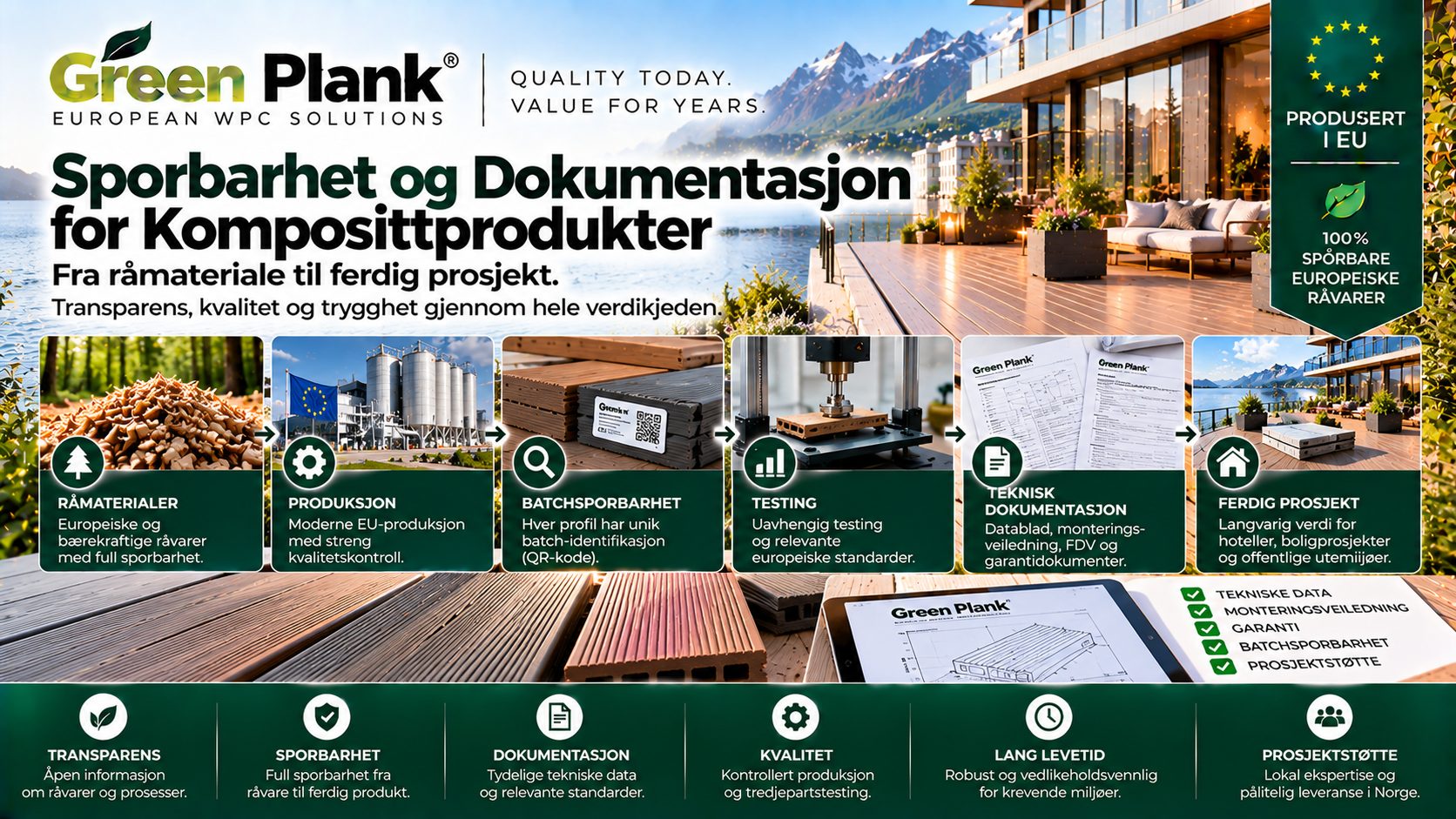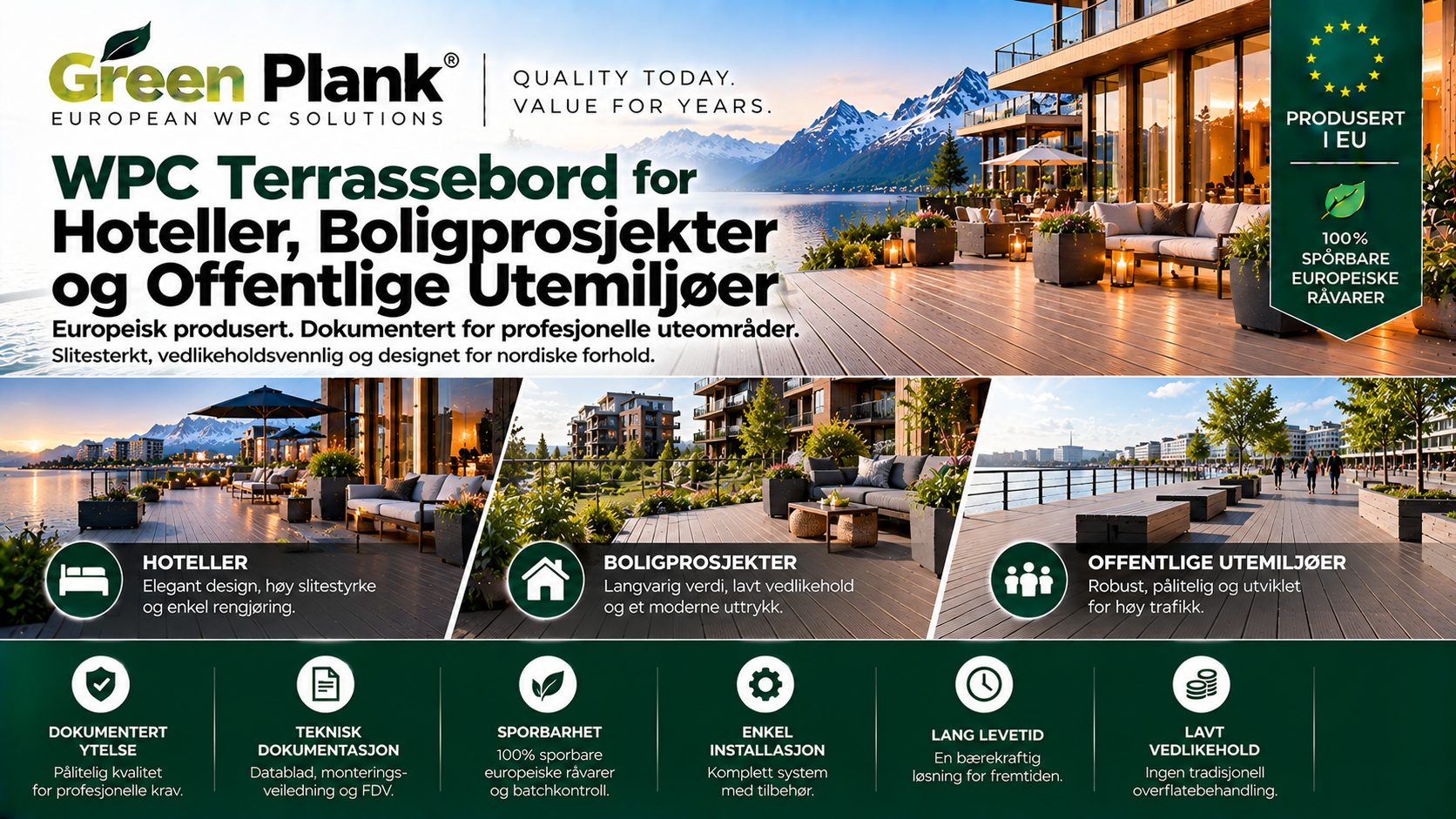




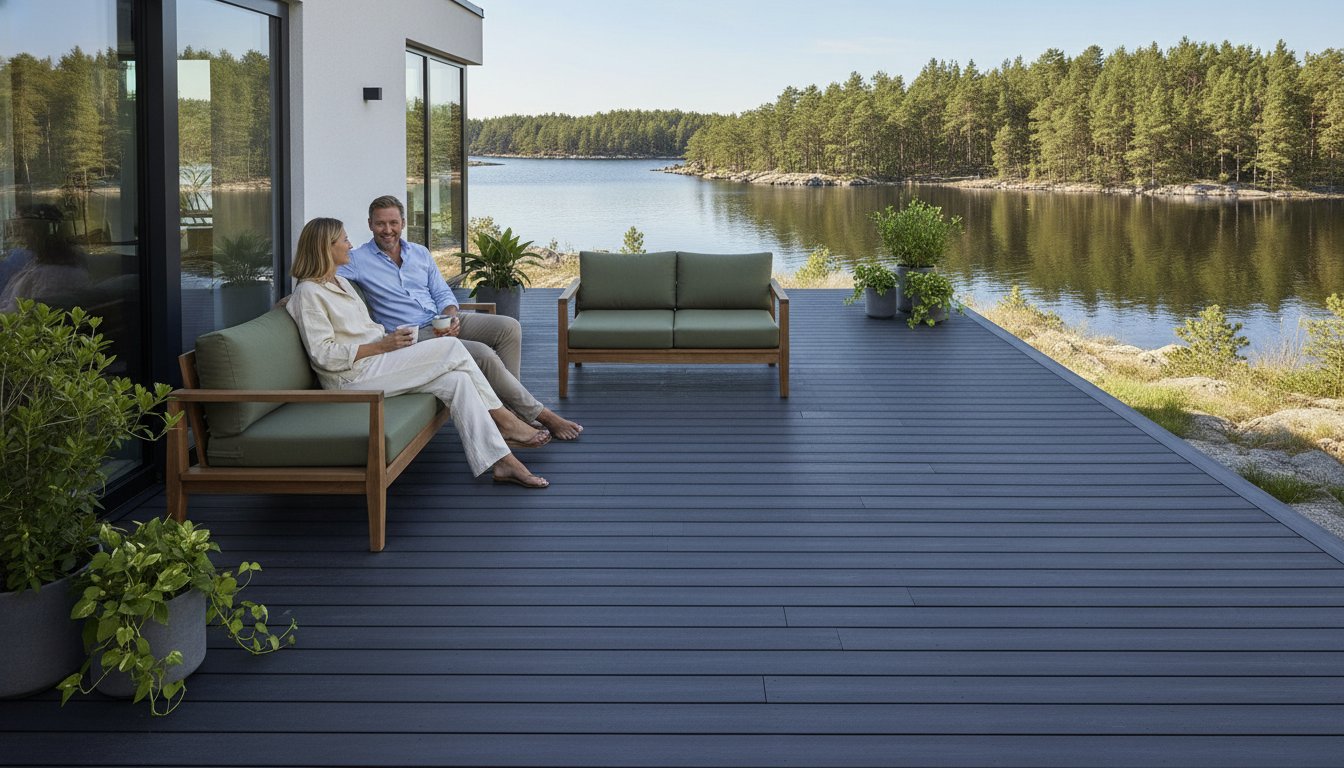
Why should an outdoor space designed for relaxation demand hours of your labor every single spring? Many homeowners choose traditional timber for their altan only to find themselves trapped in a cycle of sanding, staining, and replacing boards that have succumbed to rot. It's a frustrating reality where the long-term cost of maintenance eventually eclipses the initial investment.
You can escape this cycle by designing a high-performance, sustainable terrace using advanced composite technology for a maintenance-free lifestyle. This guide demonstrates how premium WPC materials provide the durability required for harsh climates without the environmental guilt of non-renewable choices. We'll explore the engineering behind EU-sourced hardwood fibers, the longevity of a 50-year warranty, and how proprietary fastening systems create a seamless finish. You'll learn why moving toward a circular-economy model is the most responsible way to build a beautiful, lasting retreat that respects both your time and the planet.
Key Takeaways
- Understand the material science of high-density WPC, which combines 75% hardwood fiber with HDPE to extend service life up to 50 years.
- Learn the architectural requirements for a modern altan, focusing on elevated structures that prioritize structural integrity and regional reliability.
- Identify the technical standards for a successful installation, such as the 600 cc joist spacing benchmark and the necessity of proper sub-surface ventilation.
- Reduce your environmental impact by adopting the Cradle to Cradle ownership model and selecting products manufactured within the EU to minimize your carbon footprint.
- Achieve a truly maintenance-free outdoor space by utilizing surfaces that never require staining or painting, only periodic cleaning with soap and water.
What is an Altan? Defining the Modern European Terrace
In the context of European architecture, an altan is more than a simple wooden platform. It's a specific structural entity. By definition, it is an elevated outdoor space that rests on pillars, columns, or walls rather than being cantilevered from the main building. This structural distinction is vital for engineering integrity. While a balcony projects directly from the facade, this structure provides a grounded, substantial extension of the living area. Understanding What is a Modern European Terrace requires looking at these load-bearing foundations, which allow for larger surface areas and higher weight capacities than typical suspended structures.
The evolution of the Swedish altan reflects a broader shift in construction ethics. For decades, traditional timber was the primary material choice. However, the constant exposure to UV radiation and moisture in Nordic climates led to inevitable decay. Modern construction in 2026 has transitioned toward high-performance composite systems. These systems provide the aesthetic warmth of wood without the structural vulnerabilities of organic materials. This transition isn't just about appearance; it's about building a structure that remains safe and beautiful for up to 50 years.
Elevated Structures vs. Ground-Level Patios
Linguistic overlap often causes confusion in the Nordic market between a terrace and an elevated platform. A terrace is typically a ground-level patio, whereas the altan must be raised. This height difference triggers specific regulatory requirements. In many jurisdictions, any structure raised more than 60 cm above the ground requires a building permit. These regulations ensure that the structural supports and railings meet safety standards for fall protection.
- Foundation: Support via pillars or walls rather than soil-contact sleepers.
- Exposure: Increased airflow beneath the boards reduces the risk of trapped moisture.
- Permitting: Higher elevations require adherence to 2018 International Residential and Building Code (IRC) standards.
The Shift Toward Sustainable Outdoor Living
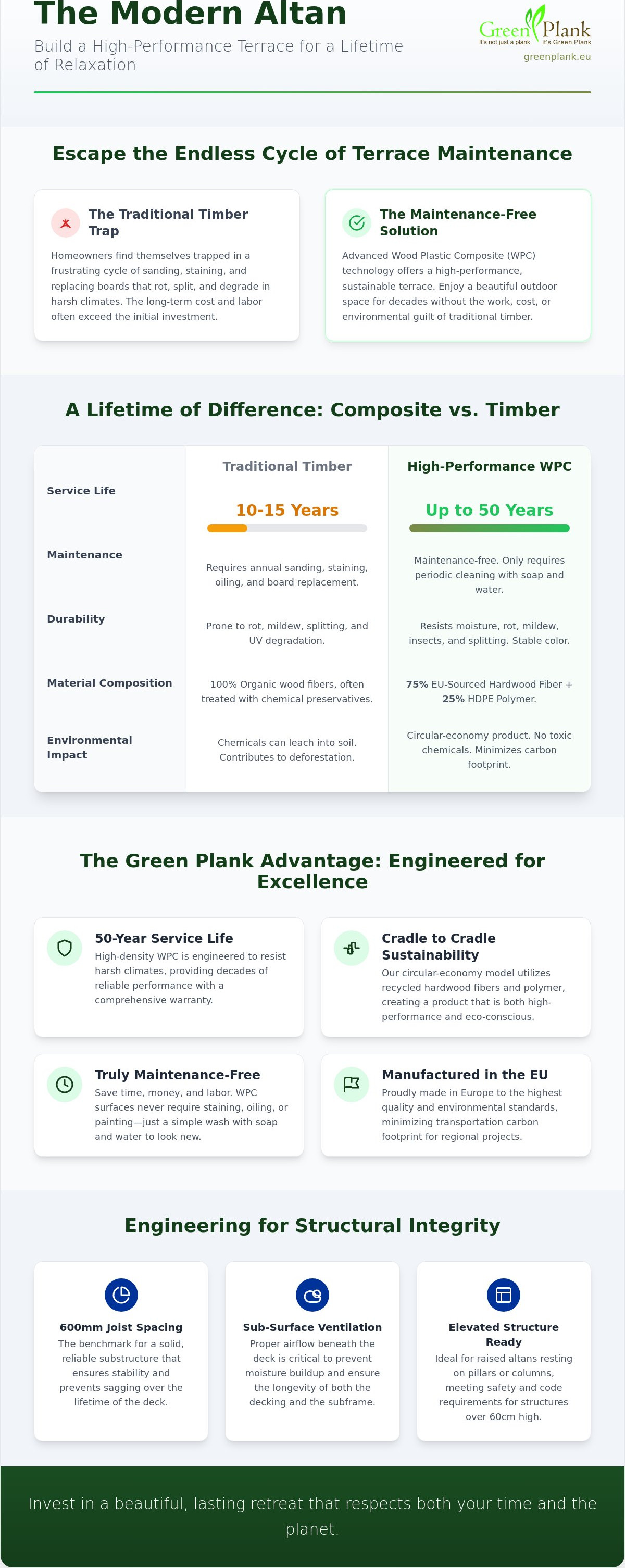
The modern homeowner's priority has shifted from initial cost to long-term value. Traditional pressure-treated wood is losing favor due to the environmental impact of chemical preservatives. Instead, the maintenance-free lifestyle has become the gold standard for 2026 home design. Wood Plastic Composite (WPC) is now the industry benchmark. By utilizing a blend of 75% hardwood fiber and 25% HDPE, manufacturers create a circular-economy product. These materials don't leach chemicals into the soil; they provide a durable surface that resists rot for decades. This shift represents a commitment to regional reliability and eco-conscious engineering.
Selecting Materials for Longevity: Why Composite Outperforms Timber
The material foundation of your altan determines whether it becomes a long-term asset or a recurring liability. While traditional pressure-treated timber has been the historical default, its performance often degrades within 10 to 15 years. Exposure to the fluctuating European climate causes organic fibers to swell, contract, and eventually split. In contrast, high-performance WPC is engineered for a service life of up to 50 years. This longevity isn't accidental; it's the result of precise material science that replaces the vulnerabilities of raw wood with a stable, weather-resistant matrix.
Engineering for high-performance requires a specific balance of ingredients. A blend of 75% hardwood fiber and 25% HDPE creates a high-density profile that resists moisture absorption. This ratio ensures the material retains the natural stiffness and aesthetic warmth of timber while the polymer component encapsulates the fibers to prevent rot. Because the material is non-porous, it doesn't support the growth of mold or mildew, even in damp, shaded areas where traditional wood would quickly decay. This scientific approach to durability is why modern composites are increasingly recognized as The Eco-Friendly Altan Choice for responsible homeowners.
The Problem with Traditional Wood Decks
Homeowners often overlook the cumulative costs of timber maintenance. Beyond the initial purchase, traditional wood requires annual sanding, oiling, and staining to prevent UV degradation and moisture ingress. These chemical treatments aren't just labor-intensive; they're environmentally taxing. Over time, the preservatives in NTR-classed wood can leach into the surrounding soil. Furthermore, even with meticulous care, timber remains susceptible to warping and insect damage, particularly in coastal regions where salt and humidity accelerate the breakdown of organic lignin.
The Engineering of Green Plank WPC
Quality begins with the source. Utilizing 100% EU raw materials ensures that every board meets stringent safety and environmental standards. Proprietary profiles like Terra Tuff utilize a low-density, high-strength design that simplifies installation without compromising structural integrity. This engineering approach provides several practical advantages for the end-user:
- Thermal Stability: Reduced expansion and contraction rates keep the surface level and the gaps consistent across seasons.
- Safety First: A splinter-free surface combined with high slip resistance makes the area safe for children and pets.
- Color Retention: Advanced UV inhibitors are integrated into the material blend to prevent the fading common in stained timber.
Choosing a premium surface like Nordeka wpc composite decking allows you to enjoy the timeless appearance of a hardwood terrace without the burden of seasonal restoration. By prioritizing material density and engineering precision, you ensure your outdoor space remains a beautiful, maintenance-free retreat for decades to come.
Engineering the Perfect Altan: Structural Integrity and Installation
Designing a high-performance altan requires more than just high-quality planks; it demands a rigorous approach to structural engineering. The longevity of your altan is intrinsically linked to the precision of its substructure. For private residential projects, 600 cc joist spacing is the established benchmark. This configuration ensures that the composite boards have the necessary support to handle live loads without deflection. If you're managing commercial infrastructure projects, these requirements often increase to accommodate higher foot traffic and heavier equipment. Consult the Wood Plastic Composite (WPC) Information Center for deeper technical insights into how material density influences these load-bearing standards.
Proper ventilation and drainage are equally critical for a successful installation. While the WPC surface resists moisture, the area beneath the boards must remain dry to protect the subframe and prevent the accumulation of stagnant water. Adequate airflow facilitates temperature regulation, which helps manage the natural expansion of the materials. Once the primary surface is secure, transitioning to finishing elements like Skerting wpc decking or composite fencing systems creates a cohesive, professional appearance that conceals the substructure and enhances the overall property value.
HidLoc™ Hidden Fastening Systems
A clean, screw-free surface is a hallmark of premium outdoor design. The HidLoc™ system utilizes hidden fasteners to secure planks from the side, providing a sleek aesthetic that traditional top-down screws cannot match. This approach isn't just about looks; it's a safety feature that eliminates the risk of exposed hardware or splinters. Because WPC planks experience thermal expansion, the HidLoc™ clips allow for subtle movement between the boards. This flexibility prevents the planks from warping or buckling as temperatures fluctuate throughout the seasons.
Framing and Substructure Best Practices
The choice of framing material often dictates the ultimate lifespan of the project. While treated timber is a common choice, many high-end installations now utilize aluminum subframes for their absolute resistance to rot and superior straightness. To ensure a perfectly level foundation, installers frequently use adjustable pedestals or concrete plinths. This allows for precise leveling regardless of the underlying terrain. For a comprehensive walkthrough of the technical requirements, refer to our Professional Deck Installation Guide. It provides the engineering details necessary to build a structure that remains stable for decades. Utilizing a high-performance composite system ensures that every component of your build respects both nature and your investment.
Sustainability in 2026: The Eco-Friendly Altan Choice
Modern construction demands a shift from passive consumption to active stewardship. Building a high-performance altan in 2026 is no longer just about aesthetics; it's about the ethical implications of the materials we choose. Traditional outdoor structures often rely on chemically treated timber or imported hardwoods that contribute to global deforestation. By contrast, a sustainable terrace utilizes a circular-economy approach. This model ensures that every component serves a purpose today without compromising the resources of tomorrow. It represents a commitment to regional reliability and a rejection of the "take-make-waste" philosophy that has dominated the industry for decades.
Material composition is the cornerstone of this ecological responsibility. Green Plank products utilize a precise blend of 75% recycled hardwood fiber and 25% HDPE. This high concentration of recycled content effectively diverts wood waste from landfills and repurposes it into a structural asset. Because these materials are encapsulated in a high-density polymer, they don't require the toxic preservatives, oils, or stains that traditional wood decks demand. The result is a toxicity-free surface that is safe for children, pets, and the delicate local ecosystems surrounding your home.
For families in Nordic climates who prioritize safety at home, finding high-quality products for infants is a natural next step; to see how comfort and security are combined in nursery items, visit BabyNordic and explore their memory foam baby blankets.
Circular Construction and Material Recovery
True sustainability requires planning for the end of a product's lifecycle. While our composite systems are engineered for a 50-year service life, the Cradle to Cradle ownership model ensures they remain part of a technical loop. At the end of their functional life, the HDPE components can be recovered and reprocessed into new high-performance profiles. This process minimizes the demand for virgin plastics and reduces the overall environmental burden of your project. For more information on these cycles, explore our guide to Sustainable Building Materials.
Local Sourcing and Carbon Reduction
The carbon footprint of an altan is heavily influenced by logistics. Many composite brands ship products across oceans, incurring a massive CO2 cost before the first board is even installed. Choosing materials labeled "Made in EU" is a vital sustainability metric. Our commitment to 100% EU raw materials ensures shorter supply chains and adherence to the world's strictest environmental regulations. By avoiding imported tropical hardwoods, you protect global biodiversity and support ethical manufacturing standards within the region.
You can begin your journey toward a more responsible outdoor lifestyle today. To find the right fit for your home, explore our collection of sustainable WPC composite decking and see how circular engineering transforms the modern terrace.
Maintenance and Long-Term Value of Your Altan
Owning a high-performance altan shouldn't involve a lifetime of manual labor. While traditional timber owners spend their spring weekends sanding and oiling boards, premium WPC eliminates these chores. You'll never need to paint, stain, or seal your deck. A simple cleaning protocol using soap and water is sufficient to keep the surface looking new. This resistance to the elements isn't just about convenience; it's a direct result of the material science and encapsulation technology that protects the hardwood fibers from moisture and UV damage.
Engineering confidence is best expressed through a 50-year warranty. This specific long-term performance guarantee provides peace of mind and significantly enhances the property's financial value. It covers structural integrity and resistance to rot, ensuring the structure remains a permanent asset rather than a temporary fixture. To protect this investment, we recommend a few practical habits:
- Surface Protection: Use protective pads under heavy furniture to prevent surface scratches.
- Impact Care: Avoid dropping heavy or sharp metal objects directly onto the composite surface.
- Winter Safety: Use plastic shovels rather than metal ones when clearing snow to maintain the finish.
Low Maintenance vs. No Maintenance
It's vital to debunk the myth that any outdoor material is "zero" maintenance. Dust, pollen, and organic debris will naturally accumulate on any exterior surface. Seasonal care involves removing leaves and debris to prevent tannins from sitting on the boards for extended periods. WPC remains the superior choice for rental properties and commercial spaces because it withstands heavy foot traffic without showing the splintering or wear typical of softwood. It's a "Responsible Innovator" choice that prioritizes longevity over constant intervention.
Maximizing Property Value with High-End Composites
Modern homebuyers prioritize "move-in ready" outdoor spaces that respect their time and the environment. A high-quality altan acts as a seamless extension of the indoor living area. This increases the usable square footage and resale appeal of the home. Prospective buyers view a 50-year warranty as a sign of engineering excellence and reduced future costs. When comparing global options, many European professionals look for European-Engineered WPC Alternatives that offer regional reliability and stricter manufacturing standards. Choosing a locally engineered system ensures your project meets the highest quality benchmarks while supporting a circular, sustainable economy.
With the terrace serving as a new hub for social life, homeowners often look for ways to entertain their guests in this beautiful setting; to add a unique touch to your next gathering, find out more about the magic of Goochelaar Robin Matrix.
Building a Lasting Legacy: Your Future Outdoor Space
Designing a high-performance altan is an investment in both your personal lifestyle and the health of the planet. By moving away from the recurring labor of traditional timber, you embrace a structure engineered for decades of service. The transition to premium WPC materials provides a surface that combines the natural warmth of 75% natural hardwood fiber with the uncompromising durability of advanced polymers. This choice secures a beautiful, maintenance-free retreat that withstands the most demanding climates while respecting regional ecological standards.
Our commitment to a Cradle to Cradle Certified approach ensures that your project supports a circular economy, minimizing waste and maximizing material recovery. With a warranty of up to 50 years, your outdoor space becomes a permanent asset that increases property value and provides a safe, toxic-free environment for your family. It's time to choose a solution that balances engineering precision with environmental ethics.
Explore our sustainable WPC decking collections for your next project and discover how regional reliability can transform your vision into a reality. We look forward to helping you create a space that truly lasts a lifetime.
Frequently Asked Questions
What is the difference between an altan and a terrace?
An altan is an elevated structure supported by pillars or walls, while a terrace is typically a ground-level patio. This structural distinction is important because the elevation of an altan often triggers specific safety and building permit requirements. While the terms are sometimes used interchangeably in casual conversation, the architectural definition remains fixed on the method of support.
Does composite decking get too hot in the sun compared to wood?
Modern WPC decking absorbs heat similarly to dark-colored wood but cools down effectively due to its material density. High-performance profiles are engineered with UV inhibitors that help manage surface temperatures during peak sunlight hours. While any outdoor surface in direct sun will warm up, choosing lighter color profiles can significantly reduce heat retention for a more comfortable experience.
How long does a Green Plank WPC altan actually last?
A high-performance WPC altan is engineered to last between 30 and 50 years. This longevity is backed by a specific long-term performance warranty that covers structural integrity and resistance to biological decay. Because the material consists of 75% hardwood fiber encapsulated in HDPE, it doesn't succumb to the rot that typically destroys traditional timber within 10 to 15 years.
Do I need a building permit to build an altan in Sweden?
You generally need a building permit if the structure is elevated significantly above the ground or alters the exterior appearance of the home. In Sweden, specific rules allow for certain terrace additions without a permit if they stay within height and distance-to-border limits. However, because an altan is by definition an elevated structure on pillars, you should always verify local zoning laws with your municipality before starting construction.
Can I install a composite altan myself or do I need a professional?
You can install a composite system yourself if you have basic carpentry skills and follow the technical guidelines precisely. Proprietary systems like HidLoc™ simplify the process by using hidden fasteners that ensure consistent spacing and a screw-free finish. While DIY installation is common, hiring a professional ensures that the substructure and joist spacing meet the rigorous standards required for a 50-year service life.
Is WPC composite decking slippery when wet?
No, premium WPC decking is engineered with high slip resistance to ensure safety in wet climates. The high concentration of hardwood fiber provides a textured surface that maintains traction even during rain or snow. This makes it a reliable choice for family homes and commercial spaces where fall prevention is a primary engineering concern.
How does the cost of a composite altan compare to pressure-treated wood over 10 years?
While WPC has a higher initial material cost, it's significantly more affordable than pressure-treated wood over a 10-year period. Traditional timber requires annual expenses for oil, stain, and labor, which accumulate quickly. When you factor in the total cost of ownership including maintenance products and the inevitable replacement of rotting boards, the composite choice provides superior long-term financial value.
What is the recommended joist spacing for a Green Plank altan?
The recommended joist spacing for private residential projects is 600 cc. This spacing provides the necessary structural support to prevent board deflection and ensure a level surface. For commercial infrastructure or diagonal board patterns, this spacing may need to be reduced to accommodate higher load requirements. Proper spacing is a critical component of engineering a structure that remains stable for its entire service life.
Spesifiser produktet
Bruk denne guiden i en Green Plank-spesifikasjon
Tekniske WPC-artikler skal støtte de kommersielle sidene — ikke konkurrere med dem. Fortsett til komposittdekke, TerraTuff, Nordeka eller de tekniske nedlastningene.