



The term "maintenance-free" is a dangerous misnomer that costs Swedish homeowners thousands of kronor in avoidable repairs every year. Understanding how to clean composite decking is essential for protecting the traceable raw materials that give your deck its refined Nordic character. You likely chose natural-fiber composite for its durability and the promise of a worry-free outdoor lifestyle. It's frustrating to see organic stains or mold appear on a surface that was supposed to stay pristine without effort; however, proper care is the key to long-term performance.
We'll show you exactly how to apply professional-grade techniques that protect your 50-year engineered lifespan and maintain your signature Scandinavian aesthetic. You'll master the balance of effective cleaning without the risk of scratching the surface or voiding your 30-year warranty. We've compiled specific data from our European manufacturing facilities to ensure you use the right household products and safe pressure settings. This guide provides a logical framework for preserving your sustainable investment. It ensures your outdoor space remains built to last and designed for life.
Key Takeaways
- Understand the critical distinction between low-maintenance and neglect to protect your deck from environmental pollutants common in the Swedish climate.
- Identify damaging cleaning myths, such as the use of high-pressure washers and bleach, which can permanently compromise the integrity of natural-fiber composites.
- Master how to clean composite decking using professional-grade, pH-neutral techniques designed to safeguard the engineered fiber-polymer bond.
- Follow our refined 2026 cleaning protocol to ensure your outdoor space retains its high-end Scandinavian aesthetic for its full 50-year lifespan.
- Discover how Green Plank engineering, including HidLoc™ hidden fasteners, proactively eliminates debris-traps to simplify your long-term maintenance routine.
The Low-Maintenance Myth: Why 'Maintenance-Free' Doesn't Mean 'Neglect-Free'
The term "maintenance-free" often leads homeowners to believe their outdoor space requires zero attention once installed. In reality, no exterior material can entirely escape the rigors of the Swedish climate. High-quality Wood-Plastic Composites (WPCs) offer a superior alternative to traditional wood, but they still interact with their environment. Environmental pollutants, pollen, and organic debris settle on the surface, creating a foundation for biofilm if left undisturbed. Learning how to clean composite decking properly ensures these Nordic-engineered surfaces retain their high-friction, anti-slip properties during wet autumn months. Regular rinsing prevents seasonal grime from hardening into stubborn stains that mask the refined grain of the boards.
WPC vs. Traditional Timber: A Maintenance Comparison
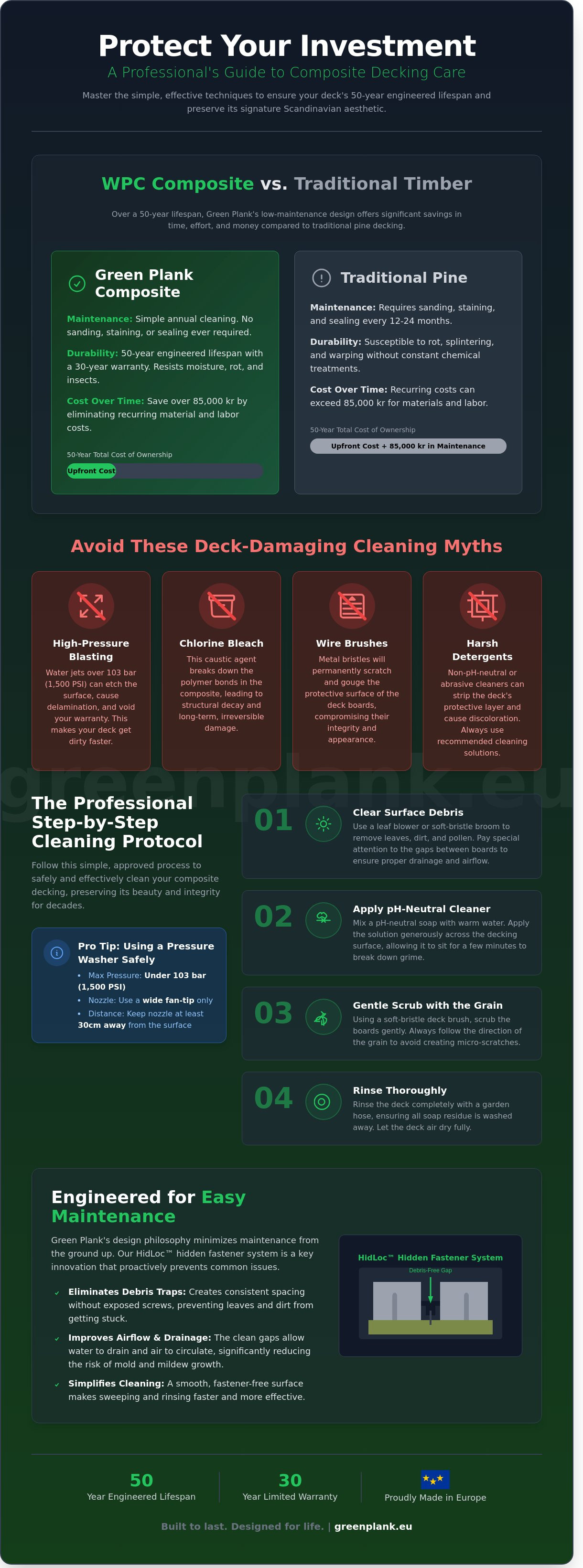
Traditional Swedish pine decking demands a cycle of sanding, staining, and sealing every 12 to 24 months. Over a 50-year service life, these material and labor costs can easily exceed 85,000 kr for a standard 30-square-meter deck. Green Plank surfaces eliminate these recurring expenses through a robust 75% hardwood fiber blend. This high wood content provides the natural aesthetic of timber while the polymer component locks out moisture. You save both time and money. Our professional-grade engineering ensures the boards remain stable without the toxic chemical treatments required by softwoods. Built to last. Designed for life.
The Real Enemy: Organic Debris and Tannins
The primary threat to a deck's appearance isn't foot traffic; it's the debris trapped in the gaps. When leaves and dirt accumulate between boards, they restrict airflow and trap moisture. This creates a breeding ground for mold and mildew. You might notice dark spots, which are often mistaken for product failure but are actually external organic growth. Understanding how to clean composite decking involves prioritizing these gaps over aggressive surface scrubbing.
You may also observe "tannin leaching" during the first few months after installation. This natural process occurs when wood fibers release bronze-colored oils after initial exposure to rain. It is a temporary phenomenon. Clearing the gaps with a leaf blower or a steady stream of water ensures the deck breathes, preventing long-term surface discoloration and allowing the natural weathering process to stabilize. Designed in Scandinavia. Produced in Europe.
Debunking Common Cleaning Myths: Methods That Actually Damage Your Deck
Many homeowners believe that "low-maintenance" signifies "indestructible." This misconception leads to aggressive cleaning habits that can permanently scar your investment. Understanding how to clean composite decking requires unlearning common myths that prioritize speed over material integrity. Using the wrong tools can result in surface delamination or a voided 25-year warranty; a mistake that costs between 5,000 kr and 15,000 kr in localized board replacements.
- Myth 1: Power washers are the fastest and safest way to clean composite.
- Myth 2: Bleach is the best solution for removing mold and mildew.
- Myth 3: Wire brushes help remove stubborn stains without affecting the texture.
- Myth 4: Any household detergent is safe for WPC surfaces.
The Danger of High-Pressure Washing
High-pressure water is an abrasive force. When you exceed 103 bar (1,500 PSI), the jet can penetrate the protective cap of the deck board. This causes delamination, where the wood-plastic layers begin to separate. It also creates "etching," a process that leaves the surface porous and rough. These microscopic craters trap organic debris, which means your deck actually gets dirty faster after a heavy pressure wash. If you must use a jet wash, keep the fan nozzle at least 30cm away from the surface at all times. This protects the engineered grain and maintains the European-standard slip resistance of your Green Plank boards.
Chemical Hazards: Why Bleach is a Short-Term Fix
Chlorine bleach is a caustic agent that provides an immediate white finish but causes long-term structural decay. It breaks down the HDPE (High-Density Polyethylene) polymer bonds that hold the natural fibers together. Scientific research on moisture absorption shows that once these bonds weaken, the material becomes more susceptible to internal swelling and fungal growth. Bleach also poses a significant risk to the Swedish environment; runoff can alter the pH balance of your garden soil and contaminate local groundwater. Choosing oxygen-based cleaners is a more sustainable choice. These products lift dirt through carbonation without stripping the UV inhibitors that prevent color fading.
Mechanical damage is equally permanent. Wire brushes or metal scrapers slice through the wood-fiber composite, creating permanent scars that cannot be sanded away like traditional timber. Similarly, many household degreasers contain harsh solvents that dull the refined Nordic finish of your deck. For those seeking long-term beauty, it's better to choose professional-grade maintenance solutions specifically engineered for circular building materials. Proper care ensures your outdoor space remains a durable, high-end retreat for decades.
The Science of WPC Care: Protecting the Fiber-Polymer Bond
Understanding how to clean composite decking requires a look at the molecular level of Wood Plastic Composite (WPC). Green Plank boards utilize a precise 75/25 ratio: 75% hardwood fibers for structural rigidity and 25% High-Density Polyethylene (HDPE) as a protective matrix. This HDPE content acts as a microscopic shield, encapsulating the organic fibers to prevent the structural decay seen in traditional timber. When you apply a cleaner, you aren't just washing a surface; you're maintaining a factory-engineered color profile. Using pH-neutral solutions is vital because harsh acidic or alkaline chemicals can degrade the UV-inhibitors bonded within the polymer, leading to premature fading.
Longevity is the core of our Cradle to Cradle philosophy. This approach dictates that every product should be maintained to last its full 20 to 30 year lifespan before being recycled into new boards. Temperature plays a critical role in this preservation. Cleaning your deck in Swedish summer heat exceeding 28°C can cause cleaning solutions to evaporate too quickly, leaving behind concentrated chemical residues that might spot the surface. We recommend performing deep maintenance during mild weather, ideally between 15°C and 20°C, to ensure the cleaning agents work effectively without thermal stress on the fiber-polymer bond.
Hardwood Fiber Integrity and Moisture
The 75% hardwood fiber content in Green Plank products provides superior dimensional stability, ensuring boards don't warp under the heavy snow loads common in Scandinavia. While the wood provides the strength, the HDPE prevents moisture from penetrating deep into the core during the cleaning process. Our low-density engineering ensures that dirt and organic matter remain on the surface rather than becoming embedded in the grain. This makes surface-level cleaning more effective and reduces the physical force required to restore the board's aesthetic. Built to last. Designed for life.
Eco-Friendly Cleaning Solutions
Maintaining a sustainable home shouldn't involve toxic runoff. For light maintenance, a DIY mixture of 250ml white vinegar, 15ml of baking soda, and 4 liters of warm water is highly effective for removing pollen and dust. This solution costs approximately 18 kr per batch and is safe for the surrounding garden. For tougher stains, choose biodegradable commercial cleaners that align with our 100% EU-sourced raw materials. These professional-grade options break down naturally without introducing microplastics or harmful phosphates into the Swedish groundwater system.
The ideal pH-neutral cleaner for WPC decking in 2026 is a biodegradable formula with a pH value between 7.0 and 8.0 that removes organic debris without stripping the UV-inhibitors engineered into the European-made polymer shell.
When you master how to clean composite decking using these scientific principles, you protect your investment and the environment simultaneously. Nordic reliability means choosing methods that respect the material's engineering. Clean smart. Preserve the bond.
The Professional Step-by-Step Cleaning Protocol for 2026
Maintaining the integrity of your natural-fiber composite requires a disciplined approach. While our boards are engineered for durability, following a structured protocol ensures the Scandinavian aesthetic remains vibrant for decades. This guide outlines exactly how to clean composite decking to protect your investment and maintain your 20-year warranty standards.
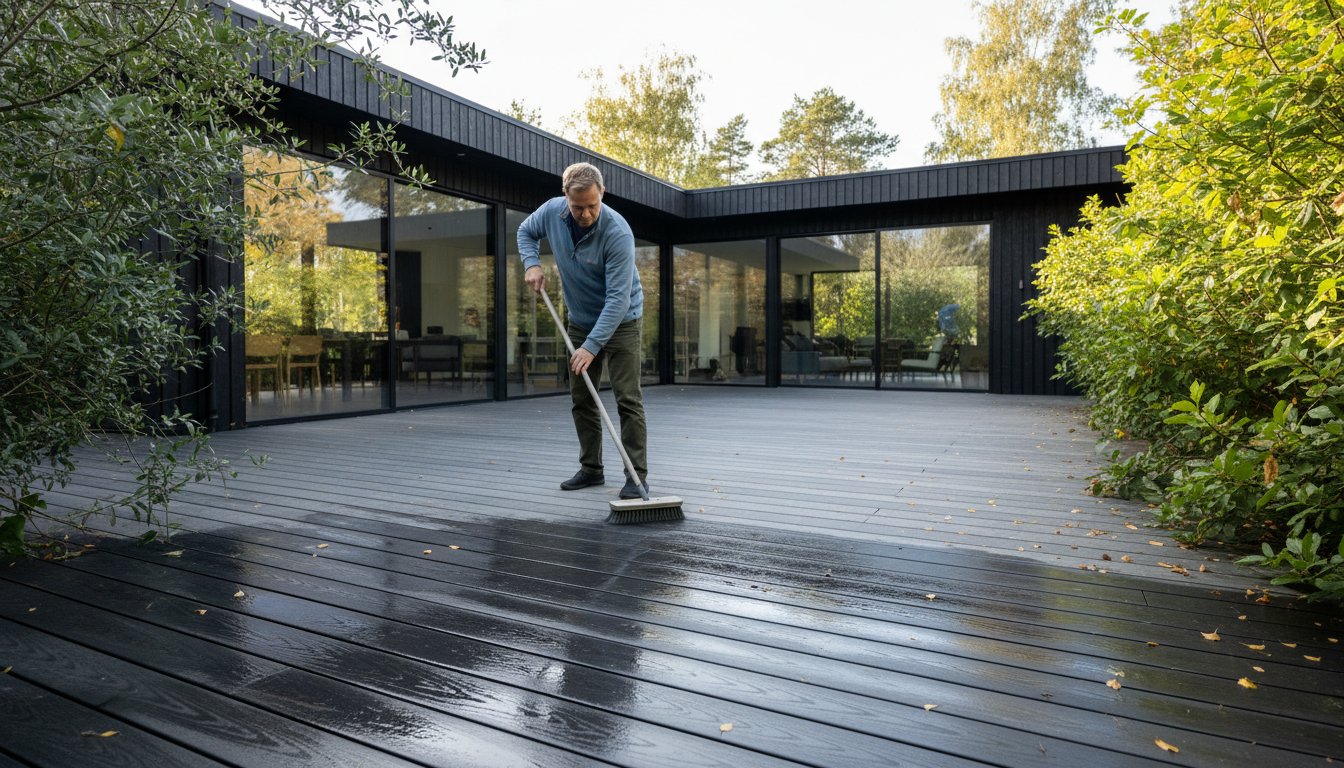
- Step 1: The Dry Clear. Remove all furniture and planters. Use a soft-bristled broom to sweep away loose debris, pine needles, and grit. Small stones act as abrasives underfoot; removing them prevents micro-scratches on the protective cap layer.
- Step 2: Pre-Rinsing. Use a standard garden hose to hydrate the deck surface. This process softens organic matter and cools the boards. Avoid high-pressure washers exceeding 1500 PSI, as excessive force can etch the composite fibers.
- Step 3: Targeted Application. Apply a professional-grade, pH-neutral cleaner. Work in manageable 5-square-meter sections. This prevents the cleaning solution from drying on the surface, which is the primary cause of unsightly white streaks.
- Step 4: The Soft Scrub. Use a long-handled brush with nylon bristles. Scrub in the direction of the grain pattern. This mechanical action lifts deep-seated dust from the embossed textures without damaging the European-made finish.
- Step 5: Final Rinse and Inspection. Flush the area with clean water until all soap bubbles disappear. Residual soap film acts as a magnet for new pollen and dust.
Removing Specific Stains: Grease, Oil, and Food
The first 24 hours are vital when dealing with oil-based spills from outdoor dining. Use a concentrated degreaser or a common Swedish dish soap like "Yes" for immediate spot treatment. For stubborn rust marks left by metal furniture, avoid steel wool. Instead, apply a specialized phosphoric acid-based cleaner or a lemon juice solution. These methods dissolve the oxidation without scouring the surface. Prompt action prevents the oil from migrating into the natural fibers of the core.
Seasonal Maintenance Schedule
Spring maintenance focuses on removing the accumulated grit and salt from the Swedish winter. This reset prepares the surface for high-traffic summer use. During autumn, clearing leaves weekly is mandatory. Wet foliage trapped in gaps creates "tannin tea" that can stain boards and promote mold growth in the damp climate. For winter care, use calcium chloride or rock salt to manage ice. Avoid using metal shovels; a plastic spade prevents gouging the surface. Professional cleaning kits in Sweden typically range from 450 kr to 900 kr, a small price for protecting a high-end installation.
Designing for Longevity: How Green Plank Minimizes Maintenance
Green Plank views decking as an engineering challenge where durability meets environmental ethics. We use 100% traceable EU raw materials to ensure every plank behaves predictably under the harsh Swedish climate. This traceability means our natural-fiber composites don't contain hidden contaminants that cause uneven fading or internal structural decay. By controlling the entire supply chain, we deliver a product where the aging process is a slow, graceful transition rather than a breakdown of materials. It's a predictable lifecycle designed for the long term.
The HidLoc™ Advantage for Easy Cleaning
Traditional face-fastened decks create thousands of tiny divots where screw heads sit. These are magnets for Swedish pine needles, pollen, and standing water. Our HidLoc™ hidden fastening systems eliminate these debris-traps entirely. You get a completely smooth surface. This makes the process of how to clean composite decking significantly faster; a simple broom or squeegee moves across the surface without snagging on metal hardware.
Maintenance of the gaps is equally critical for a longer service life. We've engineered our clips to maintain consistent 5mm to 8mm spacing. This ensures proper drainage and airflow, which prevents the moisture buildup that often leads to mold in shaded areas. When you don't have screw heads obstructing your path, scrubbing away seasonal grime becomes a streamlined task rather than a weekend-long project.
Selecting the Right Profile for Your Environment
Different environments demand specific textures. Our Classic boards feature deep grooves that provide excellent slip resistance, while the Nordeka line offers a more refined, brushed aesthetic. If you're installing in a high-traffic commercial zone in Gothenburg or Stockholm, our Terra Tuff and Smart System lines are engineered for extreme durability. These profiles handle heavy scrubbing and industrial cleaners better than standard residential boards. You can explore our WPC composite decking range to find the texture that matches your specific maintenance appetite.
Your investment is protected by more than just Scandinavian engineering. Green Plank offers a 50-year limited warranty on our premium lines. To keep this protection valid, we recommend keeping a simple log of your annual cleaning. Protecting a 100,000 kr installation requires only a few hours of effort each year. We've built these systems to be resilient, ensuring that how to clean composite decking remains a simple part of your home care routine. Designed in Scandinavia. Produced in Europe. Built to last. Designed for life.
Preserve Your Decking Investment for the Decades Ahead
Maintaining a premium outdoor space requires moving past the myth of zero maintenance toward a strategy of informed care. Learning how to clean composite decking using the 2026 professional protocol protects the delicate fiber-polymer bond from premature degradation. Proper care ensures your surface remains slip-resistant and visually striking through every Swedish season. Neglecting these simple steps can lead to surface staining that compromises the material's refined Nordic character.
Green Plank products are engineered in Scandinavia and produced in Europe using 100% traceable raw materials. This commitment to quality allows us to offer an industry-leading warranty of up to 50 years. Our Cradle to Cradle ownership model means your deck isn't just a purchase; it's a sustainable investment in circular design. You don't have to settle for high-maintenance wood or low-quality imports when professional-grade durability is available.
Take the first step toward a beautiful, resilient outdoor living area. Request a Professional Sample Pack of Our Low-Maintenance Decking to feel the engineering precision firsthand. Your future self'll thank you for choosing a deck that's truly built for life.
Frequently Asked Questions
Can I use a pressure washer on my composite deck?
You can use a pressure washer on your composite deck provided the pressure remains below 103 bar, which is approximately 1500 PSI. Use a fan-tip nozzle and maintain a distance of at least 30 centimeters from the surface to prevent etching the natural-fiber composite. High-pressure settings can permanently damage the engineered surface and compromise the refined Nordic character of your installation. This careful approach ensures your deck remains beautiful while protecting its structural integrity.
What is the best homemade cleaner for composite decking?
The most effective homemade solution for how to clean composite decking involves mixing mild dish soap with warm water. Combine 10 milliliters of liquid soap with 4 liters of water to create a gentle yet powerful cleanser that lifts organic debris. This mixture supports our circular philosophy by avoiding toxic chemicals that could harm your local Swedish ecosystem. It's a professional-grade cleaning method that respects both your home and the environment.
How often should I clean my WPC deck?
Clean your WPC deck at least twice per year to maintain its premium, low-maintenance finish. We recommend a thorough cleaning in April to remove winter grime and another in October to clear away autumn leaves and organic matter. Regular maintenance prevents the buildup of debris that can lead to surface stains or mold growth. Following this biannual schedule ensures your Scandinavian-designed outdoor space stays ready for life throughout every season.
Will vinegar damage my composite decking boards?
Diluted white vinegar won't damage your composite decking boards if you use it correctly for removing mineral deposits or hard water spots. Mix one part vinegar with two parts water and apply it only to the affected areas. Always rinse the deck thoroughly with clean water after application to ensure no acidic residue remains on the surface. While vinegar is a natural alternative, avoid using it at full strength to protect the engineered wood fibers within the boards.
How do I remove mold and mildew from composite decking?
Remove mold and mildew using a soft-bristle brush and a solution of warm, soapy water as soon as you spot growth. For stubborn patches, use a professional-grade cleaner containing sodium percarbonate, which effectively breaks down organic spores without bleaching the pigments. Addressing mold quickly is essential because it feeds on trapped pollen and dirt rather than the boards themselves. This proactive care preserves the durability and aesthetic quality of your European-made decking for decades.
Is it safe to use rock salt on composite decking in winter?
It's safe to use rock salt or calcium chloride to melt ice on your composite deck during the Swedish winter months. These products won't damage the durable material, but they can leave a white, powdery residue once the ice thaws. Rinse away the salt with water as soon as temperatures rise above 0 degrees Celsius to prevent surface abrasion. Our decks are built to last in harsh climates, but removing salt buildup maintains the visual integrity of the grain.
Can I sand my composite deck to remove deep scratches?
You shouldn't sand your composite deck because it permanently removes the engineered grain pattern and protective surface layer. Sanding creates an inconsistent, flat patch that won't match the rest of your Nordic-inspired space. For scratches deeper than 2 millimeters, use a specialized heat gun or a color-matched wax filler kit to mask the mark. Most minor surface abrasions will naturally blend into the deck over 12 to 16 weeks through standard weathering processes.
Why is my new composite deck fading or changing color?
New composite decks undergo a natural weathering process during the first 8 to 12 weeks of exposure to UV light and rain. This is a planned engineering characteristic where the natural wood fibers stabilize to their permanent tone. In the Swedish climate, you might notice a 10 percent shift in vibrancy before the color locks in for the duration of the 20 to 30 year warranty. This transition reflects the authentic quality of our traceable raw materials as they adapt to your environment.
Specifikér produktet
Brug denne guide i en Green Plank-specifikation
Tekniske WPC-artikler skal understøtte de kommercielle sider — ikke konkurrere med dem. Fortsæt til kompositterrasse, TerraTuff, Nordeka eller de tekniske downloads.