



If a park bench costs more to maintain over its lifetime than it did to install, is it truly a public asset or a liability? Urban planners and architects often face the same frustrating cycle of rotting timber, vandalized surfaces, and escalating maintenance budgets. You understand that public furniture should be a permanent investment, not a recurring expense. By integrating advanced public space composite seating solutions, cities can finally break the replacement cycle while meeting the rigorous safety demands of the new EN 581-2:2026 standards.
This guide reveals how high-performance WPC is redefining durability and aesthetics in modern infrastructure. We'll examine the engineering precision of European-made profiles that utilize 75% hardwood fiber to deliver an unprecedented service life. You'll learn how these materials contribute to LEED v5 and BREEAM certifications through a Cradle to Cradle ownership model. We'll also preview the aesthetic versatility of profiles like Terra Tuff and Nordeka, which offer the warmth of natural wood without the inevitable decay. It's time to discover a seating solution that balances material science with circular ethics.
Key Takeaways
Compare the engineering-grade 50-year lifespan of modern WPC against the 10-year limit of traditional timber to secure long-term infrastructure investments.
Learn how 75% hardwood fiber reinforcement in public space composite seating solutions eliminates board warping and maintains structural integrity in extreme urban climates.
Adopt the Cradle to Cradle ownership model to ensure projects meet strict 2026 CO2 reduction targets and circular economy standards.
Utilize the HidLoc™ hidden fastening system to create seamless, vandal-resistant surfaces that reduce maintenance costs and improve public safety.
Discover why European-made profiles like Terra Tuff are essential for achieving LEED v5 and BREEAM certifications in high-traffic urban zones.
Table of Contents
The Evolution of Public Space Composite Seating Solutions in 2026
Why WPC Outperforms Traditional Materials in Urban Environments
Engineering Durability: Designing Seating for High-Traffic Zones
Sustainability and Circularity in Public Infrastructure Projects
Green Plank Commercial Profiles: The Foundation for Modern Seating
The Evolution of Public Space Composite Seating Solutions in 2026
Urban infrastructure in 2026 has moved beyond temporary fixes. Modern Wood-plastic composites (WPCs) are no longer just for residential decks; they've become the backbone of resilient city planning. As global temperatures rise and municipal budgets tighten, the demand for public space composite seating solutions has shifted from a luxury choice to an engineering necessity. We're seeing a transition toward materials that don't just look like wood but perform like high-grade infrastructure. This evolution is driven by the implementation of the EN 581-2:2026 standard, which mandates stricter mechanical safety and durability requirements for outdoor seating across Europe.
Seating is the foundation of social stickiness in urban environments. It's the difference between a transit hub and a community square. When people have a comfortable, clean place to sit, they stay longer and engage more deeply with their surroundings. By replacing splintering timber and scorching metal with advanced composite profiles, designers create spaces that are both inviting and enduring. These materials offer the warmth of natural wood with the industrial strength required for 24/7 public use. They represent a commitment to both the citizen's experience and the city's long-term financial health.
Why Traditional Materials are Failing Urban Spaces
Traditional materials are struggling to keep pace with the demands of modern urban life. Pressure-treated wood requires annual staining and sanding to prevent rot, yet it still succumbs to moisture and UV degradation within a decade. These hidden maintenance costs drain city resources and lead to unsightly, unsafe furniture. Metal seating presents a different challenge; it absorbs solar radiation and intensifies the urban heat island effect. During peak summer months, metal benches often become too hot for use, rendering public spaces inaccessible. Standard materials also lack the inherent resistance to vandalism and heavy wear that defines 2026 infrastructure requirements.
The Rise of High-Performance WPC Profiles
The new generation of WPC profiles utilizes a specific blend of 75% hardwood fiber and 25% high-density polyethylene (HDPE). This high-wood content provides the structural rigidity needed for high-traffic zones while the HDPE encapsulates the fibers to prevent moisture absorption. It's a balance of engineering precision and ecological responsibility. By using 100% EU raw materials, these profiles ensure consistent quality and a significantly lower carbon footprint than imported alternatives.
Low-density engineering: Advanced manufacturing creates profiles that are lightweight yet incredibly strong, simplifying installation without sacrificing durability.
Material stability: The 75/25 hardwood blend prevents the warping and bowing common in inferior composite products.
Regional reliability: Manufacturing within the EU guarantees adherence to the highest environmental and professional standards.
Surface integrity: High-performance composites resist splintering and cracking, ensuring a safe seating surface for decades.
Why WPC Outperforms Traditional Materials in Urban Environments
The choice between timber and high-performance WPC isn't just about aesthetics; it's a decision regarding the long-term viability of Sustainable Urban Equipment. While traditional wood seating typically requires replacement or major refurbishment every 5 to 10 years, public space composite seating solutions are engineered for a service life of 30 to 50 years. This longevity is backed by an inherent resistance to the very elements that destroy natural wood. Salt water spray in coastal plazas or chlorine exposure near public fountains won't cause the material to rot or corrode. Even extreme temperature fluctuations, which cause standard wood to expand and crack, have minimal impact on the dimensionally stable HDPE and hardwood blend.
Vandalism is an unfortunate reality in modern city centers, but the high density of commercial-grade profiles provides a robust defense. The material's surface is resistant to deep scratching and heavy impact. Unlike porous wood, the composite structure doesn't absorb paint or ink. This makes graffiti removal significantly easier and less damaging to the profile's integrity. Additionally, these solutions solve the "hot seat" problem. While metal benches can reach dangerous temperatures during peak summer months, the thermal properties of WPC ensure the surface remains touch-safe even under direct sunlight. It's a material that respects both the environment and the comfort of the citizen.
Maintenance-Free Infrastructure: The Economic Reality
Municipalities often overlook the cumulative costs of labor and materials required to keep timber benches safe and attractive. By choosing WPC, you eliminate the need for annual sanding, staining, or chemical sealing. This creates a maintenance-free environment where the primary cost is the initial installation. When calculating the 20-year ROI for municipal projects, the savings in labor and the avoidance of public space downtime become clear. It's a shift from reactive repairs to proactive asset management. For those planning large-scale urban projects, reviewing commercial infrastructure profiles can provide a clearer picture of these long-term financial benefits.
Material Stability and Safety
Public safety is a non-negotiable requirement for urban designers and city planners. Splinter-free surfaces are essential for preventing injuries and reducing municipal liability in high-traffic parks. Because these profiles are manufactured with consistent dimensions, they are ideal for large-scale modular seating where precision is required for seamless alignment. These materials also carry high slip-resistance ratings, ensuring that seating remains safe in wet or humid coastal environments. It's a combination of engineering precision and user-focused design that traditional wood simply cannot match. You aren't just buying furniture; you're investing in a stable, predictable surface that performs for decades.
Engineering Durability: Designing Seating for High-Traffic Zones
The engineering of public space composite seating solutions requires a sophisticated understanding of material science and load-bearing dynamics. Infrastructure in high-traffic zones isn't merely furniture; it's a structural component that must withstand constant use and environmental stress. One of the primary advantages of Wood Plastic Composites is the ability to engineer specific performance traits directly into the profile. By utilizing a 75% hardwood fiber reinforcement, these profiles achieve a level of rigidity that prevents the warping and sagging often seen in cheaper, plastic-heavy alternatives. This high wood content acts as a stabilizer, ensuring the seating slats remain straight and safe for decades.
Designing for the volatile climate patterns of 2026 means accounting for rapid thermal expansion and heavy precipitation. The HidLoc™ hidden fastening system serves a dual purpose here. It provides a clean, fastener-free aesthetic that complements modern architecture while allowing the boards to expand and contract naturally without compromising the structure. This system also eliminates exposed screw heads; these are common points of failure where rust and moisture ingress typically begin. By removing surface penetrations, you protect the internal integrity of the profile and reduce the risk of snagging on clothing or skin.
Commercial Infrastructure Profiles vs. Residential Grades
It's vital to distinguish between standard residential materials and commercial infrastructure profiles. Commercial seating demands increased wall thickness and internal ribbing to handle multi-person weight distribution. While wpc composite decking technology provides the foundation for these materials, seating profiles are often solid or heavily reinforced to prevent breakage under impact. These profiles are tested for high load-bearing capacities. They don't fail in public parks or transit hubs where usage is relentless and unpredictable.
Customization and Architectural Versatility
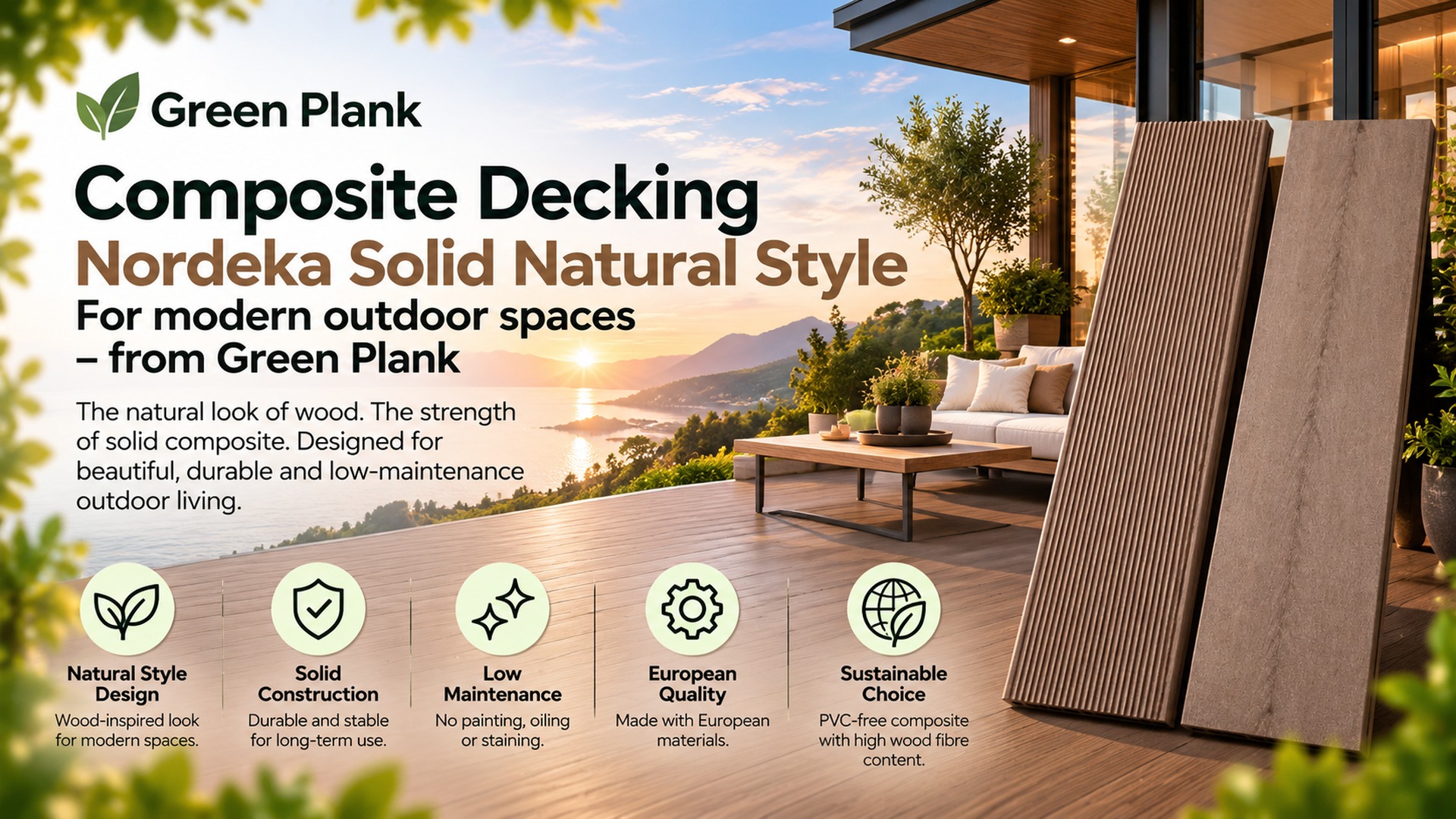
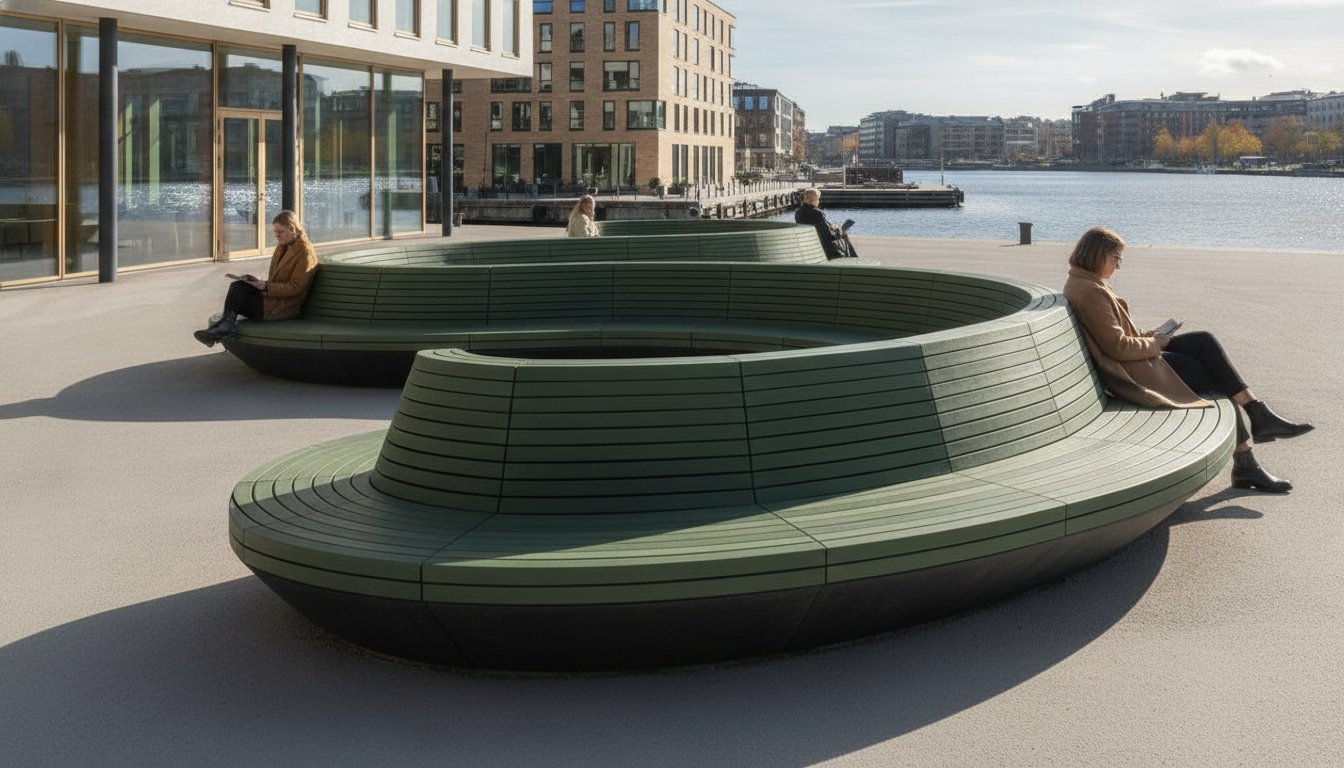
Architects don't have to sacrifice their vision for the sake of durability. High-performance WPC offers incredible flexibility, including the ability to create curved seating solutions through specialized manufacturing processes. The UV-stable HDPE ensures that the color you specify today remains vibrant twenty years from now. This color retention is crucial for public branding and maintaining the visual quality of urban spaces. You get the organic warmth of natural wood with the precision of modern engineering. It's a versatile material that fits seamlessly into both historic districts and ultra-modern plazas.
Sustainability and Circularity in Public Infrastructure Projects
Sustainable public design in 2026 requires a shift from linear consumption to circular systems. The public space composite seating solutions we deploy today must be designed with their end-of-life in mind. By adopting the Cradle to Cradle ownership model, municipalities ensure that materials are recovered and repurposed rather than discarded. This circular approach transforms urban furniture into a perpetual resource. It aligns perfectly with the zero-waste mandates that define modern city planning. Every profile is engineered to be an asset that stays within the production loop for generations.
The environmental impact of transport is often the hidden carbon cost of infrastructure. Sourcing 100% EU raw materials eliminates the massive CO2 emissions associated with shipping tropical hardwoods from overseas. This regional focus ensures that every bench and seating slat supports local ecosystems while reducing the project's overall carbon footprint. Additionally, the 75% hardwood fiber used in these profiles contributes to significant CO2 sequestration. It effectively locks carbon into the built environment for the duration of its 50-year service life. It's a pragmatic way to turn public seating into a tool for climate action.
Reducing the CO2 Footprint of Urban Spaces
Choosing WPC over tropical hardwoods provides a clear path toward Net Zero city goals. While the harvesting of exotic timber often leads to deforestation and biodiversity loss, composite profiles utilize post-industrial waste and responsibly sourced fibers. Integrating these sustainable building materials into urban projects reduces the pressure on global forests. High-density polyethylene (HDPE) plays a critical role here by repurposing plastic waste into a durable, high-performance binder. This combination results in a material that is both ecologically responsible and technically superior.
Ethical Manufacturing and European Standards
Ethical manufacturing is a core pillar of regional reliability. Sourcing within the EU guarantees that every profile meets the highest standards for labor rights and environmental protection. This transparency is essential for projects seeking BREEAM or LEED certifications. Material longevity is the ultimate form of sustainable consumption; the longer a product lasts, the fewer resources are needed for its replacement. This durability ensures that the environmental investment made during installation pays off for decades. If you're ready to specify materials that respect both nature and the citizen, view our range of certified commercial profiles.
Green Plank Commercial Profiles: The Foundation for Modern Seating
Green Plank's Commercial Infrastructure Profiles represent the pinnacle of material science for urban furniture. These aren't generic boards adapted for public use; they're profiles engineered from the ground up to meet the rigors of 24/7 urban environments. When selecting public space composite seating solutions, specifiers require the assurance of European manufacturing and ethical sourcing. Our profiles utilize the signature 75% hardwood fiber and 25% HDPE blend to ensure maximum rigidity. This engineering focus makes Green Plank the preferred choice for municipalities across Europe that prioritize long-term performance over temporary fixes.
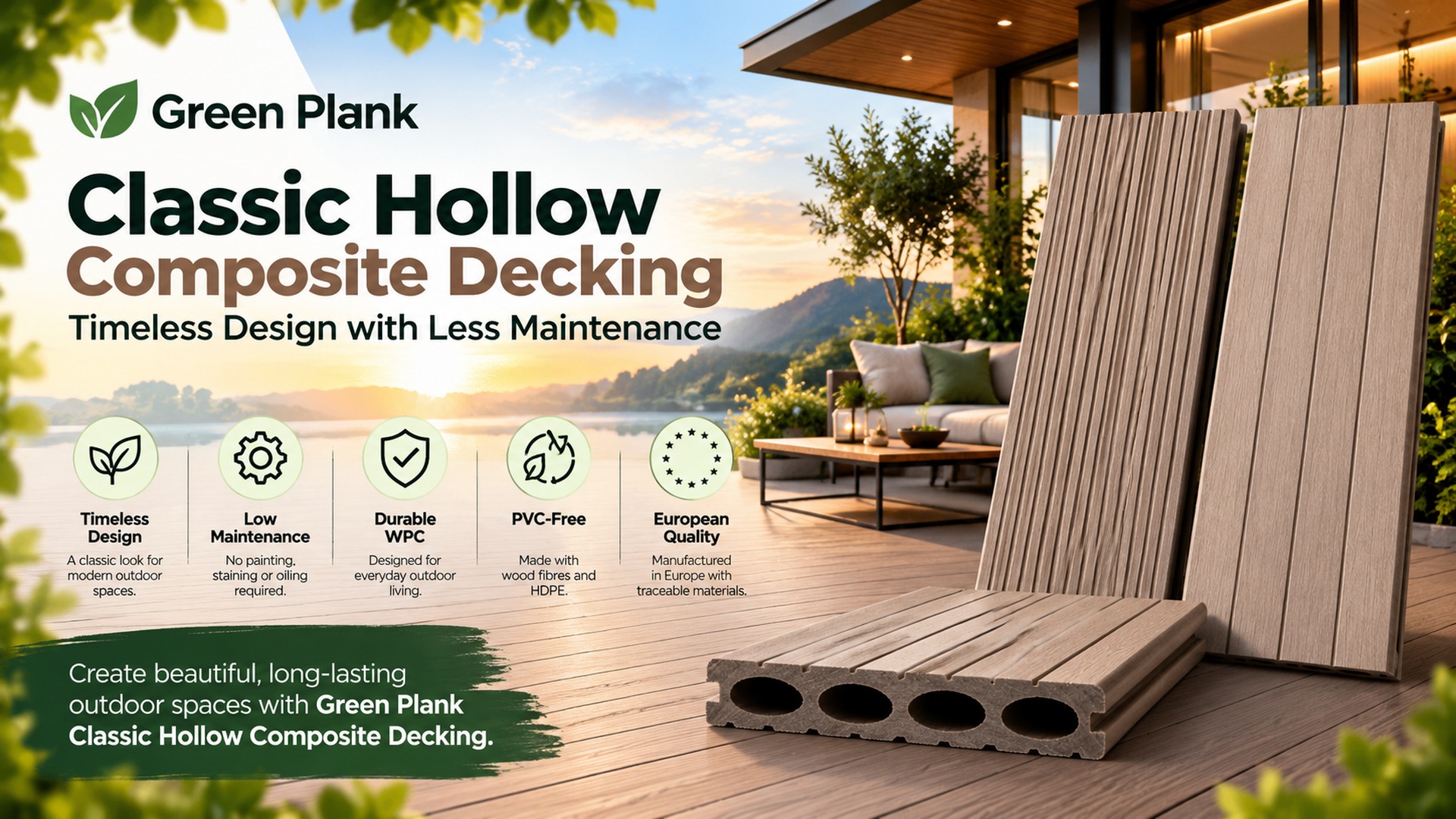
The Terra Tuff line is specifically designed for high-impact urban zones where durability is the primary requirement. It handles the physical stress of high-traffic transit hubs and city plazas without the splintering or cracking typical of traditional timber. When drafting municipal tenders, specifying Green Plank ensures compliance with both the EN 581-2:2026 safety standards and strict environmental mandates. Our 100% EU raw materials provide a transparent, low-carbon supply chain that simplifies the procurement process for sustainability-focused projects. We provide the technical documentation and engineering support necessary to turn ambitious architectural visions into resilient public assets.
The 50-Year Warranty Commitment
A 50-year commercial warranty is a statement of engineering confidence. It's a commitment that protects city budgets from the recurring costs of replacement and repair. For architects and specifiers, this warranty minimizes project risk and ensures that the initial capital expenditure remains a one-time investment. We don't just sell materials; we provide a partnership that lasts for the duration of the infrastructure's life. This long-term performance guarantee is a primary signature of our professional standards and regional reliability. It allows planners to design with the future in mind, knowing the material will maintain its integrity and aesthetic appeal for half a century.
Seamless Aesthetics with HidLoc™ Fastening
The HidLoc™ hidden fastening system is essential for creating the clean, modern surfaces required in contemporary urban design. By eliminating visible screws, we create a safer seating surface that won't snag clothing or skin. These hidden fasteners also serve a technical purpose by preventing board movement and reducing moisture ingress at attachment points. This system allows for a cohesive design language across a project. Architects often integrate our seating solutions with composite wall cladding to create unified exterior facades and public spaces. The result is a maintenance-free environment that respects both the aesthetic of the architecture and the needs of the community.
Terra Tuff Durability: Engineered for extreme impact and heavy foot traffic.
HidLoc™ Integration: Vandal-resistant, fastener-free surfaces for public safety.
Tender Compliance: Meets all 2026 European safety and sustainability standards.
Cohesive Design: Matches with cladding and fencing for a professional urban finish.
Building the Future of Resilient Urban Landscapes
Modern cities require more than temporary furniture; they demand infrastructure that respects both the environment and the municipal budget. High-performance public space composite seating solutions provide a definitive answer to the challenges of maintenance and material decay. By choosing profiles engineered with 75% hardwood fiber and 100% European raw materials, you secure a 50-year service life that outperforms traditional timber in every climate. These solutions represent a commitment to the circular economy through the Cradle to Cradle ownership model, ensuring your project meets the strict CO2 reduction targets of 2026.
Engineering confidence is built on technical precision and regional reliability. Our commercial-grade profiles don't just look like natural wood; they provide the structural integrity required for high-traffic public zones. If you're ready to specify materials that balance premium aesthetics with ethical manufacturing, we're here to support your design phase. You can Request a Technical Specification for Your Public Seating Project to see how our certified materials elevate urban infrastructure. Investing in quality today ensures a beautiful, maintenance-free public space for generations to come.
Frequently Asked Questions
Is composite seating better than traditional wood for public parks?
Composite seating is superior because it combines the organic aesthetics of wood with the industrial performance of HDPE. Unlike traditional timber, which requires annual staining and often rots within a decade, these profiles are impervious to moisture and UV degradation. This eliminates the risk of splinters and structural failure. It ensures that public space composite seating solutions remain safe and attractive for park visitors without the recurring costs of wood maintenance.
How long do public space composite seating solutions actually last?
High-performance public space composite seating solutions are engineered to last between 30 and 50 years in demanding urban environments. Green Plank reinforces this longevity with a specific 50-year commercial warranty on infrastructure profiles. This extended lifespan is possible because the material doesn't succumb to the biological decay or moisture absorption that typically limits the life of organic materials. It's a long-term investment that minimizes the need for frequent municipal replacements.
Does WPC seating get too hot for users in the summer?
WPC seating remains comfortable and touch-safe even during peak summer temperatures. While metal benches often become too hot for use, the thermal conductivity of composite materials is significantly lower. The specific blend of 75% hardwood fiber acts as a natural insulator, preventing the surface from absorbing excessive solar heat. This ensures that public seating remains accessible and functional throughout the year, even in direct sunlight or during heatwaves.
Are composite seating profiles resistant to graffiti and vandalism?
Commercial-grade profiles are highly resistant to vandalism due to their dense, non-porous structure. Graffiti is easily removed because paint and ink don't penetrate the HDPE binder as they do with porous wood. Additionally, the high density of the material resists deep scratching and impact damage. This durability ensures that the furniture maintains its visual integrity in high-traffic urban zones where vandalism is a frequent concern for city planners and maintenance teams.
What maintenance is required for commercial-grade WPC seating?
Maintenance for these profiles is limited to occasional cleaning with soap and water to remove surface dirt. You don't need to sand, stain, or apply chemical sealants to preserve the material's integrity or color. This maintenance-free nature reduces long-term labor costs and eliminates the need for toxic chemicals in public parks. It's a pragmatic solution for municipalities looking to reduce their operational budgets while maintaining high-quality public infrastructure.
Can Green Plank profiles be used for custom-designed urban furniture?
Green Plank profiles offer exceptional architectural versatility and can be adapted for custom urban furniture designs. The material's consistent dimensions and structural stability allow architects to create complex shapes, including curved seating solutions. By utilizing different profile sizes and the HidLoc™ fastening system, designers can achieve bespoke aesthetics that match modern architecture. This flexibility allows for unique branding and identity in city plazas while maintaining the benefits of high-performance composite materials.
How do composite seating solutions contribute to LEED or BREEAM certifications?
These solutions contribute to LEED v5 and BREEAM certifications by utilizing recycled content and sustainable manufacturing processes. The Cradle to Cradle ownership model ensures that materials are part of a circular economy rather than a linear waste stream. Sourcing 100% EU raw materials also reduces the carbon footprint associated with transport. These factors provide the documented environmental credentials required for projects aiming for high-level sustainability ratings and Net Zero city goals.
What is the difference between residential decking and commercial seating profiles?
Commercial seating profiles differ from residential decking in their wall thickness, internal ribbing, and load-bearing capacity. While residential products are designed for domestic foot traffic, infrastructure profiles like Terra Tuff are engineered to withstand the relentless use of public transit hubs and city squares. These profiles are often solid or feature reinforced cavities to prevent breakage under extreme weight or impact. They're built for industrial-grade performance that residential grades can't match.
Specify the product
Use this guide with a Green Plank specification
Technical articles support the commercial catalogue — category, product, evidence, then samples or quotes.