



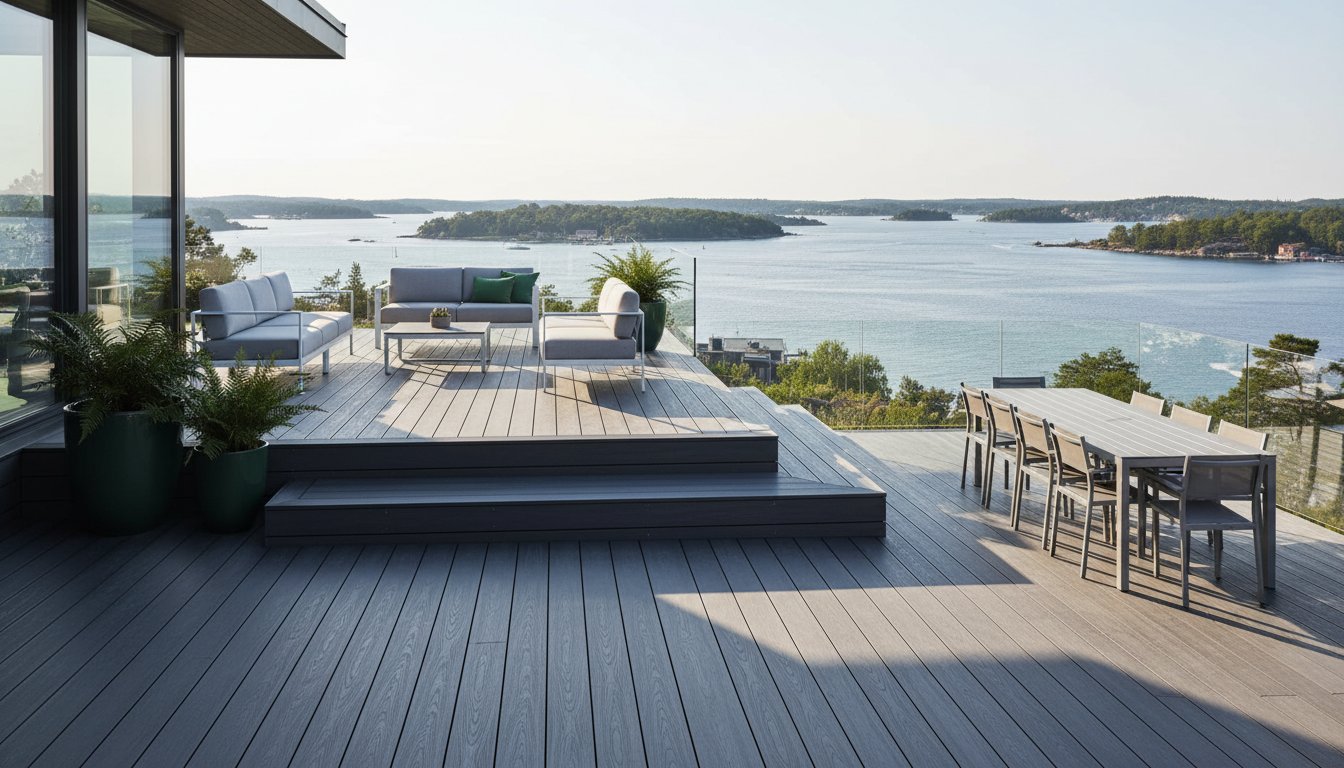
A deck that looks like plastic is no longer just an aesthetic failure; in 2026, it is a sign of outdated engineering. You likely want an outdoor space that mirrors the sophistication of modern European architecture, yet you might worry about colours fading under UV exposure or surfaces becoming dangerously slippery in the rain. It is a valid concern for anyone prioritizing long-term value and safety. This guide explores the latest wpc composite decking finishes and colours Europe offers, showing you how to achieve a high-end look that remains stable for decades without the need for sanding or oiling.
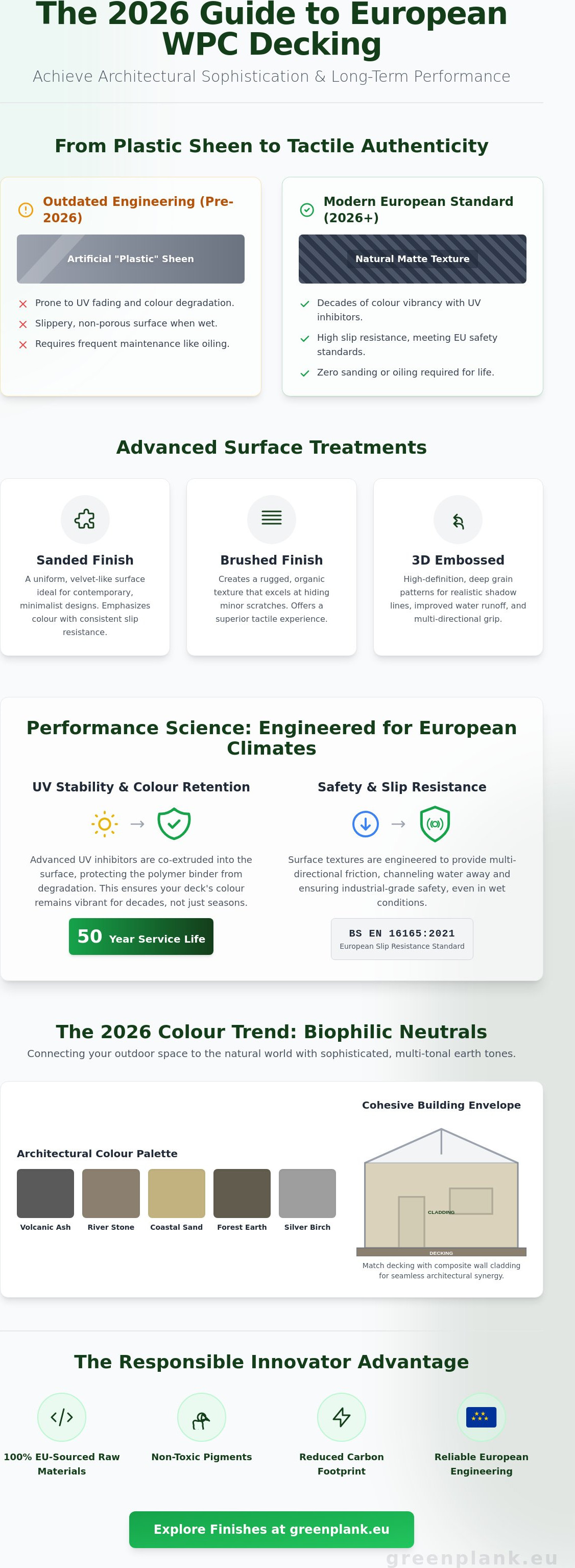
With the implementation of Regulation (EU) 2024/3110, the industry has moved toward "Tactile Authenticity" and rigorous environmental standards. You will learn how to identify finishes that meet BS EN 16165:2021 slip resistance requirements while embracing the "Quiet Luxury" of multi-tonal earth tones. We provide a clear path to selecting materials that offer a 50 year service life and a reduced carbon footprint. This preview of the 2026 design landscape ensures your choice balances architectural beauty with the regional reliability of European manufacturing.
Key Takeaways
- Understand how advanced mechanical surface treatments remove the artificial "plastic sheen" to deliver a sophisticated, natural wood aesthetic.
- Explore the 2026 trend of "Biophilic Neutrals" and learn to create a cohesive building envelope by matching decking with composite wall cladding.
- Evaluate the technical role of UV inhibitors in protecting the HDPE binder, ensuring your wpc composite decking finishes and colours Europe remain vibrant for decades.
- Decode European slip resistance standards, such as CEN/TS 16165, to select surface textures that provide industrial-grade safety in wet conditions.
- Discover the "Responsible Innovator" approach to sustainability through the use of non-toxic pigments and 100% EU-sourced raw materials.
Table of Contents
- Understanding WPC Composite Decking Finishes and Surface Textures
- The 2026 European Colour Palette: Trends and Architectural Synergy
- Performance Science: UV Stability and Colour Retention in Europe
- Selecting the Right Finish for Safety and Slip Resistance
- The Green Plank Advantage: Sustainable Finishes Engineered in Europe
Understanding WPC Composite Decking Finishes and Surface Textures
The final character of a deck board is determined long after the initial extrusion. In the European market, the quality of a deck is often judged by its tactile authenticity. Low-quality imports often arrive with a reflective, oily surface. This "plastic sheen" is a byproduct of high-speed extrusion without proper finishing. Premium European manufacturing involves secondary mechanical or heat-based processes to refine the surface. These treatments transform a basic industrial product into a sophisticated architectural element. When selecting wpc composite decking finishes and colours Europe, the surface texture is as vital as the pigment choice; it defines how the material interacts with light and how it feels underfoot.
Mechanical finishing serves a dual purpose. It removes the smooth, non-porous outer layer of the plastic binder to reveal the natural wood fibers within. This process increases the surface area and creates a matte finish that mimics the light-absorption properties of real timber. Wood-plastic composites (WPCs) engineered in Europe utilize these techniques to ensure the material looks grounded and organic rather than synthetic. This commitment to surface engineering is what separates professional-grade profiles from entry-level retail products.
Sanded vs. Brushed Finishes
Sanded finishes involve passing the boards through high-grit abrasive rollers. This creates a uniform, velvet-like surface that is highly popular in contemporary, minimalist designs. It's a clean look that emphasizes the board's colour profile without the distraction of heavy grain patterns. Because the surface is evenly abraded, it provides a consistent level of slip resistance across the entire installation.
Brushed finishes use stiff wire brushes to pull away the softer parts of the composite surface. This technique opens the pores of the material and creates a more rugged, organic texture. It's a practical choice for high-traffic areas. The deeper texture of a brushed finish excels at hiding minor scratches and scuffs, as the irregular surface breaks up visual imperfections. For those seeking a balance between modern durability and traditional timber aesthetics, the brushed finish offers a superior tactile experience.
Embossed Wood Grain and 3D Textures
The evolution of 3D embossing has revolutionized the European decking landscape. Modern high-definition embossing uses heated rollers to press intricate patterns deep into the composite core. This creates realistic shadow lines and depth that traditional flat-printing cannot achieve. These patterns aren't merely for show; they serve a functional role in outdoor safety.
- Deep-grain embossing creates channels for water runoff; this reduces the risk of hydroplaning in wet European winters.
- Variable texture heights provide multi-directional friction; this improves grip for footwear and pets alike.
- High-definition patterns break up the surface area; this reduces the visibility of dust and debris between cleanings.
Architects frequently specify 3D textures for larger commercial projects where visual scale is important. The play of light and shadow on an embossed surface prevents the deck from looking like a flat, monolithic block. It creates a dynamic outdoor floor that changes character throughout the day as the sun moves across the horizon.
The 2026 European Colour Palette: Trends and Architectural Synergy
In 2026, the European design aesthetic has moved beyond simple utility toward a philosophy of "Biophilic Neutrals." This trend prioritizes colours that bridge the gap between built environments and the natural world. Modern landscape design no longer treats the deck as a separate platform; instead, it is an extension of the interior floor. Selecting the right wpc composite decking finishes and colours Europe requires an understanding of how these tones interact with the changing seasons and local light conditions. While bright, high-contrast colours have faded from popularity, nuanced shades that reflect regional landscapes have taken their place.
Creating a cohesive building envelope is now a primary goal for architects. You can achieve this by pairing your floor surfaces with high-performance composite wall cladding. When the vertical and horizontal planes of a structure utilize matching or complementary tones, it creates a sense of architectural permanence. This synergy is particularly effective in modern residential projects where "Quiet Luxury" is the desired outcome. Using 100% EU raw materials ensures that these pigments remain stable, preventing the mismatch that often occurs when low-quality materials fade at different rates.
Modern Greys: From Silver Birch to Anthracite
Scandinavian minimalism continues to exert a strong influence across the continent. Cool-toned greys, such as Silver Birch and Anthracite, are the preferred choice for urban environments. These shades provide a neutral canvas that allows garden greenery or designer furniture to stand out. Urban Grey is especially practical for city living; its mid-tone depth effectively hides dust and environmental pollutants. When you pair grey decking with glass balustrades or steel frames, the result is a crisp, industrial aesthetic that feels both timeless and sophisticated.
Natural Timber Tones: Teak, Walnut, and Oak
Earth tones remain the standard for traditional renovations and rural retreats. The "Alpine Walnut" trend has gained significant traction in 2026, offering a deep, chocolate-brown warmth that complements stone masonry and timber-framed houses. These finishes allow homeowners to enjoy the prestigious look of tropical hardwoods like Teak or Iroko without the ecological guilt of deforestation. You can choose between uniform boards for a clean, contemporary look or multi-tonal, variegated boards that mimic the natural grain shifts of old-growth timber. If you are ready to elevate your outdoor space, you can explore our full range of sustainable profiles designed for the European climate.
- Teak: A golden-brown classic that brings a Mediterranean feel to sun-drenched terraces.
- Alpine Walnut: A rich, dark tone that provides a sense of enclosure and coziness in open landscapes.
- Silver Birch: A light, airy grey that reflects sunlight and keeps surfaces cooler in peak summer.
- Royal Oak: A balanced, honey-toned finish that pairs perfectly with traditional brickwork.
Performance Science: UV Stability and Colour Retention in Europe
The longevity of wpc composite decking depends on the molecular stability of its binder. In many wpc composite decking finishes and colours Europe projects, the primary cause of failure isn't the wood itself, but the degradation of the 25% HDPE binder. High-quality European raw materials include advanced UV inhibitors that prevent polymer chains from breaking down under intense solar radiation. This engineering precision ensures the board remains structurally sound while maintaining its aesthetic appeal for decades. It is a level of quality control that cheaper imports rarely match.
Every composite board undergoes an "Initial Weathering" phase. During the first 12 weeks of outdoor exposure, the surface wood fibres naturally lighten as they interact with rain and sunlight. This is a predictable transition rather than a defect. Once the material reaches its equilibrium, the colour stabilizes. Unlike timber, which continues to silver and crack over time, professional-grade WPC retains its settled hue without further significant change. It provides a permanent aesthetic that respects the original design intent.
There is a persistent myth that WPC requires oils or topical treatments to "renew" its colour. This advice usually targets low-quality products that lack proper UV protection. You don't need to apply oils to a well-engineered board. Oiling WPC is a temporary fix for a fundamental material deficiency. It often creates a sticky surface that attracts dirt and requires perpetual maintenance. Choosing a product with regional reliability eliminates the need for these costly and time-consuming chemicals.
The Role of 75% Hardwood Fibre in Colour Depth
A high 75% hardwood fibre ratio is the secret to a natural, non-reflective finish. This density allows for deeper pigment absorption during manufacturing. The wood fibres act as a carrier for the colour, providing a richness that high-plastic products cannot replicate. This high fibre density also ensures long-term structural integrity. When colour retention is high, it's a reliable indicator that the internal bond between the wood and the HDPE remains intact. It is a sign of a healthy, durable material.
Heat Absorption and Darker Colour Choices
Darker shades like Anthracite or Walnut are popular, but they require careful consideration in Southern European climates. Dark surfaces naturally absorb more thermal energy. To counter this, advanced manufacturing uses innovative pigments that reflect infrared light. This technology keeps the surface temperature manageable, even in peak summer. If you're installing a deck in a high-sun exposure area, consider these practical steps:
- Select mid-tone greys or sandy browns to minimize heat retention in open areas.
- Prioritize boards with infrared-reflective properties to reduce surface temperature.
- Ensure proper ventilation beneath the deck structure to allow heat to dissipate naturally.
Selecting the Right Finish for Safety and Slip Resistance
Aesthetic appeal is secondary to safety in public and high-traffic environments. In 2026, slip resistance is no longer a vague promise; it's a measurable performance metric defined by rigorous testing. When evaluating wpc composite decking finishes and colours Europe, you must consider how the surface texture interacts with moisture. European standards, specifically BS EN 16165:2021, provide a clear framework for assessing pedestrian safety. For wet or critical areas, a Class 3 rating (Pendulum Test Value over 45) is the benchmark for professional-grade installations. This technical precision ensures that your outdoor space remains accessible and secure throughout the damp European winter.
The relationship between surface texture and friction is a matter of material science. Brushed finishes and deep-grain embossing aren't just visual choices; they're functional features that break the surface tension of water. This prevents the formation of a slippery film between footwear and the board. For commercial composite decking projects, selecting a finish with integrated drainage channels is essential. These micro-grooves aid in rapid water runoff, reducing the risk of standing water and hydroplaning. It's a "Feature-Benefit" logic where the technical attribute of the texture directly translates to the practical advantage of user safety.
Best Finishes for Poolside and High-Moisture Areas
Poolside environments require a specialized "Barefoot" rating under DIN 51097. Surfaces in these zones must provide high friction against skin while remaining comfortable to walk on. A refined brushed finish is often superior to heavy embossing in these contexts, as it offers a consistent grip without being abrasive. Our finishes are also engineered for saltwater and chlorine resistance. This ensures the surface doesn't pit, erode, or lose its slip-resistant properties after repeated exposure to pool chemicals or coastal spray. A well-chosen finish maintains its integrity and safety profile for the duration of its 50 year service life.
Commercial vs. Residential Finish Requirements
Commercial settings, such as retail plazas or hospitality terraces, demand a higher level of durability than private gardens. The finish must withstand heavy foot traffic and frequent cleaning cycles without losing its texture. In these public spaces, the use of hidden deck fasteners is a critical design choice. These systems keep the surface free of protruding screws, creating a seamless finish that is safer for pedestrians and easier to maintain. If you are planning a high-specification project, you can view our technical data sheets to match the right finish to your specific safety requirements.
- Public Piers: Require deep-grooved finishes for maximum drainage in marine environments.
- Restaurant Terraces: Benefit from brushed textures that hide scuffs from moving furniture.
- Residential Balconies: Often utilize sanded finishes for a soft, contemporary feel.
- Coastal Boardwalks: Demand high-density fibres to resist the abrasive effects of sand and wind.
The Green Plank Advantage: Sustainable Finishes Engineered in Europe
Green Plank operates as a "Responsible Innovator" within the regional market. Our commitment to 100% EU raw materials isn't merely a logistical preference; it is a fundamental quality mandate. By sourcing all components within Europe, we maintain absolute oversight of the material science behind our products. This ensures that the wpc composite decking finishes and colours Europe expects from a premium brand are delivered with total consistency. While entry-level imports often fluctuate in tone between batches, our controlled manufacturing environment guarantees a stable aesthetic. Our 50 year warranty serves as the ultimate proof of this material confidence. It is a promise of long-term performance that respects both the customer and the environment.
Cradle to Cradle: Beauty Without Environmental Compromise
Our design philosophy follows a circular model. Every board we produce is intended to function as part of the sustainable building materials ecosystem. This "Cradle to Cradle" ownership ensures that our finishes are eco-friendly from the point of production to their eventual end-of-life recycling. We utilize a high-density mix of 75% hardwood fibre and 25% HDPE. This specific ratio allows us to reduce the CO2 footprint of every project while providing a natural, non-reflective finish. The use of premium, reclaimed European hardwoods provides a depth of grain that synthetic alternatives cannot match. You receive a product that is non-toxic, durable, and aesthetically superior.
Custom Solutions for Large-Scale European Projects
We recognize that high-specification architectural projects often require bespoke attention. Green Plank provides technical support for specifiers who are evaluating trex decking alternatives and require a regionally compliant, sustainable choice. Our aesthetic ranges are designed to meet diverse architectural needs through a "Feature-Benefit" logic:
- Terra Tuff: A rugged, high-strength range designed for commercial infrastructure and public spaces.
- Smart System: A refined, contemporary range optimized for modern residential terraces and balconies.
- Classic: A timeless finish that offers the traditional warmth of domestic timber with modern durability.
To experience the tactile quality of our finishes first-hand, we invite you to request a sample set. Feeling the weight and texture of our European-engineered boards is the most effective way to understand the Green Plank standard. We provide the tools and technical data necessary to ensure your next project balances architectural beauty with environmental responsibility. Choosing the right finish is an investment in the longevity of your outdoor space.
Investing in Architectural Longevity and Regional Reliability
Selecting the ideal wpc composite decking finishes and colours Europe requires a balance of tactile authenticity and technical performance. You now understand how brushed textures improve safety underfoot and why 100% European raw materials are essential for permanent colour stability. These choices define the longevity of your architectural vision and the safety of your guests. It's about creating a space that feels as natural as it looks.
Our commitment to engineering precision allows us to provide a 50-year limited warranty. This guarantee reflects our confidence in the UV inhibitors and high-density fibres that prevent material degradation. By choosing Cradle to Cradle certified products, you ensure your outdoor space respects the environment while offering a maintenance-free lifestyle. It's an investment in regional quality that avoids the common pitfalls of inferior, synthetic-looking imports.
Explore the Green Plank Colour Collection and Request Your Samples Today
Your journey toward a more sustainable and beautiful outdoor environment begins with a single, well-informed choice.
Frequently Asked Questions
Do WPC composite decking colours fade over time in the sun?
All WPC boards undergo a natural weathering phase during the first 12 weeks of outdoor exposure. During this period, the surface wood fibres lighten slightly as they react to UV rays and moisture. Once this initial equilibrium is reached, the colour remains stable for decades. Our European-engineered boards utilize advanced UV inhibitors to protect the HDPE binder, ensuring the pigment stays rich without the dramatic silvering seen in traditional timber.
Can I paint or stain my WPC decking if I want to change the colour later?
You shouldn't paint or stain high-quality WPC decking. The material's density and the 25% HDPE binder create a surface that doesn't absorb topical treatments like natural wood does. Any paint or stain applied will likely peel or flake within a short timeframe, creating a high-maintenance problem. It's better to select a permanent colour from our range that complements your long-term architectural vision, as the finish is designed to last for its 50 year service life.
Which WPC finish is the most slip-resistant for a rainy climate?
Brushed finishes and deep-grain 3D embossing provide the highest levels of slip resistance in wet climates. These textures break the surface tension of water and provide multi-directional friction for footwear. When choosing wpc composite decking finishes and colours Europe for rainy regions, look for a Class 3 rating under BS EN 16165:2021. This technical standard ensures the surface remains safe and accessible even during the dampest European winters.
Are darker composite decking colours significantly hotter to walk on?
Darker shades like Anthracite or Walnut naturally absorb more thermal energy than lighter tones like Silver Birch. However, our premium pigments are engineered to reflect infrared light, which helps keep the surface temperature lower than standard dark composites. If your deck is in a south-facing area with high sun exposure, we recommend choosing mid-tone greys or sandy browns. Proper ventilation beneath the deck structure also helps dissipate heat effectively.
What is the difference between an embossed and a brushed WPC finish?
An embossed finish uses heated rollers to press a 3D wood grain pattern into the board, creating realistic shadow lines and depth. In contrast, a brushed finish uses wire brushes to mechanically abrade the surface, revealing the natural wood fibres and creating a matte, organic feel. Embossing is often chosen for its traditional aesthetic, while brushing is favored for its modern, velvet-like texture and superior scratch resistance in high-traffic areas.
How do I clean different types of WPC textures and finishes?
Cleaning WPC is straightforward regardless of the finish. Use warm, soapy water and a soft-bristled brush to remove dirt and debris from the grooves or grain patterns. For brushed finishes, always scrub in the direction of the grain to maintain the uniform texture. It's best to avoid high-pressure washers at close range, as they can damage the surface fibres. Regular maintenance ensures your deck stays vibrant and free from organic growth without the need for harsh chemicals.
Does the colour of WPC decking vary between different production batches?
Minor colour variations can occur between production batches due to the 75% natural hardwood fibre content. To ensure a perfectly uniform look, we recommend ordering all the boards for your project at the same time. Our 100% EU raw materials provide much higher consistency than global imports, but slight shifts in the natural timber component are a hallmark of an authentic, biophilic product. Mixing boards from different pallets during installation helps blend any subtle nuances.
Why should I choose European-made WPC over cheaper imported alternatives?
Choosing European-made WPC ensures compliance with strict environmental and safety regulations like Regulation (EU) 2024/3110. Our products utilize 100% EU raw materials, which translates to better quality control and a significantly lower carbon footprint. Cheaper imports often lack the UV inhibitors and high-density fibres required for the European climate. By selecting a regional manufacturer, you gain a 50 year service life and the peace of mind that comes with Cradle to Cradle sustainability.
Specificera produkten
Använd den här guiden i en Green Plank-specifikation
Tekniska WPC-artiklar ska stärka de kommersiella sidorna — inte konkurrera med dem. Fortsätt till komposittrall, TerraTuff, Nordeka eller de tekniska nedladdningarna.