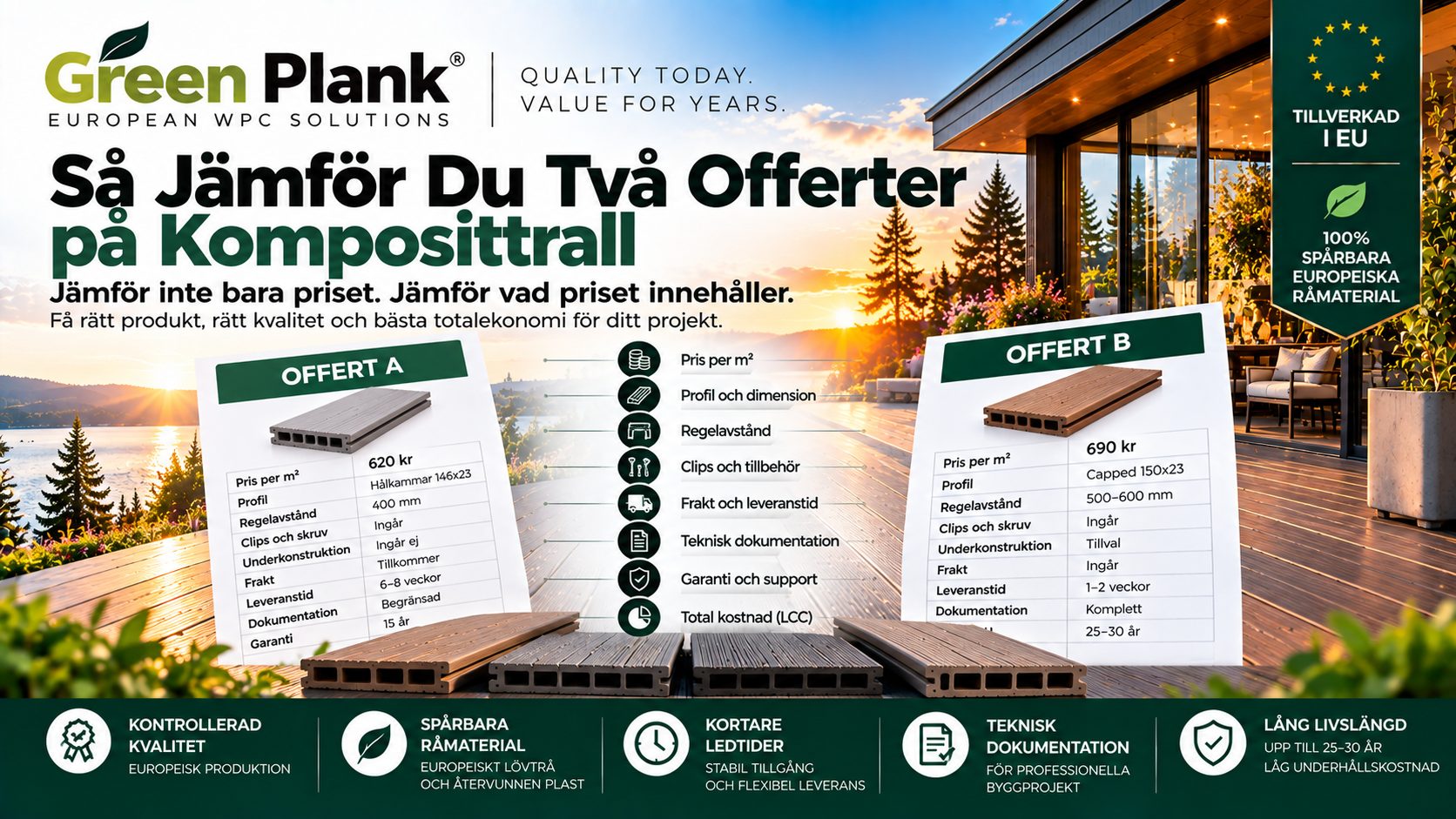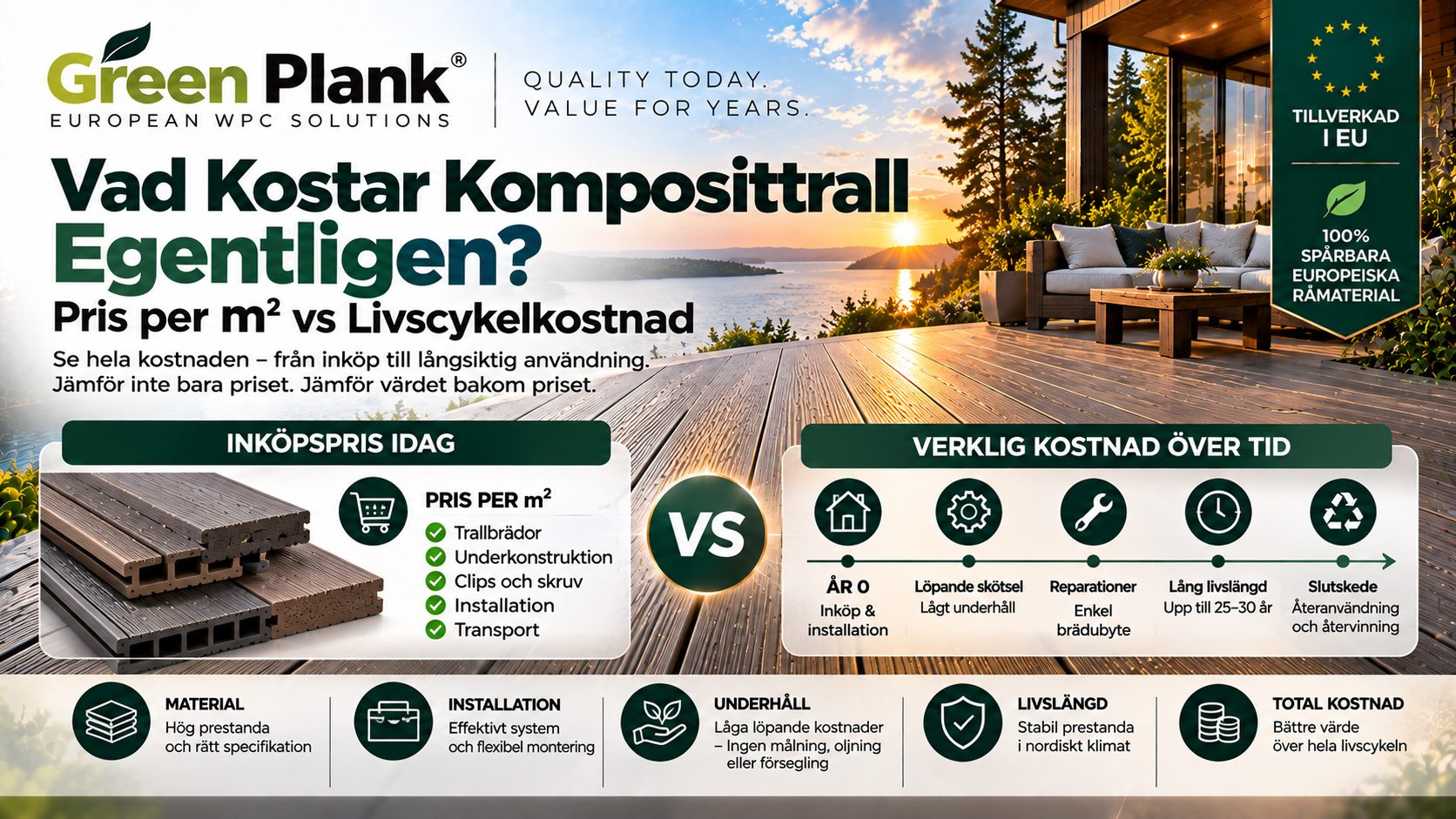




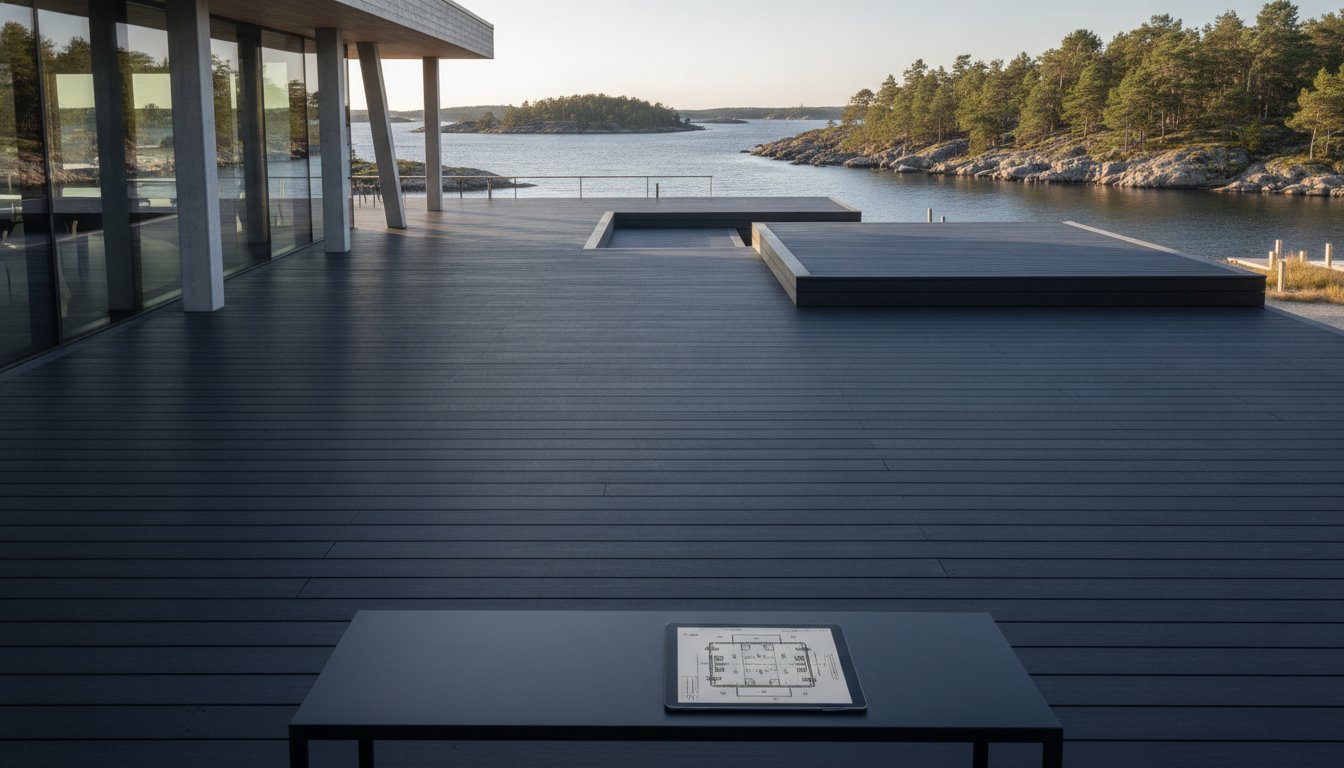
The success of a commercial outdoor space is no longer measured by its initial aesthetic appeal, but by its molecular integrity and environmental footprint. When you are specifying composite decking for projects in 2026, the gap between a 15-year failure and a 50-year asset is defined by technical precision rather than a simple color palette. A deck must do more than look good; it must perform under pressure while respecting the planet.
You likely understand the frustration of trying to verify sustainability claims while ensuring a profile can actually handle heavy foot traffic. It's a difficult balance to satisfy both the environmental auditor and the structural engineer. This guide provides a clear framework for selecting high-performance WPC decking that meets rigorous commercial standards and cradle-to-cradle goals. We will examine the engineering differences between hollow and solid profiles, the verification of EU-sourced material quality, and the specific requirements for achieving a 50-year service life. By the end, you'll have the confidence to specify materials that are as durable as they are responsible.
Key Takeaways
- Identify the specific material ratios required to prevent structural deflection and ensure long-term stability in high-traffic environments.
- Determine when to prioritize solid-core profiles over engineered hollow boards based on the unique load-bearing demands of commercial infrastructure.
- Streamline the process of specifying composite decking for projects by aligning material selection with EU-certified CO2 reduction targets and safety R-ratings.
- Evaluate how HidLoc™ hidden fastening technology preserves the aesthetic integrity of the surface while accommodating natural thermal movement.
- Secure long-term project value by understanding the engineering precision and regional manufacturing standards that support a 50-year service life.
Understanding WPC Material Composition for Project Longevity
Architectural performance begins at the molecular level. Wood-plastic composite materials (WPC) have evolved from simple residential alternatives into high-performance engineering solutions. When you're specifying composite decking for projects, the chemical composition determines whether the installation will endure for decades or degrade under environmental stress. It's a choice between temporary aesthetics and long-term structural integrity.
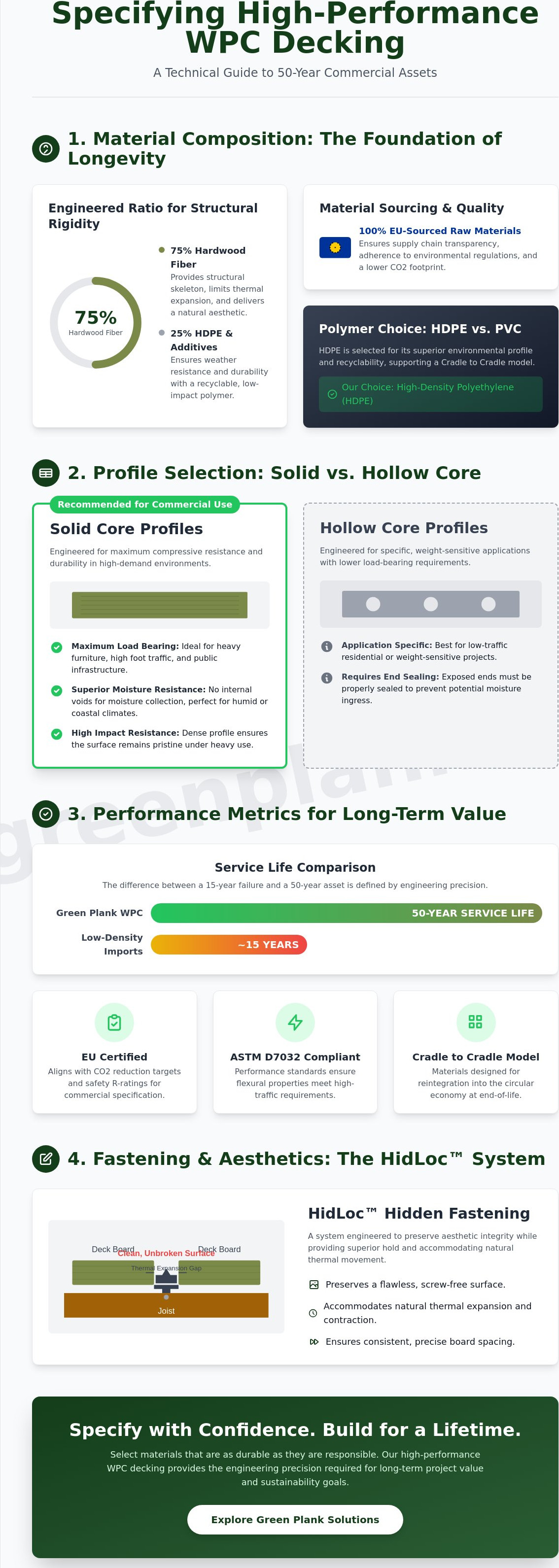
Our specific formulation utilizes a rigorous ratio of 75% hardwood fiber to 25% high-density polyethylene (HDPE) and essential additives. This high wood content provides the structural rigidity required for commercial applications. It creates a dense, stable board that resists the common pitfalls of plastic-heavy alternatives. By prioritizing fiber density, we ensure the material behaves more like high-quality timber while retaining the weather-resistant benefits of modern polymers.
Consistency depends on the origin of the ingredients. We utilize 100% EU-sourced raw materials to ensure total transparency in the supply chain and strict adherence to European environmental regulations. This regional reliability reduces the CO2 footprint of every project. It also eliminates the variability found in imported materials, giving specifiers confidence that every board meets the same professional standards.
Density management is a primary indicator of a project's lifespan. While some low-density composites are engineered for specific weight-sensitive applications, high-performance commercial projects often require the compressive strength of high-density profiles. These profiles provide the impact resistance necessary for public infrastructure, ensuring the surface remains pristine under heavy foot traffic for a 50-year service life.
The Role of Hardwood Fiber in Performance
Hardwood fibers act as the internal skeleton of the board. They provide essential reinforcement that significantly limits thermal expansion and contraction, which is a common challenge in outdoor environments. This stability allows for tighter installation tolerances and more predictable performance across seasons. Beyond the technical advantages, this high fiber content delivers a natural, matte aesthetic. It captures the warmth of traditional wood without the risks of rot, splintering, or high-maintenance staining.
HDPE vs. PVC: Specifying the Right Polymer
The choice of polymer is central to a project's sustainability profile and physical durability. We utilize HDPE because it's more readily recyclable and offers a lower environmental impact than PVC alternatives. This commitment to material science supports a Cradle to Cradle ownership model, ensuring that the decking can be reintegrated into the circular economy at the end of its life cycle. Selecting the right polymer isn't just a technical decision; it's an ethical one. For a deeper look at these principles, consult our Sustainable Building Materials Guide.
Specifying Profiles: Solid vs. Hollow Core for Load Requirements
Structural integrity is the silent foundation of any successful architectural build. When you are specifying composite decking for projects, the geometric profile of the board is just as critical as its material density. Choosing between solid and engineered hollow cores isn't merely a matter of cost; it's an engineering decision based on anticipated point loads and environmental exposure. To ensure compliance with ASTM D7032 performance standards, specifiers must align the board's flexural properties with the project's specific traffic requirements.
Solid profiles offer maximum compressive resistance. They're the preferred choice for areas where heavy furniture, high-density crowds, or maintenance equipment are expected. Unlike some hollow designs, solid boards leave no internal voids where moisture can potentially collect if the ends aren't correctly sealed. This makes them exceptionally reliable for projects in humid or coastal climates where long-term durability is paramount. Optimizing the substructure is a key part of specifying composite decking for projects, particularly when transitioning between different load zones.
Commercial Infrastructure Profiles
Public walkways, piers, and high-occupancy terraces require profiles that minimize deflection under load. Increased board thickness directly improves the stiffness of the deck, ensuring a safe and stable walking surface that won't bounce or sag over time. This structural rigidity is essential for maintaining safety standards in public spaces. For detailed technical layouts, our Professional Deck Installation Guide provides the necessary blueprints for high-traffic success. If your project involves public safety, it's vital to prioritize these heavy-duty profiles that resist the wear of thousands of footsteps.
Residential Specification Standards
For private garden projects or high-rise balconies, engineered hollow cores provide an excellent balance of strength and weight reduction. A lighter board reduces the dead load on the building's primary structure, which is a significant advantage in urban multi-story developments. For most private residential uses, a 600cc joist spacing standard provides ample support. When installing decking on these surfaces, it is also essential to ensure the underlying structure is expertly sealed against the elements; you can learn more about professional moisture protection and leak prevention systems. Before finalizing your plans, verify the following:
- Confirm the specific joist span matches the manufacturer's load-bearing table for the chosen profile.
- Check that the profile geometry allows for adequate airflow beneath the deck to prevent heat buildup.
- Ensure the substructure is correctly leveled to prevent water from pooling in hollow chambers.
You can explore our full range of Commercial Infrastructure Profiles to find the right structural match for your next build.
Environmental Standards and Safety Certifications
Specifying composite decking for projects in 2026 necessitates a rigorous evaluation of both environmental impact and public safety certifications. It isn't enough for a material to be durable. It must be demonstrably safe for high-occupancy use and gentle on the planet. When you audit a material's life-cycle, the origin of the raw materials and the chemical additives used during manufacturing become the primary indicators of project quality. Choosing a material that aligns with modern ethical standards protects both the environment and the specifier's professional reputation.
Project carbon accounting is now a standard requirement for commercial developments. By utilizing 100% EU-manufactured WPC, you effectively minimize the emissions associated with transcontinental logistics. Regional manufacturing ensures that every board is produced under the world's strictest environmental regulations. This regional reliability provides a verifiable paper trail for sustainability audits. It removes the uncertainty often found with imported materials that may not adhere to the same rigorous carbon reduction targets.
To further support these sustainability audits and achieve true energy efficiency, many architects are now pairing low-carbon materials with renewable energy infrastructure; you can learn more about EEHD Erneuerbare Energien Handel und Distribution GmbH to explore how their photovoltaic solutions integrate into modern, eco-conscious designs.
Safety is a non-negotiable engineering metric. High-occupancy infrastructure, such as municipal piers or hotel terraces, requires specific slip resistance ratings to mitigate risk. These R-ratings are essential for maintaining public safety in wet or coastal environments. Beyond physical grip, fire safety classifications are critical for multi-story projects where cladding and decking must meet stringent flame-spread requirements. Our focus on non-toxic additives and stable HDPE polymers ensures that the installation remains safe for the public and the ecosystem throughout its entire service life.
Reducing Project Carbon Footprint
The most effective way to lower a project's environmental impact is to extend the replacement cycle. The longevity-to-replacement ratio is a vital sustainability metric. When a product is engineered for a 50-year service life, it significantly reduces the need for future resource extraction. You can learn more about how material science supports these goals in our What is WPC Composite Decking Guide. Regional sourcing doesn't just lower transport emissions; it supports a circular economy through cradle-to-cradle ownership.
Public Safety and Compliance
Specifying composite decking for projects in wet areas requires a surface that provides consistent traction. WPC offers superior slip resistance that doesn't diminish over time, unlike traditional timber which becomes slick as it decays. This consistency is a primary benefit for commercial owners who wish to reduce long-term liability. Because the material is splinter-free and requires no chemical staining, it remains a safe, low-maintenance asset for decades. Choosing European-standard materials provides the legal and ethical security that modern architectural projects demand.
Aesthetic and Fastening Systems Integration
Aesthetics in modern architecture are inseparable from the mechanical systems that support them. When you're specifying composite decking for projects, the method of attachment is as critical as the board's color. Traditional face-screwing often leads to technical failure points; it restricts natural movement and creates entry points for moisture. Utilizing a sophisticated fastening system preserves the surface integrity and ensures the deck remains a premium asset for its entire 50-year service life. The visual success of a project depends on how well these technical components disappear into the design.
HidLoc™ hidden fastening systems are the professional standard for achieving a clean, screw-free finish. These clips reside within the side grooves of the boards, creating a seamless visual plane that highlights the material's natural texture. Beyond aesthetics, these clips are engineered to manage thermal expansion. Because WPC contains high-density polymers, it expands and contracts with temperature fluctuations. The HidLoc™ system allows for this movement without compromising the structural hold or causing the boards to warp. This engineering precision is what separates a professional installation from a DIY alternative.
Designers can choose between reversible finishes to match the project's specific atmosphere. A deep woodgrain texture offers a classic, organic feel, while a grooved surface provides a contemporary, linear aesthetic. This versatility allows for creative patterns and zoning within a single installation. To complete the architectural finish, specifying color-matched skirting and trim is essential. For projects requiring curved architectural elements or specialized lightweight wood accents, GM ORFIN provides innovative solutions through sklejkaelastyczna.pl that complement high-end decking installations. These components hide the substructure and provide a polished edge that reflects the high standards of professional manufacturing, ensuring every detail works in harmony to respect the surrounding nature.
For those seeking to expand their architectural vision with complementary structures, the high-quality aluminium pergolas from Pergola2Go provide a durable, low-maintenance solution that aligns with the longevity of professional-grade decking.
The HidLoc™ Fastening Advantage
Precision is the hallmark of the HidLoc™ system. These hidden fasteners effectively eliminate the risk of surface splinters and protruding screw heads, which is a vital safety consideration for public spaces. Installation efficiency is another primary benefit. On large-scale commercial sites, the use of clip-based systems significantly reduces labor time compared to traditional drilling. The clips also act as automatic spacers, ensuring uniform gap widths across the entire surface for a perfectly aligned architectural result. This systematic approach ensures that specifying composite decking for projects leads to a predictable and high-quality outcome.
Designing with Color and Texture
Selecting the right range, such as Terra Tuff or Nordeka, depends on the visual and environmental demands of the site. Our materials are engineered for exceptional color stability and UV resistance, making them ideal for the intense sunlight and harsh winters of northern climates. You can use different board widths and textures to create architectural interest or to define specific functional zones. This design flexibility ensures that the finished project respects both the surrounding nature and the client's vision. Explore our full range of HidLoc™ Hidden Fastening Systems to see how technical integration elevates design.
Conclusion: Selecting the Right Project Partner
Successful architectural outcomes are built on technical rigor rather than visual trends. When you are specifying composite decking for projects, the engineering data must always precede the aesthetic selection. A beautiful terrace offers little value if it cannot withstand the structural demands of high-occupancy use or the environmental stressors of a changing climate. By prioritizing density, profile geometry, and regional manufacturing standards, you ensure that the outdoor space remains a high-performance asset for decades. To see how these technical standards are applied in premium outdoor designs, you can check out BigDecks for specialized construction expertise.
Investment security in the commercial sector is defined by longevity. Our 50-year service life warranty serves as a primary signature of our engineering confidence; it protects the developer's capital while respecting the planet's resources. This long-term commitment reduces the total cost of ownership and eliminates the waste associated with frequent replacements. Selecting a partner who understands the intersection of material science and environmental ethics is the final, most critical step in the specification process.
The Green Plank Commitment
We operate as a Responsible Innovator, blending regional heritage with advanced manufacturing quality. Our commitment to 100% EU raw materials ensures that every board meets the highest standards of ecological responsibility. We provide more than just standard decking; we offer specialized Commercial Infrastructure Profiles tailored to the unique load requirements of public walkways and piers. For those evaluating global options, our Trex Decking Alternatives comparison explains why European-engineered WPC is the superior choice for sustainable construction in 2026.
Next Steps for Specification
Moving from a technical guide to a physical installation requires precise data. We invite architects and project managers to engage with our technical support team for comprehensive project assistance. We provide the following resources to streamline your workflow:
- Detailed technical data sheets for all WPC profiles and fastening systems.
- Custom material samples to verify texture, color, and density in person.
- Expert consultation on specific load-bearing calculations and joist spacing.
- Carbon footprint reports to support your project's sustainability certifications.
Precision in the planning phase prevents failure in the operational phase. Contact Green Plank for your next project specification to ensure your design is supported by the highest standards of European engineering and environmental ethics.
Engineering the Future of Outdoor Infrastructure
Professional projects demand a shift from aesthetic-first thinking to an engineering-first approach. We've established that the success of a build depends on material density, profile geometry, and the precision of the fastening system. By prioritizing a 75% hardwood fiber ratio and specifying the correct load-bearing profile, you ensure the installation remains stable and secure for decades. When you are specifying composite decking for projects, you are choosing a 50-year warranty that reflects true manufacturing confidence and regional reliability.
Every component we've discussed, from the slip-resistant surfaces to the 100% EU raw materials, supports a cradle-to-cradle ownership model. This approach minimizes the project's CO2 footprint while maximizing its long-term commercial value. It's about creating a beautiful, maintenance-free environment that upholds the highest standards of environmental ethics and material science.
This commitment to high-performance materials is a principle that applies to all aspects of outdoor life; whether you are specifying structural components or selecting personal gear, you can explore TOAKS Titanium Cookware at Wood To Water Outdoors to see how engineering excellence translates to durable, lightweight outdoor solutions.
Request Technical Specifications and Samples for Your Project to see how our engineering precision can elevate your next architectural design. We're here to provide the technical data you require, the material samples you need, and the professional support you expect to build with absolute confidence.
Frequently Asked Questions
What is the recommended joist spacing for commercial composite decking?
Commercial installations typically require a joist spacing of 300mm to 400mm centers depending on the specific profile and anticipated point loads. While a 600cc spacing is often sufficient for private residential balconies, high-occupancy public areas demand a tighter substructure to minimize deflection. Always consult the technical data sheet for your chosen profile to ensure the substructure meets the structural requirements of the project.
How does the CO2 footprint of Green Plank compare to imported WPC?
Green Plank significantly reduces the environmental impact of a project by utilizing 100% EU raw materials and regional manufacturing. Imported WPC products often carry a heavy carbon debt due to transcontinental shipping and less stringent environmental oversight in the country of origin. By sourcing locally, we minimize transport emissions and support a transparent, ethical supply chain that aligns with European sustainability targets.
Can I specify composite decking for fire-rated building zones?
Yes, you can specify WPC decking and cladding for projects requiring specific fire safety classifications. Our high-performance profiles are engineered with specialized additives to meet the rigorous safety standards required for multi-story developments and public infrastructure. It's essential to verify the specific fire rating of the profile against the local building codes for your project zone before final specification.
What is the difference between Terra Tuff and Smart System decking?
Terra Tuff Composte Decking is our premier heavy-duty solution designed specifically for high-traffic commercial infrastructure and public walkways. It prioritizes maximum density and impact resistance for extreme durability. Smart System wpc composite decking offers a more versatile, engineered profile that balances strength with weight efficiency, making it an ideal choice for premium residential projects or light commercial terraces where structural load is a consideration.
Why is a 75% hardwood fiber ratio important for project durability?
The 75% hardwood fiber ratio provides the essential structural skeleton that gives the board its rigidity and natural matte aesthetic. This high fiber content is critical when specifying composite decking for projects because it significantly limits thermal expansion and contraction compared to plastic-heavy alternatives. The result is a more stable, timber-like performance that doesn't warp or buckle under fluctuating temperatures.
Do hidden fastening systems like HidLoc™ allow for thermal expansion?
HidLoc™ Hidden Fastening Systems are precision-engineered to manage the natural movement of WPC boards. The clips secure the decking while allowing for slight longitudinal expansion and contraction within the side grooves. This technical integration prevents the structural stress and surface warping that can occur with traditional face-screwing, ensuring the deck remains flat and secure throughout its 50-year service life.
What maintenance is required for specified commercial WPC decking?
Commercial WPC requires only periodic cleaning with water and a mild detergent to remove surface debris and maintain slip resistance. Unlike traditional timber, it never needs sanding, staining, or oiling to preserve its structural integrity or color. This maintenance-free nature reduces long-term operational costs and liability for commercial owners, making it a highly efficient asset for public spaces.
For those managing existing traditional structures that still require specialized care, professional services like cascadeoutdoorservices.com offer expert deck restoration and structural outdoor construction to extend the life of your current assets.
Does Green Plank offer custom profiles for specialized infrastructure projects?
We provide a range of Commercial Infrastructure Profiles and can consult on custom solutions for large-scale architectural requirements. Our team of specialists assists architects when specifying composite decking for projects that involve unique load-bearing calculations or specific geometric needs. This collaborative approach ensures that every project benefits from our "Sustainable Craftsman" philosophy and regional manufacturing expertise.
Specificera produkten
Använd den här guiden i en Green Plank-specifikation
Tekniska WPC-artiklar ska stärka de kommersiella sidorna — inte konkurrera med dem. Fortsätt till komposittrall, TerraTuff, Nordeka eller de tekniska nedladdningarna.