



The traditional wooden deck is no longer a luxury; it is a recurring debt that Swedish homeowners pay every spring. You likely spent your last free weekend scrubbing graying timber or spending over 2,500 kr on high-grade sealants that barely survive a single Nordic winter. It’s frustrating to watch a premium investment become a slippery safety hazard. Choosing low maintenance decking isn't just about saving time. It's about ending the cycle of physical labor and rising material costs that plague traditional timber installations.
We understand that you value your time as much as you value the environment. This 2026 professional guide shows how our engineered composite technology eliminates the annual requirement for sanding and staining while providing a 50-year sustainable outdoor solution. We'll explore the circular manufacturing behind our natural-fiber composites and explain how to achieve a refined Nordic aesthetic without the "plastic" look of inferior alternatives. We've analyzed the latest engineering standards to ensure your space remains safe and beautiful for decades. Designed for life. Built to last.
Key Takeaways
- Analyze the hidden financial burden of traditional timber by calculating the 10-year expenditure on stains and sealants in Swedish Krona (SEK).
- Discover how advanced WPC engineering creates low maintenance decking that replaces the annual cycle of sanding with a simple cleaning routine.
- Compare the performance of WPC, PVC, and timber to see how modern natural-fiber composites achieve a refined Nordic aesthetic without structural flaws.
- Select the optimal profile for your lifestyle by assessing how traffic patterns and color choices impact long-term thermal performance and upkeep.
- Learn why Scandinavian design and European manufacturing standards are essential for creating a circular, high-strength outdoor space that is built to last.
The True Cost of High-Maintenance Outdoor Spaces
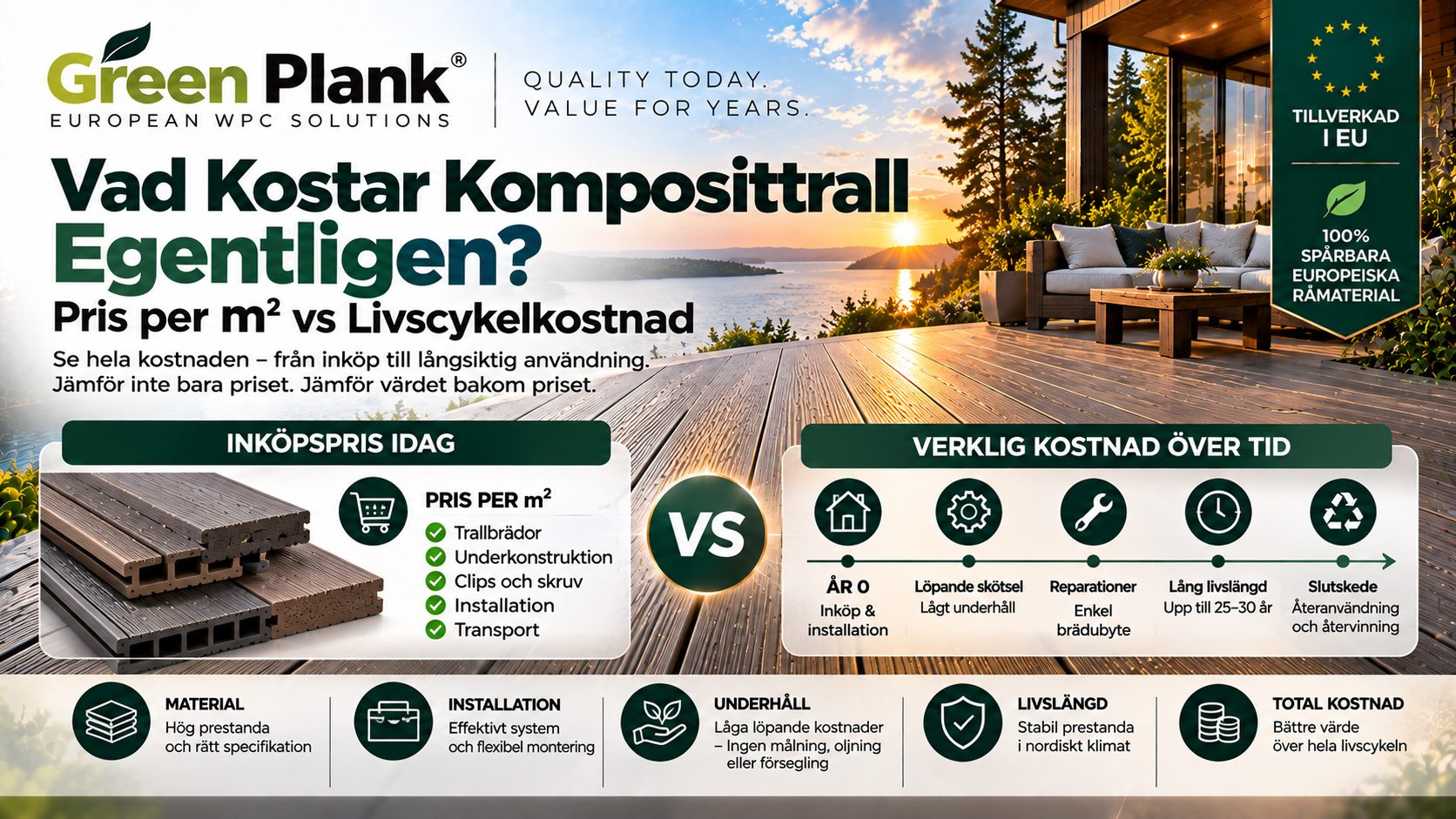
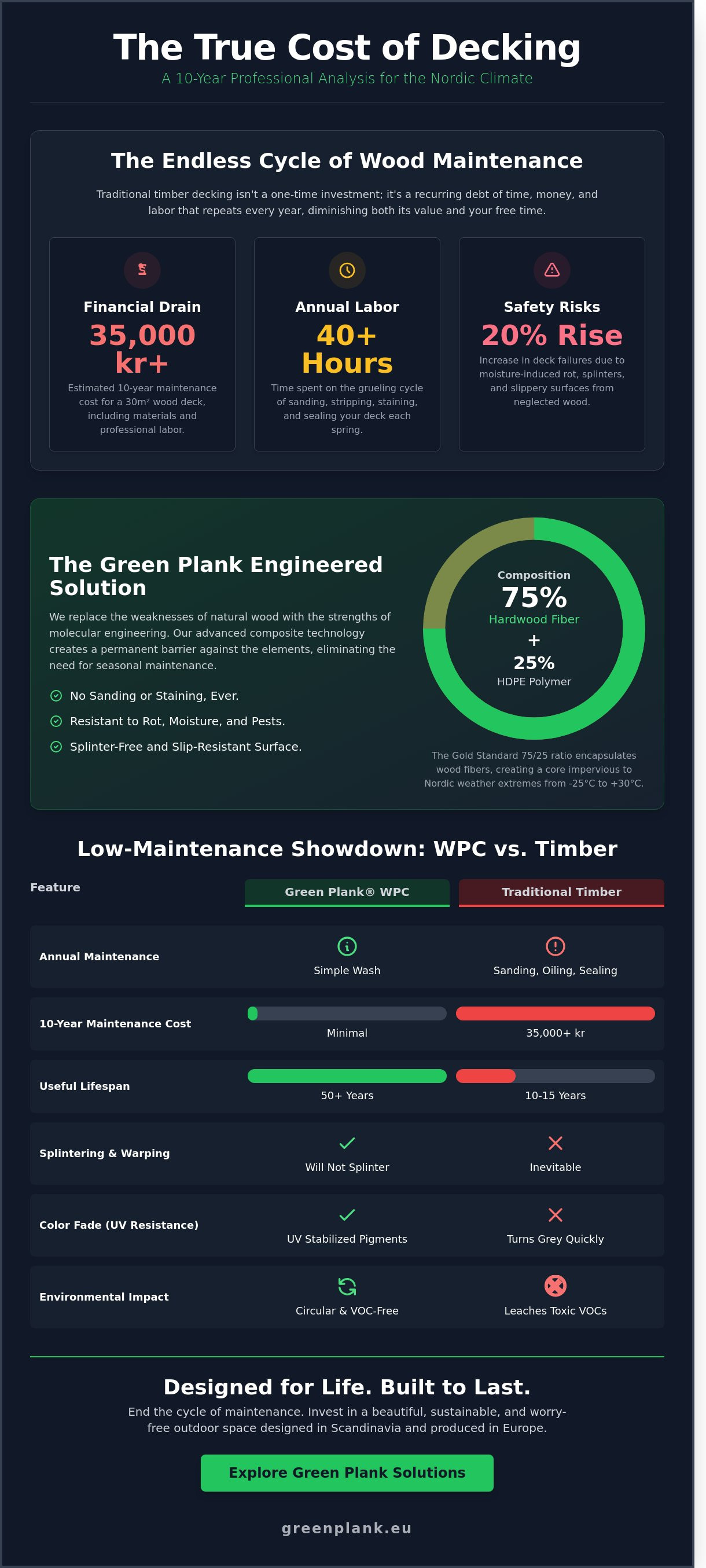
Choosing a deck material is a long-term financial commitment that extends far beyond the initial purchase price. For many homeowners and developers in Sweden, low maintenance decking represents a shift from reactive repairs to proactive engineering. True low maintenance materials are defined by their ability to retain structural integrity and aesthetic appeal through basic cleaning, rather than requiring invasive chemical treatments or structural reinforcements. The hidden financial drain of traditional timber is substantial. In the Swedish market, maintaining a standard 30-square-meter pressure-treated pine deck requires an annual investment in high-quality oils, cleaners, and brushes. Based on 2024 retail prices, these materials cost approximately 2,000 kr per year. When you factor in professional labor rates, which often exceed 600 kr per hour, the 10-year maintenance bill for a wood deck can surpass 35,000 kr. This "maintenance tax" quickly erases any initial savings gained from choosing cheaper softwoods. Safety remains the most critical factor in the shift toward advanced materials. High-maintenance wood often suffers from neglect, leading to internal rot that isn't always visible on the surface. By 2026, the industry has seen a 20% increase in deck failures attributed to moisture-induced decay in traditional timber frames. This risk is driving the rapid adoption of Wood-plastic composite (WPC) in both residential and commercial sectors across Scandinavia. These engineered solutions provide a stable, slip-resistant surface that doesn't splinter or weaken over time.The Annual Maintenance Cycle of Traditional Wood
Traditional softwoods demand a grueling cycle of sanding, stripping, and resealing to combat the harsh Nordic climate. Because timber is naturally porous, it absorbs moisture during the autumn and freezes in the winter, which causes inevitable warping and deep-seated cracks. This physical breakdown occurs regardless of how much oil is applied. Additionally, the environmental cost is high; many oil-based sealants and chemical stains used for upkeep contain Volatile Organic Compounds (VOCs) that leach into the surrounding soil and groundwater during heavy rains.
Why "Maintenance-Free" is a Myth
It's vital to distinguish between "zero maintenance" and "low maintenance." No outdoor surface is entirely self-cleaning. Environmental debris, tree pollen, and urban dust will accumulate on any deck. In the damp European climate, organic matter can lead to surface mold if left undisturbed. Low maintenance decking doesn't eliminate the need for a garden hose and a soft brush; it eliminates the need for power sanders and toxic chemicals. Setting realistic expectations means understanding that a quick rinse twice a year is the only thing standing between you and a pristine outdoor space. Designed in Scandinavia. Produced in Europe.
Engineering Durability: Why Material Composition Dictates Upkeep
True low maintenance decking isn't an accident of design; it's a result of molecular engineering. Traditional timber fails because it's naturally porous. It breathes, absorbs moisture, and eventually rots. Green Plank solves this through a precise blend of 75% hardwood fiber and 25% High-Density Polyethylene (HDPE). This ratio creates a permanent moisture-resistant barrier that shields the core from the inside out. It's a sophisticated solution for the harsh Swedish climate.
Understanding how is WPC made reveals the importance of the extrusion process. Under intense heat and pressure, the HDPE encapsulates every individual wood fiber. This prevents the internal expansion-contraction cycle that causes natural wood to splinter and crack during seasonal shifts. While a standard pine deck might require yearly oiling to prevent warping, our engineered boards remain structurally sound without chemical treatments.
Thermal stability is a core requirement for longevity. High-density engineering ensures the boards maintain their shape even when temperatures fluctuate between -25°C in winter and +30°C in summer. We also incorporate specialized UV stabilizers and high-grade pigments directly into the mix. These additives prevent the dull grey-out effect common in natural wood, ensuring the color you choose today remains vibrant for decades. It's a product designed for life; built to last.
The 75/25 Ratio: The Gold Standard for Stability
Green Plank utilizes a higher hardwood content than many competitors who often rely on 50% or less wood fiber. This specific 75/25 ratio provides superior structural integrity and a natural aesthetic. We use 100% EU-sourced, traceable raw materials to ensure every board meets strict European quality standards. This high density directly affects the feel underfoot. It eliminates the bouncy or hollow sensation often found in cheap, air-filled PVC alternatives, providing a solid, premium experience that mimics the weight and grip of traditional hardwood.
Capped vs. Uncapped Composites
The choice between capped and uncapped profiles depends on the intended use of the space. A capped layer acts as a protective shield, offering an extra level of stain and scratch resistance. This is particularly vital for commercial infrastructure or residential dining areas where spills are frequent. Our Terra Tuff series stands as the benchmark for this extreme durability. It's engineered specifically for high-traffic environments that demand zero-compromise performance. If you're looking for a professional-grade finish that respects the planet, consider our range of sustainable decking solutions for your next project.
Low-Maintenance Showdown: WPC vs. PVC vs. Timber
Selecting the right material determines whether your outdoor space remains a sanctuary or becomes a recurring chore. Traditional pressure-treated timber requires annual sanding and oiling, often costing Swedish homeowners between 2,500 kr and 5,000 kr in materials and labor every two years. In contrast, Wood Plastic Composite (WPC) and PVC offer a true low maintenance decking experience. While PVC is entirely synthetic, high-quality WPC blends recycled wood fibers with polymers to achieve a natural aesthetic without the structural decay of organic wood.
Modern engineering has solved the "plastic look" that once plagued early composites. Current WPC boards use advanced embossing techniques to mimic the deep grain of Scandinavian oak or Siberian larch. These materials don't splinter, rot, or warp. A 50-year warranty serves as more than a marketing promise; it's a technical indicator of material density and UV stability. It signals that the manufacturer has accounted for decades of exposure without significant aesthetic degradation.
The environmental impact is equally distinct. While treated timber relies on chemical preservatives that can leach into the soil, Green Plank WPC utilizes recycled content and traceable raw materials. This approach reduces the CO2 footprint by approximately 30% compared to virgin plastic alternatives over a 20-year lifecycle, supporting a circular economy without sacrificing performance.
Performance in Diverse Climates
Nordic winters present a unique challenge for outdoor materials. Temperature swings from -20°C to +25°C cause significant thermal expansion. Engineered WPC handles these cycles better than PVC, which can become brittle in extreme cold. For coastal properties in the Stockholm archipelago or poolside environments, saltwater resistance is vital. WPC doesn't corrode or degrade when exposed to salt spray. Safety is prioritized through high slip resistance ratings, typically achieving R11 or R12 classifications, ensuring a secure grip even during autumn rains.
The Installation Factor: HidLoc™ and Maintenance
Long-term durability depends on how the boards are secured. The HidLoc™ hidden fastening system eliminates surface screws, which are common entry points for moisture and ice ingress. By securing the boards from the side, the surface remains intact and easy to clean. Proper sub-structure engineering is equally critical. Maintaining a maximum joist spacing of 400mm prevents the sagging often seen in amateur installations. Using the Smart System minimizes human error during the build, ensuring the deck remains level and stable for decades. This precision engineering reduces the likelihood of drainage issues that lead to mold or structural fatigue, protecting your low maintenance decking investment.
Selection Guide: Matching Your Decking to Your Lifestyle
Selecting the right low maintenance decking requires a precise balance between architectural vision and technical requirements. For a private residential balcony in Stockholm, a lightweight hollow profile often suffices. In contrast, high-traffic commercial zones like public piers in Gothenburg demand solid, high-density boards engineered for constant friction and heavy loads. Performance is not universal; it's specific to the environment.
Thermal management is a critical consideration for Swedish summers. Darker tones like charcoal or deep walnut offer a sophisticated aesthetic but retain more heat during peak July sun. Lighter shades such as silver grey or sand stay significantly cooler underfoot. This makes them more suitable for south-facing gardens where children or pets spend time. We prioritize the Cradle to Cradle model, ensuring materials are circular and traceable. This engineering precision ensures your outdoor space respects the environment while delivering professional-grade durability.
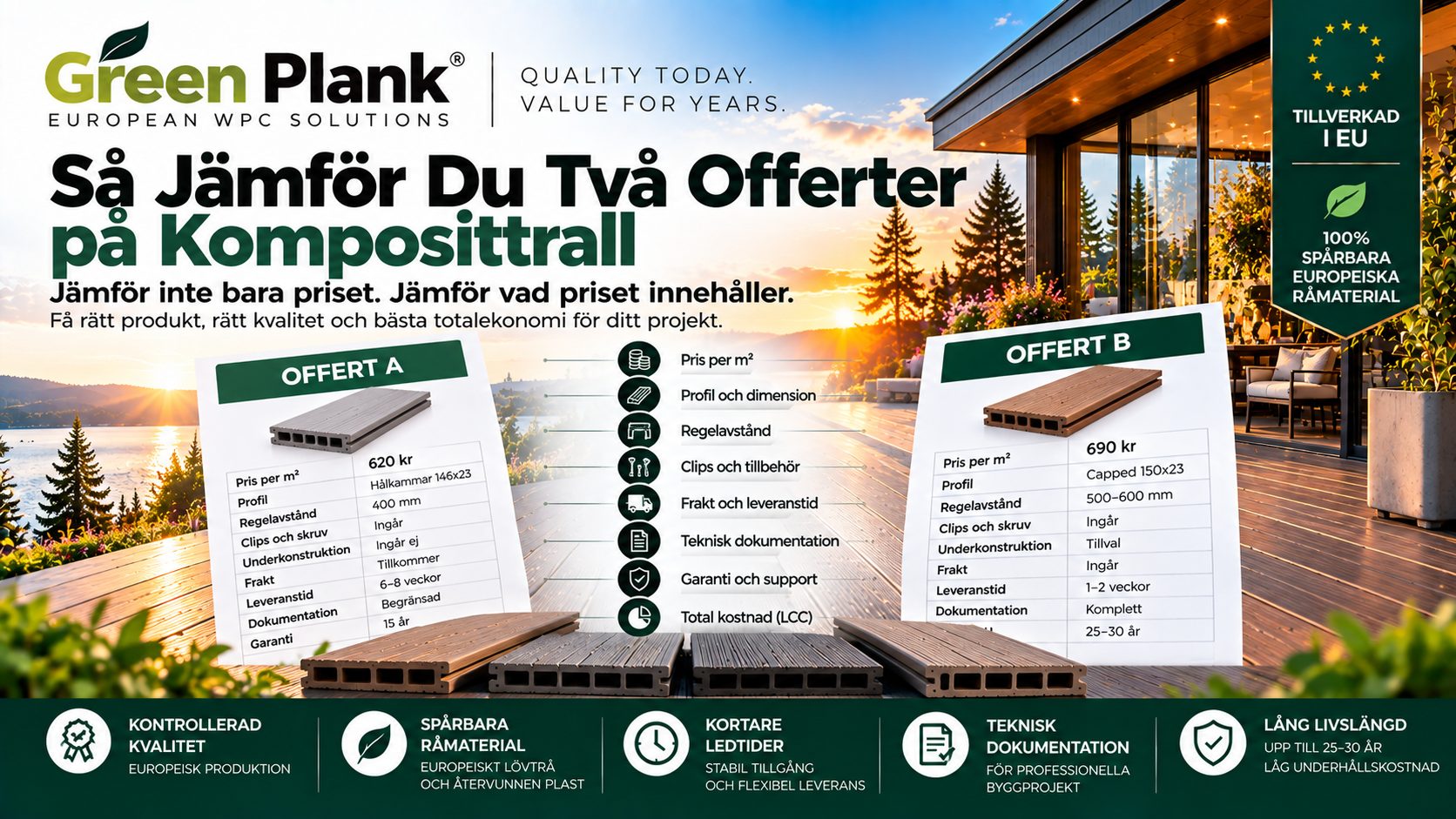
Financial planning should focus on the five-year window rather than the initial purchase. While pressure-treated timber might cost 450 kr per square metre, the hidden costs of annual oiling, sanding, and chemical treatments quickly accumulate. A premium natural-fiber composite might require an upfront investment of 950 kr per square metre, yet it eliminates recurring maintenance expenses. By year five, the total cost of ownership for composite is typically lower than traditional wood. It's a choice between constant labor and long-term value.
The Aesthetic of Low Maintenance
Modern design favors a unified facade. You can match your low maintenance decking with WPC fencing and cladding to create a seamless, high-end look. Our boards feature deep-embossed textures that effectively hide organic debris and dust, maintaining a clean appearance between seasonal washes. For detailed design inspiration, you can refer to our complete guide to WPC. Designed in Scandinavia. Produced in Europe.
Cleaning and Care Best Practices
The "Soap and Water" rule is the gold standard for composite care. A simple deep clean once or twice a year using a soft brush and mild detergent is all that's required to maintain the finish. Avoid using pressure washers on high settings; excessive force can compromise the engineered surface of the boards. In shaded or damp areas, regular sweeping prevents organic growth from taking root. This proactive approach ensures your deck remains a pristine extension of your home. Built to last. Designed for life.
Explore our range of sustainable decking solutions designed for the Nordic climate.
Why Professionals Choose Green Plank for Minimal Upkeep
Professionals specify Green Plank because quality control isn't an afterthought. Our "Designed in Scandinavia, Produced in Europe" ethos ensures every profile meets rigorous EU standards. By manufacturing within Europe using 100% traceable, recycled materials, we help developers significantly reduce a project's carbon footprint. This commitment to a circular economy helps firms meet strict Swedish environmental regulations while delivering a premium aesthetic. It's a logical choice for those who value both performance and planetary health.
Our low-density, high-strength profiles simplify commercial logistics. They're lighter to transport and easier to handle on-site, which reduces labor hours and installation costs. We don't just sell boards; we provide an engineered system. We stand behind this engineering with a 50-year warranty. This isn't just a number. It's a commitment to our brand mantra: Built to last. Designed for life. This level of long-term security makes Green Plank the definitive low maintenance decking solution for 2026 and beyond.
A Legacy of Nordic Reliability
Green Plank has operated as an independent, family-owned innovator since 2004. We've spent over two decades refining natural-fiber composites specifically for the harsh Swedish climate. Our commercial infrastructure profiles are proven in extreme public environments, from high-salinity coastal boardwalks to high-traffic urban plazas. Architects specify our systems for sustainable building projects because they require zero chemical staining or annual sealing. This reliability translates to lower lifecycle costs and predictable maintenance schedules for municipal developers.
The Path to Your New Deck
Transitioning from a rotting timber deck to a high-performance WPC system is a strategic upgrade for any property. While traditional wood often fails within 10 to 15 years in Nordic conditions, our composite systems remain stable and rot-resistant for five decades. You can find a professional partner for supply and installation through the Green Plank network across Sweden. They'll ensure your project meets the highest standards of craftsmanship. It's time to stop the cycle of endless repairs. Invest in the future of your outdoor living space with low maintenance decking that respects your time and the environment.
Invest in a Lifetime of Outdoor Performance
Choosing the right surface isn't just about the first summer on your terrace. It's about how that material performs after a decade of harsh Swedish winters and intense UV exposure. Traditional timber decks often require annual sanding and oiling that can cost homeowners thousands of kr in recurring maintenance expenses and lost weekend hours. By switching to high-performance low maintenance decking, you eliminate these chores and protect your long-term property value. Green Plank products are engineered with 100% EU-sourced raw materials, ensuring a traceable supply chain that meets the highest European environmental standards. Our Cradle to Cradle ownership model means your deck supports a circular economy while providing a professional-grade finish that doesn't splinter, warp, or rot. We back this engineering confidence with a warranty of up to 50 years. It's a commitment to Nordic reliability that turns your outdoor space into a permanent, worry-free sanctuary. You've done the research; now it's time to build for the future.
Explore our range of high-performance, low maintenance decking solutions
Transform your outdoor living space with a solution built for life.
Frequently Asked Questions
Is there such a thing as maintenance-free decking?
No decking material is strictly maintenance-free because environmental debris and organic matter will always accumulate on outdoor surfaces. However, low maintenance decking significantly reduces the labor required by eliminating the need for annual sanding, staining, or sealing. A simple rinse with water and mild soap twice a year maintains the integrity of the surface. This engineered approach saves Swedish homeowners approximately 15 to 20 hours of labor every year compared to traditional pressure-treated pine.
How much more does low maintenance composite decking cost than wood?
The initial investment for low maintenance decking typically ranges from 700 kr to 1,500 kr per square meter, while standard pressure-treated wood costs around 200 kr to 400 kr. While the upfront price is higher, the total cost of ownership levels out after approximately 7 to 9 years. You'll avoid the recurring costs of oils and specialized cleaners which can exceed 3,000 kr every two years for a medium-sized wooden deck.
Does low maintenance decking get hotter than wood in the sun?
Composite materials generally retain more heat than natural timber due to their high density and polymer content. On a 30-degree Celsius day in Stockholm, a dark composite board can reach surface temperatures 10 to 15 percent higher than light-colored wood. We recommend choosing lighter shades like Nordic Grey or Sand if your deck has full southern exposure. Our engineered profiles are designed with air channels to improve thermal dissipation and enhance barefoot comfort.
Can I power wash my low maintenance composite deck?
You can use a power washer on your composite deck if you maintain a safe distance and low pressure. Keep the nozzle at least 30 centimeters from the surface and ensure the pressure stays below 1,500 PSI to avoid damaging the protective cap layer. Use a fan-tip nozzle rather than a narrow jet. Professional installers in Sweden suggest following the grain of the board to ensure a uniform clean without leaving swirl marks.
How do I remove food or grease stains from a composite deck?
Remove food or grease stains immediately using warm water and a grease-cutting detergent like standard dish soap. For stubborn spots, a soft-bristle brush helps lift oils from the textured surface. Most high-performance composites feature a non-porous shield that prevents deep penetration of organic fats. According to industry tests, stains addressed within 24 hours are 98 percent more likely to be completely removed without leaving a permanent shadow.
Will my low maintenance deck fade over time?
All outdoor materials experience some degree of UV exposure, but high-quality composite is engineered to resist significant color loss. Most premium boards undergo a weathering phase during the first 12 to 16 weeks where the color settles into its permanent hue. After this period, the pigments remain stable for decades. Our European-made boards utilize advanced UV inhibitors that limit fading to less than 5 units on the Delta-E scale over 25 years.
Is composite decking really more sustainable than natural timber?
Composite decking is more sustainable than timber when considering the entire product lifecycle and forest preservation. Green Plank products use up to 90 percent recycled materials, including FSC-certified wood fibers and reclaimed polymers. This circular approach prevents deforestation and diverts plastic waste from Swedish landfills. Because the boards last 30 years without chemical treatments, the environmental footprint is significantly lower than wood that requires toxic stains every season.
What is the lifespan of a Green Plank composite deck?
A Green Plank composite deck is engineered for a service life of 20 to 30 years depending on the specific product line. Our professional-grade collections come with comprehensive warranties that reflect this durability. Designed in Scandinavia. Produced in Europe. This longevity ensures that your investment remains structurally sound and aesthetically pleasing long after traditional wooden decks have succumbed to rot or insect damage. Built to last. Designed for life.
Specificera produkten
Använd den här guiden i en Green Plank-specifikation
Tekniska WPC-artiklar ska stärka de kommersiella sidorna — inte konkurrera med dem. Fortsätt till komposittrall, TerraTuff, Nordeka eller de tekniska nedladdningarna.