



Mold is not an inevitable byproduct of outdoor living; it is a technical failure that begins long before the first board is laid. While many homeowners invest in premium surfaces only to be met with unsightly black spots and slippery hazards, the secret to how to prevent mold on composite decking lies in the intersection of material science and precision engineering. You shouldn't have to choose between an eco-conscious lifestyle and a pristine, safe outdoor environment.
We understand the frustration of seeing a high-end investment compromised by organic growth that feels impossible to control. This guide provides a masterclass in professional prevention, moving beyond surface-level cleaning to address the root causes of moisture retention and fungal colonization. You'll learn how to select high-performance materials like our EU-manufactured WPC profiles and implement smart installation techniques that ensure your deck remains a beautiful, low-maintenance sanctuary for decades. We will explore the critical role of sub-deck airflow, the science of moisture-resistant HDPE, and the specific maintenance routines that protect your 50-year warranty.
Key Takeaways
- Identify the organic catalysts of fungal growth to transform your cleaning routine from reactive scrubbing to proactive prevention.
- Learn how to prevent mold on composite decking through the selection of high-density polyethylene (HDPE) blends that shield hardwood fibers from moisture absorption.
- Implement precision installation techniques, such as strategic drainage slopes and sub-frame ventilation, to eliminate the stagnant environments where mold thrives.
- Adopt a sustainable maintenance protocol that utilizes gentle cleaning methods to preserve the structural integrity and aesthetic finish of your outdoor space.
- Understand the engineering standards behind European manufacturing that support long-term performance guarantees and ecological responsibility.
The Biology of Mold: Why It Grows on Composite Surfaces
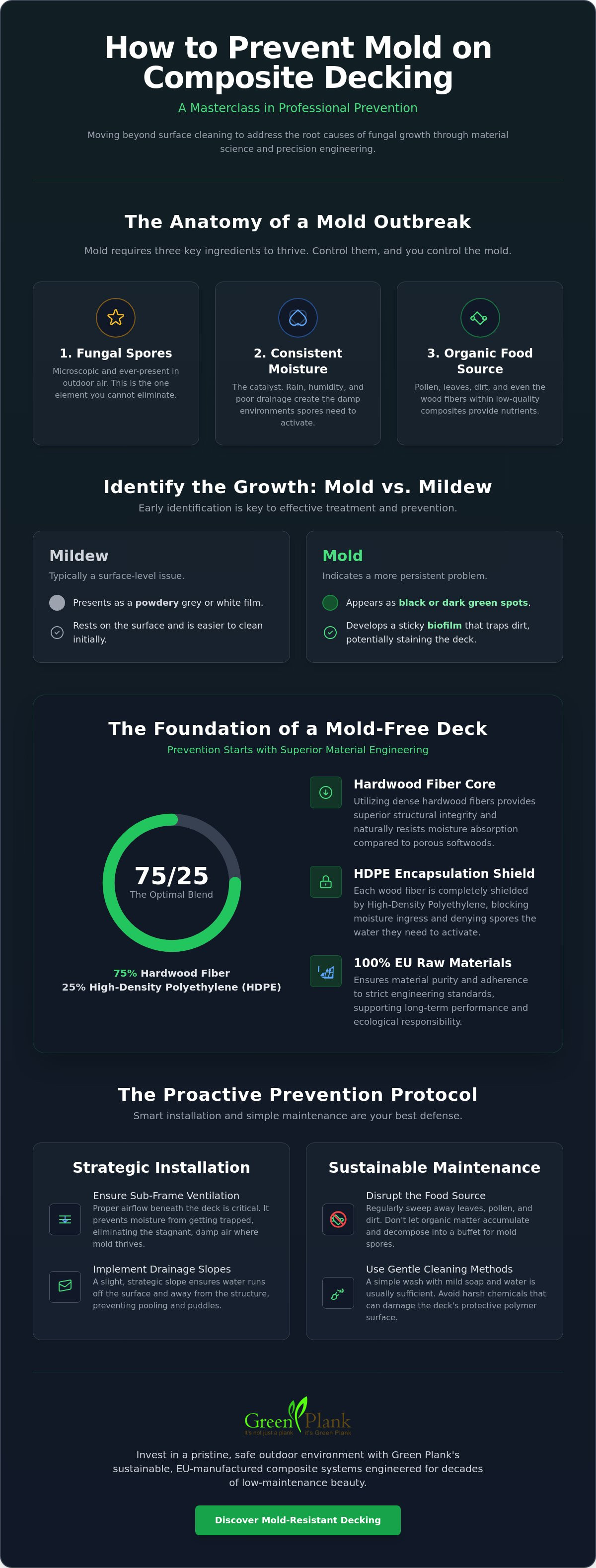
Understanding the biological mechanics of fungal growth is the first step in mastering how to prevent mold on composite decking. Mold is not a spontaneous occurrence; it's a biological response to a specific set of environmental conditions. For mold to thrive, three pillars must exist simultaneously: microscopic spores, consistent moisture, and an organic food source. While we can't eliminate spores from the outdoor air, we can engineer the environment to deny them the moisture and nutrients they need to colonize. Professional deck maintenance isn't about fighting nature; it's about removing the catalysts that allow nature to reclaim your living space.
Many homeowners believe that "low-maintenance" equates to "zero-cleaning." This is a common misconception that often leads to frustration. While Wood-plastic composites (WPCs) are engineered for superior durability compared to traditional timber, they aren't completely immune to their surroundings. Environmental factors like heavy shade from overhanging trees or proximity to lush vegetation create damp micro-climates. These areas remain wet long after a rainstorm, providing the perfect incubation period for fungal spores. It's also vital to distinguish between surface mold and structural decay. On premium composite boards, mold is typically an aesthetic issue restricted to the surface. However, if moisture is allowed to penetrate the core of lower-quality materials, it can lead to safety hazards and structural instability.
Mold vs. Mildew: Identifying the Growth
Recognizing the early signs of growth is essential for maintaining a pristine deck surface. Mildew typically presents as a powdery grey or white film that rests on the surface, while mold appears as persistent black or dark green spots. Over time, these organisms develop a biofilm, which is a sticky, protective layer that traps dirt and atmospheric pollutants. If you leave this unaddressed, the biofilm can integrate into the surface texture. This makes removal more difficult and increases the risk of permanent staining within the polymer matrix.
The Role of Organic Matter in WPC
The organic component of wpc composite decking provides its natural aesthetic, but it also requires mindful hygiene. Pollen, fallen leaves, and wind-blown dirt act as a buffet for mold spores. When these materials accumulate in the gaps between boards or in areas of standing water, they break down into a nutrient-rich sediment. Even the most advanced engineering cannot prevent mold if the surface remains covered in decomposing organic matter. Maintaining surface hygiene is the simplest way to disrupt the food pillar of the growth cycle. It remains a core component of how to prevent mold on composite decking effectively over the long term.
Material Engineering: Choosing Mold-Resistant WPC
The foundation of a mold-free deck is built at the molecular level. While many manufacturers rely on generic wood-plastic blends, a professional engineering approach prioritizes specific material ratios and polymer purity. The secret to how to prevent mold on composite decking lies in the 75/25 formulation. This precise blend of 75% hardwood fiber and 25% high-density polyethylene (HDPE) creates a product that is both structurally superior and biologically resistant. By utilizing 100% EU raw materials, we ensure the material purity necessary to prevent internal contamination and maintain long-term performance standards.
The primary defense mechanism in high-quality WPC is the encapsulation of organic fibers. HDPE acts as a high-performance shield, surrounding each individual wood fiber to block moisture ingress. Without moisture, fungal spores cannot activate. Research into Fungal Attack Patterns in Composites demonstrates that the specific density and type of wood fiber used significantly impact a board's vulnerability. Lower-quality composites often use softwoods or recycled paper waste, which are highly porous and prone to moisture "wicking." Our engineering focus on hardwood fibers ensures a denser, more resilient core that naturally resists the environmental pressures of damp climates.
Hardwood Fiber vs. Softwood in Composites
Hardwood fibers offer a distinct structural advantage due to their high density and lower sugar content compared to softwoods. This high density reduces the rate of moisture absorption, effectively starving mold of the hydration it requires. Green Plank engineering further enhances this resistance by minimizing the wicking effect, where water is drawn deep into the board's core through capillary action. For commercial applications and high-end residential projects, this material choice ensures a deck that remains stable, safe, and aesthetically pristine even in challenging environments.
The Importance of Low-Density, High-Performance Polymers
Modern sustainable building materials must balance durability with ecological responsibility. We utilize low-density HDPE to create a non-porous surface shield that prevents organic sediment from taking root. This polymer selection doesn't just protect against mold; it ensures the deck's finish remains vibrant for decades. By focusing on material purity and circular construction principles, we provide a product that is 100% recyclable at the end of its long service life. If you're planning a project that requires this level of engineering precision, you can view our range of EU-manufactured decking profiles to find the right fit for your space.
Preventing Mold Through Strategic Installation and Airflow
The most advanced material engineering remains vulnerable if the installation environment promotes moisture stagnation. Precision in the assembly phase is the invisible architecture of longevity. When considering how to prevent mold on composite decking, professionals look beyond the surface to the substructure. A deck is a living system that requires constant respiration. If air cannot move and water cannot escape, mold will eventually find a foothold regardless of the board's quality. Strategic installation ensures that environmental moisture is managed through physics rather than chemistry.
Effective drainage begins with a calculated slope. Every professional installation should incorporate a 1-2% gradient away from the primary structure. This subtle pitch prevents water from pooling on the surface and directs runoff toward the perimeter. Consistent board spacing is equally vital; it creates the necessary channels for water to pass through to the ground below. To protect the timber substructure, we recommend the use of joist tape. This protective barrier seals the top of the joists against moisture, preventing the damp conditions that lead to underside mold and structural rot.
HidLoc™ Fastening: Engineering for Airflow
The HidLoc™ Hidden Fastening System is a primary tool for achieving optimal airflow. Unlike traditional face-screwing methods that can create small craters where water and organic debris collect, HidLoc™ clips ensure uniform expansion gaps between every board. These consistent 5mm channels facilitate vertical ventilation and rapid drying. This system provides a clean, fastener-free aesthetic while simultaneously removing the physical traps where fungal colonies typically begin. It is a functional design choice that prioritizes both beauty and biological resistance.
Substructure Management and Ground Clearance
Adequate ground clearance is the foundation of sub-frame ventilation. We recommend a minimum height of 300mm between the ground and the bottom of the joists to allow for effective cross-ventilation. If the deck is built too low, rising damp from the soil creates a humid micro-climate that feeds mold on the underside of the boards. Managing the ground surface with a weed barrier and a layer of gravel can further reduce moisture evaporation. For a technical deep dive into these requirements, our deck installation guide provides the engineering specifications necessary for a successful, mold-resistant build. Proper clearance isn't just a suggestion; it's a requirement for ensuring the long-term health of your outdoor space.
The Proactive Maintenance Protocol for a Mold-Free Deck
Maintenance is the final pillar of engineering a long-lasting outdoor space. While superior material selection and precision installation create the foundation, a consistent protocol ensures the surface remains pristine for decades. A bi-annual "Sweep and Spray" routine is the most effective way to remove the organic sediment that feeds fungal spores. This process should be prioritized during the transitions into autumn and winter. As leaves fall and dampness increases, the risk of organic accumulation rises. Removing these materials before they decompose into a nutrient-rich biofilm is essential for how to prevent mold on composite decking effectively.
Professional care requires the right tools and a gentle touch. We strongly advise against the use of high-pressure washers. While some sources suggest them for deep cleaning, the extreme force can damage the composite fibers and compromise the protective polymer shield. This mechanical stress creates microscopic fissures where moisture can penetrate, eventually leading to the very mold issues you're trying to avoid. Instead, rely on low-pressure garden hoses and soft-bristled brushes to maintain surface integrity without risking structural damage.
Safe Cleaning Agents for WPC
Choosing the correct chemical agent is a matter of material science. Harsh, bleach-based cleaners are caustic and can discolor your deck while drying out the composite matrix. We recommend using pH-neutral soaps or specialized cleaners designed specifically for WPC. These agents break down surface tension and lift dirt without aggressive chemical reactions. For localized spots, immediate treatment prevents the formation of larger colonies. Apply the cleaner, let it sit for a few minutes, and use a soft brush to agitate the area before rinsing thoroughly. This method preserves the factory finish while ensuring a hygienic surface.
Managing External Factors
Environmental management extends beyond the boards themselves. Trimming overhanging branches increases sunlight exposure, which helps the deck surface dry faster after rain. You should also inspect gutters and downpipes to ensure they don't discharge water directly onto the decking. Moisture traps are another common culprit. Outdoor rugs and heavy furniture can hold water against the surface for extended periods, creating stagnant zones where mold thrives. Periodically moving these items allows the boards to breathe and ensures uniform drying across the entire space. If you're looking for a surface that stands up to these environmental pressures, you can explore our high-performance composite decking collections designed for regional reliability.
Long-Term Protection with Green Plank’s Sustainable Systems
The final component of a mold-free outdoor environment is the assurance of material longevity. While maintenance and installation are critical, they cannot compensate for a product that lacks internal integrity. Our commitment to the Cradle to Cradle Ownership model ensures that every profile is manufactured with a focus on circularity and material health. By prioritizing a 75/25 hardwood-to-polymer ratio, we provide a foundation that naturally resists biological colonization. This engineering confidence is backed by specific performance guarantees, including warranties of up to 50 years on our premium lines. This comprehensive approach to engineering is the definitive answer to how to prevent mold on composite decking over a fifty-year lifespan.
Investing in professional-grade WPC is a decision that balances aesthetic aspiration with rational economics. Systems like Terra Tuff and our Smart System are engineered to withstand high-traffic commercial environments and the most demanding residential applications. These profiles utilize a dense hardwood fiber matrix encapsulated in high-performance HDPE, effectively creating a surface that excludes the moisture mold requires to activate. When you choose a Green Plank system, you aren't just buying boards; you're investing in a technical solution that outlasts traditional timber by decades while respecting the natural world.
Terra Tuff: Engineering for Maximum Resistance
The Terra Tuff line is specifically designed for environments where moisture is a constant factor, such as coastal regions or poolside installations. Its high-density core and non-porous surface shield provide a primary defense against the organic accumulation that leads to fungal growth. When comparing sustainable decking alternatives in the European market, professionals prioritize our profiles for their regional reliability and superior material purity. This makes Terra Tuff the preferred choice for architects and contractors who require a deck that maintains its structural and visual integrity under heavy environmental pressure.
Sustainability as a Performance Metric
We view sustainability not just as an ethical stance, but as a critical performance metric. Reducing our CO2 footprint through localized manufacturing and 100% EU raw materials directly correlates with the durability of the final product. By maintaining strict control over the supply chain, we eliminate the contaminants and low-quality fillers often found in imported composites. This purity ensures that the 75/25 hardwood-to-polymer ratio remains consistent throughout the board, providing uniform protection against moisture ingress. Choosing a sustainable system means choosing a deck that requires fewer chemical interventions and less frequent replacement, fulfilling our promise of high-end quality with grounded responsibility. It is a long-term strategy for how to prevent mold on composite decking that prioritizes both the homeowner and the planet.
Securing Your Outdoor Legacy with Precision Engineering
Creating a pristine deck is a deliberate choice that begins with material science and ends with a commitment to quality. By prioritizing a 75% hardwood fiber blend for superior density and ensuring precision airflow through hidden fastening systems, you have mastered the technical foundation of how to prevent mold on composite decking. These proactive steps transform your outdoor space from a high-maintenance burden into a long-lasting architectural asset that remains beautiful for generations.
Our Cradle to Cradle ownership model ensures that every profile we manufacture meets the highest standards of ecological responsibility and engineering performance. We stand behind our premium lines with up to 50-year warranties; this gives you the confidence to invest in a space that respects nature while providing a high-end, aspirational lifestyle. It's time to move beyond temporary fixes and embrace a professional-grade solution that truly outlasts the elements.
Explore Green Plank's Mold-Resistant Decking Solutions to discover how European engineering can redefine your outdoor living experience. Your journey toward a permanent, beautiful, and sustainable retreat starts with a single, quality-obsessed decision.
Frequently Asked Questions
Can mold actually damage the structure of my composite deck?
Mold primarily affects the aesthetic surface of premium boards rather than their structural core. High-density HDPE encapsulation prevents the fungal spores from reaching the internal wood fibers. However, in low-quality materials, persistent moisture can lead to structural decay over time. Our engineering standards ensure that our WPC profiles maintain their integrity for decades, provided you follow the professional guidelines on how to prevent mold on composite decking.
Is bleach safe to use on Green Plank composite decking?
Chlorine bleach is not recommended for Green Plank composite decking because it is a caustic agent that can damage the polymer matrix. It dries out the material and can lead to permanent discoloration or pitting of the surface. Instead, we advise using pH-neutral soaps or specialized composite cleaners. These gentle agents lift organic sediment without compromising the long-term performance or the environmental integrity of the boards.
Does capped composite decking still get moldy?
Capped composite decking is highly resistant to internal rot, but surface mold can still occur. Mold doesn't feed on the plastic cap itself; it feeds on the organic debris, such as pollen and dirt, that accumulates on top of it. Regular surface hygiene remains the most effective method for how to prevent mold on composite decking, even when using our most advanced capped profiles like the Terra Tuff line.
How often should I clean my deck to prevent mold growth?
A bi-annual cleaning schedule is the professional engineering standard for maintaining a mold-free environment. You should perform a thorough sweep and spray routine in early spring to remove winter sediment and again in late autumn to clear fallen leaves. This frequency disrupts the biological growth cycle before spores can colonize. Consistent maintenance ensures your deck remains a safe, pristine extension of your home throughout the year.
Why are there black spots on my deck even though I clean it?
Black spots often indicate that microscopic organic matter is trapped within the surface texture of the boards. Even if the deck looks clean, pollen or wind-blown dirt can provide enough nutrients for fungal spores to activate during damp weather. These spots are colonies of mold that require targeted treatment with a soft brush and pH-neutral cleaner. Addressing these early prevents the biofilm from hardening and causing permanent surface staining.
Can I use a pressure washer to remove mold from WPC?
You should avoid using a pressure washer on WPC surfaces because the extreme force can permanently damage the composite fibers. High pressure often creates microscopic fissures in the polymer shield, which then become entry points for moisture and spores. This mechanical damage actually makes the deck more susceptible to future mold growth. A standard garden hose combined with a soft-bristled brush is the safer, more effective professional choice.
Does the color of the deck affect how much mold grows?
The color of your deck does not influence the biological rate of mold growth, but it does affect visibility. Lighter tones may show dark mold spots more clearly, while darker earthy tones can mask early colonization. Regardless of the aesthetic choice, the engineering requirements for airflow and drainage remain the same. Choosing a color should be based on your lifestyle preferences, as our material density provides uniform protection across all collections.
How do I fix a deck that already has a significant mold problem?
Fixing an existing mold problem requires a systematic approach using specialized, non-bleach cleaners and mechanical agitation. Apply a pH-neutral composite cleaner to the affected area and allow it to sit for several minutes to break down the biofilm. Use a soft-bristled brush to gently scrub the spots before rinsing with a low-pressure hose. If the mold is persistent, you may need to repeat the process to ensure all organic sediment is removed.
Specificera produkten
Använd den här guiden i en Green Plank-specifikation
Tekniska WPC-artiklar ska stärka de kommersiella sidorna — inte konkurrera med dem. Fortsätt till komposittrall, TerraTuff, Nordeka eller de tekniska nedladdningarna.