



The lower initial price of a PVC panel might seem like a win for your budget, but this choice often compromises the very durability you're paying for. You've likely felt the frustration of sorting through conflicting technical claims while worrying about how a material will handle the intense thermal shifts of a European winter. We understand that for professionals and homeowners alike, a beautiful outdoor space is an investment in both lifestyle and the planet. This guide clarifies the technical reality of Hdpe wpc products vs pvc based wpc products to help you select a material that offers both engineering precision and ecological responsibility.
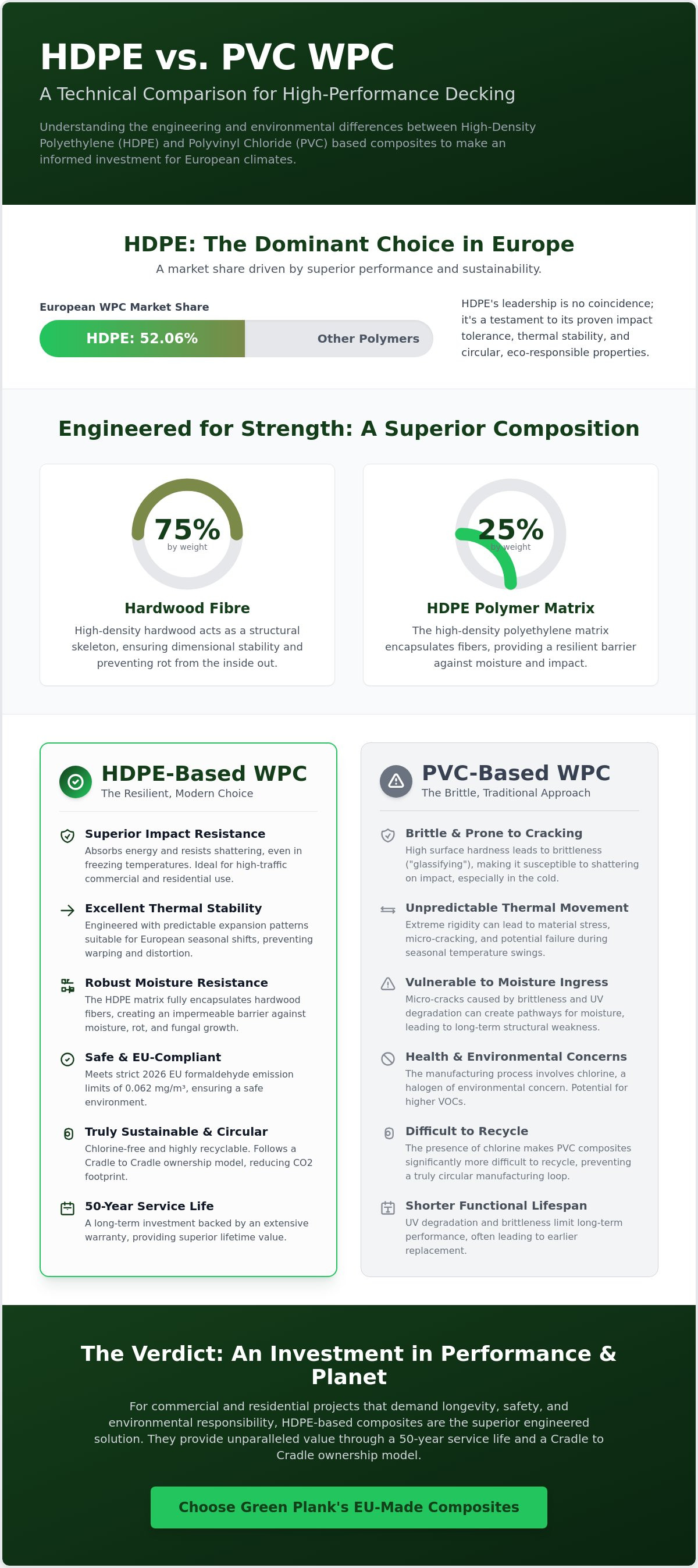
You'll learn why HDPE's 52.06% market dominance in Europe isn't a coincidence, but a result of its superior impact tolerance and circularity. We'll examine how HDPE-based composites meet the strict 2026 EU formaldehyde emission limits of 0.062 mg/m³ while providing the thermal stability needed to prevent warping. From understanding the 50-year service life of our EU-manufactured profiles to verifying the Cradle to Cradle ownership model, you'll gain the clarity needed to choose a high-performing solution that respects nature.
Key Takeaways
- Understand how the polymer matrix dictates moisture resistance and long-term structural integrity in varied climates.
- Compare the technical performance of Hdpe wpc products vs pvc based wpc products to see why impact resistance often outweighs surface hardness for outdoor longevity.
- Learn to manage thermal expansion by selecting materials with predictable movement patterns suitable for European seasonal shifts.
- Evaluate the environmental impact of chlorine-heavy PVC against the circular, recyclable nature of HDPE composites to meet 2026 sustainability standards.
- Identify why a 50-year service life and Cradle to Cradle ownership provide superior value for high-traffic commercial infrastructure and premium residential decking.
Table of Contents
- WPC Composition: Understanding the HDPE vs. PVC Matrix
- Physical Properties: Durability, Density, and Structural Integrity
- Thermal Expansion and Climate Resilience in European Environments
- Sustainability Benchmarks: Recyclability and the CO2 Footprint
- Selecting the Superior WPC for Commercial and Residential Projects
WPC Composition: Understanding the HDPE vs. PVC Matrix
A Wood-Plastic Composite (WPC) is a sophisticated hybrid material that bridges the gap between nature and engineering. By merging organic bio-fibres with synthetic polymers, manufacturers create a product that captures the aesthetic of timber while offering the resilience of plastic. The polymer matrix serves as the structural foundation of this material. It binds the wood fibres together and provides a critical barrier against moisture. When professionals compare Hdpe wpc products vs pvc based wpc products, they're essentially evaluating the long-term integrity of this binding matrix. The ratio of wood to plastic dictates the final performance. Our specific formulation of 75% hardwood fiber and 25% HDPE provides a balance of natural texture and technical endurance.
PVC-Based WPC: The Traditional Rigid Approach
Polyvinyl Chloride (PVC) was one of the first polymers used in the composite industry. Its primary appeal lies in its high initial surface hardness, which gives the material a dense, rigid feel. Historically, this made PVC-WPC a popular choice for fencing and indoor wall panels. However, the use of a chlorinated plastic in outdoor construction presents distinct disadvantages. While some competitors claim PVC is the superior matrix, this ignores the material's tendency to become brittle under UV exposure and cold European winters. This brittleness can lead to micro-cracking over time. Additionally, the presence of chlorine makes PVC significantly more difficult to recycle, often preventing it from entering a truly circular manufacturing loop.
HDPE-Based WPC: The Resilient Modern Alternative
High-Density Polyethylene (HDPE) has become the preferred choice for modern, sustainable construction. Classified as a polyolefin, HDPE provides a level of impact resistance that rigid PVC can't match. It doesn't shatter under stress. Instead, it absorbs energy, making it ideal for high-traffic commercial infrastructure and private decking. Our engineering process utilizes high-density variants to ensure structural integrity across a 50-year warranty period. At a molecular level, the HDPE matrix encapsulates the hardwood fibres to prevent water absorption from the inside out. This interaction creates a low-density, high-performance profile that remains stable even as temperatures shift. By sourcing 100% EU raw materials, we ensure every board supports a reduced CO2 footprint and follows a Cradle to Cradle ownership model.
Physical Properties: Durability, Density, and Structural Integrity
When evaluating the technical merits of Hdpe wpc products vs pvc based wpc products, surface hardness is often the first metric discussed. PVC-WPC typically registers a higher Brinell hardness rating. This measures a material's resistance to permanent indentation. While a harder surface sounds beneficial, extreme rigidity in outdoor construction is a double-edged sword. A material that's too hard lacks the ability to absorb energy. In the demanding climates of Europe, where temperatures can swing from scorching summers to freezing winters, this rigidity often leads to brittle failure. HDPE-based profiles offer a more balanced physical profile. They provide sufficient surface integrity for high-traffic use while maintaining the internal flexibility required to resist cracking under pressure.
The Hardwood Fibre Advantage
The strength of a composite isn't just determined by the plastic; it's defined by the reinforcement. Many competitors utilize softwood sawdust or rice husks as fillers because they're inexpensive and easy to process. We've chosen a different path. Our profiles consist of 75% hardwood fibre. Hardwood fibres possess a higher aspect ratio and greater natural density than softwood alternatives. They act as a structural skeletal system within the HDPE matrix. This high fibre-to-plastic ratio ensures the board remains dimensionally stable. It also significantly reduces moisture absorption. Because hardwood is less porous than softwood, the internal core of the board remains protected against the rot and fungal growth that often plagues lower-quality composites.
Impact Resistance and Surface Integrity
Impact resistance is where the difference between these two materials becomes undeniable. Standard testing procedures, such as drop-impact and point-loading tests, reveal how these materials behave under sudden stress. PVC-WPC has a tendency to shatter or "glassify" when struck in cold temperatures. It doesn't bend; it breaks. HDPE has an inherent "material memory." It absorbs the energy of an impact and distributes it through the polymer chains. This resilience is why HDPE is the engineering choice for commercial infrastructure profiles that must withstand heavy public use without splintering.
Choosing a material with 100% EU raw materials also ensures a predictable performance standard. Research published in MDPI regarding Greenhouse Gas Emissions from WPC confirms that high-density composites using recycled polymers offer a more sustainable life cycle than traditional PVC. This engineering confidence is why we provide a long service life and warranties up to 50 years. We don't just sell a product; we provide a high-performing, maintenance-free solution that respects the environment while delivering uncompromising durability for your project.
Thermal Expansion and Climate Resilience in European Environments
Thermal energy forces every building material to expand and contract. In the technical comparison of Hdpe wpc products vs pvc based wpc products, the Coefficient of Linear Thermal Expansion (CLTE) is a vital metric for European architects. While PVC is often marketed as having lower expansion rates, it lacks the elasticity required to survive repeated freeze-thaw cycles without becoming brittle. HDPE-based composites accommodate these micro-movements through superior molecular flexibility. This prevents the internal shearing that often occurs when moisture trapped in wood fibres freezes. A Comparative study on WPC degradation confirms that HDPE maintains better structural integrity when exposed to harsh environmental conditions like acid rain and fluctuating temperatures.
Proper installation is the second half of the resilience equation. We've designed our HidLoc™ hidden fastening systems to work in harmony with these physics. These fasteners provide the necessary clearance for longitudinal movement while keeping the boards perfectly aligned. By allowing the material to breathe, we eliminate the structural tension that leads to warping in inferior installations. This creates a stable, maintenance-free surface that performs reliably from the Mediterranean coast to the Nordic interior.
Managing Movement in Extreme Temperatures
Precision gapping is essential for any composite project. Our Terra Tuff decking is specifically engineered with a high hardwood-to-polymer ratio to minimize expansion. Darker profiles naturally absorb more thermal energy, which can increase surface temperature and expansion rates. We compensate for this by using high-density polymers that resist softening. This ensures the deck remains structurally sound and comfortable underfoot even during the peak of a continental summer.
UV Resistance and Colour Longevity
Sunlight is a destructive force for many plastics. PVC-WPC is particularly prone to "chalking," a process where UV radiation breaks down the polymer chains and leaves a dusty, faded residue on the surface. We prevent this degradation by integrating professional-grade UV inhibitors into our HDPE matrix. Because we use 100% EU raw materials, we maintain strict control over the chemical purity of these additives. This level of engineering precision ensures that our boards retain their rich, natural aesthetic for decades without the need for staining or painting.
Sustainability Benchmarks: Recyclability and the CO2 Footprint
The environmental impact of building materials is no longer a secondary concern. It is a core engineering requirement. When we analyze Hdpe wpc products vs pvc based wpc products, the difference in ecological responsibility is stark. PVC contains chlorine, a substance that releases toxic dioxins during both manufacturing and accidental combustion. This chemical profile makes PVC-based composites significantly harder to recycle. In contrast, HDPE is a clean polyolefin. It remains a high-value circular material throughout its life. This distinction is central to our 2026 Guide to Circular Construction, which prioritizes materials that can return to the production cycle without loss of quality.
We operate on a "Cradle to Cradle" ownership model. This means we take responsibility for the entire lifecycle of our products. By using 100% EU-sourced raw materials, we eliminate the massive carbon cost associated with long-distance shipping from Asia. Every board we produce helps reduce the global CO2 footprint. Our commitment to regional manufacturing ensures that professional standards and environmental ethics are never compromised for the sake of lower production costs.
Recyclability and End-of-Life Disposal
Most municipal recycling centers reject PVC-based composites. The chlorine content contaminates other plastic streams, often resulting in these materials being sent to landfills or incinerators. HDPE-WPC avoids this dead end. Our boards are fully recyclable. We can regrind used decking or cladding into new profiles for commercial infrastructure. This closed-loop manufacturing system ensures that no material is wasted. It transforms post-consumer waste into high-end, durable building solutions that last for generations.
Sourcing and Manufacturing Ethics
The origin of raw materials is a critical factor in sustainability. Importing WPC from overseas involves a high carbon price. We source 100% of our wood and polymers within Europe to keep our supply chain short and transparent. Our formula uses 75% hardwood fiber, which serves as the "sweet spot" for carbon sequestration. Trees absorb CO2 as they grow; by locking that carbon into a 50-year warranty product, we prevent it from returning to the atmosphere. We utilize renewable energy in our WPC manufacturing process to further minimize environmental impact.
Building for the future requires a partner committed to ethical innovation. Explore our full range of sustainable WPC decking and cladding to see how we combine engineering precision with environmental stewardship.
Selecting the Superior WPC for Commercial and Residential Projects
Choosing the correct material for a large-scale installation requires more than a surface-level comparison. When evaluating Hdpe wpc products vs pvc based wpc products, the decision ultimately rests on the environment and the required performance lifespan. High-traffic commercial infrastructure demands a material that can survive heavy point-loading and constant public use. HDPE-based composites provide the impact resistance necessary for these environments. While PVC may offer initial surface hardness, it lacks the internal elasticity needed to prevent brittle failure under stress. Our profiles deliver a safe, stable surface that captures the natural warmth of timber without the risk of structural rot or splintering.
Aesthetics and maintenance are equally critical for the modern designer. HDPE surfaces remain stable and easy to clean. They do not require the specialized chemical cleaners often needed to prevent the "chalking" effect common in aged PVC. A simple wash with water and mild soap is usually sufficient to maintain the professional appearance of the boards. This low-maintenance reality ensures that the project looks as pristine in year twenty as it did on day one. It allows property owners to focus on enjoying their outdoor spaces rather than maintaining them.
Commercial vs. Residential Applications
Public piers and boardwalks prioritize durability above all else. HDPE's ability to absorb energy without cracking makes it the standard for European infrastructure projects. In residential settings, the focus shifts toward barefoot safety and comfort. Because HDPE does not become brittle, it remains splinter-free for its entire service life. This safety benefit is vital for families with children and pets. When you calculate the long-term ROI over 25 to 50 years, the reduced maintenance and repair costs of HDPE make it the clear financial winner. It represents a one-time investment in quality that respects both the budget and the environment.
Green Plank's HDPE Solutions
We provide a range of engineered profiles designed for specific technical requirements. Our Terra Tuff and Smart System WPC product lines are the result of decades of sustainable innovation. We also manufacture specialized infrastructure profiles for heavy-duty projects that require extreme load-bearing capabilities. Every board is made in the EU using 100% EU raw materials. This ensures that every project supports regional manufacturing standards and ethical sourcing practices.
The final verdict for 2026 is definitive. HDPE-based composites provide the resilience, sustainability, and climate endurance required for the next generation of European building. They are the responsible choice for professionals who refuse to compromise on quality. Contact us today for a professional project consultation or to request a sample of our high-performance material to experience our engineering precision firsthand.
Building for the Next Generation of European Infrastructure
Selecting the right composite material is a decision that defines the longevity and environmental impact of your project for decades. The technical reality of Hdpe wpc products vs pvc based wpc products is clear. While PVC offers surface rigidity, HDPE provides the essential impact resistance and thermal stability required to thrive in Europe's shifting climates. Choosing HDPE means prioritizing a circular economy. It avoids the recycling hurdles of chlorinated plastics and embraces a material designed for a closed-loop lifecycle.
Our commitment to engineering precision is backed by 100% EU-sourced raw materials and a long service life supported by an industry-leading 50-year warranty. By utilizing Cradle to Cradle certified materials, we ensure your outdoor space respects nature while delivering high-end, maintenance-free performance. You don't have to choose between aesthetics and ethics. You can have both. Take the first step toward a more resilient and responsible build today.
Request a Sustainable WPC Sample Pack from Green Plank to experience the quality of our professional-grade composites firsthand. Build with the confidence that your investment is protected by the highest standards of European manufacturing.
Frequently Asked Questions
Is HDPE-based WPC more expensive than PVC-based WPC?
PVC-based wall panels are generally 20-30% cheaper to purchase upfront than WPC panels in 2026. However, this initial saving often masks higher long-term costs. HDPE-based composites provide a 50-year service life and superior durability in high-traffic areas. When analyzing Hdpe wpc products vs pvc based wpc products, the lower maintenance requirements and extended warranty of HDPE offer better value over the lifespan of your project.
Can PVC-based WPC be recycled at the end of its life?
Recyclability for PVC-based composite materials is extremely limited due to the presence of chlorine. Most municipal centers reject these products because they contaminate the plastic stream. HDPE is a clean polyolefin that allows for full circularity. We utilize a Cradle to Cradle ownership model where used boards can be reground into new infrastructure profiles. This ensures your choice supports a truly closed-loop manufacturing system.
Which material is better for a deck in a cold climate like Sweden?
HDPE is the engineering choice for Nordic climates like Sweden due to its superior impact resistance in sub-zero temperatures. PVC becomes brittle when frozen, which can lead to shattering or cracking under stress. HDPE maintains its material memory and molecular flexibility throughout the freeze-thaw cycle. This resilience ensures your deck remains structurally sound and safe despite the intense seasonal shifts of Northern Europe.
Does HDPE WPC scratch more easily than PVC-based products?
PVC-based products often have a higher surface hardness rating, making them more resistant to minor abrasions. However, this hardness comes at the cost of being prone to brittle failure. HDPE-based composites use high-density polymers that absorb energy from heavy impacts rather than shattering. While some surface marking may occur, the material doesn't splinter or compromise its structural integrity. This makes it safer for public boardwalks and busy family homes.
Is there a difference in fire ratings between HDPE and PVC composites?
PVC naturally offers higher fire resistance because of its chlorine content, which acts as a flame retardant. HDPE requires the addition of specialized, eco-conscious inhibitors to achieve comparable fire ratings. We engineer our profiles to meet strict safety standards without compromising our commitment to sustainability. Always verify the specific fire classification on the technical data sheet to ensure the material meets the local building codes for your project.
How do I know if the WPC I am buying is HDPE or PVC?
Checking the technical data sheet (TDS) is the most reliable way to identify the polymer matrix. Look for the material composition section, which will list either High-Density Polyethylene or Polyvinyl Chloride. You can also feel the difference in weight and density. HDPE-based profiles often have a more natural, wood-like texture and a balanced density that feels substantial without being overly rigid like traditional PVC.
Why does Green Plank use 75% hardwood fibre in its HDPE products?
We use a 75% hardwood fiber ratio to provide a structural skeletal system that softwood or rice husks cannot match. Hardwood fibers are less porous and more dense, which significantly reduces moisture absorption. This "sweet spot" ensures maximum dimensional stability and carbon sequestration. By locking carbon into a 50-year warranty product, we help reduce the global CO2 footprint while delivering a premium, maintenance-free finish.
Can I use hidden fasteners with both types of composite?
Hidden fasteners can be used with both materials, but the installation requirements differ. HDPE requires a system like our HidLoc™ hidden fasteners to manage the longitudinal movement caused by thermal expansion. These fasteners allow the boards to breathe and shift slightly without creating structural tension. When comparing Hdpe wpc products vs pvc based wpc products, the ability to manage this movement effectively is what prevents warping and keeps the deck perfectly aligned.
Specificera produkten
Använd den här guiden i en Green Plank-specifikation
Tekniska WPC-artiklar ska stärka de kommersiella sidorna — inte konkurrera med dem. Fortsätt till komposittrall, TerraTuff, Nordeka eller de tekniska nedladdningarna.