



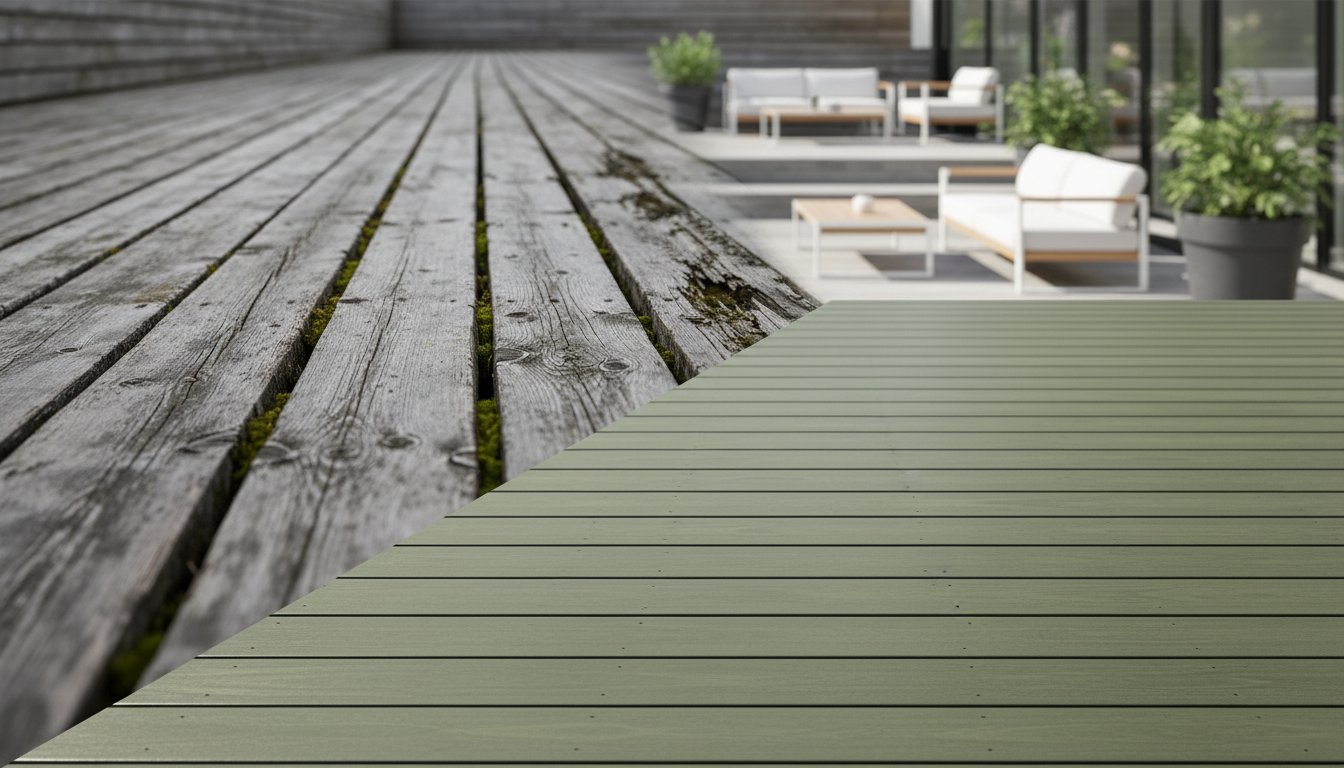
Why do we continue to invest thousands of kronor into a material that is biologically programmed to fail? You likely chose timber for its natural warmth and traditional Scandinavian aesthetic, yet the reality of owning a deck often feels like a demanding second job. Between the relentless cycles of sanding and the expensive staining required to combat Sweden's harsh seasonal shifts, wood decking problems quickly become a burden on both your time and your wallet. It's frustrating to watch a premium investment succumb to structural rot, dangerous splinters, or slippery surfaces within 24 months of exposure.
At Green Plank, we believe your outdoor space should be a sanctuary, not a maintenance project. This guide identifies the specific engineering flaws inherent in traditional timber and explains why even high-grade softwoods struggle against moisture and UV degradation. You'll discover how our European-made, natural-fiber composites eliminate these maintenance cycles for good. We'll explore the science of engineered durability and show you how to achieve a refined, maintenance-free terrace that is truly built to last. Designed for life. Built to last.
Key Takeaways
- Understand the biological science behind timber decay and why organic fibers are naturally programmed to decompose when exposed to moisture and UV rays.
- Identify the five most critical wood decking problems, from structural rot to hazardous warping, that threaten the safety and value of Swedish outdoor spaces.
- Calculate the true financial burden of maintenance cycles, where recurring costs for sanding and sealing can reach thousands of SEK over the deck's lifespan.
- Learn how to perform the "Screwdriver Test" to accurately evaluate your current substructure's health and determine if a repair or a full replacement is required.
- Discover the engineering precision of Green Plank WPC, a circular solution designed in Scandinavia to provide a stable, maintenance-free alternative to traditional timber.
The Science of Decay: Why Traditional Wood Decking Eventually Fails
Wood is a biological material programmed by nature to return to the earth. While it serves as a robust structural element in living trees, its performance as a static building material is a constant battle against decomposition. In the Swedish climate, where humidity levels often fluctuate between 60% and 90% throughout the year, this biological clock ticks faster than many homeowners anticipate. Traditional timber fails because it's an organic composite of lignin and cellulose, both of which are highly susceptible to environmental degradation.
Lignin acts as the natural adhesive that binds wood fibers together, providing structural rigidity. When solar energy in the form of UV radiation hits the deck, it breaks these chemical bonds. Once the lignin degrades, the cellulose fibers become loose and vulnerable to washouts from rain. Understanding The Science of Wood Decay is essential for anyone looking to avoid common wood decking problems, as it reveals how moisture and bacteria work in tandem to compromise structural integrity from the inside out.
Even premium hardwoods like Ipe or Teak aren't immune to these forces. While their high density slows the process, they're still subject to the same laws of biology. In Sweden, a 20-square-meter Ipe deck can cost over 45,000 kr in raw materials, yet it still requires significant annual investment to prevent it from turning brittle. This leads many into the maintenance trap. Surface treatments like oils and stains only provide a temporary aesthetic shield. They don't stop the internal rot that occurs when water becomes trapped within the grain, creating a cycle of expensive, labor-intensive upkeep that only delays the inevitable replacement.
Moisture Absorption and Cellular Breakdown
Wood cells are naturally porous and designed to transport fluids. In a decking environment, this characteristic becomes a liability. The timber absorbs water during the wet autumn months and releases it during the dry summer, causing the cells to expand and contract. This mechanical stress creates micro-fractures in the surface. Over time, these fractures develop into "checking," which are deep cracks that allow water to penetrate into the heart of the board.
Hygroscopy is the primary driver of wood instability as it forces the material to constantly seek moisture equilibrium with its surroundings. This process leads to common wood decking problems such as:
- Cupping: Boards curve upward at the edges due to uneven moisture distribution.
- Splitting: Deep structural failures that occur when internal tension exceeds the strength of the wood fibers.
- Fungal Growth: Once the internal moisture content stays above 20%, decay-causing fungi begin to consume the cellulose.
The Impact of UV Radiation on Timber Aesthetics
Solar radiation is a relentless destructive force for natural timber. UV light triggers a photochemical reaction that bleaches the natural pigments in the wood, quickly turning a vibrant brown deck into a dull, weathered grey. This isn't merely a cosmetic change; it's a sign that the surface fibers are losing their structural "glue."
The chemical reaction between UV light and wood oils causes the surface to become hydrophobic and then eventually brittle. To maintain the original look, a deck in Sweden requires chemical intervention every 12 to 18 months. Without these toxic stains and sealants, the wood loses its suppleness and begins to splinter. At Green Plank, we believe outdoor spaces should be built to last and designed for life, without the need for constant chemical preservation.
5 Common Wood Decking Problems That Compromise Safety and Value
Traditional timber decks are often chosen for their initial aesthetic, yet they quickly reveal inherent vulnerabilities when exposed to the harsh Swedish climate. These wood decking problems aren't merely cosmetic; they represent a fundamental failure of the material to withstand moisture and temperature fluctuations. Structural rot serves as the most dangerous issue, acting as a silent killer of deck joists. In regions with high humidity, moisture seeps into the end-grain of the wood, leading to fungal decay that compromises the entire substructure's integrity. By the time you notice a soft spot underfoot, the structural damage is often irreversible.
Warping and cupping occur as a direct result of wood's hygroscopic nature. Natural planks absorb and release water unevenly, causing the boards to twist or lift at the edges. This physical movement creates significant tripping hazards and makes the surface uneven for furniture. Additionally, insect infestation remains a persistent threat. In Southern Sweden, the House Longhorn Beetle (Husbock) can cause extensive damage, hollowing out timber from the inside. Replacing a compromised substructure is a costly endeavour, often exceeding 20,000 kr for a mid-sized installation when labor and materials are factored in.
Slippery Surfaces and Algae Growth
A common misconception is that grooved timber boards provide better traction. In reality, these channels trap moisture, pine needles, and organic debris. This creates a perfect breeding ground for algae and mould. During the damp autumn months, an "invisible" biofilm develops on the planks, making the surface incredibly slick and dangerous. This biological growth isn't just a cleaning nuisance; it's a safety liability for your family. Switching to a non-porous wpc composite decking alternative prevents this organic buildup, as the material doesn't provide the nutrients algae need to thrive.
Splintering and Surface Checking
UV radiation and constant rain cycles eventually break down the lignin in wood fibres. This process leads to surface checking, where small cracks appear along the grain. These cracks inevitably develop into sharp splinters, making the deck "barefoot-unfriendly" and hazardous for children and pets. While many homeowners spend thousands of kronor maintaining your wood deck through aggressive sanding and oiling, these are only temporary measures. Sanding actually thins the board and exposes fresh, vulnerable fibres to the elements. Green Plank’s engineered 75% hardwood fibre blend is designed to prevent this degradation entirely. The high-density composition ensures the surface remains smooth and splinter-free for its entire service life. Exploring sustainable decking options allows you to enjoy your outdoor space without the constant fear of physical injury or the burden of annual repairs.
The Maintenance Cycle: Why Wood Becomes a Full-Time Job
Traditional timber decks require a relentless schedule of sanding, staining, and sealing. Homeowners in Sweden often find that the initial beauty of pine or larch fades after just two winters. Maintaining structural integrity means repeating these laborious tasks every 12 to 24 months. These recurring wood decking problems aren't just aesthetic issues; they're symptomatic of biological reality. Research in The Science of Wood Decay shows that moisture absorption and fungal growth begin the moment protective coatings fail. If you skip a single season, you risk permanent rot.
The manual labor involved in preserving timber is significant. A standard maintenance routine includes several stages:
- Power washing and chemical cleaning to remove graying and mold.
- Mechanical sanding to smooth out raised grain and splinters.
- Multiple coats of oil or stain to provide a temporary moisture barrier.
- Structural inspections to identify boards weakened by internal decay.
For a standard 30-square-meter deck, professional sanding and oiling can cost upwards of 8,000 kr per session. Over a decade, these maintenance events total between 40,000 kr and 80,000 kr. This figure doesn't account for the value of your own weekend hours. For commercial property managers, the labor costs are even more significant, as they often require specialized teams to maintain safety standards and slip resistance on public walkways.
The Hidden Costs of Chemical Treatments
Keeping wood alive requires aggressive chemistry. Traditional deck stains and preservatives often contain Volatile Organic Compounds (VOCs) that off-gas into your immediate outdoor environment. In the harsh Swedish climate, these chemicals eventually leach into the surrounding soil. This creates a cycle where you must constantly reintroduce toxins to prevent splintering. High-quality WPC offers a wash-and-wear alternative. It eliminates the need for toxic sealants by using an engineered surface that stays stable with simple soap and water cleaning.
Total Cost of Ownership (TCO) Analysis
Low-cost timber is a financial trap. While pressure-treated wood might seem affordable at 150 kr per meter, the 20-year maintenance bill frequently triples the original investment. Engineered composite materials represent a smarter long-term allocation of capital. A 50-year warranty acts as a hedge against the rising costs of replacement materials and labor. When choosing between materials, understanding the technical differences is vital. You can explore our detailed hdpe vs pvc decking guide to see how different composite formulations impact long-term durability. Investing in Nordic reliability means paying for quality once, rather than paying for repairs forever.
Repair vs. Replace: How to Evaluate Your Current Deck’s Health
Before you invest in another coat of expensive oil, you must determine if your structure remains sound. Many wood decking problems start beneath the surface, hidden from view. A simple diagnostic is the "Screwdriver Test." Take a flat-head screwdriver and press it into various points along the joists and beams. If the metal sinks more than 10 millimeters into the wood with little resistance, you've identified advanced rot. This degradation compromises the structural integrity of your outdoor space, making it unsafe for family gatherings during the Swedish summer.
Examine your fasteners next. Rusting screws or nails that "pop" out of the wood are clear indicators of fiber failure. When timber cycles through seasons of moisture and frost, the wood cells expand and contract, eventually losing their grip on the metal. If more than 25% of your fasteners are loose or corroded, a simple repair won't suffice. You're looking at a systemic failure that requires a professional-grade solution. Choosing to ignore these signs often leads to more costly repairs down the road.
Identifying Structural Failure
Safety begins where the deck meets the home. Inspect the ledger board carefully. If there's a gap between the board and your house facade, or if the flashing is missing, water is likely draining into your home's structure. This is a critical failure point. Similarly, check the load-bearing posts below the surface. Rot often starts at the ground level where moisture is constant. Replacing surface boards on a rotting frame is a costly mistake. It's like putting a new engine in a rusted chassis; the foundation will fail long before the new boards reach their potential.
The Transition to Sustainable WPC
If your substructure is still rigid and level, a composite retrofit is a viable path. Green Plank’s Smart System is engineered to simplify this upgrade, allowing for a seamless transition from high-maintenance timber to durable natural-fiber composite. By choosing a "Cradle to Cradle" replacement strategy, you ensure that your old timber is disposed of responsibly while your new deck is built from 100% EU raw materials. This circular approach reduces your environmental footprint while providing a surface that resists the typical wood decking problems of the Nordic climate. Designed in Scandinavia and produced in Europe, these systems offer a 20 to 30 year warranty, ensuring your investment is built to last and designed for life. For homeowners who want to apply this same philosophy of durability and renewal to their interior, Svenska trappsteg provides expert solutions for modernizing stairs.
Ready to upgrade to a maintenance-free lifestyle? Explore our sustainable decking collections and find the perfect fit for your home.
Engineered for Life: How Green Plank WPC Solves the Timber Dilemma
Traditional timber fails because it breathes, warps, and eventually succumbs to the harsh Swedish climate. Green Plank solves these common wood decking problems by re-engineering the material at a molecular level. Our unique formula consists of 75% hardwood fibre and 25% high-density polyethylene (HDPE). This high wood content preserves the natural feel of timber, while the HDPE polymer provides a shield against moisture and structural instability. It doesn't splinter; it doesn't twist; it remains dimensionally stable through every season.
Installation integrity is just as vital as the material itself. Surface holes are the primary entry points for water, which eventually leads to internal rot in softwoods. Our HidLoc™ Hidden Fastening Systems eliminate the need for visible screws on the board surface. This creates a smooth, barefoot-friendly finish and removes the risk of water pooling inside the core of the deck. Designed in Scandinavia and produced in Europe, our products are built for extreme durability in high-latitude environments.
Sustainability is not an afterthought for us. We operate on a Cradle to Cradle ownership model to ensure a responsible project lifecycle. By using 100% traceable raw materials and circular manufacturing processes, we provide a solution that respects the environment as much as it enhances your home. Built to last. Designed for life.
The Terra Tuff and Smart System Advantage
Our flagship Terra Tuff and Smart System lines represent the pinnacle of low-density, high-strength engineering. By utilizing 100% traceable EU raw materials, we maintain total quality control that generic imports cannot match. These systems are specifically engineered to provide superior load-bearing capacity while remaining easy to handle during installation. We back this engineering confidence with a 20 to 50-year warranty, providing Swedish homeowners with a permanent solution to recurring wood decking problems and maintenance costs.
Maintenance-Free Aesthetics
We achieve the authentic Nordic character of natural wood without its inherent biological flaws. Our composite boards are resistant to UV degradation, moisture, and wood-boring insects without the need for annual chemical sealing or staining. The color stays true, and the texture remains slip-resistant for decades. You can enjoy the aesthetic of a premium timber deck without the labor-intensive upkeep typically required in Scandinavia.
Invest in a Permanent Outdoor Legacy
Traditional timber decks in Sweden face a relentless battle against moisture and fluctuating temperatures. These environmental factors lead to inevitable rot, splintering, and structural instability. While sanding and oiling might offer a temporary reprieve, they don't address the underlying science of decay. Choosing a high-performance natural-fiber composite eliminates these common wood decking problems by combining engineering precision with environmental responsibility. It's a shift from constant repair to lasting enjoyment.
Green Plank delivers a superior alternative engineered for the harsh Nordic climate. Our decking consists of 75% hardwood fibre for an authentic texture, yet it remains entirely resistant to biological threats. Every board is manufactured using 100% EU-sourced sustainable materials; this ensures your outdoor space supports a circular economy. We back this durability with a warranty of up to 50 years, providing a level of security that traditional timber simply cannot match. You're not just buying a deck. You're investing in a professional-grade architectural feature that respects the planet.
Upgrade to a maintenance-free Green Plank deck today and reclaim your weekends for relaxation. Your future outdoor sanctuary is ready to be built.
Frequently Asked Questions
Is it worth repairing a rotting wood deck?
Repairing a rotting deck is rarely a viable long-term investment if more than 15% of the structure shows visible decay. While replacing a single board might cost 300 kr in materials, rot usually indicates deep-seated moisture issues that will compromise the entire installation within 24 months. Choosing a natural-fiber composite provides a circular solution that eliminates the cycle of costly, temporary fixes and ensures your outdoor space remains safe.
Why does my wood deck keep getting slippery even after cleaning?
Traditional timber remains slippery because its porous surface absorbs moisture, creating a perfect breeding ground for algae and fungi. Even after power washing, microscopic spores remain deep within the grain and regrow within 4 to 6 weeks in Sweden's humid climate. Engineered composite decking solves these wood decking problems by utilizing a non-porous surface that resists organic growth and maintains high slip resistance throughout the year.
How long does a traditional pressure-treated wood deck actually last?
A standard pressure-treated pine deck in Sweden typically lasts between 10 and 15 years before structural integrity declines significantly. Swedish Wood reports that without annual oiling and sealing, this lifespan drops by 40% due to harsh Nordic freeze-thaw cycles. Professional-grade composite is built to last; it's designed for life and offers warranties of 25 years or more without the need for toxic chemical treatments.
Can I replace my wood boards with composite using the same frame?
You can replace timber boards with composite if the existing substructure is structurally sound and joists are spaced at 30 or 40 cm centers. Many Swedish wood decks use 60 cm spacing, which requires adding extra joists to prevent the composite from flexing under load. This upgrade transforms an aging structure into a low-maintenance outdoor space while utilizing the existing foundation to reduce material waste and cost.
What are the most common signs that my deck is structurally unsafe?
Structural instability is evident if you find soft spots where a screwdriver can penetrate the wood more than 5 mm. Check the ledger board that connects the deck to your home; 90% of deck failures occur here due to improper flashing and subsequent rot. If more than 10% of your fasteners are rusted or loose, the deck poses a significant safety risk and requires immediate professional attention.
While the specifics may vary by region, seeing how established contractors handle these issues can be insightful. For an example of a team that specializes in home exteriors, you can check out Exterior Specialist LLC.
Does composite decking get as hot as wood in the summer?
High-density composite decking absorbs heat similarly to dark hardwoods like Ipe or Cumaru. On a 25°C day in Stockholm, a dark composite board can reach surface temperatures of 50°C, which is comparable to stained pressure-treated timber. Our Scandinavian-designed boards incorporate heat-reflective pigments to manage thermal gain. This engineering ensures your outdoor living space remains comfortable for bare feet even during the peak of the Swedish summer.
How do I stop my wood deck from splintering?
Stopping splinters requires sanding the entire surface with 60-80 grit sandpaper and applying a high-quality penetrating oil every 12 months. This labor-intensive process only masks the problem temporarily, as UV radiation breaks down wood fibers again within a single season. Switching to an engineered, natural-fiber composite provides a permanent, splinter-free surface. It's a professional-grade solution that's safe for children and pets without requiring constant maintenance.
Are wood decking preservatives harmful to the environment?
Many traditional wood preservatives contain copper-based biocides and chemicals that leach into the soil over time. The Swedish Chemicals Agency regulates these substances because they can harm aquatic life and long-term soil biodiversity. Choosing a traceable, European-made composite eliminates the need for these toxins. It provides a sustainable and circular alternative that respects the environment while delivering the durability required for the demanding Nordic climate.
Spesifiser produktet
Bruk denne guiden i en Green Plank-spesifikasjon
Tekniske WPC-artikler skal støtte de kommersielle sidene — ikke konkurrere med dem. Fortsett til komposittdekke, TerraTuff, Nordeka eller de tekniske nedlastningene.