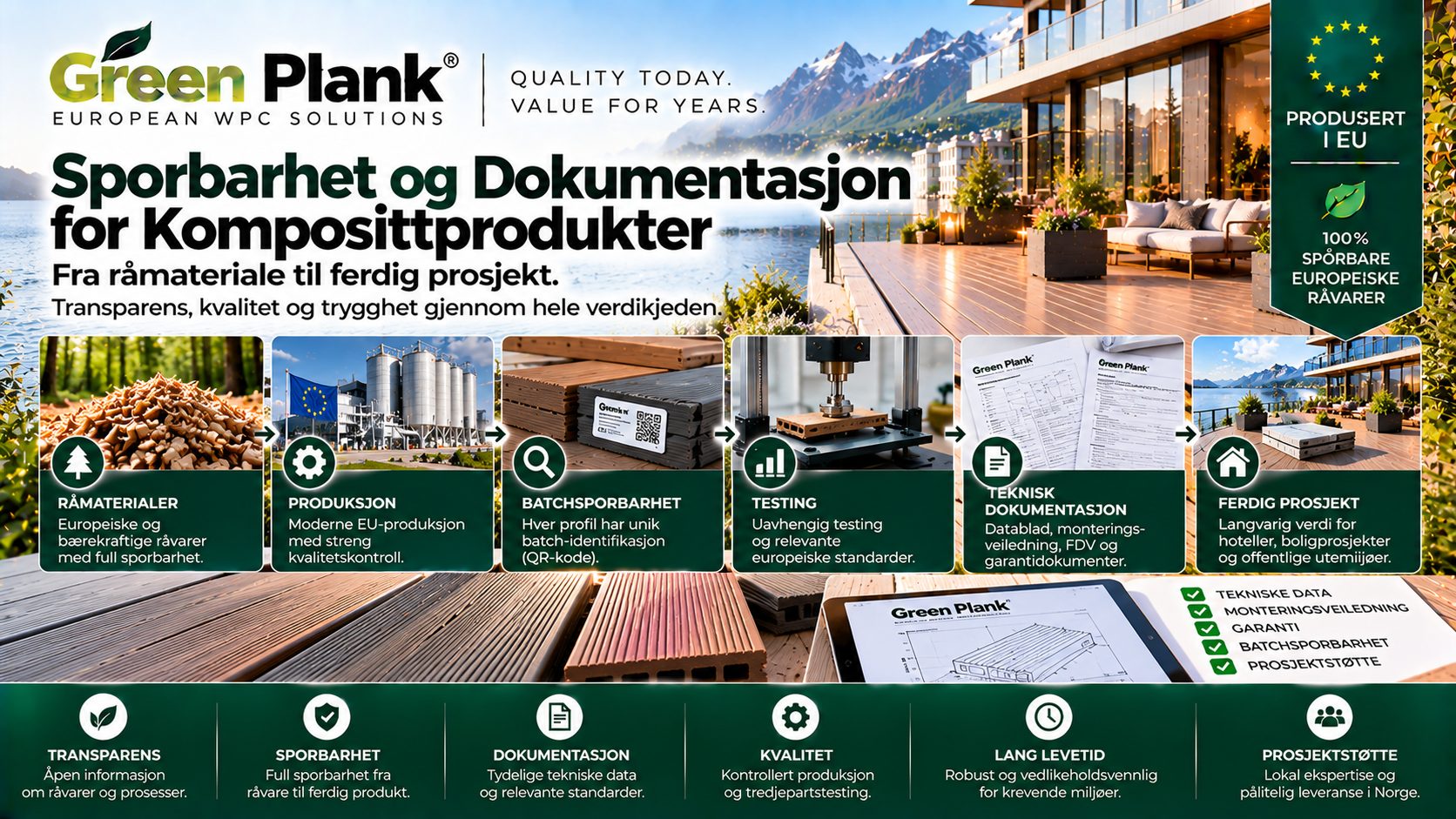




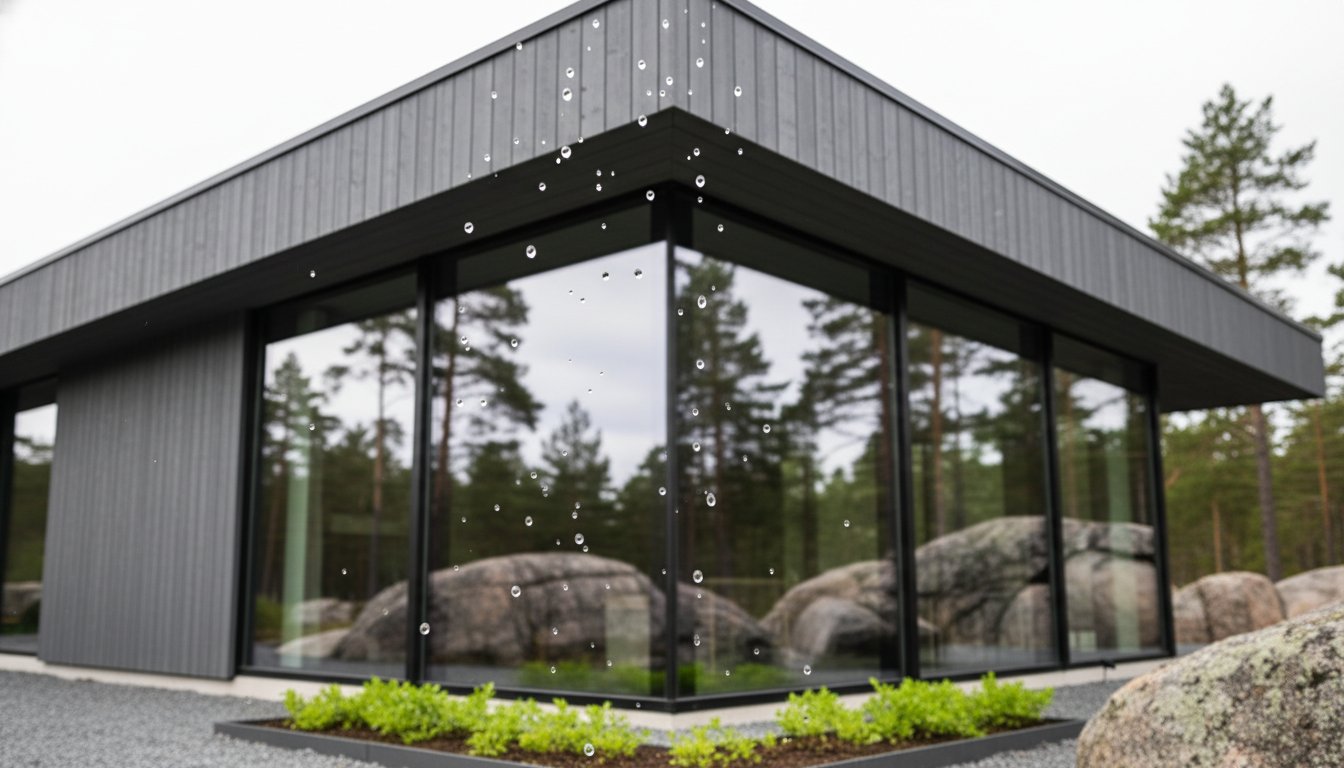
What if the most expensive part of your building's exterior wasn't the material itself, but the endless cycle of cleaning and refinishing required to keep it looking new? Most architects and developers accept facade degradation as an inevitable cost of ownership, yet the emergence of advanced stain resistant exterior cladding proves otherwise. You've likely felt the frustration of watching a pristine facade succumb to unsightly water marks, tannin leaching, or biological growth like algae and moss. It's a common pain point that drains maintenance budgets and compromises the architectural vision you worked so hard to achieve.
This guide demonstrates how cutting-edge capped composite technology provides a permanent shield against the elements. By integrating high-performance polymer capping with sustainable, European-sourced raw materials, we've moved beyond temporary coatings to a solution that preserves "new-build" aesthetics for decades. You'll learn about the engineering precision of low-density WPC profiles, the implications of the 2026 Florida Building Code updates on cladding resilience, and how to select materials that prioritize both environmental ethics and performance. We're moving away from high-maintenance surfaces toward a future of Cradle to Cradle ownership and regional reliability.
Key Takeaways
- Understand how co-extrusion technology creates a 360-degree protective shield to permanently repel moisture, oils, and biological pollutants.
- Compare wood-plastic composites against traditional materials to see why stain resistant exterior cladding offers the most balanced performance in UV stability.
- Identify which specific cladding profiles and textures are best suited to withstand environmental challenges like coastal salt-spray or urban soot.
- Discover how European-engineered materials utilizing 75% hardwood fiber achieve a low-maintenance facade without the use of toxic oils.
- Learn how high-performance engineering enables a 50-year warranty and supports a sustainable Cradle to Cradle ownership model.
Table of Contents
- Understanding Stain Resistance in Modern Facade Architecture
- Stain Resistant Exterior Cladding Comparison: WPC vs. Alternatives
- Practical Selection: Choosing Stain-Resistant Profiles for Your Project
- The Green Plank Advantage: 50 Years of Stain-Free Performance
- Securing the Future of Architectural Resilience
Understanding Stain Resistance in Modern Facade Architecture
True stain resistance is more than a superficial layer; it's the material's inherent capacity to remain impervious to moisture, oils, and biological pollutants over a multi-decade lifespan. When architects evaluate options for Understanding Exterior Cladding, they must distinguish between temporary chemical applications and permanent material properties. While traditional timber requires frequent biocides and oils to resist decay, high-performance stain resistant exterior cladding utilizes advanced material science to create a non-porous surface. This distinction is vital. A surface treatment will eventually fail, whereas an engineered profile remains stable throughout its service life.
Modern facades face a relentless barrage of environmental stressors. UV radiation breaks down chemical bonds in unprotected wood, leading to silvering and structural fragility. Tannin leaching creates dark, weeping streaks that are difficult to remove from masonry or lower-level finishes. In urban environments, soot and bird droppings chemically etch into porous surfaces. A low-maintenance facade doesn't just save time. It protects the asset's valuation by ensuring the building retains its intended aesthetic without the need for aggressive chemical interventions or frequent professional restoration.
The Problem with Porous Materials
Natural timber and fiber cement share a common vulnerability: porosity. Through capillary action, these materials pull liquid pollutants deep into their core. This leads to "ghosting," a phenomenon where shadows of previous stains remain visible even after surface cleaning because the contaminants are trapped within the material grain. Property owners often ignore the hidden financial burden of this porosity. The recurring expense of professional pressure washing and the application of toxic sealants can quickly eclipse the initial investment in higher-quality, engineered materials. Choosing a non-porous stain resistant exterior cladding eliminates these maintenance cycles entirely.
Aesthetic Longevity: The New Standard for 2026
By 2026, the industry standard has shifted from "lowest initial price" to "total cost of ownership" over a fifty-year horizon. High-end developments now prioritize materials with color-lock technology, ensuring that the vibrant hues chosen during the design phase remain consistent for decades. This commitment to longevity is a hallmark of the 2026 guide to sustainable exterior facades. When a material utilizes a 75% hardwood fiber and 25% HDPE blend, it achieves the tactile warmth of wood without the organic decay. It respects both the owner's budget and the natural environment by removing the need for recurring chemical treatments. Engineering confidence is reflected in long-term performance guarantees, moving the focus from constant repair to effortless enjoyment.
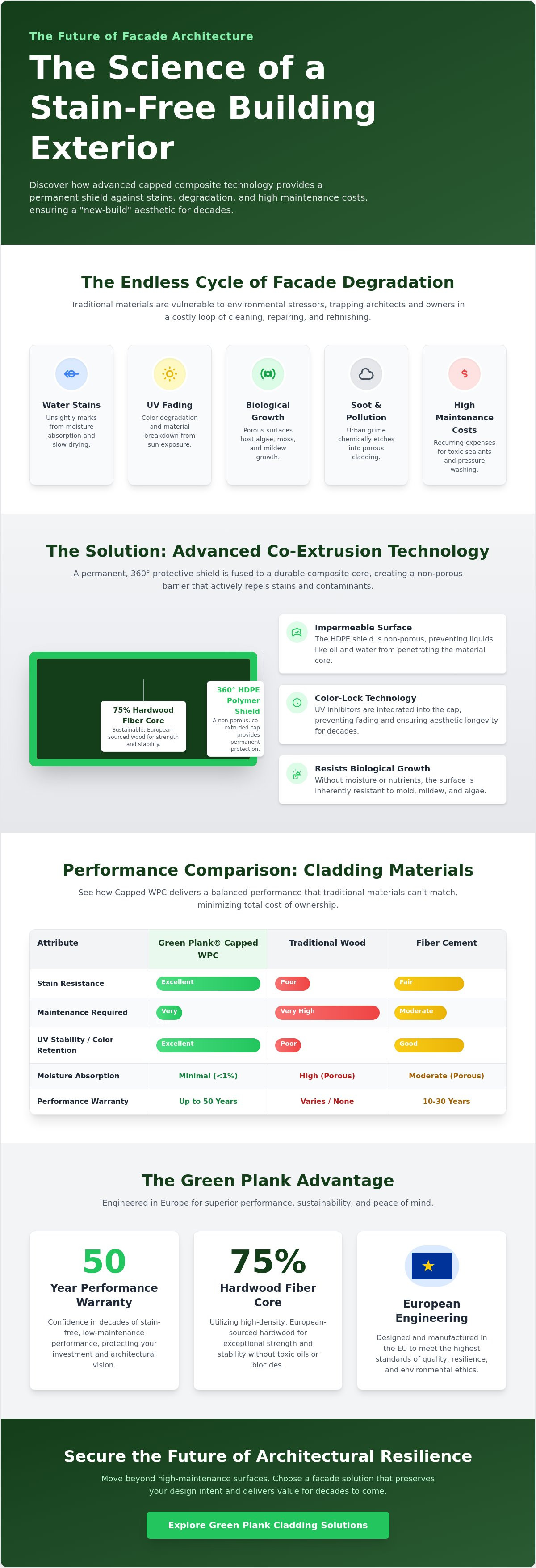
High-performance engineering transforms a facade from a high-maintenance surface into a self-protecting structure. The science behind stain resistant exterior cladding centers on the co-extrusion process. During manufacturing, the 75% hardwood fiber core and a high-density polyethylene (HDPE) shell are extruded simultaneously under extreme heat. This creates a 360-degree protective shield that isn't a mere coating; it's a permanent part of the profile. Evaluating Stain Resistance in Cladding Materials requires looking past the surface to the molecular structure of the product. The HDPE cap provides a non-porous barrier that prevents liquid penetration.This material science results in hydrophobic properties. Water beads and rolls off the surface, carrying away dust and pollutants before they can settle. To combat sun-induced staining, UV inhibitors are baked directly into the polymer cap. This prevents the yellowing or "sun-scorch" that often plagues lower-quality plastics. The result is a facade that retains its original tone despite constant exposure to harsh solar radiation. It's a solution that respects the architectural vision by ensuring the material looks as intended for decades.
Capped vs. Uncapped WPC: A Critical Distinction
First-generation wood-plastic composites lacked this protective shield. These uncapped profiles often suffered from mold growth and deep-set staining because the organic fibers were exposed to the elements. Modern project specifiers now exclusively choose capped profiles for exterior applications. The chemical bonding between the core and the shield ensures the layers move as one, which prevents the delamination seen in inferior laminated products. It's a matter of engineering confidence. You can explore our range of engineered wall cladding to see how this technology protects your investment.
Resistance to Tannin Leaching and Efflorescence
Natural timber is notorious for "bleeding." Organic tannins wash out of the wood during rain, leaving dark, oily streaks on white render or expensive stone below. This ruins the clean lines of mixed-material facades. Green Plank's engineering locks these tannins within the core. The polymer shield acts as a one-way barrier; it keeps the elements out and the organic material in. This makes stain resistant exterior cladding the ideal partner for light-colored masonry or glass. It preserves the integrity of every material on the building envelope without requiring toxic chemical sealants.
Stain Resistant Exterior Cladding Comparison: WPC vs. Alternatives
Selecting the appropriate material for a building envelope requires a rigorous assessment of performance metrics. When architects evaluate stain resistant exterior cladding, they typically prioritize four critical criteria: oil resistance, water absorption rate, UV stability, and scratch resistance. While many products claim durability, their performance varies significantly under real-world environmental stress. Wood Plastic Composite (WPC) has emerged as the balanced leader in this category, offering the tactile warmth of organic timber with the technical resilience of engineered polymers.
Fiber cement is often cited for its fire resistance and durability, yet it possesses a significant vulnerability. It is a cementitious material that relies entirely on its surface paint for protection. If the coating develops micro-cracks, the substrate absorbs moisture, leading to delamination and unsightly water staining. Metal cladding, such as aluminum or steel, offers excellent resistance to chemical stains and oils. However, these materials often project an industrial aesthetic that lacks architectural warmth; they are also susceptible to denting and permanent scratching from hail or debris. Natural timber remains the baseline for high maintenance. Without constant chemical intervention, it quickly succumbs to silvering, tannin leaching, and rot.
The Porosity Test: Why Numbers Matter
Porosity is the primary driver of material degradation. High-quality WPC profiles maintain a water absorption rate of less than 1%, which is a stark contrast to natural softwoods that can exceed 25% when saturated. This low porosity is vital for preventing frost damage; it ensures that moisture cannot enter the material grain to freeze and cause internal cracking. We utilize 100% EU raw materials in our manufacturing process to ensure consistent density across every profile. This regional reliability provides the engineering confidence needed for projects in extreme climates where seasonal temperature swings are common.
Maintenance Requirements by Material
The true value of a facade is revealed in its maintenance schedule. Capped WPC requires nothing more than a periodic rinse with soap and water to remove surface dust. This stands in direct opposition to natural timber, which demands a labor-intensive cycle of sanding, oiling, and re-staining every two to three years. Metal systems may require specialist coatings to prevent oxidation, while fiber cement necessitates periodic repainting to maintain its water-resistant barrier. For large-scale commercial infrastructure projects, these labor savings are substantial. Choosing a low-maintenance solution ensures that the "new-build" aesthetic is preserved without the recurring cost of professional cleaning crews or toxic chemical treatments.
Practical Selection: Choosing Stain-Resistant Profiles for Your Project
Selecting the right profile requires a precise understanding of your project's micro-environment. A coastal residence faces different stressors than an urban commercial complex. While salt spray creates a corrosive film in maritime settings, urban projects must withstand a constant accumulation of oily soot and fine particulate matter. High-performance stain resistant exterior cladding serves as a functional shield against these specific regional threats. The HidLoc™ Hidden Fastening System enhances this protection; by eliminating face-screws, it prevents the development of rust streaks and removes potential dirt traps. This creates a seamless facade that is significantly easier to maintain over its fifty-year service life.
Choosing a material with Cradle to Cradle ownership credentials ensures your project respects the natural environment. It's a commitment to circularity that prioritizes long-lived, high-quality components over disposable alternatives. When you select a profile made from 100% EU raw materials, you're investing in regional reliability and a lower carbon footprint. This engineering precision ensures the material remains structurally sound and aesthetically consistent, regardless of local weather extremes. You can explore our full range of sustainable wall cladding profiles to find the ideal match for your project's specific environmental needs.
Color Choice and Visibility of Stains
Color selection plays a strategic role in the perceived cleanliness of a building. In areas prone to high levels of light-colored dust or pollen, mid-to-darker tones often prove more practical. Multi-tonal woodgrains are particularly effective; they utilize varied color depth to hide surface dust and micro-abrasions more efficiently than solid, monochromatic colors. This aesthetic choice aligns with the principles found in our guide on sustainable building materials. By selecting a finish that works with the local environment, you reduce the frequency of cleaning cycles without compromising the architectural vision.
Installation Details that Prevent Staining
A successful facade depends on the rainscreen principle. Proper ventilation behind the boards prevents moisture buildup, which stops the growth of mold and mildew on the building envelope. Drainage slopes are equally vital; they ensure water moves away from the surface to prevent the formation of mineral deposits or "water-tracking" marks. For private residential applications, maintaining a 600cc joist spacing is critical. This structural standard ensures the boards remain perfectly flat, preventing the subtle bowing that can lead to standing water and localized staining. These technical standards translate directly into a maintenance-free outdoor space that retains its value for decades.
The Green Plank Advantage: 50 Years of Stain-Free Performance
The longevity of a facade is determined by the precision of its composition. Green Plank utilizes a meticulously balanced blend of 75% hardwood fiber and 25% high-density polyethylene (HDPE). This specific ratio ensures the material retains the structural rigidity of wood while gaining the impervious nature of high-grade polymers. By choosing stain resistant exterior cladding engineered with this formula, developers avoid the brittleness often associated with high-plastic content alternatives. Every profile is manufactured using 100% EU raw materials; this ensures strict adherence to safety standards and provides a level of quality control that global supply chains often fail to match.
Engineering confidence isn't a marketing claim; it's a performance guarantee. Our 50-year warranty reflects the proven durability of our co-extrusion technology and our commitment to regional reliability. This long service life is achieved through a low-density, high-strength design that reduces the weight on the building structure without compromising impact resistance. It's a pragmatic approach to construction that recognizes the most sustainable building is the one that doesn't need to be replaced. This commitment to longevity is the cornerstone of our "Responsible Innovator" philosophy.
Engineered for the European Climate
European regions experience significant seasonal shifts, from sub-zero winters to intense summer heat. Green Plank profiles are engineered to handle these extreme temperature swings without warping or cracking. This thermal stability is coupled with our Cradle to Cradle ownership model, which views materials as nutrients in a circular system rather than waste in a linear one. Choosing European-engineered WPC is a superior alternative to global competitors because it prioritizes local manufacturing and reduced CO2 footprints. It's a choice that respects both the architecture and the ecosystem it inhabits.
Next Steps for Your Cladding Project
The performance of stain resistant exterior cladding is best understood through direct experience. We encourage architects and homeowners to request physical samples to test the material's resistance to oils, tannins, and environmental pollutants personally. For large-scale developments, our technical team provides detailed commercial infrastructure specifications to ensure every profile meets the rigorous demands of modern building codes. Whether you're designing a private residence or a public facility, we invite you to consult with our specialists to secure a maintenance-free future for your facade. Reach out today to begin your transition toward sustainable, high-performance architecture.
Securing the Future of Architectural Resilience
Modern facade design has evolved beyond mere aesthetics to prioritize long-term performance and environmental ethics. You've seen how capped composite technology creates an impenetrable barrier against moisture, oils, and urban pollutants. This engineering precision effectively eliminates the need for toxic chemical treatments and costly, high-frequency maintenance cycles. By choosing stain resistant exterior cladding, you're investing in a building envelope that retains its intended beauty while actively respecting the natural world.
Our commitment to regional reliability is reflected in our use of 100% EU-sourced raw materials and the implementation of a Cradle to Cradle circular design model. We provide a 50-year service life warranty as a testament to our engineering confidence and material durability. It's time to transition toward a maintenance-free outdoor space that doesn't compromise on sustainability or professional standards. We believe in letting the longevity and environmental credentials of our products speak for themselves.
Explore our stain-resistant cladding collections and request a sample pack to see the Green Plank difference for yourself. We're ready to help you realize an architectural vision that stands the test of time.
Frequently Asked Questions
Is composite cladding truly stain-proof or just stain-resistant?
No exterior material is entirely stain-proof; however, capped composite technology provides the highest level of resistance available in modern architecture. While natural wood absorbs contaminants into its cellular structure, the non-porous HDPE shield on stain resistant exterior cladding keeps pollutants on the surface. This prevents permanent "ghosting" and ensures that most environmental residues can be removed with basic maintenance before they bond to the material.
Can I remove oil or grease stains from my WPC cladding?
You can effectively remove oil and grease stains by using warm, soapy water and a soft-bristle brush. Because the co-extruded cap prevents these substances from penetrating the wood-fiber core, the oils remain on the surface rather than soaking into the grain. For optimal results, it's best to address spills promptly to prevent the buildup of surface debris that might trap the oils against the polymer shield.
Does stain-resistant cladding still fade in direct sunlight?
Capped composite cladding is engineered with high-performance UV inhibitors to minimize color shifting over time. Unlike traditional timber that silverizes within months of exposure, our materials maintain their chromatic integrity for decades. While all outdoor materials experience very subtle weathering, the "color-lock" technology ensures the facade retains its premium aesthetic without the need for restorative staining or painting.
How often do I need to clean capped composite cladding?
A simple rinse with a garden hose twice a year is typically sufficient for most residential applications. Projects located in high-pollution urban areas or salt-heavy coastal environments may require more frequent attention to remove surface particulates. This low-maintenance schedule is a primary advantage of stain resistant exterior cladding, as it removes the need for the aggressive chemical scrubbing required by porous alternatives.
Will mold or algae grow on stain-resistant cladding?
Mold and algae cannot grow on the composite material itself because the polymer cap provides no organic nutrients for biological growth. While mold may occasionally form on surface accumulations of pollen, dust, or dirt, it cannot root into the profile. A quick cleaning with mild detergent easily removes these surface deposits, restoring the facade to its original condition without damaging the protective shield.
Does the stain resistance of Green Plank cladding wear off over time?
The stain resistance is a permanent material property that does not diminish with age. Unlike liquid sealants or topical coatings that require reapplication every few years, our protective shield is co-extruded as a structural component of the profile. This engineering precision ensures that the resistance to moisture and oils remains consistent throughout the entire fifty-year service life of the product.
What is the best way to clean my exterior cladding without damaging the cap?
The most effective cleaning method involves using a soft brush, warm water, and a pH-neutral liquid soap. You should avoid using abrasive scouring pads, metal scrapers, or harsh solvent-based cleaners that could dull the finish of the polymer cap. If you use a pressure washer, keep the nozzle at a safe distance and use a low-pressure setting to prevent mechanical damage to the textured woodgrain surface.
Is stain-resistant cladding more expensive than traditional wood?
The initial investment for high-quality capped composite is often higher than basic pressure-treated timber, but the total cost of ownership is significantly lower. When you account for the elimination of bi-annual oiling, professional sanding, and specialized chemical treatments, the material pays for itself within a few years. It's a pragmatic choice for those who prioritize long-term value and a maintenance-free lifestyle over the lowest possible entry price.
Spesifiser produktet
Bruk denne guiden i en Green Plank-spesifikasjon
Tekniske WPC-artikler skal støtte de kommersielle sidene — ikke konkurrere med dem. Fortsett til komposittdekke, TerraTuff, Nordeka eller de tekniske nedlastningene.