



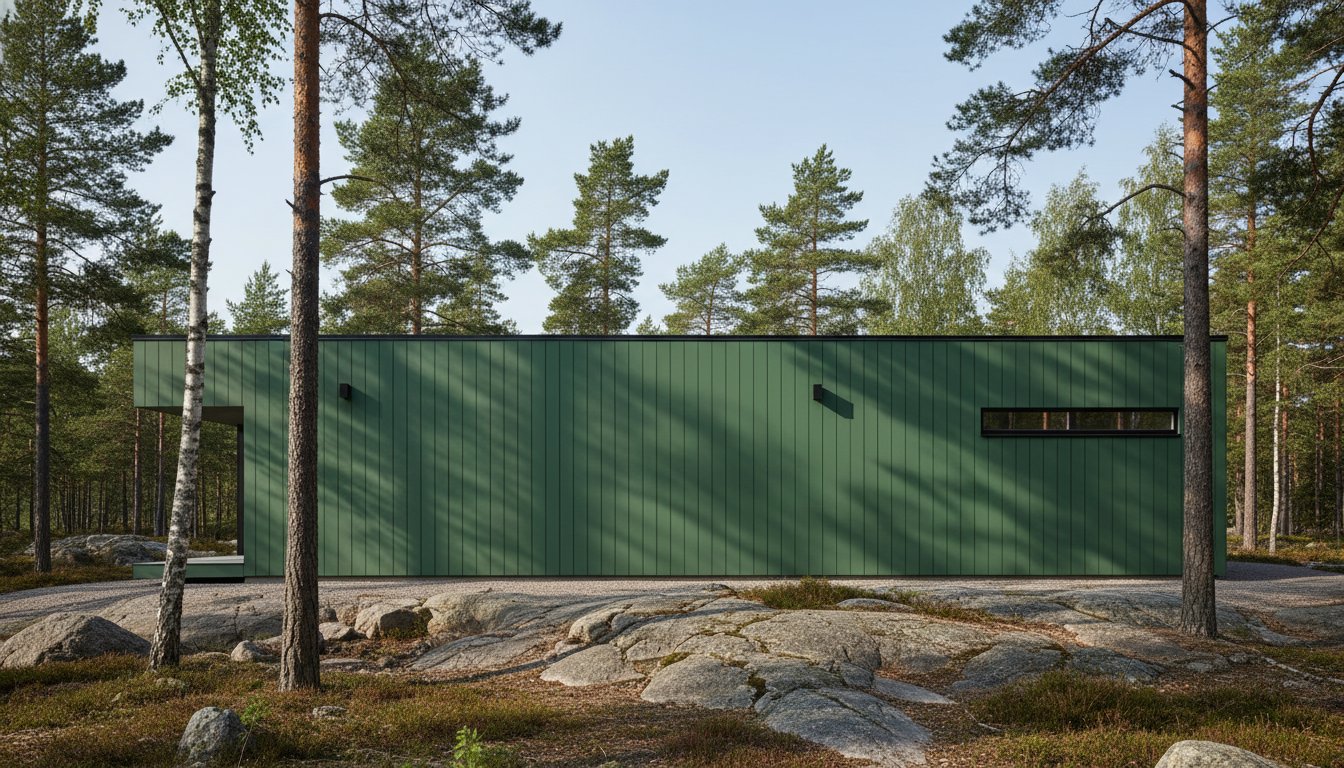
What if your building's facade could contribute to a circular economy while remaining entirely maintenance-free for the next fifty years? With the 2026 Future Homes Standard now mandating a tighter U-value of 0.15 W/m²K for external walls, the pressure to find high-performance, eco friendly exterior wall panels has never been higher. You likely recognize the "timber trap" where the beauty of natural wood quickly fades into a cycle of costly staining and eventual rot. It's frustrating to invest in sustainability only to face complex installation requirements or the nagging fear of greenwashing.
We understand that professional builders and homeowners alike seek materials that balance engineering precision with environmental ethics. This guide reveals how modern composite technology and circular design are redefining sustainable cladding for residential and commercial projects. You'll learn how EU-sourced raw materials and a 75% hardwood fiber composition create a Cradle to Cradle lifecycle. We'll examine the shift toward LEED v5 compliance, the practical benefits of hidden fastening systems, and how to achieve a reduced carbon footprint without sacrificing premium aesthetics.
Key Takeaways
- Understand how sourcing 100% EU raw materials significantly reduces the total CO2 footprint of your project compared to imported alternatives.
- Learn why a precise blend of 75% hardwood fiber and HDPE has become the engineering benchmark for high-performance eco friendly exterior wall panels.
- Discover the long-term environmental and financial advantages of choosing maintenance-free composites over chemically treated timber or high-embodied-energy materials.
- Gain technical insight into the rainscreen principle and HidLoc™ Hidden Fastening Systems to guarantee structural integrity and moisture management for a 50-year service life.
- Explore the "Cradle to Cradle" ownership model that ensures your building materials remain part of a sustainable circular loop rather than contributing to landfill waste.
Table of Contents
- What Defines an Eco Friendly Exterior Wall Panel in 2026?
- The Science of WPC: Why Hardwood Fiber and HDPE Lead the Movement
- Comparing Eco-Friendly Options: WPC vs. Bamboo and Fibre Cement
- Specifying for Longevity: Installation and Design Considerations
- Green Plank: Engineering the Future of European Circular Facades
What Defines an Eco Friendly Exterior Wall Panel in 2026?
In 2026, a truly eco friendly exterior wall panel is defined by its ability to balance low embodied carbon with extreme durability. It's no longer enough to use recycled materials if the product fails within a decade. True sustainability requires a lifecycle approach. By utilizing 100% EU raw materials, we reduce the total CO2 footprint by minimizing long-haul transport emissions. We prioritize low-density materials that simplify installation and lower fuel consumption during transit. This engineering choice reduces the strain on installers and lowers the overall environmental impact of the build. Building professionals are moving away from cheap, high-maintenance cladding that requires replacement every fifteen years. Instead, they're investing in robust systems that provide long-term peace of mind and structural reliability. This shift marks the end of "disposable" building materials, replaced by systems designed with a 50-year lifespan in mind.
The Core Pillars of Sustainable Facades
Sustainability rests on three foundational pillars. First, recycled content must be transparently sourced from both post-consumer and industrial streams. Second, longevity acts as the ultimate eco-metric. A facade that lasts fifty years requires half the resources of one that lasts twenty-five. Third, maintenance requirements dictate the long-term chemical impact. Traditional timber requires periodic staining and sealing. Our composite systems eliminate this need, preventing harmful chemicals from leaching into the soil. High hardwood fiber content provides natural rigidity. This ensures the panels remain straight and true over decades of thermal cycles. Low maintenance isn't just a convenience; it's a commitment to chemical-free ecosystems. This "Feature-Benefit" logic ensures that every technical attribute serves a practical, ecological advantage.
Environmental Certifications to Watch For
Identifying genuine products requires looking past marketing claims toward verified standards. The Cradle to Cradle (C2C) ownership model ensures that every component is designed for eventual disassembly and reuse. We utilize FSC-certified hardwood fibers to ensure responsible forest management. These fibers are blended into high-performance Wood-Plastic Composite (WPC) to create a weather-resistant barrier. Sourcing within the EU guarantees compliance with strict environmental and safety regulations. This regional focus provides a level of reliability that imported alternatives cannot match. It ensures your project meets the highest professional standards for eco friendly exterior wall panels while respecting local ecosystems. By choosing materials with documented origins, you avoid the risks of greenwashing and ensure compliance with the latest building regulations. This engineering confidence is backed by specific performance guarantees that reflect our obsession with quality and ethical manufacturing.
The Science of WPC: Why Hardwood Fiber and HDPE Lead the Movement
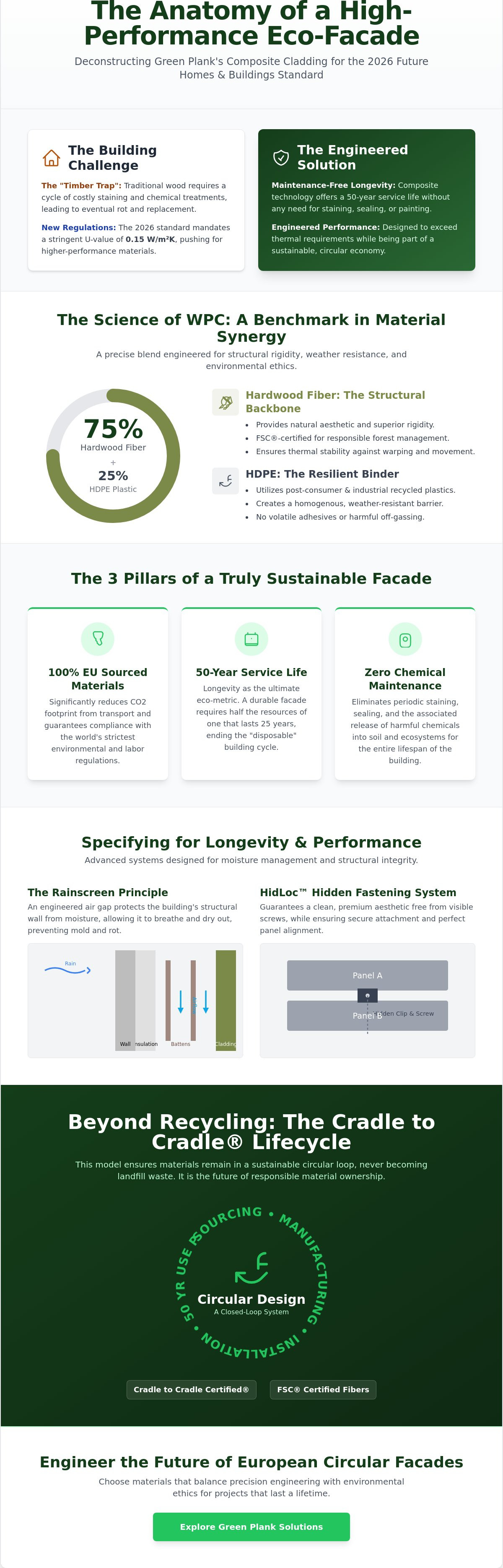
The engineering of eco friendly exterior wall panels relies on a precise material synergy. We utilize a specific ratio of 75% hardwood fiber and 25% high-density polyethylene (HDPE). This blend isn't arbitrary; it represents a technical benchmark for performance and environmental ethics. By maximizing the natural fiber content, we achieve a low-density profile that reduces the dead load on a building's structure. This technical attribute simplifies handling for installation teams and reduces transport fuel consumption. Unlike traditional manufacturing that might rely on volatile adhesives, our process uses heat and pressure to bind components. This creates a homogeneous material that won't delaminate or off-gas harmful chemicals into the environment. The result is a stable, high-performance facade that respects both the builder's timeline and the planet's resources.
Hardwood Fiber: The Structural Backbone
The 75% hardwood fiber content serves as the primary structural element. It provides the natural aesthetic and inherent rigidity associated with traditional timber. This high fiber density is crucial for thermal stability, especially in fluctuating European climates where temperature swings can cause lesser materials to warp. By utilizing such a high percentage of natural material, we significantly reduce the volume of virgin plastic required for each panel. This choice aligns with the Green Communities sustainable material criteria which prioritize reduced chemical exposure and responsible resource management. Natural rigidity ensures that long spans remain straight. High fiber content maintains the organic warmth of wood. Thermal resistance prevents expansion issues in extreme heat.
HDPE and the Circular Economy
The choice of polymer is equally critical for a circular facade. We exclusively use HDPE because it's 100% recyclable, unlike PVC which often poses challenges at the end of its life cycle. The polymer acts as a protective shell. It encapsulates the hardwood fibers to prevent moisture ingress and rot. To ensure long-term performance, we incorporate non-toxic additives that provide UV resistance and maintain pigment longevity. This ensures the panels retain their premium finish without the need for periodic painting or chemical treatments. This protective barrier is what allows us to offer a 50-year service life guarantee. If you're designing a project that prioritizes these engineering standards, you can explore our range of WPC composite wall cladding to see these principles in action. HDPE provides the durability. Hardwood provides the soul. Our manufacturing provides the future.
Comparing Eco-Friendly Options: WPC vs. Bamboo and Fibre Cement
Selecting the right material for a sustainable facade requires a deep dive into the total lifecycle of the product. While many manufacturers label their products as "green," the true environmental impact is often hidden in the supply chain. Choosing eco friendly exterior wall panels involves evaluating embodied energy, transport emissions, and end-of-life recyclability. We focus on a regional manufacturing model that prioritizes 100% EU raw materials; this strategy significantly lowers the carbon spike associated with global logistics. When we compare local composite production to imported alternatives, the difference in the total CO2 footprint becomes clear. A product is only as sustainable as the miles it travels to reach your site.
Composite vs. Natural Timber and Bamboo
Natural materials like timber and bamboo are often perceived as the default eco-friendly choice, yet they carry hidden ecological costs. Bamboo grows rapidly, but importing it from Asia to Europe creates a massive carbon debt that takes years to offset. Furthermore, natural wood is vulnerable to the elements; this leads to a short 10 to 15 year lifespan in harsh climates. To extend this life, timber requires regular applications of chemical stains and sealants that can leach into the soil. In contrast, our WPC panels offer a 50-year service life without any chemical intervention. This longevity means you use fewer resources over the building's existence. Choosing high-performance composites stops the cycle of deforestation and reduces the demand for virgin timber.
WPC vs. Aluminium and Fibre Cement
When evaluating industrial alternatives like aluminium or fibre cement, energy intensity becomes the primary concern. Aluminium production is notoriously energy-heavy; it requires extreme heat and significant electricity during the smelting process. Fibre cement is durable, but it's often a "dead-end" material that's difficult to recycle because it binds cement with cellulose fibers. Our Wood-Plastic Composite (WPC) utilizes 75% hardwood fiber and 25% HDPE; this allows the material to be ground down and returned to the production loop at the end of its life. This circularity is a core requirement for modern eco friendly exterior wall panels. Beyond the technical data, there is a clear aesthetic advantage to biophilic design. Composite facades provide the organic warmth of wood, which has been shown to improve the psychological well-being of building occupants. You get the look of nature with the engineering of the future.
Safety and fire ratings also play a critical role in material selection. We ensure our profiles meet rigorous European safety standards, providing peace of mind for both residential and commercial infrastructure. High-density HDPE acts as a protective barrier, while the hardwood core provides the natural rigidity needed for structural integrity. This combination ensures the panels remain stable during fluctuating temperatures. By prioritizing regional reliability and material science, we provide a facade solution that outlasts and outperforms traditional alternatives.
Specifying for Longevity: Installation and Design Considerations
Longevity in architecture is a result of both material selection and engineering precision. While the composition of eco friendly exterior wall panels ensures resistance to the elements, the installation method dictates how those panels perform over decades. We utilize the rainscreen principle to manage moisture and enhance thermal efficiency. This design creates a ventilated cavity between the cladding and the building's structural wall. This air gap allows moisture to evaporate, prevents mold growth, and acts as a thermal buffer. Professional design prevents premature material failure. It eliminates unnecessary waste during the construction phase. By planning for expansion and contraction, you ensure the facade remains stable for its entire 50-year service life.
The choice of substructure is equally vital for a successful build. We often recommend aluminium or our proprietary plastic wood battens to provide a stable foundation. These materials don't rot like traditional timber. They offer a predictable rate of thermal expansion that matches the cladding itself. This technical harmony ensures that the facade remains flat and secure regardless of the season. A well-engineered substructure is the invisible hero of a sustainable facade. It provides the structural reliability needed for high-end residential and commercial projects alike.
HidLoc™ and Hidden Fastening Systems
A screw-free surface is the hallmark of a premium facade. It provides a clean, uninterrupted aesthetic that highlights the natural texture of the hardwood fibers. Beyond looks, HidLoc™ fastening systems are essential for material integrity. These engineered clips allow the panels to expand and contract naturally as temperatures fluctuate. This prevents the cracking or warping often seen with face-fixed timber. Using these systems reduces installation time. It lowers labor costs on-site. It ensures a professional finish that respects the material's engineering. This clip-based approach also facilitates future disassembly, aligning perfectly with circular economy standards.
Designing for Thermal Performance
Your choice of cladding is a core component of a holistic energy plan. Ventilated facades act as a second skin for the building. In summer, the moving air in the cavity carries away solar heat before it reaches the interior. In winter, it provides an additional layer of insulation that retains warmth. This system significantly reduces cooling and heating loads. It helps projects meet the strict thermal requirements of the 2026 building standards. When you integrate these eco friendly exterior wall panels with modern sustainable materials, you create a high-performance building envelope. This reduces the total carbon footprint of the build over its entire lifecycle. If you're ready to specify these systems for your next project, you can view our full range of composite solutions to find the right profile for your design.
Green Plank: Engineering the Future of European Circular Facades
True leadership in the building industry requires more than just meeting current standards; it demands a fundamental shift in how we view material lifecycles. At Green Plank, we've moved beyond traditional manufacturing to embrace a "Cradle to Cradle" ownership model. This approach ensures that our eco friendly exterior wall panels are never destined for a landfill. Instead, they're designed to be recovered and reintegrated into the production loop at the end of their service life. This circular philosophy eliminates the concept of waste. It transforms a building's facade from a depreciating asset into a long-term reservoir of valuable raw materials. By choosing this model, architects and developers contribute to a closed-loop system that respects the planet's finite resources while ensuring structural excellence.
Our engineering confidence is rooted in a commitment to European manufacturing standards. We provide a range of profiles that cater to diverse architectural visions, from high-end residential homes to robust commercial infrastructure. Every product we manufacture carries a 50-year service life warranty. This guarantee isn't just a number; it's a testament to the durability of our 75% hardwood fiber and HDPE blend. It reflects our identity as a "Responsible Innovator" that prioritizes quality over short-term gains. When you specify our systems, you're investing in a legacy of regional reliability and ethical craftsmanship.
The 100% EU Advantage
Localized supply chains are the most effective way to lower a project's total carbon footprint. We utilize 100% EU raw materials to minimize transport emissions and support regional economies. This geographical focus ensures that every panel complies with the highest European safety and environmental regulations. By maintaining strict control over our sourcing, we provide a level of quality assurance that imported alternatives can't match. This regional commitment is a core part of our strategy to provide sustainable building materials that professionals can trust. Local sourcing reduces logistics risks. High standards ensure occupant safety. Ethical manufacturing protects our shared environment.
Commercial Infrastructure and Project Support
High-traffic commercial environments require facades that can withstand physical impact and extreme weather without degrading. We've tailored our composite wall cladding to meet these rigorous demands while maintaining a premium aesthetic. Our technical team provides comprehensive support for architects and specifiers, offering guidance on everything from thermal expansion calculations to the integration of HidLoc™ systems. We understand the complexities of modern building codes and work as a partner to ensure your project achieves its sustainability goals. Whether you're designing a public infrastructure project or a private commercial development, our eco friendly exterior wall panels provide the performance you need. Partner with Green Plank to define the future of circular construction on your next project.
Building the Circular Facades of Tomorrow
The transition to zero-carbon-ready buildings requires a fundamental shift in material selection. We've explored how the synergy of 75% hardwood fiber and high-density polyethylene creates a facade that resists rot, avoids chemical treatments, and simplifies installation. By prioritizing regional manufacturing and 100% EU raw materials, you significantly reduce the embodied carbon of your project. These eco friendly exterior wall panels aren't just a premium aesthetic choice; they're a technical solution for a 50-year service life. Our Cradle to Cradle ownership model ensures that every profile remains a resource, never becoming waste. This engineering confidence allows you to design with peace of mind, knowing your building respects the environment as much as your architectural vision. It's time to move beyond disposable materials and embrace a future of regional reliability and sustainable craftsmanship.
Explore Green Plank’s Sustainable Cladding Systems and discover how our up to 50-year warranty can secure the longevity of your next project. We look forward to helping you create a beautiful, maintenance-free space that stands the test of time.
Frequently Asked Questions
Are eco-friendly exterior wall panels more expensive than traditional wood?
Initial material costs for eco friendly exterior wall panels may be higher than low-grade timber, but the lifecycle savings are significant. Traditional wood requires regular sanding, staining, and sealing every few years. Our composite systems eliminate these recurring labor and material expenses. Over a 50-year lifespan, the lack of maintenance makes composite the more economical choice for professional projects. It's a strategic investment in long-term durability.
How do composite panels contribute to a building’s LEED or BREEAM certification?
Composite panels help achieve green building certifications by utilizing high percentages of recycled content and regional sourcing. Our 100% EU raw materials assist builders in earning points for local procurement and reduced transport emissions. The Cradle to Cradle ownership model also aligns with circular economy credits. These panels provide a documented lifecycle that satisfies the rigorous environmental standards required for modern commercial infrastructure.
Can WPC exterior panels be recycled at the end of their life?
Yes, our WPC panels are fully recyclable through a closed-loop process. The blend of hardwood fiber and HDPE can be ground down and re-processed into new profiles without losing material integrity. This capability is the foundation of our Cradle to Cradle ownership model. It ensures that building materials remain within the production cycle rather than contributing to landfill waste. We take responsibility for the material's entire journey.
Do eco-friendly panels require regular painting or staining?
Eco friendly exterior wall panels never require painting, staining, or chemical sealing to maintain their appearance. The pigments are integrated into the material during manufacturing to ensure deep, long-lasting color. This technical attribute prevents the fading and peeling associated with natural wood. You save time and avoid the environmental impact of leaching chemicals into the surrounding soil. The result is a maintenance-free facade that respects nature.
How does the fire rating of composite cladding compare to natural timber?
Engineered composite cladding provides more predictable performance in fire scenarios than traditional timber. Our profiles are manufactured to meet strict European fire safety standards for external wall systems. While natural wood can vary in density and resin content, our homogeneous material ensures consistent performance across every panel. This engineering precision provides architects with the confidence needed to specify these systems for complex residential and commercial projects.
What is the expected lifespan of a Green Plank exterior wall panel?
A Green Plank exterior wall panel is engineered for a service life of up to 50 years. This longevity is supported by a comprehensive warranty that reflects our engineering confidence. The high hardwood fiber content provides structural rigidity while the HDPE shell protects against rot and moisture. This combination ensures the facade remains stable and beautiful for decades. It's a permanent solution for high-end building envelopes.
Is the hardwood fiber used in these panels sourced sustainably?
Every gram of hardwood fiber used in our panels is sourced sustainably from within the European Union. We prioritize raw materials from managed forests and industrial streams to ensure we don't contribute to global deforestation. This regional focus guarantees that our supply chain adheres to the strictest environmental and safety regulations. It's a commitment to ethical manufacturing that supports European biodiversity and responsible resource management.
How do these panels handle extreme European weather conditions?
These panels are specifically engineered to withstand fluctuating European climates, from freezing winters to hot summers. The 75% hardwood fiber content provides the thermal stability needed to prevent warping or excessive expansion. Meanwhile, the HDPE polymer protects the core from moisture ingress during heavy rain or snow. This balance ensures the panels remain straight and true regardless of the environmental conditions they face. It's regional reliability you can trust.
Specificera produkten
Använd den här guiden i en Green Plank-specifikation
Tekniska WPC-artiklar ska stärka de kommersiella sidorna — inte konkurrera med dem. Fortsätt till komposittrall, TerraTuff, Nordeka eller de tekniska nedladdningarna.