



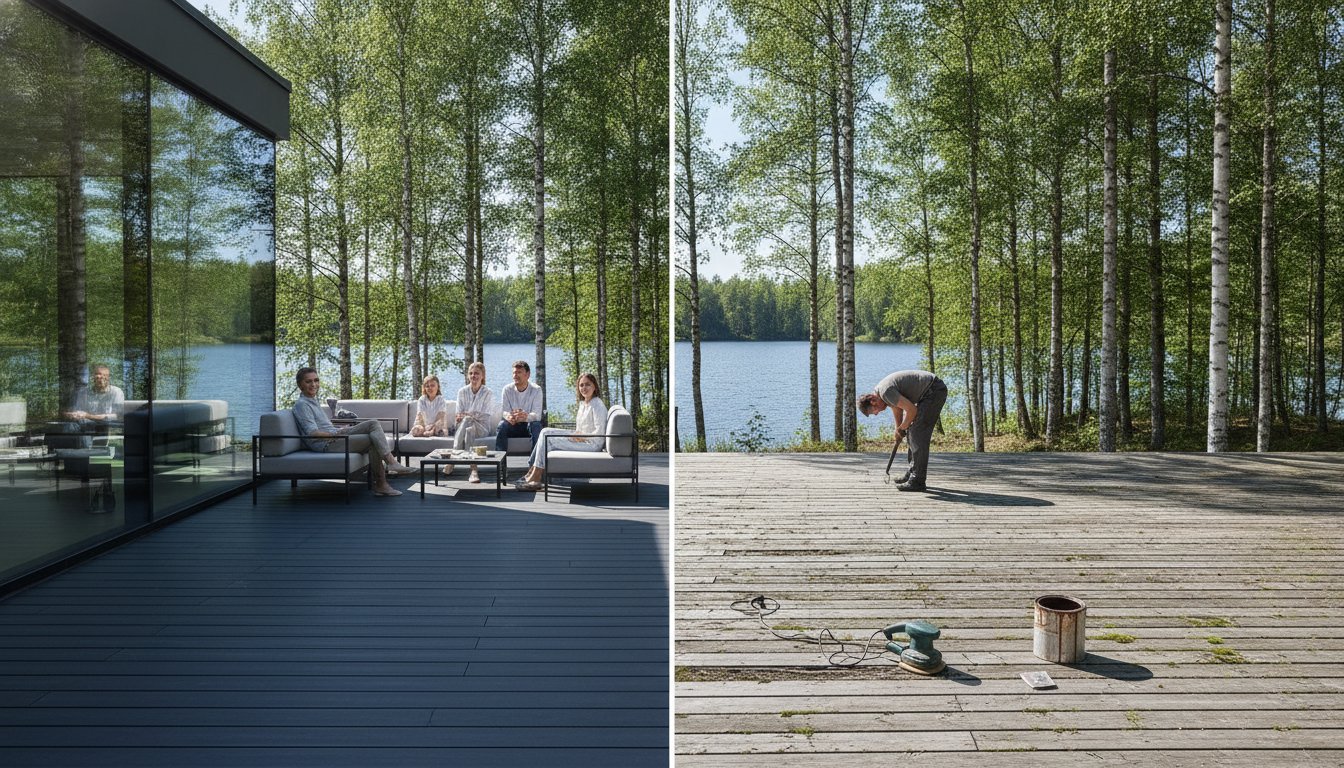
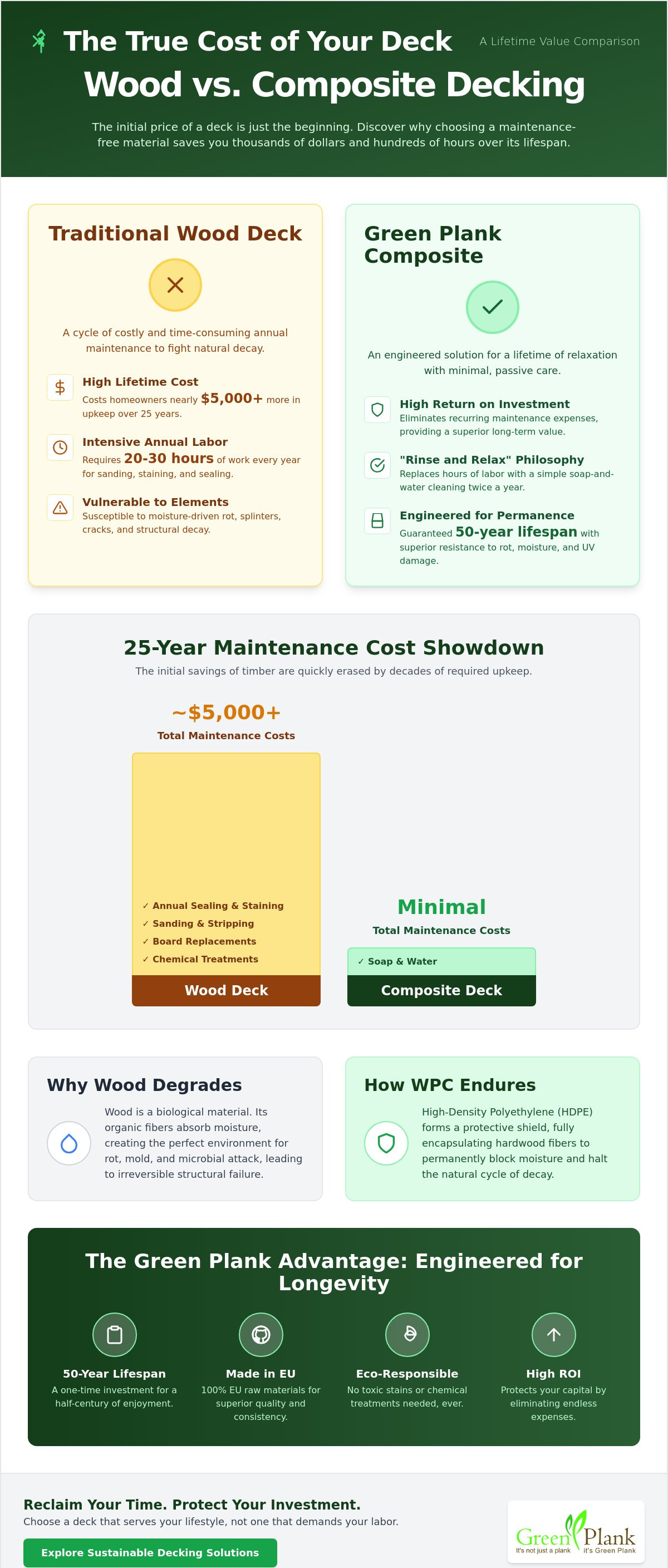
The traditional timber deck, often prized for its lower initial investment, actually costs the average homeowner nearly $5,000 more in upkeep over twenty-five years than its high-performance counterparts. Most homeowners find themselves trapped in a cycle of annual sanding and staining; they pay a biological tax for using untreated organic materials in exterior environments. When evaluating composite decking maintenance vs wood, the decision isn't just about aesthetics. It's about reclaiming your time and protecting your capital. You likely want an outdoor space that serves your lifestyle rather than one that demands your labor every spring.
This guide provides a definitive comparison of long-term costs and engineered durability. You'll learn how advanced material science eliminates the need for toxic chemical treatments while securing a 50-year lifespan for your investment. We'll break down the 2026 market data, comparing the labor-intensive reality of timber against the high ROI of maintenance-free systems like Terra Tuff. By examining the transition from cradle-to-cradle ownership to regional manufacturing standards, we'll show you how to build a space that respects both your schedule and the natural world.
Key Takeaways
- Analyze the material science behind wood degradation to understand how HDPE shields hardwood fibers from moisture-driven rot and structural decay.
- Evaluate the true Total Cost of Ownership through a 25-year comparison, revealing why the initial savings of timber are quickly eroded by recurring maintenance expenses.
- Discover why the debate of composite decking maintenance vs wood is settled by passive care, allowing you to replace annual sanding chores with a simple bi-annual rinse.
- Master the essential seasonal cleaning routines that utilize safe agents to preserve the aesthetic integrity and 50-year service life of your premium outdoor space.
- Recognize the environmental impact of your selection by prioritizing 100% EU raw materials and manufacturing processes designed to reduce your carbon footprint significantly.
Table of Contents
The Maintenance Reality: Composite vs. Wood Decking
Choosing between timber and advanced materials is fundamentally a choice between a labor-intensive hobby and a maintenance-free lifestyle. When homeowners evaluate composite decking maintenance vs wood, they often focus on the visual surface rather than the underlying commitment. Traditional timber requires active preservation; it demands a rigorous schedule of chemical intervention to survive the elements. In contrast, engineered solutions offer passive care. This represents our core commitment: Engineered durability, ecological responsibility. By shifting from reactive repairs to passive performance, you reclaim your outdoor space as a place of relaxation rather than a source of recurring chores.
The emotional cost of wood is often overlooked by those focused solely on the initial purchase price. Research indicates that maintaining a 300-square-foot wood deck can consume 20 to 30 hours of labor annually. This is time spent stripping old finishes, sanding rough grains, and applying fresh stains instead of enjoying the environment with family. Wood-plastic composites (WPCs) redefine this relationship entirely. By utilizing a high-performance blend of 75% hardwood fiber and 25% HDPE, products like Terra Tuff provide the authentic warmth of timber without the biological vulnerabilities. You gain the tactile quality of natural wood while benefiting from an engineered shield against decay.
The Annual Wood Decking Cycle
Maintaining a timber deck is a relentless cycle of correction. Every spring, the wood grain has likely expanded and contracted through winter moisture cycles, leading to micro-cracks and splinters. You must sand the entire surface to remove graying fibers, strip away peeling sealants, and apply high-grade oils to prevent rot. For those who prioritize the look of natural timber, using high-performance stains from Wood Defender can help protect the wood against these harsh cycles. Neglecting this process for even a single season allows moisture to penetrate the lignin, causing irreversible structural damage. It's a high-stakes routine where the cost of supplies and equipment rentals often ranges from $100 to $500 every year, creating a significant financial drain over the lifespan of the deck.
The WPC "Rinse and Relax" Philosophy
When comparing composite decking maintenance vs wood, the primary advantage is the total absence of structural degradation. The maintenance routine for composite systems is designed for simplicity, focusing on passive cleanliness rather than chemical restoration.
- Occasional sweeping prevents the buildup of organic debris and leaf litter.
- Simple soap-and-water cleaning removes surface dust and seasonal pollen.
- Non-porous surfaces prevent deep-set organic stains from food or foliage.
Material Science: Why Wood Degrades and WPC Endures
Wood is a biological material designed by nature to return to the earth through decomposition. Its structural integrity relies on cellulose and lignin; unfortunately, these organic compounds are highly susceptible to moisture and microbial attack. When you compare composite decking maintenance vs wood, you're looking at the difference between a material that actively decays and one that is engineered for permanence. High-Density Polyethylene (HDPE) acts as a microscopic shield, fully encapsulating every hardwood fiber within the plank. This engineering feat prevents the core elements of the wood from ever coming into contact with the moisture that triggers rot, effectively halting the natural cycle of decay before it begins.
Our commitment to regional reliability starts with 100% EU raw materials, which provides a level of quality control that global imports cannot match. By sourcing locally, we ensure a consistent density that prevents the internal voids where moisture usually collects. This material purity translates directly to UV resistance. While traditional timber undergoes photo-oxidation, leading to greying and surface splintering, our engineered profiles retain their structural profile and color depth for decades. You can explore our range of sustainable decking solutions to see how this technical precision creates a lasting aesthetic that respects the environment.
Moisture Absorption and Structural Integrity
Timber absorption rates are notoriously high, often leading to warping, cupping, and the frustrating phenomenon of fastener "pop-outs" as the boards move violently with the weather. Green Plank WPC exhibits minimal moisture absorption, maintaining its shape even in wet climates. This stability is further enhanced by our HidLoc™ Hidden Fastening Systems, which allow for natural thermal expansion without placing stress on the substructure. It's a system designed for technical harmony, ensuring your deck stays flat and secure without the need for constant screw tightening or board replacement.
The Biotic Factor: Insects and Fungi
Wood-boring insects and fungal spores require an organic food source and specific moisture levels to thrive. Because our hardwood fibers are sealed within an HDPE matrix, they're invisible to these biological threats; the insects simply cannot find a foothold. This eliminates the need for the toxic pesticides and anti-fungal treatments required by pressure-treated timber, making your outdoor space safer for families. Cradle to Cradle ownership ensures that every component of our material remains within a circular economy, maintaining material purity from the initial production through to eventual recycling.
Lifetime Cost Analysis: 25-Year Maintenance Comparison
The initial purchase price of any building material is only the first chapter of its financial story. When analyzing composite decking maintenance vs wood, the economic landscape shifts dramatically once you look beyond the initial invoice. Timber often appears as the more accessible option at the point of sale. However, this lower entry cost is essentially a down payment on a lifetime of recurring expenses. Total Cost of Ownership (TCO) accounts for every liter of oil, every sheet of sandpaper, and every hour of labor required to keep the structure safe and aesthetic. Over a 25-year horizon, the "affordable" wood deck often becomes the most expensive feature of a property.
Quantifying the supplies for a timber deck reveals a steady financial drain. High-grade UV-resistant oils, specialized wood cleaners, and replacement brushes can easily cost hundreds of dollars annually. When you factor in the periodic rental of industrial sanders or pressure washers, the cumulative investment grows rapidly. Beyond the hardware, there is the "Time Tax." If we estimate a modest 25 hours of annual maintenance, a homeowner will spend over 600 hours preserving a wood deck over 25 years. That is more than 15 full work weeks dedicated to manual labor. Choosing a high-performance system like Terra Tuff eliminates this tax, allowing you to reallocate that time and capital into your lifestyle.
The 10-Year TCO Break-Even Point
Financial modeling typically shows that the savings in maintenance supplies and equipment offset the higher upfront cost of composite materials within the first decade. After this break-even point, every year of ownership represents pure profit compared to the ongoing costs of timber. This value is further realized during property appraisals. In 2026, buyers increasingly prioritize low-intervention homes. A pristine composite deck can recoup 70% to 80% of its cost at resale, whereas a weathered wood deck often becomes a liability that requires a price reduction for repairs. You can explore more detailed figures in our guide on Calculating Composite Decking Costs for Your Project.
Professional Labour vs. DIY Care
For those who prefer not to spend their weekends sanding, the cost of professional wood restoration is significant. Hiring a specialist to strip and reseal a deck every three to five years adds thousands to the lifetime cost. For commercial facility managers, this labor requirement is even more critical. High-traffic infrastructure profiles must remain safe and splinter-free without constant closure for maintenance. Our WPC systems provide a financial insurance policy through long-term performance guarantees. While a timber deck might carry a limited 2-year warranty against rot, our products offer a 50-year service life. This engineering confidence ensures that your capital remains protected and your maintenance budget stays predictable.
Step-by-Step: How to Maintain WPC for Maximum Longevity
Maintaining a high-performance outdoor surface is an exercise in preservation rather than restoration. While we've analyzed the financial divide of composite decking maintenance vs wood, the practical execution of care is where the lifestyle benefit truly manifests. Timber requires aggressive chemical stripping and mechanical sanding to combat rot; our Wood Plastic Composite (WPC) needs only a rhythmic, bi-annual protocol to maintain its technical properties and aesthetic depth. This passive approach ensures your outdoor space remains a functional asset for decades without the need for specialized equipment or toxic materials.
Our engineering precision ensures that the HDPE shield protects the internal hardwood fibers, but the surface still interacts with the environment. You don't need to purchase expensive industrial oils or rent heavy machinery. Instead, focus on removing environmental pollutants that can sit on top of the planks. A clean surface prevents the growth of surface-level mold and keeps the drainage channels clear, which is vital for the long-term health of your substructure. By following a structured cleaning routine, you uphold the 50-year service life guarantee that defines our European manufacturing standards.
Seasonal Cleaning Protocol
Implement this three-step routine during the transition into Spring and again in late Autumn to keep your deck in peak condition.
- Step 1: Debris Management. Use a stiff broom to clear leaves, needles, and organic matter. This prevents drainage clogs and stops organic material from breaking down into a food source for surface mold.
- Step 2: Soap Application. Apply a solution of warm water and mild liquid soap. A soft-bristle brush is sufficient to agitate the surface and lift seasonal pollen or dust.
- Step 3: Low-Pressure Rinse. Rinse the surface thoroughly with a garden hose. Avoid high-PSI industrial washers; excessive pressure can damage the protective profile and is entirely unnecessary for WPC.
Addressing Scratches and Minor Stains
Life happens on a deck, and managing "The Big Three"—mold, grease, and tannins—requires a targeted but gentle approach. Grease spills from outdoor dining should be addressed immediately with warm water and degreasing soap to prevent surface bonding. Tannins, which are natural oils found in our 75% hardwood fiber blend, may occasionally surface during the initial weathering phase; these typically wash away with rain or simple rinsing. If you encounter minor surface abrasions from moving furniture, these can often be blended using a soft brass brush to follow the grain, though the density of our materials makes deep scratches rare.
For a deeper analysis of maintenance techniques and to debunk common industry myths, consult our professional guide on How to Clean Composite Decking. To invest in a surface designed for zero-stress longevity, browse our complete range of high-performance decking.
The Green Plank Advantage: Engineered for Zero-Stress Longevity
The transition from a deck owner to a deck enjoyer is a matter of technical selection. When we evaluate composite decking maintenance vs wood, the ultimate goal is the complete removal of the maintenance burden. Our Terra Tuff and Smart System lines represent the pinnacle of this low-intervention engineering. These systems aren't merely building materials; they're sophisticated environmental solutions designed to perform in the most demanding climates. By utilizing a high-density matrix of 75% hardwood fiber and 25% HDPE, these profiles offer a surface that remains stable, beautiful, and functional without the need for annual restoration.
Technical precision extends to how the boards are secured. The HidLoc™ hidden fastening system is a critical component of our zero-stress philosophy. Traditional wood decks rely on surface-driven screws that create thousands of tiny entry points for moisture and organic debris. HidLoc™ eliminates these surface penetrations, creating a seamless aesthetic while protecting the structural core of the planks. This lack of surface holes simplifies cleaning and prevents the "pop-out" issues common with timber. It's a design choice that prioritizes long-term performance and material purity, ensuring your investment stays protected from the inside out.
High-Performance Infrastructure Profiles
Our commitment to durability is why commercial developers prioritize Green Plank for high-traffic infrastructure like public piers and boardwalks. These environments are the ultimate testing grounds, where salt spray and extreme weather would destroy traditional timber in a few short years. Our Terra Tuff: Engineered for Extreme Durability profiles provide exceptional saltwater resistance without the need for toxic marine-grade sealants. We use 100% EU raw materials to ensure a reduced CO2 footprint, providing a sustainable alternative that meets the rigorous standards of professional engineers and municipal planners alike.
The 50-Year Warranty Commitment
A half-century warranty isn't just a marketing claim; it's a primary signature of our engineering confidence. This 50-year service life guarantee reflects the material stability achieved through our proprietary manufacturing processes. We operate under a "Cradle to Cradle" ownership model, ensuring that our products are as responsible at the end of their life as they are at the beginning. This circular approach to manufacturing provides peace of mind for those who value both quality and environmental ethics. You don't have to choose between a premium lifestyle and ecological responsibility. To begin your journey toward a maintenance-free outdoor space, consult with a Green Plank partner for your next project today.
Investing in a Maintenance-Free Legacy
The choice between composite decking maintenance vs wood is a decision that impacts your property value and your personal time for decades. You've seen how the initial savings of timber are quickly consumed by the recurring costs of oils, stains, and professional labor. By selecting an engineered system, you replace a cycle of active preservation with passive care. This transition is powered by material science, specifically our 75% hardwood fiber and 25% HDPE blend, which ensures structural stability without the risk of biological decay.
Our commitment to sustainability is reflected in our 100% EU-sourced raw materials and our industry-leading 50-year service life warranty. This isn't just about building a deck; it's about creating a permanent outdoor sanctuary that respects nature while serving your lifestyle. You can experience the difference in quality and texture firsthand by taking the next step toward your ideal outdoor space.
Request a Sample of Sustainable WPC Decking today and discover how regional reliability meets high-end engineering. We look forward to helping you build a space where you can finally relax and enjoy the view.
Frequently Asked Questions
Does composite decking require any oiling or staining?
Composite decking never requires oiling, staining, or sealing. Because the hardwood fibers are encapsulated in a high-density polyethylene (HDPE) shield, the material is naturally protected from moisture and UV degradation. Traditional timber relies on these coatings to prevent rot, but our engineered boards maintain their structural integrity without chemical intervention. This technical advantage eliminates the recurring cost and environmental impact of petroleum-based stains.
How much time does it take to maintain composite decking vs. wood annually?
Annual maintenance for composite decking typically requires only two to four hours for basic cleaning. In contrast, wood decks demand between 20 and 30 hours of labor for sanding, stripping, and re-coating. When comparing composite decking maintenance vs wood, the time savings represent several weekends of reclaimed leisure. This reduction in manual labor is a primary reason why high-end homeowners choose engineered WPC for their outdoor spaces.
Can I pressure wash my Green Plank composite deck?
You can pressure wash your Green Plank deck, provided you use a low-pressure setting below 1500 PSI. High-pressure industrial washers can damage the protective profile and are unnecessary for removing surface dirt. We recommend using a fan-tip nozzle and keeping it at least 30 cm from the surface. For most cleaning tasks, a simple garden hose and a soft-bristle brush are more than sufficient to maintain the aesthetic quality.
Is composite decking maintenance-free or just low-maintenance?
Composite decking is professionally classified as low-maintenance rather than entirely maintenance-free. While it doesn't rot or splinter, it still interacts with the environment and accumulates dust, pollen, or organic debris. Occasional sweeping and a bi-annual rinse with soap and water are necessary to prevent surface mold and keep drainage channels clear. This minimal intervention ensures the product achieves its full 50-year service life while remaining visually pristine.
What happens if I don’t maintain my wood deck every year?
Neglecting wood maintenance for even a single season leads to irreversible structural and aesthetic damage. Moisture penetrates the unprotected lignin, causing the wood to warp, cup, and eventually rot from the inside out. Splinters become a safety hazard, and the graying effect from UV exposure becomes difficult to reverse without aggressive sanding. This neglect significantly shortens the deck's lifespan and can decrease your property's resale value over time.
Does composite decking fade or change colour over time like wood?
Our WPC decking is engineered for high UV resistance and experiences only minimal color adjustment during the first few months of exposure. Unlike timber, which turns gray and loses its original hue without constant staining, composite retains its intended profile and depth for decades. This color stability is achieved through high-quality pigments and the protective HDPE matrix. Your deck will look as vibrant in year ten as it did in year one.
Is composite decking more environmentally friendly than wood considering the maintenance chemicals?
Composite decking is significantly more environmentally friendly when considering the lifecycle of maintenance chemicals. The debate over composite decking maintenance vs wood often centers on sustainability; traditional wood decks require annual applications of toxic stains that leach into the soil. Our products utilize 100% EU-sourced raw materials and a 75% hardwood fiber blend. The lack of recurring chemical treatments makes it a superior choice for eco-conscious homeowners.
How do I remove grease or food stains from WPC decking?
To remove grease or food stains from WPC decking, apply warm water mixed with a mild degreasing soap immediately. Use a soft-bristle brush to agitate the area and then rinse thoroughly. Because our surfaces are non-porous, stains don't penetrate deeply like they do in timber. Addressing spills quickly prevents surface bonding and ensures that your outdoor dining area remains clean and inviting without the need for harsh solvents.
Spesifiser produktet
Bruk denne guiden i en Green Plank-spesifikasjon
Tekniske WPC-artikler skal støtte de kommersielle sidene — ikke konkurrere med dem. Fortsett til komposittdekke, TerraTuff, Nordeka eller de tekniske nedlastningene.