



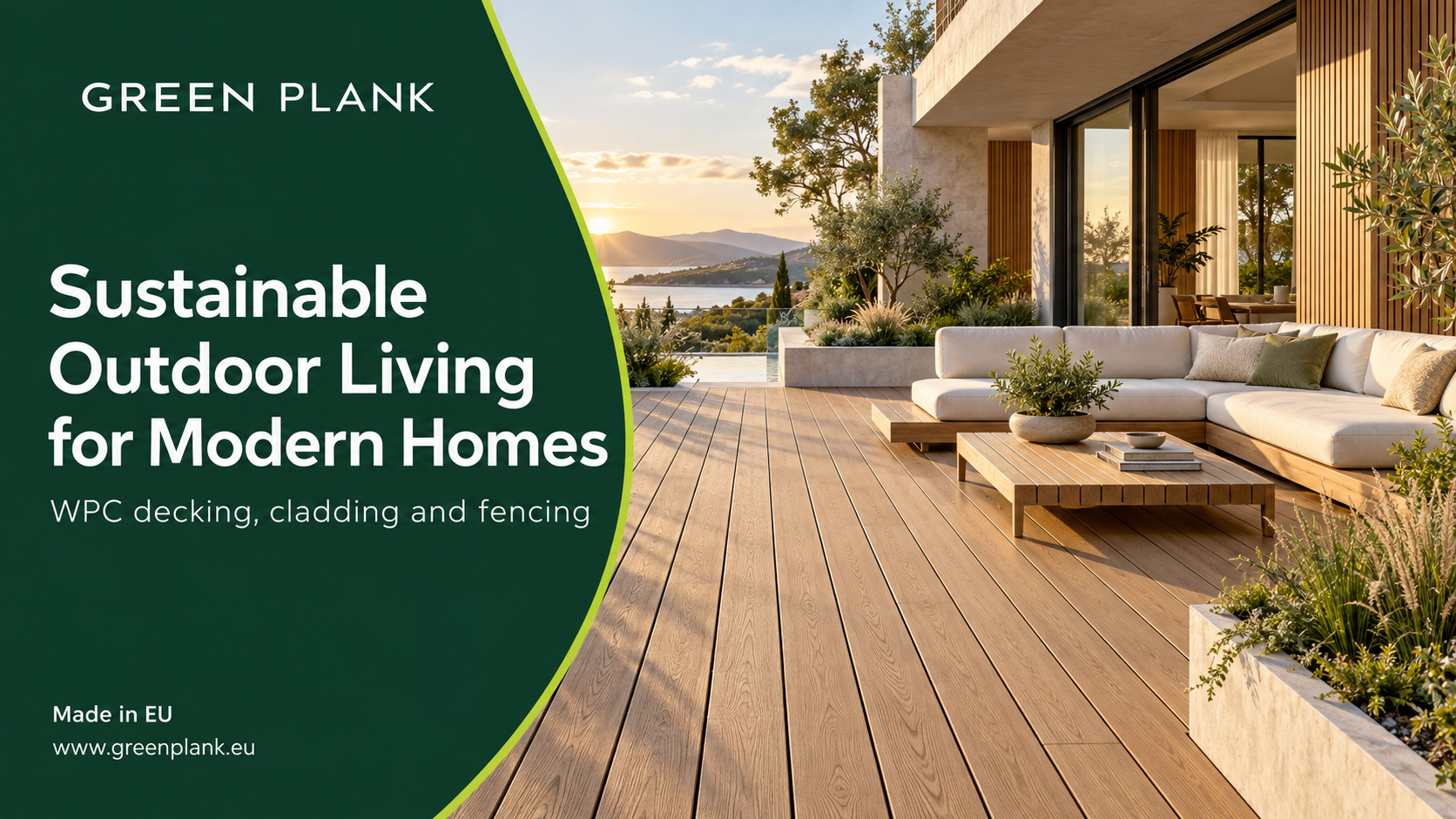
Sustainable Outdoor Living for Modern Homes Outdoor spaces have become an important extension of the modern home. Terraces, balconies, gardens, pool surroundings and outdoor kitchens are no longer treated simply as seasonal extras; they are increasingly designed as functional living environments for dining, relaxation, entertaining and everyday family life. At the same time, homeowners and architects are looking beyond appearance. Sustainable outdoor living means considering durability, maintenance, material origin, resource efficiency and long-term value alongside design. The goal is to create outdoor spaces that remain attractive and practical while avoiding unnecessary maintenance and premature material replacement. The most sustainable outdoor space is not necessarily the one with the fewest materials. It is the one designed intelligently, built with suitable materials and intended to remain useful for many years. What Does Sustainable Outdoor Living Really Mean? Sustainability should be considered across the complete life of an outdoor project. ISO 14040 defines the principles and framework for Life Cycle Assessment, including lifecycle inventory, impact assessment and interpretation. This encourages a broader evaluation than simply looking at one environmental characteristic at the time of purchase. :contentReference[oaicite:0]{index=0} For a residential outdoor space, this broader perspective can include: where the raw materials originate, how products are manufactured, transport distances and logistics, expected technical service life, cleaning and maintenance requirements, repairability and replacement frequency, and available end-of-life options. Design for Long-Term Use, Not Short-Term Trends A successful terrace should work for the household today while remaining flexible enough for future needs. Good planning begins with circulation, furniture zones, shade, drainage and connection between indoor and outdoor spaces. Instead of designing around short-lived trends, homeowners can focus on timeless materials, neutral base colours and flexible furnishings. Permanent elements such as decking, screens and structural features can form a durable foundation, while furniture, plants and accessories can be changed over time. Practical design priorities Create clear zones for dining, relaxing and circulation. Plan drainage before selecting the final surface. Provide ventilation beneath raised decking systems. Choose materials appropriate to local weather conditions. Consider maintenance access from the beginning. Design lighting and furniture positions before construction. Choosing Decking for Sustainable Outdoor Living Decking often represents one of the largest material areas in an outdoor living project. Traditional timber, modified wood, stone, ceramic systems and composite decking can all be appropriate depending on the project. The strongest decision comes from comparing the actual performance and lifecycle requirements of each solution. Consideration Traditional Timber Quality WPC Composite Routine cleaning Required Required Painting, staining or oiling May be required depending on species and desired appearance Generally not required Appearance Natural and develops through weathering Controlled colours and surface designs Dimensional movement Influenced by moisture and temperature Thermal movement must be considered Maintenance planning Depends strongly on timber and exposure Primarily cleaning and inspection Lifecycle value Depends on maintenance and replacement cycles Can benefit from reduced surface-treatment requirements This comparison is general. Performance varies significantly between individual timber species and composite formulations, so homeowners and professionals should always evaluate product-specific technical documentation. Why WPC Can Fit Modern Sustainable Homes Wood Plastic Composite, or WPC, combines wood or other cellulose-based fibres with thermoplastic polymers and functional additives. Modern composite decking can provide a natural visual character while reducing the need for recurring painting, staining or oiling. Quality, however, depends on much more than the percentages of wood and polymer. Fibre characteristics, polymer selection, coupling technology, UV stabilisation, pigments, profile geometry and manufacturing control all influence the finished product. Premium WPC is a complete material system Buyers should avoid judging composite decking solely by the percentage of wood fibre, recycled content or board weight. Long-term performance results from how the complete formulation, profile and installation system work together. Low Maintenance Can Support More Sustainable Living A low-maintenance terrace does not mean a maintenance-free terrace. Outdoor surfaces still require cleaning, inspection and sensible care. However, eliminating repeated coating cycles can reduce the time, materials and labour associated with traditional surface treatments. This can be particularly valuable for larger terraces, holiday properties and homeowners who want to spend more time using their outdoor space rather than regularly refinishing it. Clean surfaces periodically according to manufacturer guidance. Remove leaves and debris before they accumulate. Keep drainage gaps and ventilation routes clear. Inspect fixings and structural components periodically. Avoid using chemicals or cleaning methods not recommended for the product. Drainage Is Essential to Sustainable Outdoor Design Effective water management protects the complete outdoor system. Poor drainage can create standing water, increase contamination and make surfaces more difficult to maintain. A well-designed terrace should therefore incorporate suitable falls, clear drainage routes and sufficient airflow beneath raised decking. Surrounding landscaping should also direct water appropriately rather than concentrating it against the house or terrace structure. Create Shade and Climate Comfort Naturally Sustainable outdoor living also involves making the space comfortable without unnecessary energy use. Pergolas, strategically positioned trees, climbing plants and adjustable shading can reduce direct solar exposure and create more comfortable areas during warmer weather. Planting can simultaneously add biodiversity, visual softness and privacy. Native or climate-appropriate vegetation may also be easier to manage when matched correctly to soil, sunlight and local rainfall. Think Carefully About Material Origin and Traceability Modern sustainability increasingly requires transparency. Homeowners, architects and developers may want to understand where raw materials originate, where products are manufactured and what documentation supports environmental or performance claims. EU policy is moving further toward lifecycle and sustainability information for construction products. The revised Construction Products Regulation strengthens the framework for product performance and sustainability information across the European market. :contentReference[oaicite:1]{index=1} For buyers, this makes questions about manufacturing origin, raw-material traceability and technical documentation increasingly relevant when comparing products. Sustainability Is More Than Recycled Content Recycled material can contribute to circularity, but a single recycled-content percentage does not describe a product's complete environmental performance. Service life, manufacturing, transport, maintenance and replacement frequency should also be considered. The European Commission's Level(s) framework promotes a common language for evaluating sustainability performance using a lifecycle perspective. :contentReference[oaicite:2]{index=2} Responsible material selection asks two questions at the same time: what is the product made from, and how effectively will it perform throughout its useful life? Outdoor Living Should Be Designed as a Complete System A beautiful decking board alone cannot create a high-performing terrace. The substructure, fastening system, ventilation, drainage, expansion allowances and edge details all influence long-term performance. Before installation, consider: the correct support spacing for the selected profile, adequate support beneath board ends and joints, thermal expansion requirements, ventilation beneath the terrace, positive drainage away from the building, compatible clips and fastening systems, access for future cleaning and inspection. From Terrace to Complete Outdoor Living Environment Sustainable outdoor design extends beyond decking. A coordinated material palette can connect terraces with fencing, privacy screens, façades, pergolas, planters and landscape features to create a unified architectural expression. The most effective designs often use a limited number of durable materials repeatedly rather than introducing many unrelated products. This can simplify visual planning, future maintenance and replacement. Green Plank – Sustainable Outdoor Living Solutions Green Plank develops composite decking systems for demanding public environments as well as residential terraces, gardens and waterfront homes. The company's current product positioning emphasises European-made composite solutions, long service life, reduced maintenance and outdoor design applications. :contentReference[oaicite:3]{index=3} For homeowners, architects and developers, the objective should always be to select the specific profile according to its technical documentation, intended application, installation requirements and local environmental conditions. Explore Green Plank solutions for modern outdoor living at www.greenplank.eu. Conclusion: Build Outdoor Spaces for the Future Sustainable outdoor living for modern homes is about creating spaces that combine comfort, architecture and responsible long-term material choices. A successful terrace should not simply look attractive when it is completed; it should remain practical, manageable and enjoyable through years of changing seasons and everyday use. By combining durable materials, thoughtful drainage, efficient landscaping, transparent sourcing and lifecycle-based decision-making, homeowners can create outdoor environments that provide lasting value while reducing unnecessary maintenance and resource consumption. Sources ISO 14040:2006 – Environmental Management, Life Cycle Assessment Principles and Framework European Commission – Level(s), Sustainability Performance of Buildings European Commission – Construction Products Regulation Green Plank – Composite Decking and Outdoor Living Solutions
Produkt spezifizieren
Diese Anleitung in einer Green Plank-Ausschreibung nutzen
Technische WPC-Artikel sollen die kommerziellen Seiten stärken — nicht mit ihnen konkurrieren. Weiter zu WPC-Terrasse, TerraTuff, Nordeka oder den technischen Downloads.