



A restaurant patio that requires annual sanding and staining isn't an asset; it's a recurring liability that consumes your seasonal margins. You likely recognize that your outdoor dining area is a critical extension of your brand identity, but the constant maintenance of traditional timber often conflicts with the demands of a high-traffic environment. Between food spills and the safety risks of slippery surfaces, the search for viable restaurant patio decking ideas often leads to a compromise between aesthetics and endurance.
We're here to show you that this compromise is no longer necessary. You'll learn how to balance professional design with advanced material science to create outdoor spaces that remain beautiful for decades. This guide details durable, EU-made composite solutions that align with your sustainability goals and maximize your long-term ROI. We'll explore high-performance profiles like Terra Tuff, the benefits of HidLoc™ fastening systems for public safety, and how to achieve a premium look that respects your environmental reporting requirements through a Cradle to Cradle ownership model.
Key Takeaways
Learn why engineering for endurance through high-density commercial profiles provides a 50-year service life, significantly reducing long-term operational costs.
Explore innovative restaurant patio decking ideas that utilize multi-level layouts and organic shapes to define premium dining zones while maintaining brand identity.
Discover how the 75% hardwood fiber and 25% HDPE composition creates a surface resistant to common hospitality hazards like grease, wine spills, and heavy foot traffic.
Understand the importance of superior slip resistance and HidLoc™ hidden fastening systems in minimizing business liability and ensuring full ADA compliance.
Gain insights into the Cradle to Cradle ownership model and how sourcing EU-made materials reduces the carbon footprint of your commercial infrastructure.
Table of Contents
Designing a High-Performance Restaurant Patio for 2026
Creative Layout and Aesthetic Decking Ideas
Material Selection: Why WPC Outperforms Traditional Timber
Safety and Maintenance Standards for Commercial Patios
Sustainable Commercial Solutions by Green Plank
Designing a High-Performance Restaurant Patio for 2026
Outdoor dining is no longer a seasonal luxury; it's a primary revenue driver that defines a brand's presence in the urban landscape. When researching restaurant patio decking ideas, it's vital to understand the psychology behind the space. A premium outdoor area acts as a visual invitation. It signals to potential guests that your establishment values both comfort and quality. However, creating a high-performance space requires a shift from residential thinking to commercial engineering.
Residential decking focuses on occasional leisure, while hospitality settings demand extreme endurance. Traditional timber often fails here. It succumbs to the constant friction of heavy furniture, high-frequency foot traffic, and the inevitable acidity of food and wine spills. Modern hospitality projects now prioritize Wood-Plastic Composites (WPC) for their material science. These profiles offer the tactile warmth of hardwood but possess the structural integrity of high-density polymers. This balance ensures your patio remains an asset rather than a maintenance liability.
Maximizing Floor Space and Customer Flow
Efficiency is the silent partner of a profitable patio. A successful layout must accommodate peak capacity without compromising the essential paths for service staff. If your servers are navigating a maze of chairs, your table turnover will suffer. Consider these layout strategies to optimize your floor plan:
Integrated Wait Stations: Build service points directly into the deck structure to reduce staff travel time and keep the main floor clear.
Strategic Zoning: Use varied deck heights or contrasting board directions to separate high-energy bar zones from quiet dining areas.
Clear Pathing: Maintain wide primary aisles to ensure smooth flow and full accessibility for all guests.
The ROI of Durability in Hospitality
The true value of a commercial deck is measured over decades, not seasons. Calculating the total cost of ownership reveals that low-maintenance materials like Green Plank's Terra Tuff provide far superior ROI compared to softwoods or tropical hardwoods. A 50-year service life warranty reflects the engineering confidence behind these EU-manufactured profiles. You eliminate the annual costs of sanding and staining, but more importantly, you eliminate the downtime. In a high-stakes industry, every day your patio is closed for maintenance is a day of lost revenue. Choosing a sustainable, durable foundation ensures your brand identity remains untarnished by weathered or rotting boards.
Creative Layout and Aesthetic Decking Ideas
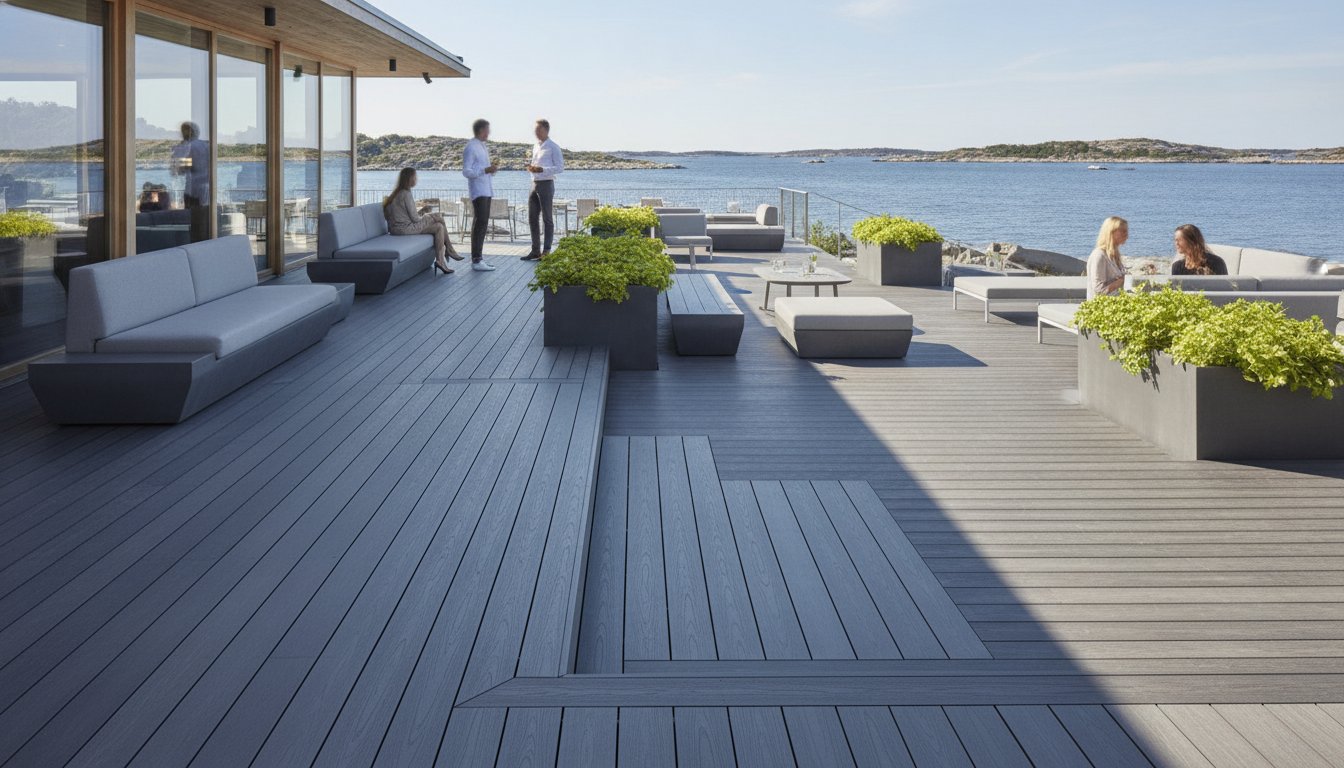
Modern restaurant patio decking ideas now focus on the seamless integration of form and function. While the structural foundation provides longevity, the layout defines the guest experience. Designers are increasingly moving away from monolithic, single-level platforms in favor of dynamic environments that utilize multi-level decking. These tiered structures don't just add visual interest; they serve as architectural tools to define distinct dining "rooms" or exclusive VIP zones without the need for restrictive walls. This approach maintains an open-air feel while providing the intimacy guests expect in a premium setting.
Precision-engineered wood-plastic composite profiles enable the creation of organic shapes and curved edges that were once difficult to achieve with traditional materials. These soft lines mimic natural landscapes, fostering a relaxing atmosphere that encourages longer stay times and increased table spend. Inlaid patterns and color-blocking also play a vital role in modern hospitality design. By alternating board directions or using contrasting tones, you can subtly guide customer movement toward host stands or exits. For projects requiring bespoke shapes, exploring high-performance composite profiles ensures your creative vision is backed by structural integrity.
Zoning for Atmosphere and Function
Effective zoning transforms a flat surface into a versatile business asset. You can use different plank orientations to visually separate a high-energy lounge area from a formal dining space. Integrating composite fencing systems adds an extra layer of privacy and serves as a sophisticated windbreak for exposed locations. To ensure year-round profitability, layouts should incorporate dedicated zones for heavy-duty heaters and shade structures. This foresight extends your outdoor season and protects your investment from the elements. Safety remains a priority in these layouts. Integrating recessed lighting into stair treads and deck perimeters ensures compliance with ADA Standards for Accessible Design, providing a safe environment for every guest.
Color and Texture Trends for 2026
The aesthetic shift for 2026 leans heavily toward "Scandi-Minimalism" and biophilic integration. This design movement prioritizes clean lines, muted palettes, and the inclusion of green elements like built-in planters. Natural wood tones remain a staple for brands seeking a classic warmth, while modern greys and charcoals align with contemporary, industrial identities. Beyond color, the texture of the decking is paramount. Advanced manufacturing now produces deep-grain finishes that provide a sophisticated tactile feel. These textures don't just look authentic; they enhance slip resistance, which is a critical safety requirement for high-traffic commercial environments where spills are a daily occurrence.
Material Selection: Why WPC Outperforms Traditional Timber
Material selection is the definitive factor in the long-term viability of any outdoor dining project. When evaluating restaurant patio decking ideas, the focus must shift from temporary aesthetics to engineering endurance. A deck that looks pristine during the grand opening but warps after one winter is a failed investment. Modern Wood-Plastic Composites (WPC) solve this by combining 75% hardwood fiber with 25% high-density polyethylene (HDPE). This specific ratio ensures the profile retains the structural rigidity of timber while gaining the weather-resistant properties of advanced polymers.
Hospitality settings present unique environmental challenges that residential materials cannot withstand. Daily exposure to grease, red wine spills, and acidic food waste will permanently stain traditional wood. WPC profiles are engineered with a non-porous surface that prevents these substances from penetrating the core. This resistance simplifies your nightly cleaning routine and preserves the deck's appearance without the need for harsh chemical treatments. It's a practical solution that respects both your staff's time and your brand's visual standards.
High-frequency movement is the silent destroyer of restaurant floors. We refer to this as the "Chair Test." In a busy establishment, chairs are dragged across the surface hundreds of times daily. Low-density composites or softwoods will quickly show deep gouges and scratching. High-density commercial profiles are manufactured to resist this abrasive force, maintaining a smooth finish even under the most demanding conditions. This density also ensures the boards remain stable during the extreme temperature fluctuations common in the European climate.
WPC vs. Hardwood vs. Softwood
Traditional timber carries significant hidden costs that aren't apparent at the time of purchase. Sanding, staining, and sealing are annual requirements for wood, leading to recurring labor expenses and lost revenue during maintenance downtime. WPC offers superior dimensional stability, meaning it won't warp, gap, or splinter over time. This ensures a safe, comfortable surface for guests in high-end footwear and eliminates the liability of splinter-related injuries. You gain the beauty of natural grain without the structural degradation associated with organic rot.
The Terra Tuff Advantage for High-Traffic
Specifying Terra Tuff composite decking for commercial infrastructure provides a level of product consistency that only 100% EU raw materials can offer. These high-density profiles are specifically designed for the rigors of the hospitality industry, offering exceptional UV resistance and moisture protection. By choosing a product manufactured within the EU, you ensure that every board meets rigorous quality and environmental standards. This engineering confidence is why these profiles carry a service life warranty of up to 50 years, providing a foundation that outlasts the interior décor itself.
Safety and Maintenance Standards for Commercial Patios
Safety is the silent foundation of a successful hospitality venue. While you explore various restaurant patio decking ideas, the technical specifications regarding slip resistance and fire safety must remain your primary filters. In a high-traffic environment, a single slip can lead to significant liability. High-performance WPC profiles are engineered with deep-embossed textures that provide superior traction even in wet conditions. This engineering protects your guests and safeguards your business from preventable insurance claims. It's a proactive approach to risk management that doesn't compromise on the premium aesthetic of your outdoor space.
Accessibility is another pillar of modern commercial design. Ensuring your patio meets international standards for inclusive access is essential for welcoming all customers. This requires a surface that remains perfectly level and free from the warping or "cupping" common in timber. By utilizing high-density commercial profiles, you maintain a stable, flat floor that accommodates wheelchairs and high-heeled footwear with equal ease. Additionally, fire safety ratings for outdoor structures are increasingly scrutinized in urban planning. Choosing materials with proven fire-retardant properties ensures your establishment complies with local building codes and provides peace of mind for both owners and patrons.
HidLoc™ Hidden Fastening Systems
Traditional deck installation often relies on face-screwing, which creates hundreds of potential trip hazards as screws inevitably back out over time. Utilizing hidden deck fasteners like the HidLoc™ system eliminates these risks entirely. This technology secures the boards from the side, resulting in a seamless, screw-free surface that's safer for staff and guests alike. For large-scale restaurant patios, these systems also manage thermal expansion, allowing the boards to move naturally without compromising the structural integrity of the deck. This precision engineering reduces installation time by up to 30%, getting your business open and revenue-generating faster.
Commercial Cleaning Protocols
The operational efficiency of your patio depends on how easily it can be restored after a busy service. Restaurant environments are prone to specific hazards like hot coffee, red wine, and cooking oils. Unlike wood, which absorbs these liquids and creates permanent stains, Green Plank's composite materials feature a non-porous surface that keeps spills on the exterior. Daily maintenance typically requires nothing more than a simple wash with soap and water. Because the material is color-fast, it requires zero painting, staining, or sealing throughout its life. This eliminates the need for toxic chemicals and ensures your patio looks as pristine in year ten as it did on opening night. To ensure your project meets these rigorous standards, you can view our commercial WPC profiles designed specifically for the hospitality sector.
Sustainable Commercial Solutions by Green Plank
Modern hospitality brands are increasingly judged by their environmental footprint. While the visual appeal of restaurant patio decking ideas often drives the initial design phase, the true value lies in the ethical foundation of the materials chosen. Sustainability is no longer a peripheral concern; it's a core component of premium branding. By selecting materials that prioritize ecological responsibility, you position your establishment as a leader in the shift toward a circular economy. This commitment resonates with a growing demographic of conscious consumers who value transparency and regional integrity.
We operate under a Cradle to Cradle ownership model. This approach ensures that every profile we manufacture is designed with its entire lifecycle in mind. Instead of a linear "take-make-waste" cycle, our products are engineered to be part of a continuous loop of utility. This circularity reduces the demand for virgin resources and prevents high-performance materials from entering landfills. It's a system that values engineering precision as much as environmental ethics, providing a decking solution that respects nature while serving your business needs for decades.
European Engineering and Ethics
Geographical branding is a hallmark of our quality standards. We utilize 100% EU raw materials to ensure absolute consistency in every batch of decking we produce. This regional focus provides several critical advantages for your commercial project:
Reduced CO2 Footprint: Shortened supply chains significantly lower the carbon emissions associated with transport and logistics.
Strict Quality Control: Manufacturing within the EU ensures compliance with the world's most rigorous environmental and labor standards.
Reliable Availability: Local production means faster lead times and more dependable support for large-scale infrastructure projects.
The 50-Year Commercial Warranty
Longevity is the most effective form of sustainability. A product that lasts for half a century inherently reduces waste by eliminating the need for frequent replacements. Our 50-year service life warranty isn't just a promise; it's a testament to the high-density engineering of our commercial profiles. When you invest in these materials, you're securing a foundation that outlasts multiple interior renovations. This extreme durability ensures that your restaurant patio decking ideas remain viable and beautiful for the long term, maximizing your ROI while minimizing your environmental impact.
Integrating sustainable building materials into your design also enhances your Corporate Social Responsibility (CSR) reporting. Many commercial projects now require detailed documentation regarding the origin and impact of construction materials. Our EU-made, high-performance composites simplify this process, providing the data you need to meet environmental standards. You don't have to choose between a premium brand identity and an eco-conscious stance. With the right engineering, your outdoor space can embody both.
Securing Your Venue’s Outdoor Future
Selecting the right foundation for your hospitality space is a decision that impacts your operational budget and brand reputation for decades. We've explored how advanced material science and thoughtful layout strategies transform a simple deck into a high-performance business asset. By prioritizing high-density profiles and slip-resistant textures, you create a safe, premium environment that withstands the rigors of heavy foot traffic and daily service. These restaurant patio decking ideas aren't just about aesthetics; they're about engineering a space that requires zero downtime for maintenance.
Our commitment to regional reliability is reflected in our use of 100% EU raw materials and a Cradle to Cradle ownership model. We provide engineering confidence through a 50-year service life warranty, ensuring your investment remains as stable and beautiful as the day it was installed. You have the opportunity to lead the industry in both design excellence and environmental responsibility. To see the quality of our sustainable craftsmanship firsthand, you can Request a Commercial Sample Kit for Your Restaurant Project. We look forward to helping you build an outdoor dining experience that respects nature and elevates your brand.
Frequently Asked Questions
What is the best decking material for a restaurant patio?
High-density Wood-Plastic Composite (WPC) is the superior choice for hospitality environments due to its balance of aesthetic warmth and engineering endurance. It combines 75% hardwood fiber with 25% HDPE to withstand extreme foot traffic and frequent spills. Unlike traditional timber, it doesn't splinter or rot, which preserves your brand's premium image for decades without recurring maintenance costs.
How long does composite decking last in a commercial setting?
When engineered for commercial infrastructure, high-quality composite decking has a service life of up to 50 years. We provide a 50-year warranty for these applications to reflect the structural integrity of our high-density profiles. This longevity is achieved through the use of 100% EU raw materials, ensuring the boards remain stable under the most demanding hospitality conditions.
Is composite decking slippery when wet for restaurant staff?
Professional-grade composite decking is specifically engineered with superior slip resistance to protect both staff and guests. Deep-embossed textures provide high traction even in wet conditions or during accidental service spills. This focus on safety helps minimize business liability and ensures a secure working environment for servers moving at high speeds during peak hours.
How do you remove food stains from WPC decking?
Most food and beverage stains are easily removed using simple soap and warm water. Because the material is non-porous, substances like red wine, coffee, and grease remain on the surface rather than soaking into the core. A quick cleaning routine with a soft-bristle brush is typically all that's required to restore the deck to its original condition.
Does commercial decking require a different installation method?
Commercial projects require specific profiles and fastening systems designed to handle higher load requirements and thermal expansion across large surface areas. Using high-density commercial infrastructure profiles ensures the deck stays level and stable under heavy furniture and constant movement. It's essential to follow professional installation guidelines to maintain the long-term structural integrity of the patio.
Can I use hidden fasteners for a high-traffic restaurant deck?
Yes, the HidLoc™ hidden fastening system is designed for high-traffic areas to eliminate trip hazards and unsightly surface screws. It secures boards from the side, creating a seamless and safe surface for every guest. This system also accommodates the natural thermal movement of the boards, which is critical for the stability of large-scale restaurant patio decking ideas.
What are the fire safety requirements for restaurant patio decking?
Fire safety requirements depend on local building codes and the specific location of your outdoor dining area. High-performance WPC materials often incorporate fire-retardant properties to meet the rigorous standards of commercial urban planning. You should always verify the specific fire rating of your chosen decking profile to ensure full compliance with regional safety regulations.
How does sustainable decking help with my restaurant’s ESG goals?
Sustainable decking solutions support ESG goals by utilizing recycled hardwood fibers and following a Cradle to Cradle ownership model. Sourcing EU-manufactured products significantly reduces your project's carbon footprint by minimizing transport distances. This commitment to circular construction provides the verifiable data needed for corporate social responsibility reporting and positions your brand as an eco-conscious leader.
Produkt spezifizieren
Diese Anleitung in einer Green Plank-Ausschreibung nutzen
Technische WPC-Artikel sollen die kommerziellen Seiten stärken — nicht mit ihnen konkurrieren. Weiter zu WPC-Terrasse, TerraTuff, Nordeka oder den technischen Downloads.