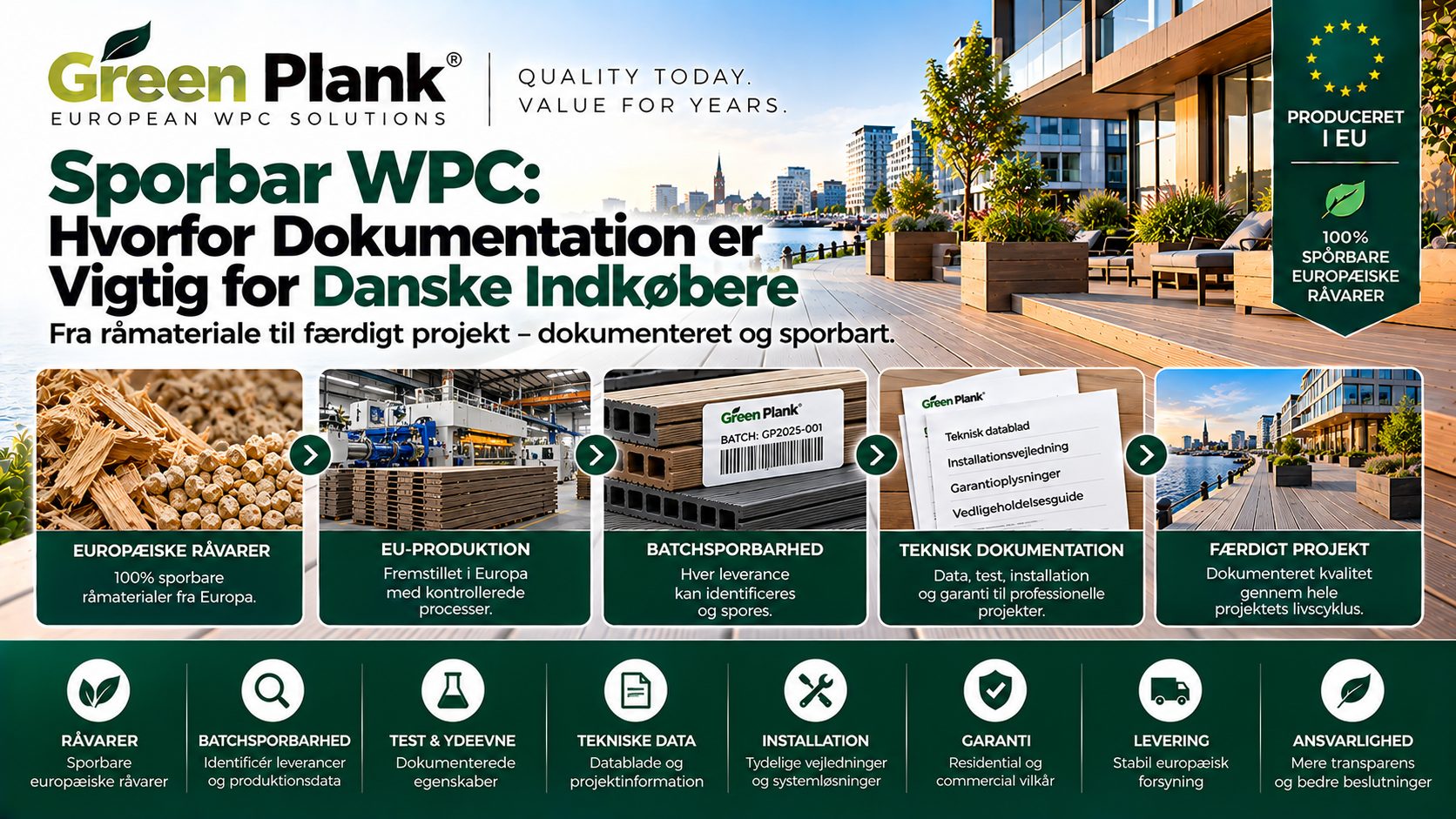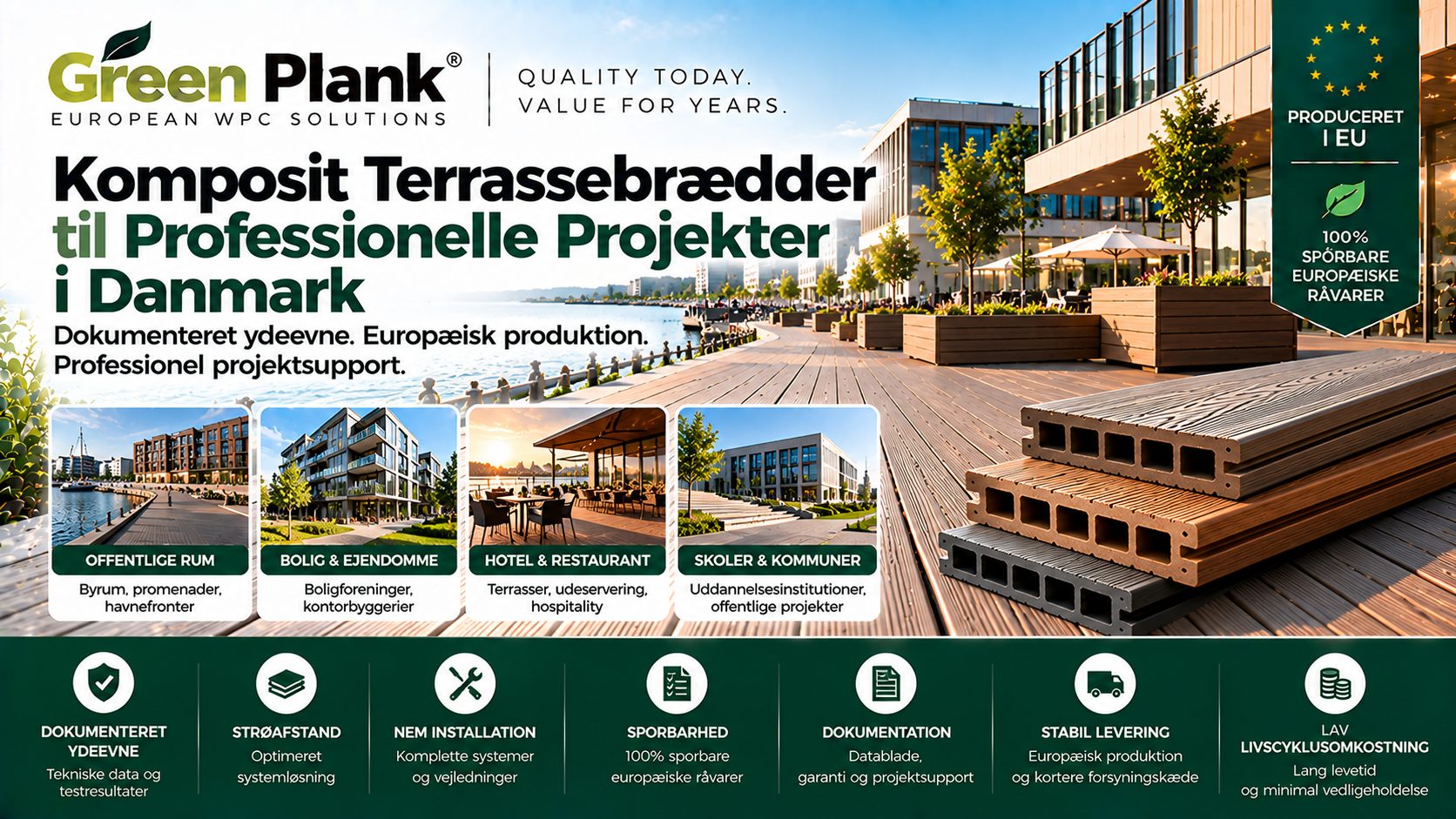




By 2026, embodied carbon is projected to account for nearly 50% of the total footprint of new construction projects, according to data from the World Green Building Council. You likely recognize that while energy-efficient windows and solar panels are vital, they only address half of the equation. The true challenge lies in the materials you specify today. Finding a way to effectively reduce co2 footprint building phases often feels like navigating a maze of greenwashing and untraceable supply chains. It's difficult to distinguish between marketing claims and genuine environmental performance when selecting composite materials for high-end projects.
You deserve clarity and engineering precision. This guide provides a strategic framework for material selection and embodied carbon management to significantly lower your project's environmental impact. We'll explore how to identify European-made, traceable natural-fiber composites that support circular economy goals while delivering professional-grade performance. Discover how to balance aesthetic excellence with 30 year durability and low-maintenance reliability. Designed in Scandinavia. Produced in Europe. Built to last. Designed for life.
Key Takeaways
- Distinguish between operational and embodied carbon to prioritize high-impact sustainability goals during the initial design and material specification phase.
- Master the selection of high-performance materials to reduce co2 footprint building projects while ensuring long-term structural integrity and aesthetics.
- Challenge the carbon-neutral myth of traditional timber by evaluating the long-term environmental costs of chemical treatments and frequent replacements.
- Explore the advantages of European-made composites that utilize traceable raw materials to ensure a circular and responsible product lifecycle.
- Discover how low-density, engineered fibers can minimize structural loads and reduce the energy required for transport and installation.
Understanding the Carbon Challenge in Modern Building Construction
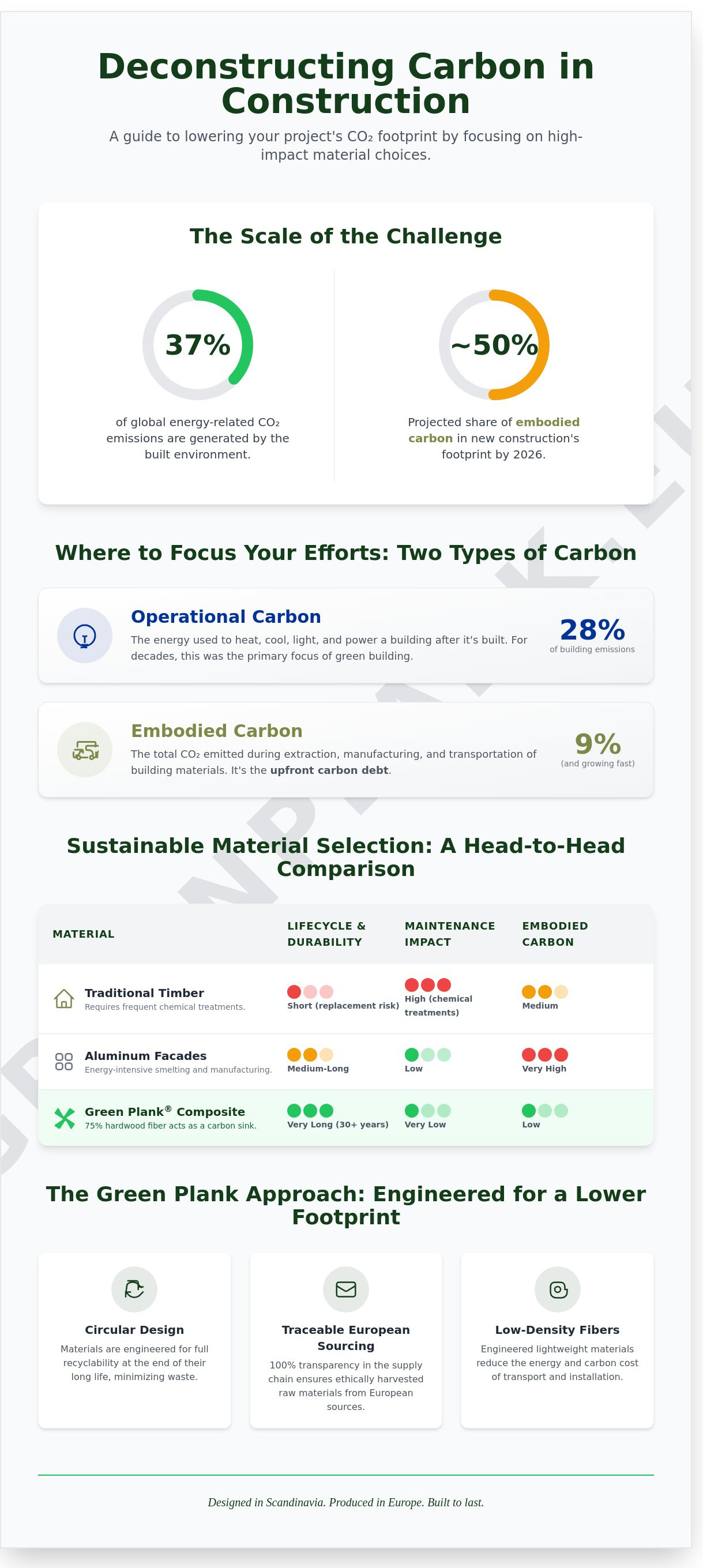
The construction industry stands at a critical crossroads. Data from the 2022 Global Status Report for Buildings and Construction shows that the built environment generates 37% of global energy-related CO2 emissions. To effectively reduce co2 footprint building strategies must evolve beyond simple energy efficiency to address the materials themselves. This shift is accelerated by the 2026 European Union building standards, which mandate stricter life-cycle assessments for all new developments. We recognize that true sustainability isn't a trend; it's an engineering requirement.
The 40% Reality: Why Buildings Matter for Net Zero
Of the total emissions attributed to buildings, approximately 28% comes from operational energy use, while 9% is tied to embodied carbon from material manufacturing and transport. As the United Nations predicts 68% of the global population will reside in urban areas by 2050, the demand for new infrastructure is relentless. Sustainable construction practices prioritize Nordic reliability and engineering precision to ensure structures remain functional for decades. We focus on circular material loops to minimize the need for future carbon-intensive renovations. Built to last. Designed for life.
Identifying High-Impact Carbon Sources in Exteriors
Exterior elements like cladding and decking are often overlooked, yet they represent high-frequency replacement cycles that drain resources. Traditional timber decks require chemical treatments every 24 months, while aluminum facades carry heavy manufacturing footprints from energy-intensive smelting. Under 2026 industry benchmarks, a building's carbon footprint is the cumulative sum of greenhouse gas emissions generated from the initial extraction of raw materials through the final demolition and recycling phase.
Choosing natural-fiber composites helps reduce co2 footprint building projects by eliminating toxic preservatives and extending the product lifecycle to 30 years. Our materials are manufactured in Europe using traceable raw materials to deliver stability and refined Nordic character. This professional-grade approach ensures that every facade and deck contributes to a lower carbon profile without sacrificing aesthetic quality. Designed in Scandinavia. Produced in Europe. We believe that durability is the ultimate form of sustainability.
- Circular Design: Materials engineered for full recyclability at end-of-life.
- Low Maintenance: Eliminating the need for carbon-heavy chemical stains and oils.
- Traceable Sourcing: 100% transparency in the supply chain to ensure ethical harvesting.
Operational vs. Embodied Carbon: Where to Focus Your Efforts
Operational carbon covers the energy used to heat, cool, and light a space. For decades, it was the primary focus of green building. Embodied carbon is different; it's the total CO2 emitted during the extraction, processing, and transportation of materials. It's the upfront carbon debt that exists before the first light switch is flipped. Professional architects increasingly prioritize this metric to hit global embodied carbon targets set for 2030 and 2050.
To reduce co2 footprint building strategies must evolve. Low-density, high-performance materials are the solution. They require less fuel for transport and less energy for installation. This creates a lighter environmental load throughout the construction phase. Choosing lighter, engineered materials isn't just about ease of handling; it's a calculated decision to lower the project's total weight and its associated carbon cost.
The Hidden Weight of Embodied Carbon
Every material choice creates an immediate carbon spike. Traditional timber-plastic composites often rely on virgin plastics or high-impact resins. Green Plank utilizes 75% hardwood fiber in its composite systems. This high organic content acts as a carbon sink, locking away CO2 that would otherwise enter the atmosphere. It's a technical advantage that provides a cleaner start for any project. Choosing materials with high recycled and natural content can lower initial emissions by up to 40% compared to conventional alternatives. Built to last. Designed for life.
Why Sourcing and Traceability Change the Equation
Where a product is made matters as much as what it's made of. Shipping materials from distant continents adds a significant layer of logistics-related CO2. European manufacturing allows for 100% traceable raw materials and shorter supply chains. This regional focus reduces transport emissions and ensures compliance with modern EU environmental regulations. Our systems are designed in Scandinavia and produced in Europe to deliver engineering precision without the environmental cost of global shipping. Explore our circular composite solutions to see how regional sourcing impacts your project's sustainability profile.
Traceability ensures that every component of the building meets strict ethical and environmental standards. It provides a clear record of the material's journey from the forest to the site. This level of transparency is essential for 2026 project certifications and for meeting the expectations of eco-conscious stakeholders. When materials are 100% traceable, the risk of hidden environmental costs is eliminated, ensuring the project's carbon claims are grounded in reality.
Sustainable Material Selection: Wood vs. Composite vs. Traditional
Traditional timber is often marketed as the gold standard for carbon sequestration. However, the 2024 Global Construction Review highlights that maintenance-heavy timber projects can increase their carbon debt by 18% over a 20-year period due to chemical staining and frequent part replacements. To truly reduce co2 footprint building strategies must prioritize the total lifecycle rather than just the initial harvest. Natural fiber composites (NFC) bridge the gap between organic aesthetics and engineering precision. These materials offer the warmth of wood without the environmental decay associated with softwoods that require intensive chemical treatments to survive outdoor exposure.
- Timber: High initial sequestration but requires toxic preservatives and frequent replacement in humid climates.
- Traditional WPC: Often uses virgin plastics and non-traceable fillers, leading to a higher manufacturing footprint.
- Green Plank NFC: Engineered with 90% recycled content and designed for a 30 to 50-year service life.
Evaluating Material Lifecycles and Durability
Durability is the most effective carbon saver in modern architecture. Replacing a deck or facade every 12 years creates a recurring environmental burden that many lifecycle assessments overlook. Our Terra Tuff systems are engineered to withstand extreme Nordic climates, backed by comprehensive warranties that ensure the material stays in place for decades. This longevity eliminates the need for volatile organic compound (VOC) heavy stains and toxic preservatives like chromated copper arsenate. When a product doesn't rot or warp, the carbon invested during its production is amortized over a much longer period, making it a superior choice to reduce co2 footprint building projects.
The Circular Economy: Cradle to Cradle Principles
True sustainability requires a shift toward Cradle to Cradle ownership. This philosophy demands that we design for deconstruction rather than demolition. By 2026, European building mandates will likely require 100% traceability for all structural and decorative components. Our manufacturing process utilizes recycled HDPE (High-Density Polyethylene), which reduces the energy demand by approximately 70% compared to virgin plastic production. It's vital to avoid load-bearing structural beams made from non-recyclable glues or composite resins that cannot be separated at the end of their life. Designing with the end in mind ensures that materials remain in the value chain rather than occupying space in a landfill.
Built to last. Designed for life. Our commitment to Nordic reliability means every plank is produced in Europe with traceable raw materials. This ensures that your project meets the highest ethical and environmental standards of the 2026 building landscape.
Practical Strategies to Lower Your Project’s CO2 Profile
To successfully reduce co2 footprint building initiatives, architects must evaluate the entire lifespan of a material. We focus on high-performance natural-fiber composites that offer a 30 year warranty. This longevity prevents the carbon-heavy cycle of replacing traditional timber every decade. Selecting low-density composites reduces the weight on structural supports by 20 percent. Lighter materials require less energy for transport and allow for leaner foundation designs. Every Green Plank product is European-made. This ensures adherence to the 2023 EU Deforestation Regulation and strict ISO environmental standards. Designed in Scandinavia. Produced in Europe.
- Durability: High-performance composites resist rot and decay for 25 to 30 years.
- Efficiency: Low-density profiles decrease fuel consumption during logistics.
- Integrity: HidLoc™ systems protect the plank structure from moisture ingress.
- Origin: European manufacturing guarantees 100 percent traceable raw materials.
Implementing Lifecycle Thinking in Design
Calculating the carbon payback period is essential for sustainable procurement. While premium composites may have a higher initial energy input, they reach carbon neutrality relative to wood within 12 years because they require no oil-based stains or chemical treatments. Scandinavian design principles prioritize this durability over short-term savings. Our Smart System decking further optimizes this by using a calculated grid pattern. This engineering approach reduces material volume by 15 percent without compromising structural integrity. It's a philosophy of "less is more" applied to resource management. Built to last. Designed for life.
Reducing Waste During Installation
Construction waste typically represents 13 percent of total project materials. Modular composite systems solve this through precision engineering. Our profiles are manufactured to exact specifications. This helps contractors avoid the errors that lead to landfill waste. The HidLoc™ hidden fastening system is a key tool here. It secures planks without piercing the surface, which preserves the material for future reuse or recycling. Contractors who aim to reduce co2 footprint building sites should utilize these interlocking systems. They reduce installation time by 30 percent and virtually eliminate scrap material on-site. Precision-engineered infrastructure profiles ensure that every centimeter of material serves a functional purpose.
The Green Plank Approach: Engineered for a Lower Footprint
Green Plank utilizes a precise formulation of 75% hardwood fiber and 25% high-density polyethylene (HDPE). This high organic content captures carbon within the material, offering a practical way to reduce co2 footprint building specifications. By sourcing 100% traceable raw materials within Europe, we eliminate the high environmental cost of long-distance shipping and ensure every plank meets strict EU timber regulations. Our manufacturing process focuses on resource efficiency, turning reclaimed fibers into high-performance architectural elements.
The significance of our European production lies in accountability. Every cubic meter of material is accounted for, ensuring that no virgin forests are depleted for our products. This commitment to circularity is rooted in the Cradle to Cradle model. We don't view our products as disposable; we see them as part of a continuous loop where materials are reclaimed and repurposed at the end of their lifecycle. Professional-grade WPC is the logical conclusion for builders who refuse to choose between structural integrity and environmental ethics.
Scandinavian Design Meets Environmental Engineering
Our low-density profiles are engineered to deliver maximum structural integrity with minimal material mass. This reduction in volume doesn't compromise strength; instead, it optimizes resource efficiency. We back this engineering with a 50-year warranty, a duration that effectively doubles the lifecycle of traditional timber alternatives. Long-term durability is the most effective strategy to reduce co2 footprint building projects, as it prevents the carbon cost of frequent replacements.
- Terra Tuff: Heavy-duty performance for high-traffic zones, engineered for maximum impact resistance.
- Smart System: Integrated solutions for rapid, waste-free installation that reduces on-site labor.
Your Partner in Sustainable Construction
We assist architects and contractors in hitting specific CO2 targets through transparent data and circular product design. Our team provides the technical documentation necessary to validate green building certifications, ensuring your project meets the highest environmental standards. Nordic reliability isn't just about the product; it's about the consistency of our supply chain and the precision of our engineering.
Choosing Green Plank means investing in a future where high-performance building exteriors respect the natural world. Our products offer a maintenance-free lifestyle without the ecological guilt associated with tropical hardwoods or virgin plastics. It's a commitment to quality that stands the test of time. Built to last. Designed for life. Designed in Scandinavia. Produced in Europe.
Building for a Low-Carbon Future
Success in 2026 hinges on your ability to address embodied carbon today. Selecting materials with circular life cycles is the most effective strategy to reduce co2 footprint building projects without compromising structural integrity. By choosing engineered natural-fiber composites, you eliminate the need for chemical treatments and frequent replacements. This approach ensures your project remains both carbon-efficient and aesthetically superior for the long term.
Green Plank delivers this through professional-grade solutions rooted in Nordic reliability. Our products feature a 75% hardwood fiber composition to provide high-end stability and a refined Scandinavian character. We utilize a Cradle to Cradle ownership model to guarantee every board contributes to a circular economy. Because we're confident in our European-made engineering, we back our solutions with an industry-leading 50-year warranty. It's a commitment to durability that protects your investment and the planet simultaneously.
Take the next step in sustainable architecture. Explore Green Plank’s sustainable WPC solutions for your next project. It's time to create spaces that are truly built to last and designed for life.
Frequently Asked Questions
How does material choice affect a building’s carbon footprint?
Material selection determines up to 50% of a building's total lifecycle emissions before the keys are even handed over. Opting for natural-fiber composites or timber instead of traditional steel and concrete can reduce co2 footprint building efforts by 30% to 40%. These choices impact raw material extraction, manufacturing energy, and transportation distances. High-performance materials like Green Plank provide a low-carbon alternative that maintains structural integrity for decades.
What is the difference between operational and embodied carbon?
Embodied carbon refers to the emissions generated during the extraction, transport, and assembly of materials; operational carbon covers the energy used to run the building. In a typical 2026 project, embodied carbon accounts for roughly 11% of global greenhouse gas emissions. Focusing on low-carbon materials addresses the immediate environmental impact. Operational carbon is managed through insulation and efficient HVAC systems over the building's 50 year lifespan.
Is composite decking more sustainable than natural wood?
Engineered natural-fiber composite decking often surpasses natural wood in sustainability because it utilizes 90% recycled content and requires zero toxic chemical treatments. Traditional pressure-treated wood often needs replacement every 10 to 15 years, whereas Green Plank products come with a 30 year warranty. This longevity prevents frequent material replacement. It's a way to stop the cycle of harvesting and waste, making it a superior choice for long-term carbon sequestration.
How does European sourcing reduce CO2 emissions in construction?
Sourcing materials within Europe reduces transportation-related CO2 emissions by up to 60% compared to importing goods from Asia or South America. Green Plank adheres to the "Designed in Scandinavia. Produced in Europe." philosophy to ensure 100% traceable raw materials. Shorter supply chains mean fewer shipping miles and lower logistics fuel consumption. This regional approach supports local economies while meeting strict EU environmental regulations that protect the planet.
Can building materials be recycled at the end of their life?
Many modern building materials are designed for circularity, allowing them to be repurposed rather than sent to landfills. Green Plank composites are 100% recyclable, meaning they can be processed back into raw pellets for new production cycles. Currently, the construction industry generates 30% of all waste in the EU. Using circular materials ensures that resources stay in the value chain for multiple lifecycles, reducing the need for virgin material extraction.
What role does durability play in a building’s sustainability?
Durability is the foundation of sustainability because a product that lasts twice as long effectively halves its environmental impact over time. When you choose professional-grade materials built to last 25 years or more, you eliminate the carbon costs of manufacturing and installing replacements. High-performance composites resist rot, decay, and insects. This engineering precision ensures the structure remains functional and beautiful without requiring resource-intensive maintenance or frequent repairs.
How does Green Plank contribute to the circular economy?
Green Plank contributes to the circular economy by manufacturing products from 90% recycled wood fibers and polymers. This process diverts thousands of tons of waste from landfills annually. Our "Designed for life. Built to last." mantra drives a production model where materials are traceable and fully reclaimable. By closing the loop, we provide architects with a reliable way to reduce co2 footprint building requirements in modern urban developments and residential projects.
What are the most carbon-intensive materials in modern building?
Specifikér produktet
Brug denne guide i en Green Plank-specifikation
Tekniske WPC-artikler skal understøtte de kommercielle sider — ikke konkurrere med dem. Fortsæt til kompositterrasse, TerraTuff, Nordeka eller de tekniske downloads.