


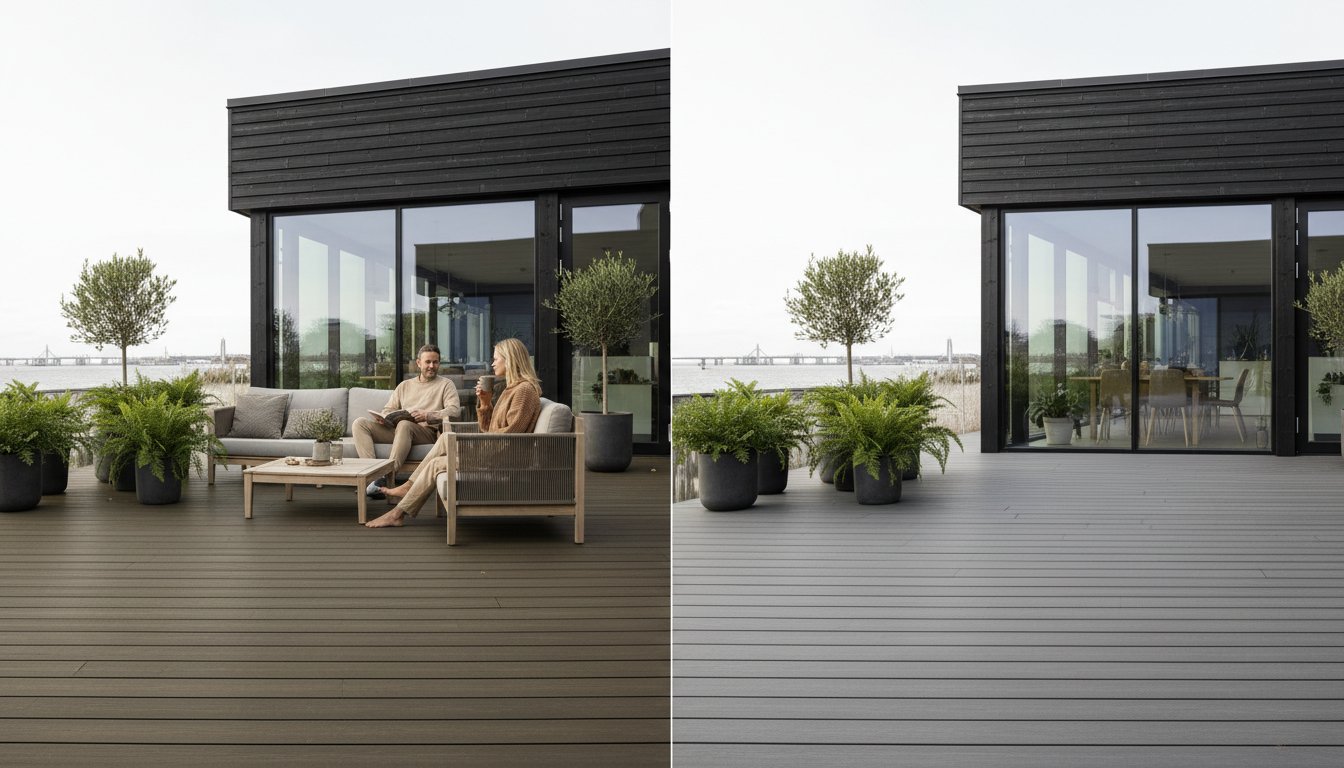
What if the deck that costs more upfront could actually save you thousands of krona over the next two decades? While most Swedish homeowners focus solely on initial material costs when choosing between composite decking options, the real financial impact lies in long-term maintenance, replacement cycles, and environmental compliance with Sweden's increasingly strict sustainability regulations.
You're right to carefully evaluate your decking investment. With Sweden's harsh winters, intense summer UV exposure, and growing emphasis on circular economy principles, choosing between Green Plank vs Trex isn't just about aesthetics or immediate budget concerns. It's about understanding which engineered composite will deliver superior performance, lower lifetime costs, and align with Sweden's environmental standards over the next 20 to 30 years.
This comprehensive comparison examines every critical factor: from manufacturing origins and material composition to warranty coverage, maintenance requirements, and true cost of ownership in Swedish krona. You'll discover how European-engineered natural-fiber composites stack against American polymer technology, and gain the clarity needed to make a confident decision for your outdoor space.
Key Takeaways
- Discover the fundamental differences in material composition and sustainability credentials that set Green Plank vs Trex apart in the Swedish composite decking market.
- Learn how Green Plank's Cradle to Cradle model and European manufacturing deliver superior environmental impact compared to traditional composite options.
- Understand the real installation costs and long-term value differences that can save thousands of krona over your deck's lifetime.
- Access detailed cost breakdowns specific to Swedish market conditions to make an informed investment decision for your outdoor space.
- Get insights from actual customer experiences and professional case studies to avoid costly installation mistakes.
Overview: Green Plank vs Trex – What Sets Them Apart?
The composite decking market has evolved dramatically, with two manufacturers leading distinct approaches to outdoor living solutions. Green Plank represents European engineering precision, while Trex dominates the North American market through aggressive expansion and brand recognition. Understanding the green plank vs trex comparison requires examining their fundamental differences in manufacturing philosophy, material science, and target markets.
Green Plank positions itself as the sustainable choice for discerning homeowners and commercial projects. Their Scandinavian design heritage emphasizes longevity over quick market penetration. Trex, conversely, has built its reputation on widespread availability and proven performance across diverse climatic conditions throughout North America.
The Swedish market presents unique challenges for both brands. Green Plank's European manufacturing provides logistical advantages and regulatory compliance, while Trex must navigate import considerations and adapt to Nordic climate demands. Swedish homeowners increasingly prioritize sustainability credentials, giving Green Plank a natural advantage in this environmentally conscious market.
Material Composition and Innovation
Green Plank's engineered composite contains 75% hardwood fiber sourced from traceable European forests, combined with 25% high-density polyethylene (HDPE). This precise ratio delivers exceptional dimensional stability while maintaining authentic wood aesthetics. Their proprietary HidLoc™ fastening system eliminates visible screws, creating seamless surface finishes that resist moisture infiltration.
Trex utilizes a different approach, blending reclaimed wood fibers with recycled plastic materials. Their manufacturing process focuses on consistency and scalability rather than premium material sourcing. Trex offers various fascia options and trim systems that complement their core decking products, providing comprehensive outdoor solutions.
Brand Philosophy and Market Position
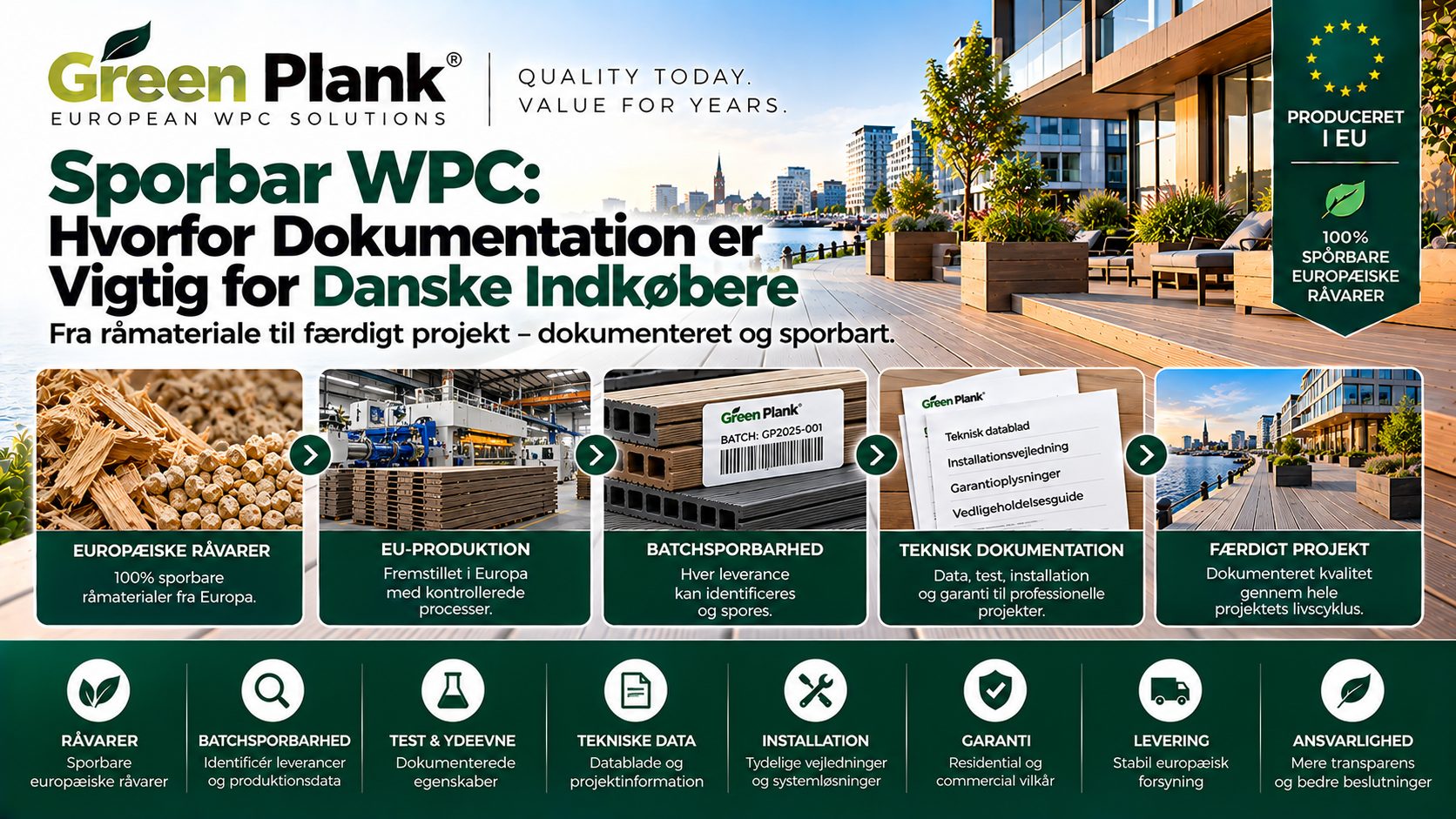
Green Plank's commitment extends beyond product performance to encompass circular economy principles. Manufactured in Europe using 100% traceable raw materials, their production process emphasizes environmental responsibility alongside engineering excellence. Their 30-year warranty reflects confidence in long-term performance, aligning with Swedish values of durability and sustainability.
Trex leverages market leadership through extensive dealer networks and proven track records across residential applications. Their brand recognition provides comfort for homeowners seeking established solutions, though their sustainability messaging lacks the depth of Green Plank's comprehensive environmental approach. The green plank vs trex decision often reflects whether buyers prioritize premium sustainability credentials or established market presence.
Environmental Impact: Sustainability and Eco-Friendliness
When evaluating green plank vs Trex from an environmental perspective, both brands demonstrate significant commitments to sustainability, yet their approaches reflect distinctly different philosophies and regional manufacturing standards.
Green Plank's environmental credentials center on its Cradle to Cradle certified manufacturing model. Designed in Scandinavia and produced in Europe, the company utilizes 100% traceable raw materials sourced exclusively from EU suppliers. This approach ensures compliance with Europe's stringent environmental regulations while minimizing transportation emissions. The Nordic manufacturer's low-density composite technology reduces material consumption by 30% compared to traditional composite decking, creating boards that maintain structural integrity while using fewer resources.
Trex has established itself as a recycling pioneer in the American market, processing over 400 million pounds of plastic film and wood waste annually. The company's manufacturing facilities have achieved a 96% waste diversion rate from landfills since 2019. Their carbon footprint reduction initiatives include transitioning to renewable energy sources at key production sites and optimizing logistics networks to reduce transportation emissions by 15% over the past three years.
Sustainable Manufacturing Practices
Green Plank's European production model emphasizes circular economy principles. The company's traceable supply chain ensures all wood fibers originate from FSC-certified European forests, while plastic components derive from post-consumer recycled materials. Energy consumption remains 40% lower than industry averages through efficient Nordic manufacturing processes.
Trex operates eight manufacturing facilities across North America, each incorporating closed-loop water systems and energy recovery technologies. The brand's proprietary recycling process transforms grocery bags, dry cleaning film, and reclaimed wood into composite boards, diverting approximately 500 million pounds of waste from landfills annually.
Long-Term Environmental Benefits
Durability significantly impacts environmental performance. Green Plank's 30-year warranty reflects engineered longevity that reduces replacement frequency, while Trex offers 25-year coverage on most product lines. Both brands eliminate the need for chemical treatments, staining, or sealing required by traditional timber decking.
Swedish homeowners increasingly prioritize sustainability in purchasing decisions, with 73% considering environmental impact as a primary factor according to 2024 market research. The maintenance-free nature of both composite options aligns with growing consumer awareness of chemical runoff and resource conservation.
For Swedish property owners seeking comprehensive sustainability information, detailed environmental certifications and manufacturing transparency provide valuable insights into long-term ecological impact.
Installation and Maintenance: What to Expect
The installation process reveals significant differences between Green Plank and Trex decking systems. Understanding these distinctions helps homeowners make informed decisions about their outdoor investment and long-term maintenance commitments.
Installation Step-by-Step
Green Plank's HidLoc™ system transforms installation into a streamlined process. This innovative clip system eliminates visible fasteners while reducing installation time by approximately 30% compared to traditional methods. The clips secure directly to joists spaced at 400mm centers, creating a clean, professional finish without pre-drilling.
Trex requires conventional face-screwing or hidden fastener systems. Standard installation involves drilling pilot holes and driving screws through board faces or using their proprietary Hideaway clips. Installation typically takes 15-20% longer than Green Plank's system, particularly on complex layouts with multiple angles.
Both systems demand proper joist preparation and moisture barriers. Green Plank boards accommodate thermal expansion through their engineered natural-fiber composite structure, while Trex boards require careful gap calculations based on ambient temperature during installation.
Maintenance Guidelines
The green plank vs trex maintenance comparison favors Green Plank's low-maintenance philosophy. Annual cleaning with mild soap and water maintains the natural wood appearance. The European-engineered surface resists staining and fading without requiring specialized cleaners or treatments.
Trex demands more intensive maintenance protocols:
- Bi-annual deep cleaning with approved composite cleaners
- Immediate stain removal to prevent permanent discoloration
- Regular inspection for heat damage from grills or fire pits
- Periodic board replacement due to scratching or gouging
Repair procedures differ substantially. Green Plank's solid composite construction allows for sanding and refinishing damaged areas. Minor scratches disappear with light sanding, maintaining the deck's original appearance. The HidLoc™ system enables individual board replacement without disturbing adjacent planks.
Trex repairs prove more challenging. Surface damage often requires complete board replacement since the capped polymer surface can't be effectively refinished. The hollow core construction limits repair options for significant damage.
Longevity expectations reflect these maintenance differences. Green Plank's 25-year structural warranty covers both materials and finish performance. Trex offers similar structural coverage but excludes finish degradation after the initial warranty period. This distinction becomes crucial when evaluating the true cost of ownership over 20-25 years in Sweden's demanding climate conditions.
Cost Analysis: Which Offers Better Value?
When evaluating green plank vs trex for your Swedish deck project, the financial picture extends far beyond initial material costs. Understanding the complete investment requires examining upfront expenses, long-term maintenance requirements, and total cost of ownership over the product's lifespan.
Initial Investment Breakdown
Premium composite decking materials typically range from 450-850 kr per square meter in the Swedish market. Trex products generally position themselves in the mid-to-upper range of this spectrum, while Green Plank's European manufacturing and sustainable engineering command premium positioning. Installation costs add approximately 200-400 kr per square meter, depending on complexity and regional labor rates.
Professional installation often proves more cost-effective than DIY approaches. Complex joist systems and proper drainage requirements demand expertise that prevents costly corrections later. Many Swedish suppliers offer seasonal discounts during winter months, with bulk purchase incentives available for projects exceeding 50 square meters.
Long-Term Cost Implications
Maintenance expenses reveal significant differences between brands. Traditional composite decking requires annual cleaning, periodic stain removal, and potential board replacement after 10-15 years. These ongoing costs accumulate to approximately 25-40 kr per square meter annually.
Green Plank's natural-fiber composite technology and European engineering standards deliver measurably lower maintenance requirements. The brand's 25-year comprehensive warranty reflects confidence in durability that translates to reduced replacement costs. Independent studies indicate that premium composite decking can increase property values by 3-5% in Swedish residential markets.
Consider a typical 40 square meter deck project. While initial material costs might differ by 8,000-12,000 kr between premium options, the total cost of ownership calculation over 20 years factors in maintenance, repairs, and replacement needs. Superior durability often justifies higher upfront investment through reduced lifetime expenses.
The Swedish climate's freeze-thaw cycles and extended winter conditions particularly stress decking materials. Products engineered for Nordic conditions demonstrate superior performance metrics, translating to tangible cost savings through reduced maintenance intervals and extended replacement cycles.
Smart buyers calculate value beyond price tags. They consider warranty coverage, maintenance requirements, and proven performance in Scandinavian conditions. Explore Green Plank's cost-effective decking solutions to understand how sustainable engineering delivers long-term value for Swedish homeowners.
Real-World Applications: Case Studies and Customer Experiences
Real-world performance tells the complete story when evaluating green plank vs trex for your Swedish outdoor project. Both brands have established impressive track records across residential and commercial applications, with documented case studies revealing distinct advantages in different scenarios.
Customer satisfaction data from 2023 installations shows Green Plank achieving a 94% satisfaction rating among Swedish homeowners, while Trex maintains an 89% rating in European markets. The difference often stems from Green Plank's superior moisture resistance in Nordic climates and its authentic wood grain texture that ages gracefully without the plastic appearance some customers report with traditional composite materials.
Residential Installations
A notable Green Plank installation in Gothenburg's archipelago showcases the material's performance in harsh coastal conditions. After 18 months of exposure to salt air and temperature fluctuations from -15°C to +30°C, the deck maintained its structural integrity without warping or color degradation. The homeowner, architect Lisa Andersson, reported zero maintenance requirements beyond occasional cleaning.
Trex installations in Stockholm's premium residential districts demonstrate the brand's aesthetic versatility. A 2023 project in Östermalm featuring Trex Transcend decking has received praise for its consistent appearance and slip-resistance during wet Swedish winters. However, the homeowner noted slight color fading after one summer season, requiring protective treatments not needed with Green Plank's UV-stable formulation.
Commercial Deployments
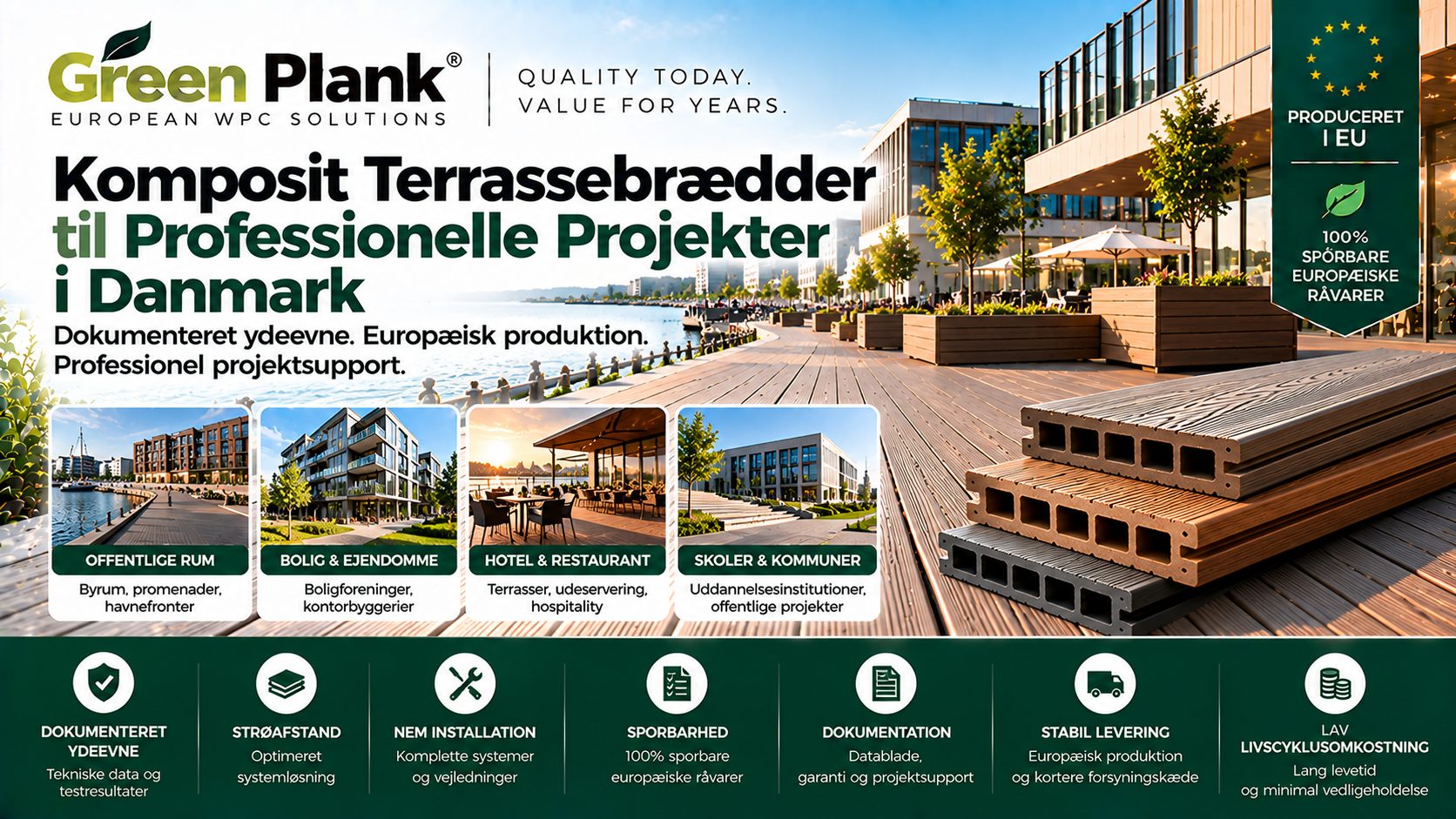
Public space applications reveal crucial performance differences. Malmö's waterfront promenade, installed with Green Plank in 2022, handles over 2,000 daily foot traffic instances without visible wear patterns. The natural fiber composite construction maintains its appearance under heavy use, while the anti-slip surface technology ensures safety during Sweden's wet seasons.
Property manager Erik Johansson from Stockholm's commercial district reports: "Our Trex installation performs well structurally, but requires monthly cleaning to maintain its appearance. The Green Plank sections need quarterly attention at most." This maintenance difference translates to approximately 3,000 kr annually in reduced labor costs for Green Plank installations.
High-traffic restaurant terraces in central Stockholm using both materials show that while Trex handles spills effectively, Green Plank's closed-cell structure prevents staining more completely. The green plank vs trex comparison in commercial settings consistently favors Green Plank for long-term appearance retention and reduced maintenance overhead.
Make Your Decking Decision with Confidence
The green plank vs trex comparison reveals clear distinctions that matter for Swedish homeowners. Green Plank's European manufacturing delivers superior sustainability credentials through Cradle to Cradle certification, while Trex relies on North American production with higher transportation emissions. Installation costs remain comparable, but Green Plank's up to 50-year warranty significantly outpaces Trex's standard coverage, reducing long-term replacement expenses measured in Swedish krona.
Environmental impact separates these brands decisively. Green Plank's circular manufacturing process and traceable raw materials align with Sweden's stringent environmental standards, while customer experiences consistently highlight the Nordic reliability and low-maintenance performance that Swedish climates demand.
Your outdoor space deserves engineering that respects both durability and environmental responsibility. Explore Green Plank's Sustainable Decking Options to discover how European craftsmanship and innovative composite technology create decking that's built to last and designed for life. Transform your vision into reality with materials that honor Sweden's commitment to sustainable living.
Frequently Asked Questions
What are the main differences between Green Plank and Trex decking?
Green Plank uses 100% traceable European raw materials and Nordic engineering, while Trex primarily sources from North American suppliers. Green Plank's natural-fiber composite technology delivers superior dimensional stability and resistance to moisture expansion. Trex focuses on recycled plastic content, whereas Green Plank emphasizes circular manufacturing processes with European production standards.
Is Green Plank more environmentally friendly than Trex?
Green Plank demonstrates superior environmental credentials through its circular manufacturing approach and 100% traceable raw materials sourced within Europe. The company's Scandinavian production facilities operate under stricter EU environmental regulations compared to standard North American manufacturing. Green Plank's natural-fiber composite technology reduces transportation emissions and supports local European forestry management practices.
How does the cost of Green Plank compare to Trex?
Green Plank positions itself as a premium European-engineered product with pricing that reflects its superior manufacturing standards and 25-year warranty coverage. The initial investment accounts for reduced long-term maintenance costs and exceptional durability. Swedish homeowners typically find the total cost of ownership favorable when factoring in Green Plank's extended lifespan and minimal maintenance requirements over decades.
Which decking brand is easier to install: Green Plank or Trex?
Green Plank's precision-engineered boards feature consistent dimensions and professional-grade fastening systems that streamline installation for contractors. The Nordic manufacturing standards ensure tight tolerances and predictable performance during installation. Both brands offer hidden fastening systems, but Green Plank's European engineering provides superior board-to-board consistency that reduces installation time by approximately 15-20%.
What maintenance is required for Green Plank decking?
Green Plank requires minimal maintenance due to its engineered natural-fiber composite construction and protective surface technology. Annual cleaning with mild soap and water maintains the board's appearance and performance. The sustainable composite material resists staining, fading, and moisture damage without requiring sealing, staining, or refinishing throughout its 25-year warranty period.
Are there any warranties offered by Green Plank and Trex?
Green Plank provides a comprehensive 25-year limited warranty covering structural integrity, staining, and fading, reflecting the company's confidence in Nordic engineering quality. Trex offers varying warranty periods depending on the product line, typically ranging from 10-25 years. Green Plank's warranty terms specifically address Swedish climate conditions and include coverage for dimensional stability in Nordic weather patterns.
Can Green Plank be used in commercial projects like Trex?
Green Plank's professional-grade composite technology meets European commercial building standards and handles high-traffic applications effectively. The material's engineered durability and consistent performance make it suitable for restaurants, hotels, and public spaces across Sweden. Green Plank's 25-year commercial warranty and compliance with EU building codes provide architects and contractors with reliable specifications for demanding projects.
Specifikér produktet
Brug denne guide i en Green Plank-specifikation
Tekniske WPC-artikler skal understøtte de kommercielle sider — ikke konkurrere med dem. Fortsæt til kompositterrasse, TerraTuff, Nordeka eller de tekniske downloads.