



Selecting the least expensive composite board feels like a win for the project budget, yet the obvious choice is often the most expensive mistake. When you conduct a cheap vs quality comparison, the hidden costs of inferior materials become clear within just two or three years. You're likely familiar with the frustration of watching a bargain deck warp or fade. It's disappointing to manage high maintenance requirements when marketing jargon promised you a maintenance-free experience.
This guide reveals why initial savings often lead to long-term losses and how to evaluate high-performance materials for lasting projects. We'll provide a clear framework for calculating ROI based on material science and engineering precision. You'll understand the technical differences in composition, specifically focusing on the 75% hardwood fiber and 25% HDPE ratios that define premium standards. This technical clarity ensures you can specify materials with confidence, prioritizing a service life that respects both the environment and the client's investment.
Key Takeaways
Identifying the "Cheap Paradox" allows you to distinguish between the upfront price and the actual long-term cost of your investment.
Conduct a cheap vs quality comparison to see how technical specifications, like a high hardwood fiber ratio, prevent warping and material failure.
Mastering the math of maintenance reveals why premium materials eliminate the need for costly staining and sealing over a 50-year lifecycle.
Professional-grade fastening systems like HidLoc™ provide a cleaner finish while enhancing the safety and durability of high-traffic deck surfaces.
Adopting a Cradle to Cradle ownership model ensures your project supports ethical manufacturing and significantly reduces its environmental impact.
Table of Contents
The Psychology of Price: Understanding Cheap vs Quality in Construction
Material Science: What Makes Quality Composite Decking Different?
The True Cost of Ownership: A 50-Year Life-Cycle Comparison
Performance Under Pressure: Engineering for High-Traffic Projects
Choosing Sustainability: Why Quality is the Only Ethical Choice
The Psychology of Price: Understanding Cheap vs Quality in Construction
In the construction industry, the lowest bid often masks the most expensive outcome. This phenomenon is the "Cheap Paradox," where a low entry price serves as a precursor to high long-term expenses. When professionals perform a cheap vs quality comparison, they must distinguish between price and cost. Price is the transaction you complete today; cost is the cumulative investment you sustain over the product's lifespan. Initial savings on inferior materials are quickly eroded by constant maintenance, structural repairs, and the eventual necessity of a premature replacement.
Engineering precision is the dividing line between temporary solutions and permanent assets. High-performance Wood-plastic composites (WPCs) are designed to resist the environmental stressors that cause budget alternatives to fail. Moving beyond "good enough" standards requires a commitment to material science that prioritizes longevity over short-term profit margins. It's a shift from viewing decking as a disposable commodity to treating it as a vital piece of architectural infrastructure.
The Hidden Risks of Low-Cost Building Materials
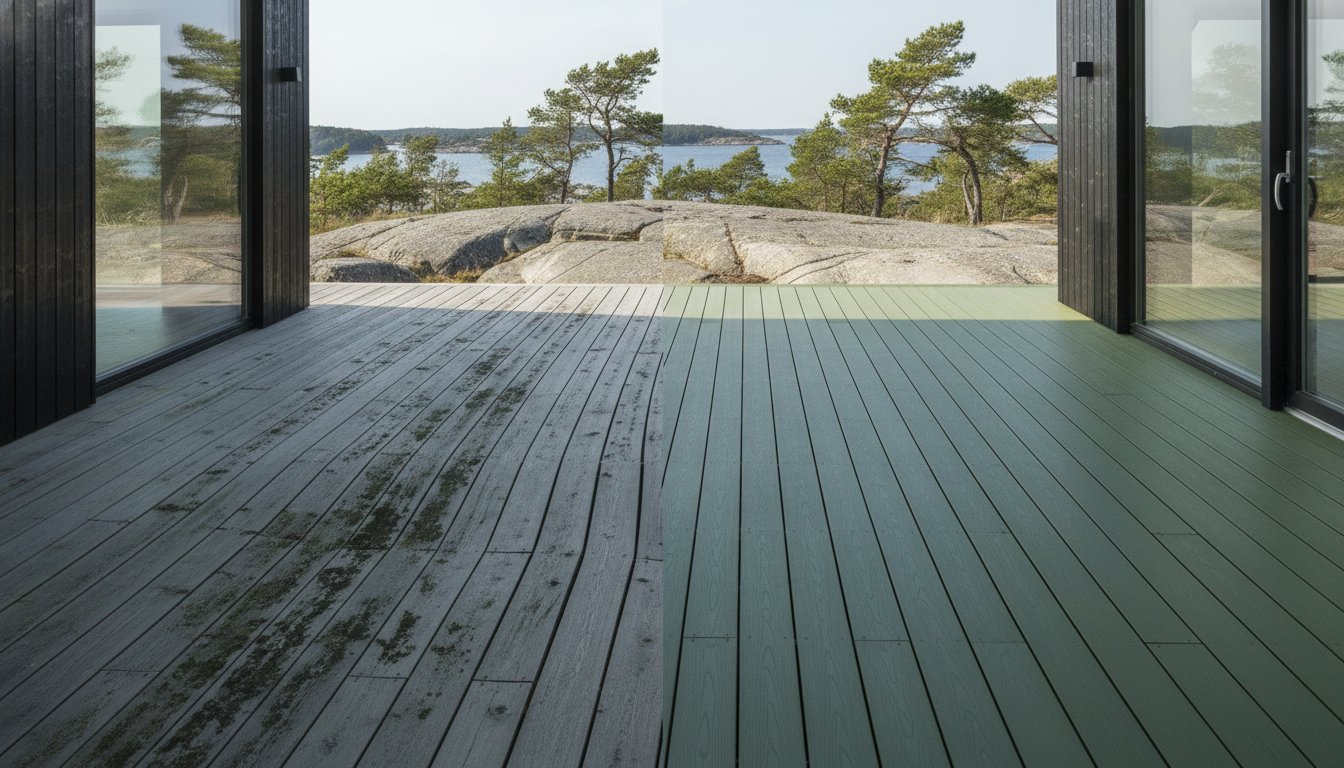
Budget-grade composites frequently sacrifice structural integrity to achieve a lower price point. These materials often warp under UV exposure, crack during seasonal thermal expansion, or lose their load-bearing capacity within just a few years. Beyond the physical failure of the boards, there are significant safety implications to consider. Low-cost options often lack the sophisticated slip resistance and fire safety ratings found in premium alternatives. For developers and homeowners, the emotional and financial toll of a project failure is immense, often resulting in legal disputes or the total loss of the initial investment.
Why Specifiers are Shifting Toward Quality-First Procurement
Modern architectural specifications are increasingly driven by lifecycle costing rather than upfront price. Industry professionals recognize that specifying high-quality wpc composite decking is the most effective way to protect their professional reputations. This shift represents a broader movement toward a "build once" philosophy, which rejects the wastefulness of disposable construction. By choosing materials engineered for a 50-year service life, specifiers deliver projects that remain beautiful, safe, and functional for decades.
Verified Performance: Engineering standards ensure materials withstand high-traffic demands and environmental stress.
Reputational Security: Quality materials prevent the callbacks and failures that damage professional standing.
Resource Responsibility: Durable products reduce the demand for replacement materials and minimize landfill waste.
Material Science: What Makes Quality Composite Decking Different?
Material science is the foundation of long-term performance. While budget boards often rely on a high percentage of plastic to mask low-quality fillers, premium engineering favors the "75/25 Rule." This specific composition consists of 75% hardwood fiber and 25% High-Density Polyethylene (HDPE). The hardwood provides the structural skeleton and natural aesthetic, while the HDPE encapsulates the fibers to prevent moisture ingress. This precise balance results in a low-life cycle cost because the material doesn't succumb to the rot or decay typical of inferior mixtures.
A rigorous cheap vs quality comparison reveals that the source of these materials matters as much as the ratio. High-performance composites are engineered for low density, which reduces the dead load on the substructure without compromising the board's flexural strength. This engineering precision also addresses thermal movement. Quality materials handle extreme temperature fluctuations by maintaining predictable expansion and contraction rates. This stability ensures that the gaps between your boards remain consistent, preventing the buckling or warping that plagues cheaper alternatives during seasonal shifts.
HDPE vs. Inferior Plastic Bindings
High-Density Polyethylene (HDPE) is the superior choice for moisture resistance and durability. Budget manufacturers often use low-grade PVC or generic "plastic" scraps that become brittle when exposed to the sun. Quality boards integrate advanced UV inhibitors and high-grade color pigments directly into the core material. This ensures the deck retains its architectural intent for decades. Cheap boards often fade in months, but premium engineering preserves the deep, rich tones of the wood grain through years of intense UV exposure.
The Role of European Raw Materials
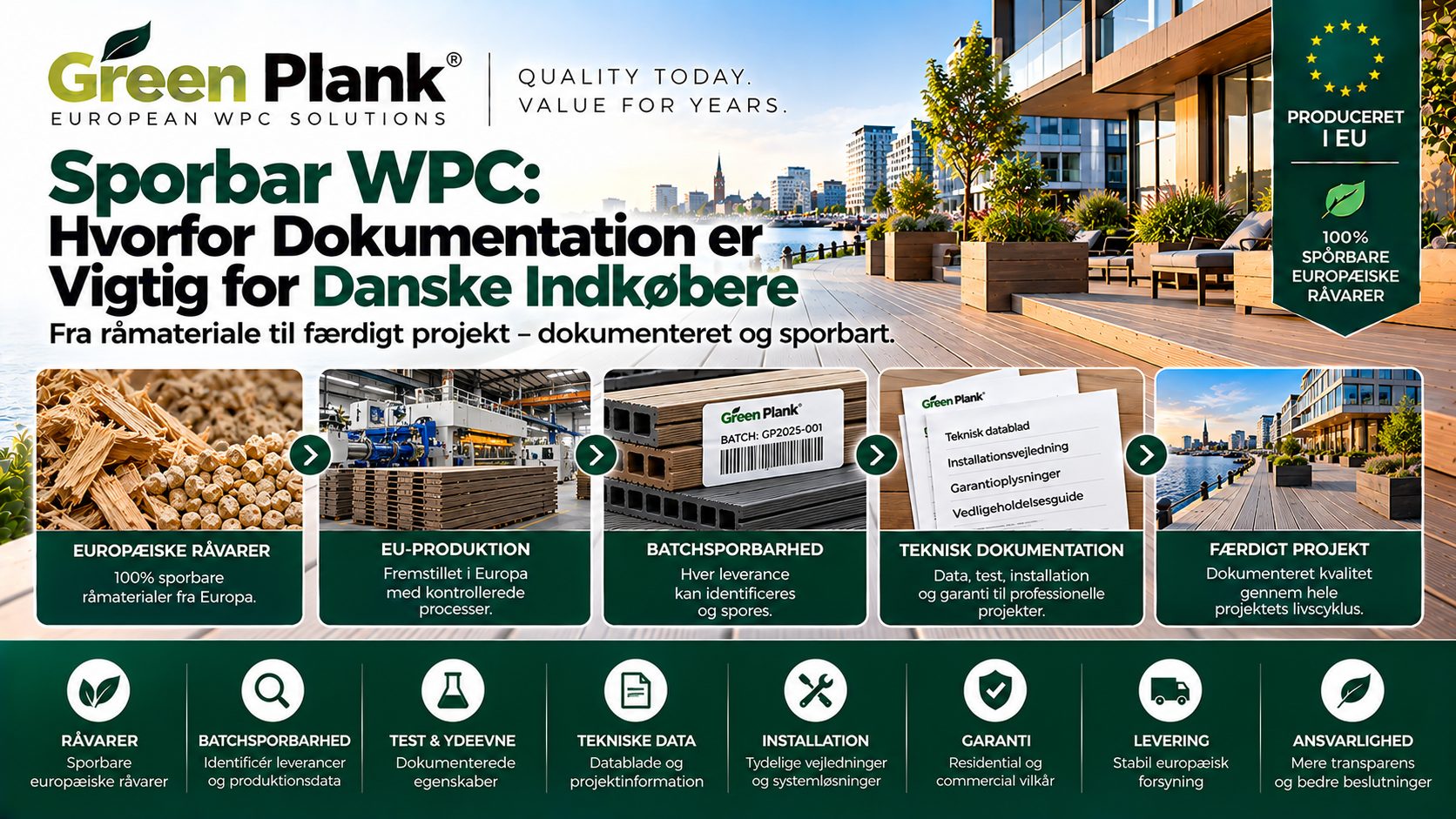
Reliability is a product of origin. Utilizing made in EU building materials ensures full traceability and adherence to strict safety standards. These regulations govern the use of chemical additives and fire retardants, providing a level of safety that budget imports rarely match. European manufacturing also delivers a consistency in grain and texture that reflects a premium market position. It's a commitment to quality that budget imports simply cannot replicate. You can explore our professional-grade profiles to see how these manufacturing standards translate into aesthetic excellence.
Moisture Protection: HDPE encapsulation prevents water absorption and fungal growth.
Structural Stability: Low-density engineering reduces weight while maintaining high strength.
Safety Assurance: EU-sourced materials meet rigorous fire safety and chemical additive standards.
The True Cost of Ownership: A 50-Year Life-Cycle Comparison
Understanding the financial impact of building materials requires looking past the initial invoice. A comprehensive cheap vs quality comparison centers on the Total Cost of Ownership (TCO) over several decades. While traditional timber often faces structural failure within seven years due to rot and insect damage, high-performance WPC is engineered for a 50-year service life. This longevity is supported by a life-cycle analysis of composite decking, which demonstrates that premium materials significantly outperform budget alternatives in long-term durability. A 50-year warranty isn't just a promise; it's a financial asset that stabilizes the maintenance budget of any residential or commercial property.
The gap between price and cost becomes evident when you calculate the replacement cycles of inferior products. If a budget deck requires a complete overhaul every decade, the property owner pays for labor, demolition, and new materials four or five times over a 50-year span. Engineering for the long term eliminates these recurring expenses. By specifying a material that remains structurally sound and aesthetically pleasing for half a century, you're investing in a permanent architectural asset rather than a temporary fixture.
Maintenance: The Silent Budget Killer
Maintenance is often the most overlooked expense in project planning. Traditional wood and low-grade composites require periodic sanding, staining, and sealing to maintain their appearance. Over a 25-year period, the cumulative cost of stains, brushes, and professional labor can easily triple the initial material investment. In contrast, "low maintenance" is a technical feature achieved through superior material encapsulation. Premium boards only require simple soap and water cleaning. You don't need expensive chemical strippers or specialized equipment to keep the surface looking pristine. This efficiency translates into direct savings and more time spent enjoying the outdoor space.
Property Value and Resale ROI
Quality materials serve as a hedge against depreciation. Specifying premium composite wall cladding or decking immediately enhances kerb appeal and overall property valuation. Buyers recognize the value of a maintenance-free exterior, especially when backed by a transferable warranty. This guarantee becomes a powerful selling point for both residential homes and commercial assets. It prevents the "dilapidation discount" that occurs when visible material degradation suggests a lack of care. By investing in quality, you ensure the property remains an attractive asset rather than a liability.
Longevity: 50-year service life reduces the need for costly replacement cycles.
Predictable Budgeting: Eliminating staining and sealing costs stabilizes long-term expenses.
Asset Protection: Transferable warranties and high-performance finishes increase property resale value.
Performance Under Pressure: Engineering for High-Traffic Projects
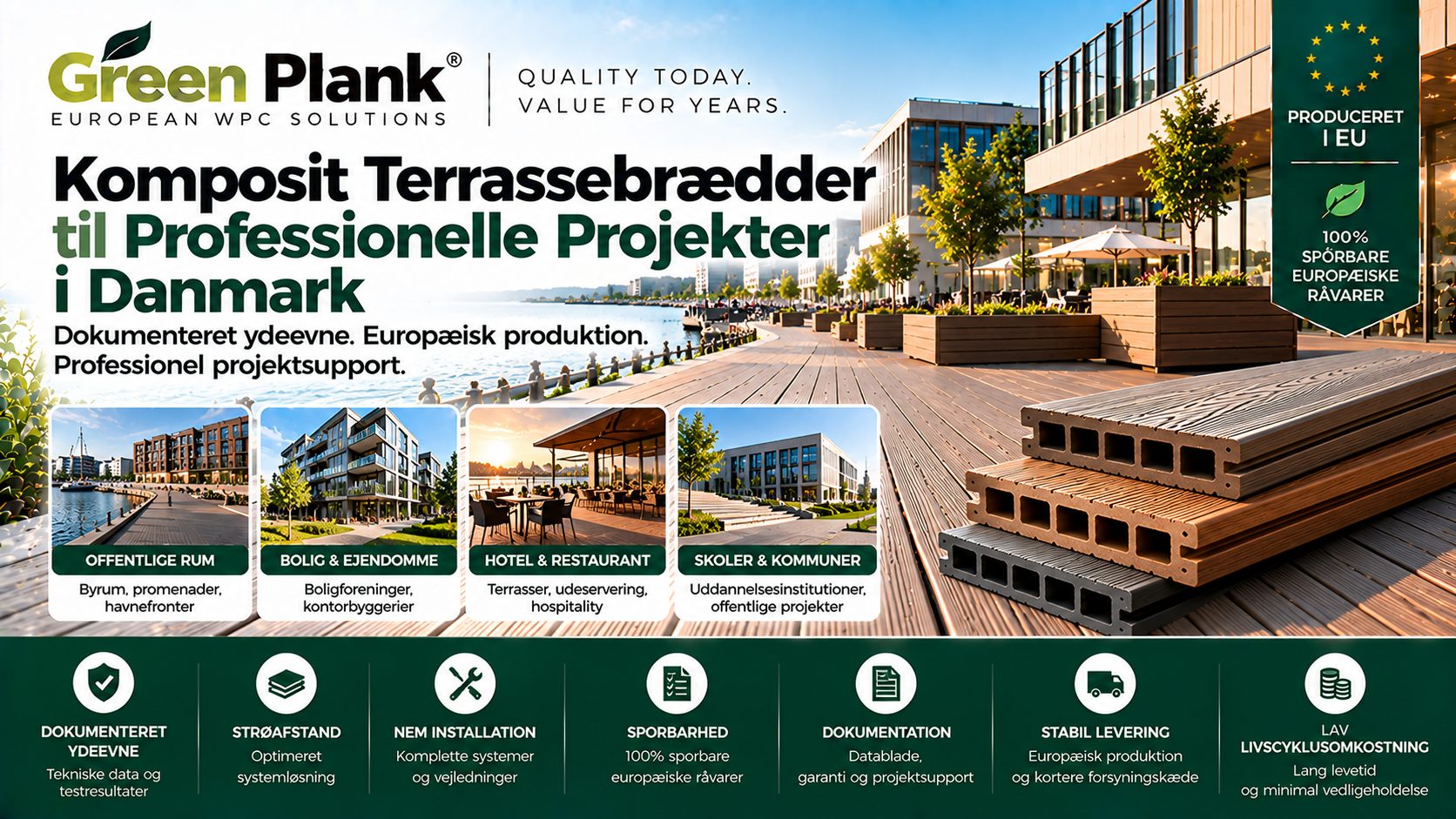
Public spaces and commercial developments demand a level of engineering that far exceeds standard residential requirements. While a private balcony might only face occasional use, commercial boardwalks and restaurant terraces endure constant footfall and heavy furniture loads. A rigorous cheap vs quality comparison reveals that budget materials often lack the internal density required to maintain structural integrity under these conditions. Quality engineering ensures that boards meet strict load-bearing standards, such as the 600 cc joist spacing requirements for private use, while providing the robust profiles necessary for intense commercial traffic.
Safety is a technical attribute, not an aesthetic choice. High-friction surfaces are engineered into premium WPC to provide reliable slip resistance in all weather conditions. This is a critical factor for public safety and liability management. Budget alternatives often prioritize a "wood-like" appearance at the expense of grip, leading to surfaces that become dangerously slick when wet. By choosing a material designed with engineering precision, developers ensure that their infrastructure remains safe and functional for every visitor.
HidLoc™ and the Engineering of Seamless Surfaces
The method used to secure a deck is as important as the boards themselves. Traditional screw-down methods often lead to "mushrooming," where the plastic displaces around the screw head, and eventual board splitting due to restricted thermal movement. Our HidLoc™ Hidden Fastening System solves these issues by allowing the boards to expand and contract naturally. This technical advantage prevents structural stress and creates a flawless, fastener-free surface. In large-scale commercial projects, this system delivers a clean architectural finish that budget installation methods cannot match.
Durability in Extreme Environments
Premium WPC is designed to thrive where traditional materials fail. Coastal piers and boardwalks require high saltwater resistance to prevent the corrosive decay that destroys timber. Similarly, high-end pool surrounds must withstand constant exposure to chlorine without fading or losing structural density. Quality materials are also engineered for impact resistance, ensuring they don't dent or crack under the weight of heavy commercial furniture. This resilience ensures the project maintains its premium appearance regardless of environmental stress. You can view our commercial infrastructure profiles to see how we engineer for these demanding environments.
Structural Reliability: Engineered profiles handle high footfall and heavy furniture without deformation.
Advanced Fastening: HidLoc™ systems manage thermal expansion while providing a safe, seamless surface.
Environmental Resilience: Materials resist saltwater, chlorine, and UV degradation in extreme locations.
Choosing Sustainability: Why Quality is the Only Ethical Choice
The construction industry is moving away from the disposable economy. When you perform a cheap vs quality comparison, you must account for the environmental debt of short-lived materials. Low-cost boards that fail quickly contribute to a cycle of waste that our planet can no longer sustain. Quality WPC prevents deforestation by utilizing hardwood fibers with extreme efficiency. By binding 75% hardwood fiber with 25% HDPE, we create a product that effectively sequesters carbon and lasts for generations. This durability is the ultimate form of sustainability.
Regional reliability is a core pillar of ethical manufacturing. Using 100% EU raw materials significantly reduces the CO2 footprint associated with long-distance shipping and opaque supply chains. Local manufacturing ensures that the energy used in production meets strict environmental standards. This grounded responsibility allows specifiers to provide a beautiful outdoor space that respects nature while delivering high-end performance. We believe that engineering precision and environmental ethics are inseparable.
The Circular Economy in Construction
We utilize a Cradle to Cradle ownership model to ensure material circularity. High-quality sustainable building materials are designed to be reclaimed and repurposed at the end of their 50-year service life. In contrast, budget composites often contain unidentifiable plastics and toxic additives that make them impossible to recycle. These cheap alternatives inevitably end up in landfills. Choosing quality is the only way to ensure your project contributes to green building certifications rather than environmental degradation. Circularity is not just a goal; it's a manufacturing requirement.
Your Next Steps: Specifying Quality for 2026
Identifying a premium product requires looking past marketing brochures to technical data sheets. You should ask suppliers for specific documentation regarding their HDPE content and the origin of their raw materials. Transparency is the hallmark of a responsible innovator. If a supplier cannot verify the source of their fibers or the safety of their additives, the product is likely a liability. Check for certifications that prove the material is free from harmful chemicals and meets European safety standards.
Many professionals are now seeking European engineered WPC alternatives that prioritize regional sourcing and ethical production. This choice ensures long-term success by aligning your project with the highest standards of material science and ecological responsibility. Specifying quality isn't just a financial decision; it's a commitment to a future where construction and conservation exist in harmony. Your professional reputation depends on the longevity of the materials you specify.
Material Circularity: Cradle to Cradle models ensure that products are recycled, not discarded.
Carbon Reduction: EU-sourced materials and local manufacturing minimize the project's CO2 footprint.
Resource Efficiency: High hardwood fiber content maximizes the use of natural waste products.
Investing in Permanent Architectural Assets
A building material's value is defined by its performance over decades, not its price on an invoice. A rigorous cheap vs quality comparison demonstrates that initial savings are a poor substitute for engineering precision. By prioritizing 100% EU-sourced raw materials and the technical stability of a 75/25 hardwood-to-HDPE ratio, you ensure your project remains an asset rather than a liability. You're choosing a path that avoids the hidden costs of material failure and constant maintenance. This long-term focus also allows you to invest in premium additions like the saunas and hot tubs from Palazzina Wellness, creating a cohesive and high-end outdoor environment.
Specifying high-performance WPC is an act of responsible innovation. With our Cradle to Cradle certified materials and a 50-year residential warranty, you can deliver outdoor spaces that combine aspirational aesthetics with grounded, eco-conscious longevity. It's an investment in a future where quality and sustainability are inseparable. Partner with Green Plank for your next high-performance project and specify materials that reflect your commitment to excellence. Build a space that respects nature and stands the test of time.
Frequently Asked Questions
Is expensive composite decking really worth the extra cost?
Yes, premium composite decking is a superior financial investment when you evaluate the Total Cost of Ownership. A cheap vs quality comparison over 25 years reveals that high-end boards eliminate the recurring expenses of staining, sealing, and eventual replacement. You're paying for an engineered solution that remains structurally sound for up to five decades, whereas budget alternatives often fail within seven to ten years.
How can I tell if a composite board is high quality just by looking at it?
You can identify quality by examining the board's density and the consistency of its profile. High-performance boards feel heavy and solid, featuring a deep, multi-tonal grain that avoids a shiny, plastic appearance. Look at the cross-section; professional-grade materials show a uniform composition without visible air pockets or irregular fillers, signaling superior manufacturing standards and material purity.
What are the most common problems with cheap composite decking?
Rapid UV fading and structural warping are the most frequent issues associated with budget materials. Inferior boards often use low-grade plastic binders that become brittle when exposed to sunlight, leading to cracks and surface degradation. These products also tend to absorb more moisture, which causes internal swelling and eventual rot, undermining the primary reason for choosing composite over timber.
Does high-quality WPC require any maintenance at all?
High-quality WPC is designed for minimal effort, requiring only periodic cleaning with simple soap and water. You'll never need to sand, stain, or apply chemical sealants to maintain its architectural integrity. This low-maintenance profile is a technical achievement of our 75/25 material ratio, which ensures the surface remains resistant to mold and grime without the need for intensive labor.
Why does the ratio of hardwood fiber to HDPE matter so much?
The 75% hardwood fiber and 25% HDPE ratio provides the perfect equilibrium between structural strength and moisture protection. The hardwood fibers create a rigid, durable skeleton that resists sagging, while the High-Density Polyethylene encapsulates those fibers to prevent water ingress. This precise engineering is what allows for a cheap vs quality comparison that favors long-term performance over short-term savings.
How long should I expect a quality composite deck to last?
You should expect a quality composite deck to remain functional and beautiful for up to 50 years. Our residential products are backed by a 50-year warranty, which is a testament to the reliability of our EU-sourced raw materials. This longevity ensures your outdoor space remains a permanent asset that respects both your budget and the natural environment.
Is high-quality WPC more environmentally friendly than cheap wood?
Yes, because high-quality WPC utilizes recycled fibers and adheres to a Cradle to Cradle ownership model. Unlike cheap timber that requires frequent replacement and chemical preservatives, our WPC is built for half a century of use and is fully recyclable at its end-of-life. Our commitment to 100% EU-sourced materials also significantly reduces the CO2 footprint of your construction project.
What is the HidLoc™ hidden fastening system and why is it better?
The HidLoc™ system is a specialized fastening technology that secures boards from the side rather than through the surface. It's better because it accommodates the natural thermal expansion and contraction of the boards without causing structural stress or "mushrooming" around screw holes. This results in a seamless, fastener-free finish that enhances both public safety and the overall aesthetic of the project.
Specifikér produktet
Brug denne guide i en Green Plank-specifikation
Tekniske WPC-artikler skal understøtte de kommercielle sider — ikke konkurrere med dem. Fortsæt til kompositterrasse, TerraTuff, Nordeka eller de tekniske downloads.