



True architectural seclusion is a product of material stability, not just panel height. When you invest in a composite fence design for privacy, you expect a permanent visual barrier that won't succumb to the gaps and warping common in traditional timber. You've likely felt the frustration of watching a beautiful boundary degrade under the sun, or felt the environmental guilt of using non-recyclable materials. We believe your outdoor sanctuary should be both aesthetically commanding and ecologically responsible.
This 2026 guide shows you how to design a high-performance, sustainable boundary that combines modern aesthetics with an industry-leading 50-year service life. You'll learn how our EU-made WPC systems utilize 75% hardwood fiber to ensure a rigid structure that eliminates thermal expansion. This engineering precision provides total visual seclusion without the need for annual staining or repairs. We will explore the technical advantages of high-density materials, the latest horizontal slat trends, and the Cradle to Cradle ownership model that defines the future of premium European manufacturing.
Key Takeaways
- Learn how modern architectural trends favor high-density WPC to create seamless boundaries that serve as a sophisticated extension of your home’s exterior.
- Discover how tongue and groove configurations optimize your composite fence design for privacy by eliminating the gaps typically caused by thermal expansion and contraction.
- Understand the engineering behind a 50-year service life and how 100% EU-sourced raw materials provide the structural consistency required for permanent seclusion.
- Navigate complex municipal height regulations and wind load requirements to ensure your solid-surface privacy screen remains both secure and compliant.
- Evaluate the environmental impact of your project by choosing Cradle to Cradle ownership and manufacturing processes that actively reduce your CO2 footprint.
Table of Contents
- Beyond the Barrier: The Evolution of Composite Fence Design for Privacy
- Engineering Seclusion: Key Design Configurations for Maximum Privacy
- The Durability Gap: Why Material Stability Dictates Privacy
- Architectural Planning: Integrating Privacy Fencing into Your Landscape
- Sustainable Boundaries: The Green Plank Fencing System
Beyond the Barrier: The Evolution of Composite Fence Design for Privacy
Modern residential design treats the boundary as an architectural extension of the home's interior. In 2026, a sophisticated composite fence design for privacy serves as more than a property marker; it's a deliberate aesthetic choice that defines the outdoor living experience. Homeowners and architects now prioritize seamless, high-density surfaces that provide a permanent visual block. This shift reflects a deeper psychological need for a secure sanctuary. A well-engineered boundary offers peace of mind by creating a predictable, private environment that remains unchanged regardless of the season. By choosing materials that bridge the gap between natural aesthetics and engineering precision, you transform a simple barrier into a statement of architectural seclusion.
The Problem with Traditional Privacy Screens
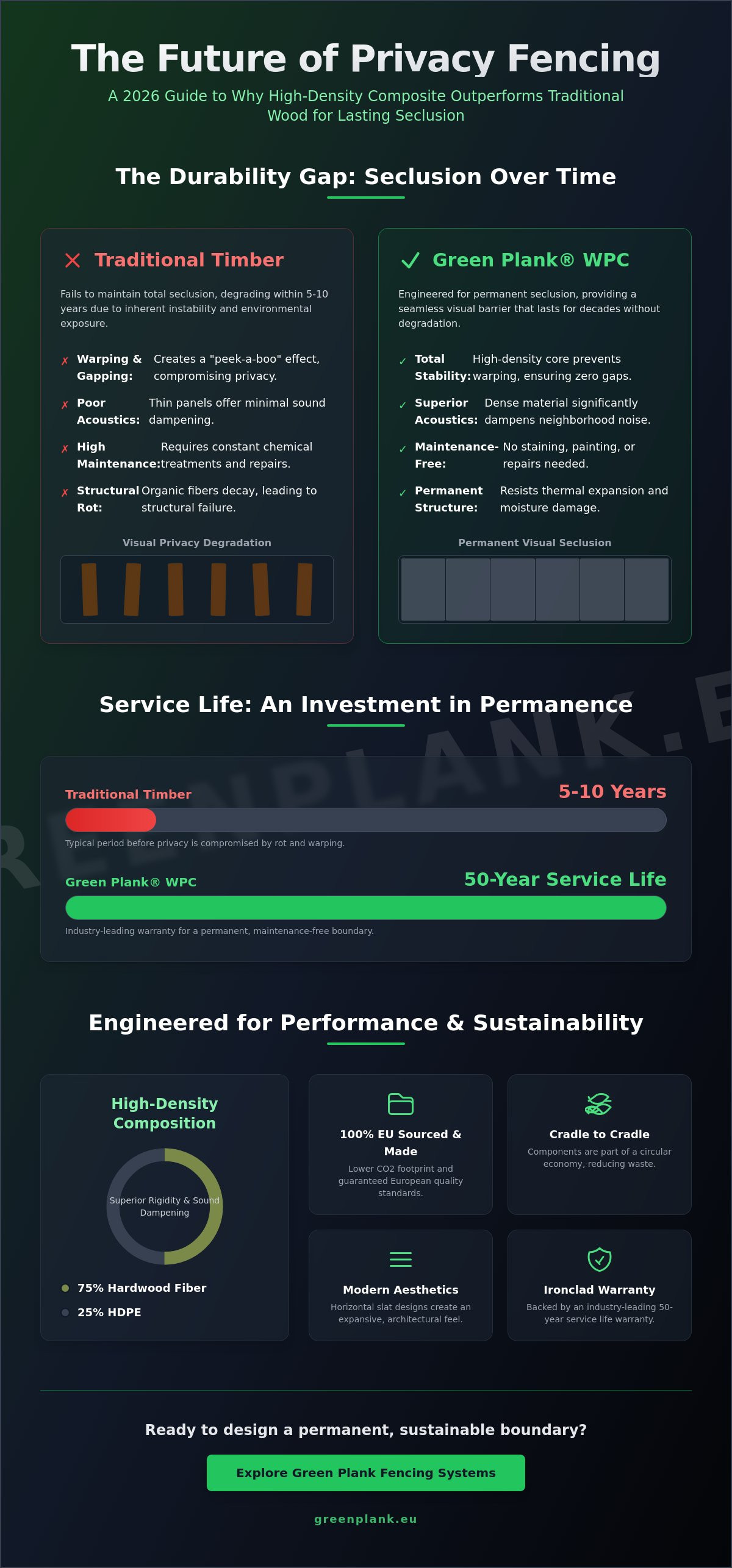
Traditional softwood fencing often fails to maintain total seclusion over a five to ten-year period. Natural timber is inherently unstable. It reacts to moisture and UV exposure by expanding and contracting, which inevitably leads to seasonal wood shrinkage. This creates the "peek-a-boo" effect where gaps appear between boards, compromising your family's privacy. Beyond the visual failure, thin traditional panels offer poor acoustic insulation. They lack the mass required to dampen neighborhood noise, leaving your outdoor space feeling exposed to both eyes and ears. Maintaining these structures requires constant chemical treatments, yet the structural integrity continues to decline as the organic fibers rot.
The WPC Advantage for Seclusion
The transition to wood-plastic composite technology solves the fundamental flaws of organic timber. Our systems utilize a precise blend of 75% hardwood fiber and 25% high-density polyethylene (HDPE) to create a profile that is significantly denser than natural wood. This high-density core ensures a total visual block that does not warp or create gaps over time. Wood-plastic composites (WPCs) represent the pinnacle of material science for 2026 builds, offering a high-performance alternative to both PVC and timber that resists thermal expansion and contraction.
Sustainability is no longer an afterthought; it's a core design requirement. We employ a Cradle to Cradle ownership model, ensuring that every component is part of a circular economy. Our fencing is made in the EU using 100% EU raw materials, which significantly reduces the CO2 footprint of your project while guaranteeing professional manufacturing standards. This commitment to quality allows us to provide a 50-year service life warranty. You gain a maintenance-free exterior that respects nature while providing the ultimate level of domestic seclusion.
- High-Density Composition: 75% hardwood fiber provides superior sound dampening and visual opacity.
- Structural Stability: Engineered HDPE prevents the warping and gapping common in softwoods.
- Ethical Manufacturing: 100% EU-sourced materials ensure a lower carbon footprint and regional reliability.
- Long-Term Performance: A 50-year warranty reflects our confidence in the material's durability.
Engineering Seclusion: Key Design Configurations for Maximum Privacy
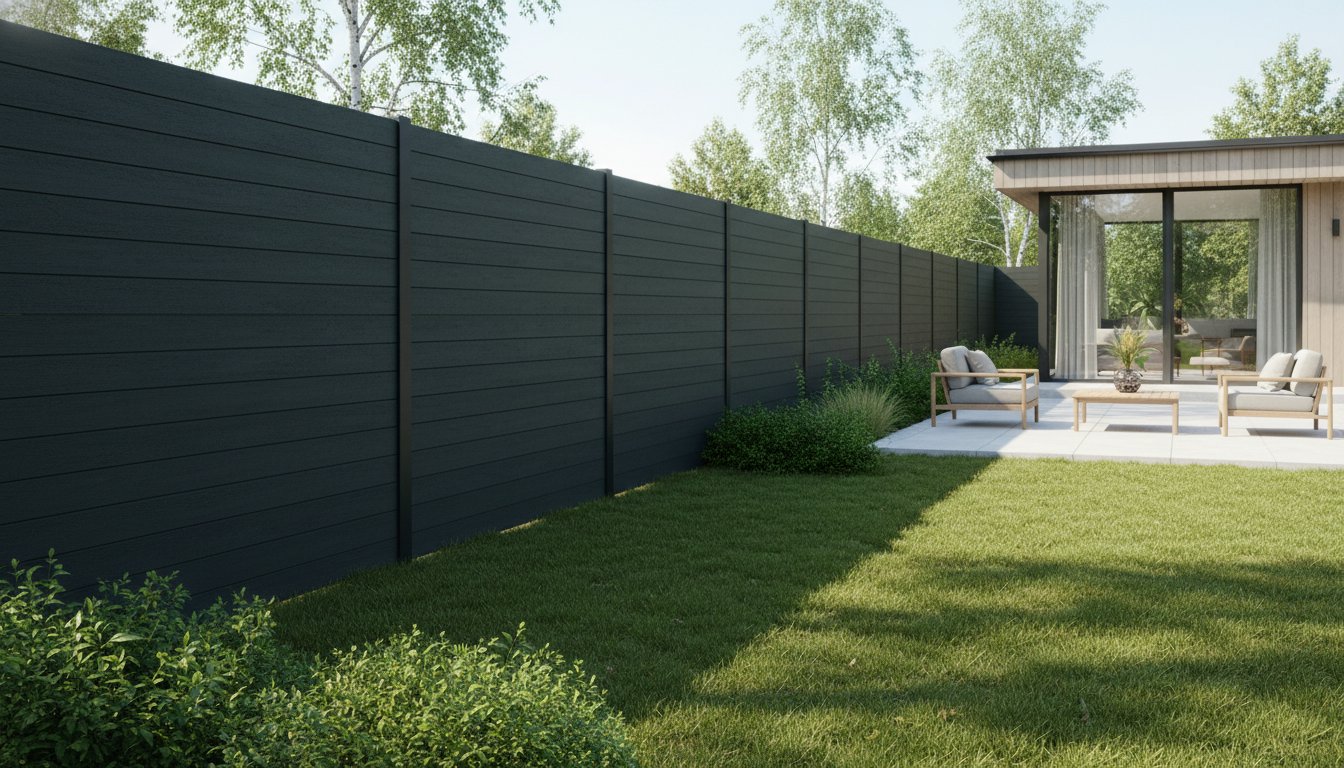
Designing for seclusion requires an understanding of both geometry and material science. A successful composite fence design for privacy doesn't just block a view; it shapes the environment by controlling light, sound, and perspective. For 2026, architectural trends favor horizontal board orientations. This configuration elongates the property line and creates a modern, expansive feel that complements contemporary residential structures. In contrast, vertical installations emphasize height and are often utilized to draw the eye upward in smaller, enclosed courtyards. Both choices benefit from strategic color theory. Using dark charcoals or deep walnuts allows the boundary to recede visually, which makes the green tones of your landscaping pop while the fence itself acts as a quiet, authoritative backdrop.
Light penetration is another critical factor in high-end design. You can maintain lower-level privacy while inviting natural light by integrating trellis tops or decorative screen inserts. These elements break up the visual mass of a solid wall without sacrificing the secure feeling of a permanent boundary. It's a balanced approach that satisfies the need for seclusion while preventing the garden from feeling boxed in or overly shadowed.
Tongue and Groove: The Seamless Barrier
The tongue and groove system remains the gold standard for zero-gap privacy. These interlocking boards eliminate the need for overlapping slats, which ensures there are no sightlines through the fence even as the material undergoes minor thermal changes. This solid-wall design provides immediate structural benefits, acting as a robust shield against wind and neighborhood noise. By utilizing our HidLoc™ Hidden Fastening Systems, you achieve a clean, fastener-free aesthetic that highlights the natural grain of the WPC. This precision-engineered fit creates a monolithic appearance that is impossible to achieve with traditional timber products.
Shadowbox and Louvered Variations
In high-wind areas, a completely solid surface can experience significant pressure. Shadowbox and louvered designs offer a solution by allowing airflow through the structure without compromising visual blocks. These configurations create depth and texture through multi-dimensional board placement, casting elegant shadows that change throughout the day. For complex architectural layouts, our Smart System WPC composite fencing components provide the modular flexibility needed to maintain privacy across uneven terrain or unique property angles. This technical adaptability ensures that your boundary remains a high-performance asset for decades, regardless of environmental challenges.
- Horizontal Orientation: Elongates the property and provides a contemporary architectural profile.
- Interlocking T&G: Guarantees 100% visual opacity and enhanced acoustic dampening.
- Receding Colors: Darker tones like charcoal help the boundary blend into the natural landscape.
- Airflow Management: Shadowbox patterns reduce wind load while maintaining total seclusion.
The Durability Gap: Why Material Stability Dictates Privacy
Thermal expansion acts as the silent killer of privacy fence alignment. When lower-quality materials are exposed to temperature fluctuations, they expand and contract at rates that compromise the interlocking integrity of the panels. This movement creates "gap-creep," where a once-seamless barrier develops visible lines that ruin the sense of seclusion. Achieving a successful composite fence design for privacy requires a material that remains dimensionally stable under stress. Our use of 100% EU raw materials ensures superior board consistency, providing the tight tolerances necessary to maintain a perfect visual block for decades.
The engineering of the 25% HDPE component is equally vital. This high-density polyethylene serves as a moisture barrier that prevents internal swelling and panel sagging. Traditional timber absorbs water, which increases its weight and causes it to pull away from fasteners. Our WPC remains lightweight and rigid. We back this engineering confidence with a 50-year service life warranty, a stark contrast to the typical 10-year lifecycle of chemically treated wood that begins to fail as soon as the initial sealant wears off.
Stability Under Extreme Weather
Green Plank boards are engineered to resist the specific challenges of the harsh Nordic climate. Intense UV exposure and sub-zero temperatures can cause inferior plastics to become brittle or lose their color. Our high-strength composite engineering maintains its structural integrity even in these demanding conditions. This same material science is applied to our commercial infrastructure profiles, where durability is a non-negotiable requirement for public safety and longevity. By choosing a product designed for the most extreme environments, you ensure your residential boundary remains a permanent fixture of your home’s architecture.
Maintenance and Privacy Retention
Maintenance is often misunderstood as a purely aesthetic task. In reality, the need to paint or stain traditional wood actually accelerates gap formation. These coatings trap moisture within the organic fibers, leading to internal rot and uneven drying. WPC offers a "set and forget" solution that preserves your seclusion without the need for annual chemical intervention. You can read more about wpc composite decking to understand how these sustainable materials create a cohesive, maintenance-free outdoor living space. This material synergy ensures that your deck and fence age at the same rate, maintaining a unified design language across your entire property.
- Dimensional Stability: 100% EU raw materials minimize thermal expansion for a gap-free finish.
- Moisture Resistance: HDPE prevents sagging and internal rot common in organic timber.
- UV Protection: Advanced pigments resist fading and brittleness under intense sunlight.
- Warranty Assurance: A 50-year guarantee provides long-term peace of mind for high-end builds.
Architectural Planning: Integrating Privacy Fencing into Your Landscape
Successful execution of a composite fence design for privacy requires a transition from aesthetic vision to technical planning. You aren't just installing a barrier; you're defining the boundary between public space and your private sanctuary. This process begins with a thorough understanding of local building codes. In most residential areas, front yard heights are strictly limited to 3 or 4 feet, whereas backyard perimeters can typically reach 6 to 8 feet. Because solid-surface fences act as sails under high wind pressure, your planning must include precise wind load calculations. These technical steps ensure that your investment remains a permanent, safe, and compliant fixture of your property's architecture.
A unified exterior aesthetic is achieved by coordinating materials across different surfaces. You can create a seamless transition by combining your fencing with composite wall cladding for the home's facade. This material synergy creates a consistent visual language that elevates the overall market value of the estate. By matching the deep textures and colors of your fence to your wall panels, you blur the lines between the structure and its surroundings, creating a truly integrated landscape design.
Site Assessment and Foundation
WPC panels are significantly denser than traditional timber, which necessitates a more robust foundation. Professional installation requires precise post spacing and depth to support the weight of heavy-duty composite boards without sagging. When dealing with uneven terrain, use a stepped or sloped installation method to maintain a level privacy line across the top of the fence. This attention to detail is vital for a successful composite fence design for privacy, preventing the gaps that occur when panels are improperly aligned. For industry-leading support on your next project, view our professional technical resources to ensure your installation meets EU engineering standards.
Aesthetic Integration
Your boundary should complement, not clash with, your existing outdoor features. Matching the grain and finish of your fence to your decking systems creates a professional, high-end look. You can further enhance the security and atmosphere of your sanctuary by integrating low-voltage lighting directly into the fence posts. This illuminates the perimeter at night without compromising seclusion. For a biophilic touch, consider designing boundaries that incorporate vertical greenery against the WPC surface. The neutral tones of our composite provide a perfect backdrop for climbing plants, blending engineering precision with natural beauty.
- Regulatory Compliance: Always verify local height limits, typically 6-8 feet for backyards.
- Wind Load Engineering: Calculate pressure requirements for solid-surface panels to prevent structural failure.
- Material Synergy: Coordinate fence textures with cladding and decking for a unified facade.
- Lighting Integration: Enhance nighttime security and visual depth with post-mounted fixtures.
Sustainable Boundaries: The Green Plank Fencing System
Integrating a premium composite fence design for privacy is a long-term investment in both property value and environmental ethics. Our systems are engineered to exceed a 50-year service life, which drastically reduces the CO2 footprint of your project by eliminating the need for frequent replacements. By choosing 100% EU-sourced raw materials, we ensure that every board adheres to the highest professional standards of manufacturing and ecological responsibility. This regional reliability is a core identity marker for Green Plank, signaling a design sensibility that respects both the user and the landscape.
We support commercial and residential specifiers through every phase of the project lifecycle. Our Cradle to Cradle ownership model ensures that the material journey doesn't end at the property line. Instead, we view our fencing as a circular resource that can be repurposed or recycled at the end of its functional life. This forward-thinking approach satisfies the rational decision-maker who prioritizes technical performance alongside the emotional buyer who seeks a beautiful, sustainable outdoor sanctuary. By choosing a system that balances engineering precision with environmental stewardship, you're building a boundary that lasts for generations.
The Green Plank Product Portfolio
Our portfolio includes versatile options like the Terra Tuff and Smart System fencing collections. Terra Tuff provides a robust, heavy-duty solution for high-traffic or exposed areas, while the Smart System offers modular flexibility for complex architectural layouts. We provide extensive customization possibilities for large-scale commercial developments, ensuring that your composite fence design for privacy meets specific infrastructure requirements. European manufacturing remains our hallmark of quality, providing the safety and performance standards expected in the premium market.
Next Steps for Your Project
Transitioning from architectural planning to physical installation begins with experiencing the material quality firsthand. We invite you to order samples to feel the high-density texture and see the depth of our walnut and charcoal finishes. For industrial applications or custom infrastructure profiles, our technical experts are available to provide detailed engineering support. This ensures your boundary remains a high-performance asset for decades to come. Our commitment to quality is backed by specific long-term performance guarantees, reflecting our role as a responsible innovator in the WPC industry.
- Terra Tuff: Heavy-duty performance for exposed or high-traffic perimeters.
- Smart System: Modular components for intricate architectural designs and varied terrain.
- EU Manufacturing: Guaranteed safety, ethical labor, and superior material consistency.
- 50-Year Warranty: A primary signature of our engineering confidence and product longevity.
Explore our full range of composite fencing systems to find the perfect sustainable solution for your next project.
Defining the Future of Architectural Seclusion
A successful composite fence design for privacy is defined by its ability to remain structurally unchanged over decades. You've seen how material science, specifically high-density WPC, prevents the warping and seasonal gapping that typically compromises traditional timber. By prioritizing 100% EU-sourced raw materials and a Cradle to Cradle circular design, you aren't just building a boundary; you're participating in a responsible manufacturing legacy. This commitment to engineering precision is the foundation of our 50-year service life warranty. It ensures your sanctuary remains as secure and beautiful as the day it was installed.
The transition from public property lines to private sanctuary zones is now a permanent architectural feature of your home. Whether you're coordinating textures with existing cladding or engineering for specific wind loads, your choice of material dictates the long-term success of the project. It's time to elevate your exterior with a maintenance-free solution that respects nature. View our high-performance composite fencing systems and start planning your sustainable sanctuary today. Your home deserves a boundary that reflects your commitment to quality and ecological responsibility.
Frequently Asked Questions
Does composite fencing provide better privacy than wood?
Composite fencing offers superior long-term seclusion because it eliminates the natural warping and shrinking found in timber. While wood panels often develop gaps as they dry and age, our high-density WPC remains dimensionally stable. This ensures your composite fence design for privacy maintains a total visual block for decades. The material's density also provides enhanced acoustic dampening, creating a quieter and more secluded outdoor environment compared to thin softwood slats.
What is the best height for a composite privacy fence?
The optimal height for a privacy fence typically ranges between 6 and 8 feet for backyard perimeters. This height effectively blocks sightlines from neighboring properties and street-level traffic. You must verify local municipal codes before installation, as many jurisdictions limit front yard heights to 3 or 4 feet. Fences exceeding 6 feet often require specific permits and wind load calculations to ensure structural safety and regulatory compliance.
Will a composite privacy fence fade in the sun?
High-performance composite fencing is engineered with advanced UV inhibitors to resist significant solar degradation. While all materials exposed to the sun undergo a minor initial color stabilization period, our EU-made boards are designed to maintain their deep charcoal and walnut tones for decades. This resistance to fading ensures that your investment continues to look premium without the need for the frequent staining or painting required by organic wood products.
How does wind load affect a solid composite privacy fence?
Solid-surface fences act as sails that capture significant wind pressure, which places stress on the posts and foundation. It's critical to use heavy-duty WPC profiles and deep post footings to counteract these forces. For high-wind areas, we recommend shadowbox or louvered configurations. These designs allow air to pass through the structure while maintaining the visual integrity of your composite fence design for privacy.
Can I install a composite privacy fence on top of a wall?
You can install composite fencing on top of existing masonry or concrete walls using specialized steel post mounts. This configuration is an excellent way to increase seclusion in urban environments without building an entirely new structure. It's vital to ensure the wall is structurally sound and capable of handling the additional wind load and weight of the WPC panels. Professional anchoring is required to maintain a level and secure boundary line.
How do I clean a composite privacy fence to keep it looking new?
Maintaining a composite fence is remarkably simple and requires only basic soap and water. You should use a soft-bristle brush to remove surface dust or organic debris that may accumulate over time. Unlike wood, WPC doesn't require power washing, which can damage the surface fibers. Regular rinsing with a garden hose is usually sufficient to preserve the material's high-end finish and ensure it remains a maintenance-free architectural asset for your property.
Is composite fencing more expensive than wood in the long run?
Composite fencing is significantly more cost-effective over its 50-year service life when compared to traditional timber. While the initial material investment is higher, you eliminate the recurring costs of stains, sealants, and labor. Timber fences typically require replacement every 10 to 15 years, whereas our EU-engineered WPC remains structurally sound for five decades. This longevity results in a much lower total cost of ownership and a higher return on investment for homeowners.
What makes Green Plank fencing more sustainable than other brands?
Green Plank distinguishes itself through a deep commitment to regional reliability and ethical manufacturing. We utilize 100% EU-sourced raw materials and a blend of 75% hardwood fiber to minimize our environmental footprint. Our Cradle to Cradle ownership model ensures that every product is designed for a circular economy, reducing CO2 emissions throughout the manufacturing process. This approach provides a sustainable building solution that respects nature while delivering professional engineering standards.
Specificera produkten
Använd den här guiden i en Green Plank-specifikation
Tekniska WPC-artiklar ska stärka de kommersiella sidorna — inte konkurrera med dem. Fortsätt till komposittrall, TerraTuff, Nordeka eller de tekniska nedladdningarna.