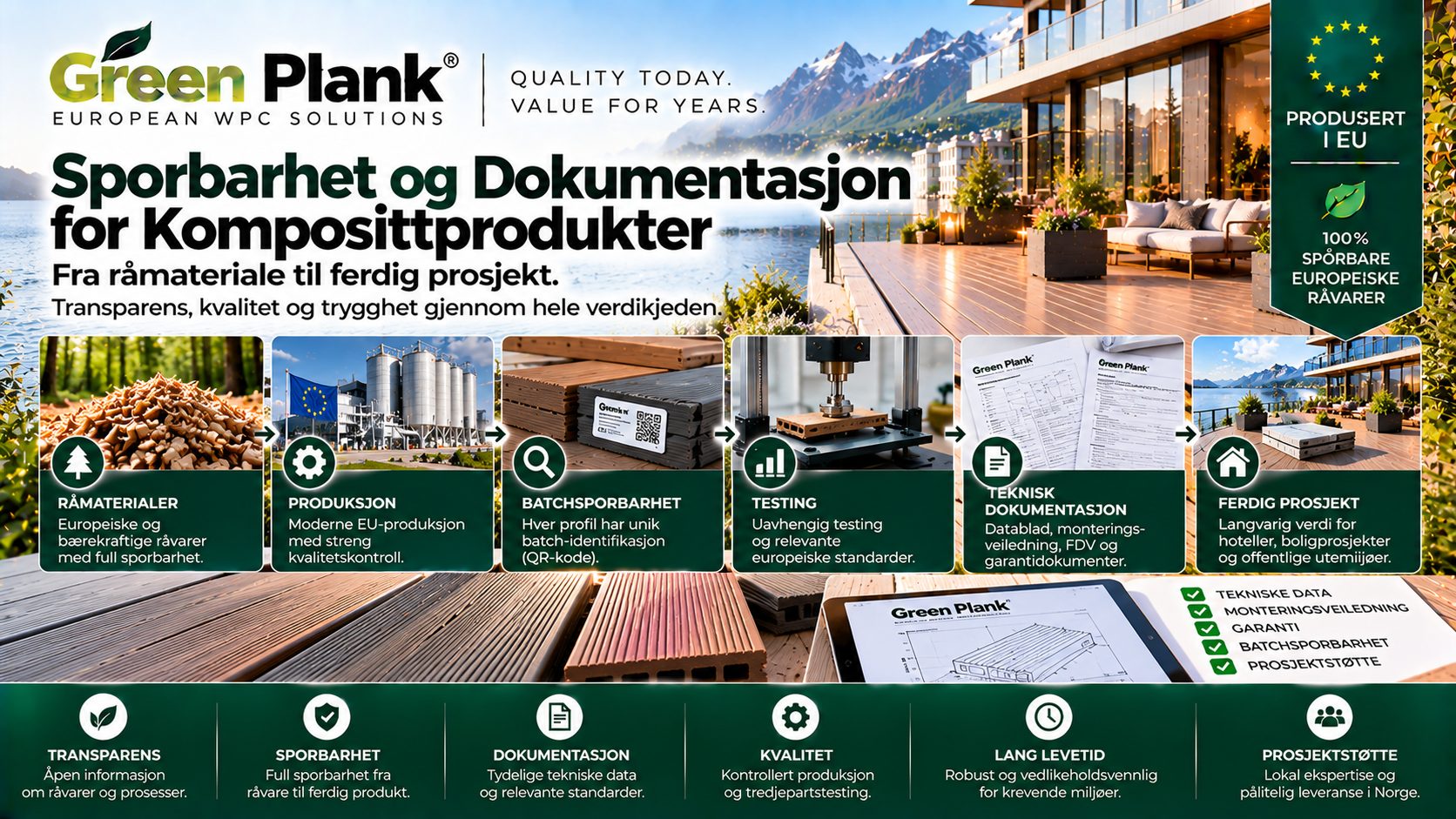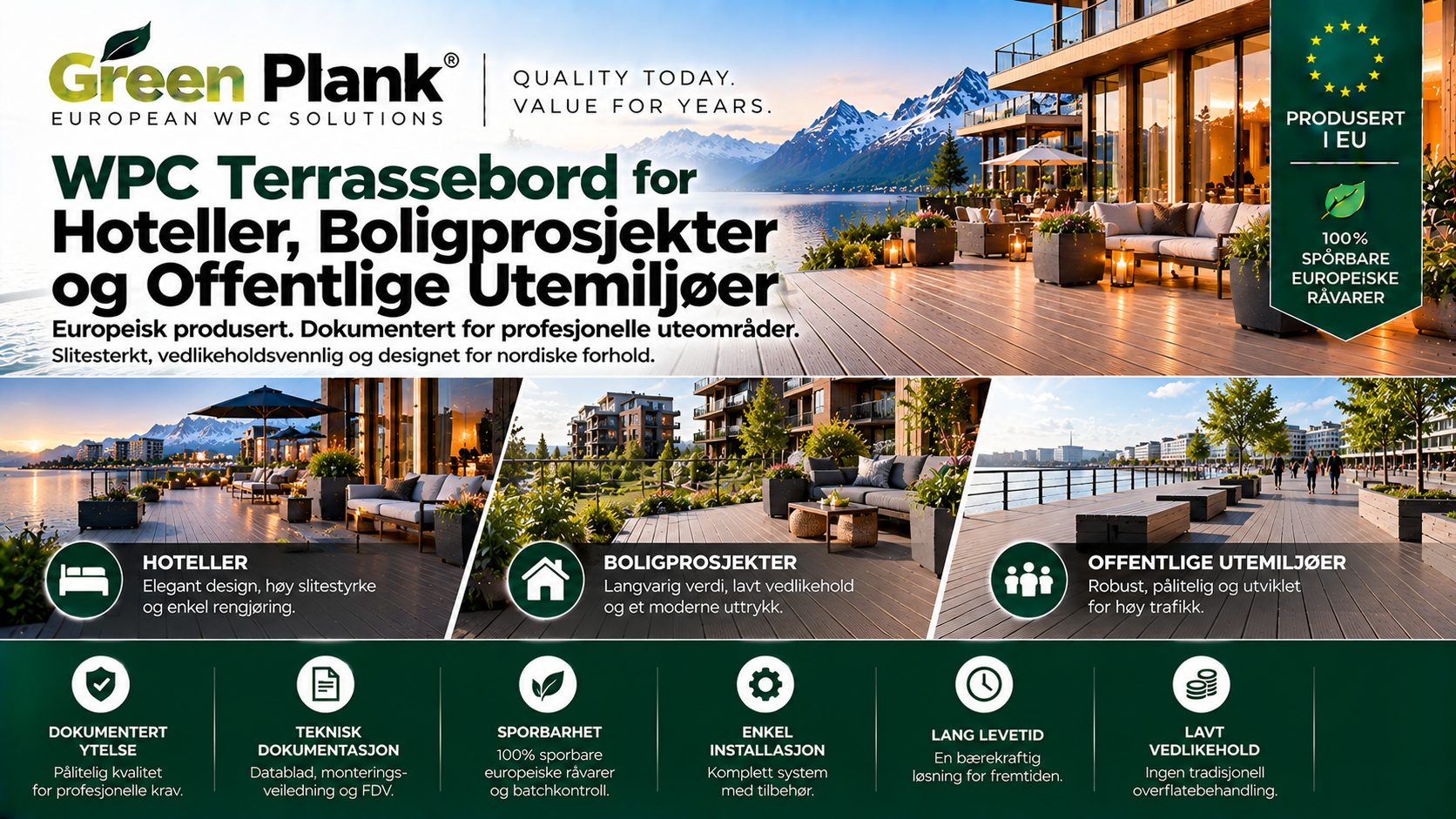




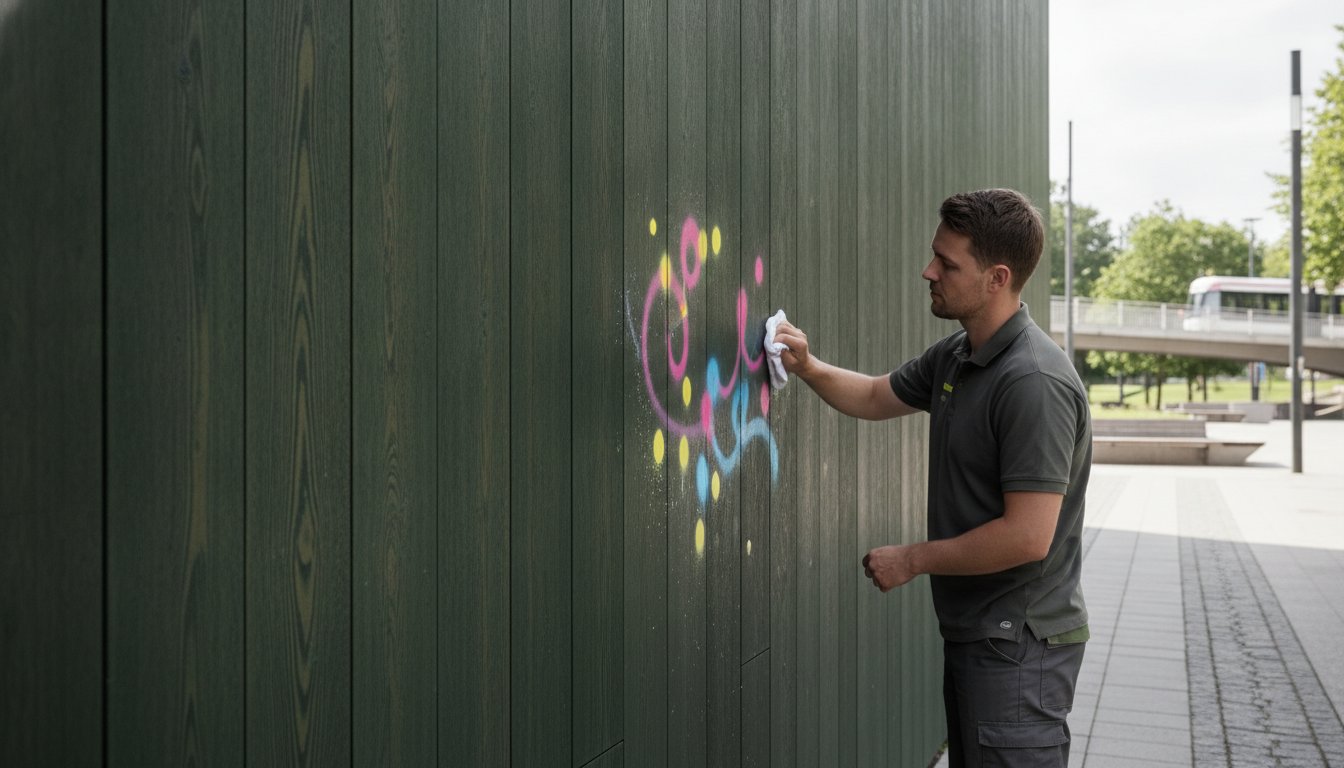
The real cost of graffiti isn't the paint; it's the aggressive chemical cycle required to remove it, which often leaves facades permanently scarred. By 2026, commercial specifications for B1-rated cladding have reached 47%, signaling a clear industry demand for materials that prioritize both safety and aesthetic longevity. High-performance anti-graffiti wpc panels represent the next evolution in this shift, moving beyond temporary surface treatments to provide an inherent defense against urban wear. These panels utilize 75% hardwood fiber and EU-sourced HDPE to create a dense, non-porous surface that resists paint penetration while preserving the warm, organic texture of natural timber.
You likely recognize the frustration of seeing a premium public building marred by vandalism and the subsequent ghosting left behind by traditional cleaning methods. Maintaining a pristine architectural image shouldn't require a constant cycle of toxic solvents or expensive reapplications. This article explores how modern wood-plastic composites offer a permanent, vandal-resistant solution that supports a 50-year service life and carries Cradle to Cradle certification. We will examine the technical engineering behind low-density profiles, the environmental benefits of reduced CO2 footprints, and the practical advantages of the HidLoc™ fastening system for a secure, seamless finish.
Key Takeaways
Learn why the 75% hardwood fiber and 25% HDPE blend creates a high-density, non-porous core that prevents permanent paint bonding.
Discover how anti-graffiti wpc panels provide an inherent material defense that eliminates the need for recurring chemical cleaning cycles.
Understand the role of the HidLoc™ hidden fastening system in creating a seamless, tamper-resistant finish for high-traffic urban areas.
Explore the technical requirements for specifying Cradle to Cradle certified cladding that supports a 50-year commercial service life.
Evaluate the environmental advantages of choosing EU-sourced raw materials to minimize the carbon footprint of modern public infrastructure.
Table of Contents
Understanding Anti-Graffiti WPC Panels for Urban Resilience
The Engineering Behind Graffiti Resistance in WPC
Performance Comparison: WPC vs. Coatings and Laminates
Specifying and Maintaining Vandal-Resistant WPC Cladding
Green Plank: European Solutions for Resilient Urban Design
Understanding Anti-Graffiti WPC Panels for Urban Resilience
Anti-graffiti wpc panels aren't simply standard wood alternatives with a slick topcoat. They represent a specialized class of material engineering where the composite matrix is designed to resist permanent bonding with aerosol paints, permanent markers, and industrial inks. By utilizing a precise blend of 75% hardwood fiber and 25% high-density polyethylene (HDPE), these panels create a surface that lacks the microscopic pores found in traditional timber or masonry. This lack of porosity ensures that pigments sit on the surface rather than soaking into the core, allowing for restoration without the "ghosting" effects that plague older urban materials.
Modern city planning requires materials that can withstand the rigors of high-traffic environments. Wood-plastic composites (WPCs) serve as a foundational technology here, offering the warmth of natural wood with the resilience of advanced polymers. Traditional wood is a high-risk choice for public facades because its cellular structure acts like a sponge for vandalism. Once ink penetrates the grain, removal usually involves deep sanding or aggressive chemical stripping. Transitioning to permanent material solutions like anti-graffiti wpc panels removes the reliance on "sacrificial" coatings that require reapplication after every cleaning cycle.
The Growing Need for Vandal-Resistant Facades
Rapid urbanization has driven maintenance budgets to record highs, forcing a rethink of how we protect public property. Architects now prioritize the aesthetic preservation of commercial infrastructure over a 50-year lifecycle to ensure long-term value. Integrating anti-graffiti properties into composite wall cladding does more than just stop paint; it protects the investment of the community and reduces the environmental burden of frequent repairs. It's a shift from reactive cleaning to proactive protection.
Key Attributes of High-Performance Anti-Graffiti Panels
The effectiveness of these panels depends on specific technical factors that define their performance in the field. High-quality panels maintain their integrity through a combination of chemistry and structural density. Key attributes include:
Surface tension: Low surface energy prevents liquids from wetting the material, which causes ink to bead up rather than spread.
UV stability: Advanced HDPE ensures that the panel colors don't fade after graffiti removal or prolonged sun exposure.
Mechanical durability: The high-density core resists abrasive forces, ensuring the surface doesn't become dull or scratched during maintenance.
The Engineering Behind Graffiti Resistance in WPC
The resistance of anti-graffiti wpc panels isn't a superficial film; it's a structural achievement. While many manufacturers rely on temporary laminates that can peel or scratch, high-performance WPC integrates protection into the core. By combining 75% hardwood fiber with 25% high-density polyethylene (HDPE), the manufacturing process creates a material with extreme density. This process eliminates the microscopic surface voids where paint typically takes root. The result is a facade that stays clean because it lacks the physical space for pigments to anchor.
Surface engineering plays a critical role in this defense. Proprietary extrusion methods ensure that the outer skin of the panel remains non-porous and smooth. Because HDPE is naturally chemically inert, it resists the aggressive solvents found in permanent markers and spray paints. This chemical resistance ensures that when cleaning agents are applied, they only interact with the graffiti, leaving the underlying facade unharmed. Additionally, the thermal stability of these panels allows them to withstand high-pressure water cleaning without compromising structural integrity or causing warping.
Material Density and Ink Penetration
Natural wood is inherently fibrous and porous, which makes it a magnet for pigments. When paint hits timber, it travels deep into the grain through capillary action. This leads to "ghosting," where a faint outline remains even after heavy scrubbing. Green Plank composite solves this by utilizing 100% EU raw materials to maintain a consistent material density. This uniform structure prevents ink from migrating below the surface, ensuring a clean restoration every time. You can explore our commercial infrastructure profiles to see how this density supports large-scale urban projects.
The Role of HDPE in Surface Protection
HDPE acts as a powerful hydrophobic barrier. It repels both water-based and oil-based paints, forcing them to sit loosely on the surface. This "Responsible Innovator" approach to material science is what allows for a 50-year service life warranty. Because the protection is part of the material itself, it won't wear away over time like a spray-on coating. HDPE density prevents deep-pigment absorption by creating a molecular shield that ink cannot penetrate. This engineering precision results in a facade that remains beautiful and easy to maintain for decades.
The benefits of this engineering include:
Consistent density: Uniform core structure prevents internal pigment migration.
Chemical inertness: Resistance to harsh cleaners preserves the panel's original color.
Moisture repulsion: Hydrophobic properties ensure that even wet paint fails to bond.
Performance Comparison: WPC vs. Coatings and Laminates
Choosing between inherent material properties and temporary surface treatments determines the long-term viability of an urban facade. While many developers opt for sacrificial coatings, the recurring maintenance cycles often negate initial savings. Anti-graffiti wpc panels offer a permanent alternative that withstands the rigors of public spaces without needing constant re-treatment. When paint is applied to a film-protected surface, the removal process often degrades the film itself, eventually leading to a full replacement of the protective layer. This creates a cycle of waste that high-performance composites avoid entirely.
By 2026, the shift toward sustainable building materials has highlighted the inefficiency of chemical-heavy cleaning protocols. Traditional surfaces often require toxic solvents to dissolve stubborn inks, which can leach into the local environment. WPC panels simplify this process. Most vandalism can be managed with simple pressure washing or mild, eco-friendly detergents, preserving both the facade and the surrounding ecosystem. This reduction in chemical reliance is a core component of responsible urban management.
Structural Integrity vs. Surface Films
Surface films are vulnerable to delamination, especially in climates with extreme temperature fluctuations. Once a film begins to peel, it invites further vandalism and moisture ingress. Green Plank panels utilize through-color protection, meaning the pigment and anti-graffiti properties are consistent throughout the entire profile. If a panel suffers a deep scratch in a high-traffic zone, there's no unsightly substrate exposed. This mechanical durability ensures the building looks as intended for decades, even in demanding public environments like train stations or schools.
Sustainability and the CO2 Footprint
The environmental benefit of WPC extends beyond its easy maintenance. With 75% hardwood fiber content, these panels contribute to carbon sequestration by locking away CO2 within the building's envelope. This high organic content is balanced by a Cradle to Cradle ownership model, ensuring that panels don't end up in landfills. At the end of their 50-year service life, the materials can be reclaimed and recycled into new profiles. This circular approach reduces the total carbon footprint of the infrastructure project and aligns with modern green building certifications.
The performance advantages of structural WPC include:
No delamination: Inherent material properties won't peel or flake off over time.
Reduced maintenance: Eliminates the need for recurring chemical applications.
Circular economy: Supports 100% recyclability through the Cradle to Cradle model.
Specifying and Maintaining Vandal-Resistant WPC Cladding
Specifying anti-graffiti wpc panels requires a balance of aesthetic vision and technical foresight. Architects must evaluate a building's exposure to public traffic and choose profiles engineered for high-impact zones. While standard cladding might focus only on appearance, vandal-resistant specifications prioritize material density and surface energy. Choosing the correct profile ensures the facade remains a long-term asset rather than a maintenance liability. Routine inspection schedules should be established for all public infrastructure to identify and address minor issues before they escalate.
Proper specification also involves understanding the environmental context of the project. High-traffic urban areas demand a material that doesn't just resist paint, but also resists the physical wear of a busy city. By integrating these panels into the early design phase, professionals can ensure the building's envelope supports both sustainability goals and operational budgets. You can view our full range of commercial infrastructure profiles to find the ideal match for your next project.
Professional Installation for Commercial Security
The HidLoc™ hidden fastening system provides a seamless finish. This visual continuity reduces the physical edges that vandals often target for prying or tampering. Because anti-graffiti wpc panels are high-density materials, they require precise expansion gaps to accommodate natural thermal movement. Proper spacing prevents warping and ensures the facade remains stable for its 50-year service life. Installers must also ensure adequate rear ventilation to prevent moisture buildup, which protects the structural integrity of the building's wall assembly.
Effective Graffiti Removal Techniques
Cleaning a WPC facade is straightforward because pigments don't penetrate the HDPE-based core. Maintenance teams should use biodegradable cleaners to maintain the project's ecological standards. When using a pressure washer, keep the setting below 1,500 PSI to avoid material erosion. For permanent markers, follow this simple protocol:
Apply an eco-friendly citrus-based cleaner to the affected area.
Let the solution sit for three to five minutes to break the ink's bond.
Gently scrub with a soft-bristled brush following the grain of the panel.
Rinse thoroughly with clean water to remove all residue.
This process is efficient. It's cost-effective. It's environmentally responsible. Because the anti-graffiti properties are inherent to the material, you don't need to reapply any protective layers after the cleaning is complete. This "Responsible Innovator" approach ensures that the facade stays pristine through countless cleaning cycles without losing its original luster or texture.
Green Plank: European Solutions for Resilient Urban Design
Green Plank’s commitment to regional excellence begins with the "Made in EU" designation. This isn't just a label. It's a guarantee of supply chain transparency and rigorous quality control. By sourcing 100% EU raw materials, we ensure that every batch of anti-graffiti wpc panels meets the exacting standards required for modern urban infrastructure. This proximity to manufacturing allows for a level of oversight that global competitors often lack. It ensures that every profile delivered to a job site is a product of professional standards and ethical manufacturing.
Engineering for the long term is our primary signature of confidence. We provide a 50-year commercial service life warranty because our high-density composite is built to endure. For public works, this longevity significantly reduces the total cost of ownership. Instead of budgeting for facade replacements every decade, municipalities can invest in a permanent solution that maintains its integrity through decades of urban wear. Our profiles are designed for stability. They are engineered for resilience. They are crafted for a future where maintenance is a choice, not a burden.
The Sustainable Choice for 2026
By 2026, meeting EU regulations for sustainable building materials is a priority for large-scale developments. Our panels support these goals by utilizing 75% hardwood fiber, which helps reduce the CO2 footprint of the building envelope. We embrace a "Sustainable Craftsman" approach, blending material innovation with ecological responsibility. Our Cradle to Cradle ownership model ensures that these materials remain part of a circular economy, returning to the production cycle at the end of their life rather than entering a landfill. This approach satisfies both the emotional desire for beauty and the rational need for environmental compliance. It reflects a brand that knows its value and respects the natural world.
Next Steps for Project Partners
Moving forward with a resilient facade requires technical precision and expert consultation. We invite architects and developers to request detailed specifications regarding our anti-graffiti performance and material density. Our team provides guidance on custom commercial infrastructure profiles to ensure a perfect fit for specific project requirements. We believe that quality materials should speak for themselves through their performance and environmental credentials. There is no need for hyperbole when the results are visible on the facade. Explore our commercial WPC solutions at Green Plank to begin your transition toward a more durable, sustainable urban future.
Building Resilient Urban Spaces for the Next Generation
We've explored how shifting from reactive maintenance to inherent material defense preserves architectural integrity. High-performance anti-graffiti wpc panels offer a permanent solution that respects both the urban environment and the municipal budget. By utilizing 100% EU-sourced raw materials and a high-density core, these facades eliminate the cycle of toxic chemical cleaning. This is the hallmark of the sustainable craftsman.
Specifying Cradle to Cradle certified materials ensures your project supports circular construction while benefiting from a 50-year service life warranty. This commitment to engineering precision provides the peace of mind that your infrastructure will remain pristine for decades. It's time to invest in materials that reflect the professional standards of modern architecture.
Request a Technical Specification for Your Urban Facade Project and discover how we can help you design public spaces that are beautiful, durable, and environmentally responsible.
Frequently Asked Questions
Can graffiti really be removed from WPC panels without leaving a shadow?
Yes, graffiti can be removed from high-quality anti-graffiti wpc panels without leaving a shadow or "ghosting" effect. This is possible because the high-density core prevents pigments from penetrating the surface. Traditional materials absorb ink deep into their fibers; however, the 25% HDPE content in our panels creates a non-porous barrier that keeps paint on the surface for easy removal.
Are all composite panels naturally anti-graffiti?
Not all composite panels are naturally resistant to graffiti. Resistance depends on the material's surface energy and porosity. Standard low-quality composites often have microscopic voids that allow ink to bond permanently. Green Plank anti-graffiti wpc panels are specifically engineered with a precise 75% hardwood fiber and 25% HDPE blend to ensure the surface remains impenetrable to common spray paints.
How does the cost of anti-graffiti WPC compare to standard timber?
Anti-graffiti WPC typically has a higher upfront material cost than standard timber, but it offers a significantly lower total cost of ownership. Timber requires regular sanding, staining, and expensive chemical treatments to manage vandalism. WPC eliminates these recurring expenses. Over a 50-year service life, the savings on maintenance and replacement make it the more economical choice for public infrastructure.
Do Green Plank panels require a special anti-graffiti coating?
Green Plank panels don't require a separate anti-graffiti coating to resist vandalism. The protection is an inherent property of the material's molecular structure. Unlike sacrificial films that peel or wear away, our panels maintain their resistance throughout their entire lifespan. This "Sustainable Craftsman" approach ensures the facade stays protected without the need for recurring chemical applications.
What is the best cleaning method for removing spray paint from WPC cladding?
The best cleaning method involves using a low-pressure water wash or a biodegradable, citrus-based cleaner. You should avoid aggressive solvents that can damage the environment. Pressure washing at settings below 1,500 PSI effectively removes most aerosol paints. For stubborn marks, a soft-bristled brush can be used to gently lift the pigment without scouring the panel's surface texture.
How long do anti-graffiti WPC panels last in high-traffic urban environments?
These panels are engineered to last up to 50 years in demanding urban environments. Our 50-year commercial warranty reflects our confidence in the material's durability against UV exposure, moisture, and frequent cleaning cycles. The high-density core resists structural degradation, ensuring the facade remains safe and aesthetically pleasing even in high-traffic zones like transit hubs or schools.
Is the HidLoc™ system necessary for anti-graffiti installations?
While not strictly mandatory for the anti-graffiti properties themselves, the HidLoc™ system is highly recommended for urban installations. This hidden fastening system creates a seamless surface that's difficult for vandals to pry or tamper with. It enhances the building's security while providing a clean, architectural finish that complements the natural aesthetic of the composite material.
Are Green Plank panels compliant with EU fire safety and sustainability standards?
Yes, Green Plank panels comply with the latest EU fire safety and sustainability standards. As of 2026, our panels meet the rigorous temperature-based fire safety requirements for commercial cladding. Additionally, our Cradle to Cradle certification ensures every panel is produced using 100% EU raw materials and is fully recyclable at the end of its long service life.
Spesifiser produktet
Bruk denne guiden i en Green Plank-spesifikasjon
Tekniske WPC-artikler skal støtte de kommersielle sidene — ikke konkurrere med dem. Fortsett til komposittdekke, TerraTuff, Nordeka eller de tekniske nedlastningene.