



Choosing to paint your composite facade is a decision to trade a maintenance-free engineered surface for a permanent cycle of manual upkeep. While the question of can you paint wpc cladding is technically answered with a yes, the reality involves a complex balance of material science and long-term commitment. You might feel the urge to refresh a faded exterior or update a color palette to match 2026 trends, but this "one-way door" requires a precise understanding of how architectural plastics interact with modern coatings.
We understand the desire for a home that evolves with your aesthetic preferences while maintaining its structural integrity. This guide explores the technical requirements for successful adhesion, the specific 100% acrylic latex paints required for the task, and the significant impact painting has on your 50-year warranty. You'll gain the knowledge necessary to decide if a refreshed facade is worth the loss of your cladding's original Cradle to Cradle sustainability profile. We'll examine the professional preparation methods that ensure durability and the long-term consequences of altering your high-performance composite.
Key Takeaways
- Understand the material science behind why you can you paint wpc cladding, focusing on the specific adhesion requirements of high-density polyethylene surfaces.
- Evaluate the long-term warranty implications, as most premium performance guarantees are voided once an aftermarket coating is applied to the composite.
- Recognize the maintenance transition from a zero-care engineered facade to a permanent repainting cycle every three to five years.
- Learn the professional two-step preparation process involving deep degreasing and controlled abrasion to ensure coating durability.
- Discover sustainable alternatives like UV-revivers and composite-safe cleaners that restore aesthetic depth without compromising the material’s eco-conscious profile.
The Short Answer: Can You Paint WPC Cladding?
Technically, the answer to the question can you paint wpc cladding is a definitive yes. It's a "yes" that comes with significant technical caveats. Unlike traditional timber, which is porous and welcoming to most coatings, WPC is an engineered material designed specifically to resist the elements. It's built for longevity. Most high-quality composite cladding is manufactured to be color-fast. This means the pigment is integrated throughout the material during the extrusion process. This engineering choice eliminates the need for painting for several decades. You must identify if your cladding is "capped" or "uncapped" before you proceed. Capped boards feature a protective polymer sleeve that is notoriously difficult for paint to grip.
Understanding the material composition is essential for success. Wood-plastic composites (WPCs) typically consist of a precise blend of hardwood fibers and thermoplastics like HDPE. While the wood fibers might absorb some moisture, the plastic component acts as a shield. This unique hybrid structure requires a different approach than standard wood siding. The process isn't just about color; it's about chemistry. If the paint can't form a mechanical bond with the plastic, it will peel within a single season.
Why You Might Consider Painting
Homeowners often seek to paint their facade when an older property undergoes a significant architectural renovation. Perhaps the original earth tones no longer align with a modern, minimalist vision. In commercial settings, a change in corporate branding might require a specific color that wasn't available during the initial installation. While WPC is incredibly durable, stubborn stains or minor surface abrasions can occur over time. If deep cleaning fails to restore the look, a specialized coating becomes an attractive alternative to full replacement. It allows for a complete aesthetic refresh while keeping the existing sustainable infrastructure in place.
Initial Considerations and Material Types
The success of your project depends on the ratio of materials within your boards. High-performance profiles, such as the Nordeka or Terra Tuff collections, utilize 75% hardwood fiber and 25% HDPE. The wood provides the structural "tooth" for paint to grip. The HDPE provides the weather resistance. This balance ensures a long service life of up to 50 years. When you ask can you paint wpc cladding, you must consider the origin of the materials. Products made in the EU from 100% EU raw materials are engineered for color stability. Green Plank products are specifically designed to maintain their pigment without secondary coatings. This honors a Cradle to Cradle ownership model that prioritizes environmental responsibility. If you choose to paint, you are stepping away from a maintenance-free lifestyle and entering a cycle of periodic upkeep.
The Technical Challenge: Adhesion and Material Science
Surface energy is the invisible barrier that determines whether an exterior coating will succeed or fail. When you ask can you paint wpc cladding, you are essentially asking if you can overcome the low surface energy of high-density polyethylene. Because WPC is engineered to repel water, it also repels the resins found in standard exterior paints. This repulsion causes liquids to bead rather than penetrate. One of the documented disadvantages of WPC is this inherent difficulty in applying secondary finishes. Without a chemical or mechanical intervention, the paint remains a separate layer sitting on top of the board, destined to fail.
This challenge of achieving a secure bond without damaging the substrate is common in many industries; for instance, just as WPC requires specialized care, maritime professionals explore Sea-Speed V 10 X Ultra as a non-toxic alternative to traditional paints that can compromise aluminum hulls.
The HDPE Factor in Adhesion
The 25% HDPE blend used in high-performance cladding creates a non-porous surface that lacks the "tooth" found in traditional timber. Standard exterior house paints are designed to anchor into organic fibers. On a composite surface, these paints often begin to flake or peel within 12 to 24 months. This failure occurs because the paint cannot form a molecular bond with the plastic components. To bridge this gap, you must use specialized plastic-bonding primers. These primers are formulated to etch into the HDPE, creating a receptive surface for the topcoat. If you prefer to avoid these chemical interventions, choosing a pre-finished wpc composite wall cladding system is a more sustainable long-term strategy.
Thermal Expansion and Coating Elasticity
Material movement presents a secondary hurdle for any aftermarket coating. Unlike wood, which primarily expands across its grain, composite boards expand and contract along their length. This linear movement is a result of thermal changes rather than moisture alone. Standard paints often become brittle as they cure. When the WPC board moves, a brittle paint layer cannot stretch. This leads to "checking" and peeling, particularly at the board ends and joints where movement is most pronounced. You require a high-elasticity coating that maintains flexibility across a wide temperature range.
The internal composition also dictates the choice of primer. While the 75% hardwood fiber core provides strength, it reacts to moisture if the paint seal is breached. If water penetrates a crack in the paint, the wood fibers can swell, causing the paint to lift from the inside out. Water-based acrylic primers are generally preferred over oil-based options. Oil-based products can struggle to dry on plastic-heavy substrates and may even lead to discoloration of the underlying composite. Success requires a sophisticated understanding of how these engineered materials behave in a dynamic outdoor environment.
The Trade-off: Maintenance, Sustainability, and Warranty
Deciding to paint is a commitment to a new architectural lifestyle. WPC is specifically engineered for lower maintenance requirements, offering a "set and forget" solution for modern facades. When you ask can you paint wpc cladding, you are essentially asking to convert a high-performance, maintenance-free material into a traditional high-maintenance surface. This transition moves your property from a zero-care exterior to a mandatory repainting cycle every three to five years. You trade the peace of mind of an engineered product for the recurring labor of a painted one.
Consider the economic shift over the long term. In early 2026, professional painting labor costs range from $37 to $70 per hour. Premium exterior paints, which are necessary for any hope of adhesion, cost between $60 and $90 per gallon. By painting your facade, you introduce a recurring financial and labor liability that did not exist previously. This often negatively impacts resale value. Savvy buyers prioritize composite cladding for its lack of upkeep. A painted facade removes that primary selling point and raises questions about the condition of the material beneath the coating.
The 50-Year Warranty Risk
Most manufacturers provide a long service life of up to 50 years, which covers structural integrity and color stability. This guarantee is a signature of engineering confidence. However, once a third-party coating is applied, this warranty is typically voided. Manufacturers cannot be responsible for how aftermarket pigments or solvents interact with their proprietary HDPE and hardwood fiber blends. Paint can also trap moisture against the board, potentially leading to internal core degradation that the material was never designed to experience. Applying paint to high-performance WPC trades a lifetime of guaranteed security for a temporary aesthetic change.
Sustainability and VOC Considerations
The environmental impact is the most significant hidden cost of this decision. High-quality composite products follow a Cradle to Cradle ownership model, ensuring materials can be safely recycled at the end of their life. Adding layers of synthetic paint introduces Volatile Organic Compounds (VOCs) and surface contaminants that complicate the mechanical recycling process. This compromises the status of WPC as sustainable building materials by breaking the circularity of the 100% EU raw materials. If a project absolutely requires a color change, you must prioritize low-VOC, eco-friendly coatings to minimize the damage to the product's ecological footprint.
How to Paint WPC Cladding Correctly: A Professional Workflow
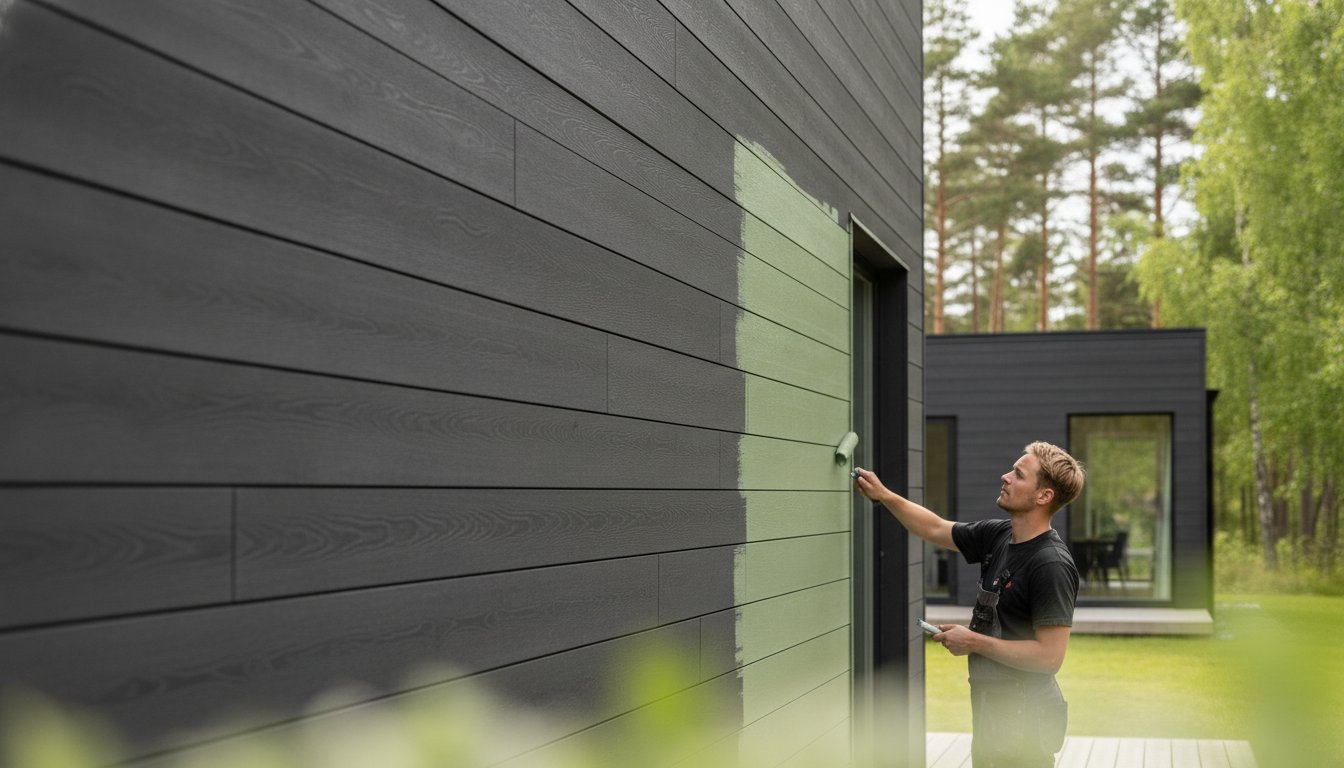
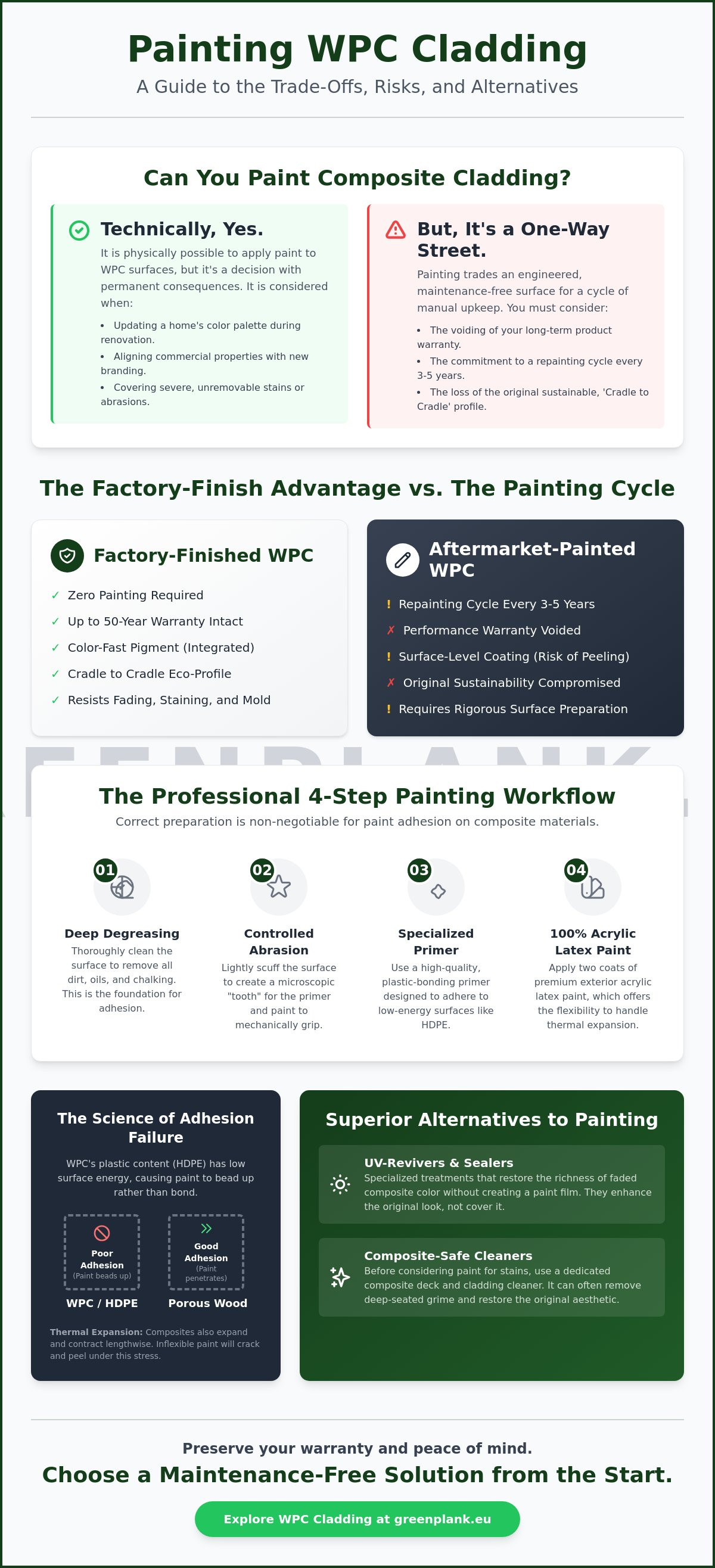
If you have weighed the warranty risks and decided to proceed, following a disciplined engineering sequence is the only way to achieve a durable result. When asking can you paint wpc cladding, the focus must shift from the possibility to the precision of the application. A haphazard approach will result in immediate delamination. A professional workflow ensures the coating behaves as a functional skin rather than a temporary mask.
- Step 1: Deep Degreasing. Clean the facade with a composite-safe degreaser to remove atmospheric oils, pollen, and residual tannins. This eliminates the invisible barrier that prevents primer adhesion.
- Step 2: Controlled Abrasion. Scuff the surface using 220 to 320 grit sandpaper. This creates a mechanical "tooth" for the primer to grip without destroying the embossed wood grain of the boards.
- Step 3: High-Adhesion Priming. Apply a primer specifically formulated for architectural plastics or vinyl composites. This chemical bridge is essential for bonding with the 25% HDPE content found in high-performance profiles.
- Step 4: Topcoat Application. Use a UV-stable, 100% acrylic latex exterior paint. This material remains flexible, allowing it to move with the thermal expansion of the composite.
- Step 5: Managed Curing. Allow the system to cure in dry, temperate conditions for at least 24 to 48 hours. Avoid application in direct, mid-day sunlight to prevent the paint from drying too quickly and becoming brittle.
Surface Preparation and Cleaning
Preparation is the most labor-intensive phase of the project. You must remove all traces of mold and mildew using a mild oxygen-bleach solution before any pigment is applied. If you seal organic growth under paint, it will eventually cause the coating to bubble and lift. When using a pressure washer, keep the setting below 1500 PSI. High-pressure streams can "fuzz" the 75% hardwood fibers, creating a textured surface that is difficult to coat evenly. Always test your cleaning and painting system on a small, inconspicuous area. This allows you to verify adhesion before committing to the entire facade.
Selecting the Right Coating System
The choice between a film-forming paint and a solid color stain is critical. Solid color stains are often superior for WPC because they are thinner and more "breathable." This breathability allows vapor transmission from the internal wood fiber core, reducing the risk of internal moisture buildup. Your selected paint must be 100% acrylic latex to handle the linear expansion of the boards. Oil-based systems are too rigid and will likely crack as the temperature fluctuates. For those seeking a permanent color solution without the risks of manual painting, exploring our pre-pigmented wpc composite wall cladding options remains the most reliable path for long-term facade integrity.
Superior Alternatives for a Facade Refresh
While the technical answer to can you paint wpc cladding is yes, the long-term maintenance cycle often makes it an undesirable choice for those who value their time and the environment. You don't have to resort to permanent coatings to restore the aesthetic appeal of your building. Several professional-grade alternatives allow you to refresh your facade while maintaining the material's low-maintenance credentials and sustainable profile. These methods respect the original engineering of the boards.
- Professional Composite Cleaners. Specialized surfactants penetrate the board's surface to lift deep-seated atmospheric pollutants and biological growth. These products restore the original luster without the need for abrasive pigments.
- UV-Revivers and Sealants. High-performance clear sealants can bring back color depth to boards that have weathered over decades. These treatments enhance the existing pigment rather than masking it behind a layer of paint.
- Strategic Design Adjustments. Sometimes a facade feels dated because of its surroundings. Introducing modern architectural lighting or updated landscaping can shift the visual focus and make a weathered facade feel like a deliberate, organic part of the environment.
- Partial Replacement. If specific areas are damaged beyond repair, you can integrate new sections of composite wall cladding. This creates a contemporary, multi-tonal look that is trending in 2026 architecture.
Restoration vs. Renovation
Before you commit to a painting project, you must identify if your cladding is actually faded or simply obscured by environmental buildup. Often, what appears to be permanent discoloration is actually a layer of industrial soot, pollen, or microscopic mold. Refreshing the surface through restoration preserves the material's health and avoids the risks of peeling associated with aftermarket paints. Professional cleaning is the essential first step to determine if the material requires a color change or simply a deep reset of its original surface.
The Green Plank Solution: Engineered Longevity
Our products are built with a "Responsible Innovator" mindset, focusing on materials that look beautiful for decades without human intervention. The Terra Tuff and Smart System lines utilize a sophisticated 75% hardwood fiber and 25% HDPE blend. This ratio ensures that the natural wood aesthetic is preserved through color-fast technology that resists UV degradation. Because our materials are made in the EU with 100% EU raw materials, we provide a 50-year warranty that reflects our engineering confidence. You don't need to wonder can you paint wpc cladding when the original material is designed to remain vibrant and durable throughout its entire service life.
Explore our range of maintenance-free WPC cladding solutions to see how engineered sustainability can transform your property without the burden of a repainting cycle.
Preserving Your Architectural Legacy
Deciding how to maintain your facade requires balancing immediate aesthetic desires with long-term material performance. While the technical reality of can you paint wpc cladding remains possible, the resulting maintenance cycle and potential loss of warranty coverage often outweigh the benefits. High-performance composites are engineered to thrive without aftermarket coatings, relying instead on material science to resist UV degradation and moisture. Choosing restoration over recoloring preserves the structural integrity of your boards and maintains their eco-conscious profile.
Our profiles are manufactured with 75% hardwood fiber for natural durability and follow a Cradle to Cradle ownership model. This engineering precision allows us to offer up to 50-year warranty coverage, ensuring your investment remains sustainable and beautiful for decades. Request a technical data sheet for our high-performance cladding to see the data behind our maintenance-free promise. Embrace a lifestyle that prioritizes longevity and respects the natural world through superior material choice.
Frequently Asked Questions
Will painting my WPC cladding void the manufacturer's warranty?
Yes, applying any aftermarket coating typically voids the long-term performance guarantees provided by the manufacturer. Products like our Nordeka and Terra Tuff lines carry up to 50-year warranties based on their original engineered state. Once you apply paint, the manufacturer can no longer guarantee how the boards will react to moisture or thermal expansion, as the paint may trap vapor or cause surface degradation.
What is the best type of paint for wood-plastic composite materials?
High-quality, 100% acrylic latex exterior paint is the most effective choice for composite substrates. This specific formulation offers the elasticity required to accommodate the linear expansion and contraction of the boards during temperature shifts. You must avoid oil-based paints; they are too rigid for the HDPE content in WPC and will likely crack or peel as the material moves throughout the seasons.
How often will I need to repaint my composite cladding once it's been coated?
You should expect a repainting cycle of every three to five years once the initial coat is applied. While the question of can you paint wpc cladding is technically a yes, doing so converts a maintenance-free facade into a permanent labor liability. The exact frequency depends on your local UV index and moisture levels, which eventually break down the bond between the paint and the non-porous plastic surface.
Can I use a standard wood stain on WPC boards?
No, standard wood stains are designed to penetrate deep into organic timber pores, which are largely absent in engineered composites. Because WPC contains a significant blend of high-density polyethylene, traditional stains will fail to soak in and will remain tacky on the surface. If you seek a stained aesthetic, you must use a specialized solid-color acrylic stain formulated specifically for plastic-bonding applications.
Do I need to sand my composite cladding before painting it?
Yes, light sanding with 220 to 320 grit sandpaper is a critical step for ensuring mechanical adhesion. This process removes the factory-applied surface tension and creates a "tooth" that allows the primer to grip the HDPE components. You must be extremely careful not to sand too deeply, especially on capped profiles, as this can permanently destroy the protective polymer layer and the embossed wood grain pattern.
Is it better to paint or replace old, faded WPC cladding?
Replacement is almost always the superior choice for long-term property value and material health. While painting offers a lower upfront cost, it introduces recurring maintenance expenses and eliminates the 50-year warranty coverage. Replacing weathered sections with modern, color-fast profiles ensures your facade remains truly maintenance-free and preserves the architectural integrity of the building without the need for future chemical treatments.
Can I use a heat gun to fix scratches before painting WPC?
You should avoid using a heat gun because it can easily melt the plastic components and permanently distort the board's profile. High temperatures can cause the 25% HDPE content to liquefy, leading to glossy patches or structural warping that paint cannot hide. Minor abrasions in the hardwood fiber are better handled with a light wire brushing or by allowing the material to weather naturally over time.
Does painting WPC cladding make it more or less sustainable?
Painting significantly decreases the sustainability of the material by introducing Volatile Organic Compounds and surface contaminants. High-quality WPC follows a Cradle to Cradle ownership model, designed for clean mechanical recycling at the end of its service life. Adding layers of synthetic paint complicates this circular process, often making the boards unsuitable for recycling and forcing them into landfills instead of back into the production cycle.
Specificera produkten
Använd den här guiden i en Green Plank-specifikation
Tekniska WPC-artiklar ska stärka de kommersiella sidorna — inte konkurrera med dem. Fortsätt till komposittrall, TerraTuff, Nordeka eller de tekniska nedladdningarna.